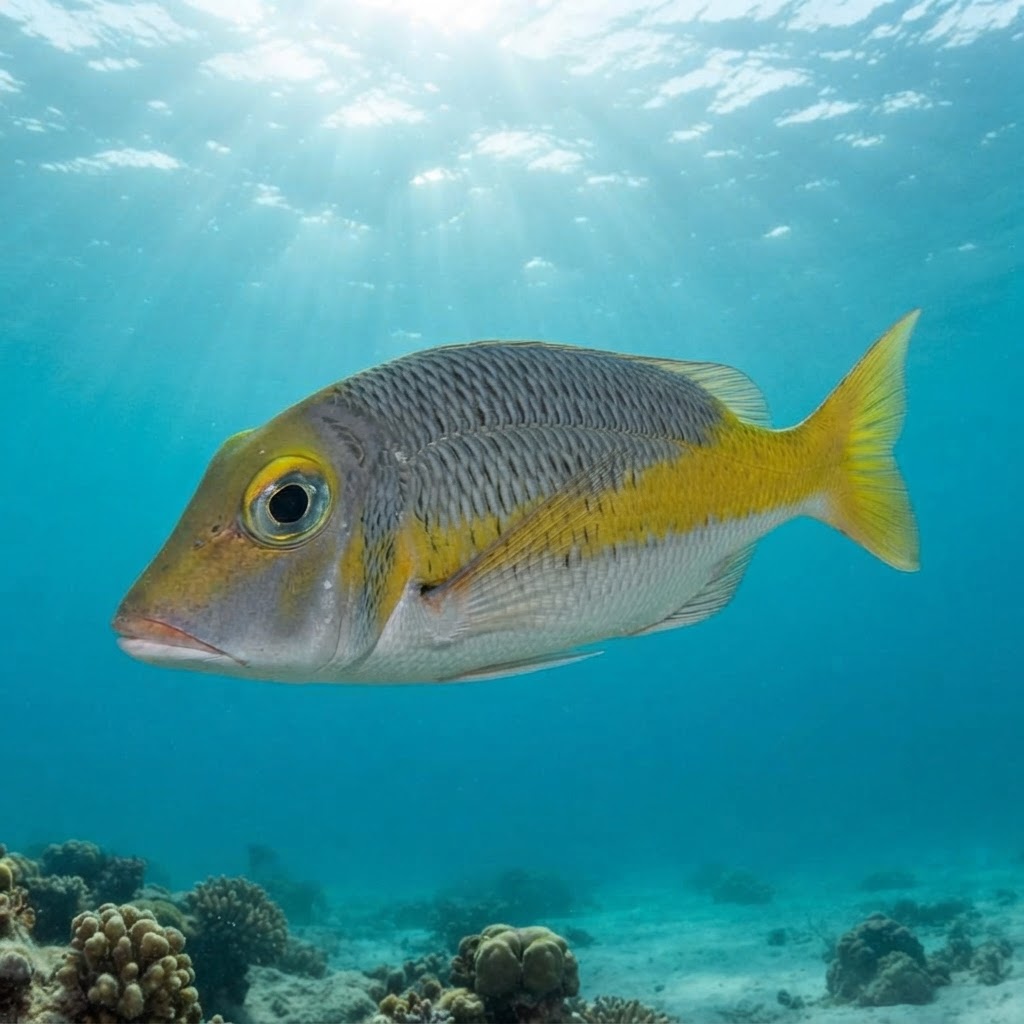
Lethrinus atkinsoni
Uncommon but reliable on Queensland reefs, this yellow-finned emperor turns up year-round in water around 25 to 29 C.
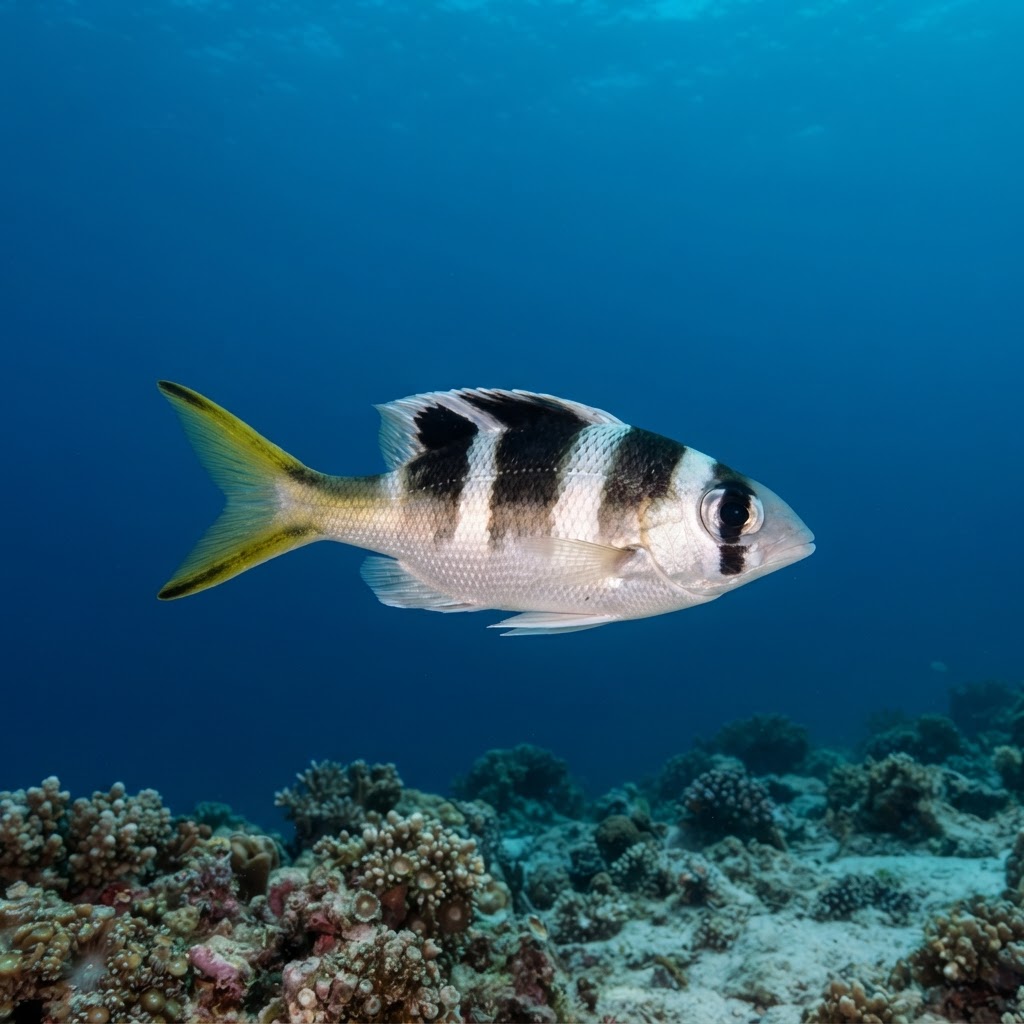
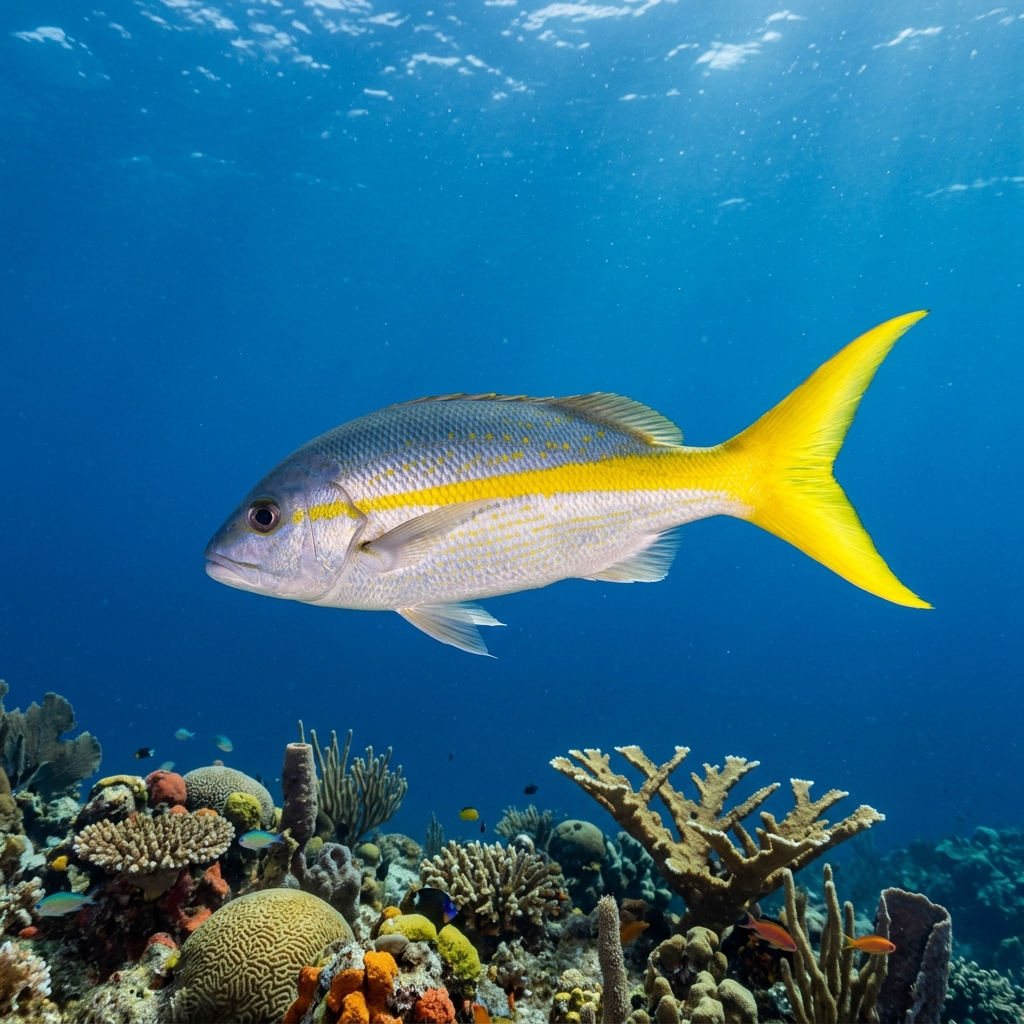
Grows to around 35 cm, with a silvery-grey to pale bronze body and a sharply forked yellow tail that gives it away at a glance. Look for faint yellow tinges through the fins and a fairly steep, blunt-nosed profile typical of emperors. It usually hovers just off the reef alone or in small loose groups rather than tight schools.
Divers typically spot it cruising alone or in small, unhurried groups just above the reef, picking over sand and rubble patches for food rather than sheltering in structure. It tends to keep a bit of distance from divers without bolting, and sightings are logged as uncommon at most sites, so it is more of a nice surprise than a guaranteed encounter. A handful of Queensland sites report it as common, so persistence at the right spot pays off.
Like other emperors, it forages by picking invertebrates out of sand and rubble, making it a useful reef cleanup species on the patches it favours.
No clear season shows up in the sightings data, and its comfort range of roughly 25 to 29 C matches tropical and subtropical reefs year-round, so any month is worth a look where it occurs.
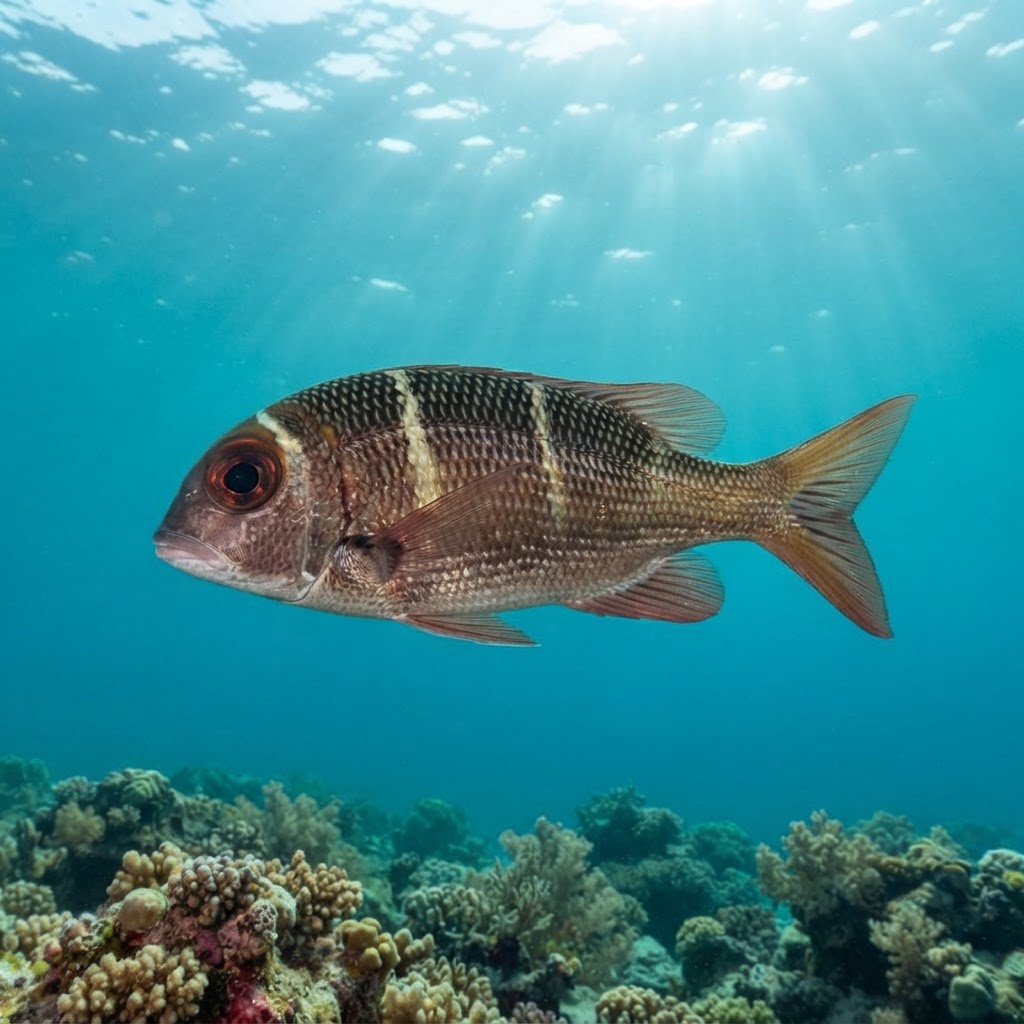
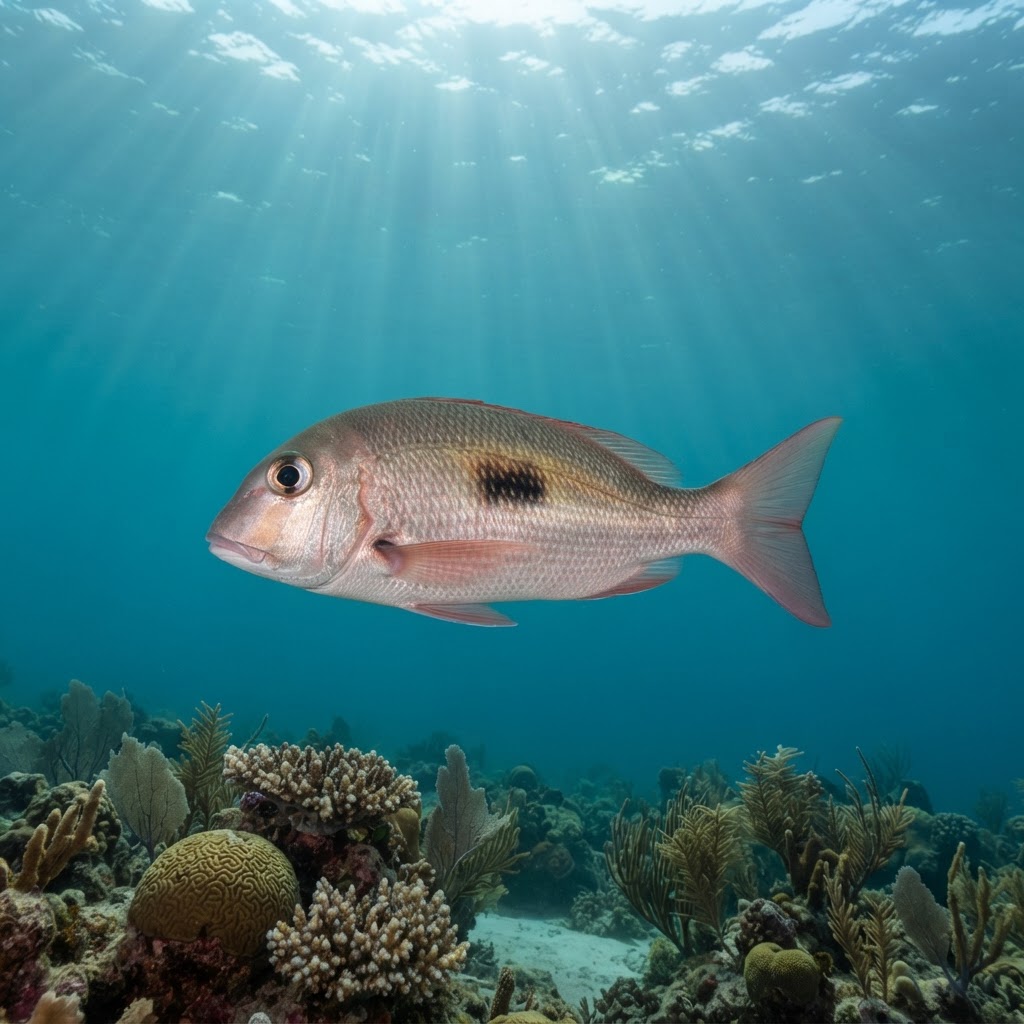
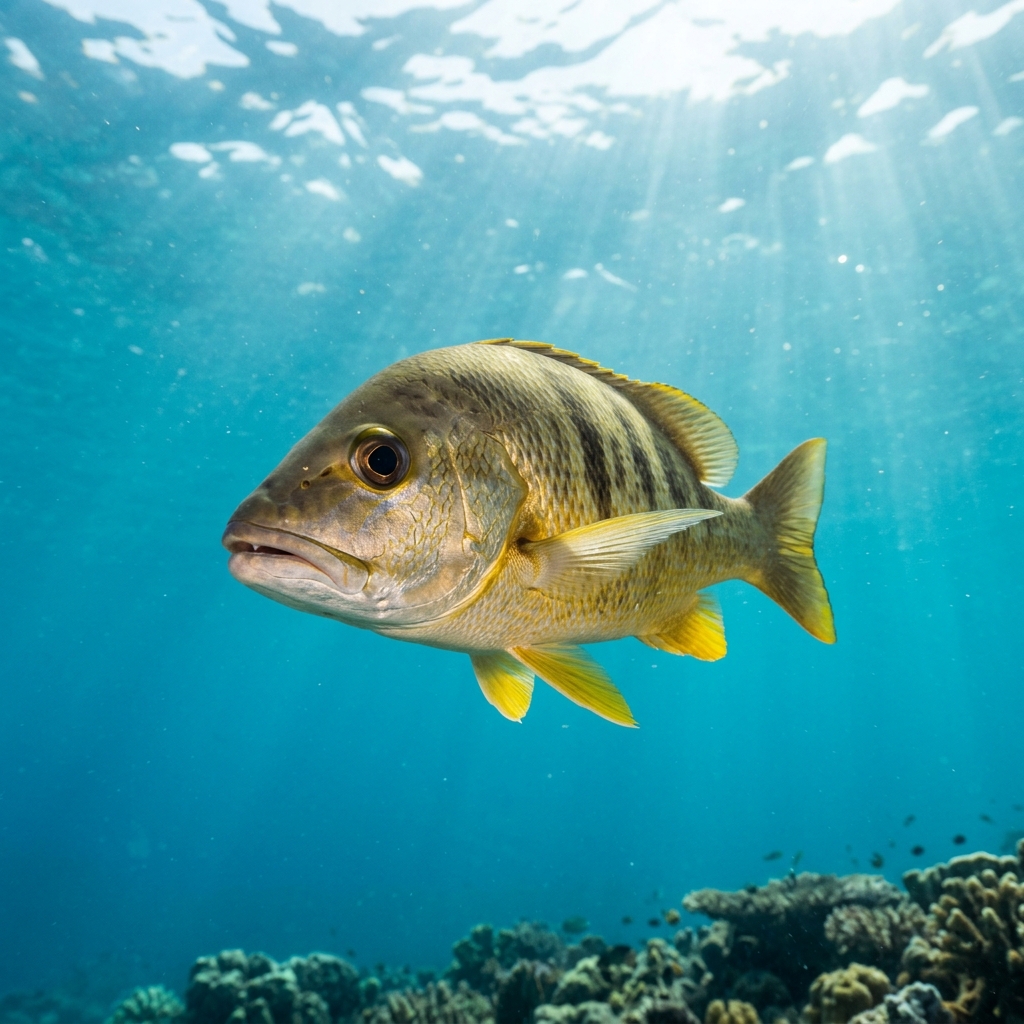
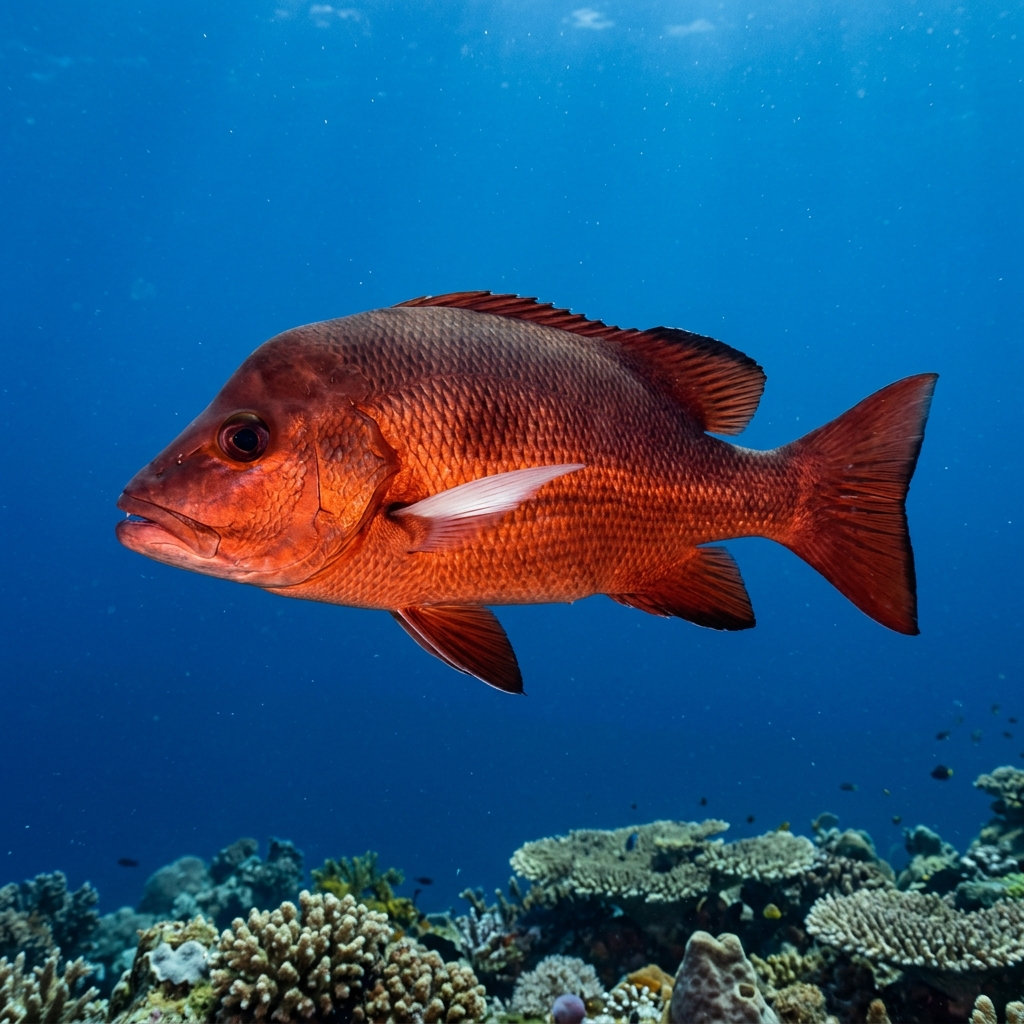
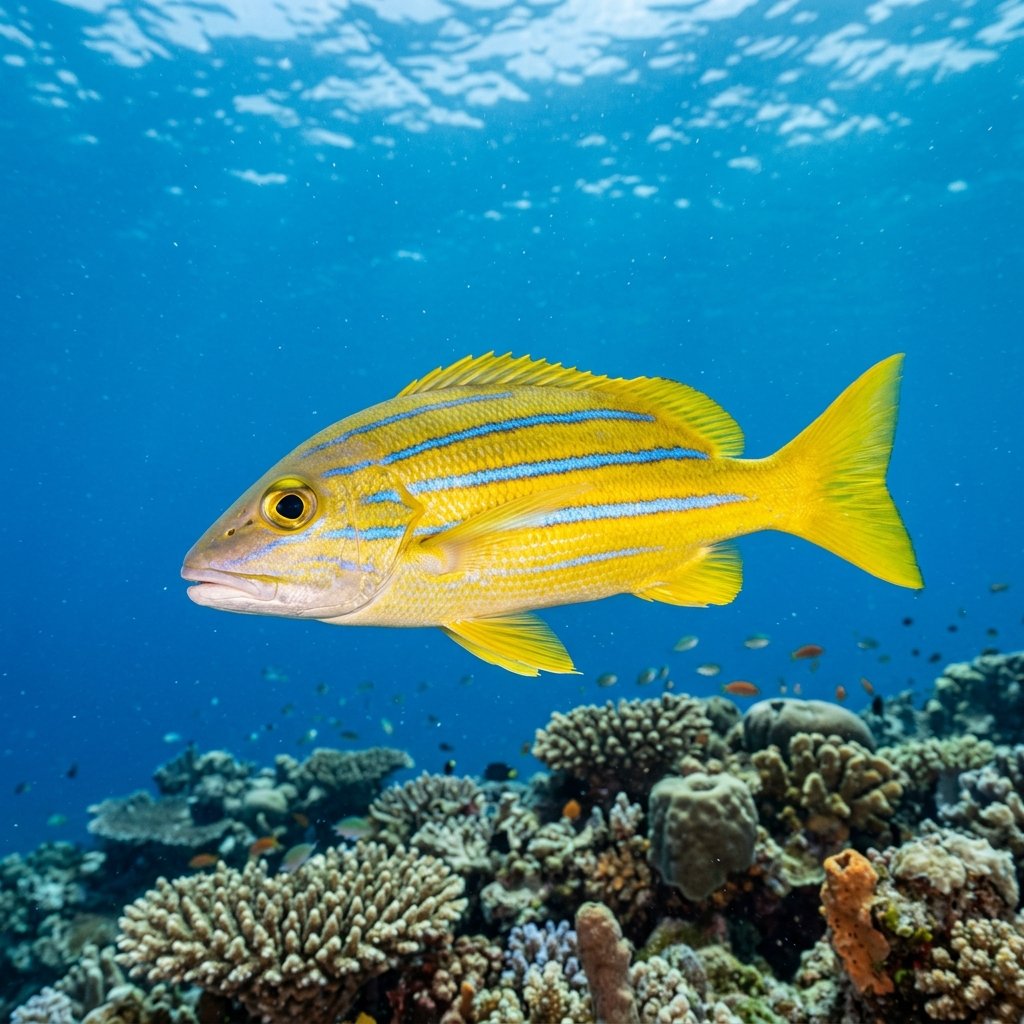
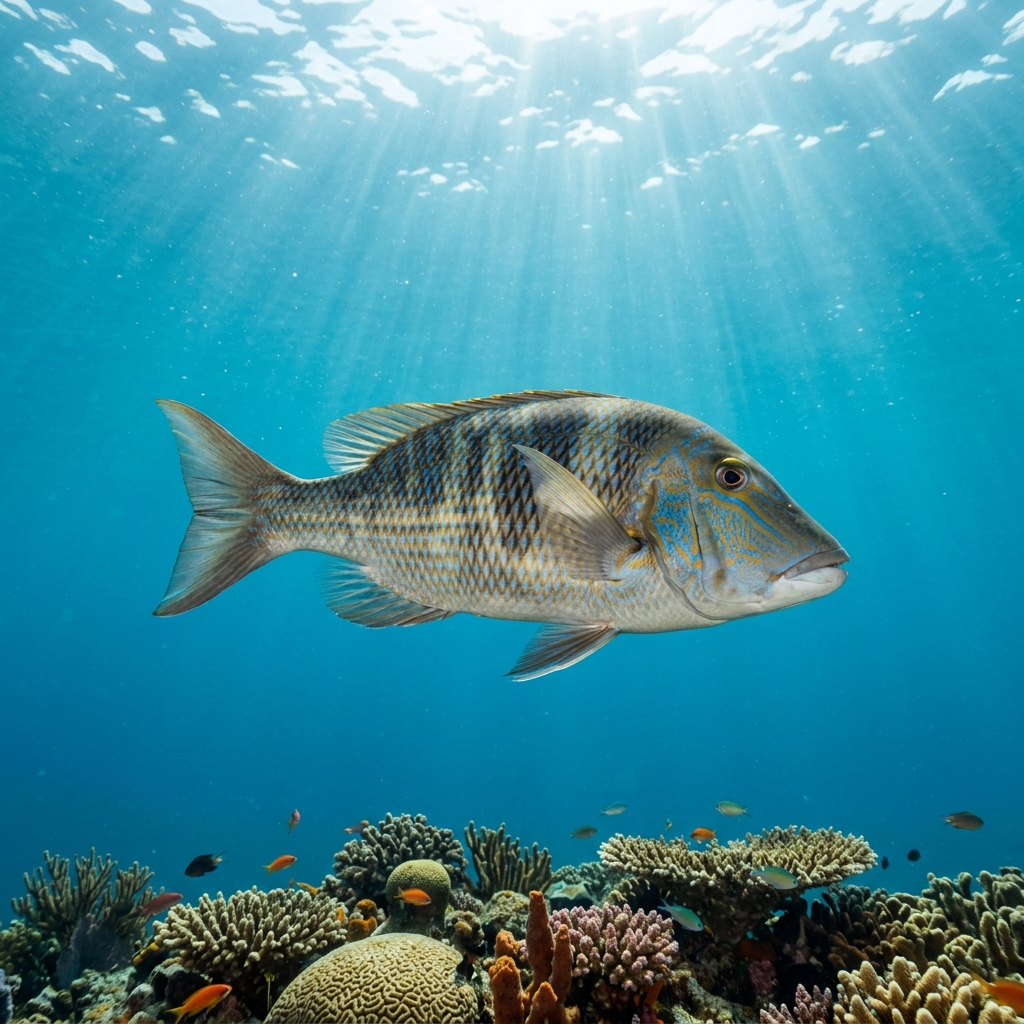
Reef neighbours a diver could mistake it for. Use the identification notes above to tell them apart.
Most reliably logged on Queensland's reefs, with a solid secondary presence in Western Australia, making Australia the strongholds for this species. Smaller numbers turn up around Nouméa in New Caledonia and on reefs in Fiji's Lomaiviti group.
Mapping where Pacific Yellowtail Emperor is logged…
Queensland, Australia is by far the strongest region for sightings, with Western Australia a reliable secondary spot. It also shows up around Nouméa in New Caledonia and on reefs in Fiji's Lomaiviti group.
There is no strong seasonal pattern in the sightings, and it favours water around 25 to 29 C, so it is present on tropical reefs throughout the year rather than during a specific window.
Check for a silvery-grey to pale bronze body around 35 cm long with a distinctly forked yellow tail and yellow-tinged fins. It usually swims alone or in small loose groups just above the reef rather than schooling tightly.
They typically reach about 35 cm in length, a modest, mid-sized reef fish rather than a standout giant.
No, they pose no threat to divers and are simply worth watching as they forage over sand and rubble near the reef.
Site and sighting data is aggregated from diver logs, iNaturalist and GBIF. For taxonomy and conservation status:
Emperor
2,052 sites