Sarda chiliensis
Rare but real sighting off California: torpedo-shaped bonito with dark oblique stripes cruising cool 14-23 C water.
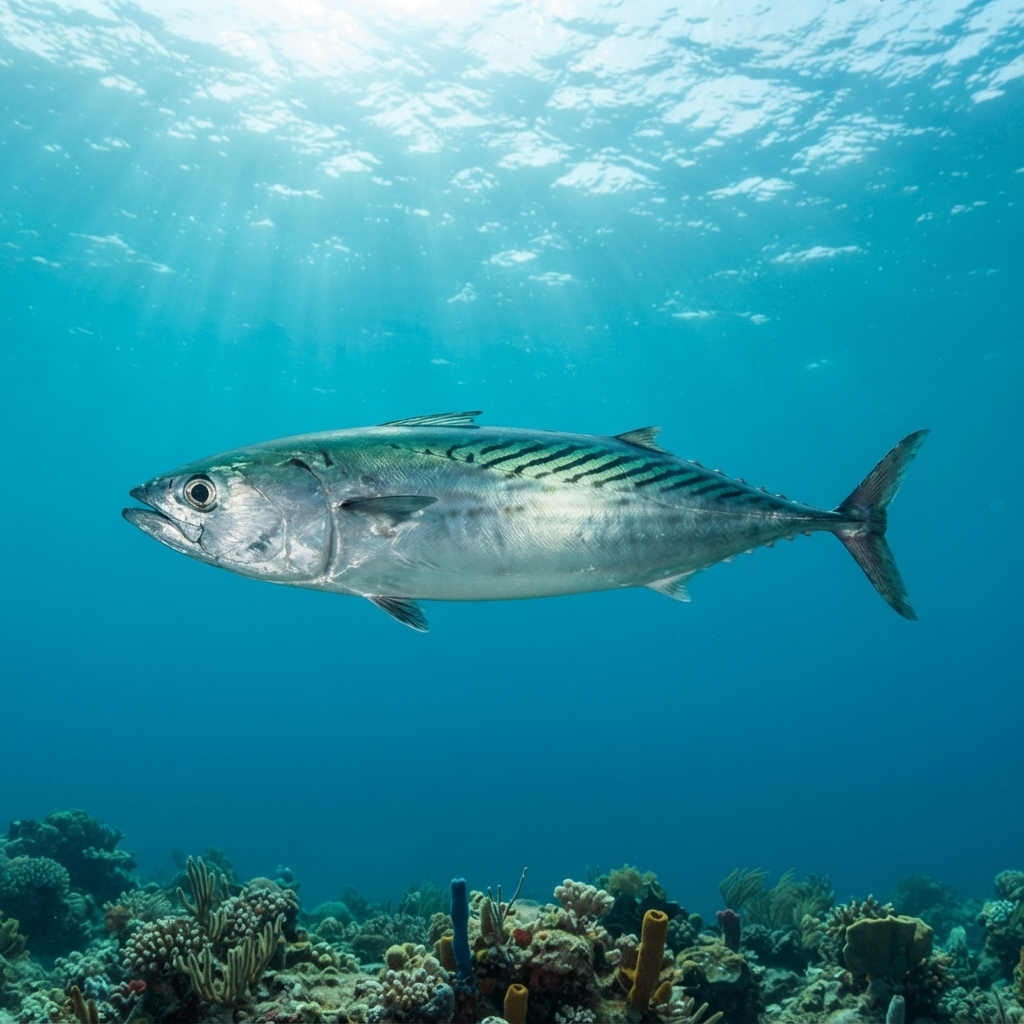
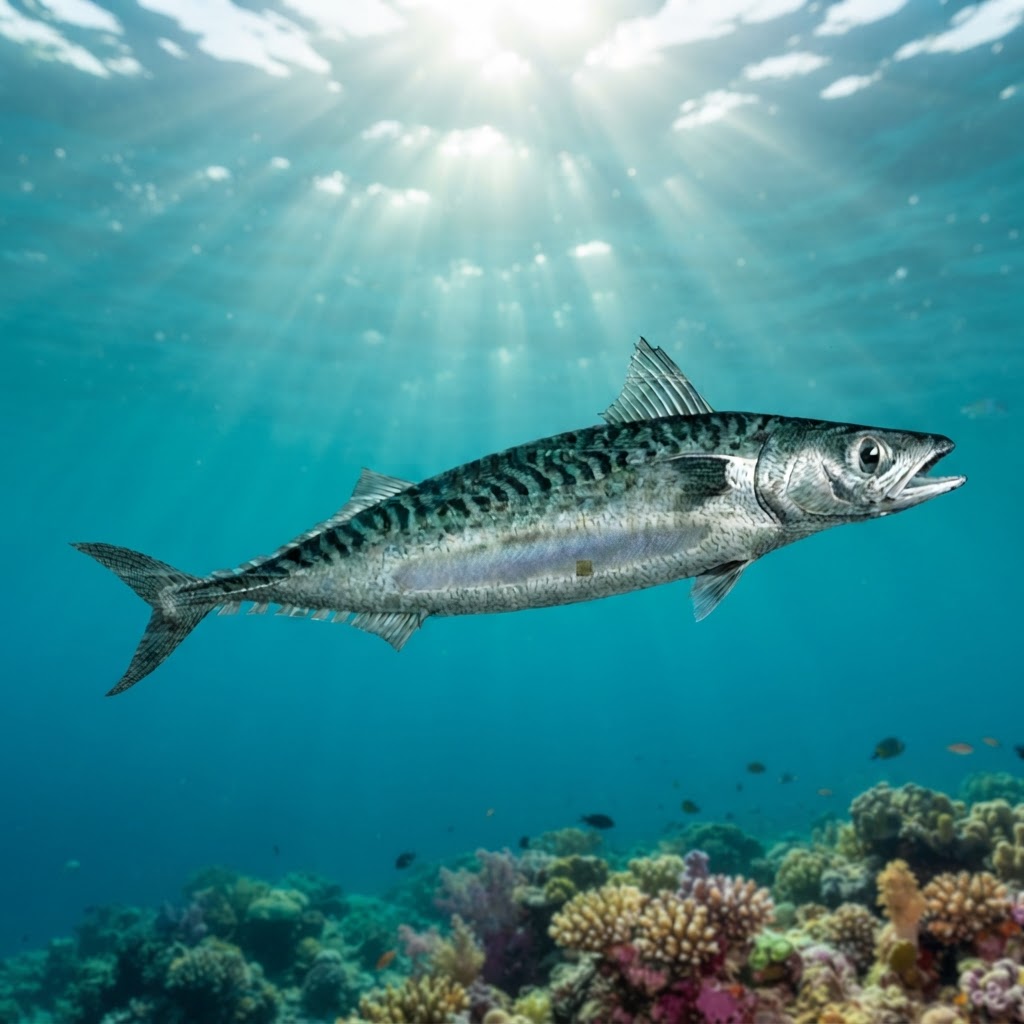
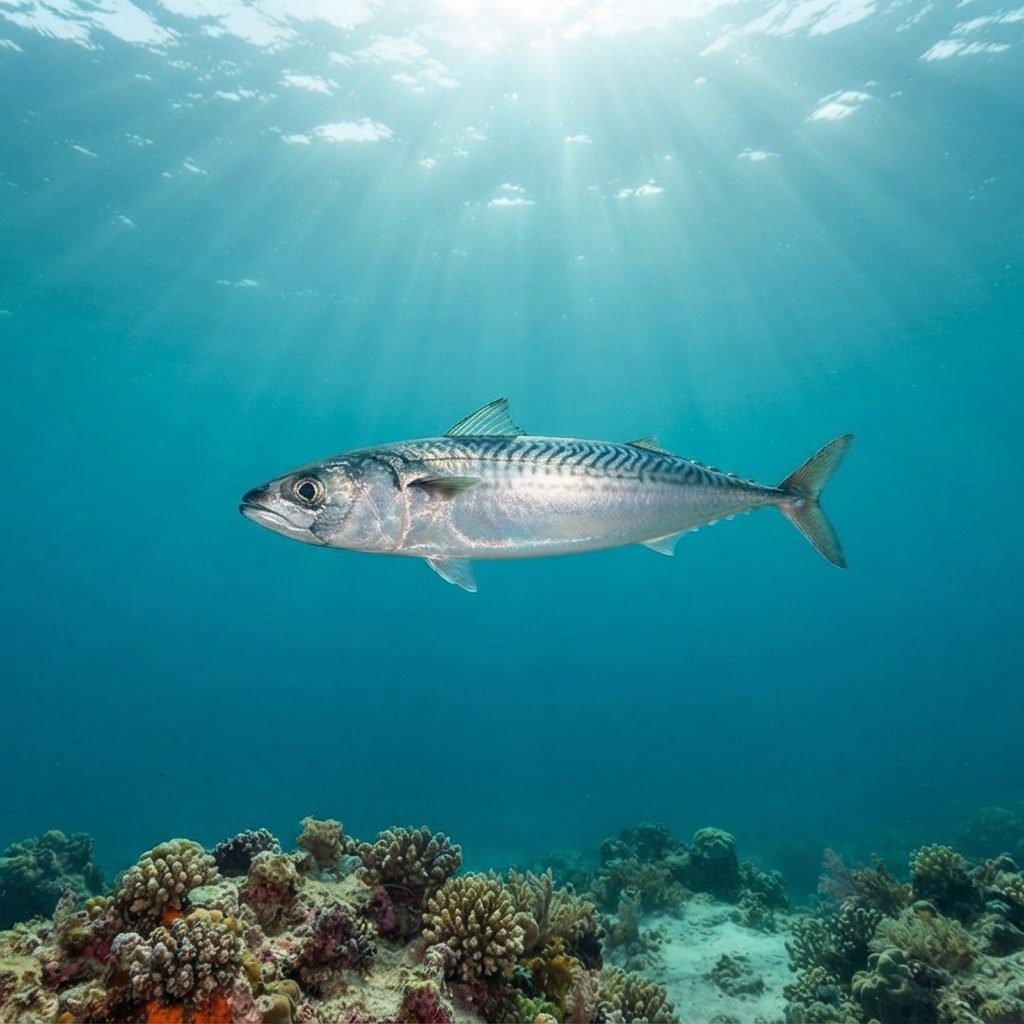
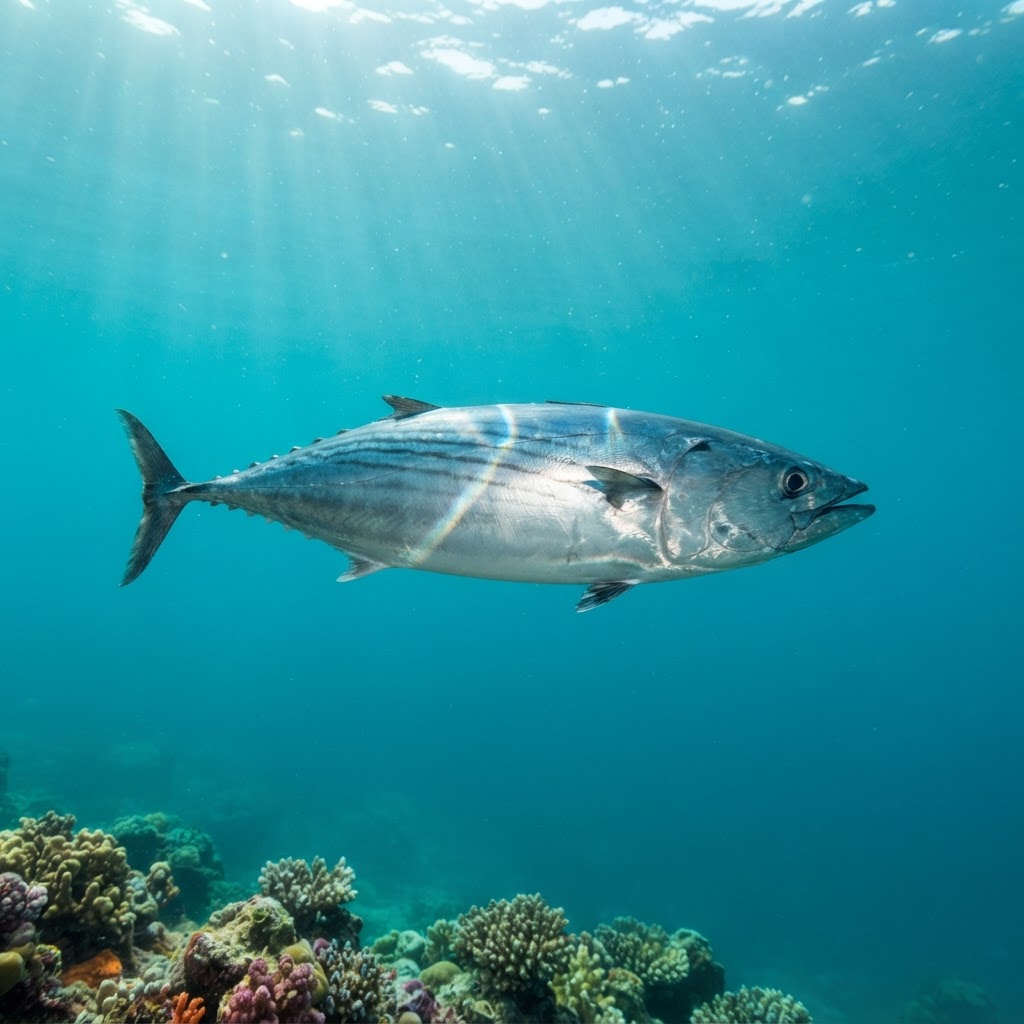
Torpedo-shaped body up to about 71 cm, built for speed with a narrow tail and slender profile typical of the mackerel and tuna family. Look for dark, slightly oblique stripes running along the upper back against a steel-blue to greenish sheen, fading to silver on the belly. It moves in fast, purposeful bursts rather than hovering, so you usually spot it mid-water rather than on the reef itself.
Divers encounter it moving fast through open water, often solo or loosely grouped, rather than parked over structure. It behaves like the active predator it is, cruising rather than lingering, and tends to keep its distance from divers instead of investigating. Sightings logged so far mark it as rare to uncommon, so a clear view is more of a bonus than something to plan a dive around.
As a scombrid, it is built for sustained speed rather than manoeuvring, which is why divers see it slice through open water instead of working a reef wall the way a grouper or wrasse would.
Sightings do not show a clear seasonal pattern, so treat it as a year-round possibility in its 14.6 to 23.1 C comfort range rather than a fish tied to one season. That temperature spread covers most of the year along the California coast.
Reef neighbours a diver could mistake it for. Use the identification notes above to tell them apart.
Logged sites for this species are concentrated in California, United States, where it turns up as an open-water encounter rather than a reef fixture. It has not yet been logged elsewhere in the diver observation data, so California is currently the place to look.
Mapping where Pacific Bonito is logged…
Current diver logs place it in California, United States, where it has been recorded at a small number of sites as an open-water sighting rather than a reef regular.
There is no strong season in the data, so it is best treated as a year-round possibility within its 14.6 to 23.1 C temperature range.
Look for a fast-moving, torpedo-shaped fish up to around 71 cm with dark, slightly angled stripes along a blue-green back and a silvery belly. It rarely stops to be examined, so the stripe pattern and quick swimming style are your best clues.
They reach roughly 71 cm in length, giving them a lean, fast-swimming build rather than a bulky one.
Yes, sighting logs mark it as rare at most sites where it has been recorded, with only occasional uncommon reports, so seeing one is a real highlight rather than a given.
Site and sighting data is aggregated from diver logs, iNaturalist and GBIF. For taxonomy and conservation status:
Dogtooth Tuna
629 sites