Thunnus thynnus
Torpedo-shaped giants logged from the Carolinas to the Saronic Gulf, cruising open water in 10.6-28.2C seas year-round.
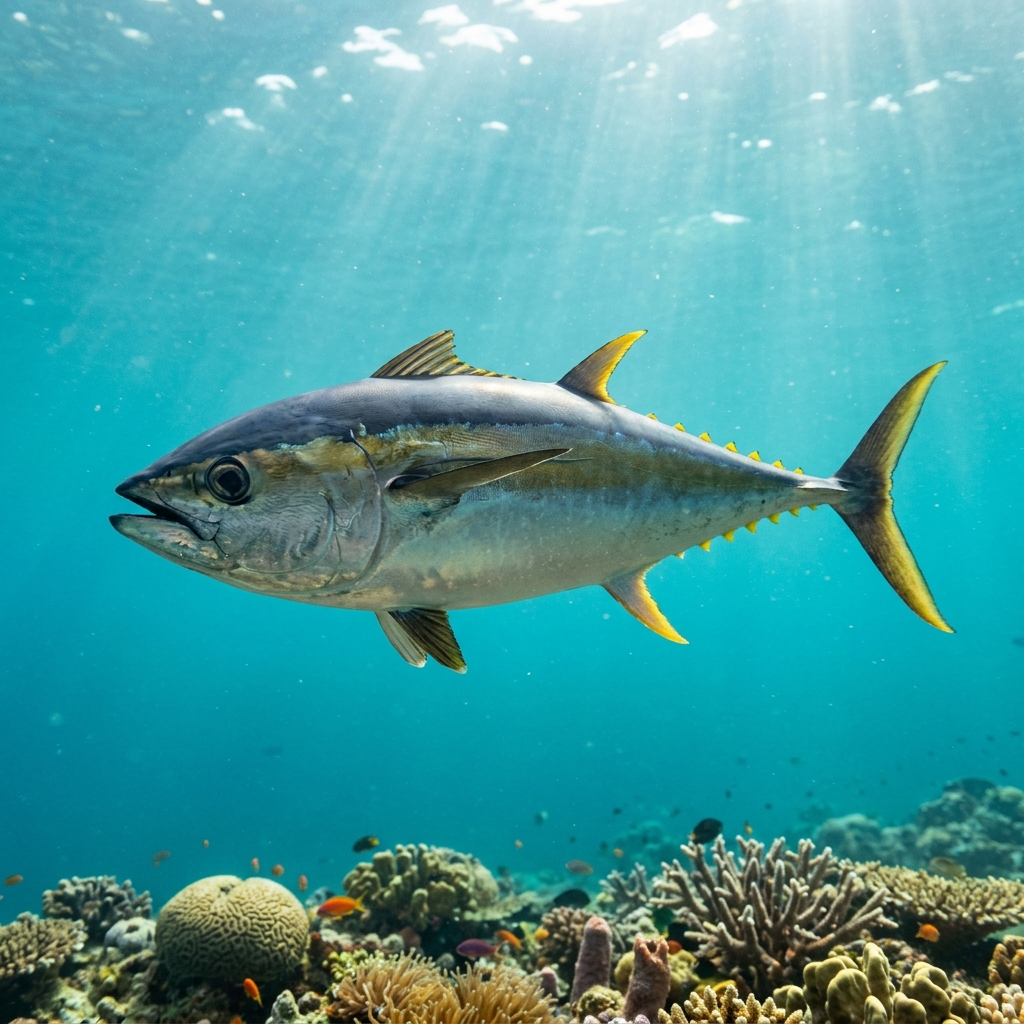
Look for a thick, torpedo-shaped body up to 3 metres long with a dark blue-black back, silvery flanks, and a series of small yellow finlets running along the tail. The first dorsal fin is short and the pectoral fins are noticeably shorter than on other large tunas, giving it a more streamlined, bullet-like profile. It moves fast and holds a rigid, powerful swimming line rather than the looser, schooling wobble of smaller mackerel species.
When divers or snorkellers do cross paths with one, it's usually in open water off a boat rather than on a reef wall, moving fast and often alone or in a loose small group rather than a tight bait-ball school. They rarely slow down for a look and tend to pass through rather than linger, since they are built for constant, high-speed cruising rather than reef-holding behaviour.
This fish can raise its core body temperature above the surrounding water using specialised muscle tissue, letting it hunt effectively in cold water most other fish avoid.
Data doesn't show a sharp season, and that fits the biology: this tuna tolerates a wide temperature band from about 10.6 to 28.2C, so encounters get logged across the year rather than in one tight window. Treat any specific sighting as opportunistic rather than seasonal.
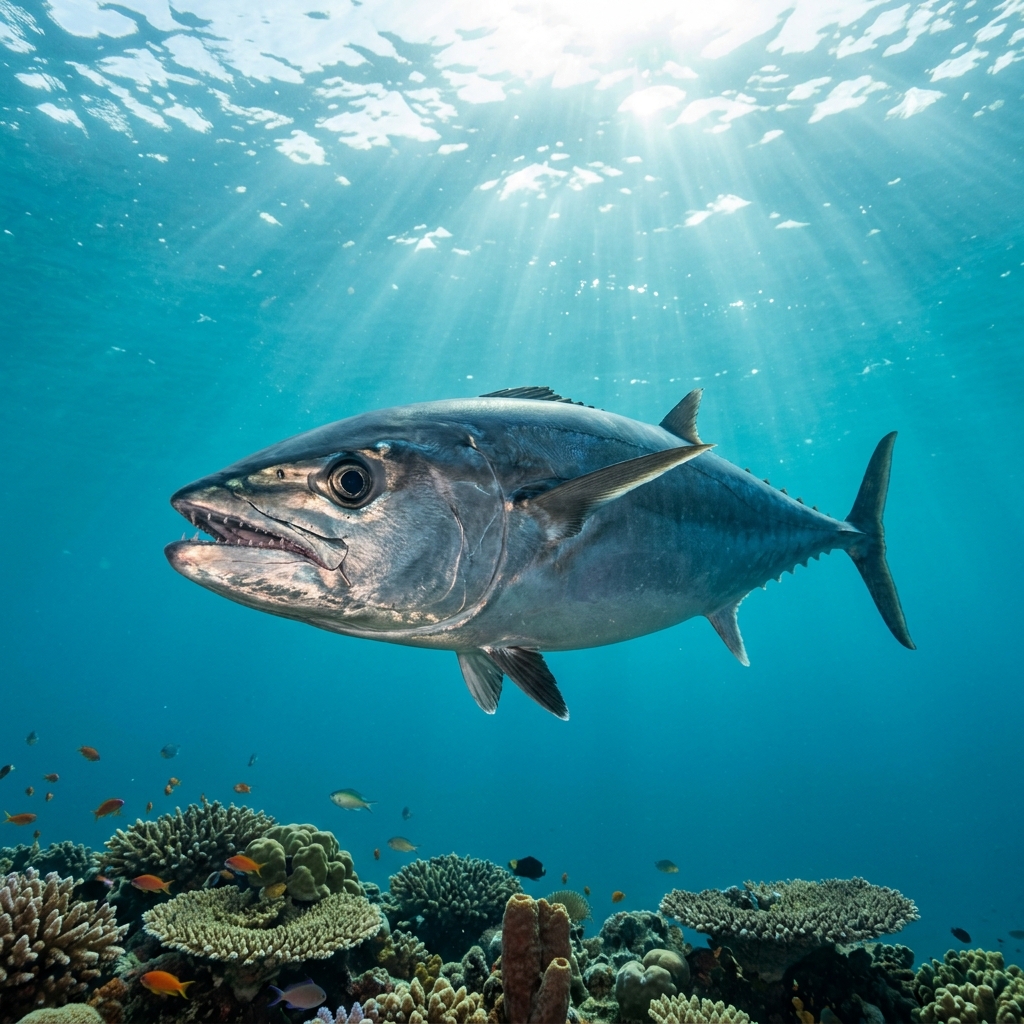
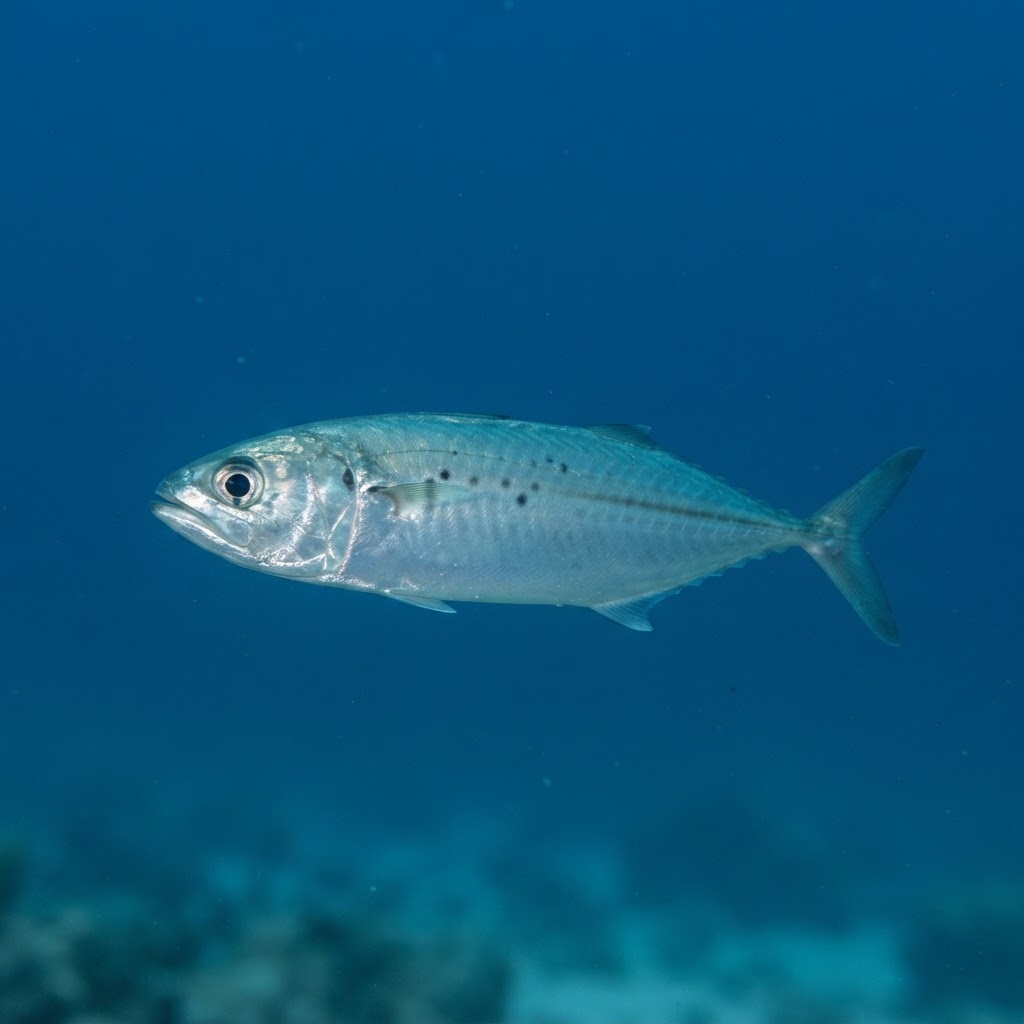
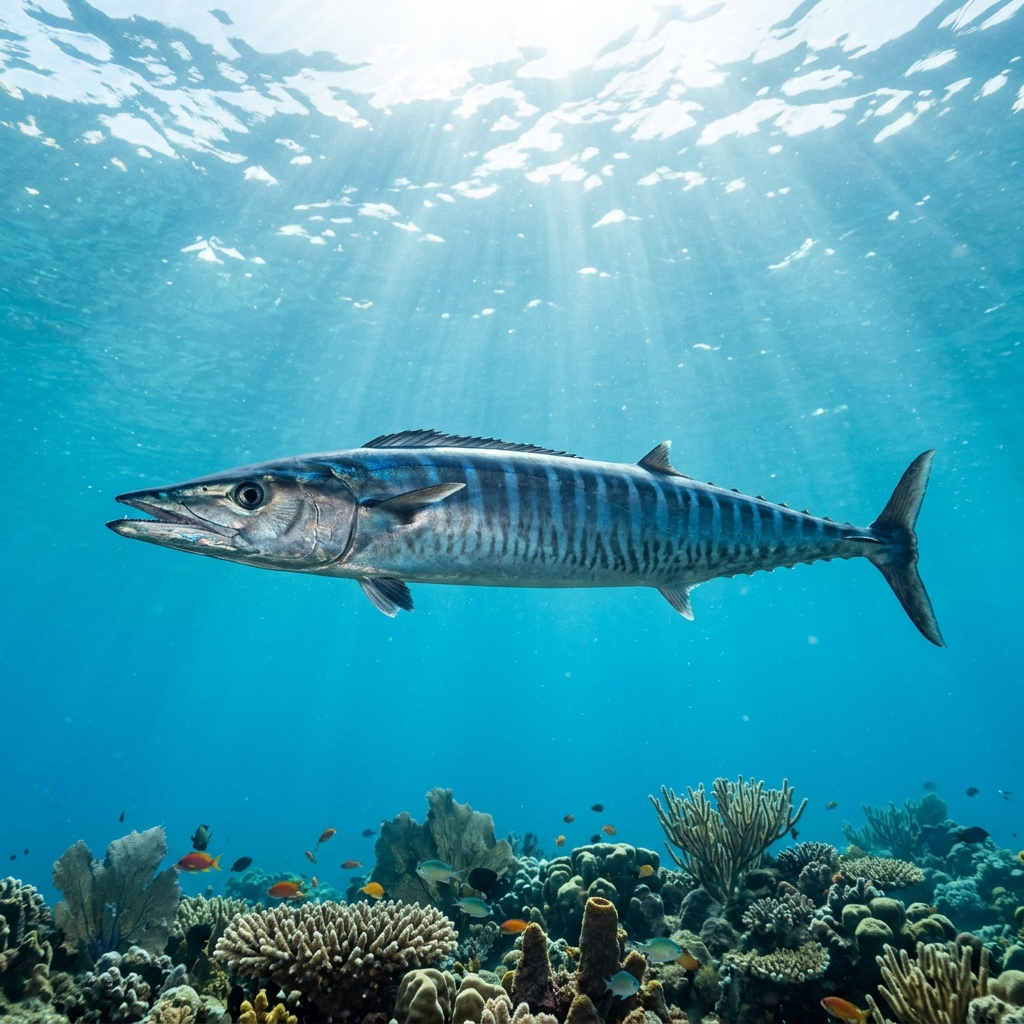
Reef neighbours a diver could mistake it for. Use the identification notes above to tell them apart.
Sightings are logged widest in the United States, especially the Carolinas, Florida, and the Northeast, with strong showings across the Mediterranean in Greece (Saronic & Athens, the Cyclades), Italy (including Sardinia), Turkey, and Croatia. England and Brittany in France also turn up regularly, reflecting this fish's huge range across temperate and warm Atlantic and Mediterranean waters.
Mapping where Atlantic Bluefin Tuna is logged…
Most sightings cluster around the United States, particularly the Carolinas, Florida, and the Northeast, along with the Mediterranean, especially Greece, Italy, and Turkey. Open-water boat dives and drift dives in these regions give the best odds.
There's no strong seasonal pattern in the sighting data, and given this species tolerates roughly 10.6 to 28.2C, encounters happen across the year rather than in one defined window.
Look for a huge, dark blue-backed, silver-sided body with small yellow finlets near the tail and short pectoral fins. Its rigid, fast, torpedo-like swimming style sets it apart from schooling mackerel or slower-moving fish.
They can reach around 320cm in length, making them one of the largest bony fish divers might ever see in open water.
They can warm their own muscles and organs above the surrounding sea temperature, a rare trait among fish that lets them hunt efficiently in cold water.
Site and sighting data is aggregated from diver logs, iNaturalist and GBIF. For taxonomy and conservation status:
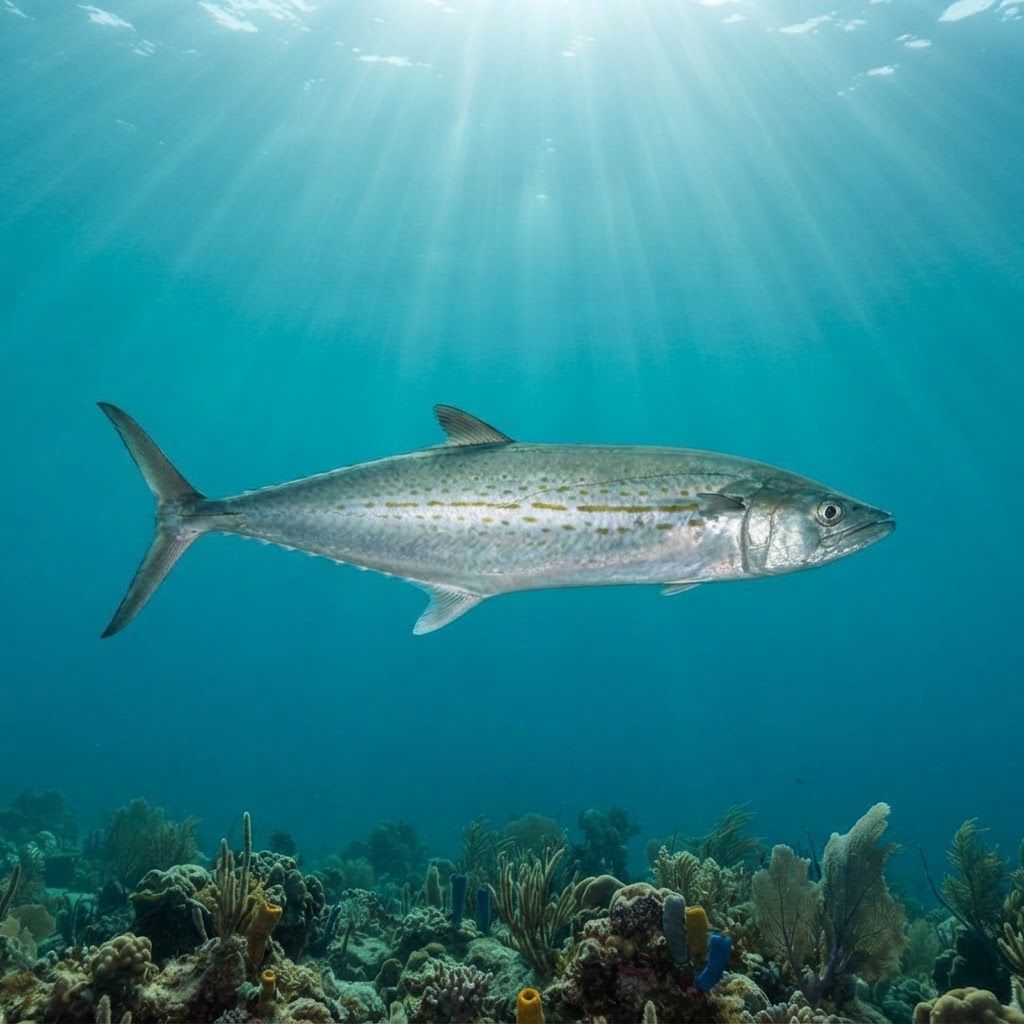
Cero
183 sites