Thunnus spp.
Silver torpedoes patrolling the Maldives' Northern Atolls to Queensland reefs, year-round in warm to temperate water.
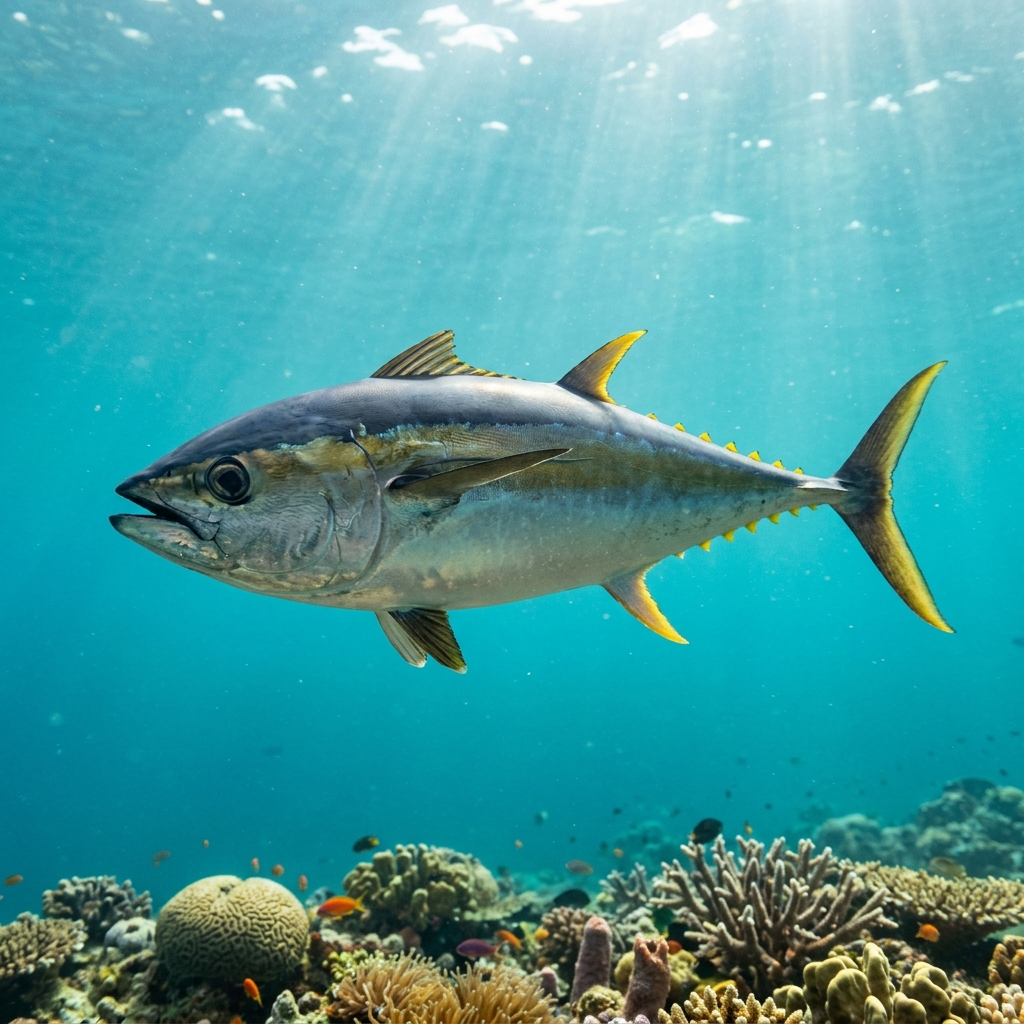
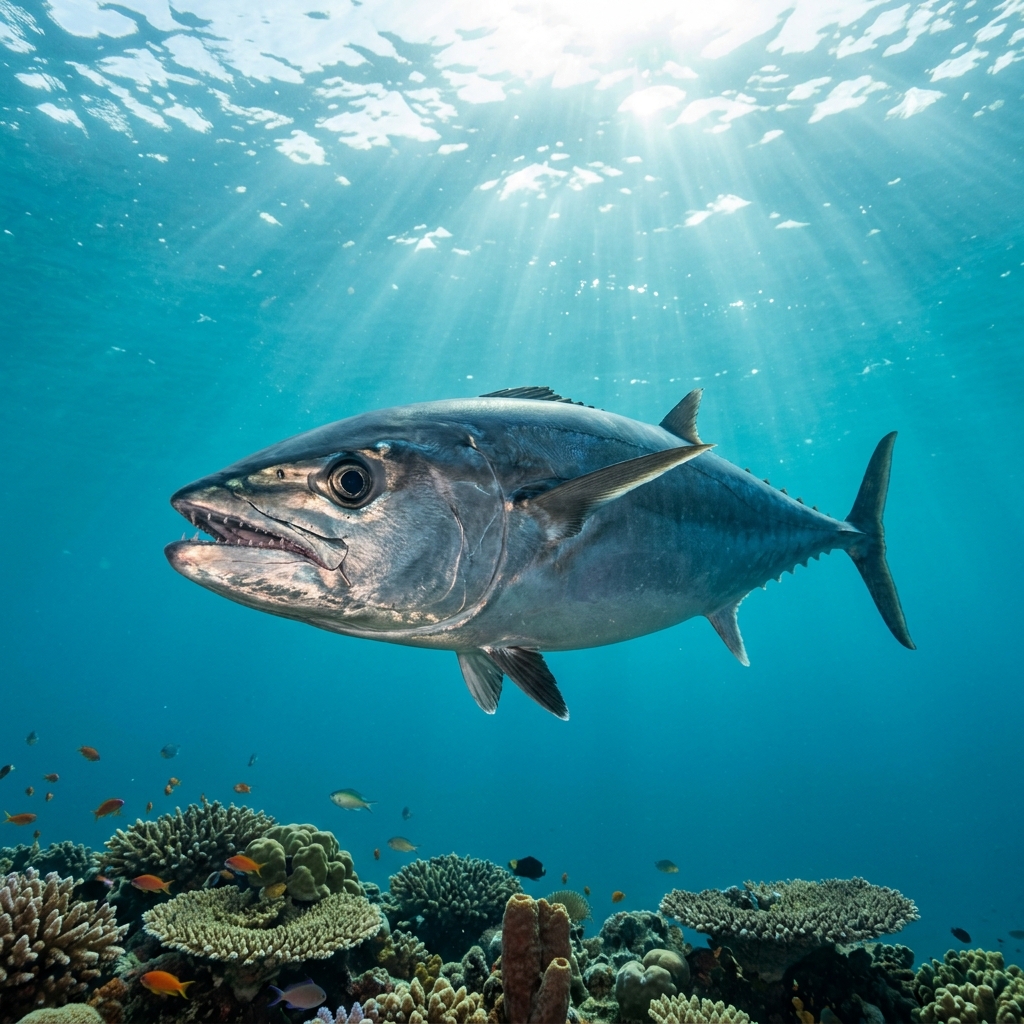
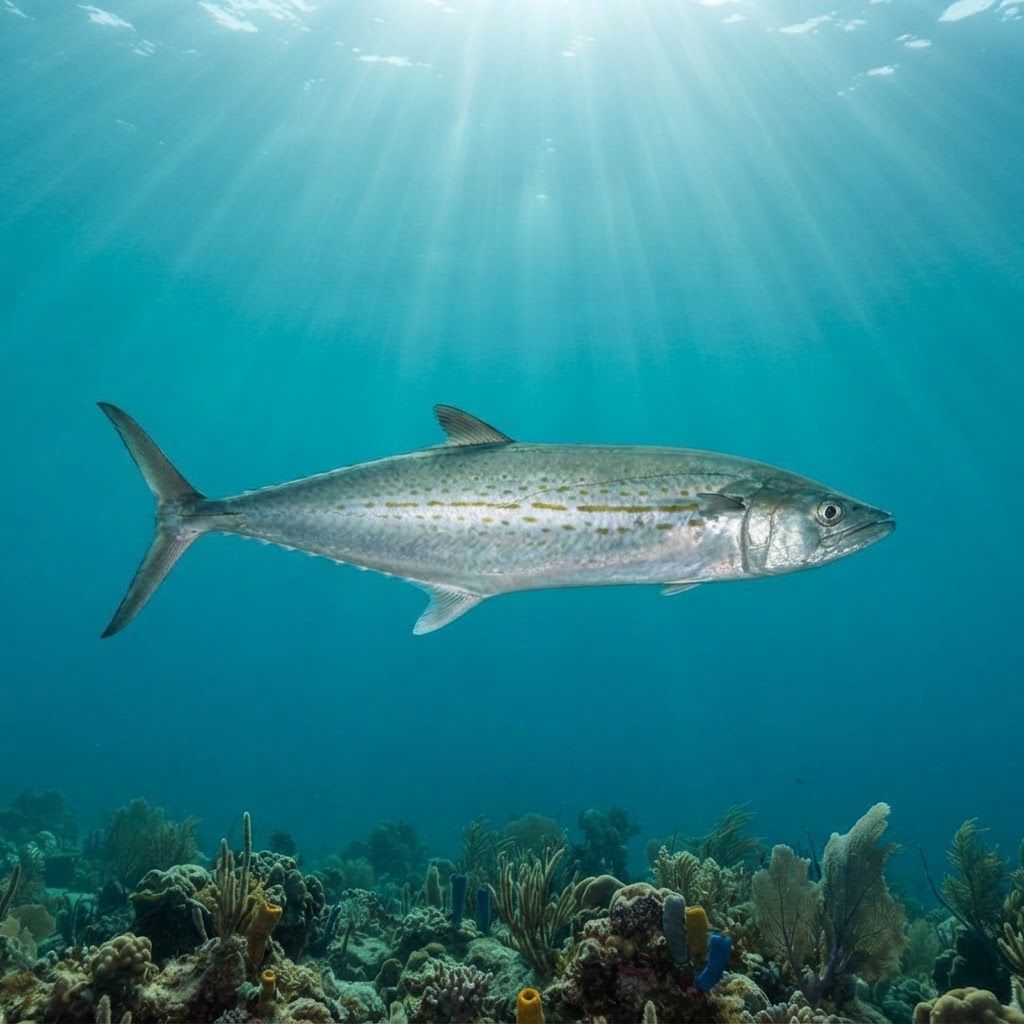
Look for a torpedo-shaped body built for speed, silvery flanks, a dark blue-black back, and a deeply forked tail that never seems to stop moving. Most species show a row of small yellow or dusky finlets between the second dorsal fin and the tail, and they typically travel in tight, fast-moving schools rather than lingering over the reef. Size and exact colour vary a lot by species within the genus, so precise ID often comes down to fin colour and body proportions rather than a single mark.
Divers usually see tuna as a blur of silver moving fast through blue water, often working a current line or channel edge rather than hovering near coral. They tend to stay wary of bubbles and divers, cutting through mid-water in loose to tight schools and only occasionally slowing to circle a cleaning station or bait ball. Early morning and periods of strong current tend to bring the best action, since that's when baitfish activity picks up and tuna move in to feed.
Tuna are among the few fish that keep parts of their body warmer than the surrounding water, a trick that lets them power through cooler currents and outrun most predators and prey alike.
Sightings show no strong seasonal pattern in the data, and with a comfortable range of roughly 15 to 29 C, tuna turn up across tropical, subtropical and even cooler temperate water year-round. In any given region, timing your dive around current-swept channels or drop-offs matters more than picking a particular month.
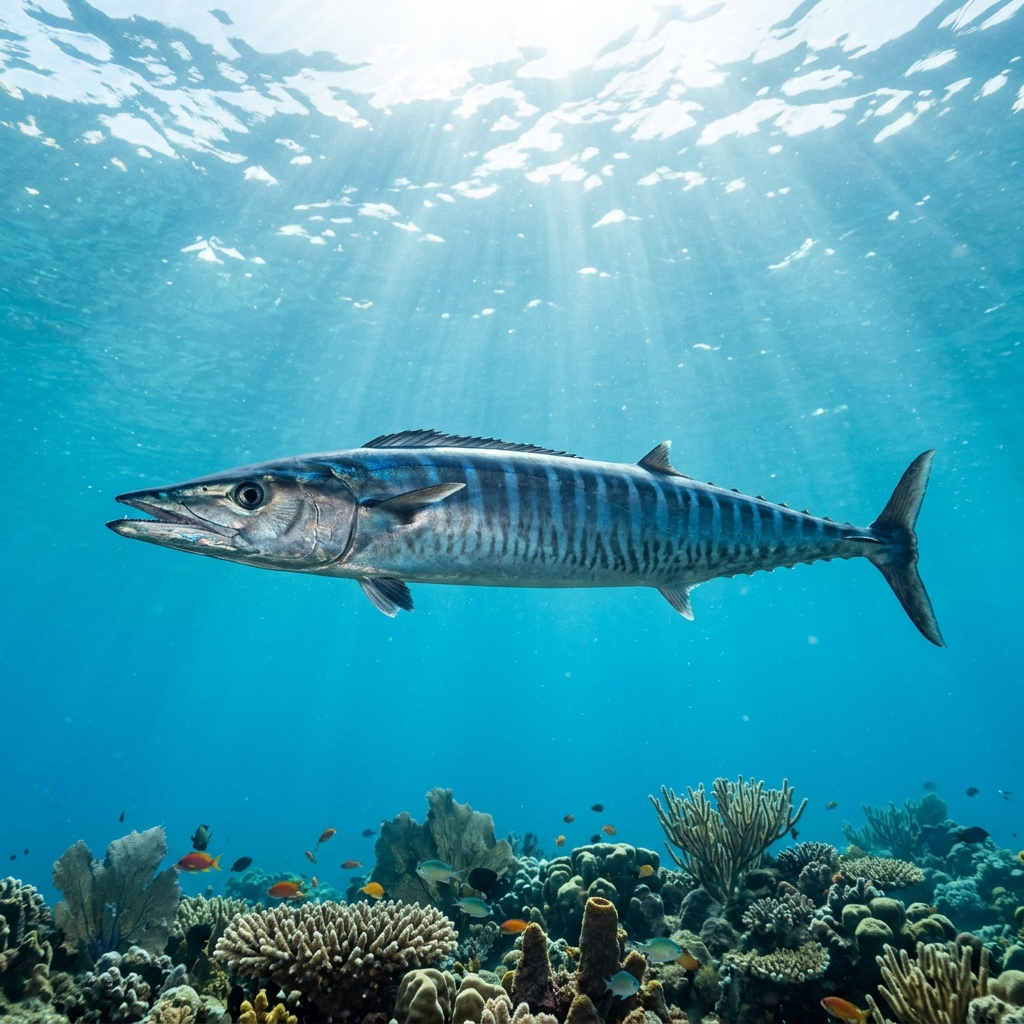
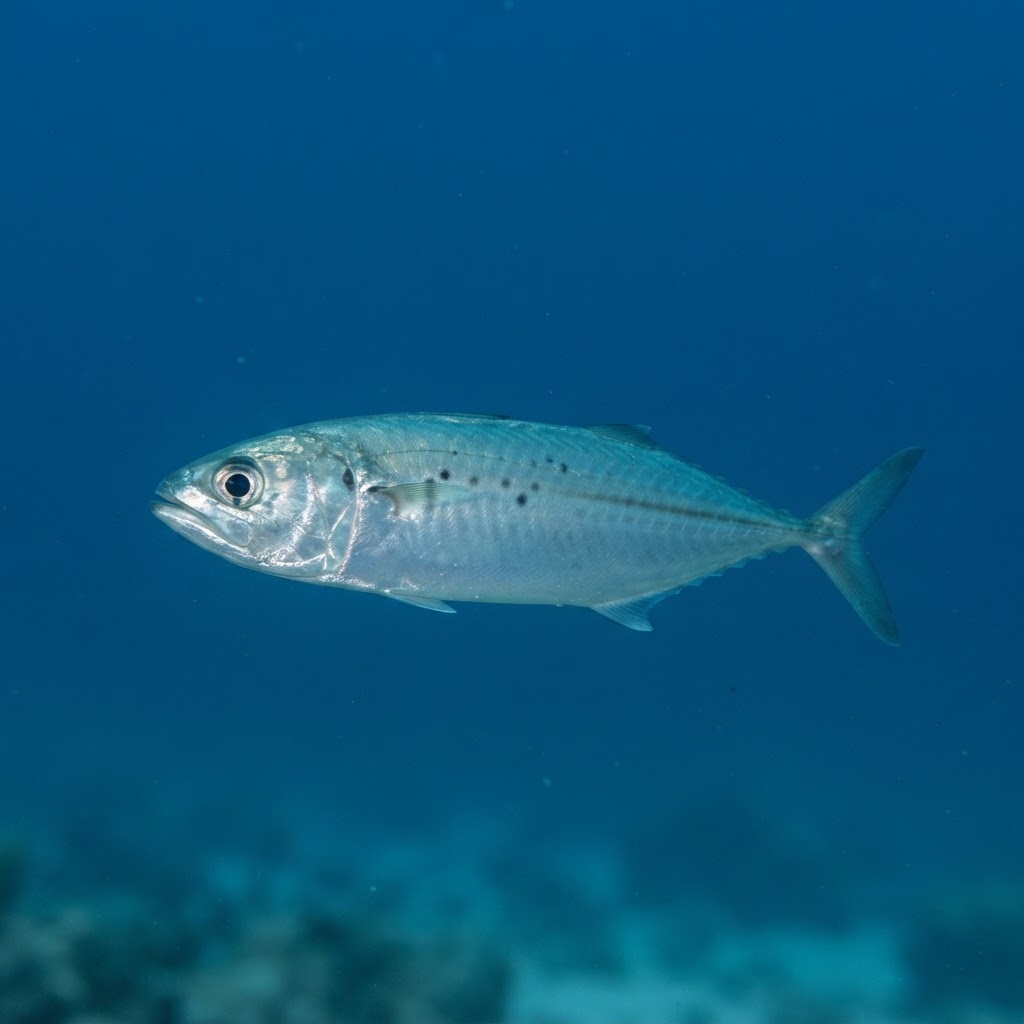
Reef neighbours a diver could mistake it for. Use the identification notes above to tell them apart.
Tuna sightings are logged across a huge spread of dive destinations, but they show up most reliably in the Maldives, especially the Northern and Southern Atolls, where blue-water passes and channels concentrate them. Strong numbers also come from the Carolinas and Florida in the United States, the Saronic Gulf and Athens area in Greece, and reefs off Queensland and Western Australia, with solid records too from Italy, Croatia, the Philippines and Indonesia.
Mapping where Tuna is logged…
The Maldives, particularly the Northern and Southern Atolls, produces the most consistent sightings, followed by the Carolinas and Florida in the US, Greece's Saronic Gulf, and reefs off Queensland and Western Australia.
There's no clear seasonal spike in sightings, so tuna can turn up year-round wherever water temperature sits in their comfortable 15 to 29 C range. Focus on channels and current lines rather than a specific month.
Look for a fast-moving, torpedo-shaped fish with silvery sides, a dark bluish back, and a deeply forked tail, often travelling in tight schools through open water rather than hugging the reef.
Size varies widely across the genus, from smaller reef-associated species up to large open-ocean giants, so exact size depends on which species you encounter.
Tuna can keep certain muscles and organs warmer than the surrounding seawater, an unusual trait among fish that helps them sustain high-speed swimming across a wide range of temperatures.
Site and sighting data is aggregated from diver logs, iNaturalist and GBIF. For taxonomy and conservation status:
Cero
183 sites