Rastrelliger kanagurta
Silvery baitfish schools seen most often around Marsa Alam, Egypt, cruising reefs in 24-28°C water year-round.
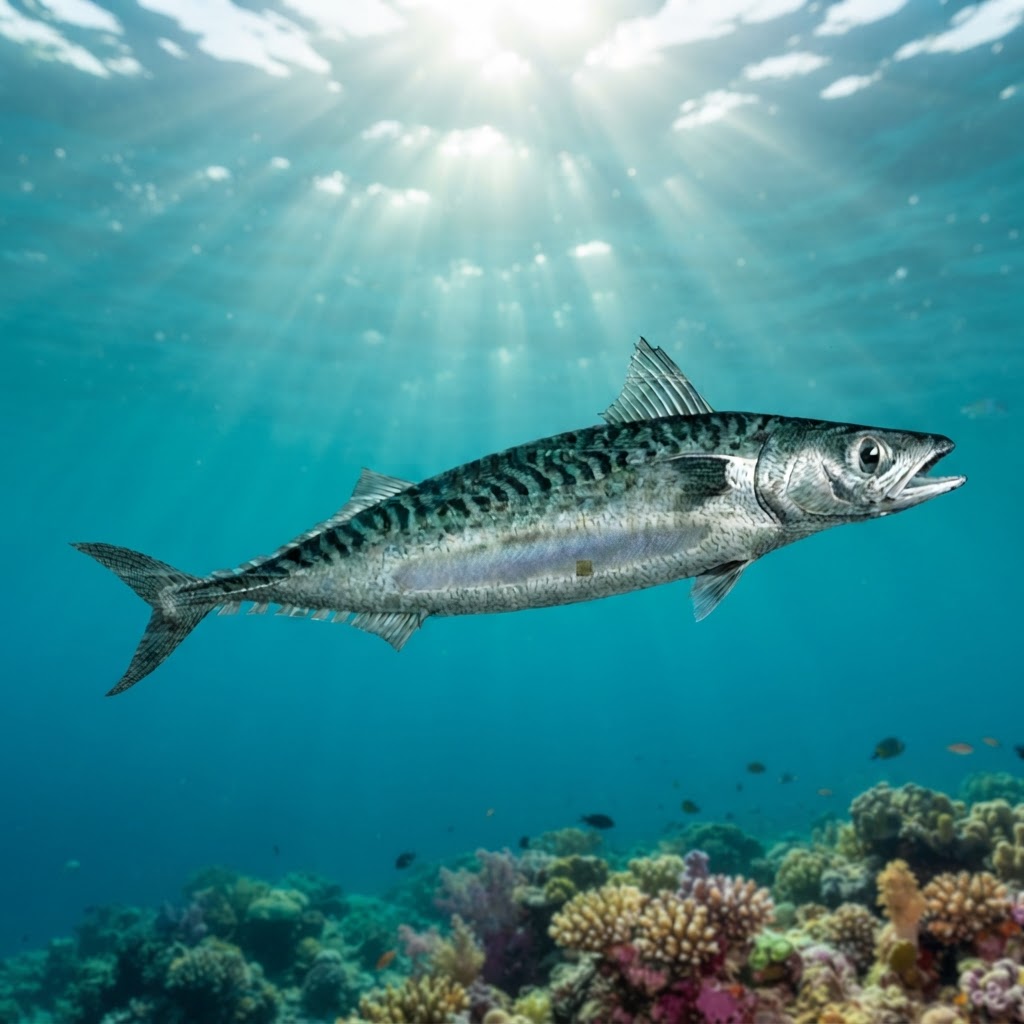
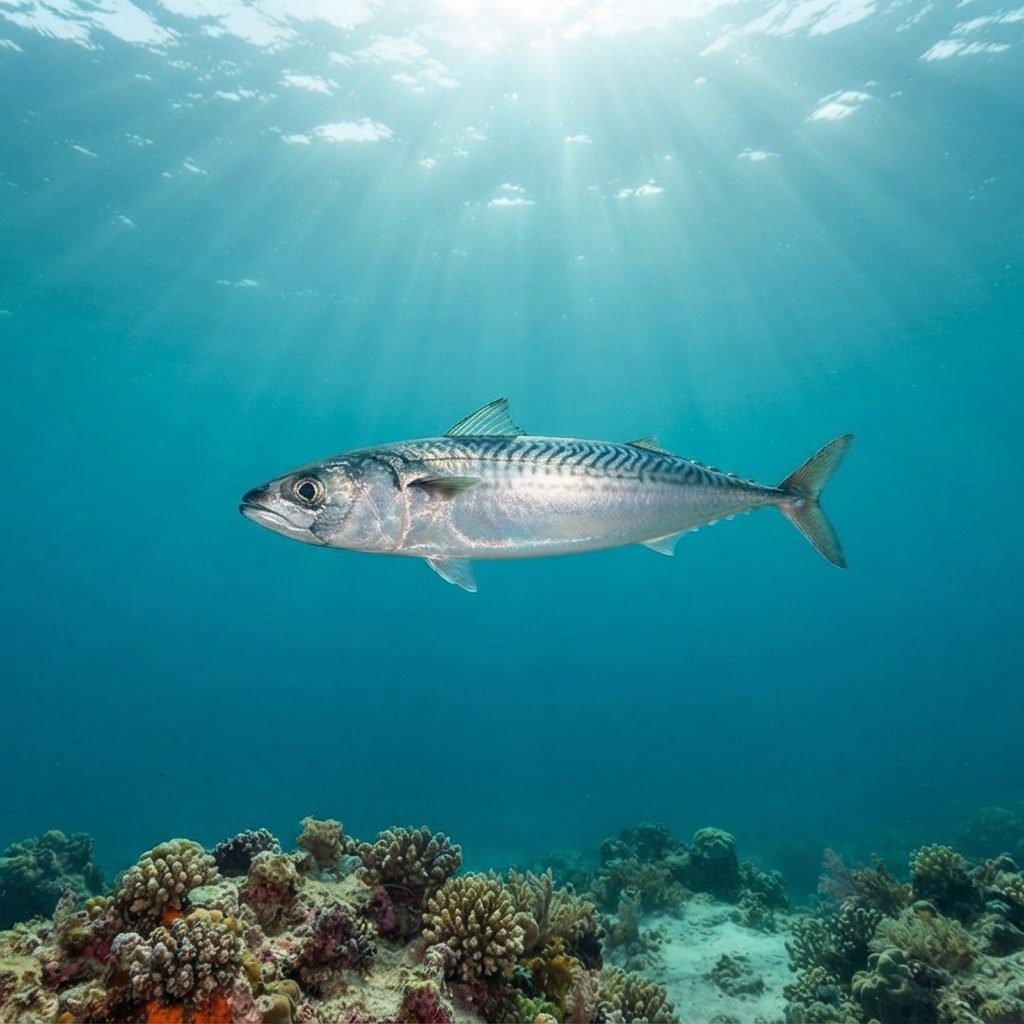
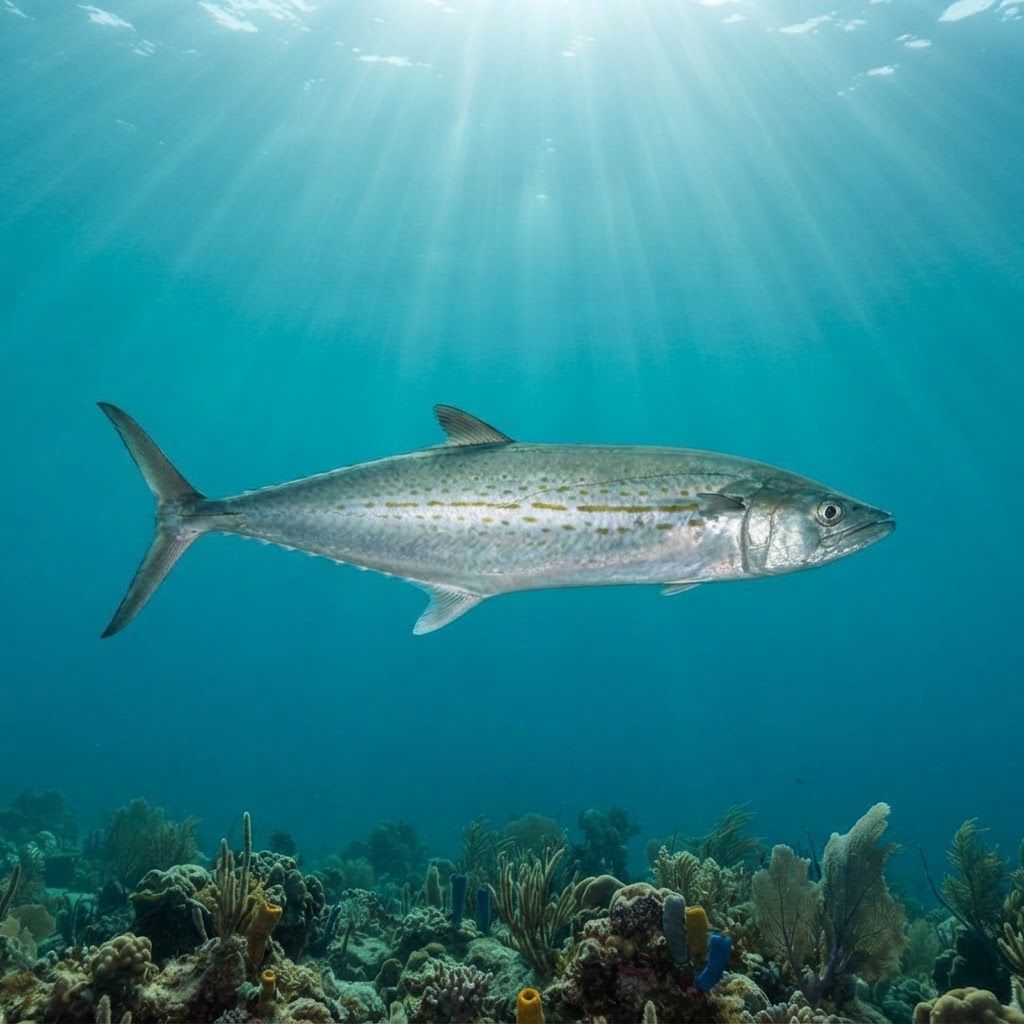
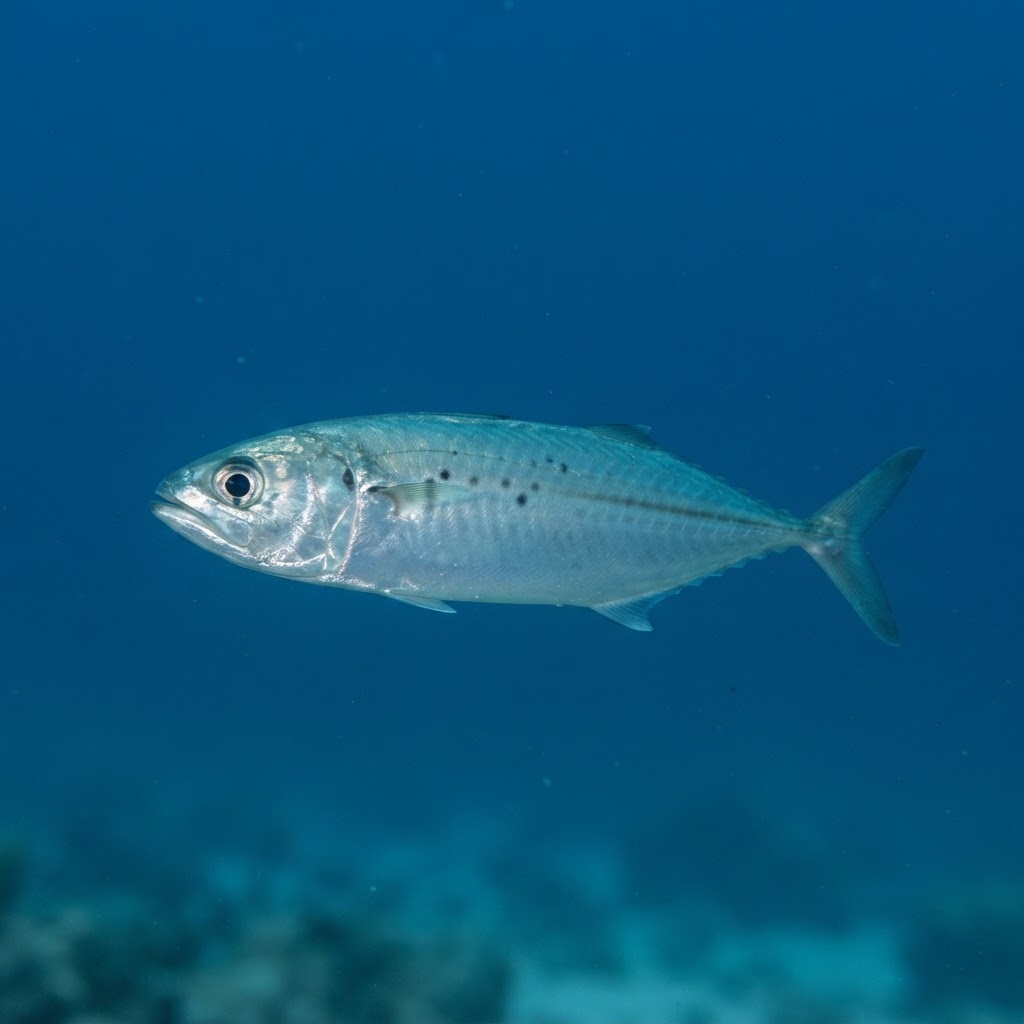
A small, torpedo-shaped fish around 25 cm, silvery on the sides with a greenish-blue back marked by faint dark wavy lines. Look for the yellow stripe that often runs along the midline and the deeply forked tail typical of the mackerel family. They almost always turn up in tight, fast-moving schools rather than alone, which is often the first clue to their identity before you can make out the markings.
Expect to see them moving in loose to tight schools over reef flats and along drop-offs, often mid-water rather than hugging the bottom. They are generally indifferent to divers, holding formation and drifting past rather than scattering, though a school can suddenly tighten up or peel away if a predator like a jack or trevally makes a run at it. Most sightings are logged as an uncommon encounter, so a school passing by is a nice bonus rather than a given on any single dive.
Schooling in tight, coordinated groups is a defence strategy: a mass of flashing silver bodies makes it harder for predators to lock onto any one fish, which is why you often see them scatter and reform rather than bolt in one direction.
No clear seasonal pattern shows up in sightings, so treat this as a year-round fish on tropical and subtropical reefs. It sits comfortably in water between about 24 and 28°C, which covers most of its range for the whole year.
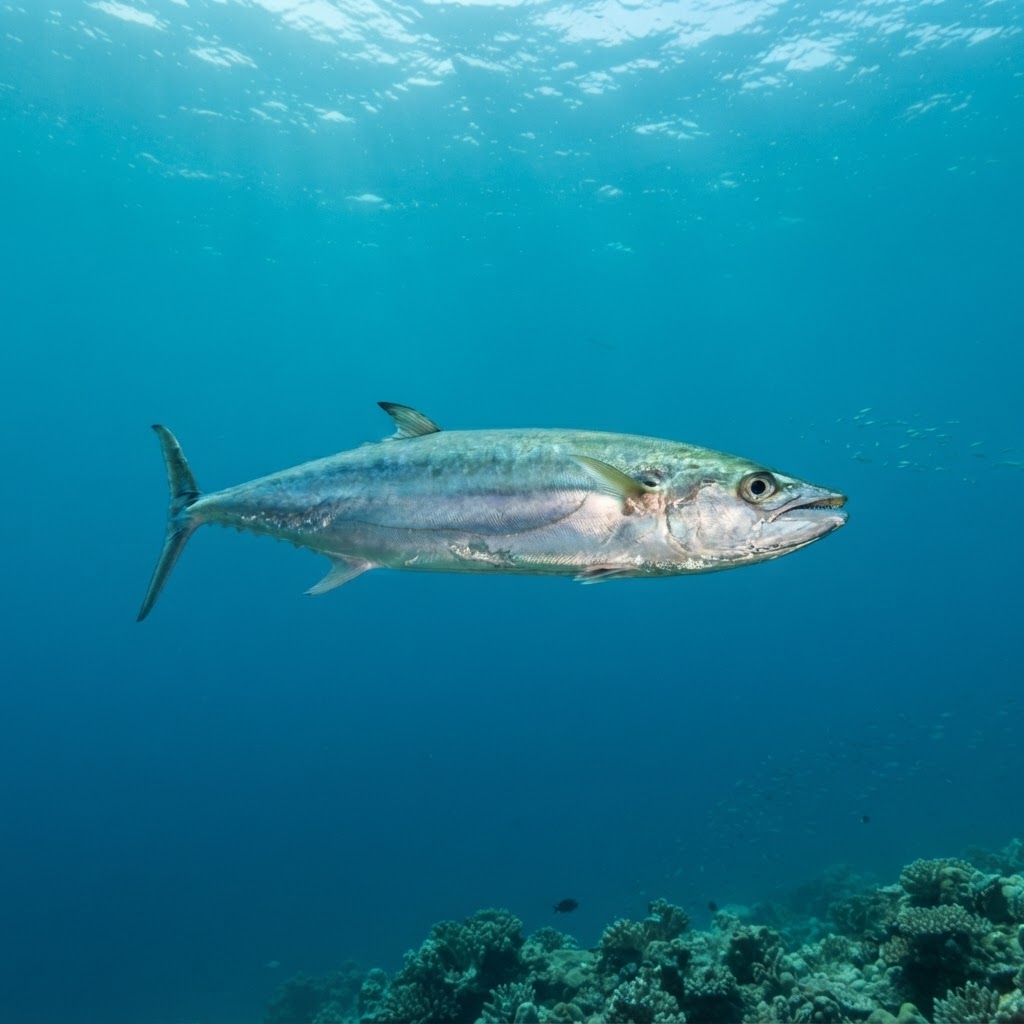
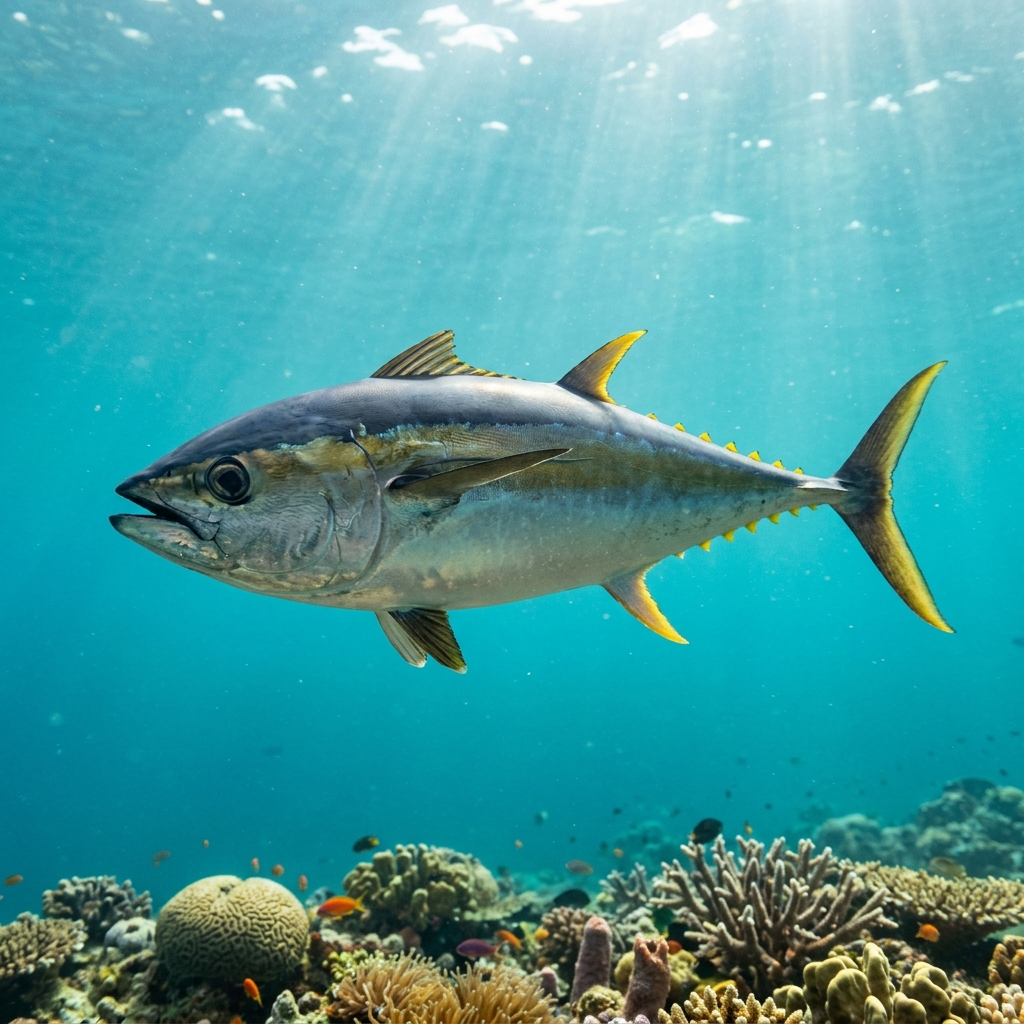
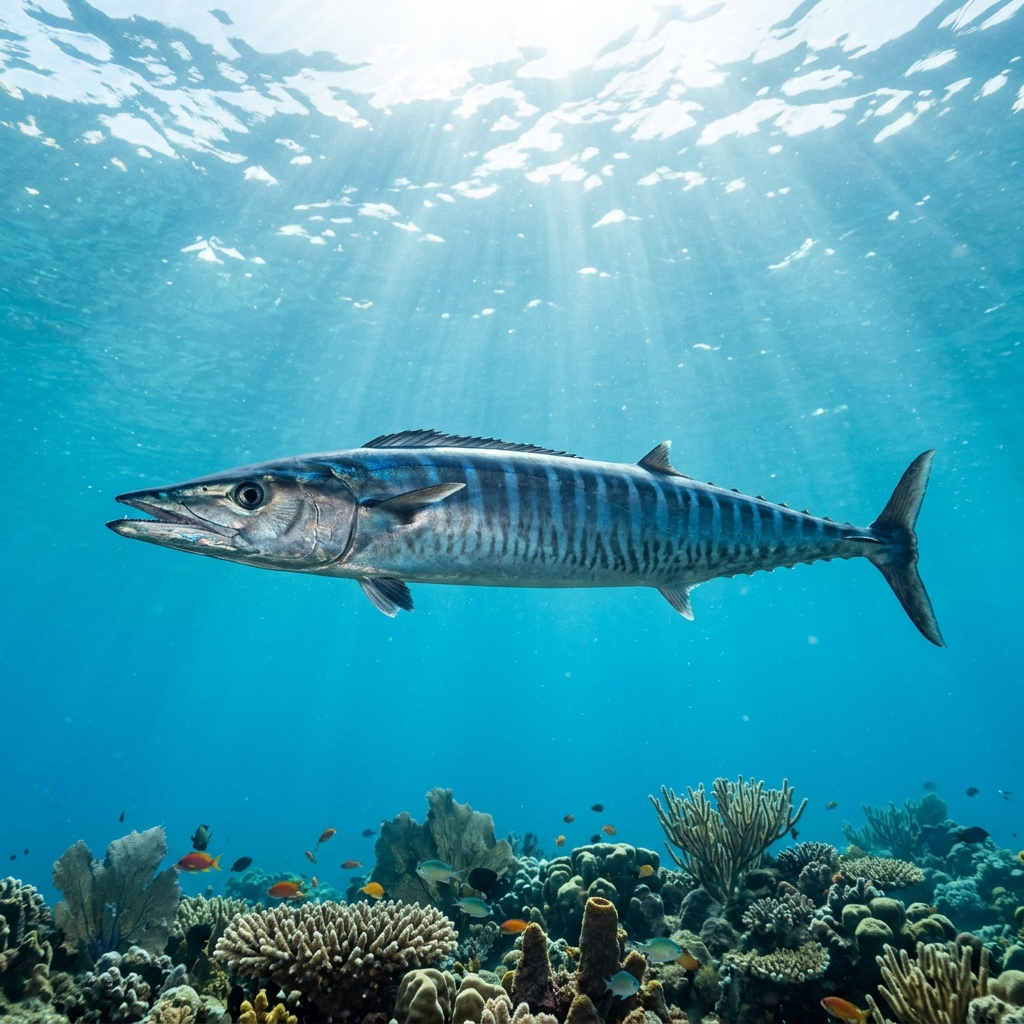
Reef neighbours a diver could mistake it for. Use the identification notes above to tell them apart.
Most reliably logged in Egypt, especially around Marsa Alam and the Deep South and the wider Red Sea Riviera, with strong numbers also in the Visayas region of the Philippines. Indonesia (particularly Sulawesi and Bali), Fiji's Viti Levu, and the Red Sea coast of Saudi Arabia also produce regular sightings, with smaller but steady records from India and the UAE.
Mapping where Indian Mackerel is logged…
Egypt is the standout location, especially Marsa Alam, the Deep South, and the Red Sea Riviera. They are also regularly seen in the Philippines' Visayas region, Indonesia (Sulawesi and Bali), Fiji's Viti Levu, and along the Saudi Red Sea coast.
There is no strong seasonal pattern in sightings, so they are considered a year-round species on the reefs where they occur. Warm water between roughly 24 and 28°C suits them for most of the year across their range.
Look for small silvery fish around 25 cm long, schooling tightly, with a greenish-blue back showing faint wavy dark lines and often a yellow stripe along the side. The forked tail and habit of moving in coordinated groups are good extra clues.
They are a small mackerel, typically reaching around 25 cm in length, so a school of them looks like a shifting cloud of similarly sized silver fish rather than anything large or imposing.
No, they pose no threat to divers. They are fast-moving schooling fish that keep their distance and show no aggressive behaviour towards people in the water.
Site and sighting data is aggregated from diver logs, iNaturalist and GBIF. For taxonomy and conservation status:
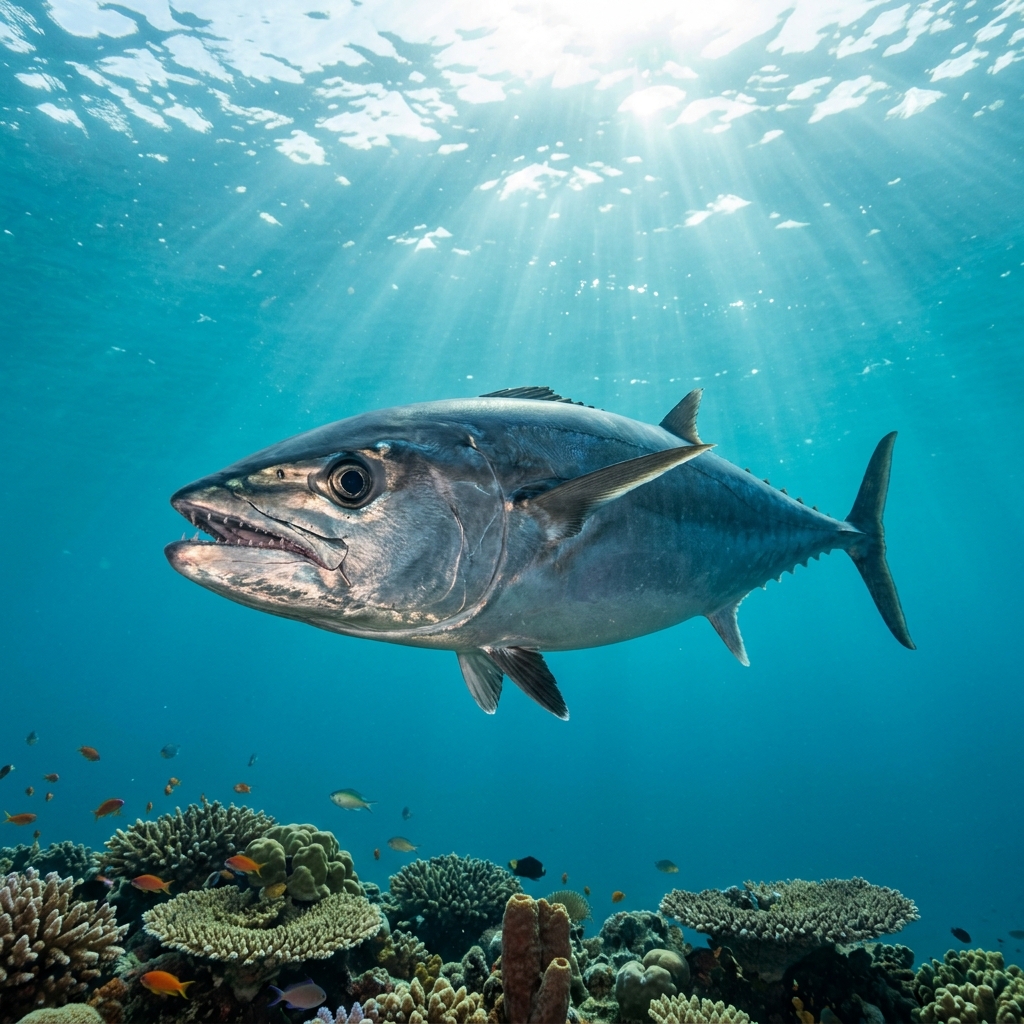
Dogtooth Tuna
629 sites