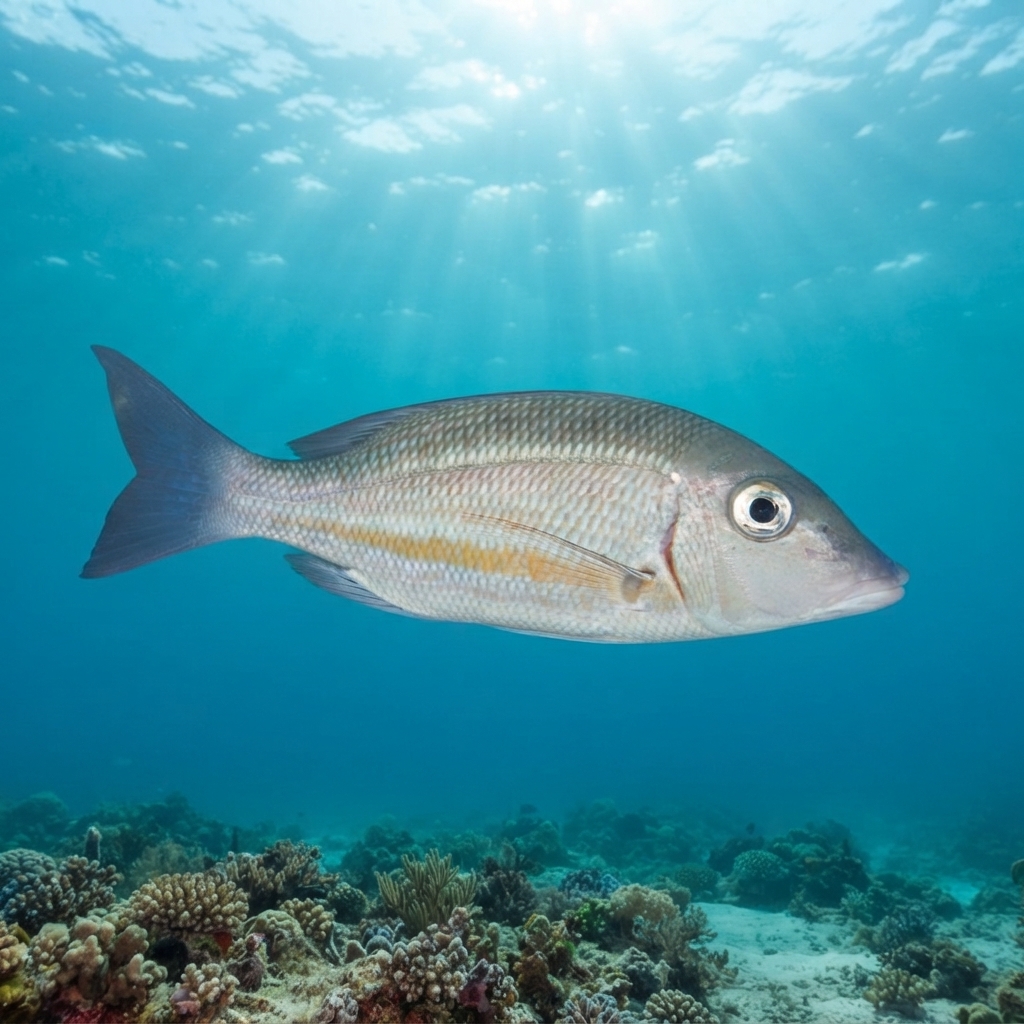
Lethrinus obsoletus
Common on Maldives house reefs and Egypt's Red Sea, this emperor sits at 26-29C on sandy reef edges year-round.
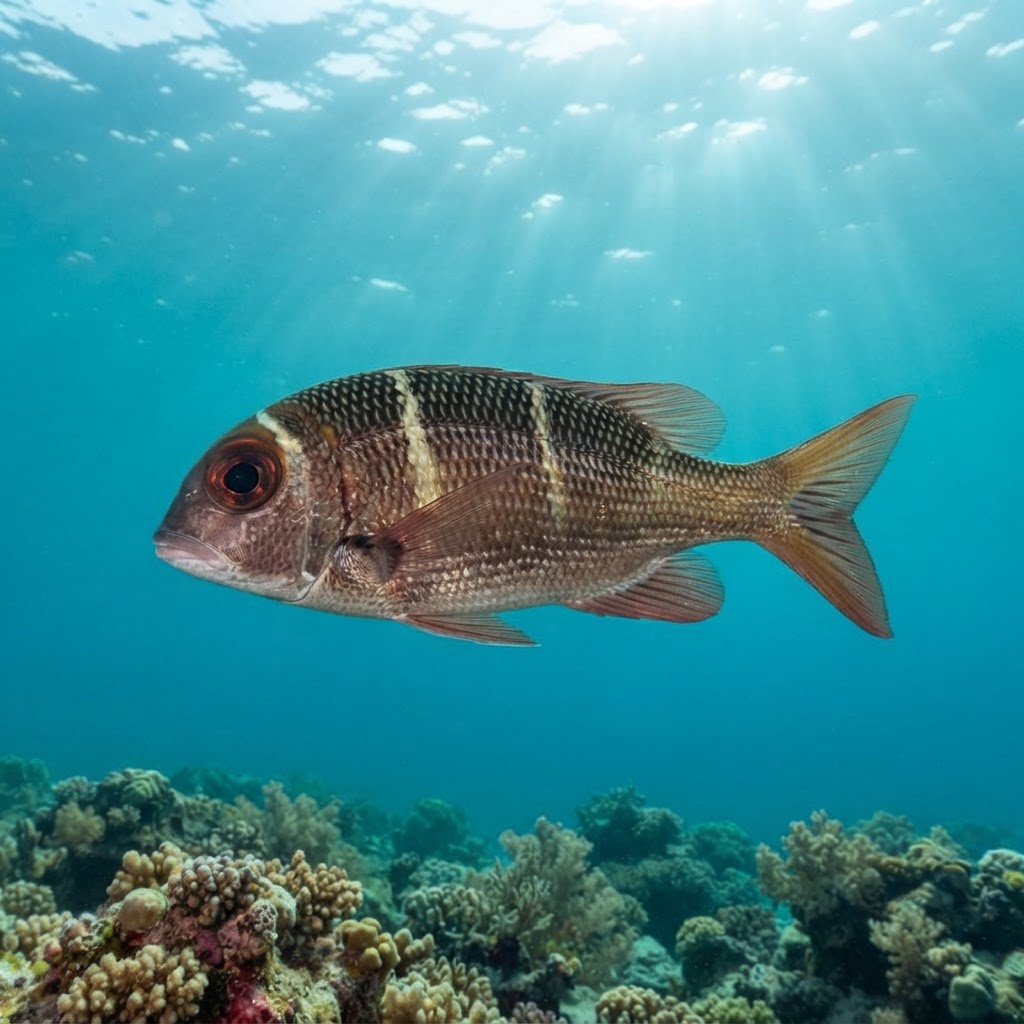
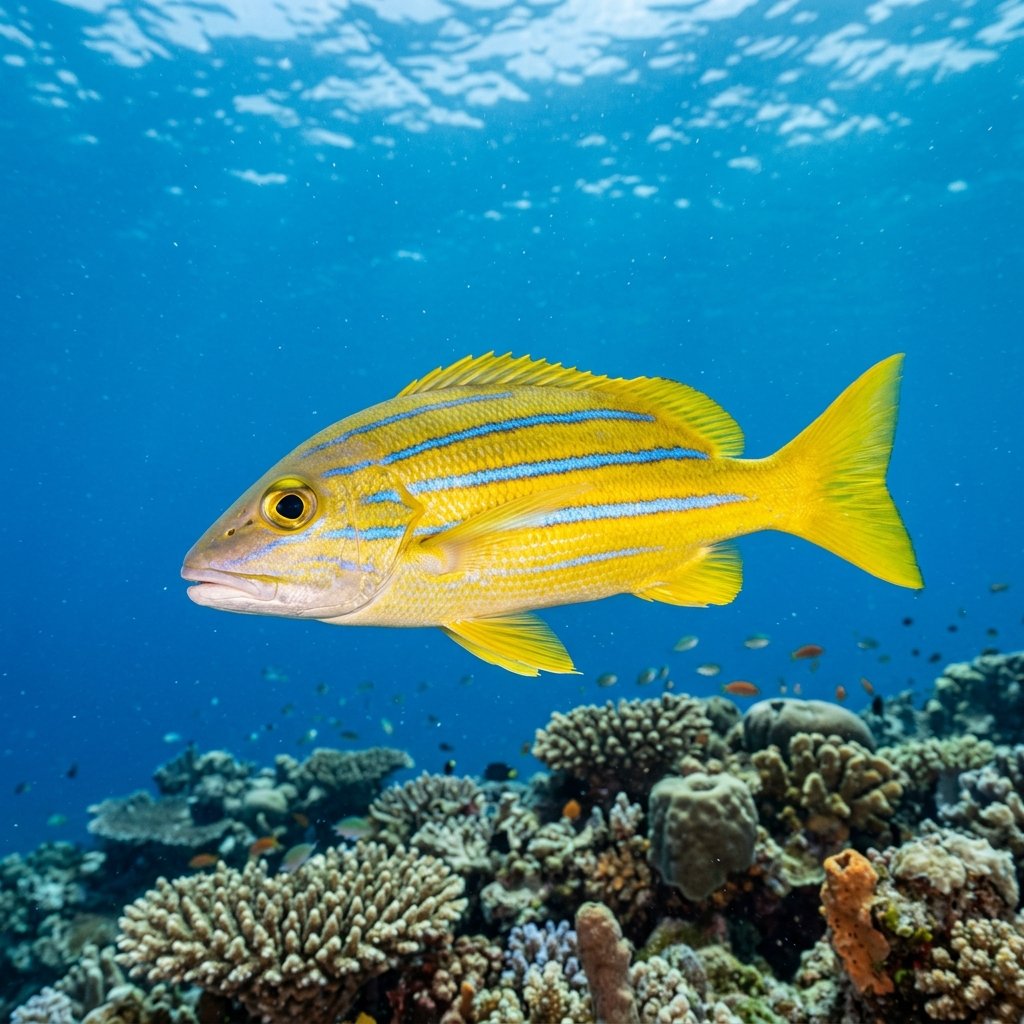
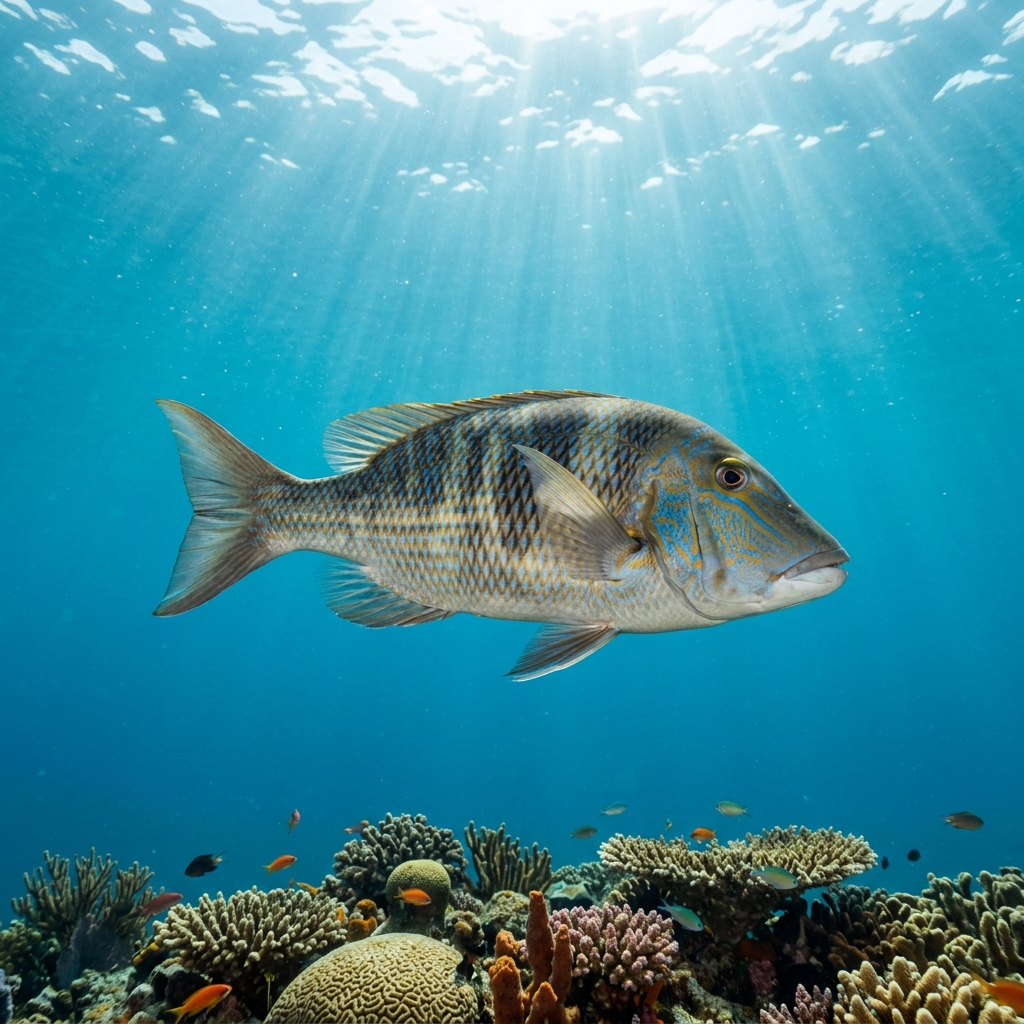
Grows to around 42cm, with a slim, slightly elongated body typical of emperors and a pale grey-brown base colour broken by faint orange-yellow horizontal stripes running along the flanks. The snout is pointed and the lips often look thick and pale, a useful cue when the stripes are hard to make out in low light. It tends to hover just off the substrate rather than tucking tight into coral, which helps separate it from more reef-bound look-alikes.
Usually seen cruising slowly over sand patches and rubble at the edge of the reef, often alone or in loose small groups, picking over the bottom for food rather than schooling in open water. It keeps a fairly relaxed distance from divers, drifting off rather than bolting, which gives you a decent window to get a look at the stripe pattern before it moves on.
Like other emperors, it forages by picking invertebrates off sand and rubble rather than grazing coral, so you're more likely to spot it working the sandy fringes of a reef than sitting on the coral itself.
No clear seasonal pattern shows up in the data, and with a comfortable range of 26 to 29C it's present on tropical reefs year-round, so any month works for a sighting.
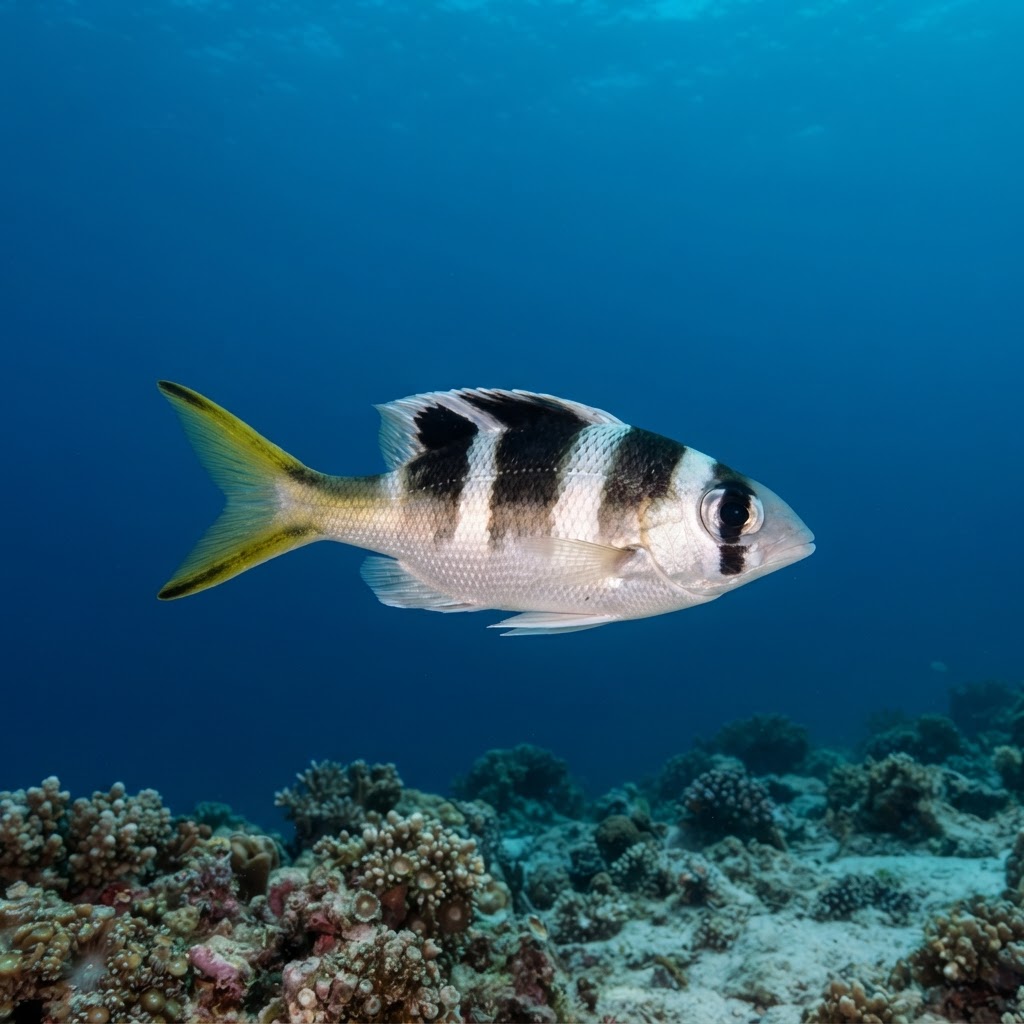
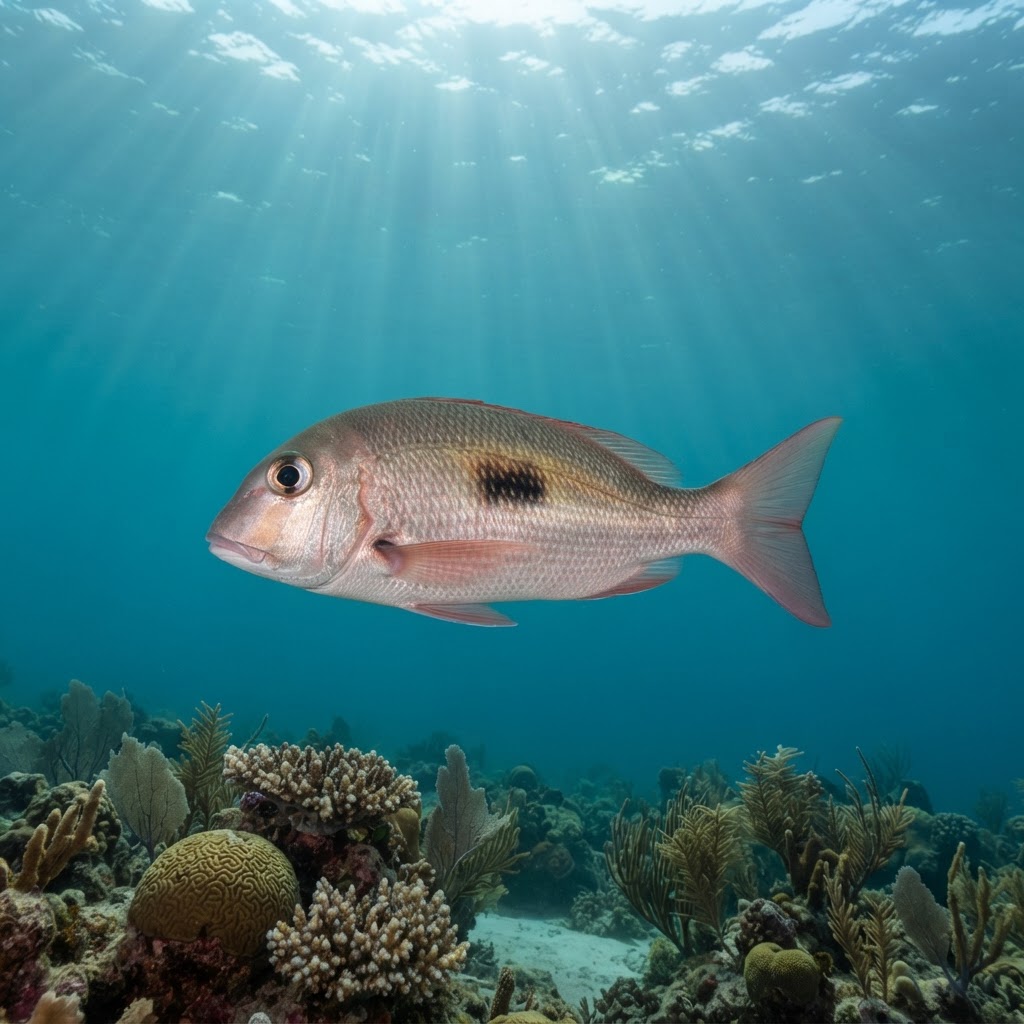
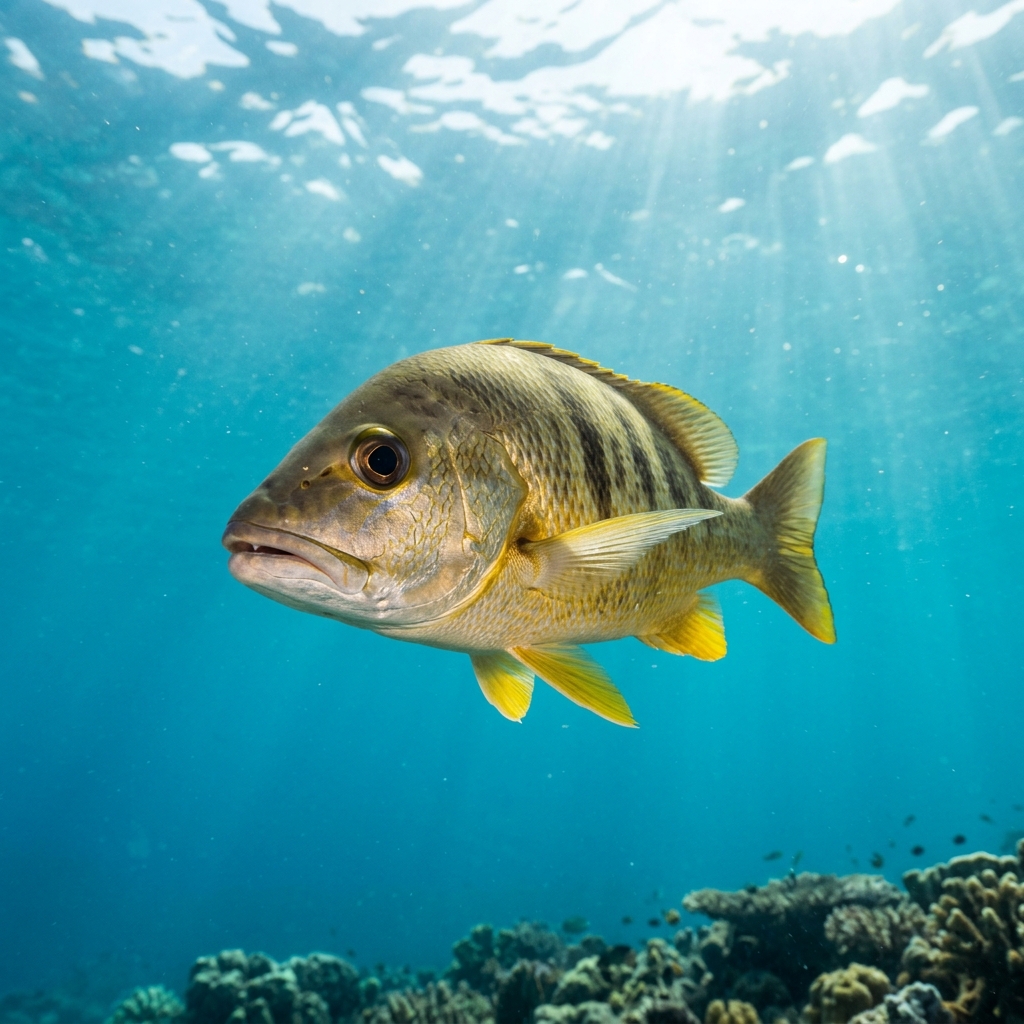
Reef neighbours a diver could mistake it for. Use the identification notes above to tell them apart.
Most reliably logged in the Maldives, especially across the Central Atolls, where it turns up on a wide spread of house reefs and channel dives. Outside the Maldives it's a steady if uncommon find in Egypt's Marsa Alam and the Deep South, around Fiji's Viti Levu, and on reefs in Queensland and Raja Ampat.
Mapping where Orangestriped Emperor is logged…
The strongest sightings come from the Maldives, particularly the Central Atolls, with further records from Egypt's Marsa Alam and Deep South, Fiji's Viti Levu, Queensland, and Raja Ampat.
There's no strong seasonal signal in the data, and it sits comfortably in 26 to 29C water, so it's a year-round sighting on the reefs where it occurs rather than a seasonal special.
Look for a grey-brown, slightly elongated body around 40cm long with faint orange-yellow stripes along the sides and a pointed snout with pale lips. It's usually seen hovering over sand or rubble near the reef edge rather than hiding in coral.
They typically reach around 42cm in length, a mid-sized reef fish rather than a giant of the emperor family.
No, they pose no danger to divers and will simply move off if you get too close.
Site and sighting data is aggregated from diver logs, iNaturalist and GBIF. For taxonomy and conservation status:
Emperor
2,052 sites