Cryptocentrus cryptocentrus
A small, uncommon burrow-dweller most often logged around Mafia Island, Tanzania, in warm 25 to 29C reef water.
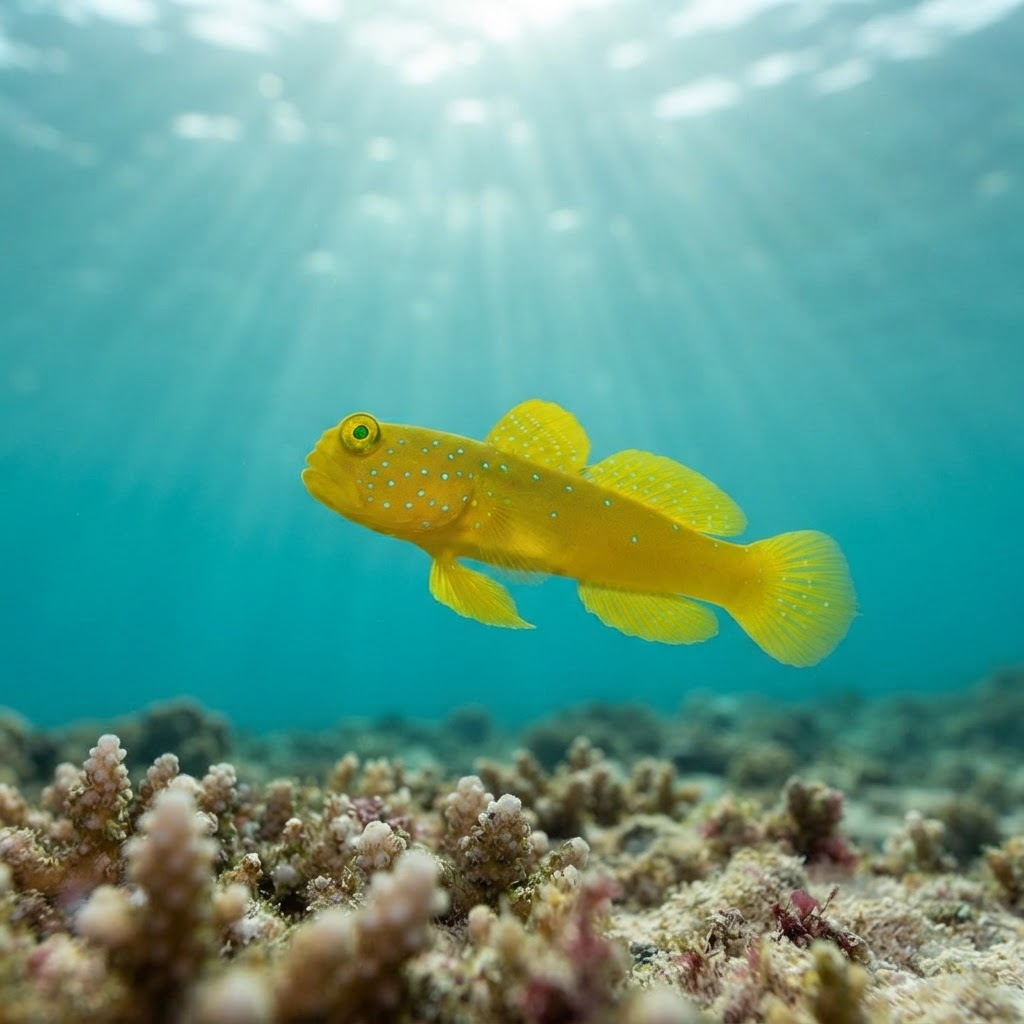
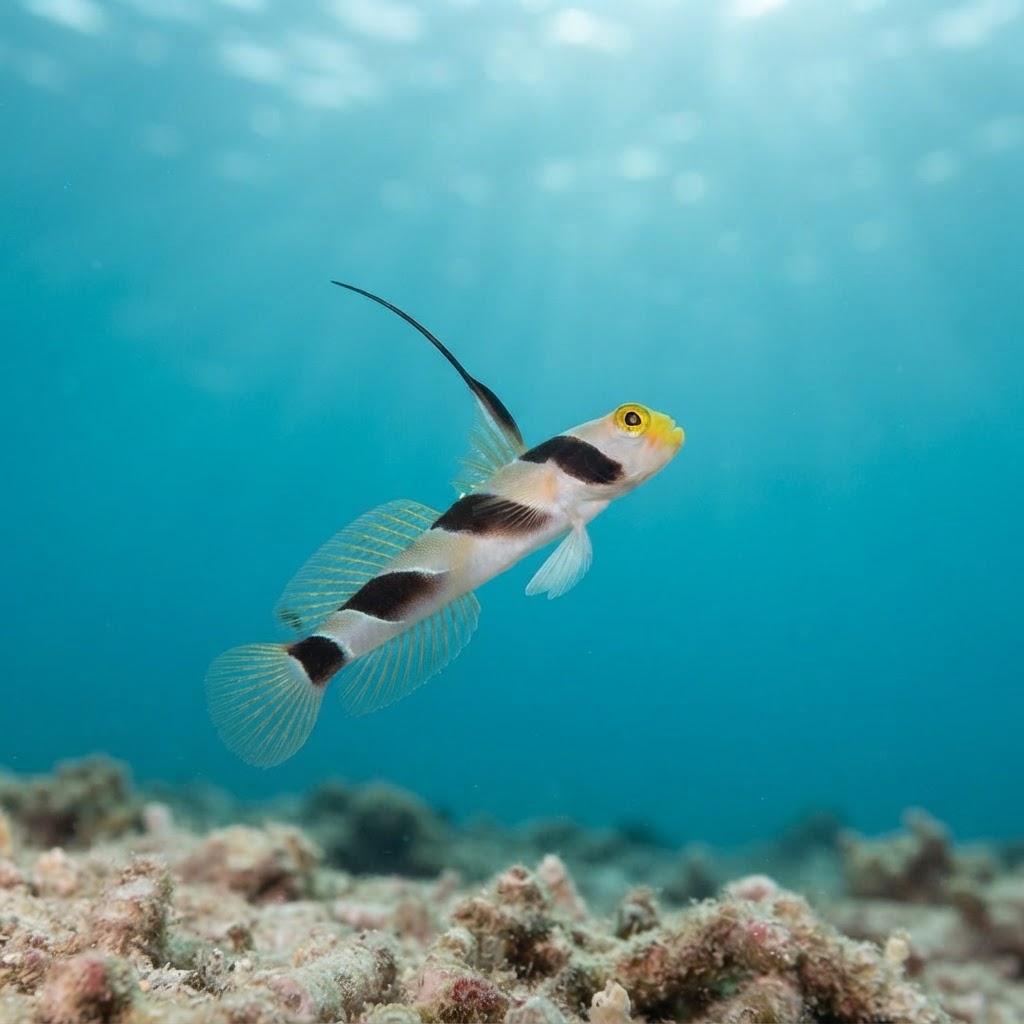
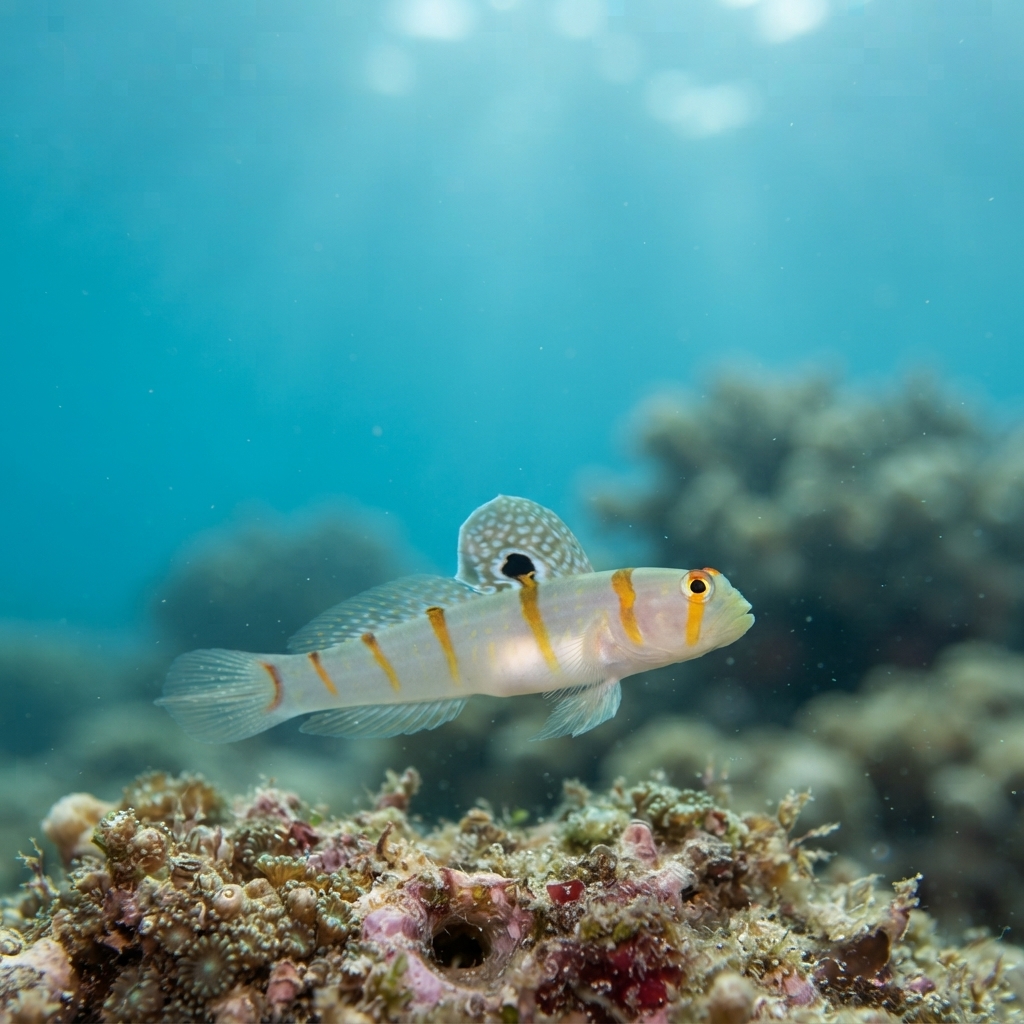
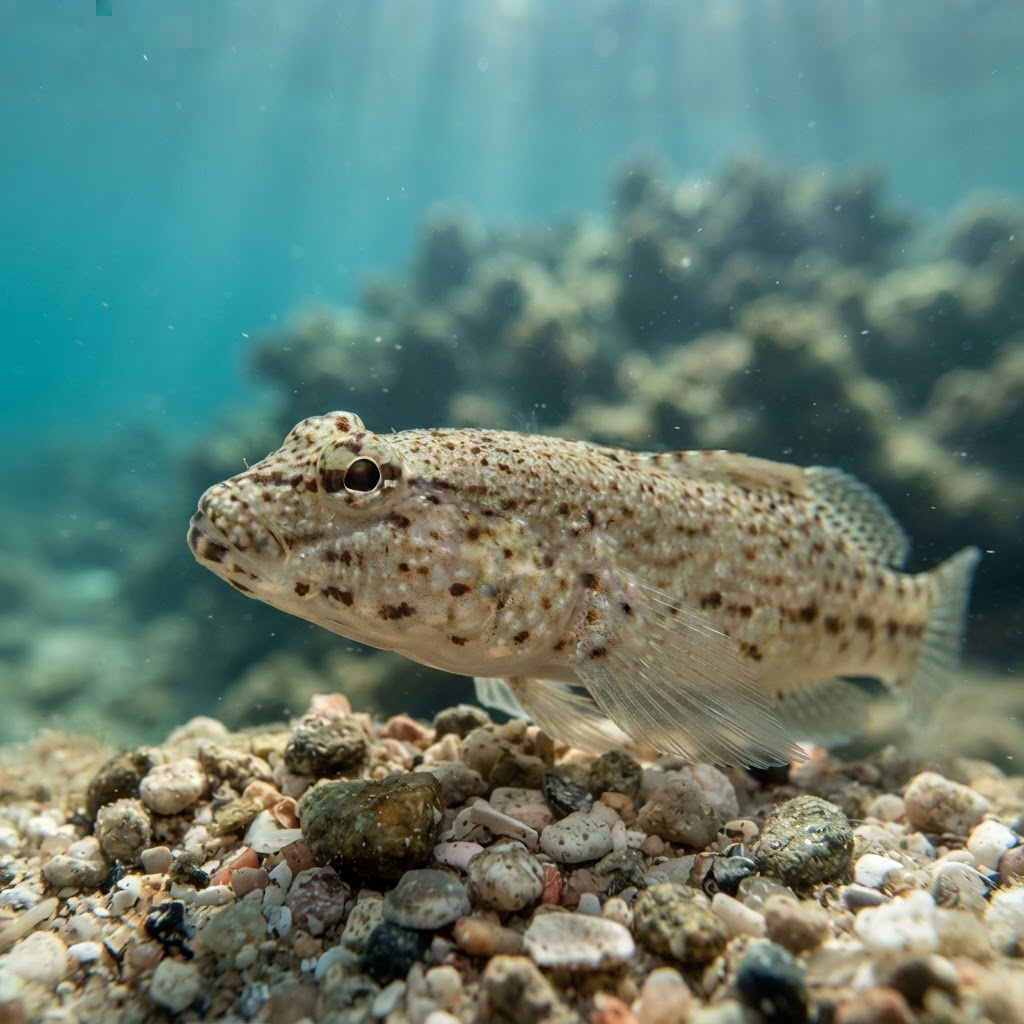
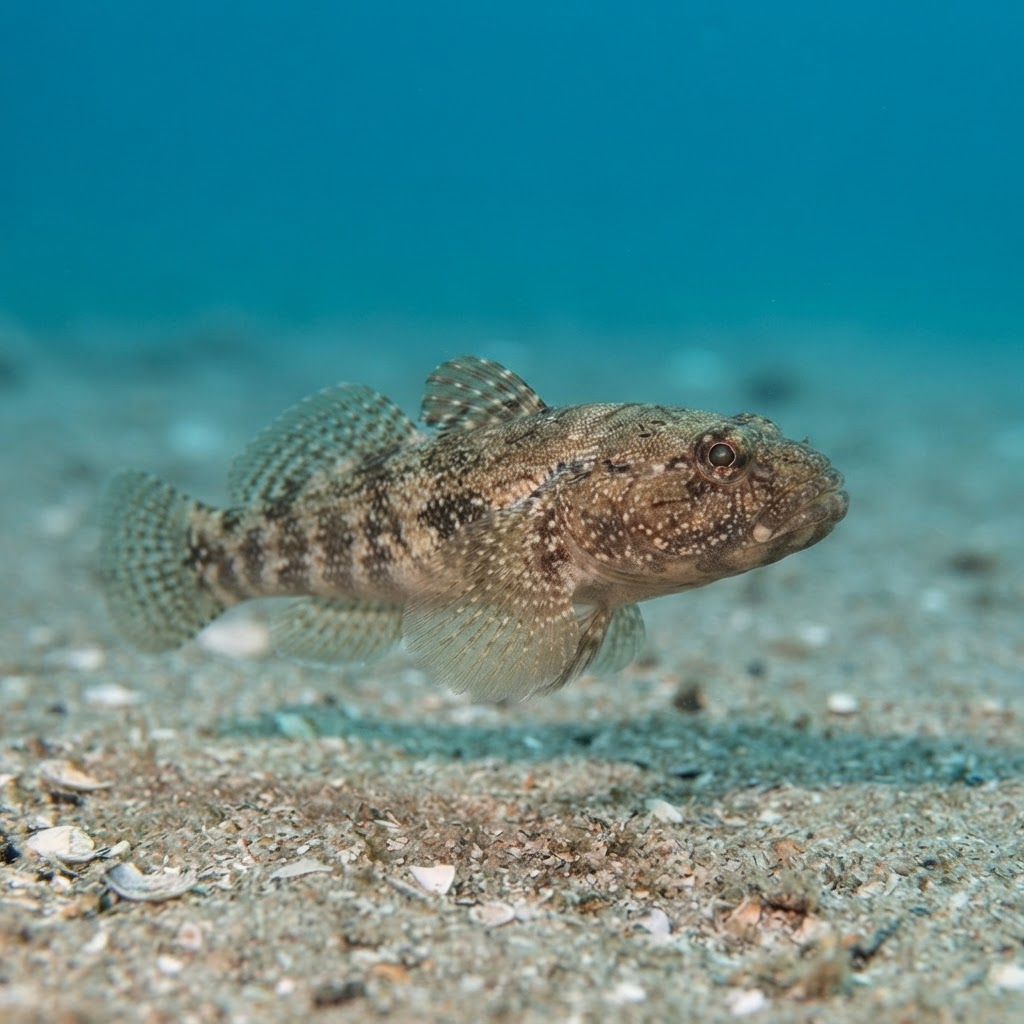
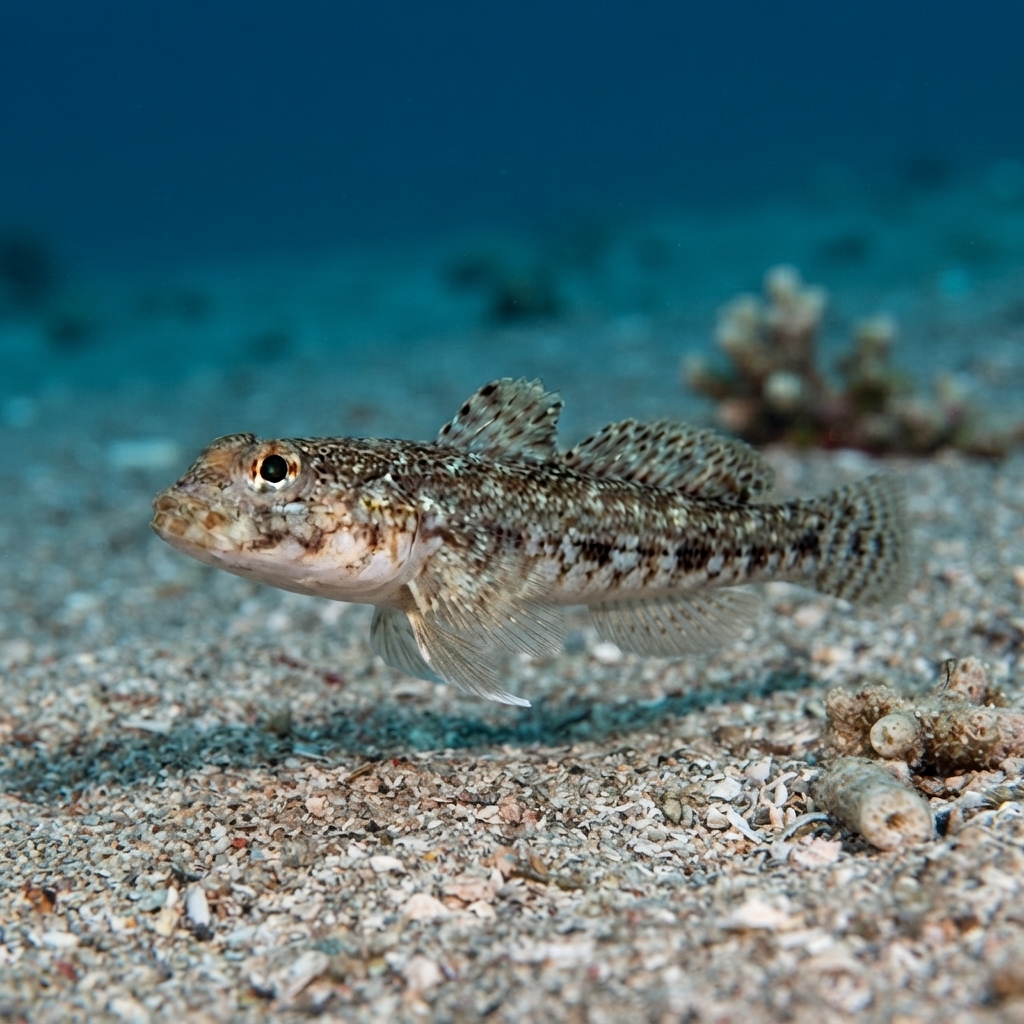
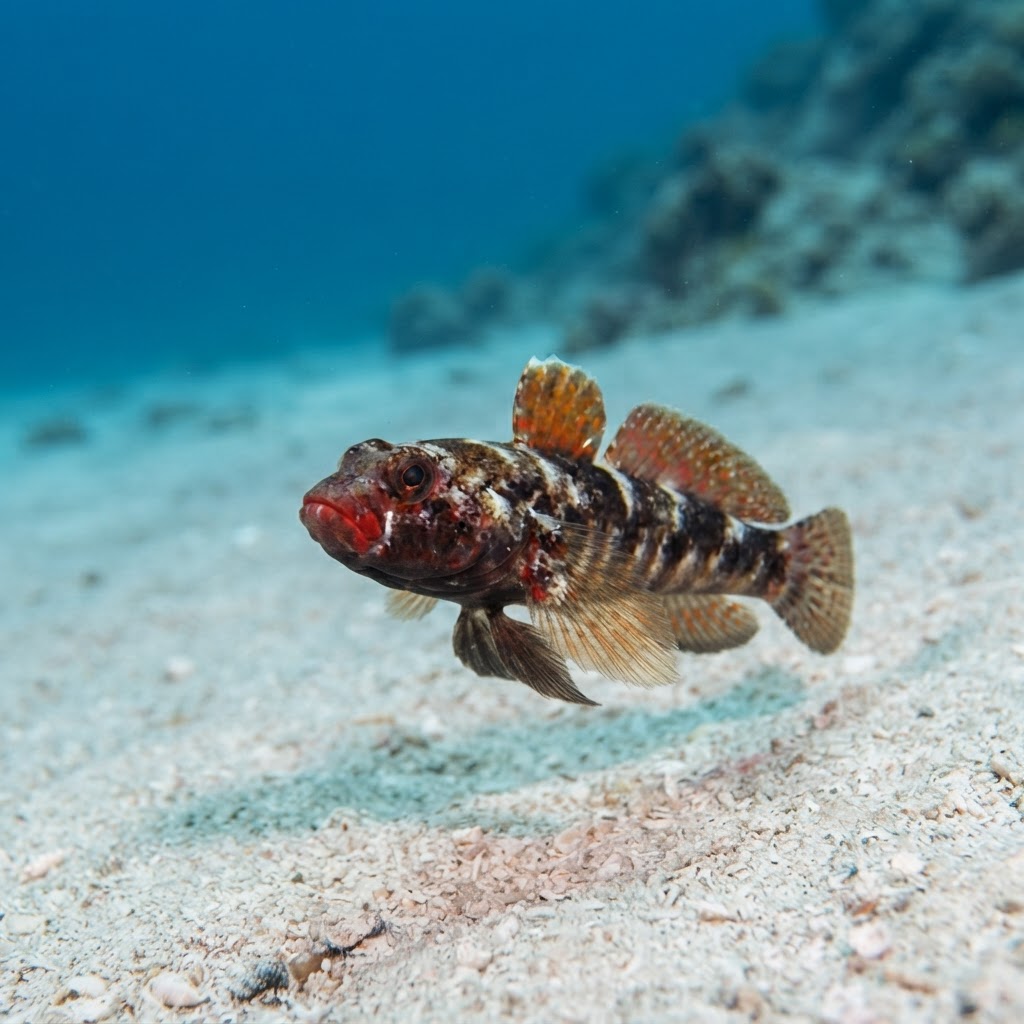
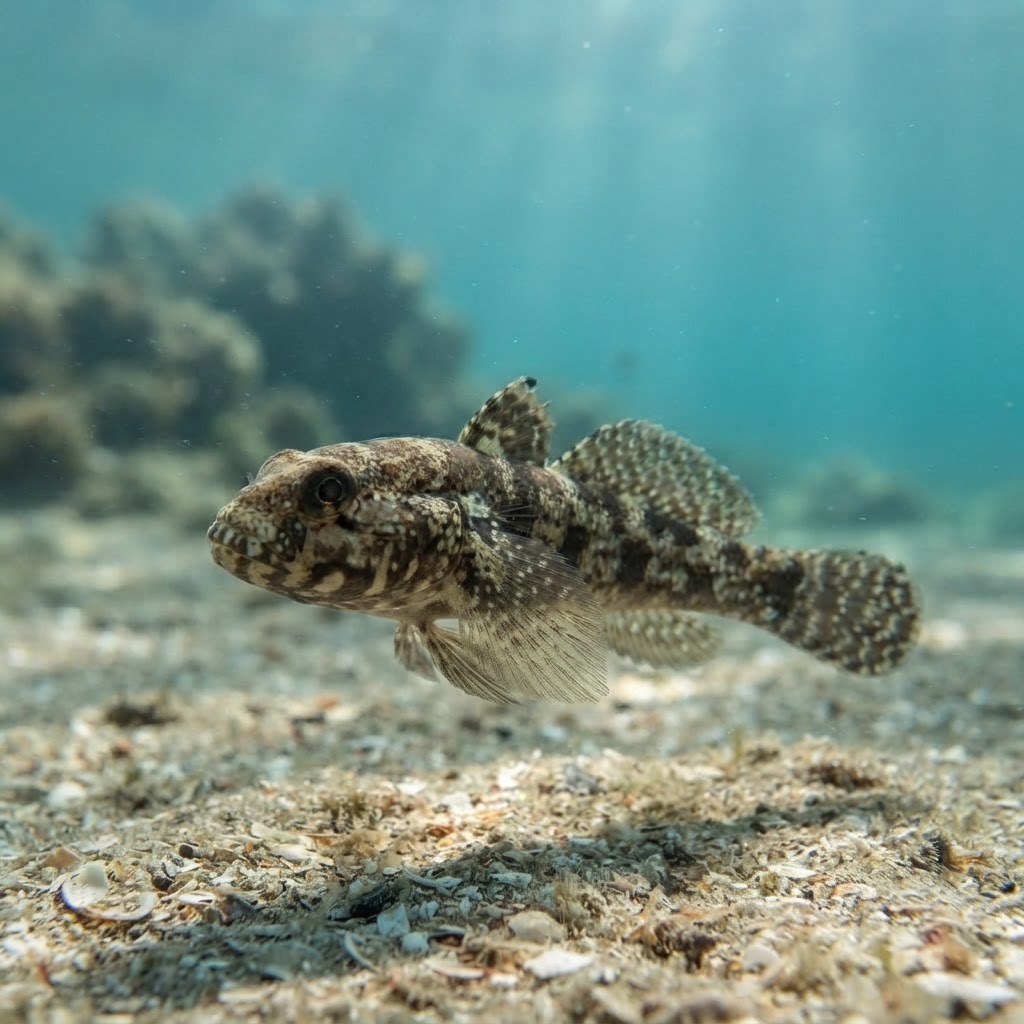
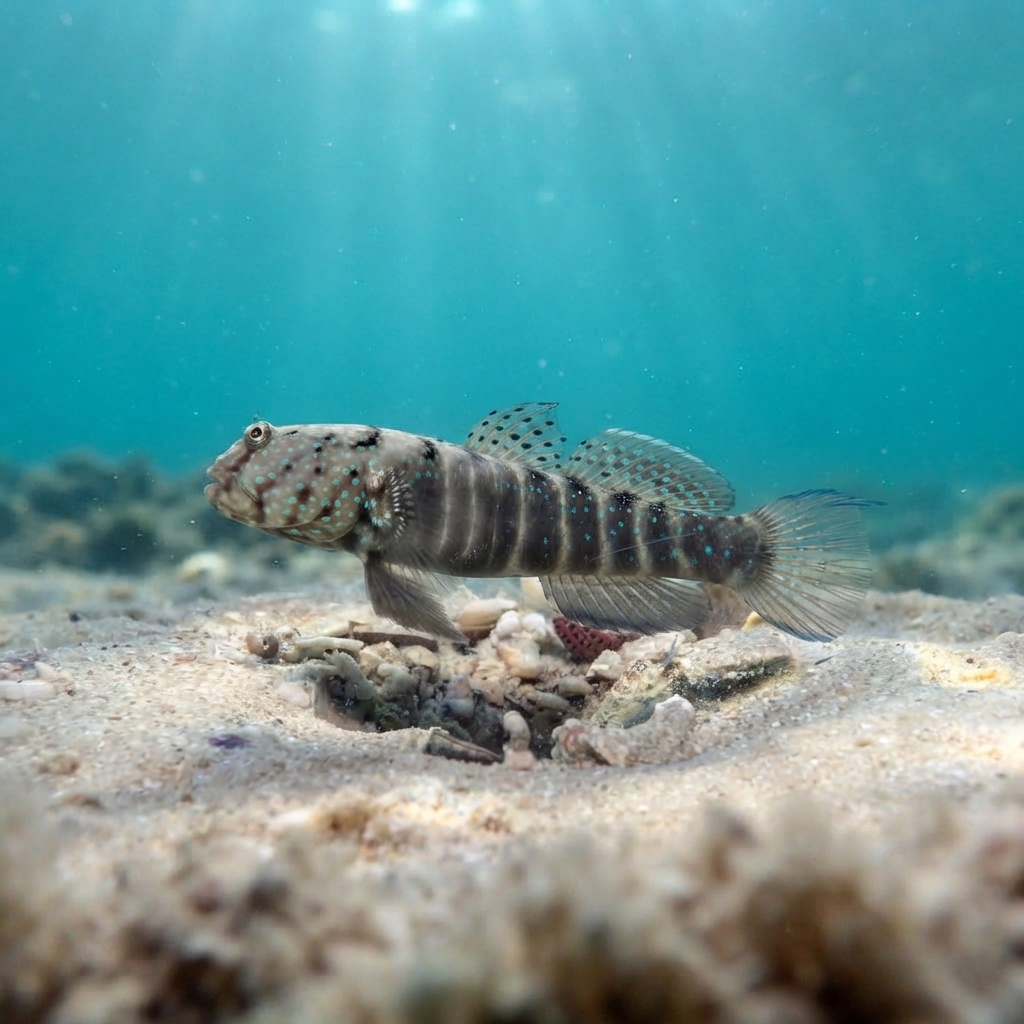
A small goby around 9 cm, usually seen hovering close to a burrow opening on sand or rubble rather than out on open reef. Look for the elongated, torpedo-shaped body typical of shrimp-associated gobies and a wary, low posture ready to dart for cover. Its size and habit of staying tight to a hole are the main underwater cues, since fine colour detail is easy to miss without a close look.
Divers typically find it hovering just above or beside a burrow entrance in sand or rubble, staying alert and quick to retreat if approached too fast. Like many burrow-associated gobies, it likely shares its hole with a shrimp partner, though this hasn't been directly logged for this species here. Slow, low approaches from a distance give you the best chance of watching it linger in the open before it slips underground.
Many gobies in this shrimp-goby group share their burrow with a partially blind shrimp that digs and maintains the hole, while the goby stands guard and signals danger with quick tail flicks, a partnership worth watching for even if unconfirmed for this exact species.
Sightings don't show a clear seasonal pattern, and with water temperatures logged between 24.6 and 29.1C, conditions stay within its comfort range across the year, so treat it as a year-round possibility rather than a seasonal target.
Reef neighbours a diver could mistake it for. Use the identification notes above to tell them apart.
Most diver sightings come from Mafia Island, Tanzania, which accounts for the majority of logged encounters, with a further site recorded in South Sinai, Egypt. If you are set on finding one, sandy and rubble patches around Mafia Island give you the better odds.
Mapping where Ninebar Goby is logged…
It's most reliably logged around Mafia Island in Tanzania, with an additional sighting recorded in South Sinai, Egypt. Sandy or rubble patches near reef structure are the places to check.
There's no strong seasonal pattern in the sighting data, and it's found in water from about 24.6 to 29.1C, so it's a reasonable year-round target on tropical reefs rather than a seasonal specialty.
Look for a small goby, roughly 9 cm, hovering close to a burrow entrance on sand or rubble rather than swimming freely over reef. Its cautious, hole-guarding behaviour is often the easiest clue, since several similar prawn-gobies share a comparable body shape.
They stay small, reaching around 9 cm in length, which is typical for gobies in this shrimp-associated group.
No, they pose no danger to divers. They're shy, retreat quickly into their burrow, and have no venomous or aggressive behaviour toward people.
Site and sighting data is aggregated from diver logs, iNaturalist and GBIF. For taxonomy and conservation status:
Slender Goby
806 sites