Oplegnathus robinsoni
An uncommon reef fish found almost exclusively along KwaZulu-Natal, South Africa, in 23.6 to 26.7 C water year-round.
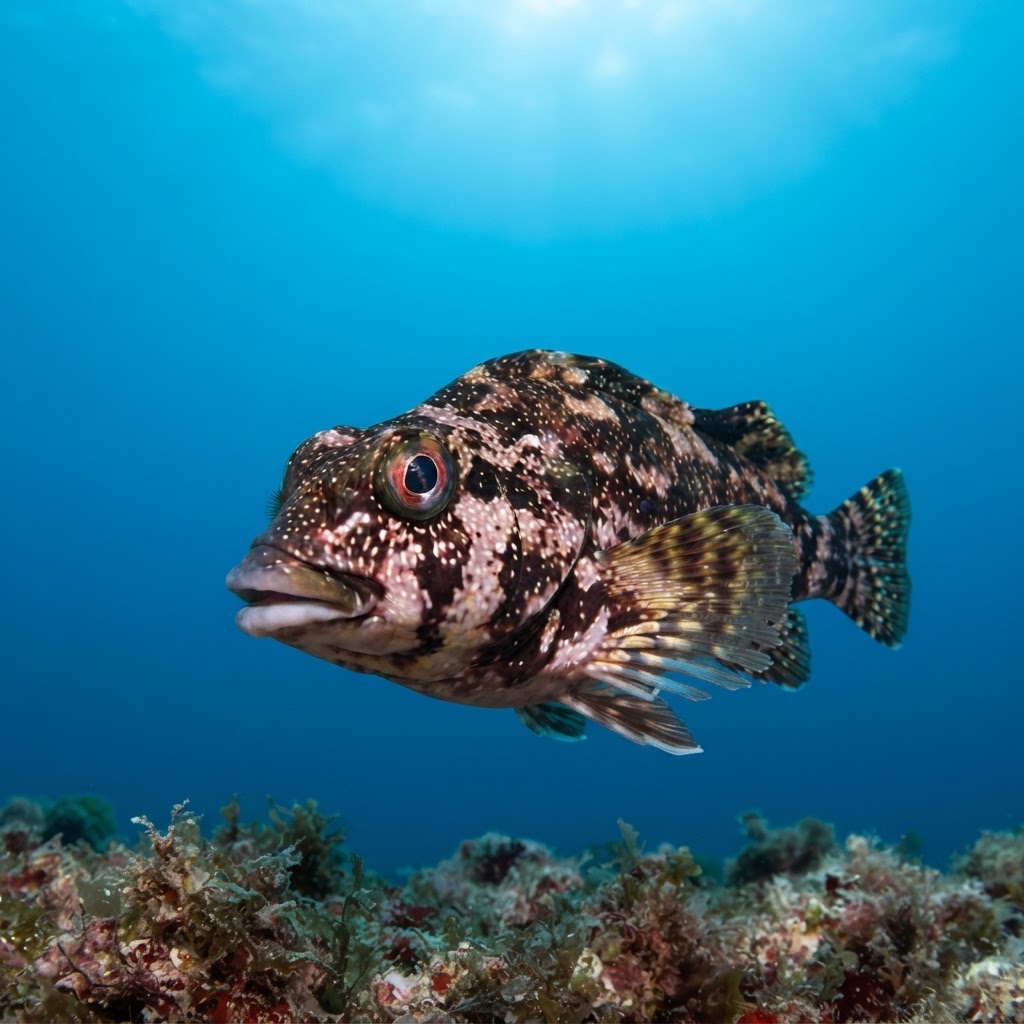
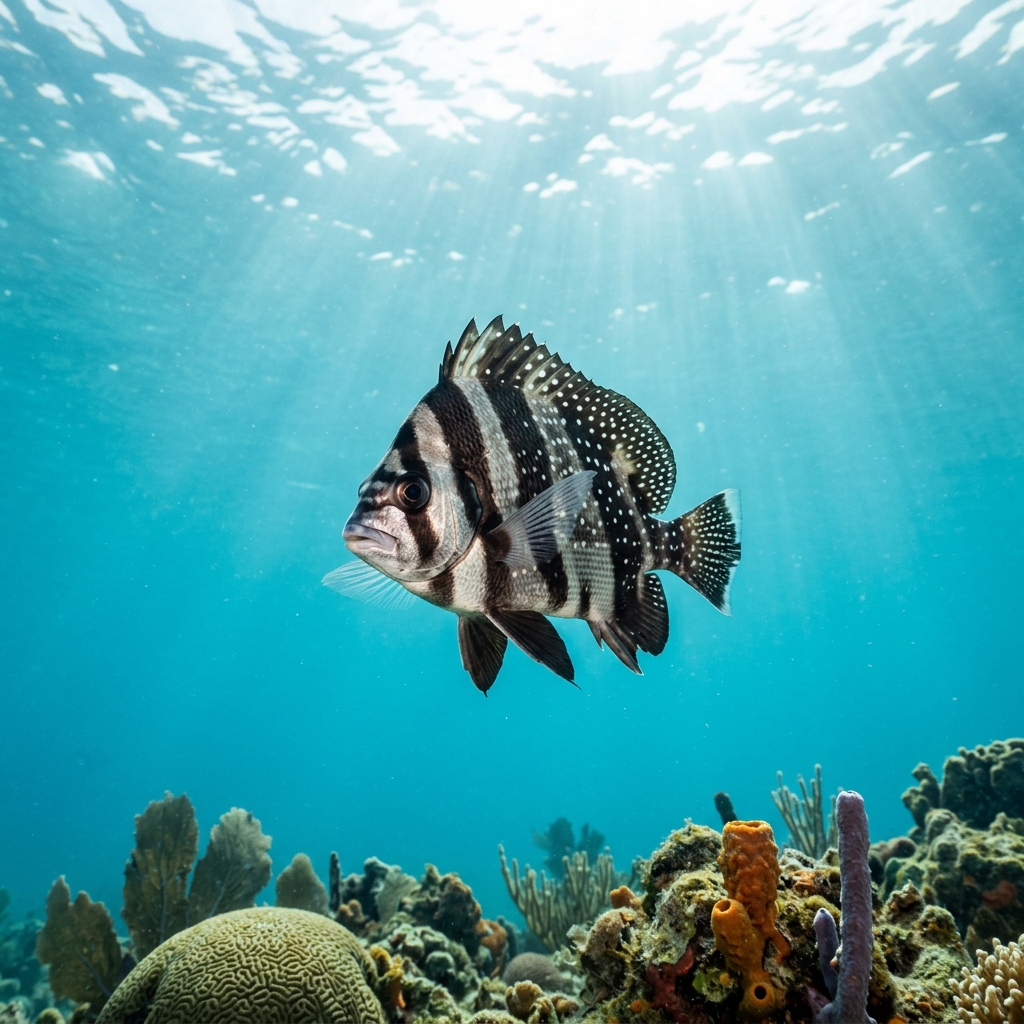
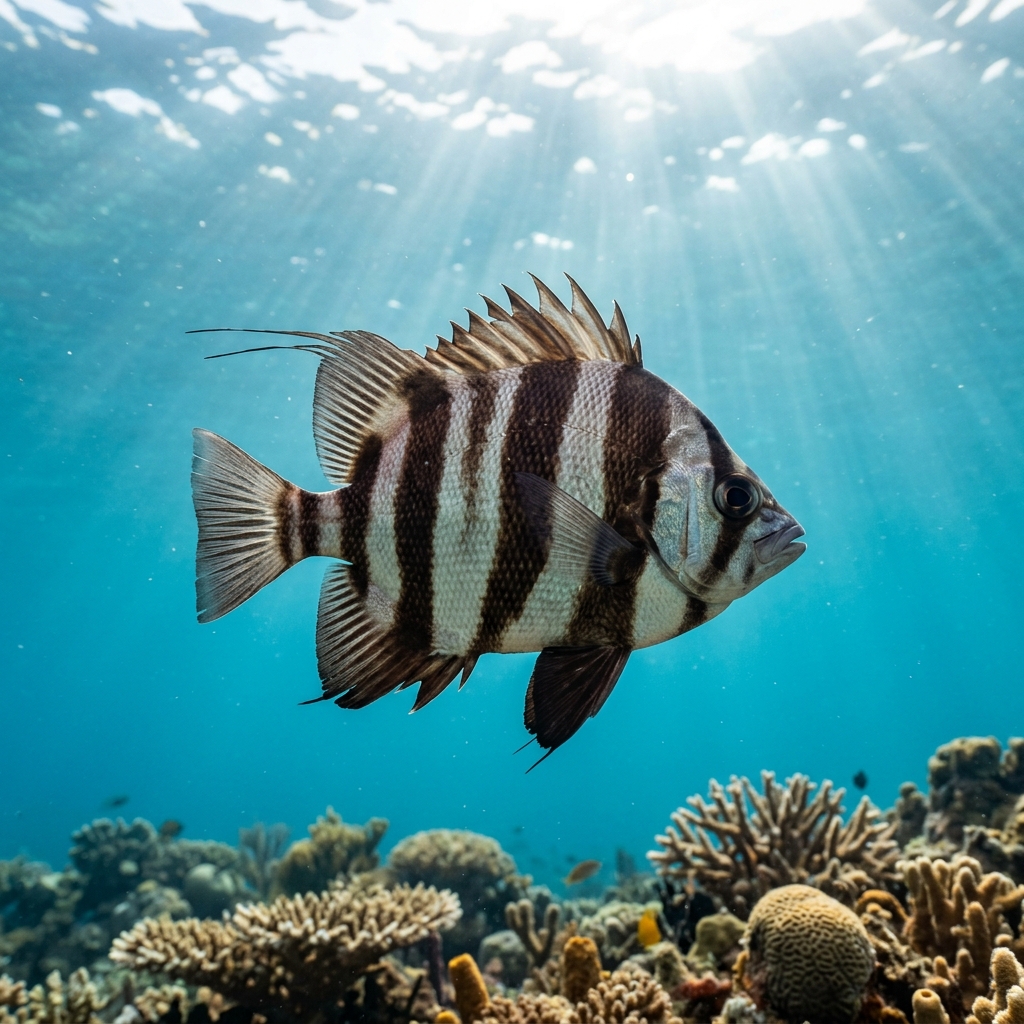
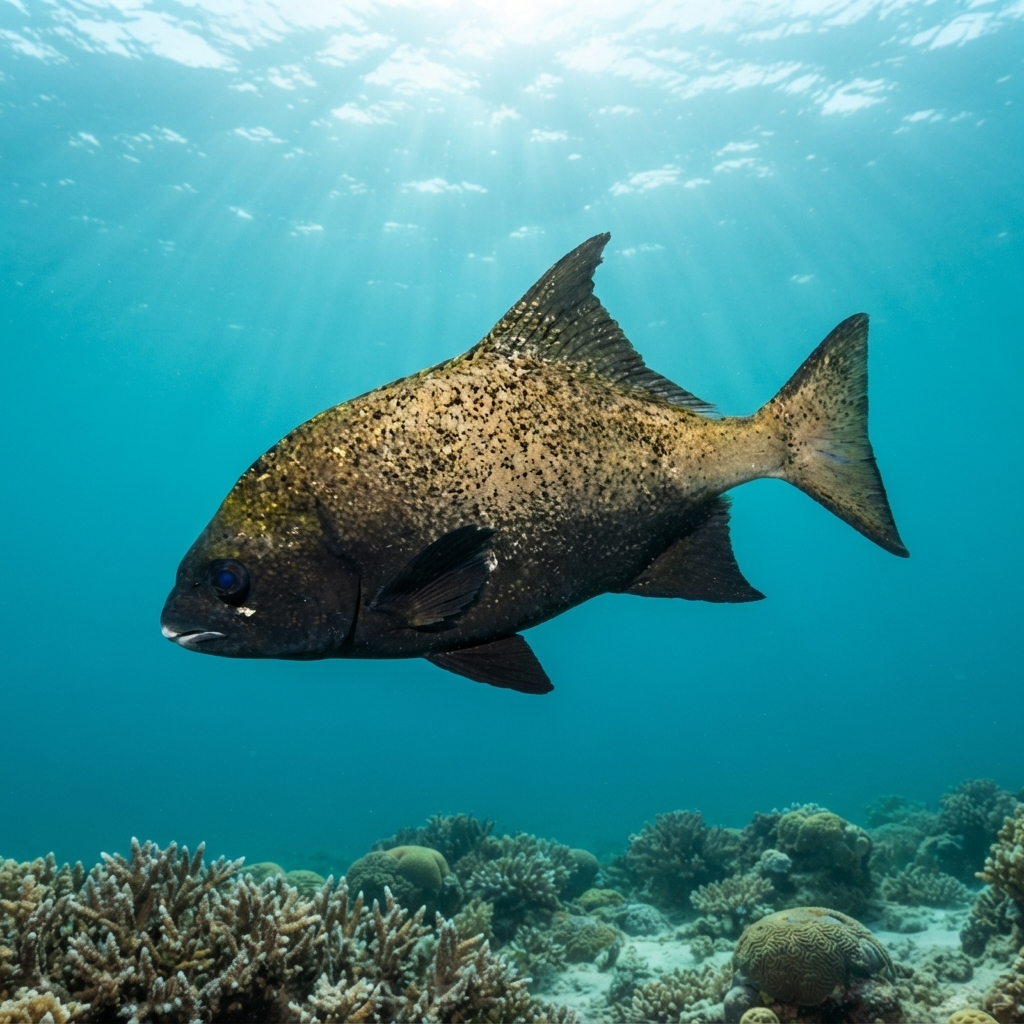
Deep-bodied and laterally compressed, growing to around 42 cm, with a heavy set of fused teeth that give the family its knifejaw name. Look for broad dark vertical bands across a grey to brown body, strongest on younger fish and fading somewhat with age, plus a blunt head and small mouth built for crunching hard-shelled prey off rock. It moves with a slow, deliberate wing-like beat of the pectoral fins rather than a fast tail-driven swim, which is often the first thing that catches a diver's eye.
Divers typically find it hovering close to reef structure or rocky ledges, picking around crevices rather than cruising open water. It's an uncommon sighting even on the sites where it turns up, so encounters tend to be brief, unhurried, and at a cautious distance rather than curious approaches. Most reports describe solitary or loosely paired fish rather than schools.
Those fused, beak-like teeth are built for crushing hard-shelled invertebrates off rock and reef surfaces, the same jaw architecture that gives the whole knifejaw family its name.
Sightings don't show a clear seasonal pattern, and the water temperature range it's recorded in, 23.6 to 26.7 C, spans much of the KZN diving calendar, so it's reasonably treated as a year-round encounter rather than a seasonal special.
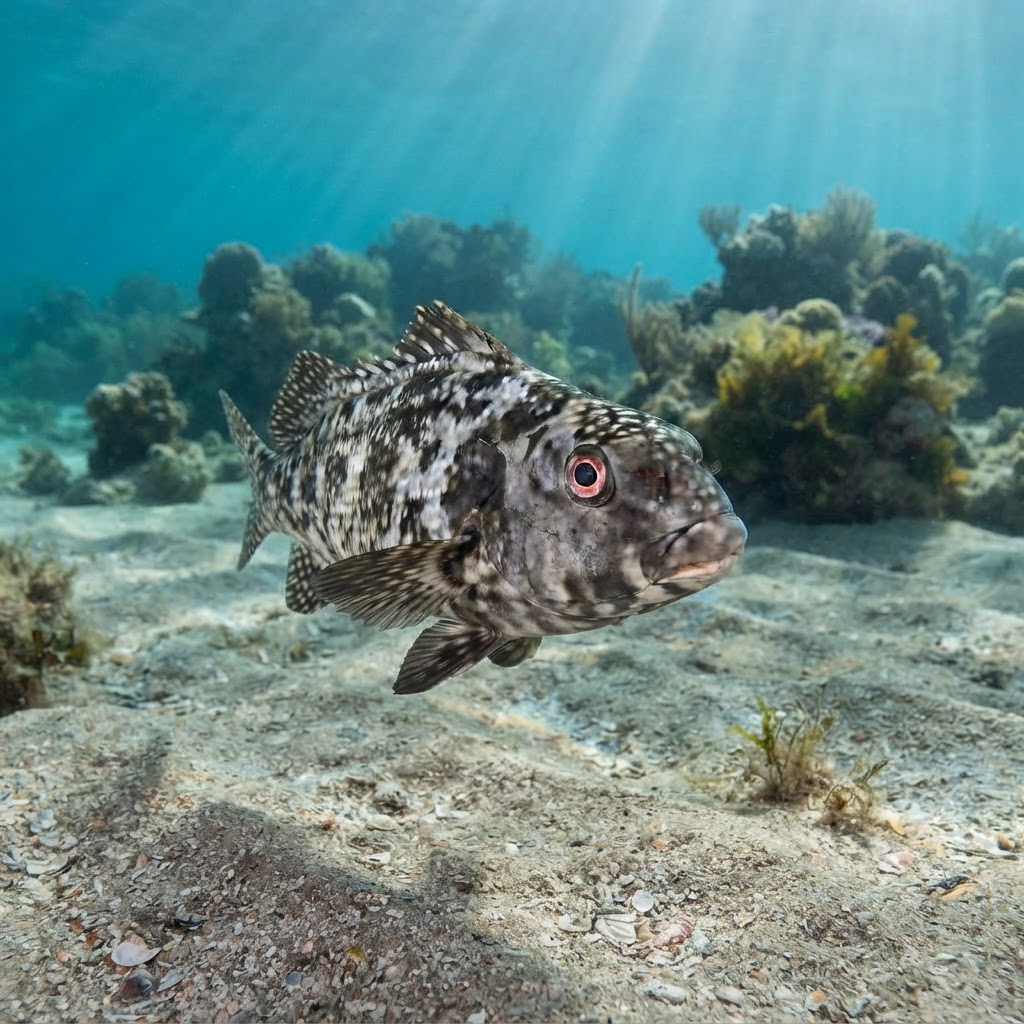
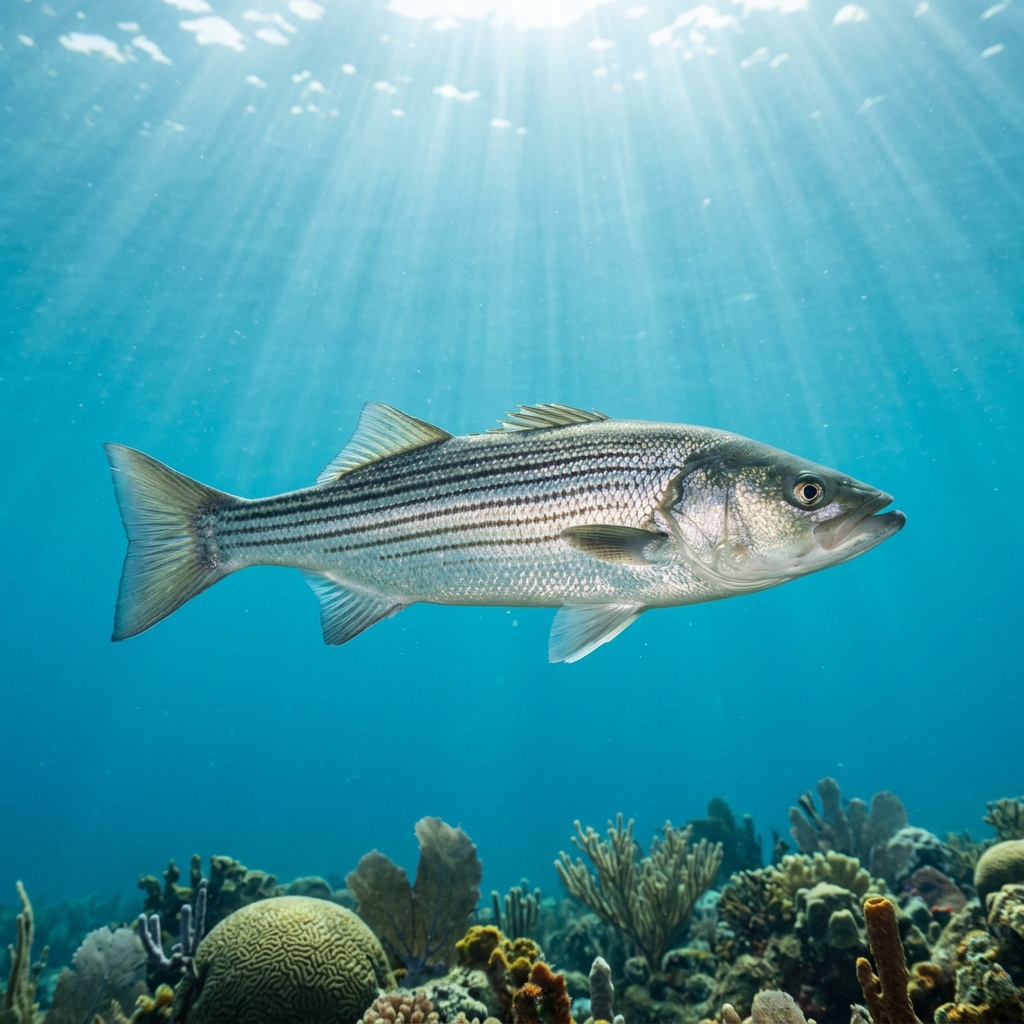
Reef neighbours a diver could mistake it for. Use the identification notes above to tell them apart.
This is very much a KwaZulu-Natal fish: every logged sighting in the data comes from that stretch of South African coast, making it the region to target if you want a realistic shot at one. It has not been reported as a reliable find outside South Africa, so plan a KZN reef or pinnacle dive specifically for it rather than hoping to bump into it elsewhere.
Mapping where Natal Knifejaw is logged…
KwaZulu-Natal in South Africa is by far the most reliable region, with sightings logged across numerous reef sites along that coast. It has not turned up as a dependable sighting elsewhere.
There's no strong seasonal signal in the sighting data, and it's recorded across a fairly wide temperature band (23.6 to 26.7 C), so it's best treated as a year-round possibility on KZN dives rather than a seasonal target.
Look for a deep, flattened body up to around 42 cm with bold dark vertical bands over grey-brown skin, a blunt head, and a small crushing mouth. Its slow, wing-beat swimming style near rocky structure is a useful extra clue.
They reach around 42 cm, making them a solid, noticeably deep-bodied presence on the reef rather than a small fish easily overlooked.
No, they're not considered dangerous to divers. They tend to keep a cautious distance rather than approach, so there's no special handling advice needed.
Its fused, beak-like teeth are adapted for crushing hard-shelled prey straight off rocky surfaces, a distinctive jaw structure shared across the knifejaw family and the source of its common name.
Site and sighting data is aggregated from diver logs, iNaturalist and GBIF. For taxonomy and conservation status:
Meagre
1,159 sites