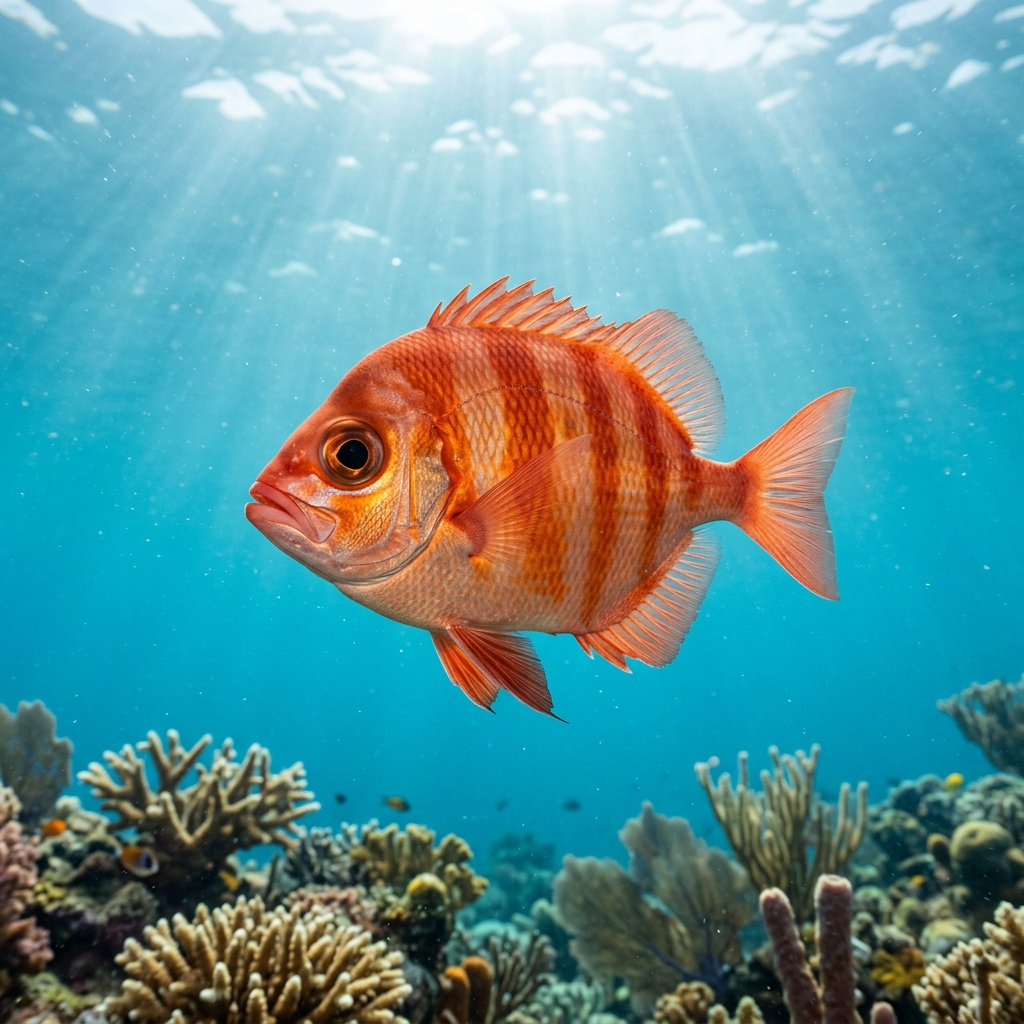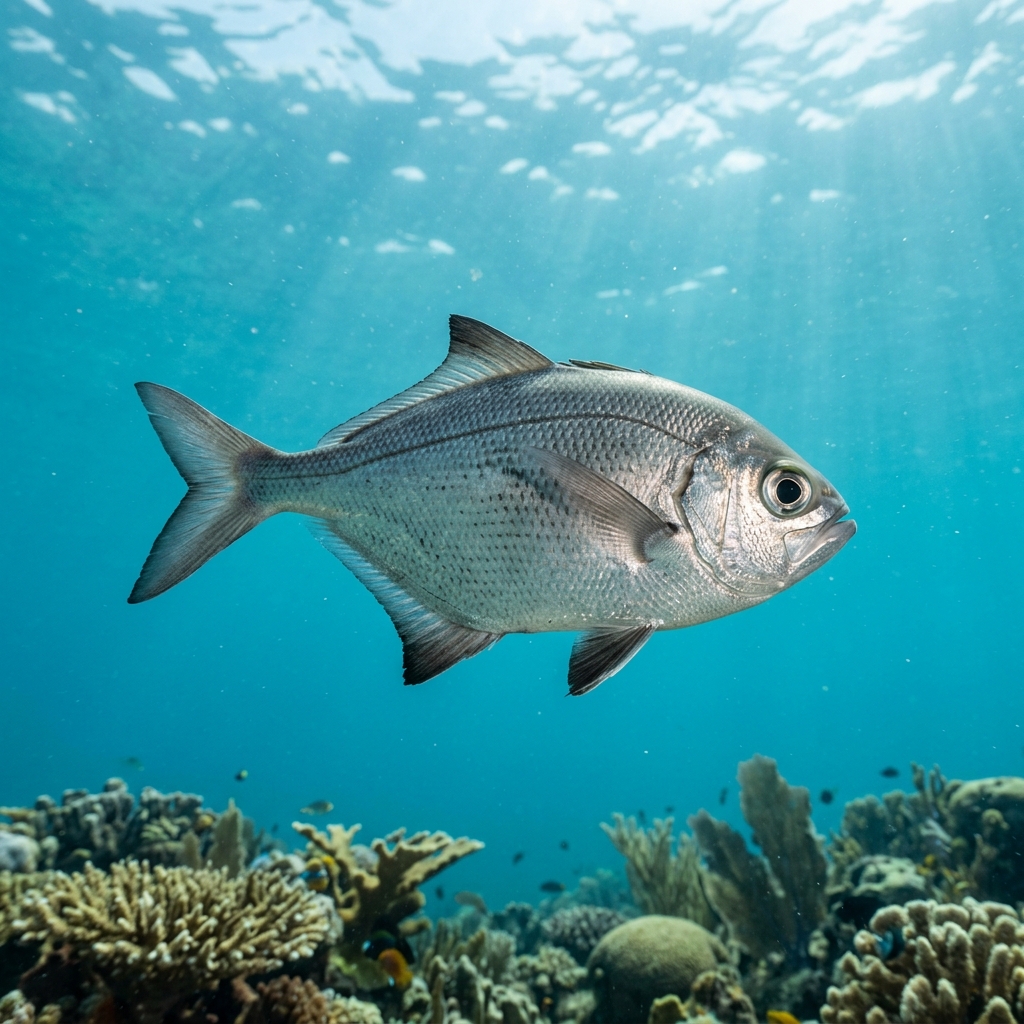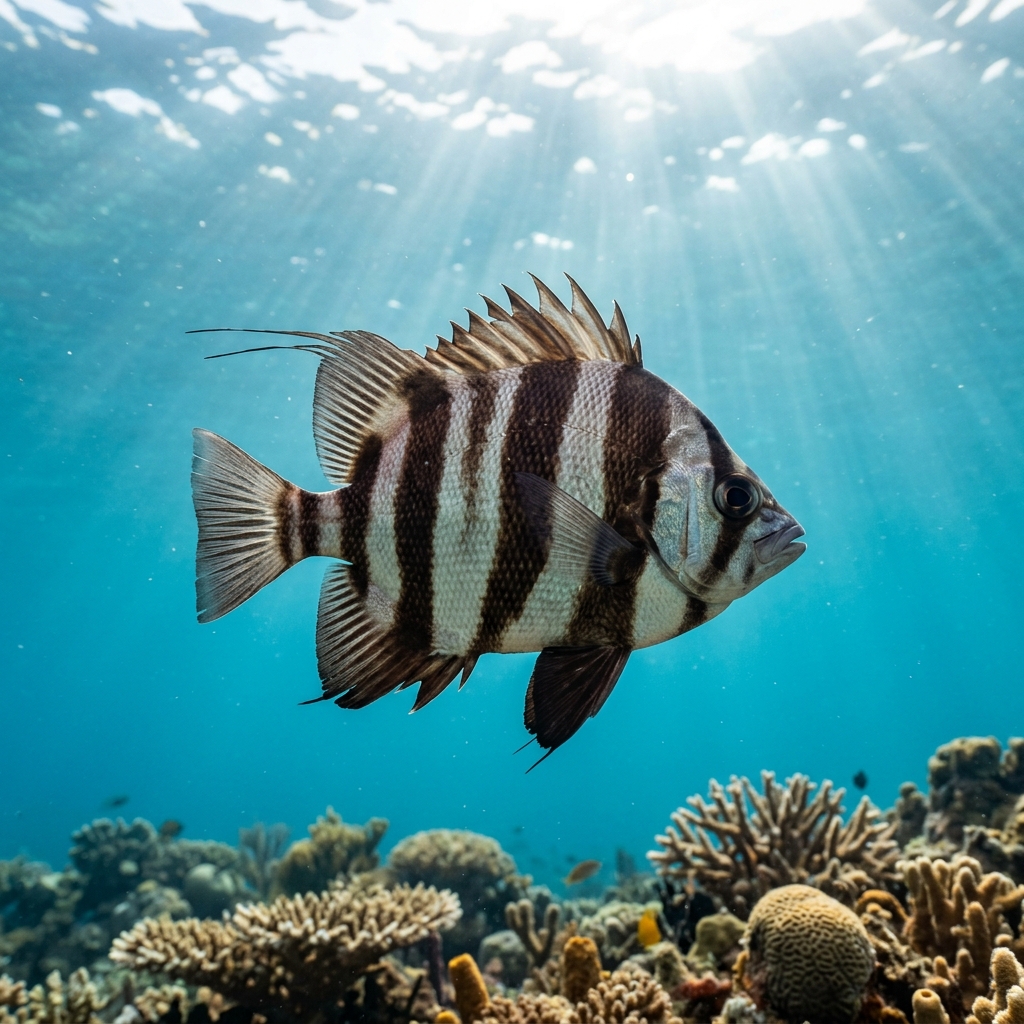
Enoplosus armatus
Old Wife patrol temperate reefs across southern Australia. Best sightings run Dec, Jun in NSW, WA and Victoria in cool 15-21°C water.
Safety warning
The first dorsal fin carries a row of stiff, sharp spines, and handling or accidentally brushing against the fish can result in a painful puncture wound. Do not attempt to handle Old Wife, and watch where you place your hands on the reef, especially if the fish is sheltering in a crevice. The spines are not venomous, but puncture wounds on a dive can introduce bacteria and are worth cleaning promptly after the dive.
If you're stung
Venomous spinesGeneral first-aid guidance, not a substitute for professional medical care. In an emergency, call your local emergency number.
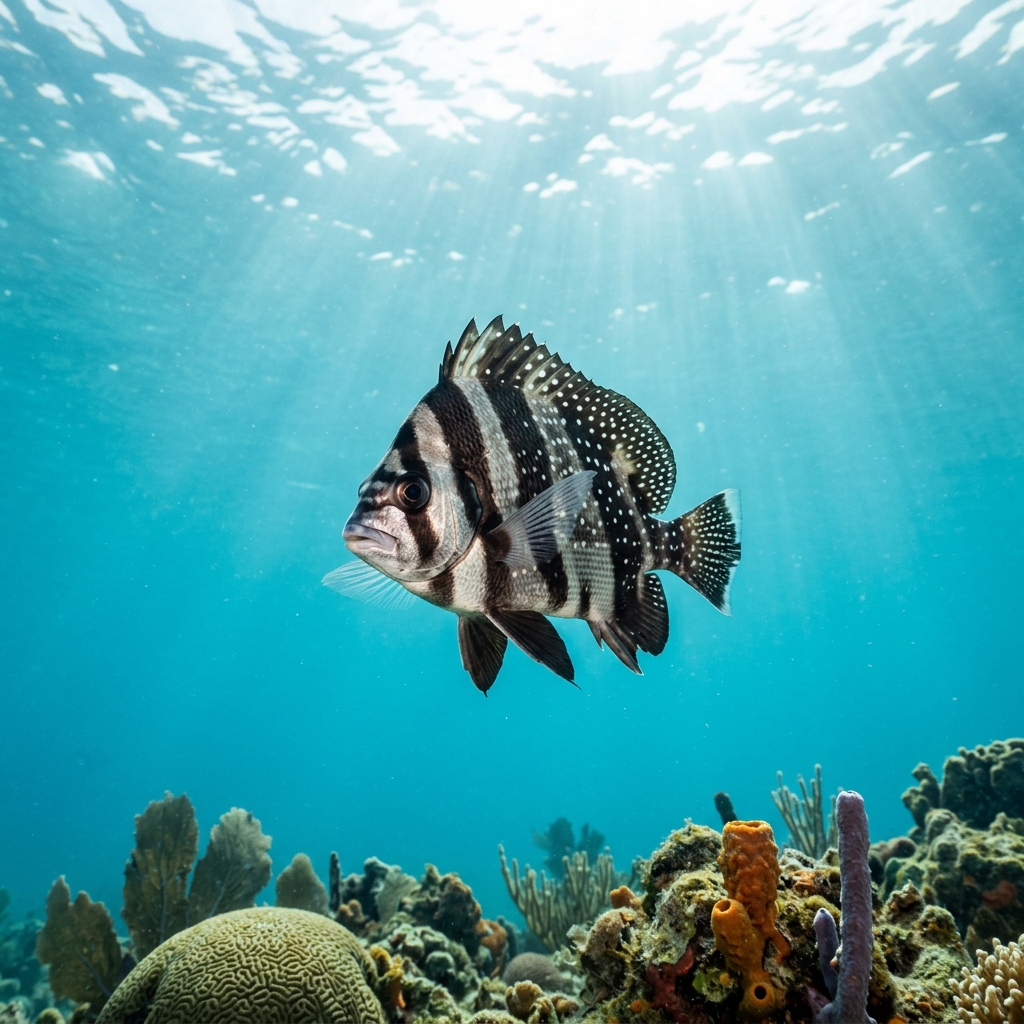
Bold, alternating black-and-white vertical stripes on a deep, laterally compressed (side-flattened) body make this species one of the easier temperate reef fish to name at a glance. At roughly 35 cm it is a mid-sized fish, roughly the size of your forearm, and it carries two separate dorsal fins, the first armed with sharp spines that give it its dangerous reputation. The high-backed oval profile and those stripes together mean there is really nothing else like it on a southern Australian reef.
Old Wife tend to cruise slowly in pairs or loose groups just above the reef, often hovering almost motionless in the water column before moving off with small, deliberate fin beats. When approached they generally hold their ground rather than bolting, which makes for a relaxed observation, but they will angle their spiny first dorsal fin toward a perceived threat. They are carnivores, and you will most often spot them picking at small invertebrates in rocky reef crevices or over seagrass adjacent to reef.
The common name is said to come from the grating, tooth-grinding noise the fish produces when caught or stressed, a sound likened to a nagging voice. Underwater you are unlikely to hear it, but the behaviour is a reminder that the animal has active acoustic defences beyond its spines.
Sightings across southern hemisphere sites concentrate from December through June, broadly the late-spring-to-autumn window in Australia. This fits the species' cool-water preference of roughly 15-21°C, which persists year-round in the southernmost states but is most accessible to recreational divers in the warmer months.
Old Wife is essentially an Australian endemic, and sightings are spread right around the southern coastline. New South Wales leads the records by a clear margin, followed by Western Australia and then Victoria, South Australia, and Tasmania. If you are targeting this species, rocky and weedy reefs in NSW and WA give you the best statistical shot.
Mapping where Old Wife is logged…
Old Wife are found across temperate southern Australia. New South Wales has the strongest concentration of sighting records, with Western Australia, Victoria, South Australia, and Tasmania all well represented. Rocky and weedy coastal reefs are the habitat to target.
Sightings peak between December and June across southern Australian sites. This late-spring-to-autumn window aligns with water temperatures the species favours, roughly 15 to 21°C. In the cooler southern states, conditions suitable for Old Wife persist across a broader part of the year.
Yes, with a caveat. The sharp spines on the first dorsal fin can deliver a nasty puncture if you brush against or try to handle the fish. They are not venomous, but the wounds can be painful and are prone to infection. Give the fish space, keep hands away from crevices where they shelter, and you will have no trouble.
Look for a deep, oval, laterally compressed body covered in bold alternating black-and-white vertical stripes, roughly 35 cm long. The two-part dorsal fin, with the first section being notably spiny, is a useful secondary marker. Nothing else on a southern Australian reef looks quite like it, so the stripes alone are usually enough.
Typical adults reach around 35 cm in length, roughly the size of a forearm. In the water their deep, compressed body shape makes them look larger than a similarly long, slender fish would.
The name is thought to come from the grating, grinding sound the fish makes by gnashing its teeth when stressed or removed from the water, a noise that was apparently compared, rather unkindly, to a scolding voice. It is one of the few Australian reef fish with a name rooted in an acoustic behaviour rather than appearance.
Site and sighting data is aggregated from diver logs, iNaturalist and GBIF. For taxonomy and conservation status:
Meagre
1,159 sites