Tomiyamichthys oni
An uncommon 8cm goby seen paired with shrimp on rubble slopes across Okinawa's Ryukyu Islands, in water from 21 to 29C.
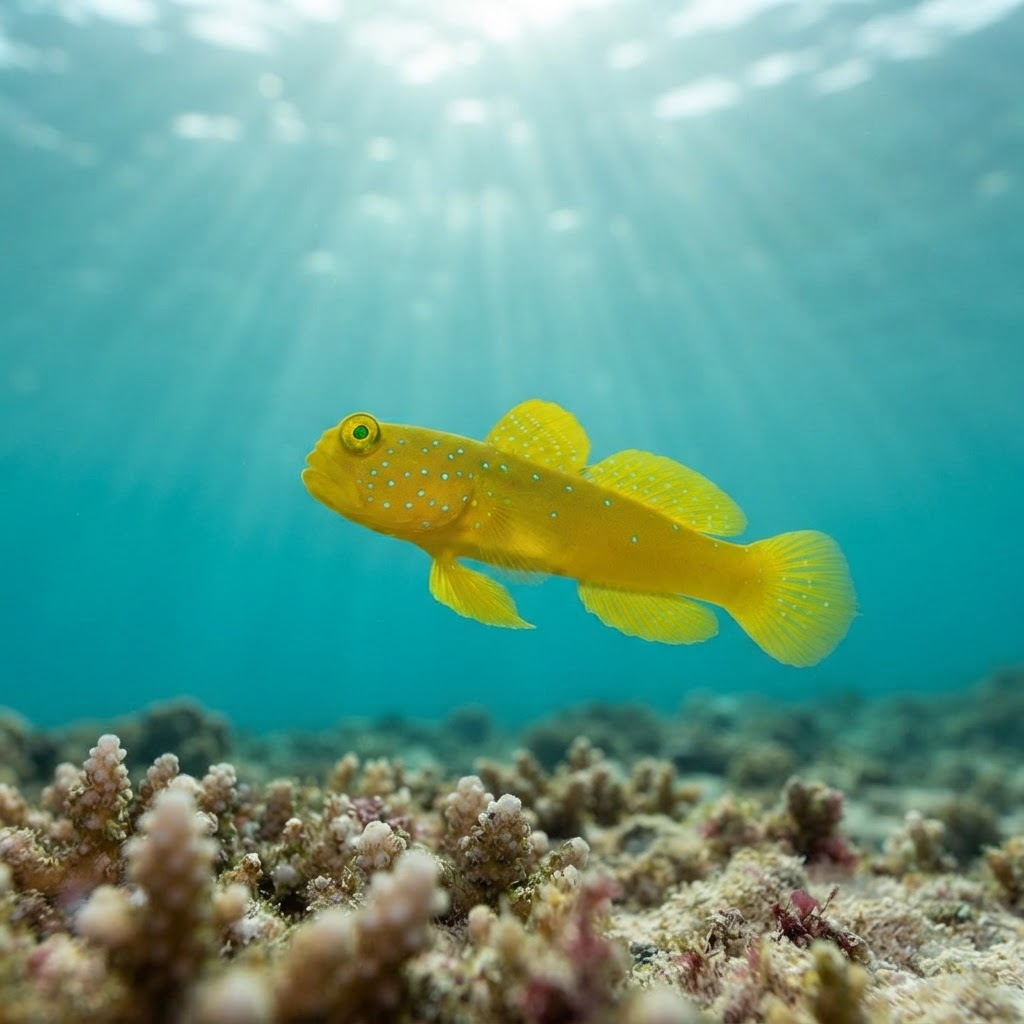
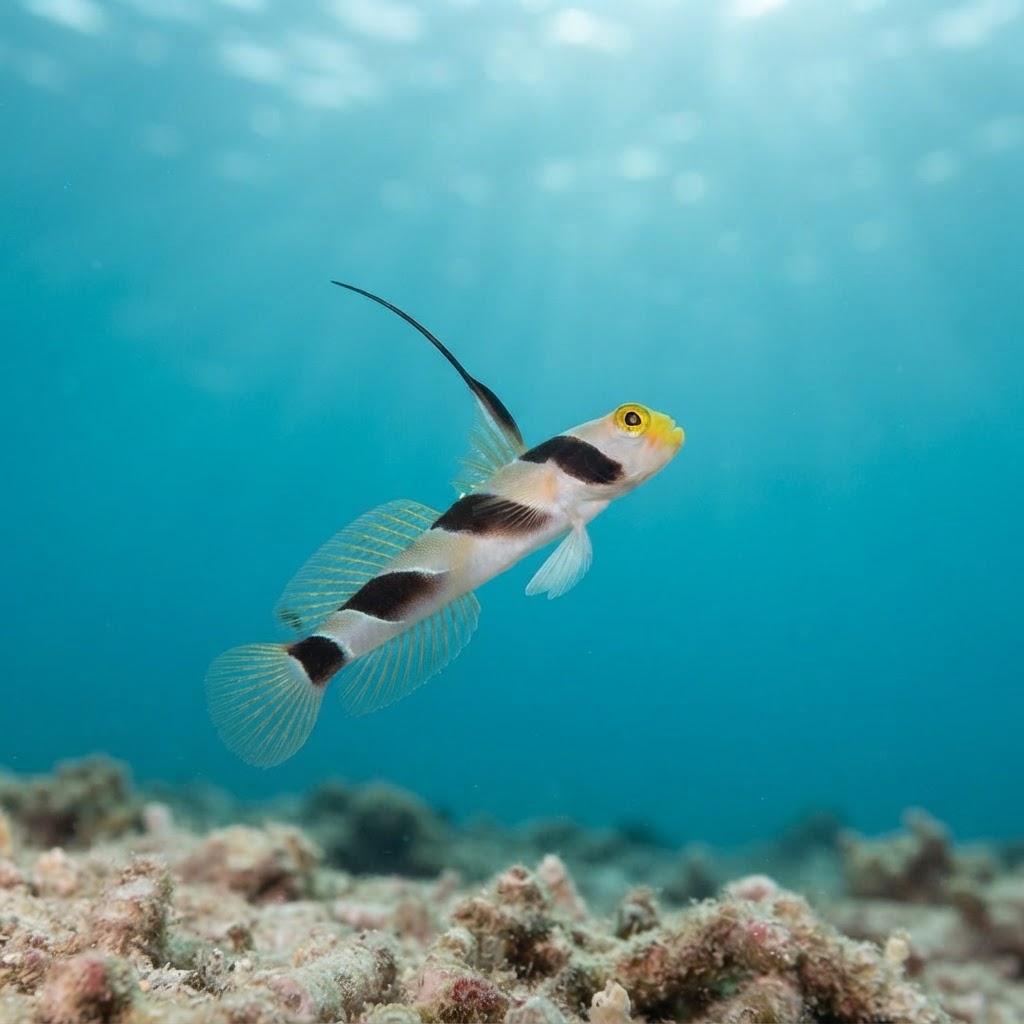
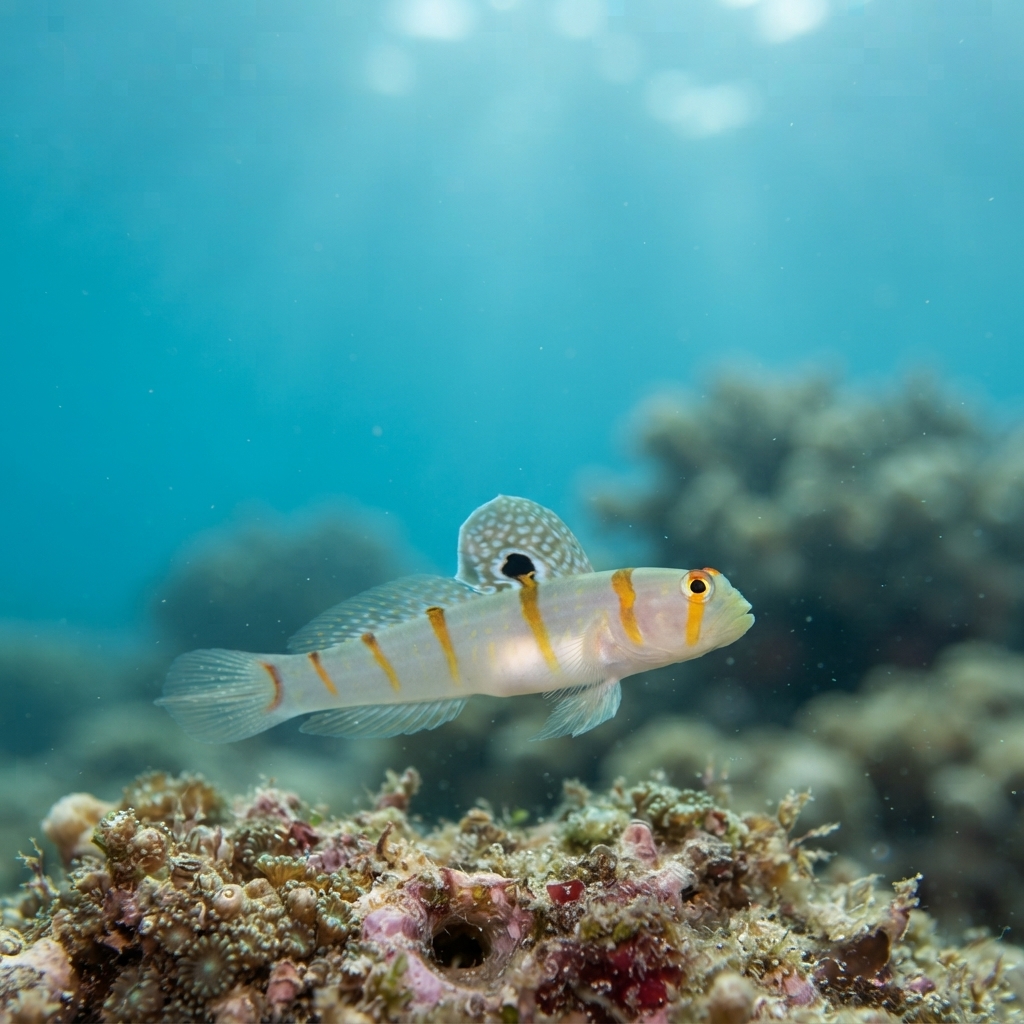
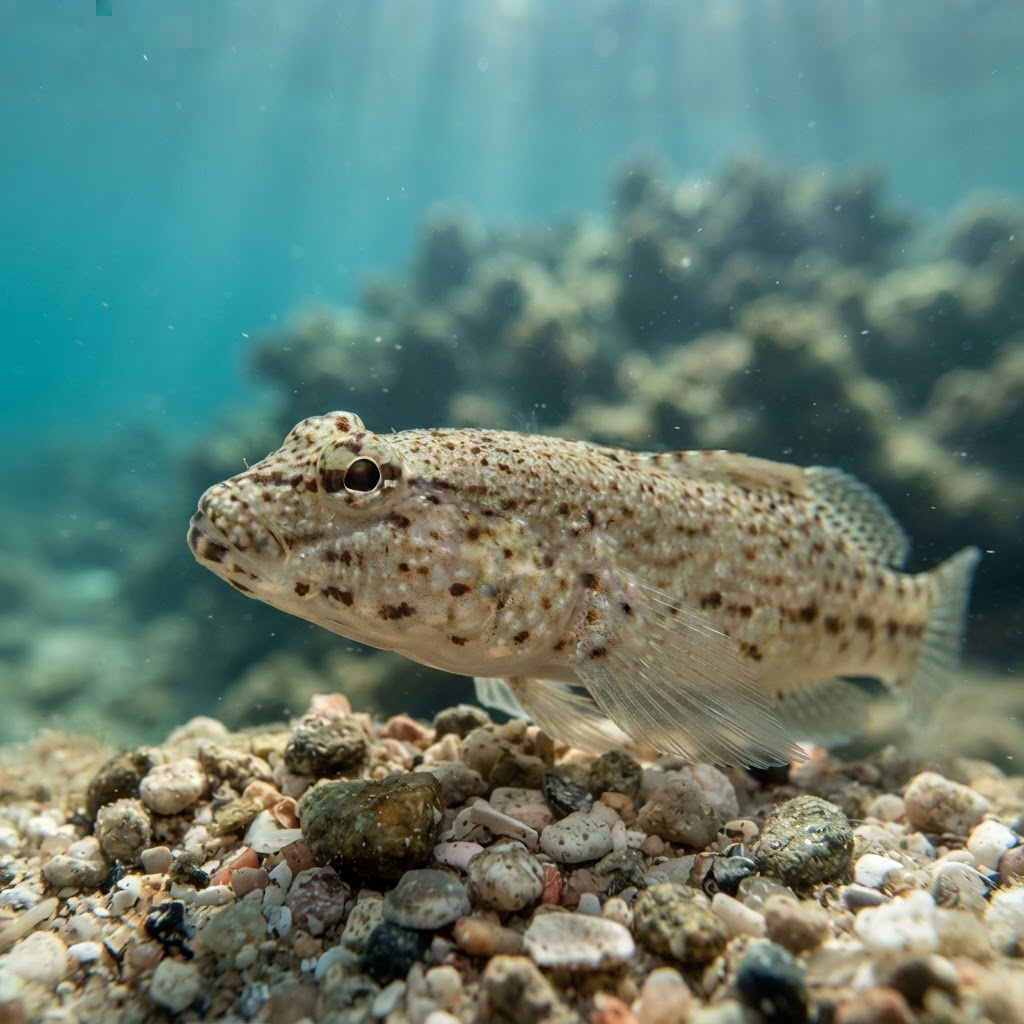
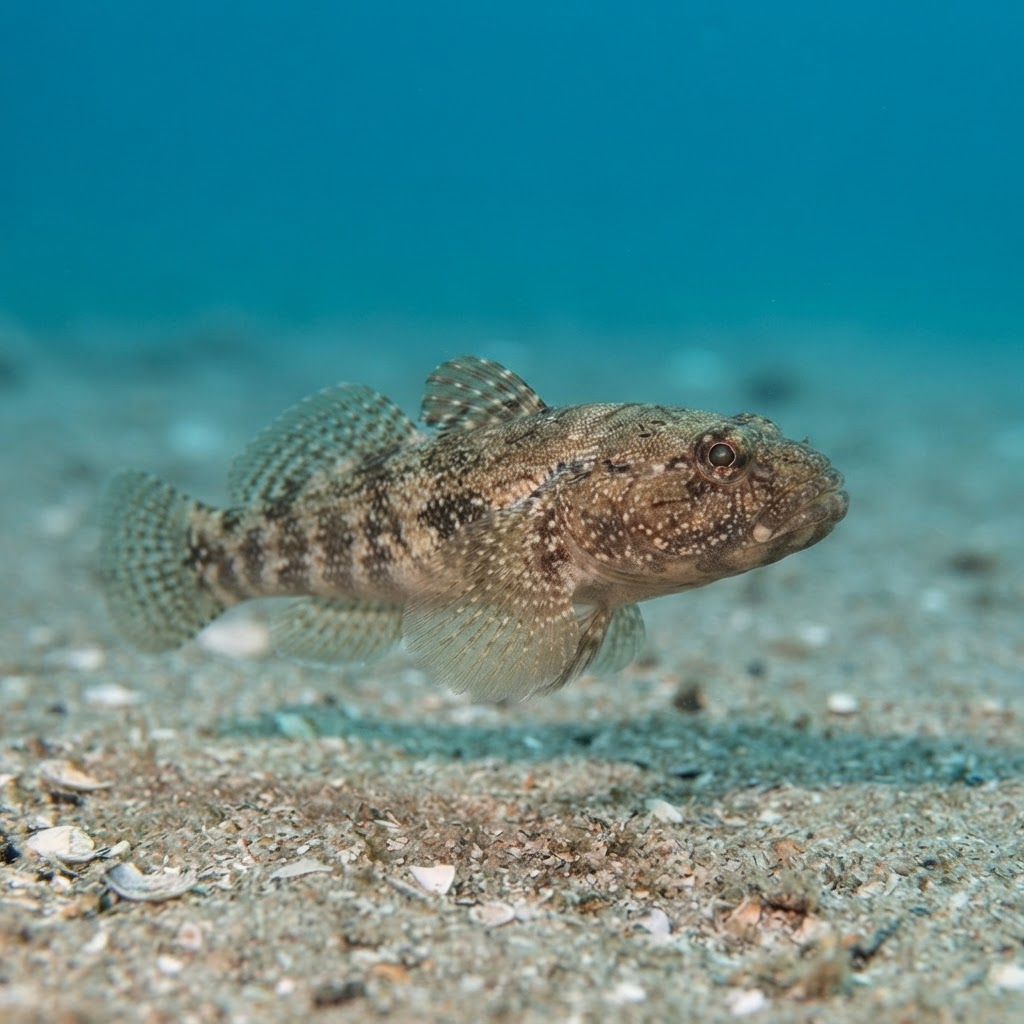
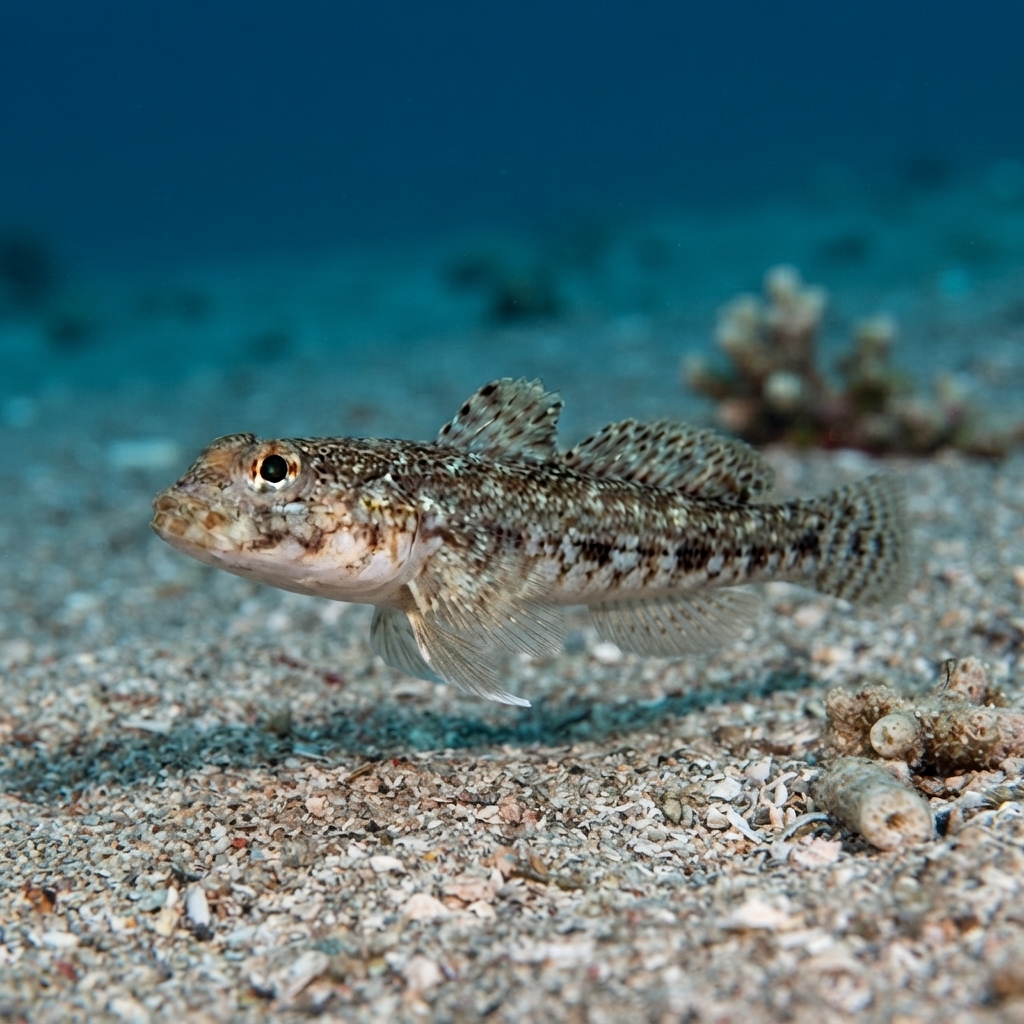
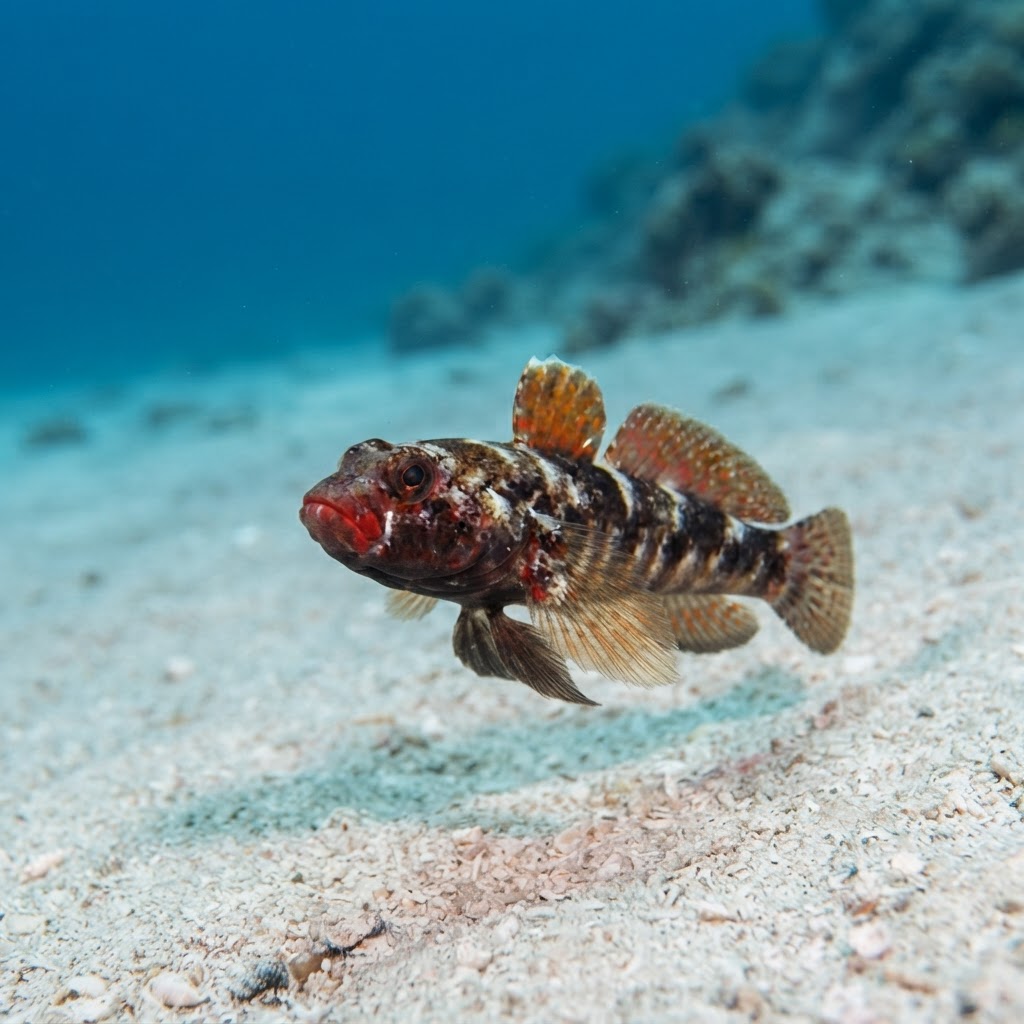
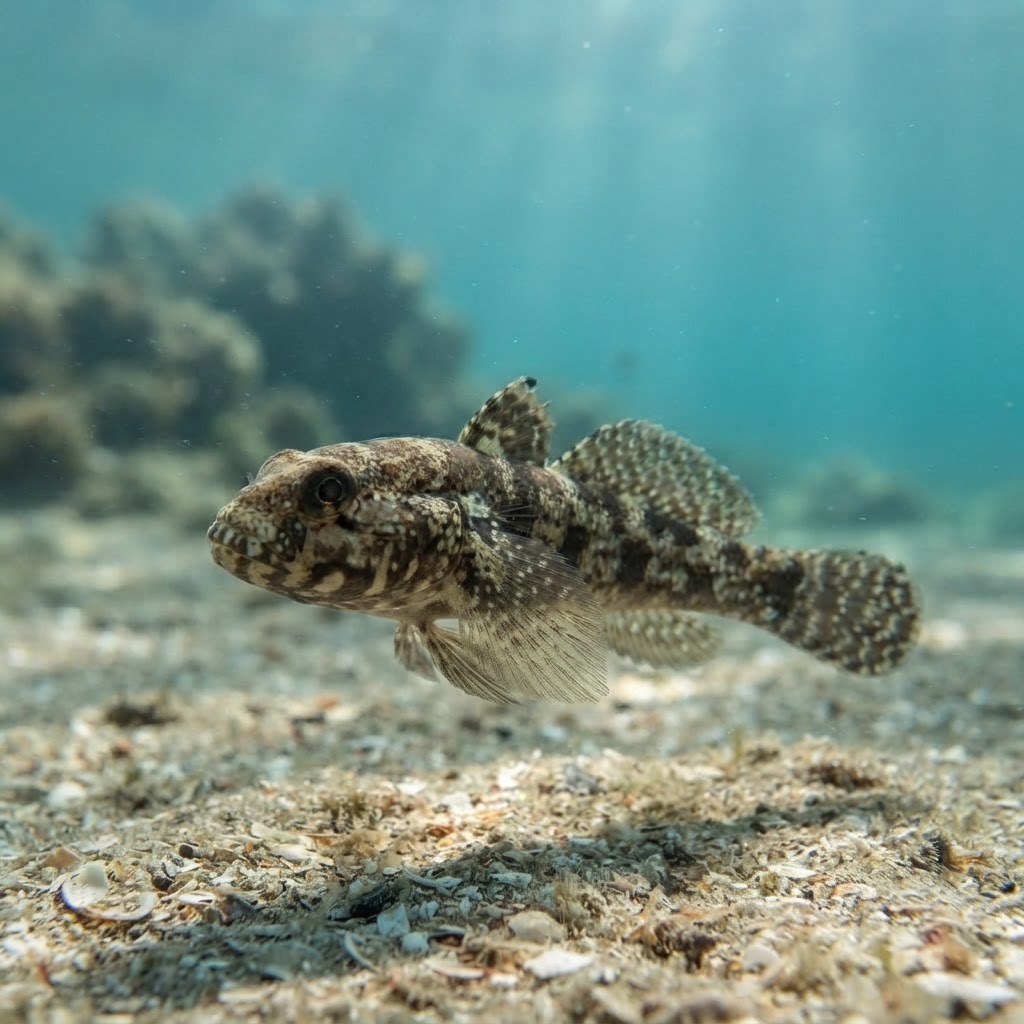
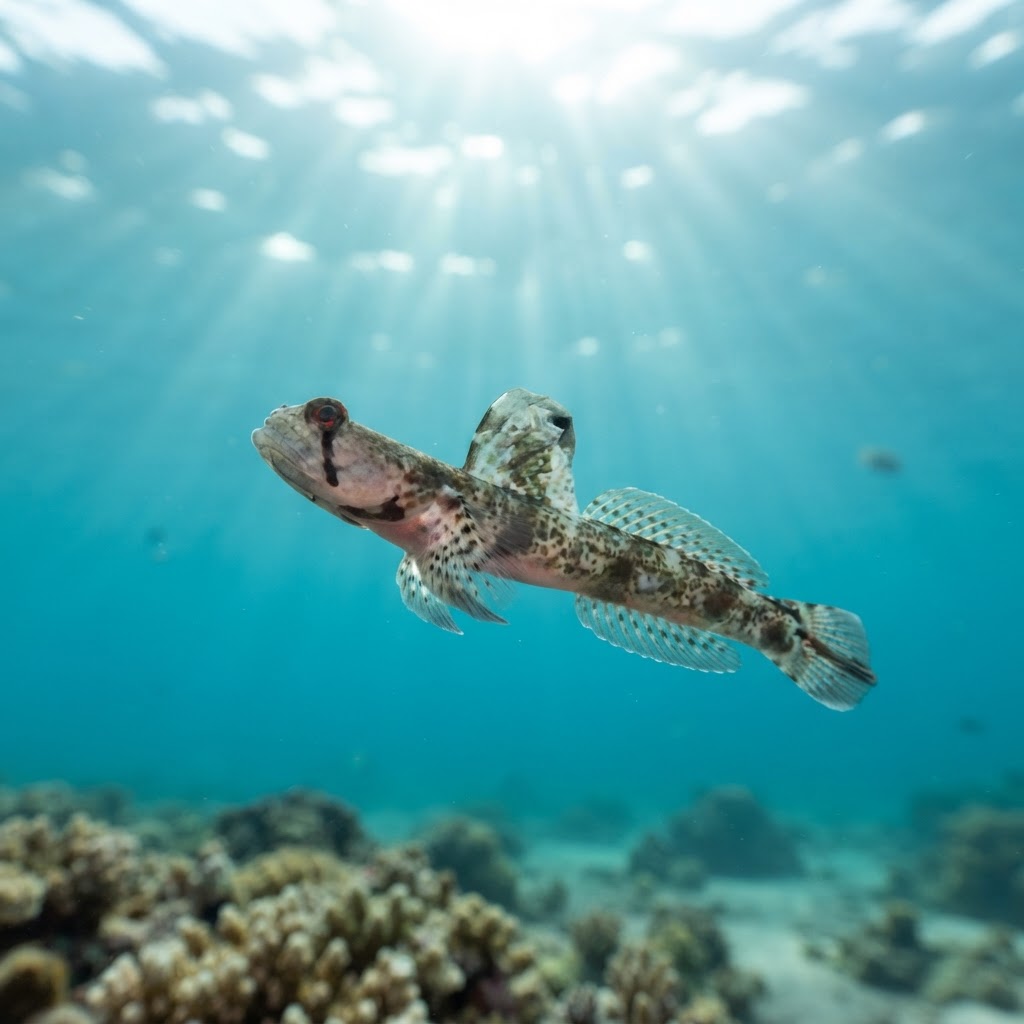
A small, slender goby around 8 cm, pale grey to sandy in colour with a dense scatter of dark speckles and blotches across the body and fins, giving it a mottled, almost camouflaged look against rubble. It has the classic elongated shrimpgoby shape with a large head and a slightly upturned mouth, and sits propped on its pelvic fins at the mouth of a burrow rather than swimming freely. Look for the tall, rounded first dorsal fin, which it often flicks upright as a signal to its symbiotic shrimp partner below.
Divers find it hovering just above its burrow on sand or rubble slopes, ready to dart backwards into the hole at the first sign of a fast approach. It shares its burrow with a partner shrimp that keeps the tunnel clear, and the goby stands guard, watching for predators while the shrimp works. Slow, low approaches and a bit of patience usually get you a longer look before it disappears.
Like other shrimpgobies, it maintains a burrow-sharing partnership with a burrowing shrimp, staying in near-constant physical contact via its tail or fin so it can flick a warning the instant danger appears.
There is no clear seasonal pattern in the sightings logged so far, and it sits comfortably in water from 21 to 29C, so it is worth looking for year-round rather than timing a trip to a particular month.
Reef neighbours a diver could mistake it for. Use the identification notes above to tell them apart.
Okinawa and the Ryukyu Islands in Japan are by far the most reliable place to find it, with sightings logged across a wide spread of sites there. It has also turned up in Sulawesi, Indonesia, though far less often, so Japan is the destination to plan around if this goby is the target.
Mapping where Monster Shrimpgoby is logged…
Okinawa and the wider Ryukyu Islands in Japan are the most reliable spot, with a scattering of sites also recorded in Sulawesi, Indonesia. Most divers who log it do so on rubble or sandy slopes in Japanese waters.
There is no strong seasonal signal in the sightings, and it tolerates a wide range from 21 to 29C, so it can turn up on any dive through the year rather than in a narrow season.
Look for a small, speckled grey-brown goby around 8 cm long, propped on pelvic fins at a burrow entrance rather than swimming in open water. Its mottled pattern and tall dorsal fin help separate it from plainer shrimpgobies nearby.
They stay small, reaching about 8 cm, which is typical for shrimpgobies and easy to miss without a close look at rubble and sand patches.
It lives in a shared burrow with a partner shrimp, staying in constant contact so it can warn the shrimp of danger with a flick of its fin or tail while the shrimp does the digging.
No, they pose no threat to divers. They are shy and retreat into their burrow rather than approach, so any interaction is entirely on the diver's terms.
Site and sighting data is aggregated from diver logs, iNaturalist and GBIF. For taxonomy and conservation status:
Slender Goby
806 sites