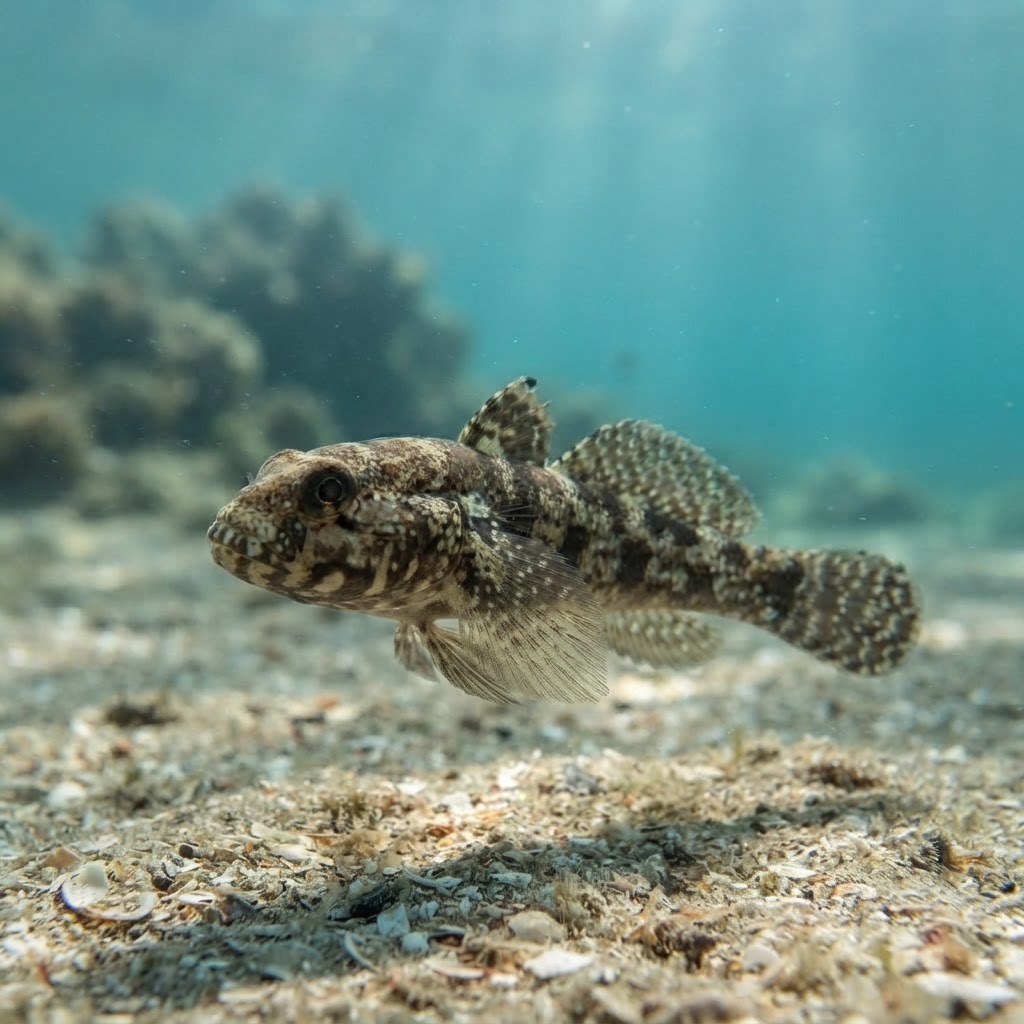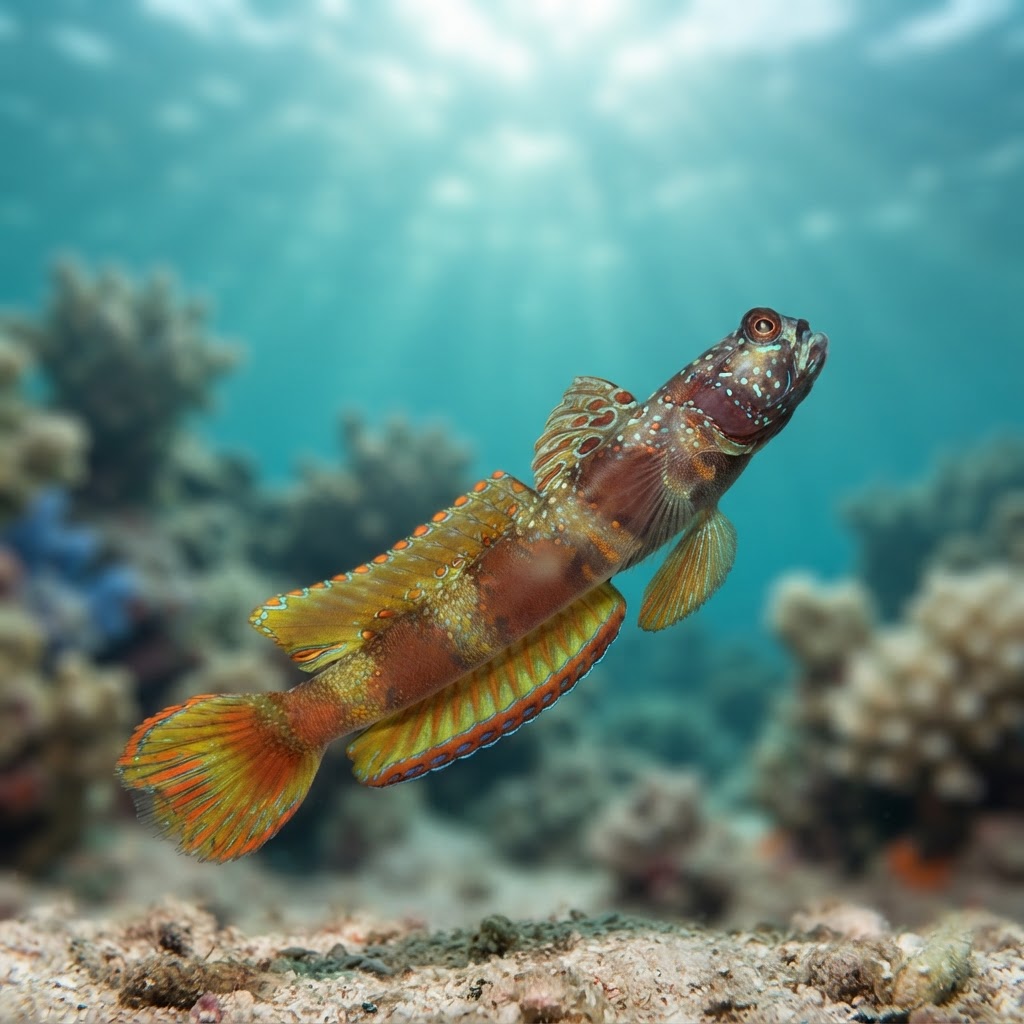
Amblyeleotris latifasciata
Sandy-slope goby paired with a shrimp, most often logged around Koh Chang and West Papua in warm 28-29C water.
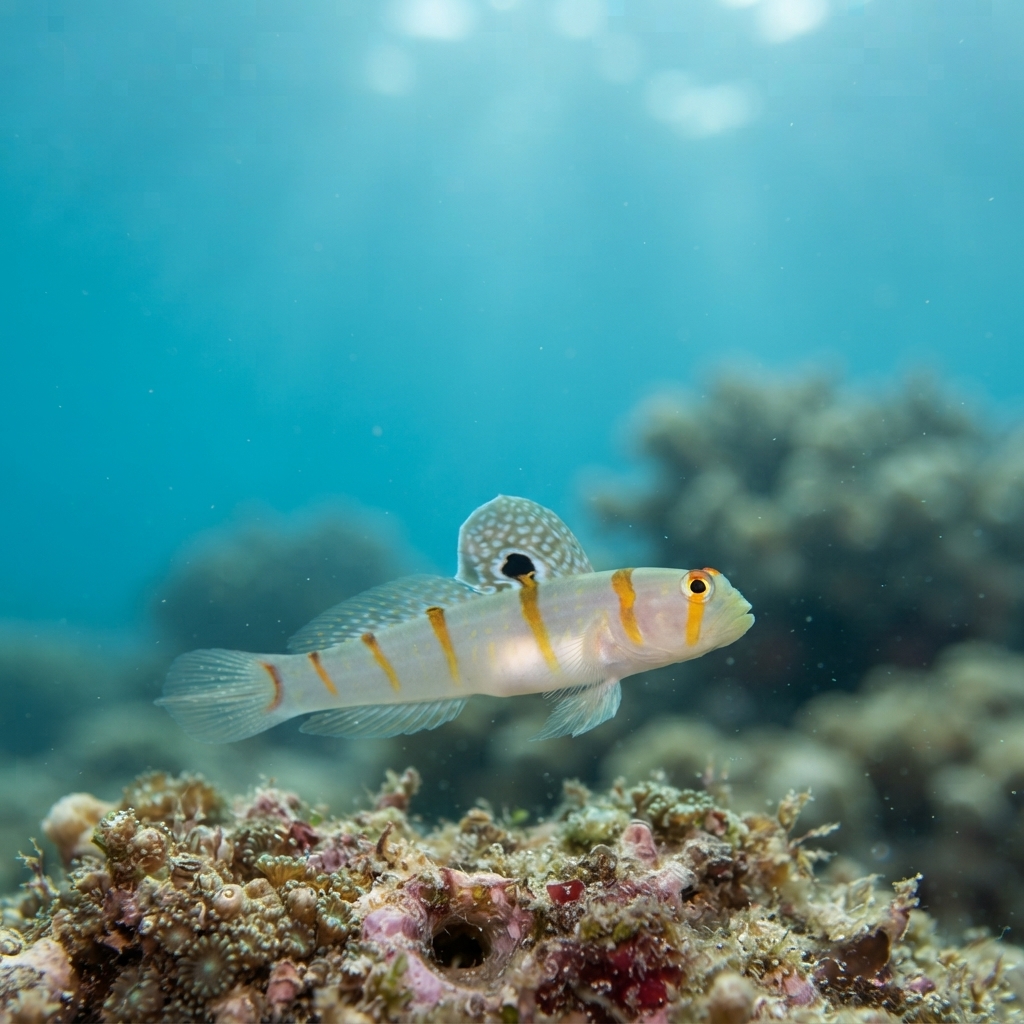
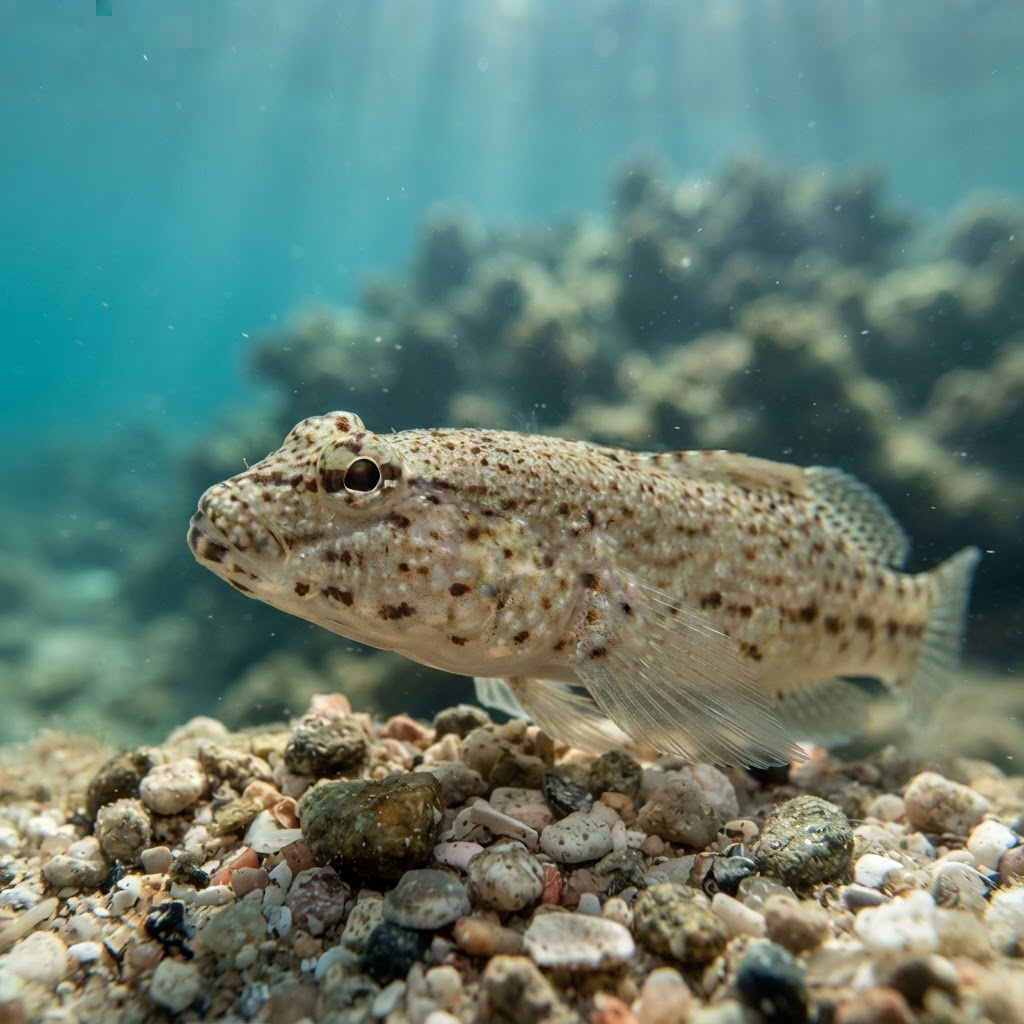
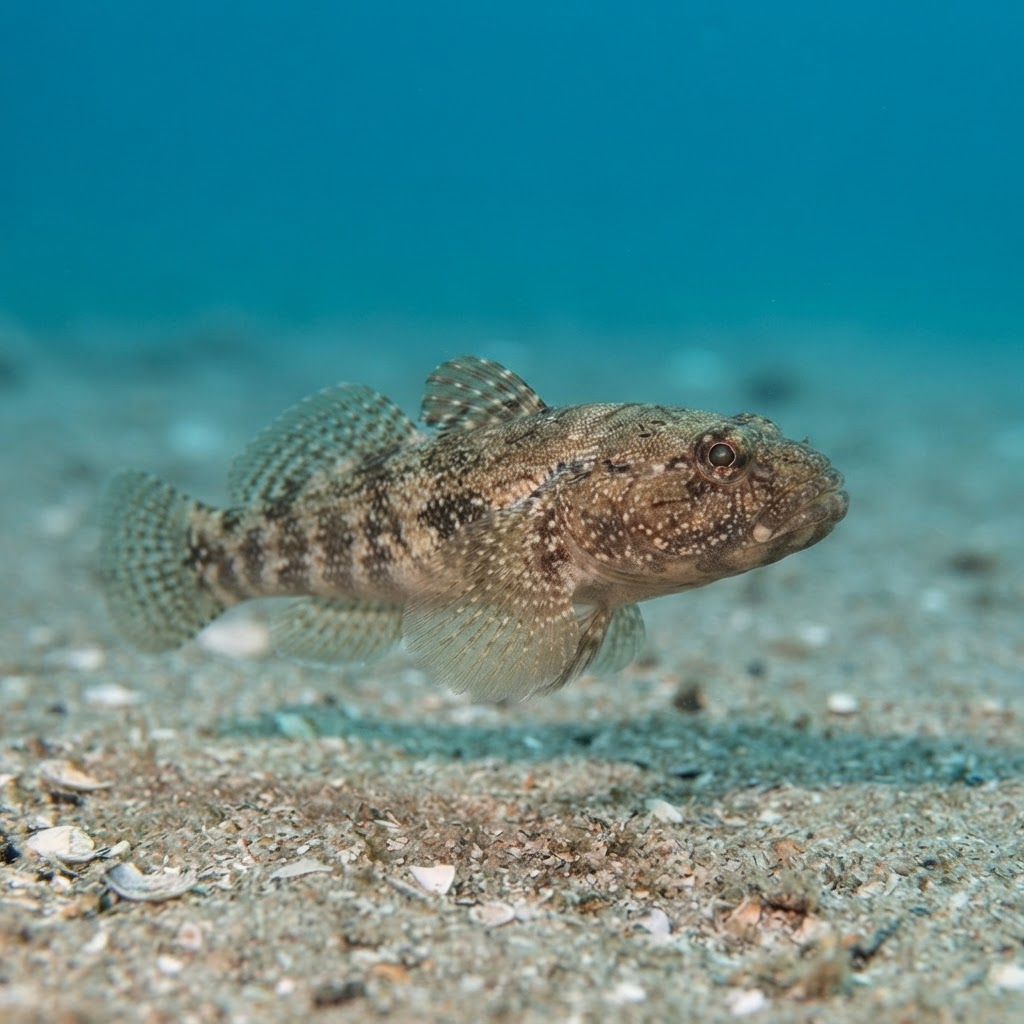
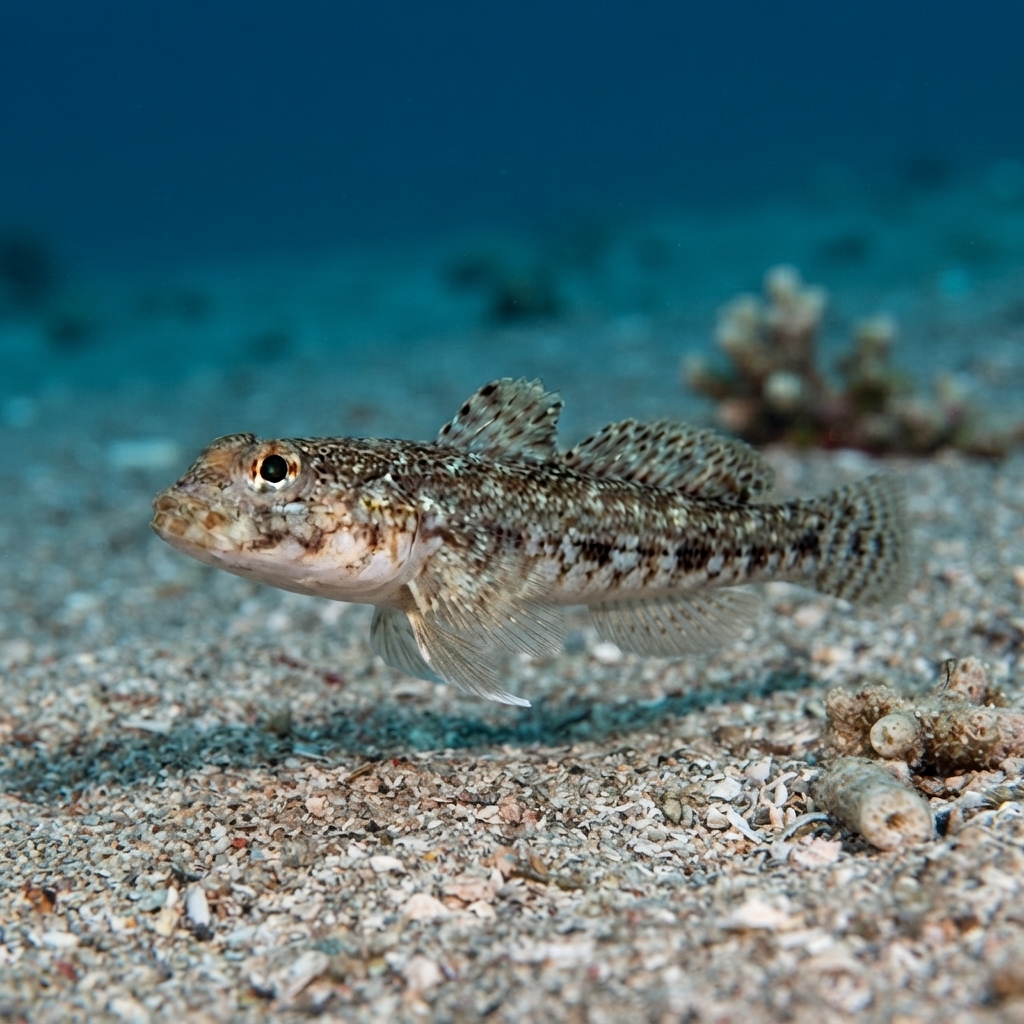
A slender, pale-bodied goby around 9cm long with a metallic sheen and faint dusky banding along the flanks that can look silvery-blue in torchlight. It hovers with its body angled up, tail near the burrow mouth, ready to dive in headfirst at the slightest disturbance. Look for the constant fin-flicking communication with a translucent shrimp working the sand just below it.
Spends its time hovering at the entrance of a shared burrow on open sand or rubble, working in partnership with a shrimp that keeps the tunnel clear while the goby watches for danger. Approach slowly and low, since a sudden fin kick or shadow sends it straight down the hole, often for several minutes before it re-emerges. Best looked for during daylight dives on gentle sand slopes rather than reef structure itself.
It keeps a running physical contact with its shrimp housemate, using its tail to signal when it is safe to keep excavating and when to freeze, a partnership that lets a nearly blind shrimp dig burrows on an open sand flat without becoming easy prey.
Sightings show no detectable season, and the observed water temperature of 28.1 to 29.2C is stable warm-tropical year-round, so it is a reasonable find on any dive at the right sites regardless of month.
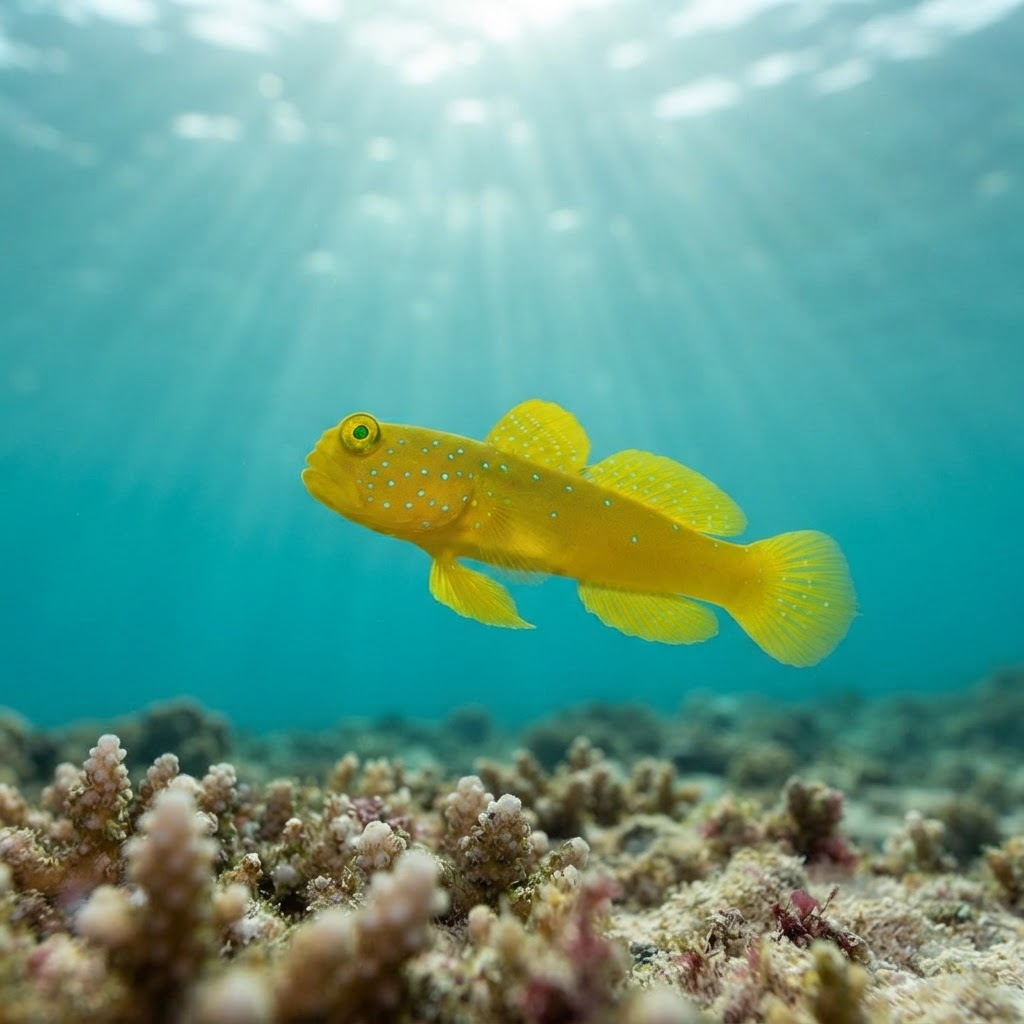
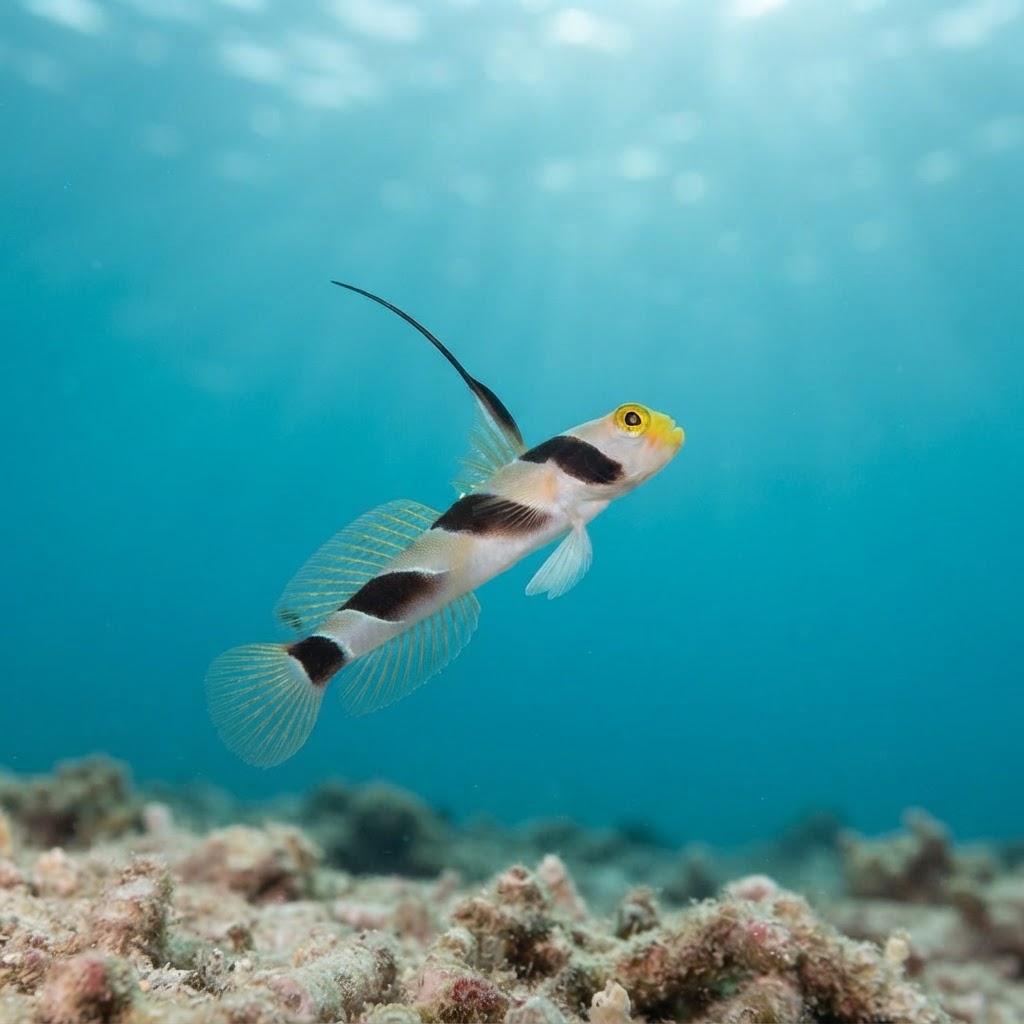
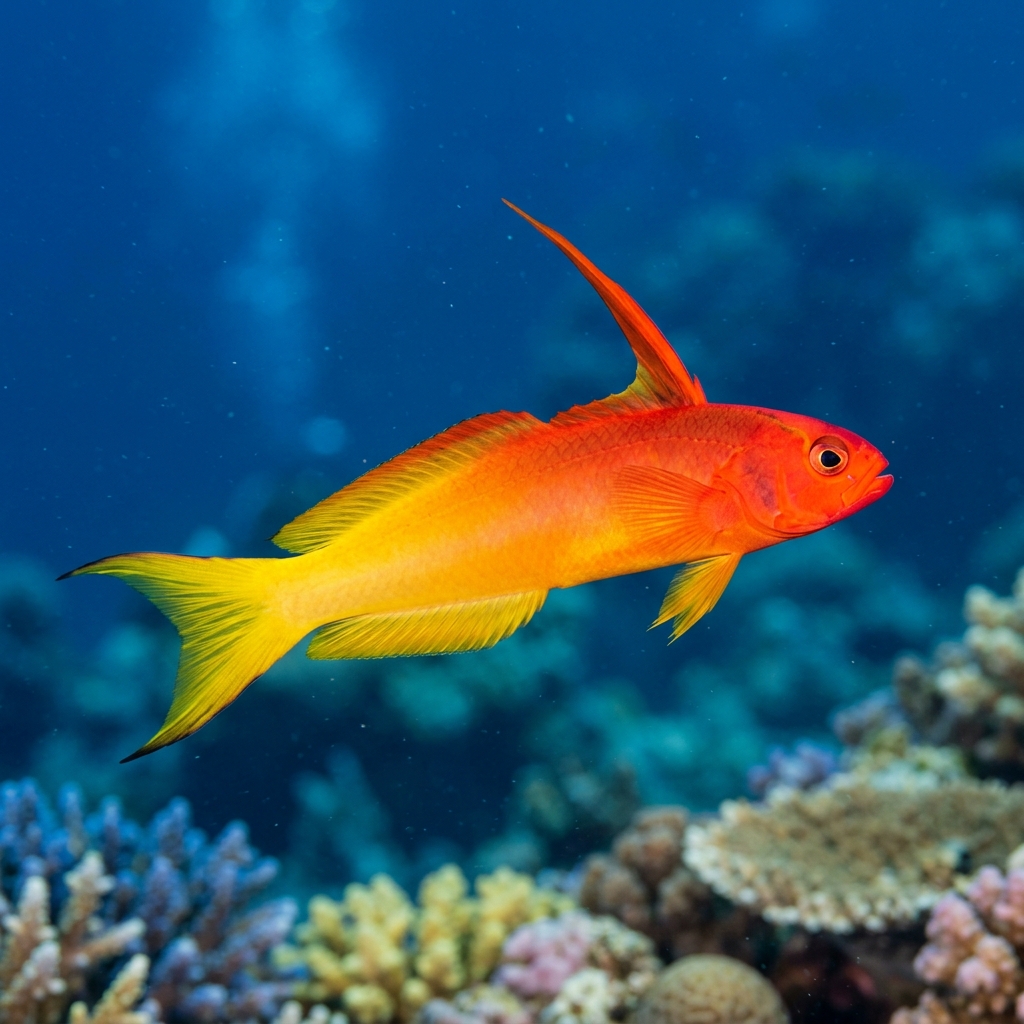
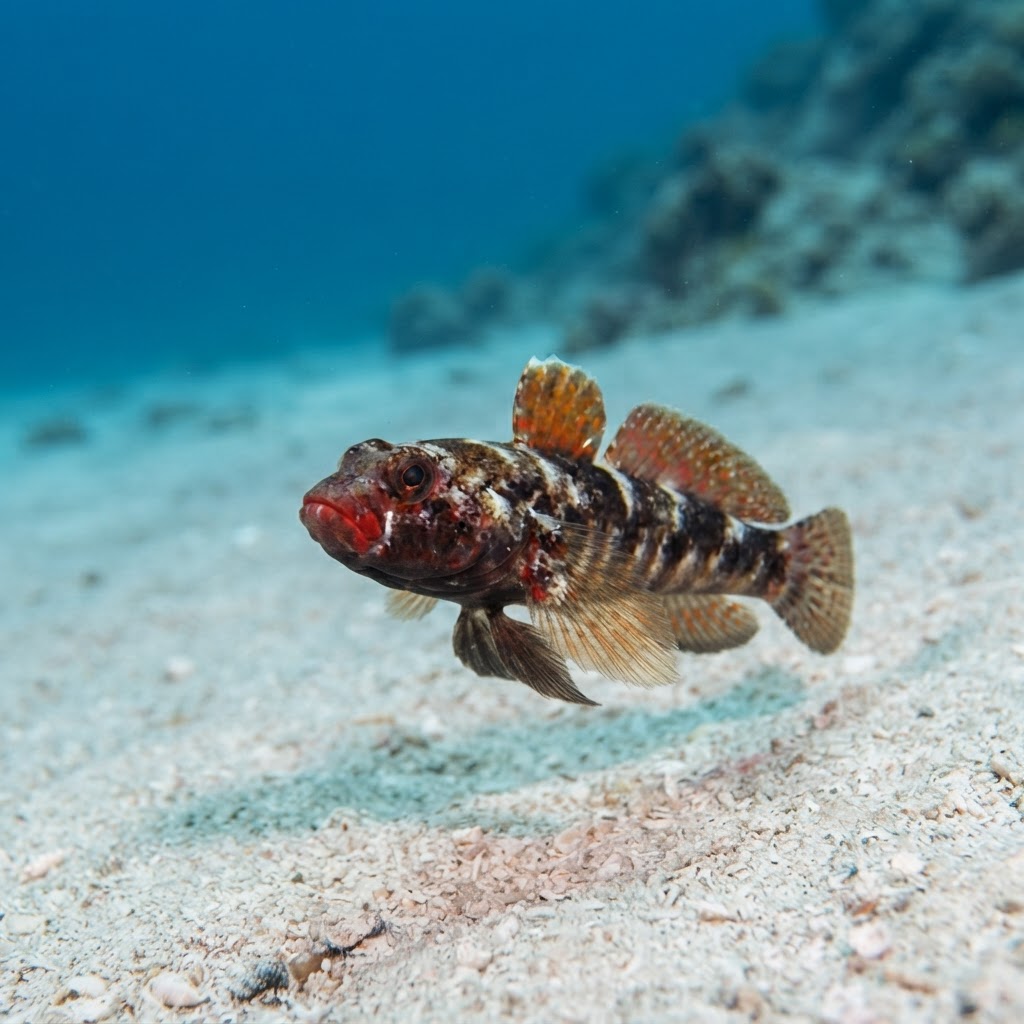
Reef neighbours a diver could mistake it for. Use the identification notes above to tell them apart.
Most reliably logged on sandy slopes around Koh Chang in Thailand, and a strong second population sits in West Papua, Indonesia, with a smaller scatter of sightings across Sulawesi. Between Thailand and Indonesia this covers the core of where divers actually find it, so those two countries are the sensible trip targets.
Mapping where Metallic Shrimp-goby is logged…
Best chances are around Koh Chang in Thailand and West Papua in Indonesia, with a few additional sites in Sulawesi. It is logged as uncommon even at these locations, so expect to search sandy slopes rather than stumble on it by chance.
There is no clear seasonal pattern in the sightings, and water temperatures stay a steady 28 to 29C, so it can turn up on any dive through the year at the right sandy sites.
Look for a small, pale, faintly metallic goby around 9cm long hovering tail-up at a burrow entrance on sand, usually with a shrimp visible nearby. The faint banding and silvery sheen separate it from plainer shrimp-gobies once you get a close look.
They reach about 9cm in length, a typical size for shrimp-gobies, so they are easy to miss against sand unless you are looking closely at burrow entrances.
The goby and its shrimp share one burrow: the shrimp digs and maintains the tunnel while the goby stands guard, using tail touches to warn it when to retreat. Neither one manages as well without the other on open sand.
Site and sighting data is aggregated from diver logs, iNaturalist and GBIF. For taxonomy and conservation status:
Slender Goby
806 sites