Cryptocentrus maudae
A pale, spotted goby that pairs with a burrowing shrimp on sandy reef flats in Krabi and Goa, best spotted hovering near its burrow.
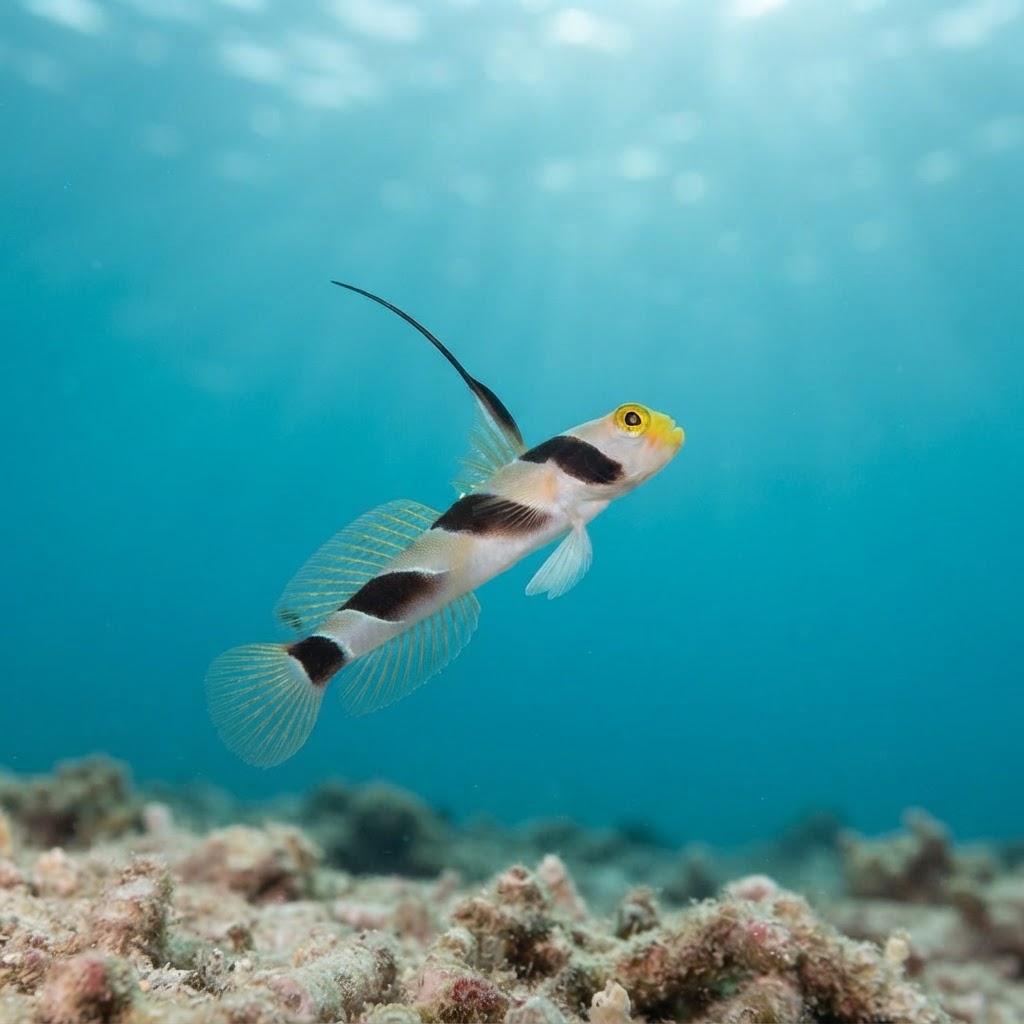
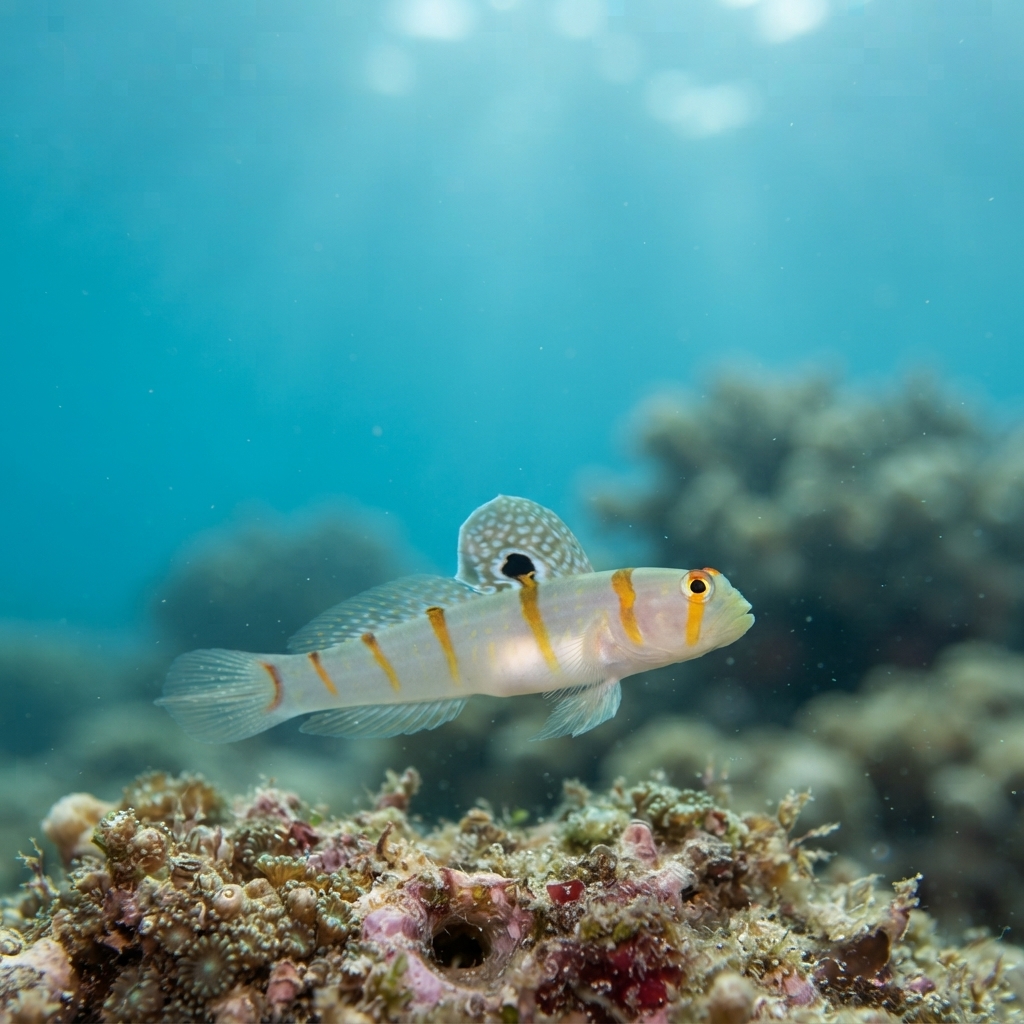
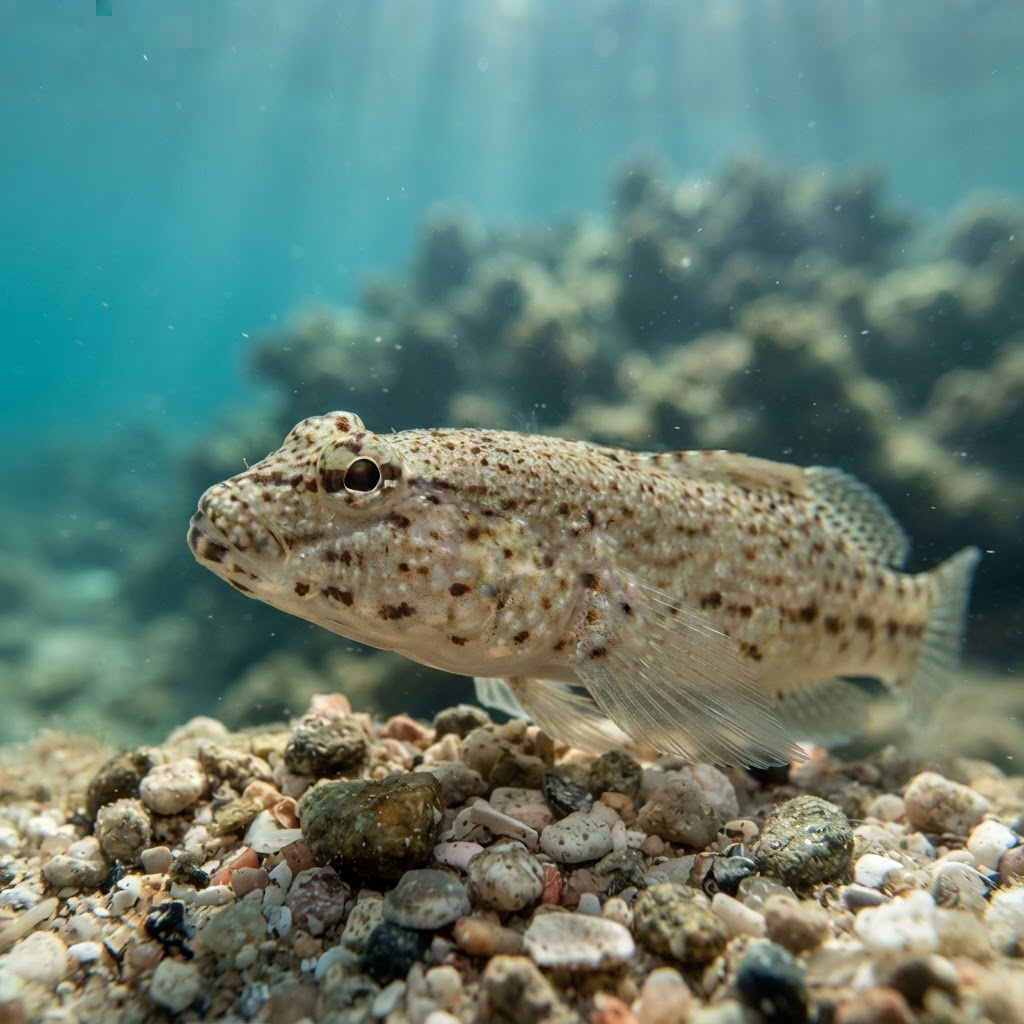
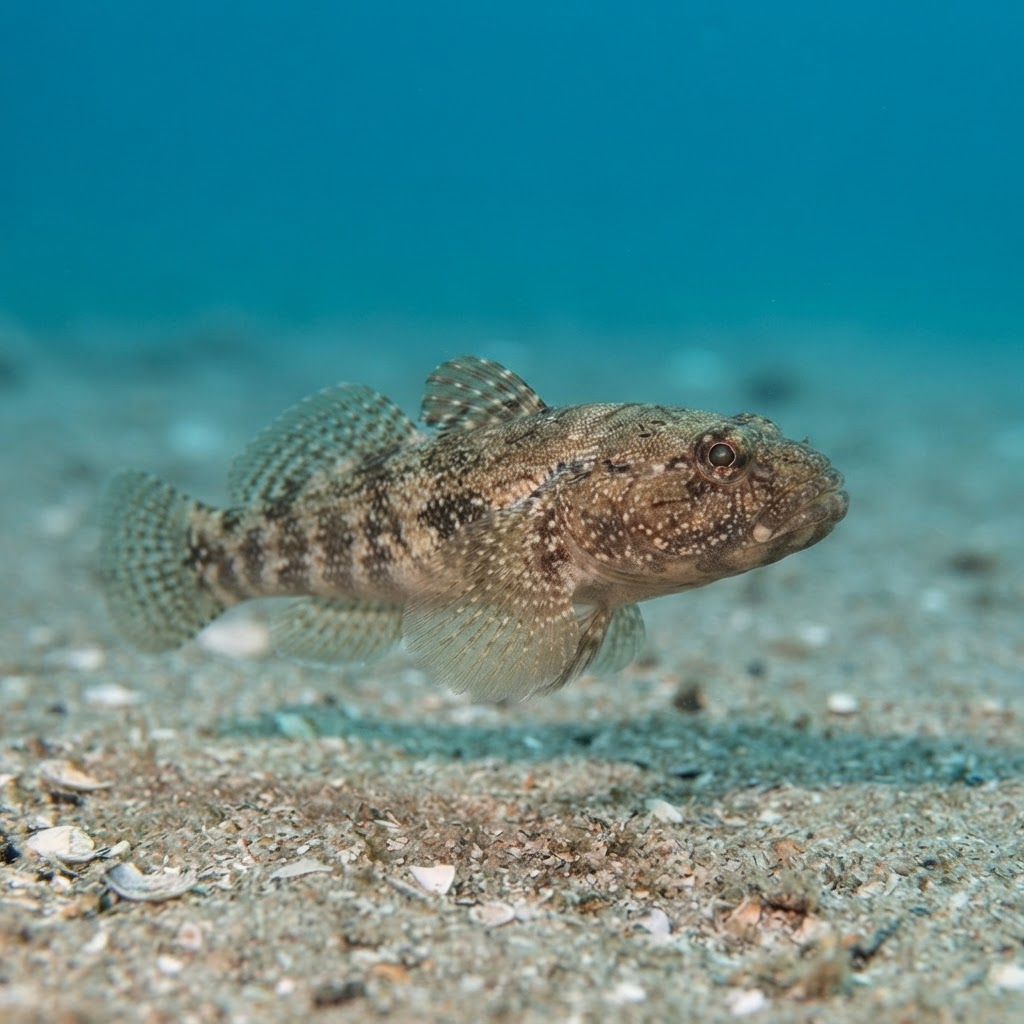
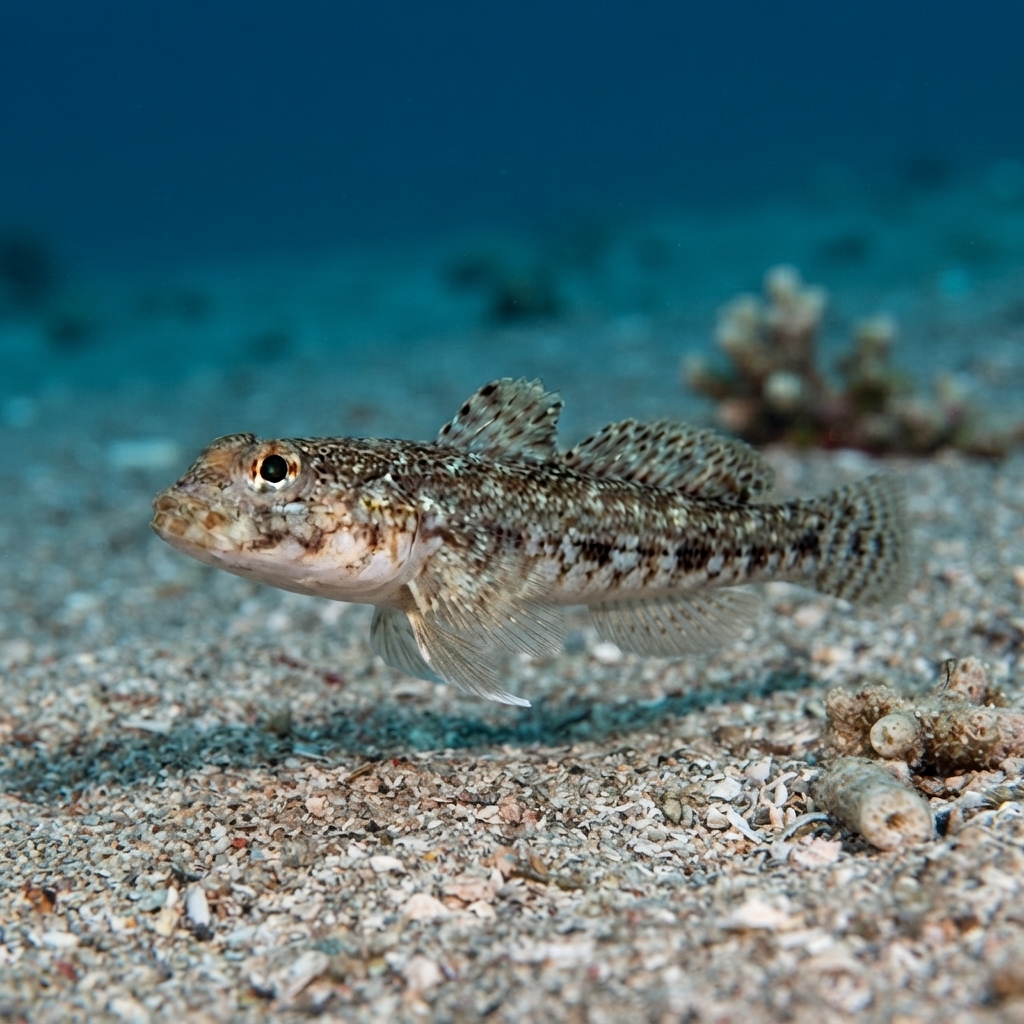
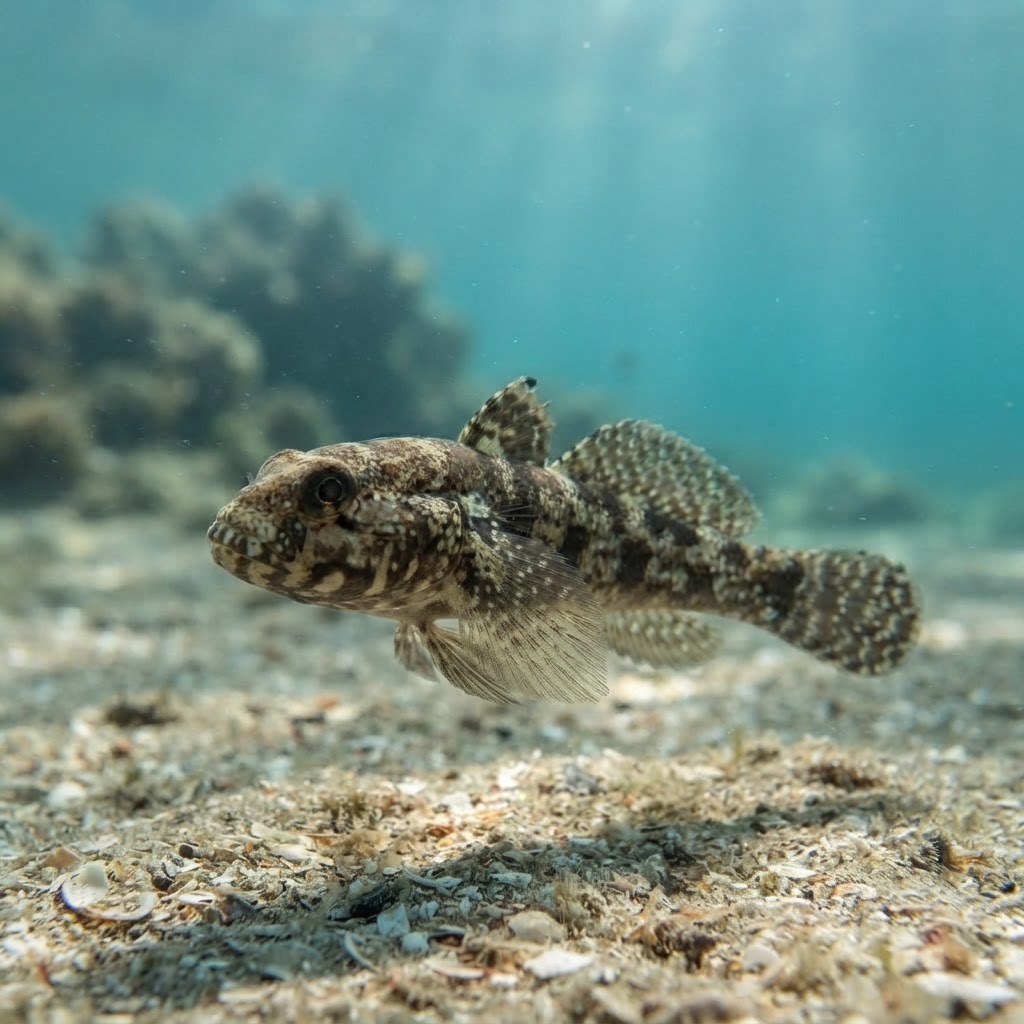
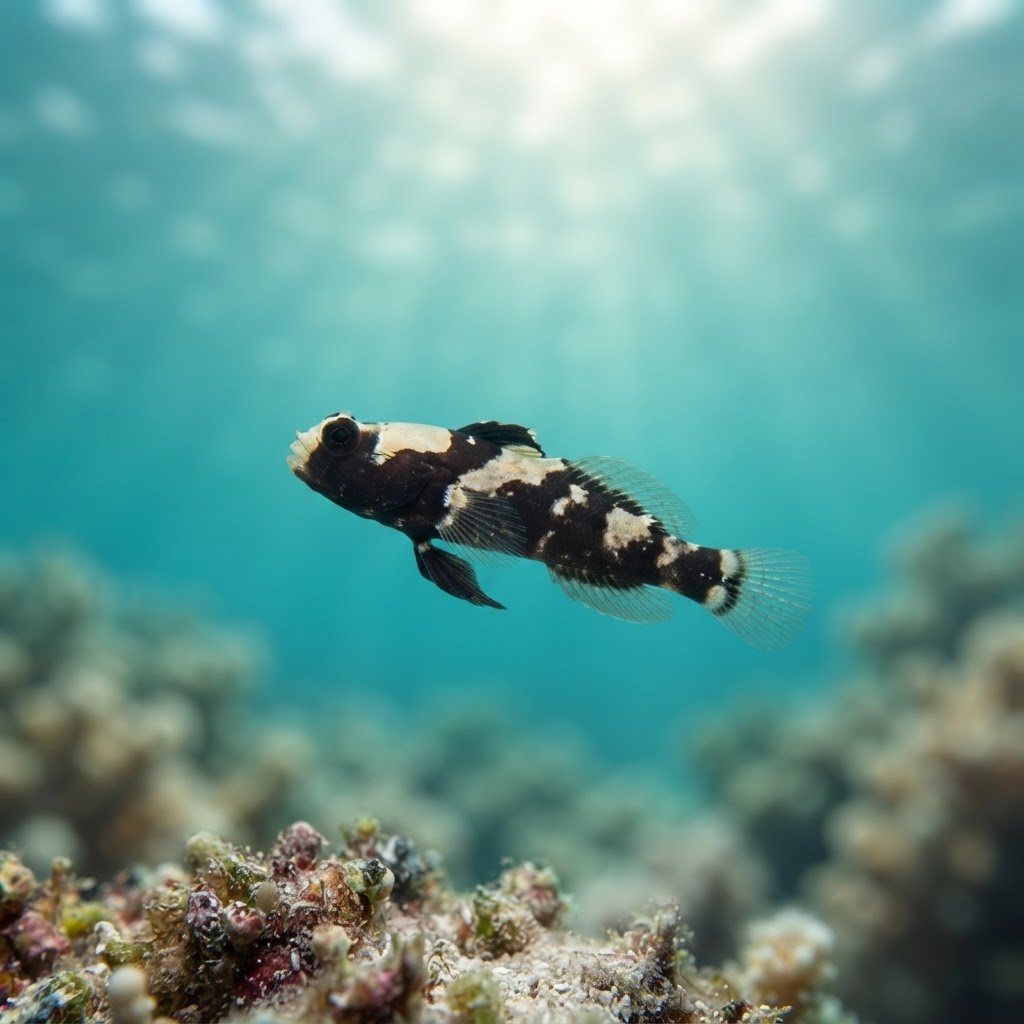
A small, slender goby around 7 cm long with a pale grey to sandy body covered in scattered dark spots and blotches, often with a faint bluish sheen along the flanks. It hovers with its front half raised above a burrow opening, tail flicking constantly, and rarely strays more than a body length from the hole. Look for the tall first dorsal fin, which it often flares as a signal.
Spends most of its time perched at the mouth of a burrow it shares with a symbiotic shrimp, letting the shrimp do the digging while it keeps watch for predators. It ducks below the sand at the first sign of a diver getting too close, then re-emerges once the coast looks clear, so a slow approach and a bit of patience from a metre or two away gets the best look. Logged as an uncommon find even at sites where it occurs, so spotting one usually takes a deliberate search of sandy patches rather than a chance pass.
Like other shrimpgobies, it keeps constant tactile contact with its shrimp partner via its tail, using touch to signal danger since the shrimp has poor eyesight and relies on the goby to warn it when to retreat underground.
No clear seasonal pattern shows up in the data, and with a comfortable range of 26.3 to 29.3 C it likely sits on sand flats year-round rather than appearing on a schedule. Plan around good visibility and calm conditions rather than a particular month.
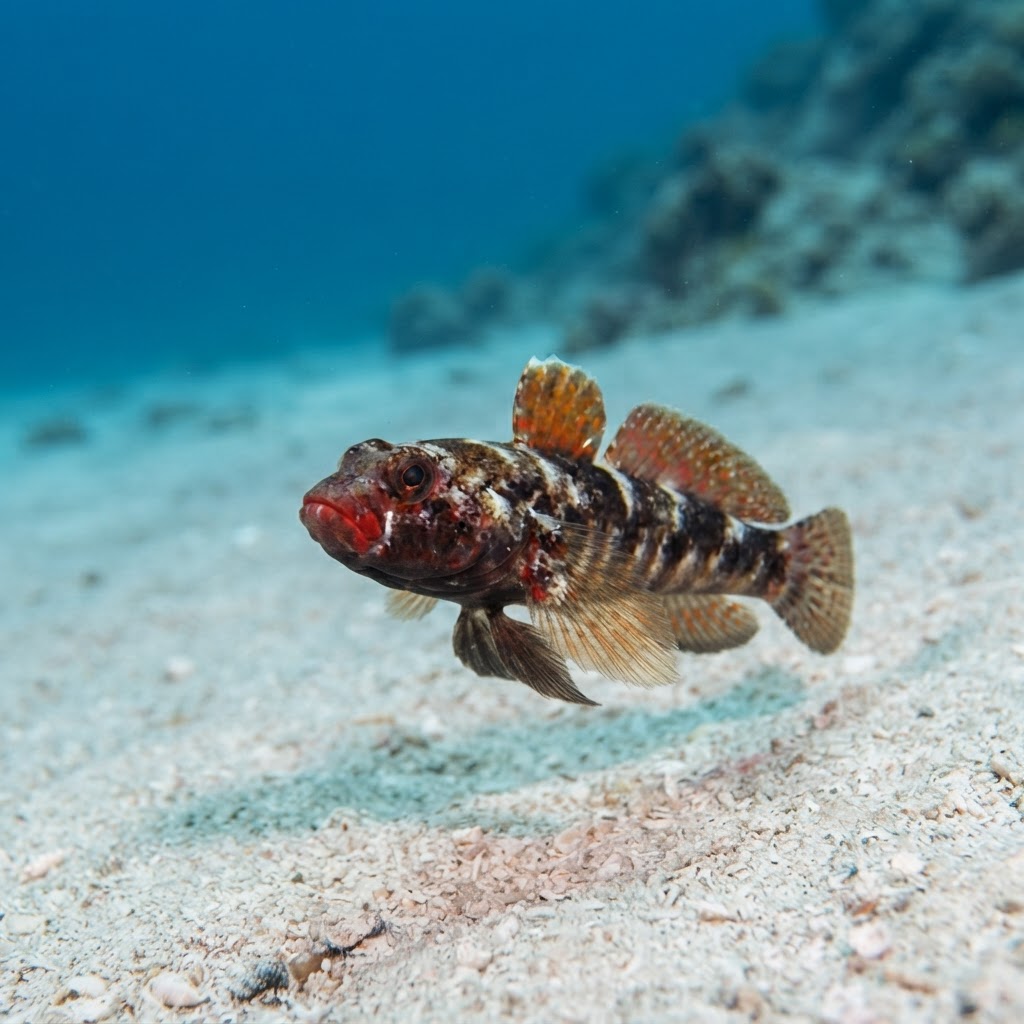
Reef neighbours a diver could mistake it for. Use the identification notes above to tell them apart.
Most consistently logged on sandy and rubble slopes in Krabi, Thailand, and Goa, India, which together account for the bulk of recorded sightings. Smaller numbers turn up in Queensland, Australia, and around Nouméa, New Caledonia, so it is worth scanning open sand patches on reefs across the wider Indo-Pacific.
Mapping where Maude's Shrimpgoby is logged…
The most reliable sightings come from Krabi in Thailand and Goa in India, with occasional records from Queensland, Australia, and Nouméa, New Caledonia. Look on sandy or rubble patches near reef edges rather than on the reef structure itself.
There is no strong seasonal pattern in the sightings, and it favours water between roughly 26 and 29 C, so it is a year-round find on tropical sand flats within that range.
Look for a small pale grey goby around 7 cm long with dark scattered spots, hovering just above a burrow entrance on sand or rubble. It flicks its tail constantly and often flares a tall first dorsal fin as a signal to its shrimp partner.
They stay small, typically around 7 cm in length, which is standard for shrimpgobies sharing burrows with pistol shrimp.
Maude's Shrimpgoby lives in a burrow dug and maintained by a partner pistol shrimp. The shrimp does the excavation while the goby, which has much better eyesight, watches for predators and warns the shrimp by touch when to duck inside.
Site and sighting data is aggregated from diver logs, iNaturalist and GBIF. For taxonomy and conservation status:
Slender Goby
806 sites