Amblyeleotris gymnocephala
A pale, black-masked goby paired with a shrimp on Sulawesi's sandy slopes, most reliably found in 25-29C water year-round.
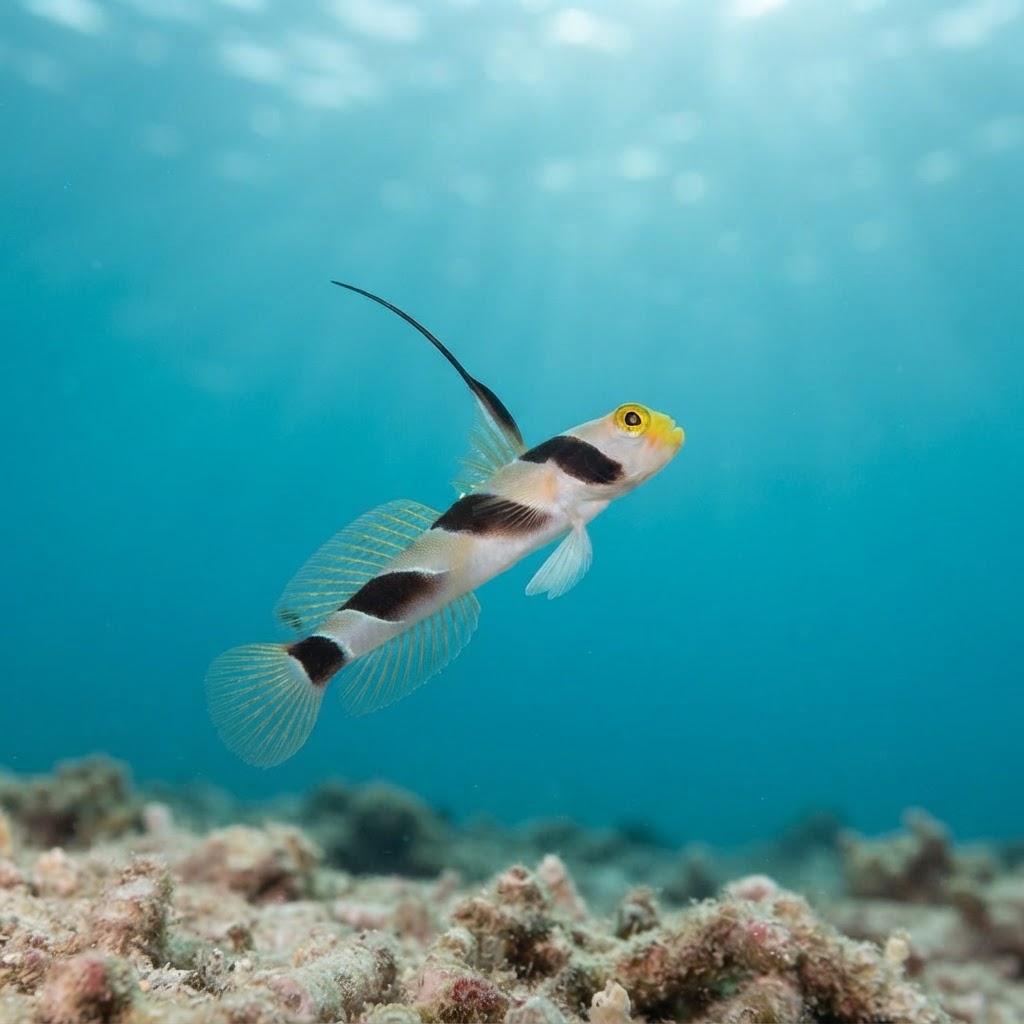
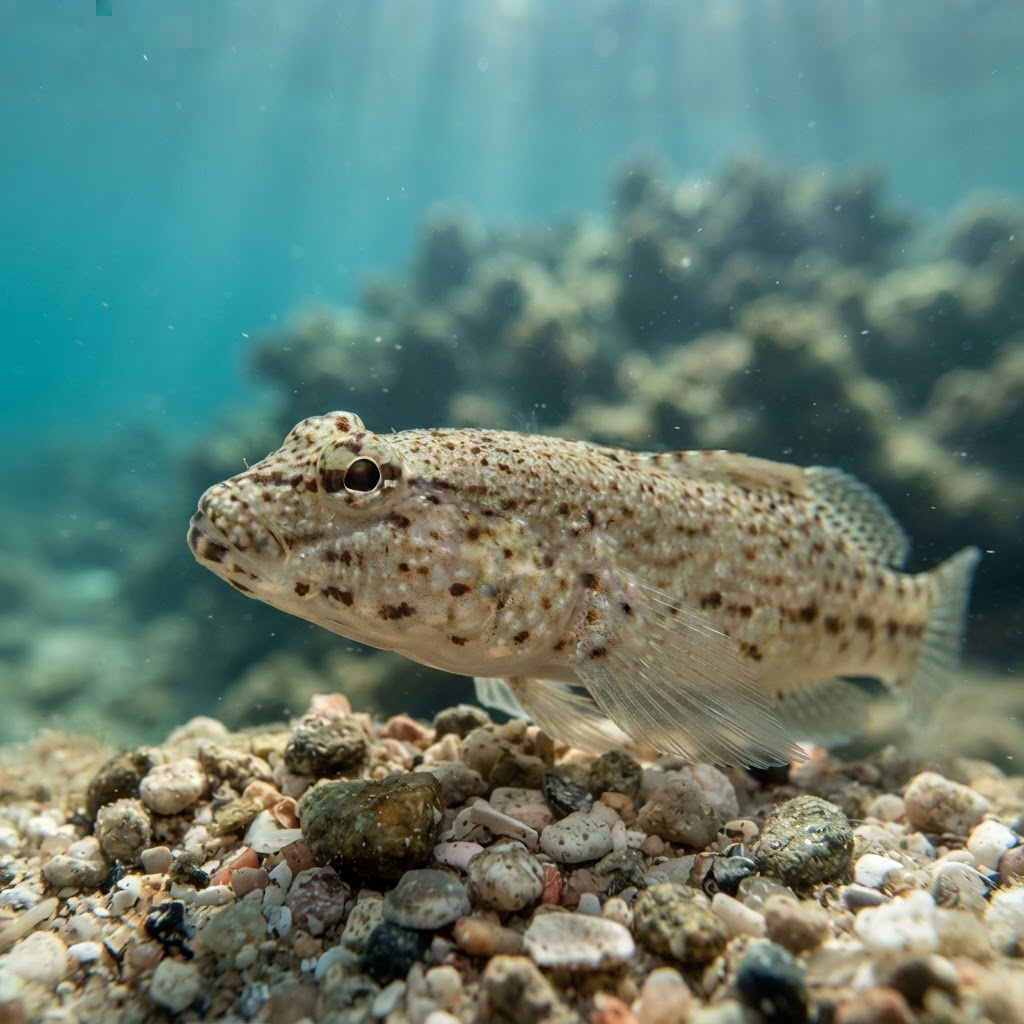
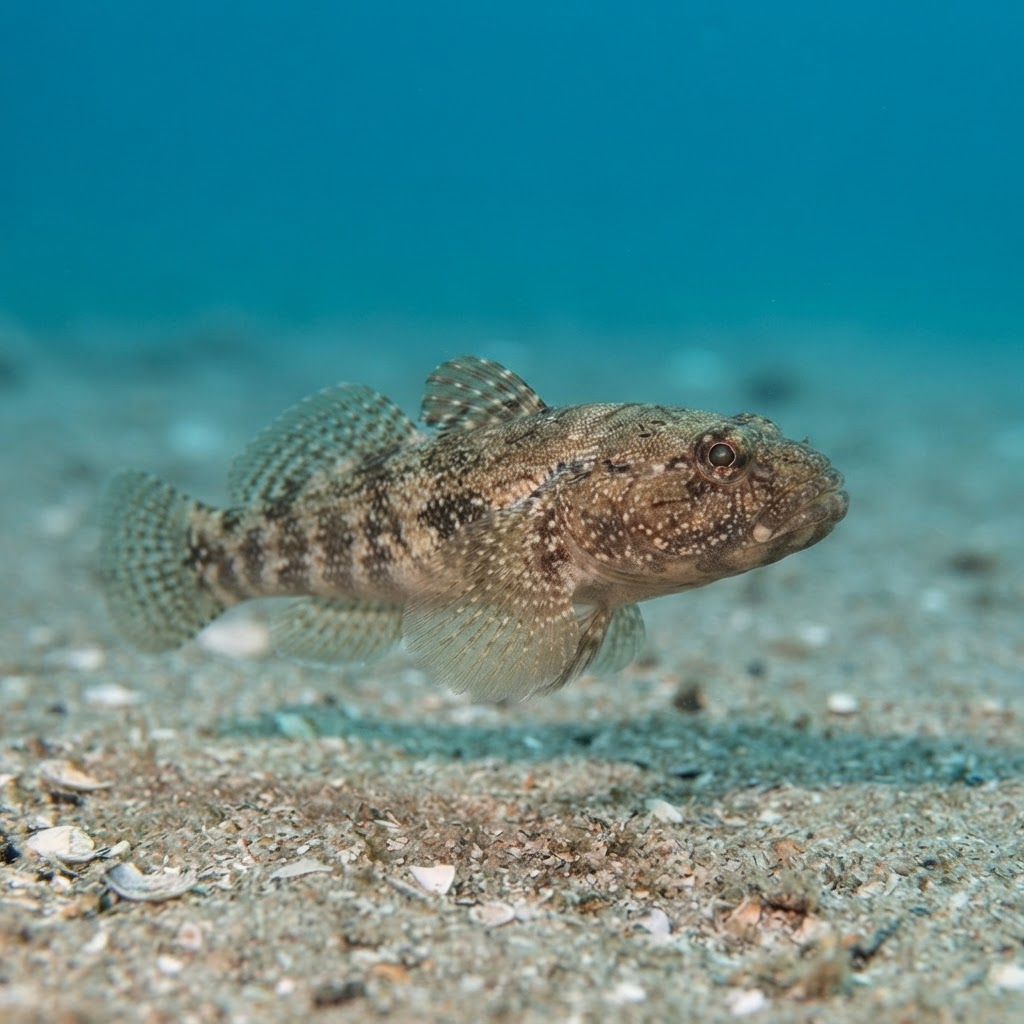
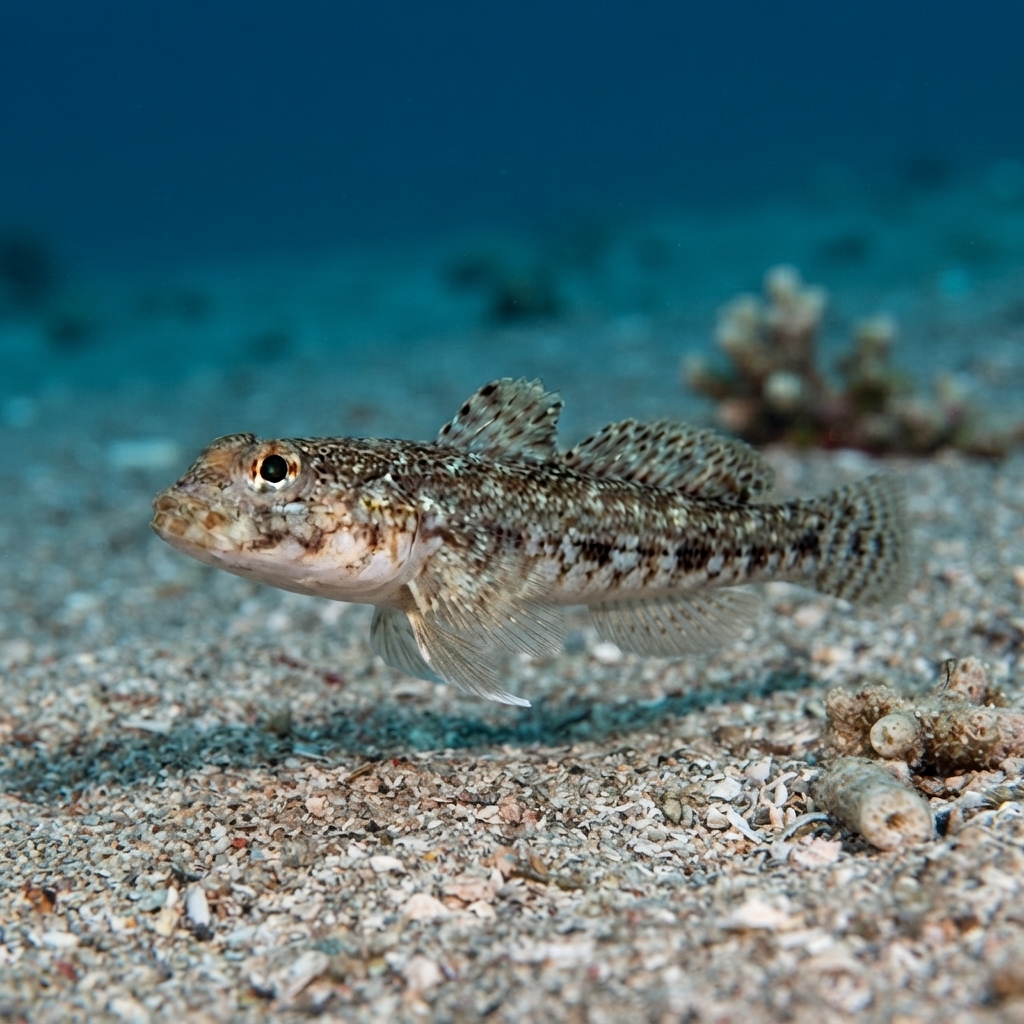
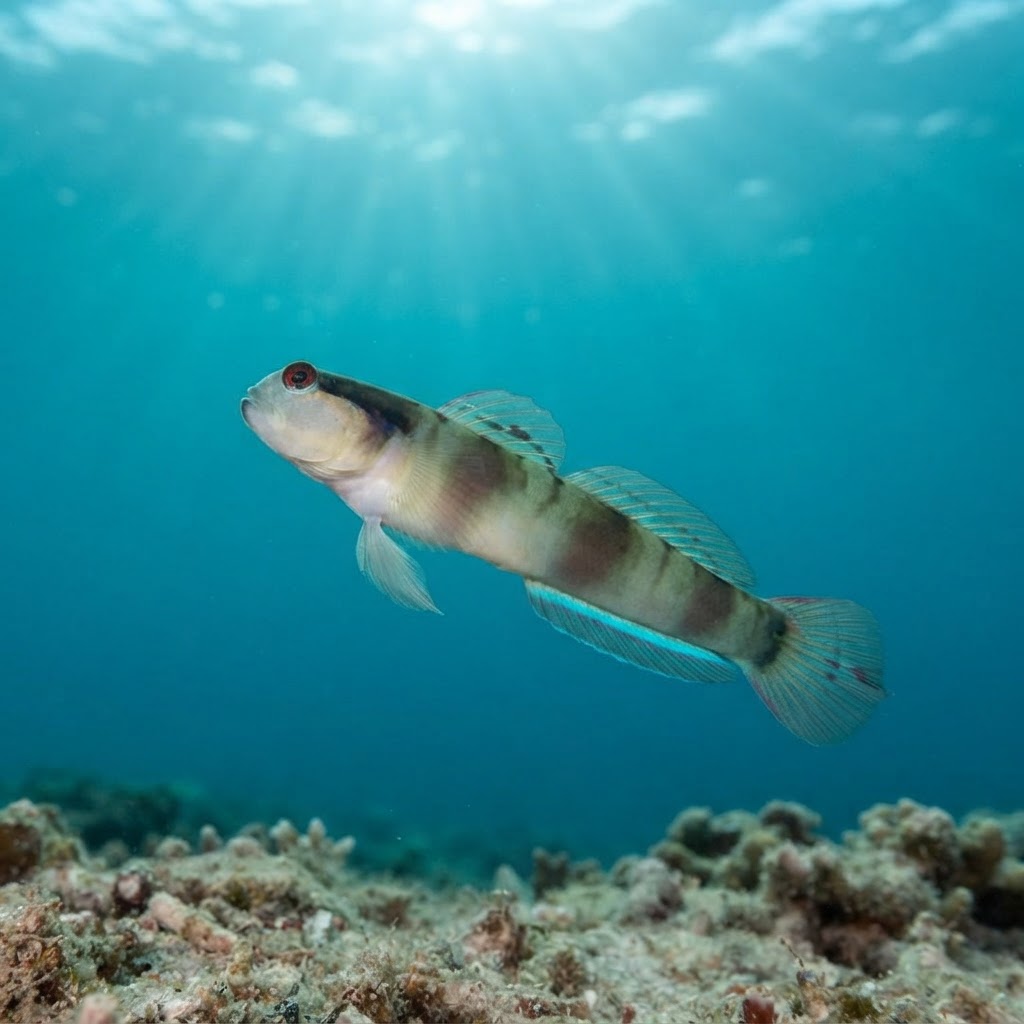
A slim, pale grey-to-cream goby around 10 cm long, marked by a dark band running through the eye like a mask, which is the easiest field mark to key on. Body carries faint rows of dusky spots or blotches along the flank, fading toward the tail. It holds a low, alert posture near its burrow entrance, hovering just off the sand rather than perched flat on it.
Watch for it hovering just above a burrow mouth on sand or rubble patches, often sharing the hole with a partner shrimp that keeps the tunnel clear while the goby stands guard. It reacts to divers with quick retreats into the burrow rather than fleeing across open ground, so a slow approach and a bit of patience usually gets it to re-emerge. Most sightings come from sand flats and gentle slopes rather than open reef faces.
Like other shrimpgobies, it keeps a symbiotic (mutually beneficial) partnership with a burrowing shrimp, relying on touch cues from its antennae to know when it is safe to surface from the shared tunnel.
Sighting records show no clear seasonal pattern, and it sits comfortably in 25.2 to 29.1C water, so it is a year-round find on the reefs where it occurs.
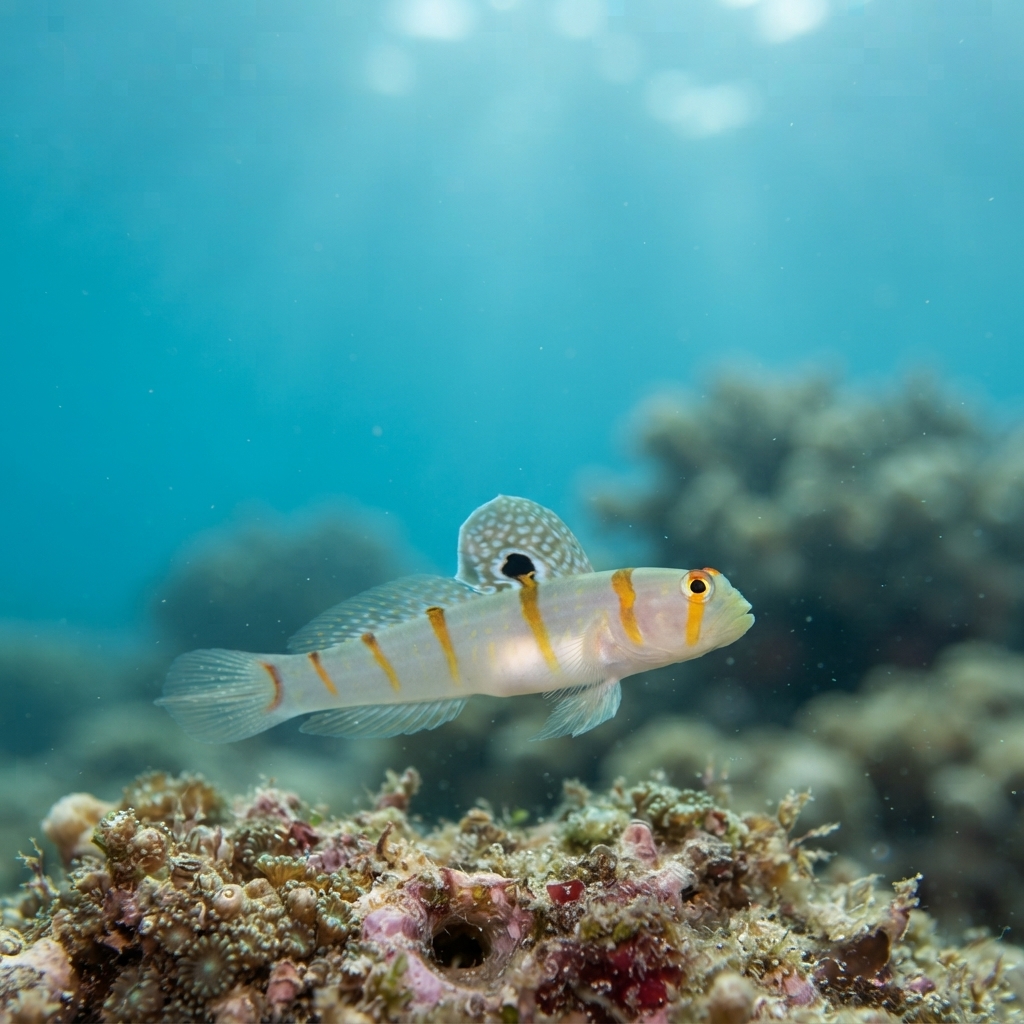
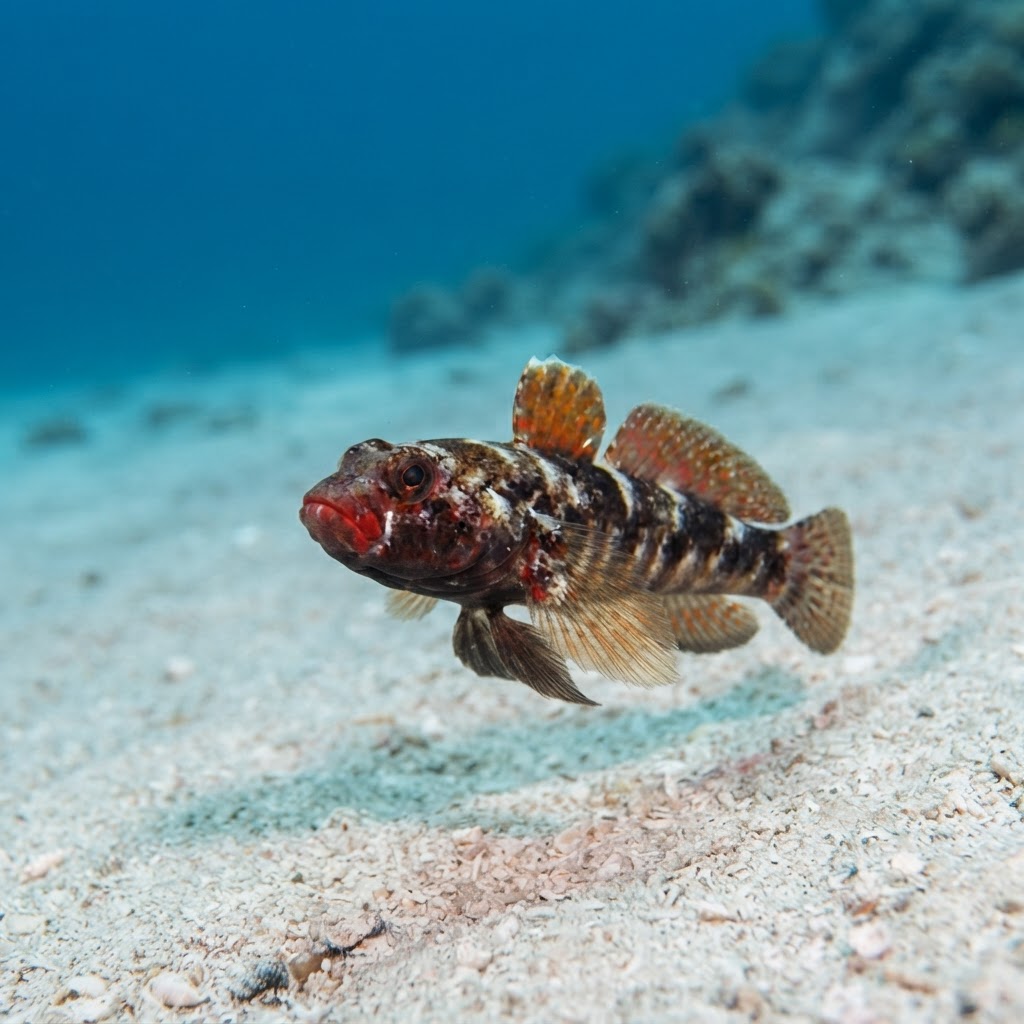
Reef neighbours a diver could mistake it for. Use the identification notes above to tell them apart.
Most commonly logged in Sulawesi, Indonesia, which accounts for the bulk of recorded sightings, with further records from Raja Ampat. Outside Indonesia it turns up in Queensland, Australia and the Visayas in the Philippines, though less frequently.
Mapping where Masked Shrimpgoby is logged…
Sulawesi in Indonesia is the strongest region for sightings, with additional records from Raja Ampat, Queensland in Australia, and the Visayas in the Philippines.
There is no strong seasonal pattern in sightings, and it stays within a warm 25 to 29C range, so it can be found on suitable sand and rubble reefs throughout the year.
Look for a small pale goby, about 10 cm, with a dark band crossing the eye like a mask and faint spotting along the body, usually hovering near a burrow entrance on sand.
They stay small, reaching around 10 cm in length, typical for shrimpgobies sharing burrows on sand and rubble bottoms.
It shares its burrow with a partner shrimp in a mutualistic relationship, standing guard against predators while the shrimp maintains the tunnel, both species benefiting from the arrangement.
No, they pose no threat to divers and will simply retreat into their burrow if approached too quickly.
Site and sighting data is aggregated from diver logs, iNaturalist and GBIF. For taxonomy and conservation status:
Slender Goby
806 sites