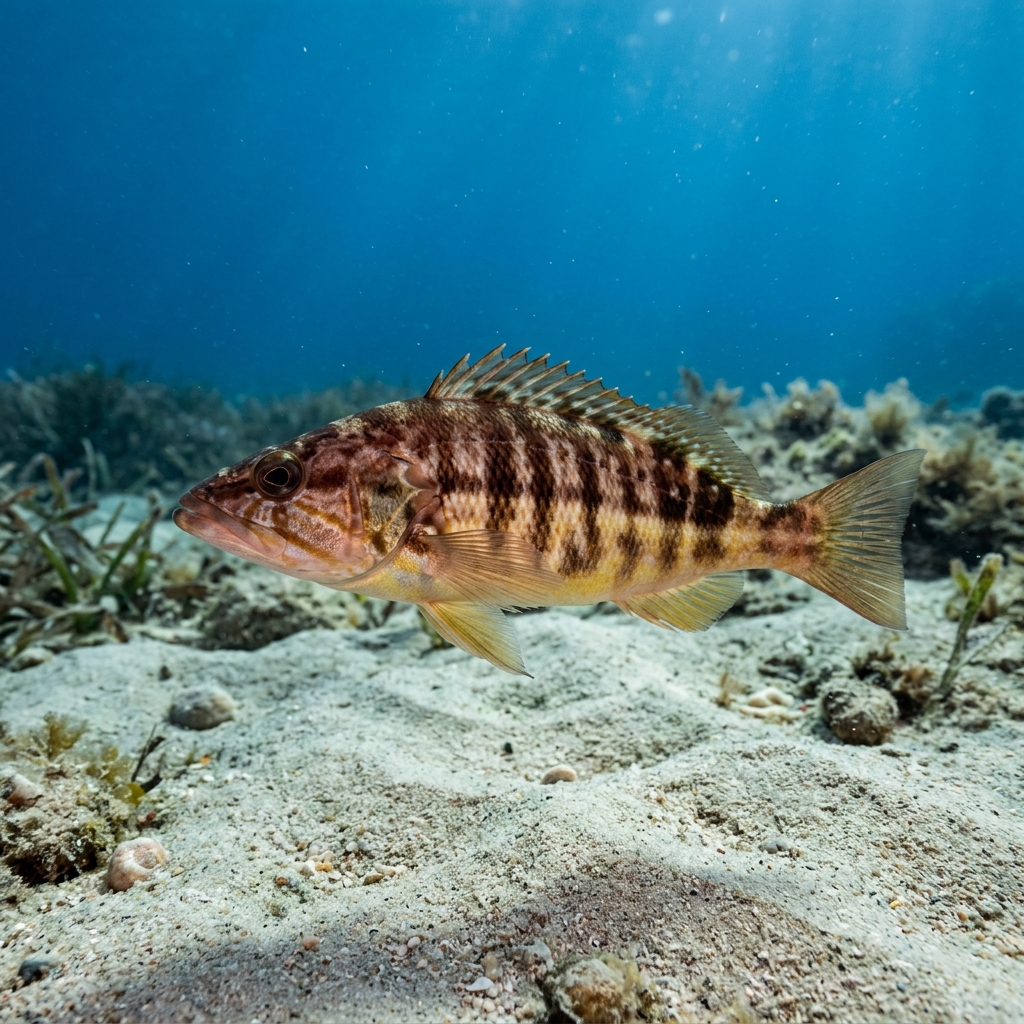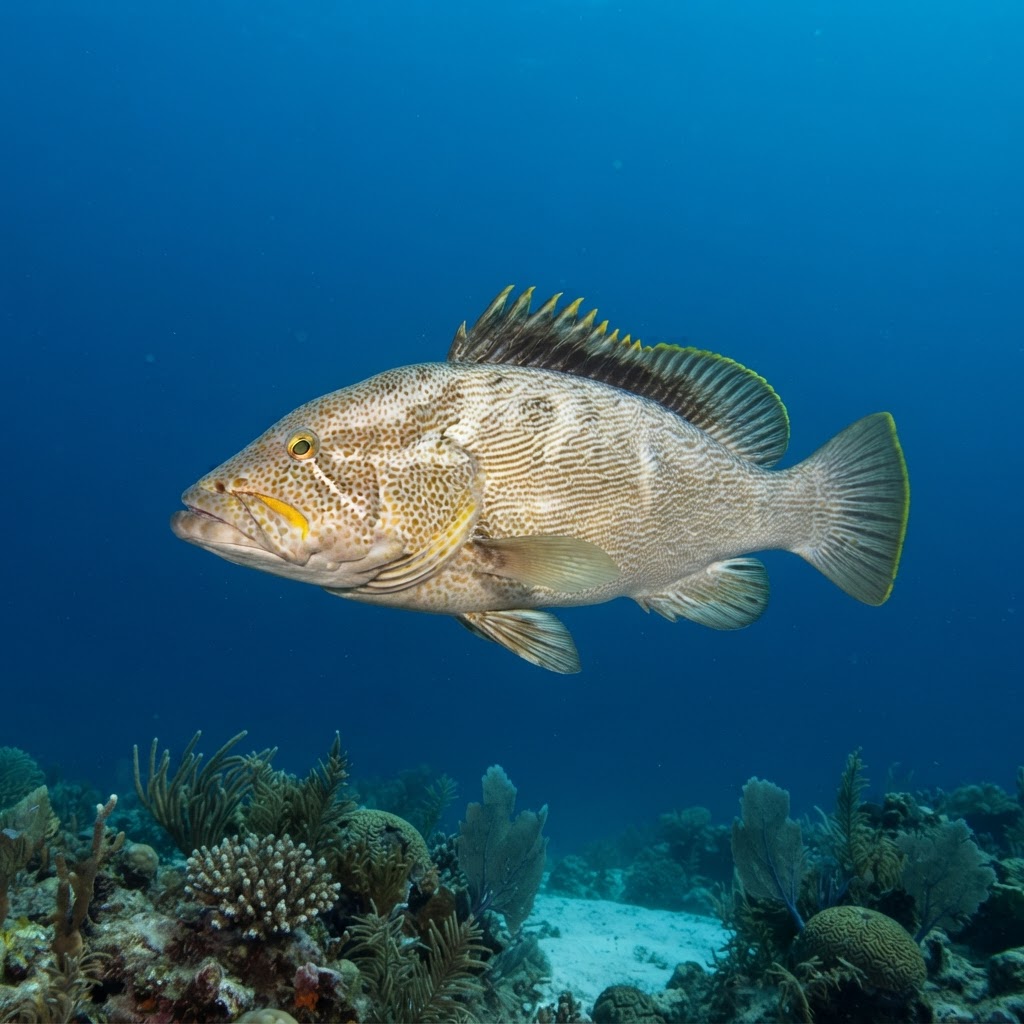
Epinephelus undulatostriatus
Common on deep reefs off New South Wales, this grouper favours 21-25C water and shows up year-round on Australia's south-east coast.
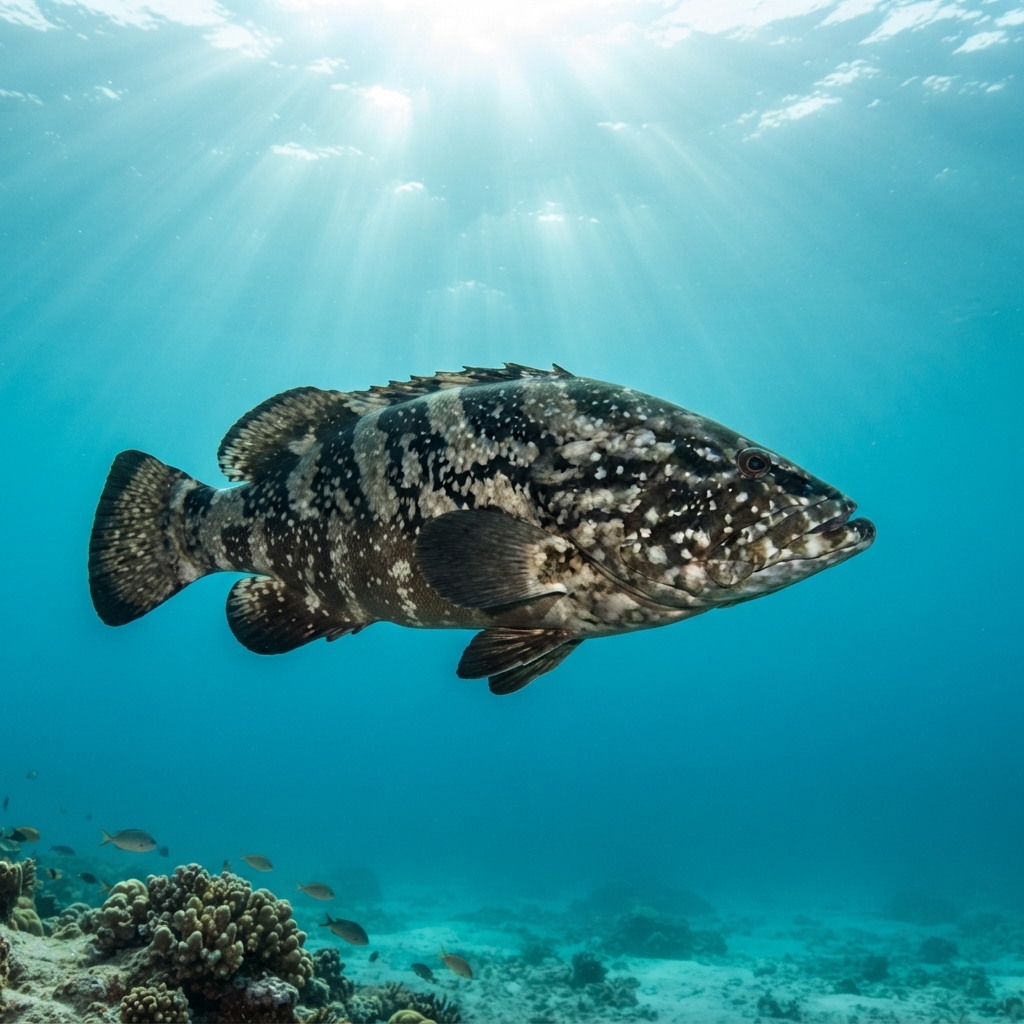
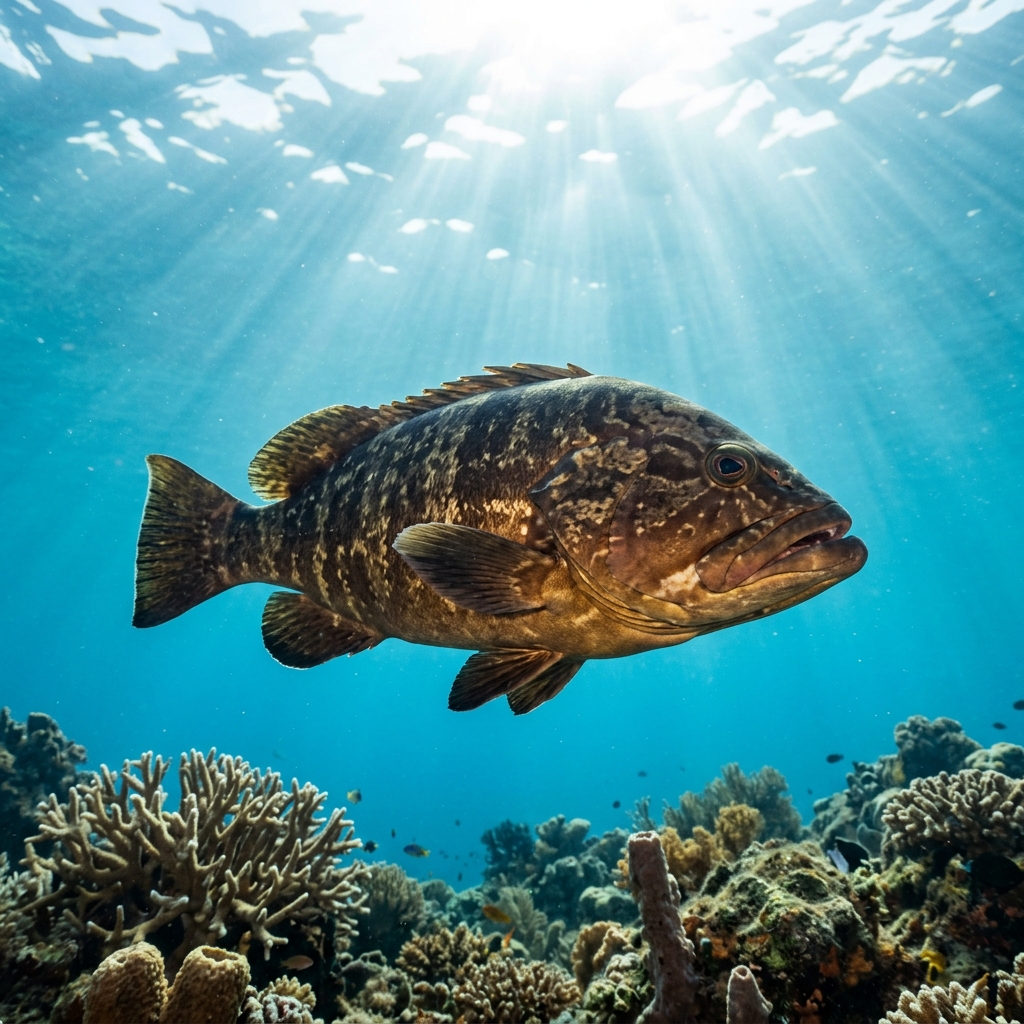
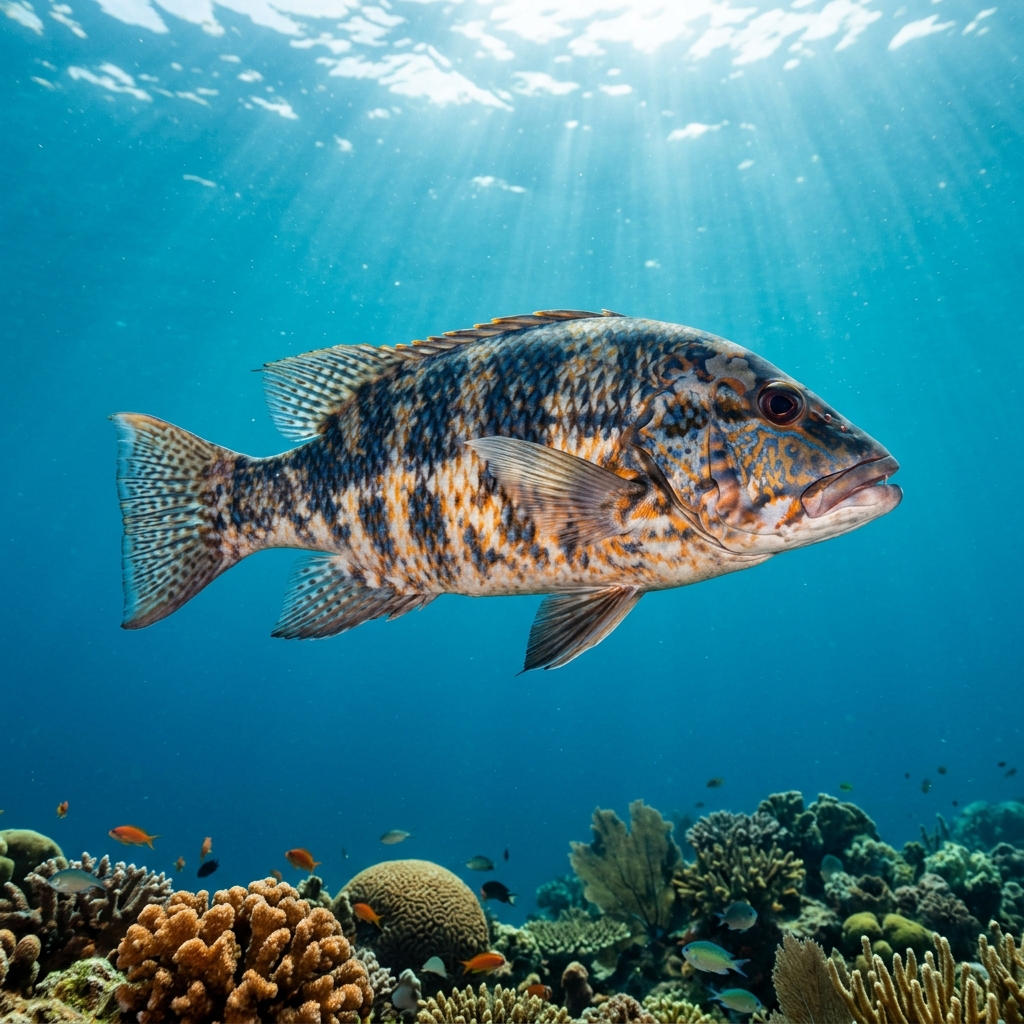
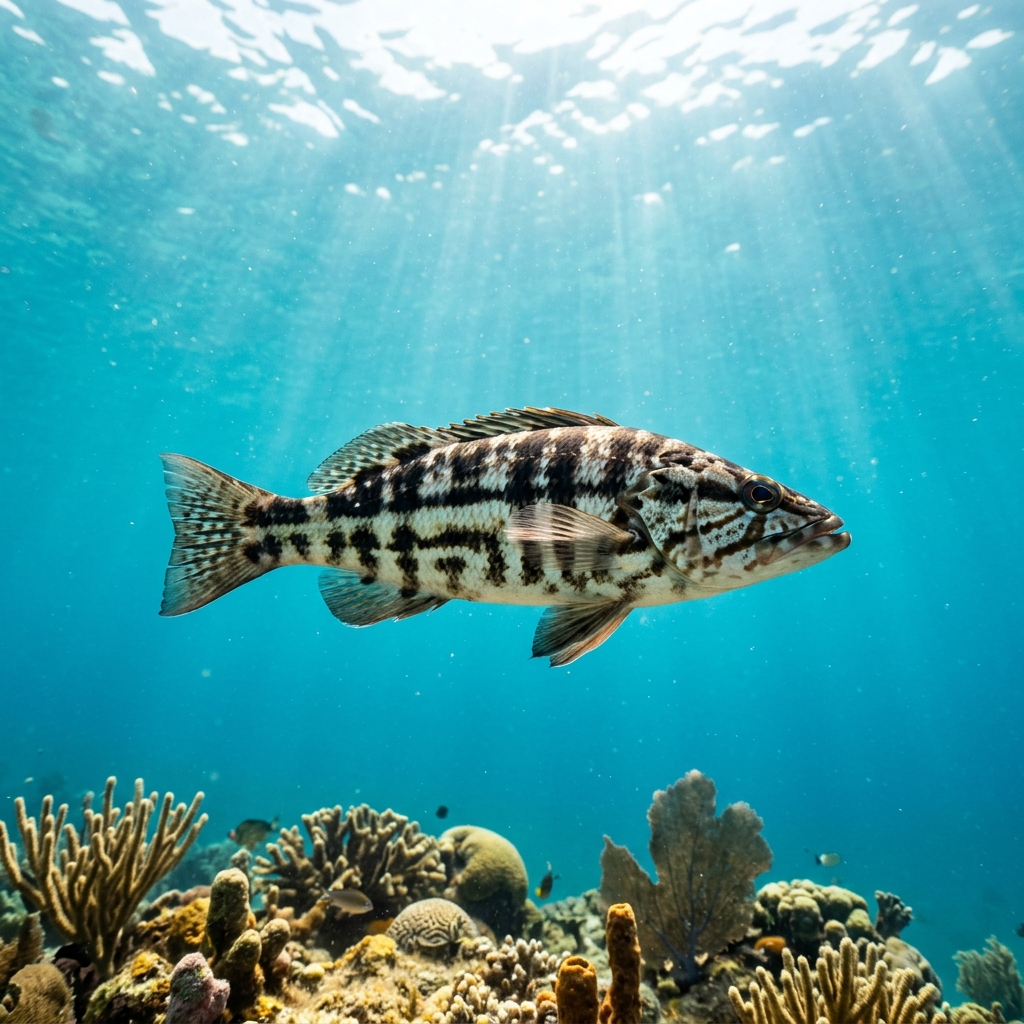
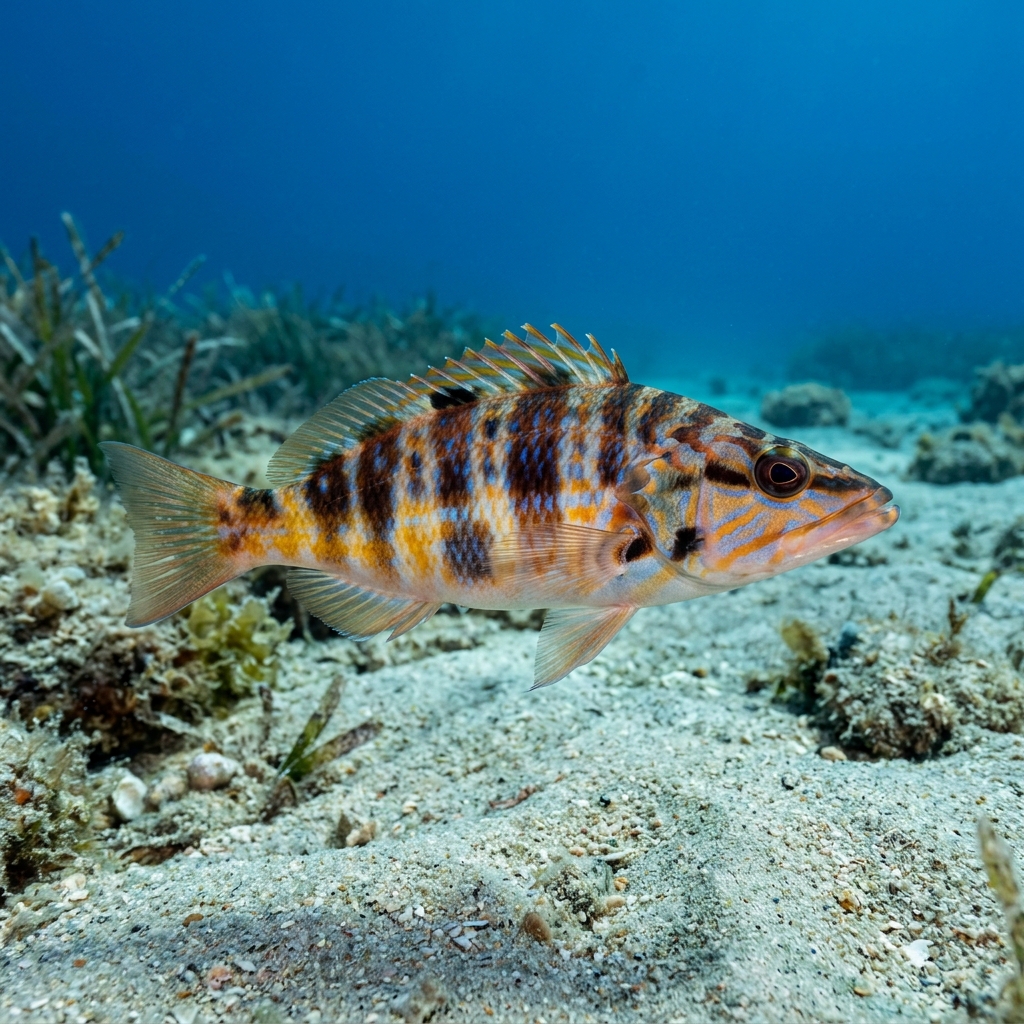
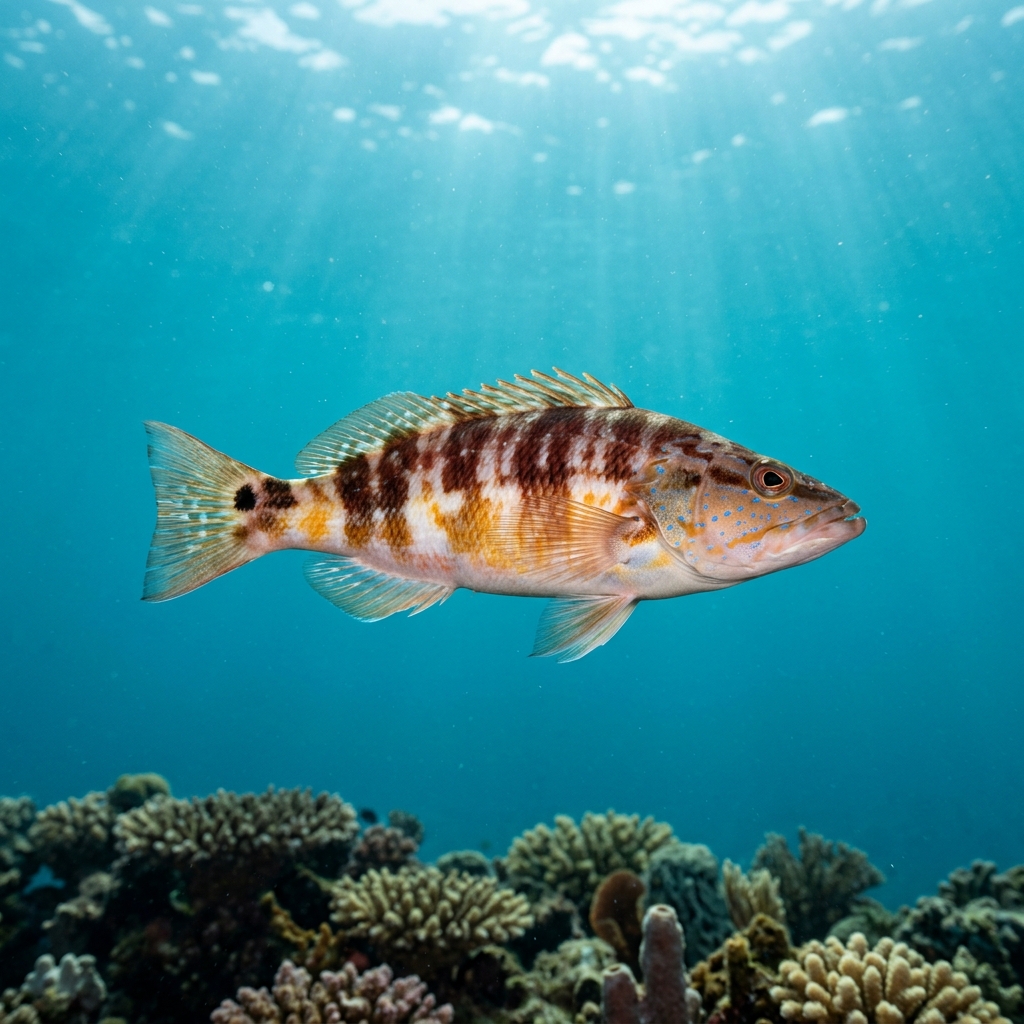
A stocky, deep-bodied grouper reaching around 42 cm, patterned with wavy pale lines and blotches over a brown to grey base that breaks up its outline against rocky reef. Look for the heavy-lipped grouper face and a thick-set body that sits low near ledges and caves rather than swimming in open water. There's no strong colour split reported between juveniles and adults for this species.
Divers most often find this grouper tucked close to rocky ledges, overhangs and reef structure at depth, holding station rather than cruising in the open. It tends to be unbothered by divers at a respectful distance, staying put or easing back under cover rather than bolting, which makes for a good look if you approach slowly. Most sightings come from the 27-80 m range, so it's a fish for deeper dives rather than the shallows.
Like many groupers, it's a reef ambush predator, relying on its mottled camouflage against rock and low light at depth to close on prey rather than chasing it down in open water.
Sightings show no detectable seasonal pattern, so treat it as a year-round resident wherever it's found. Its comfort range of 21.1 to 25.1C fits the water temperatures typical of New South Wales reefs across most of the year.
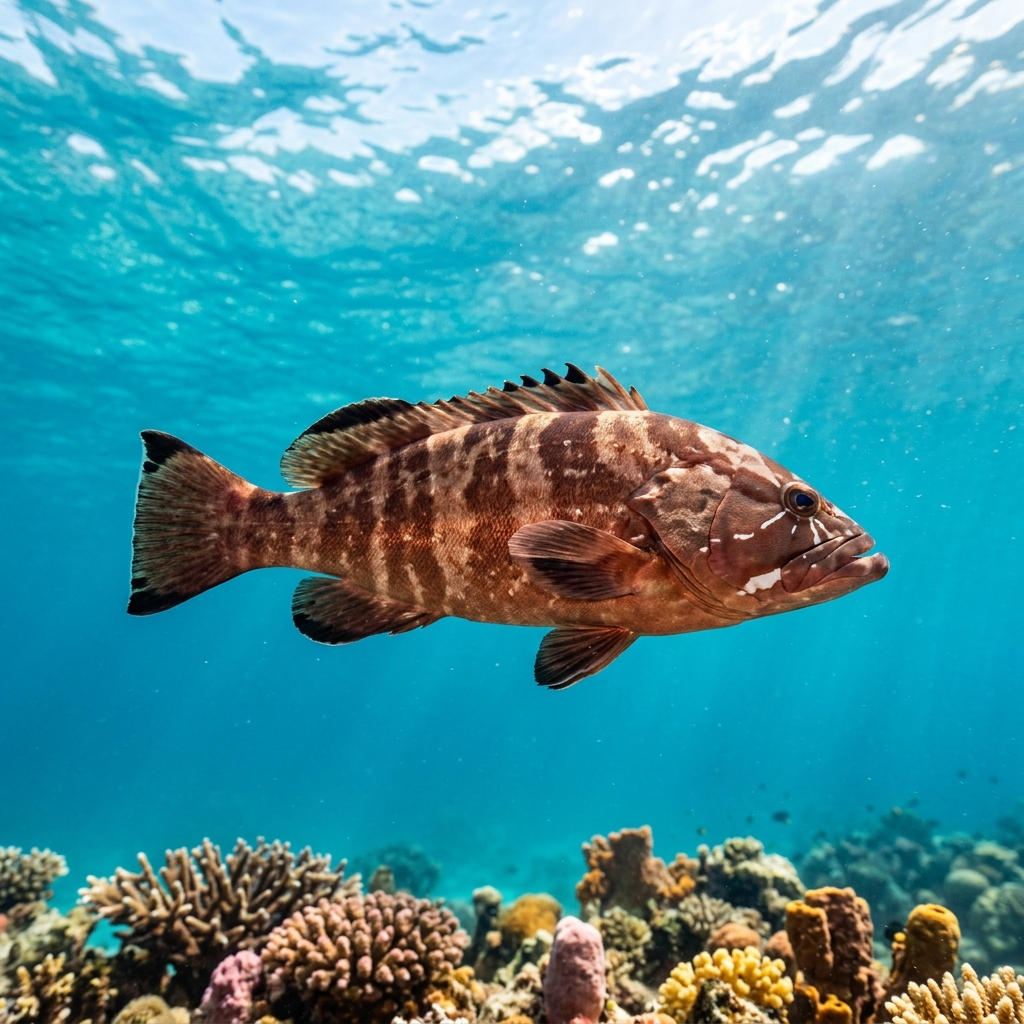
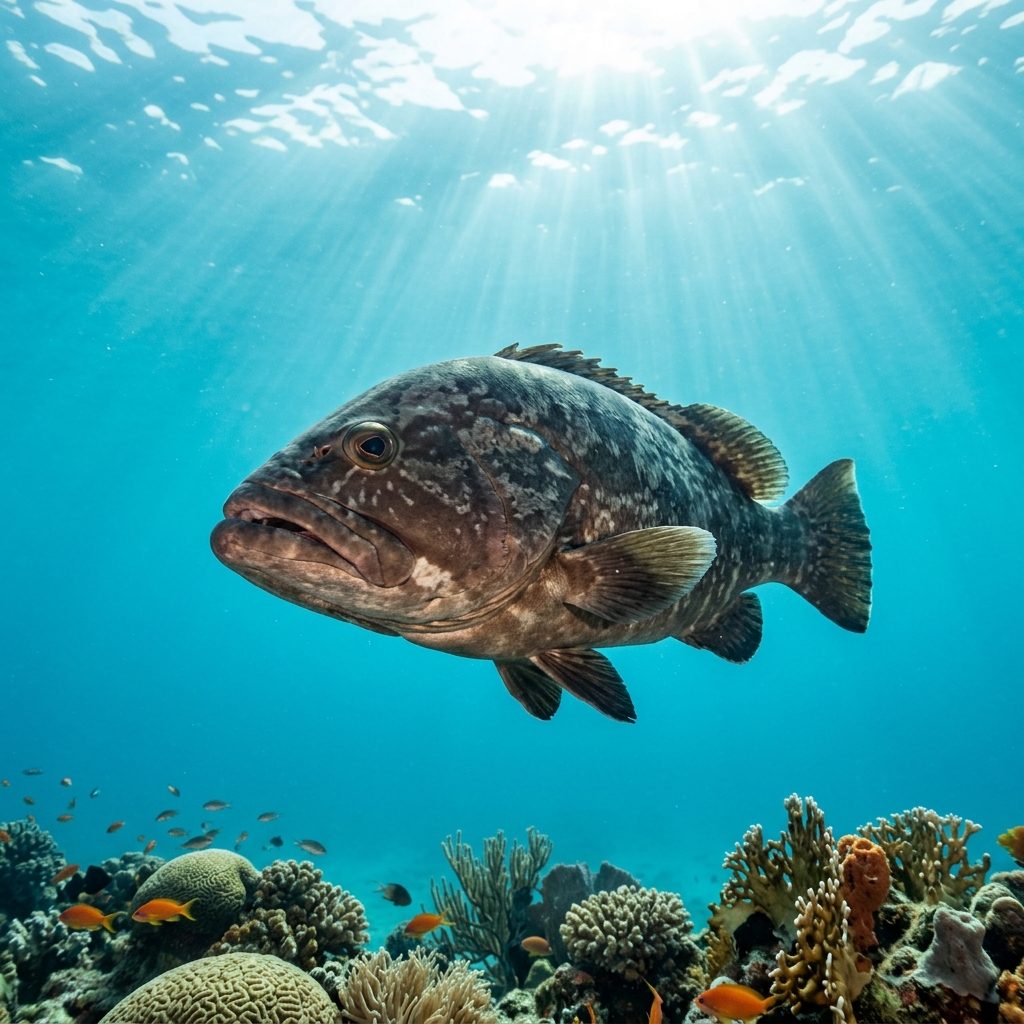
Reef neighbours a diver could mistake it for. Use the identification notes above to tell them apart.
This one is very much a New South Wales fish, with New South Wales sites accounting for the bulk of logged sightings and a smaller scatter of records from Queensland. Within Australia it turns up reliably on deeper temperate and subtropical reef sites rather than the shallow tropical reefs further north.
Mapping where Maori Rockcod is logged…
New South Wales is the stronghold, with a smaller number of sites in Queensland. It's logged as common at most of these locations, so it's a realistic target on New South Wales reef dives.
There's no clear seasonal pattern in the sightings, so it's considered a year-round fish. Its preferred water temperature of roughly 21 to 25C matches New South Wales conditions for much of the year.
Look for a stocky grouper around 42 cm with wavy pale lines and blotches over a brown-grey body, holding close to rocky ledges or overhangs. Its heavy build and reef-hugging posture separate it from more free-swimming reef fish nearby.
They typically reach around 42 cm, making them a mid-sized grouper rather than one of the giants of the family like the Queensland Grouper.
No, they're not considered dangerous to divers. They tend to hold near reef structure and are generally calm around divers who keep a reasonable distance.
Site and sighting data is aggregated from diver logs, iNaturalist and GBIF. For taxonomy and conservation status:
Blacktip Grouper
2,726 sites