Epinephelus daemelii
A large, dark, curious grouper found on rocky reefs across New South Wales, Australia, in 16 to 24 C water year-round.
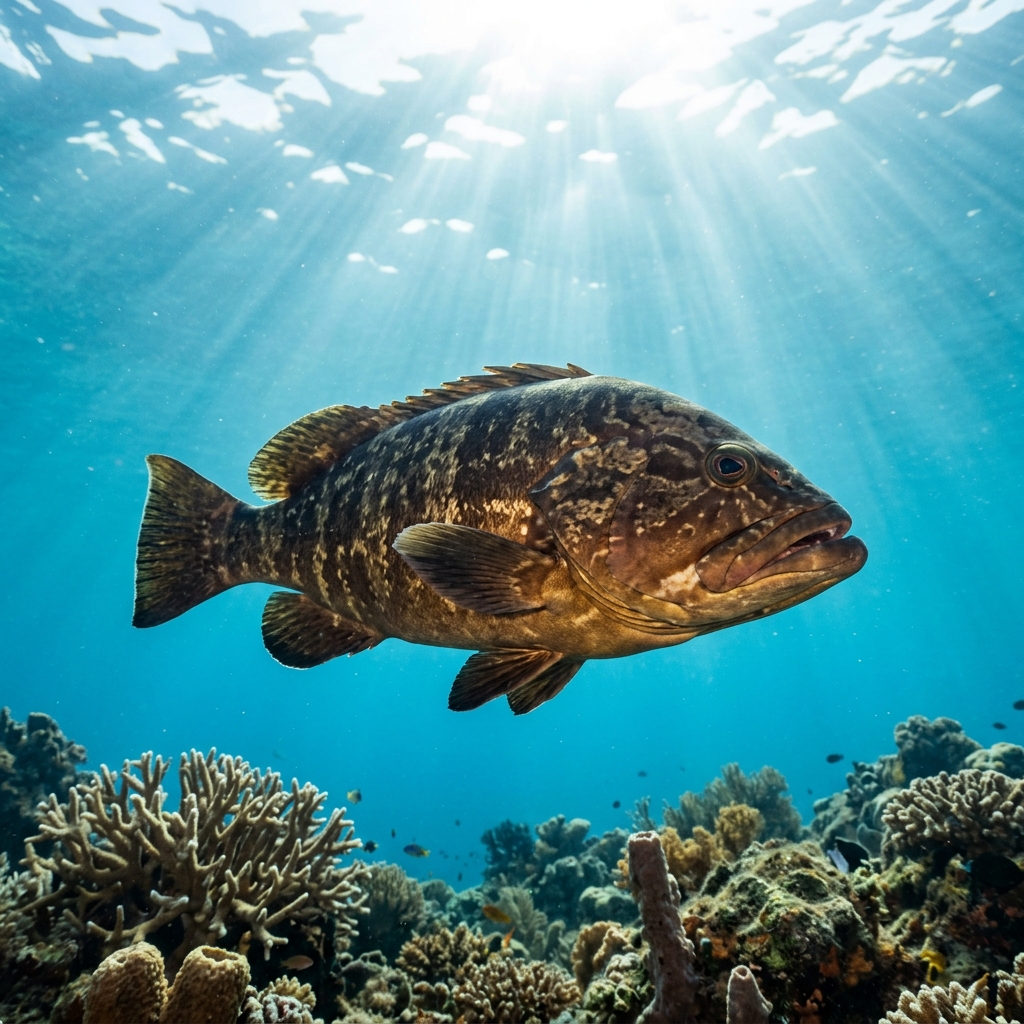
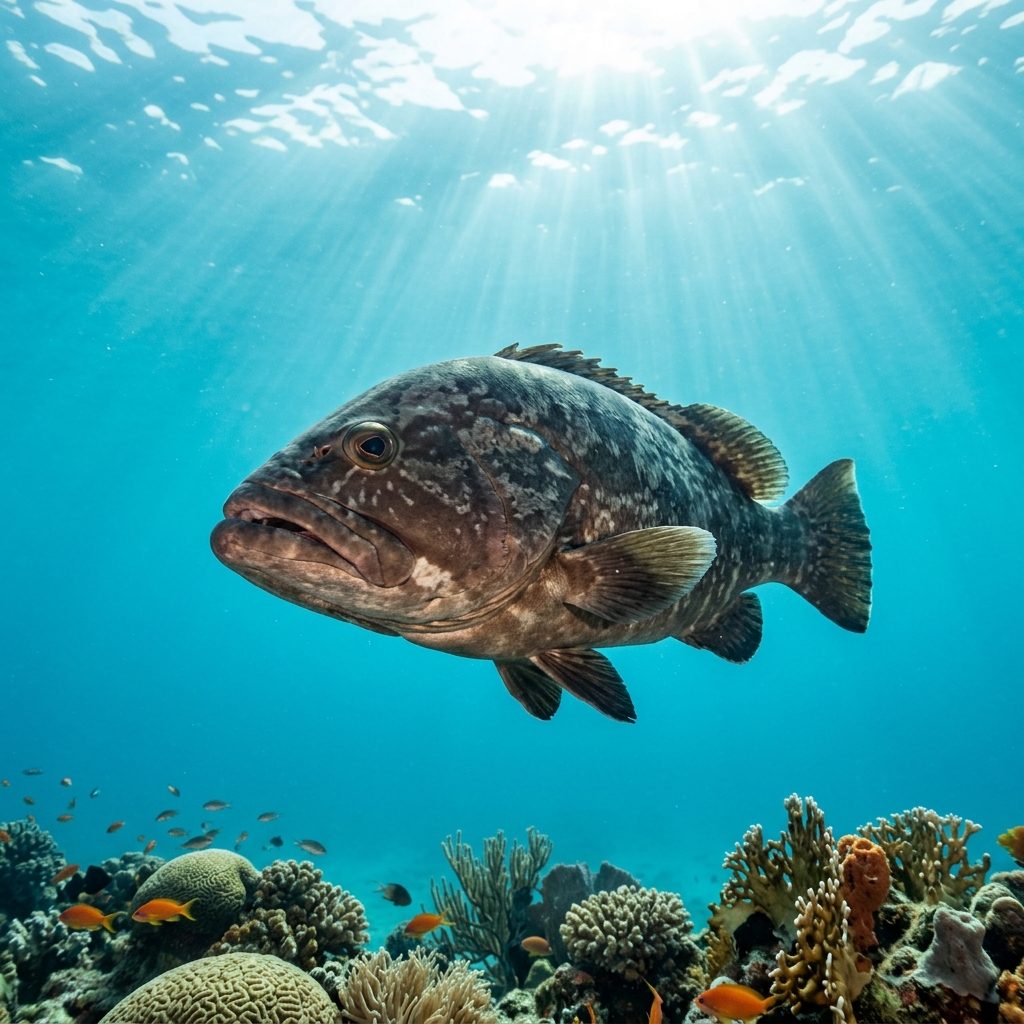
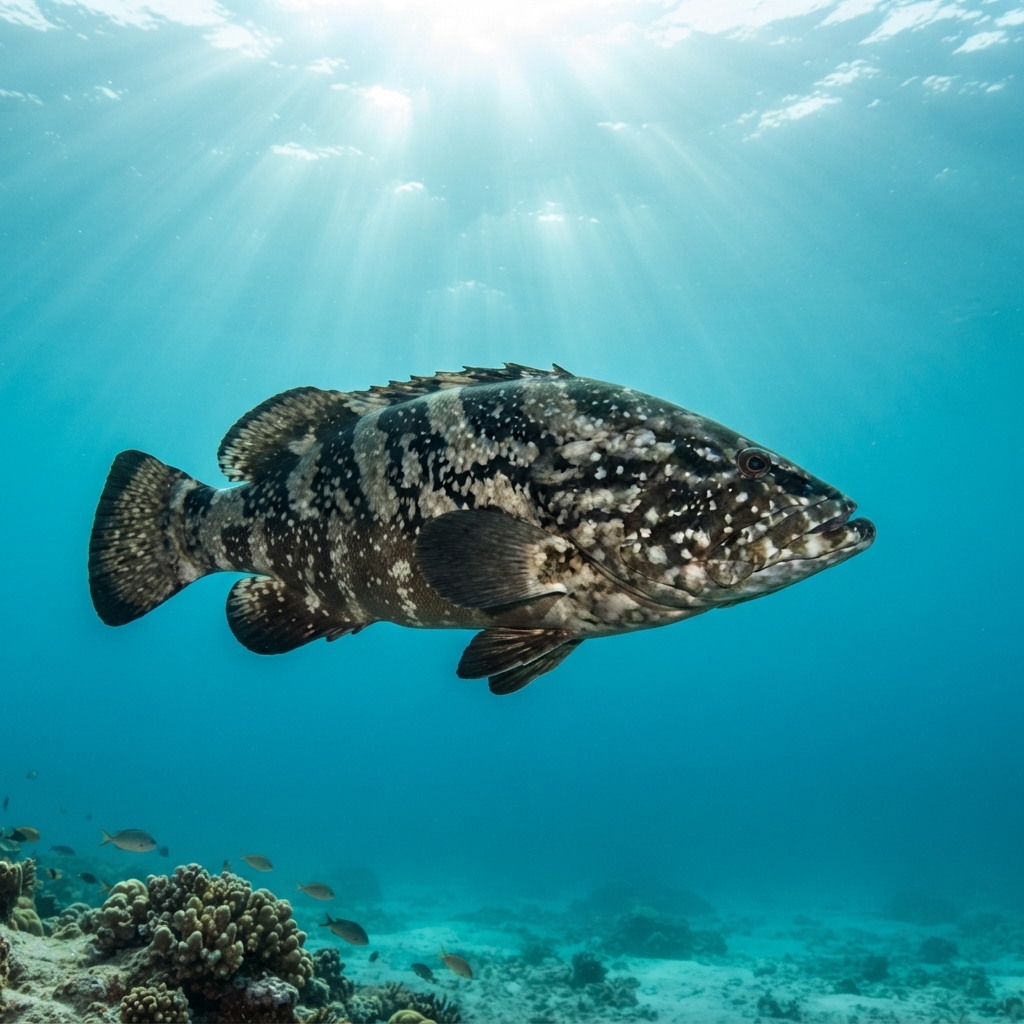
A heavy-bodied grouper that can reach around 140cm, with a mottled dark brown to grey-black body and small pale blotches scattered over the flanks that fade with age. The head is broad and blunt with a slightly undershot lower jaw, and the overall impression underwater is of a solid, slow-moving bulk parked near a ledge or cave mouth rather than out in open water. Older fish darken further, often looking almost uniformly charcoal.
Usually found holding station near a cave entrance, overhang or rocky crevice rather than swimming out over open reef, often with just its head visible from the gap. It tends to be unbothered by divers, sitting tight and watching rather than bolting, which makes for long, close looks once you spot one. Many sightings come from the same known crevices on a site, suggesting individual fish hold territories over time.
Like many groupers in this family, black rockcod are thought to change sex as they grow, with larger individuals typically becoming male, though little is confirmed specifically for this species in the wild.
No clear seasonal pattern shows up in the sightings, so it is best treated as a year-round resident. It is logged across a water temperature range of roughly 16.4 to 24.3 C, which covers NSW's seasonal swing from cooler winter water to warmer summer conditions.
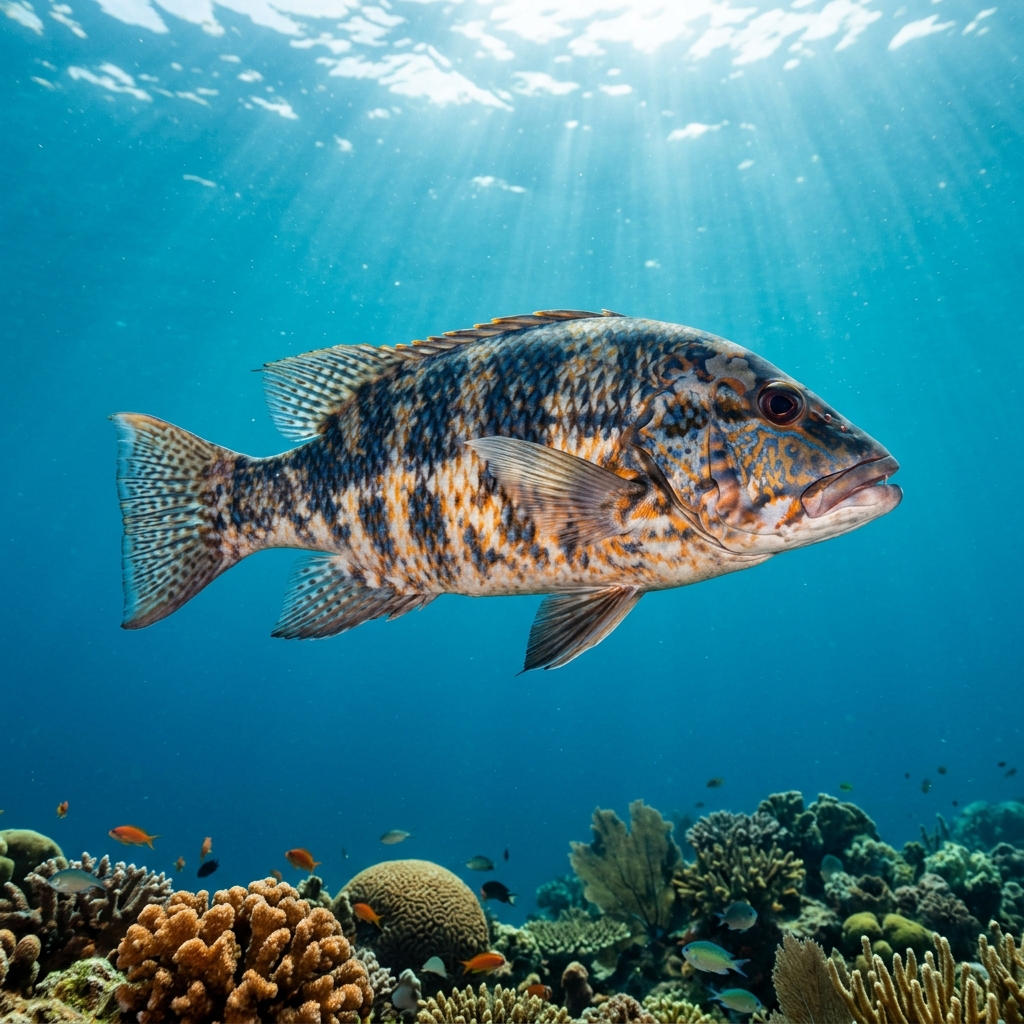
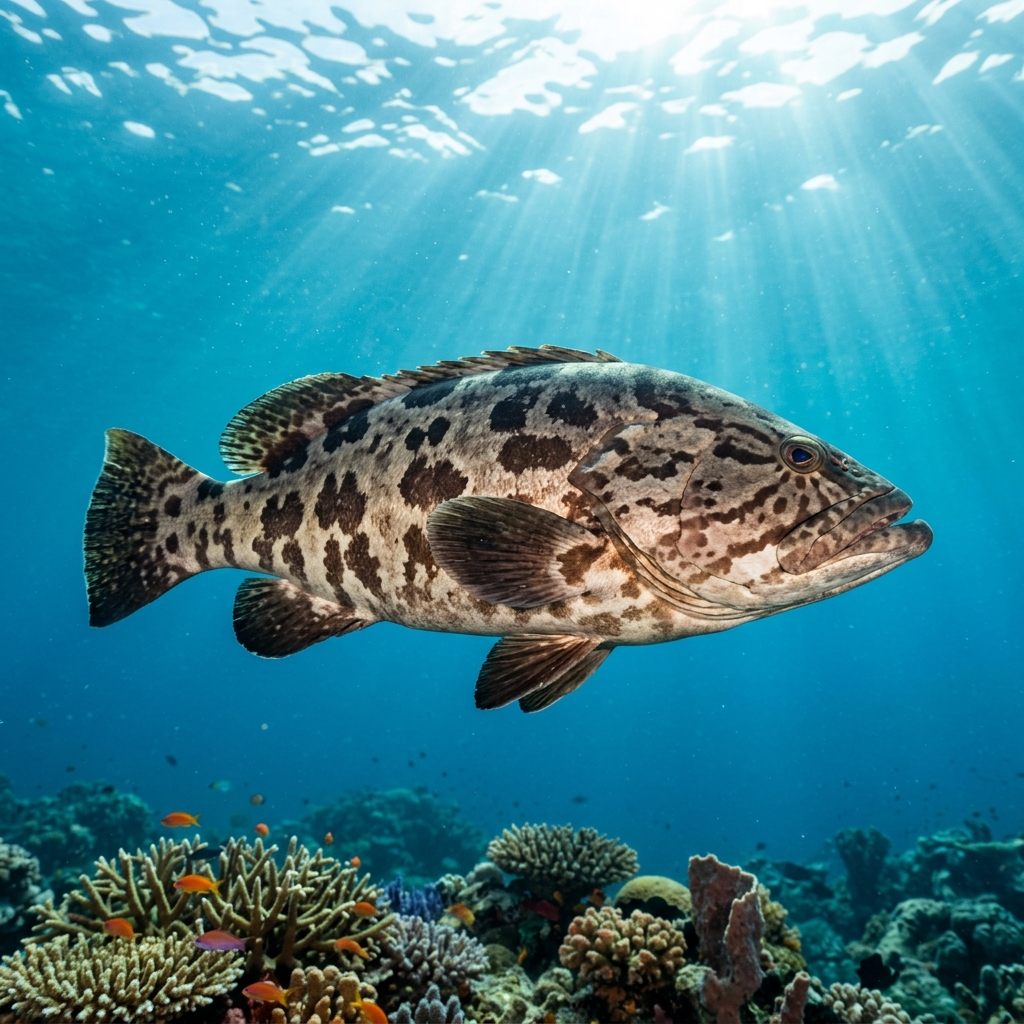
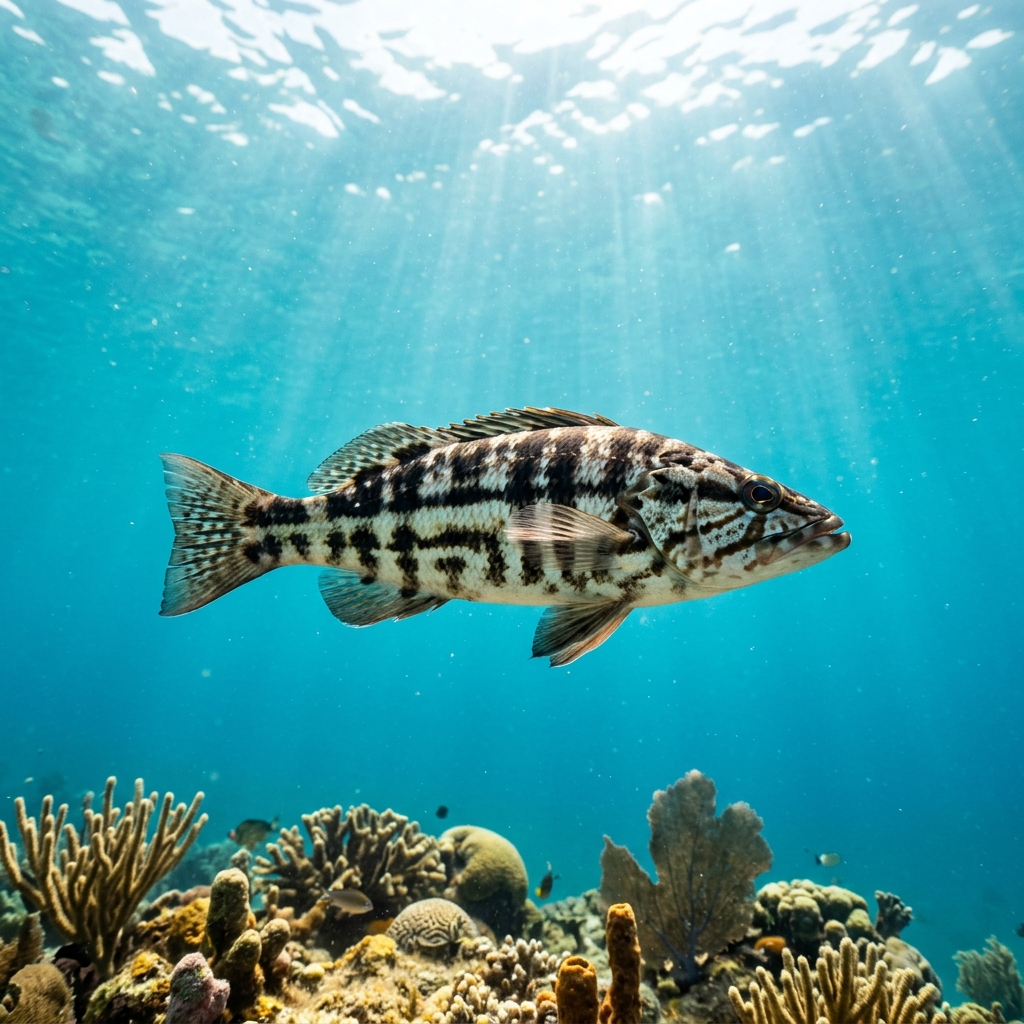
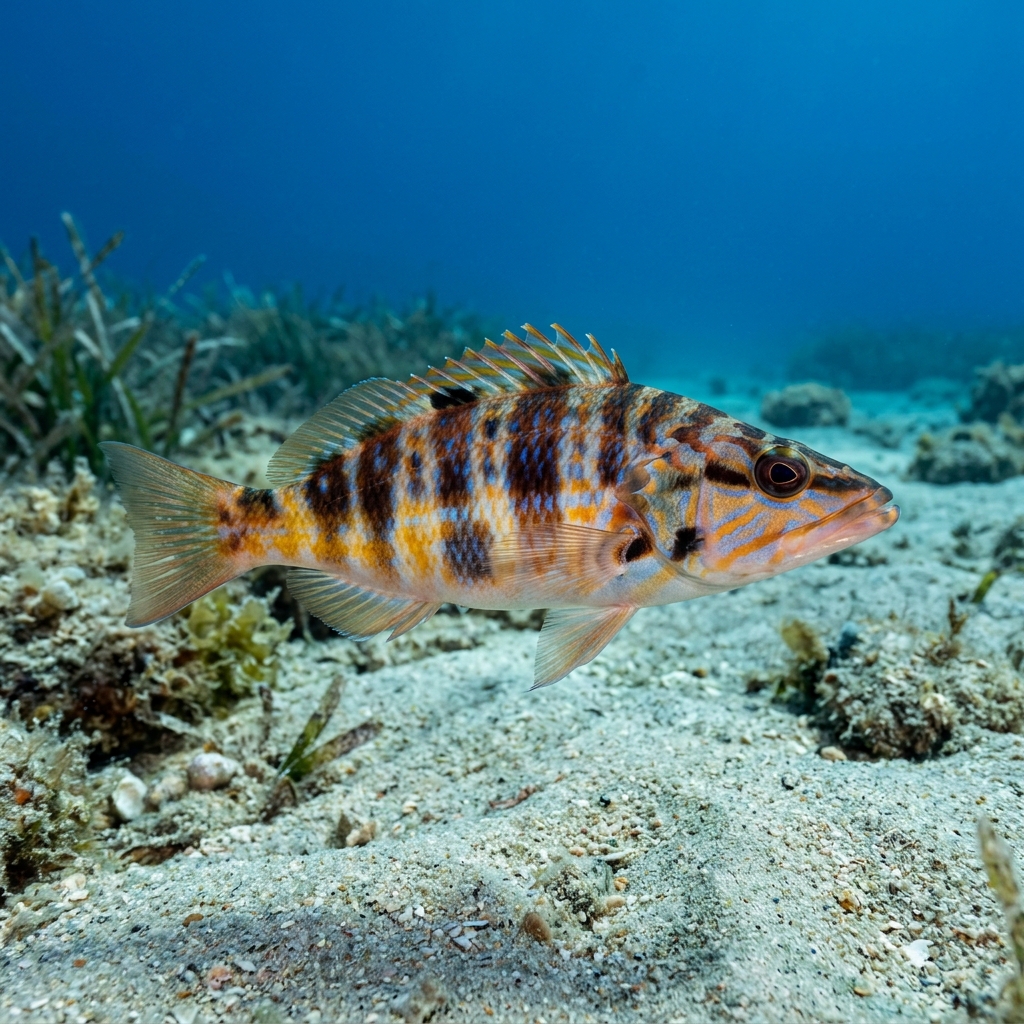
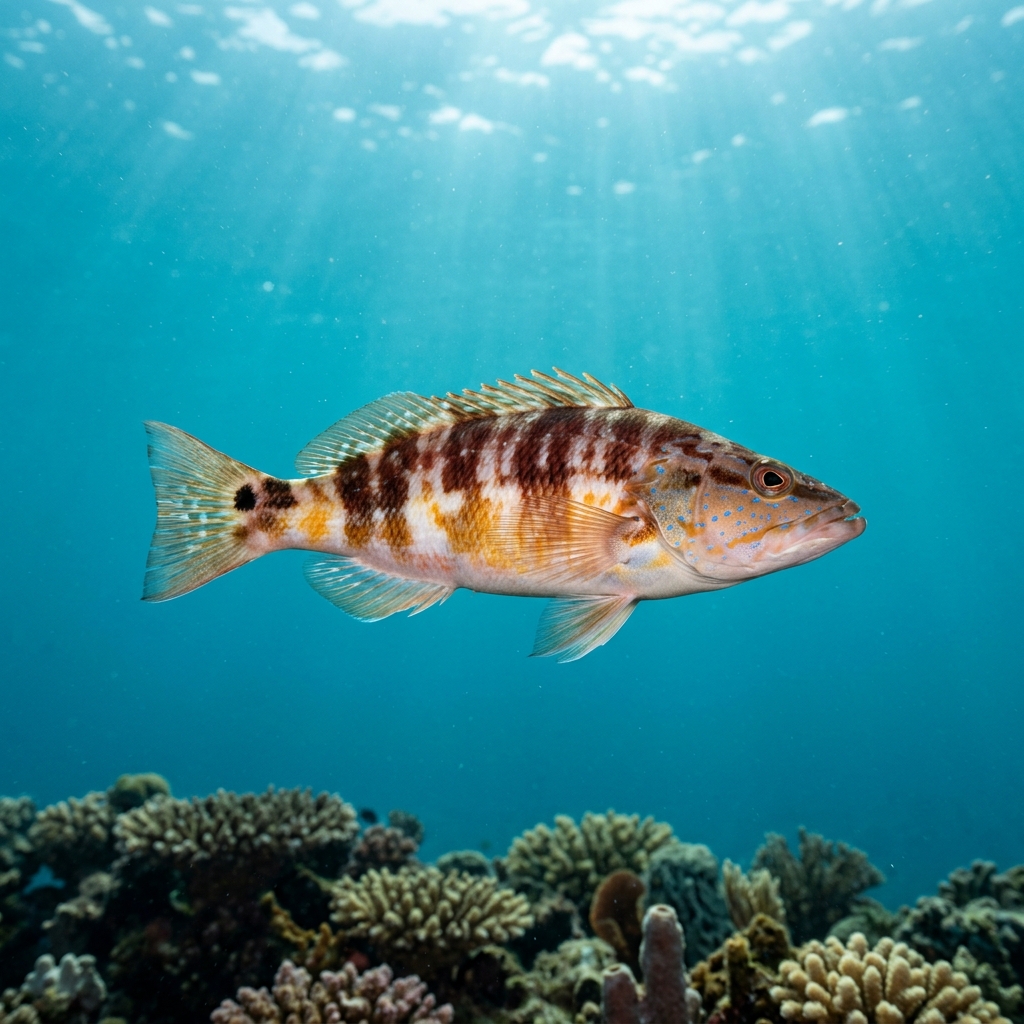
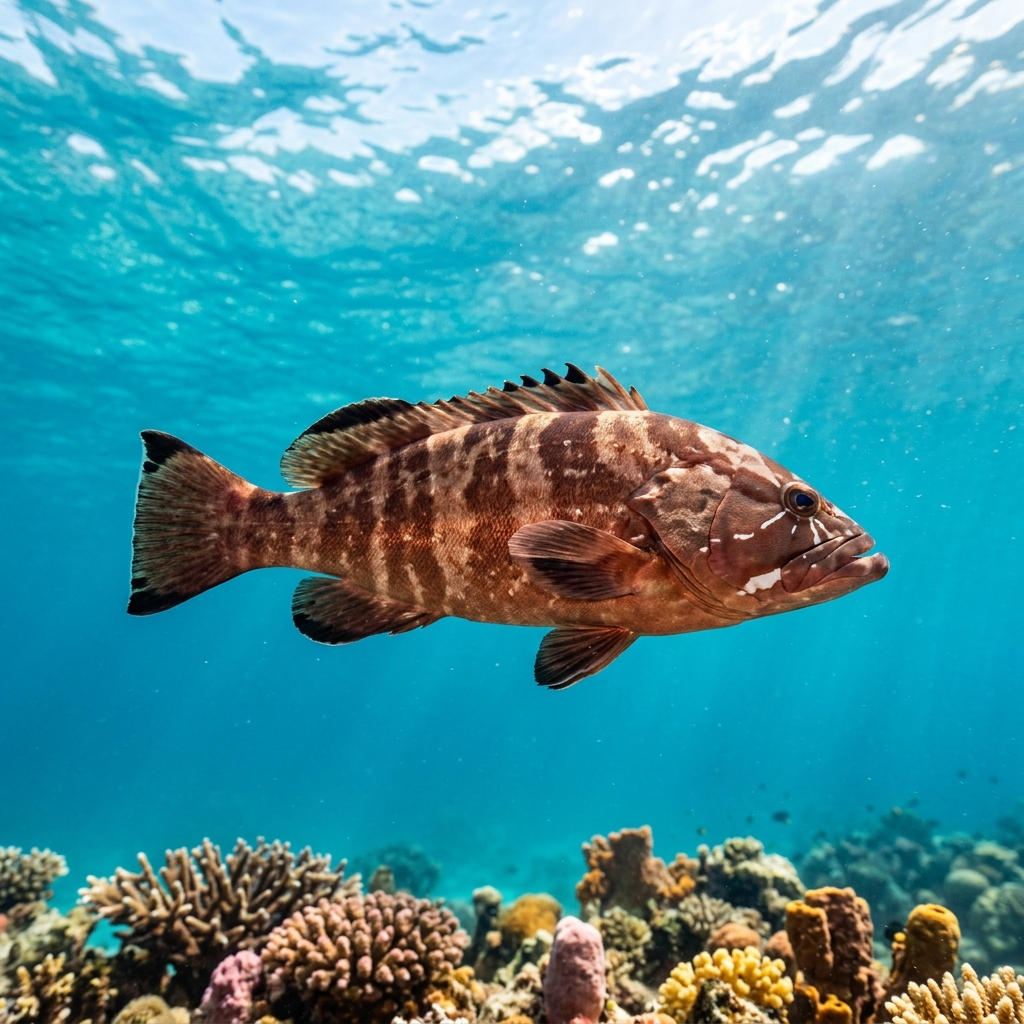
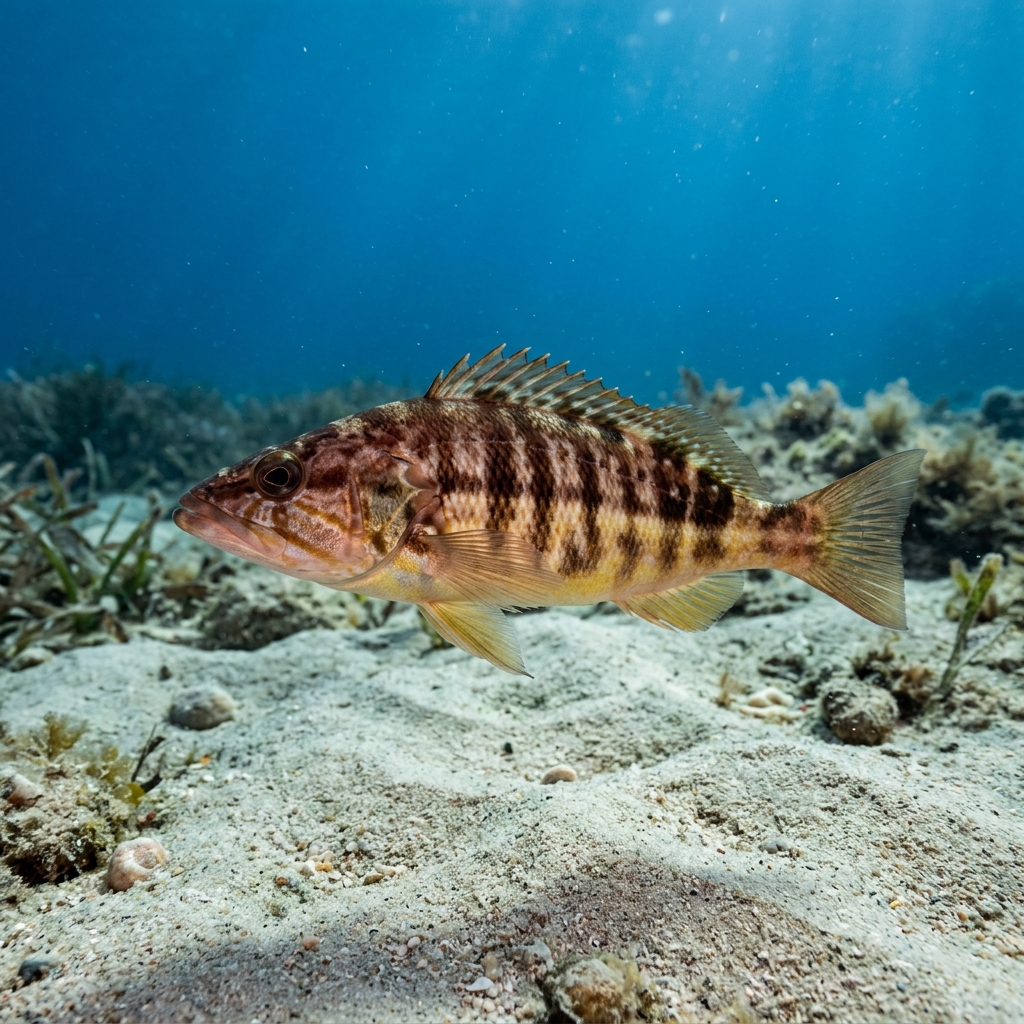
Reef neighbours a diver could mistake it for. Use the identification notes above to tell them apart.
Logged consistently along the coast of New South Wales, Australia, this is currently the only region divers reliably report it from. Within NSW it turns up across a spread of temperate rocky reef sites, appearing as a common resident at some and a more occasional find at others.
Mapping where Black Rockcod is logged…
New South Wales, Australia, is the region where divers most reliably log this species, turning up across a range of rocky reef sites along the coast.
There's no strong seasonal pattern in sightings, so they can be seen year-round. Water temperatures at the sites where they're logged range from about 16.4 to 24.3 C across the seasons.
Look for a large, heavy-bodied grouper with a dark brown to almost black body, faint pale mottling, and a blunt head, usually tucked into a crevice or cave mouth rather than swimming in the open.
They can reach around 140cm in length, making them one of the larger reef fish a diver in temperate Australian waters is likely to encounter.
No, they are not considered dangerous. They tend to sit calmly in crevices and are generally tolerant of divers approaching for a closer look.
Site and sighting data is aggregated from diver logs, iNaturalist and GBIF. For taxonomy and conservation status:
Blacktip Grouper
2,726 sites