Lutjanus argentimaculatus
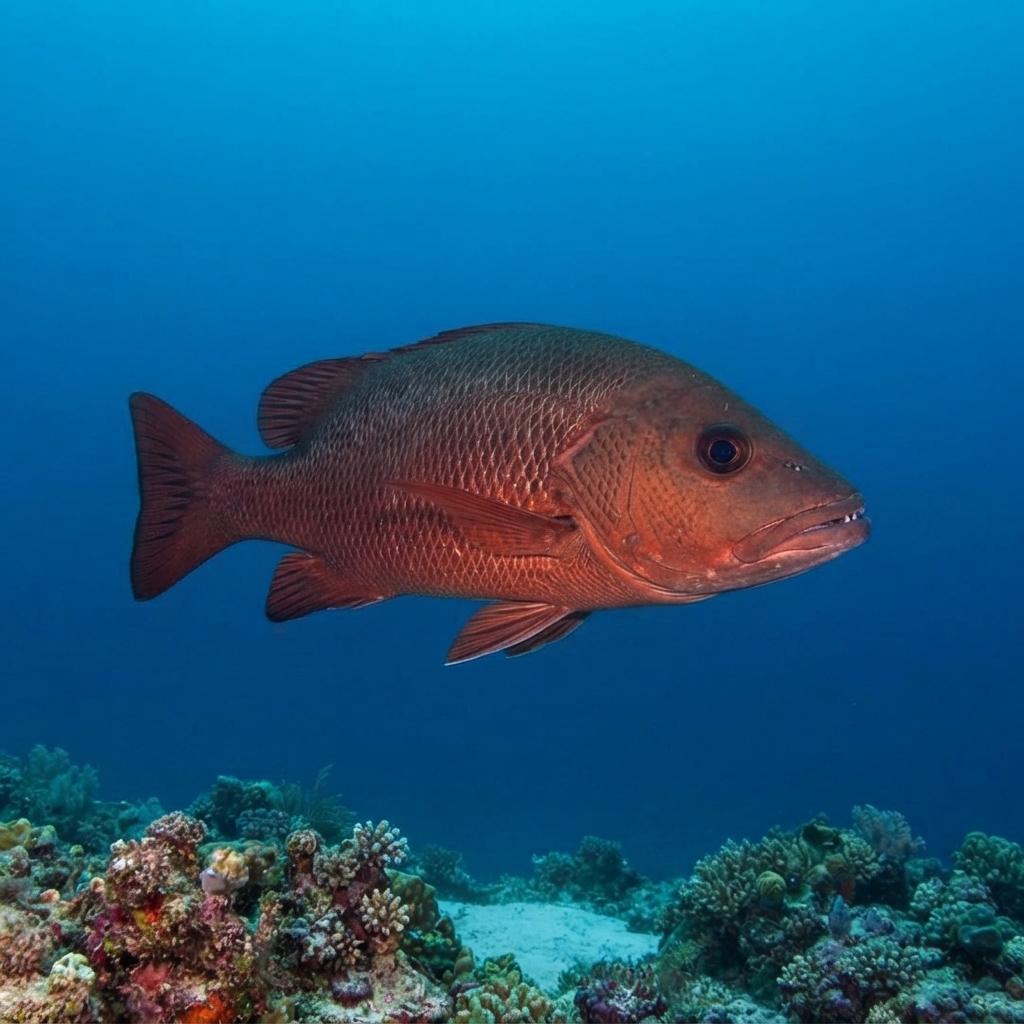
Deep red-brown snapper hiding around ledges and mangroves in Ponta do Ouro, Karnataka and West Papua, year-round in warm water.
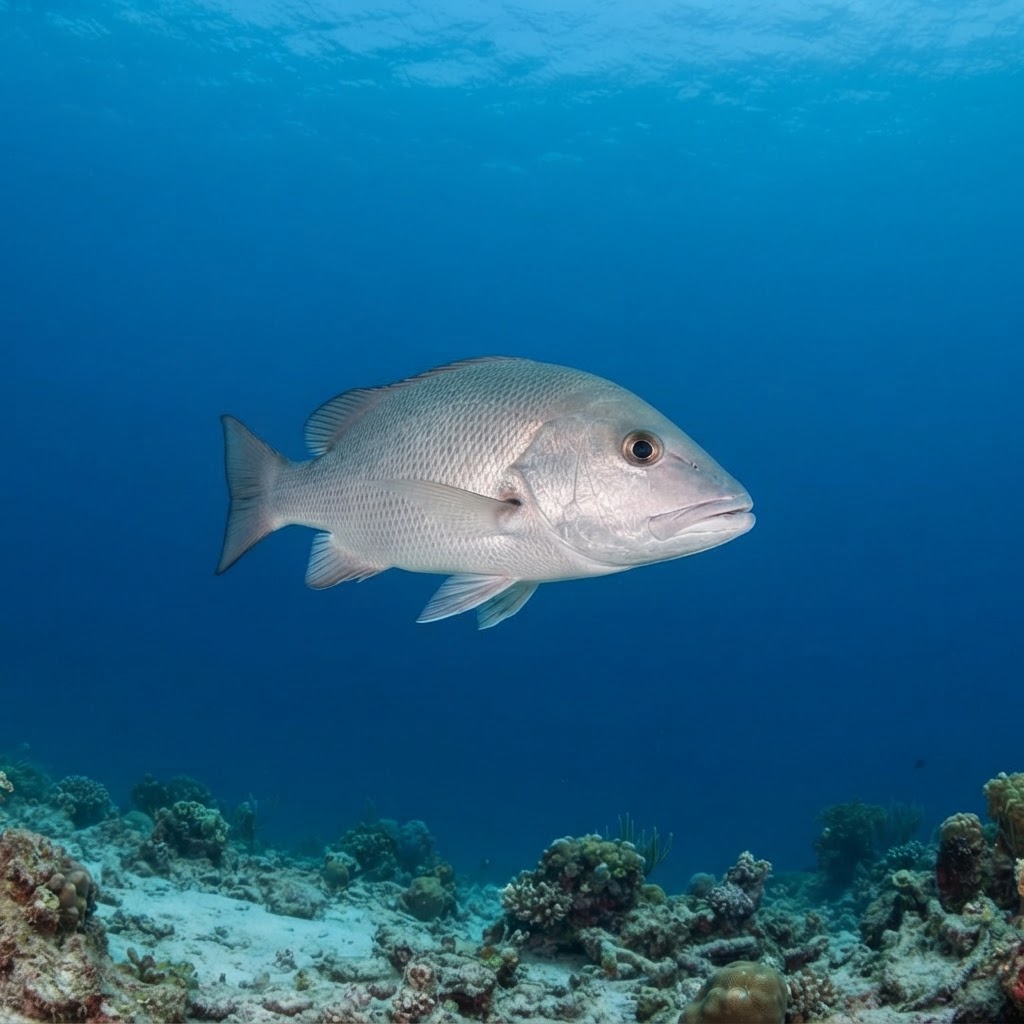
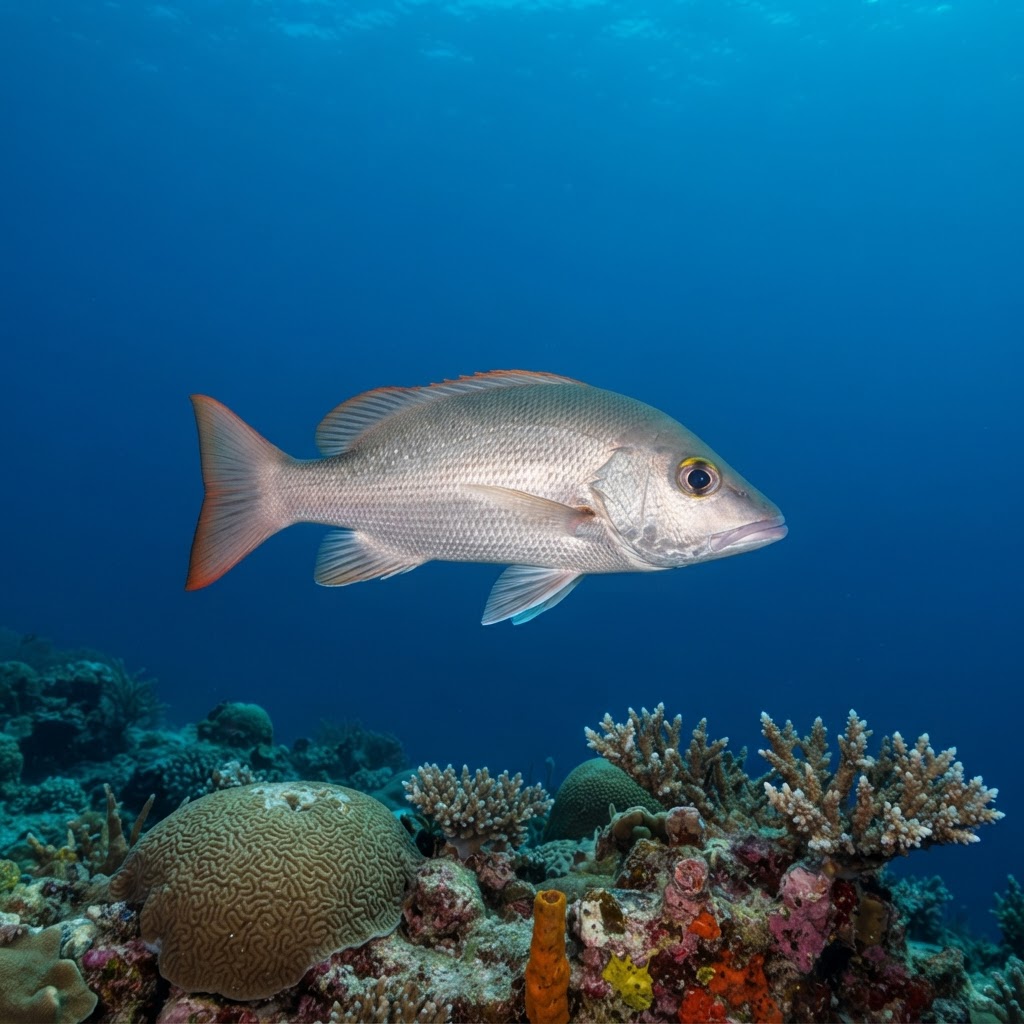
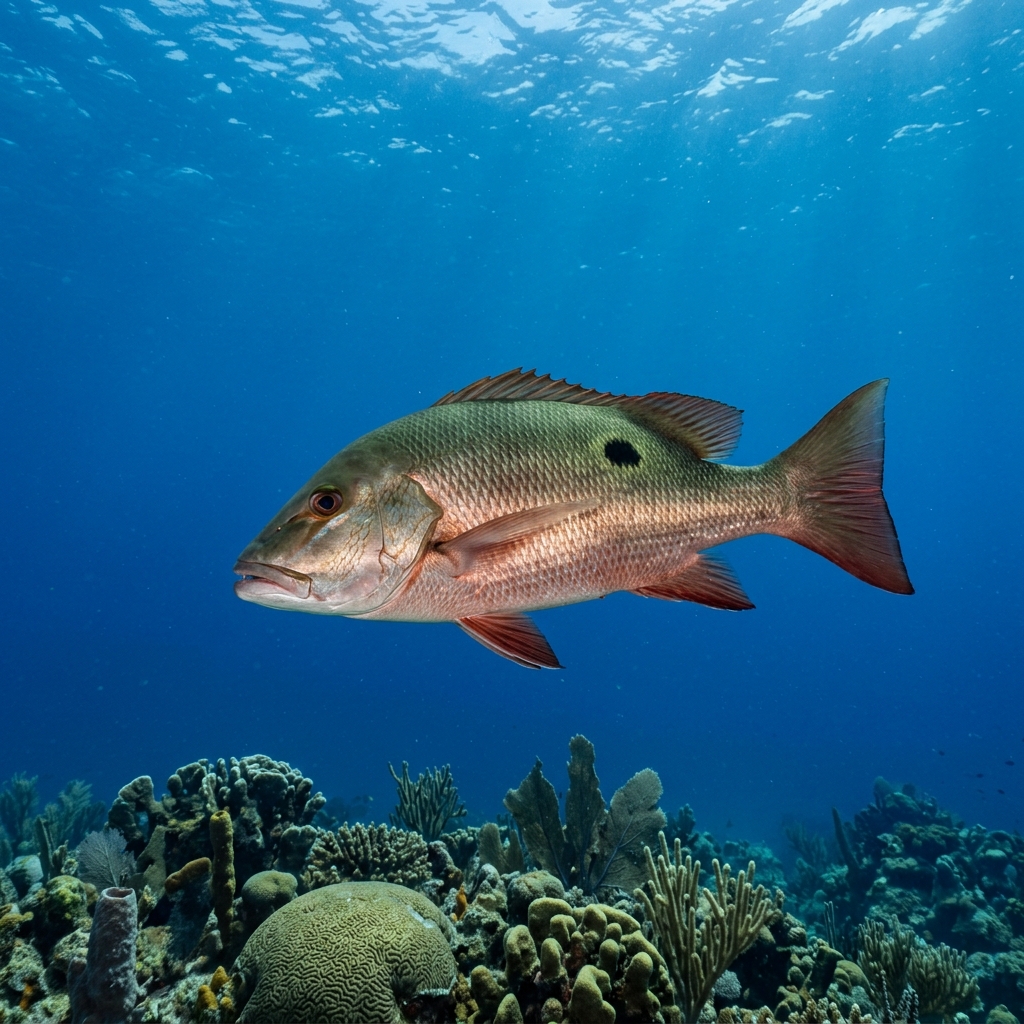
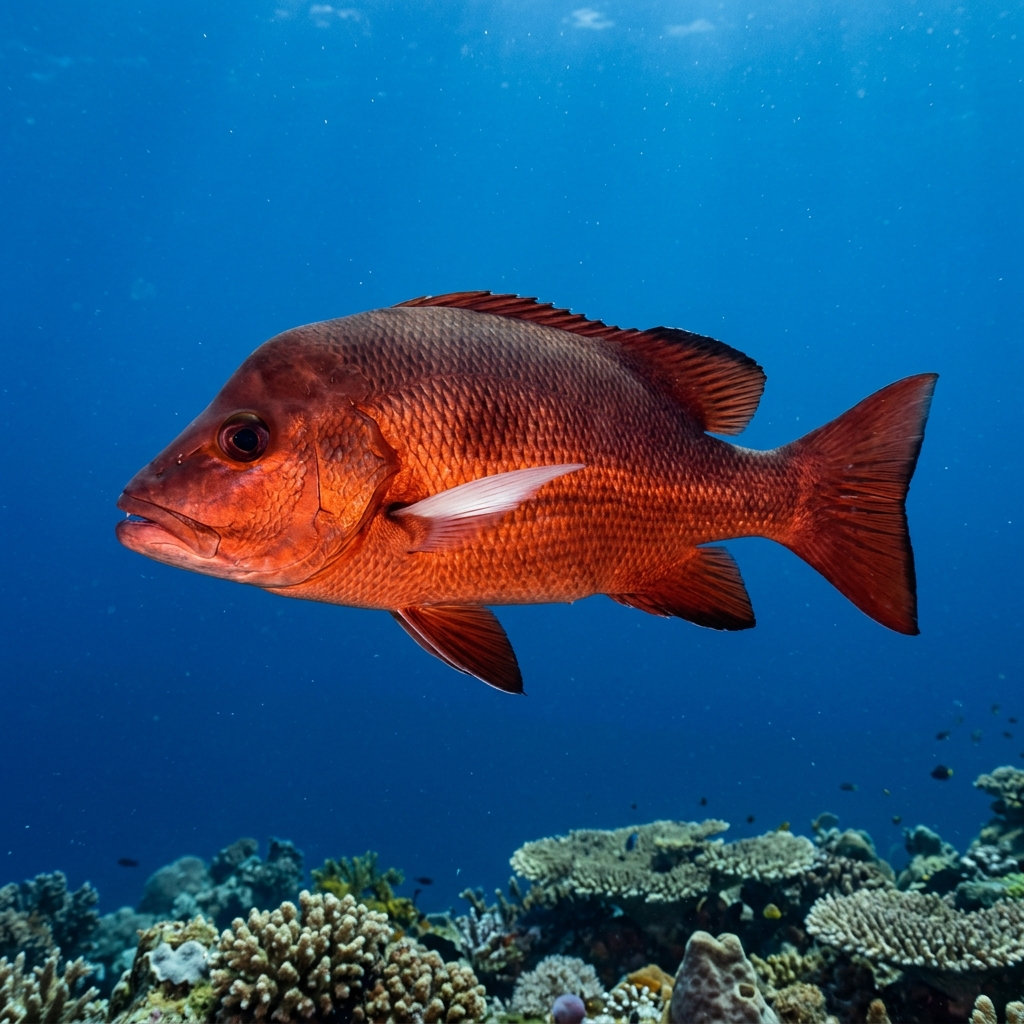
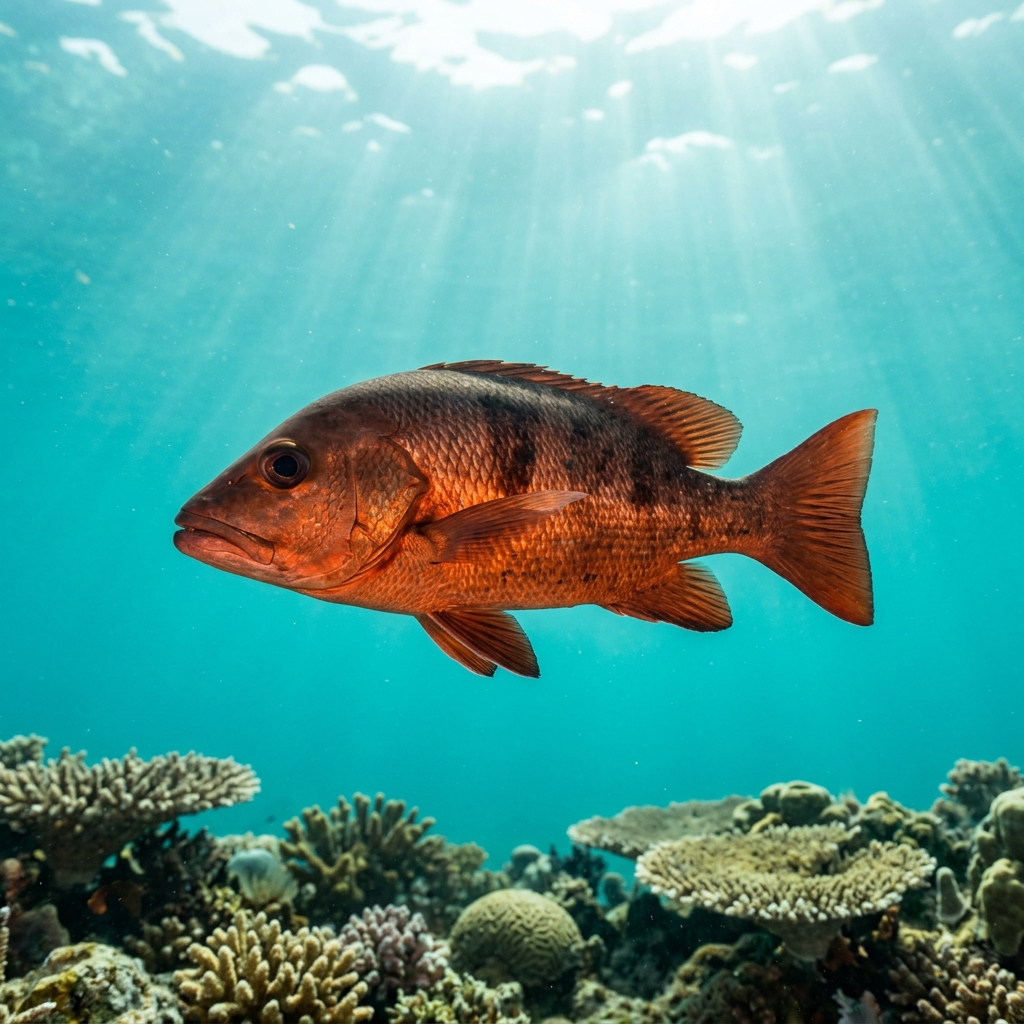
A heavy-bodied snapper with a deep reddish-brown to brick-red body, sometimes showing faint pale spots along the sides, and a distinctly steep, sloping forehead. Look for the thick set of canine-like teeth visible when the mouth is slightly open and a single dark red-brown dorsal fin running the length of the back. It can reach over a metre but most divers encounter smaller individuals tucked into shadow rather than out in the open.
Usually found hovering close to structure, ledges, wrecks, or shaded overhangs, rather than out cruising open water, and it tends to hold its position rather than bolt when divers approach slowly. Sightings lean towards uncommon rather than reliable at most logged sites, so it rewards divers who check crevices and shadows carefully instead of scanning the blue. Juveniles favour mangrove creeks and estuaries before moving onto deeper reef structure as adults.
Younger mangrove jacks spend their early life tucked into mangrove roots and estuarine creeks, only shifting out onto coral and rocky reef habitat as they mature, which is why the species bridges two very different dive environments.
No clear seasonal pattern shows up in sightings, and with a comfortable range of roughly 24 to 29 C across its Indo-Pacific range, it turns up on reefs and mangrove edges all year.
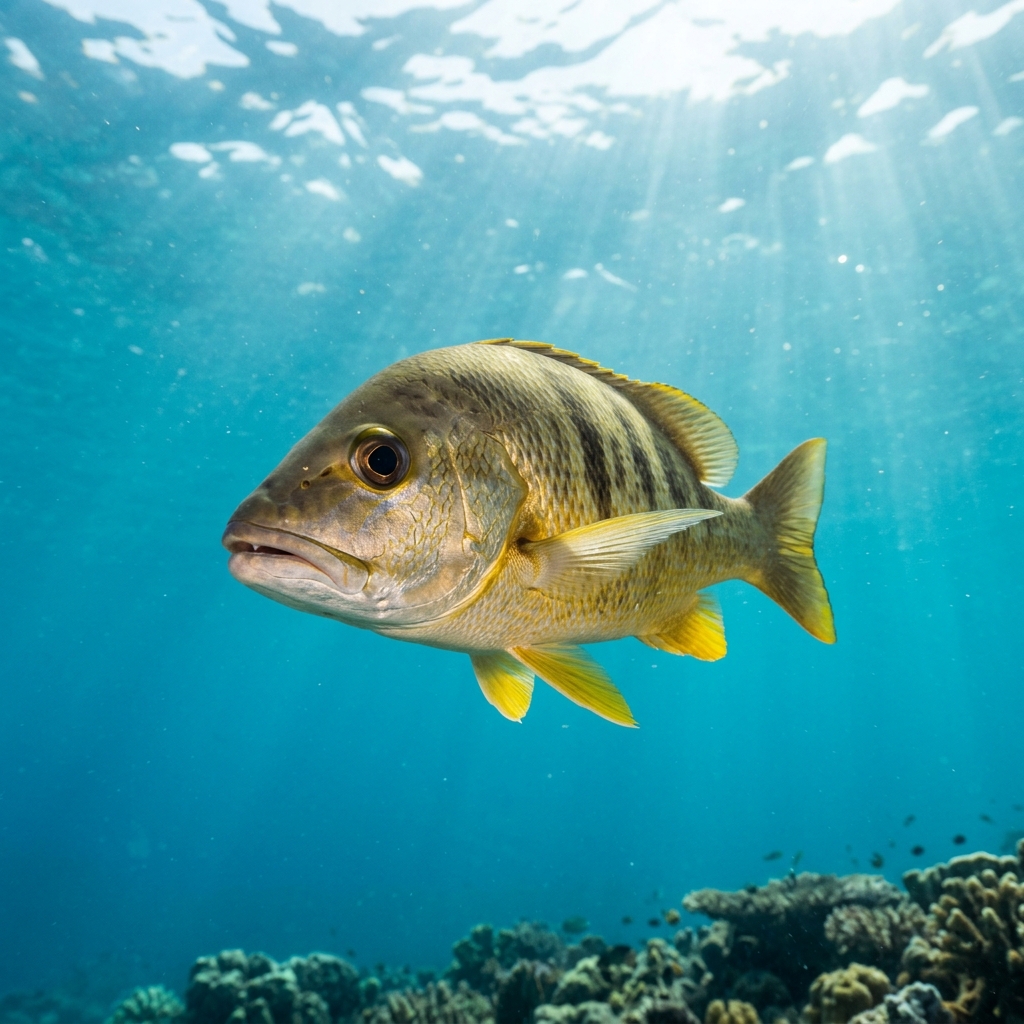
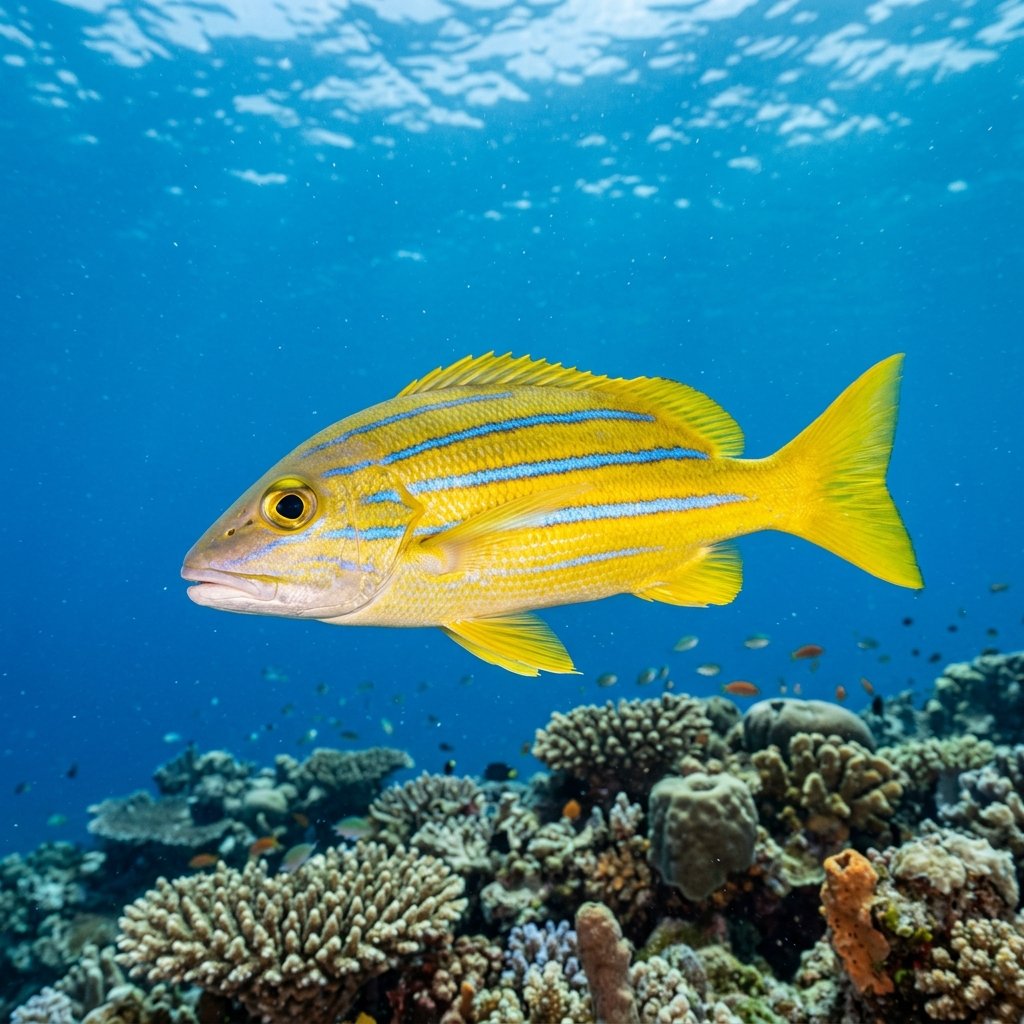
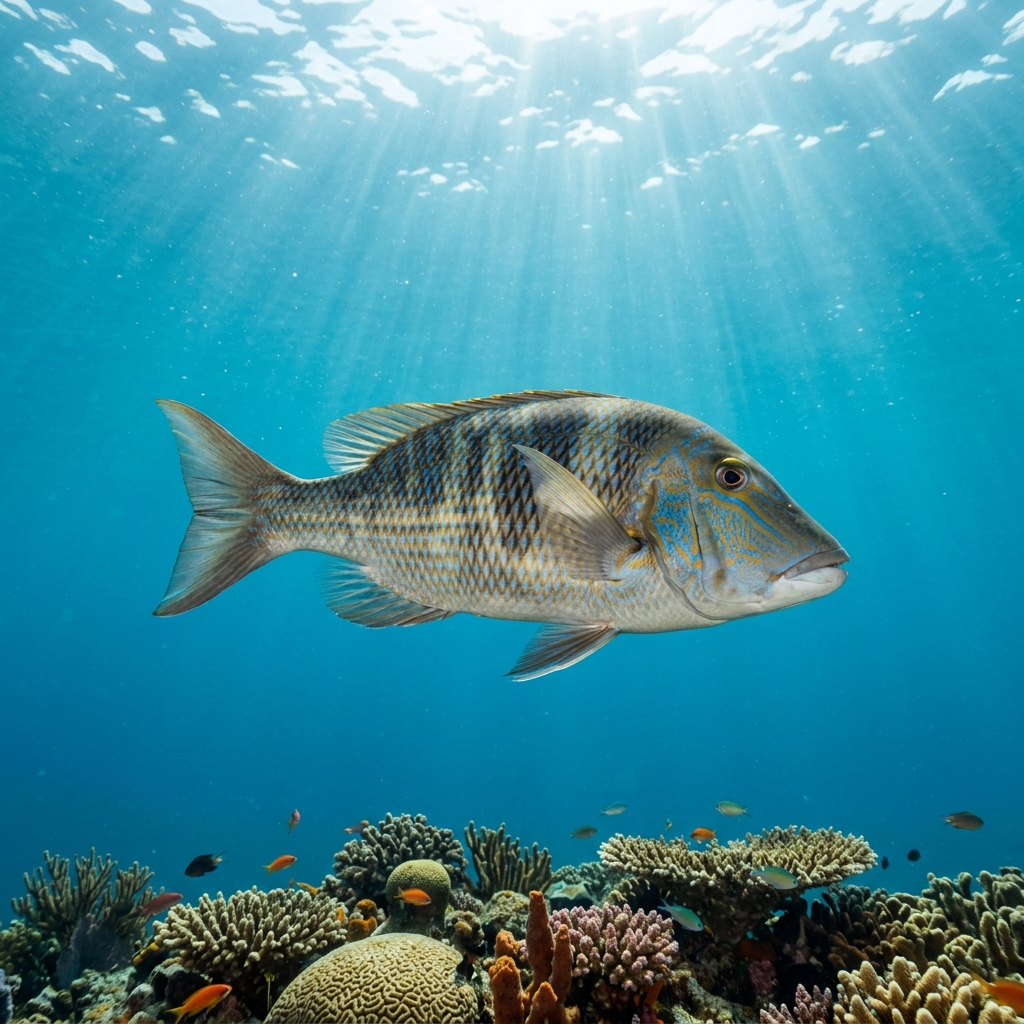
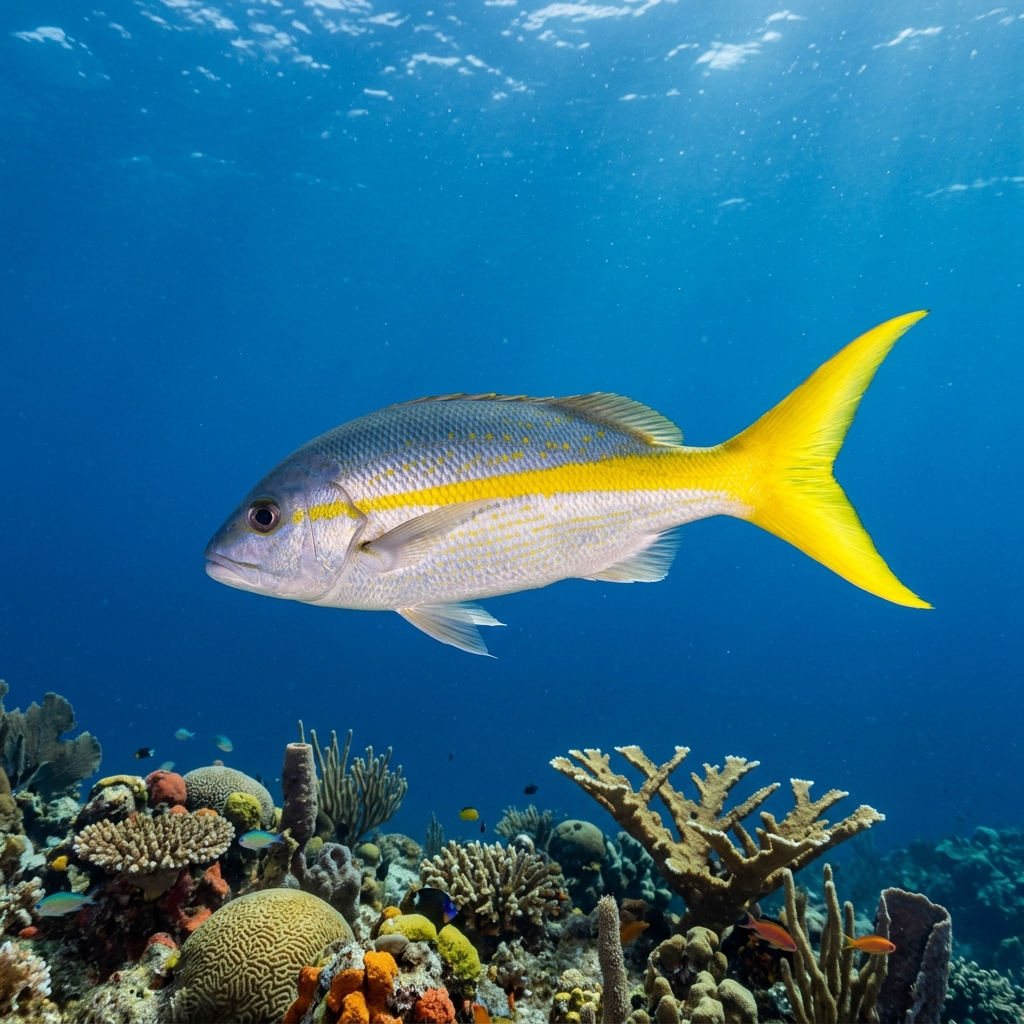
Reef neighbours a diver could mistake it for. Use the identification notes above to tell them apart.
Most consistently logged in Ponta do Ouro in Mozambique, Karnataka in India, and West Papua in Indonesia, with solid numbers too around Nosy Be in Madagascar and the Visayas in the Philippines. Queensland and Western Australia round out a strong Indo-Pacific spread, alongside sites near Nouméa in New Caledonia.
Mapping where Mangrove Jack is logged…
Best logged around Ponta do Ouro in Mozambique, Karnataka in India, and West Papua in Indonesia, with reliable sightings too in Nosy Be, Madagascar and the Visayas in the Philippines.
There is no strong season in the data. It sits comfortably in 24 to 29 C water, so it is present on tropical reefs and estuaries throughout the year.
Look for a deep reddish-brown, heavy-bodied snapper with a steep sloping forehead and prominent canine teeth. It usually sits close to ledges or overhangs rather than swimming in open water.
They can reach around 105 cm, though most individuals seen by divers are noticeably smaller and tucked into reef or mangrove structure.
No. They are not considered dangerous to divers and typically hold near cover rather than approach or act aggressively.
Juveniles grow up in mangrove creeks and estuaries before relocating to coral and rocky reefs as adults, making it one of the few snappers that links mangrove and reef habitats through its life cycle.
Site and sighting data is aggregated from diver logs, iNaturalist and GBIF. For taxonomy and conservation status:
Bluestriped Snapper
2,054 sites