Lutjanus mahogoni
A reliable Caribbean reef fish, most logged around Bonaire's Leeward Coast and Mexico's Yucatán, in warm 24-28C water year-round.
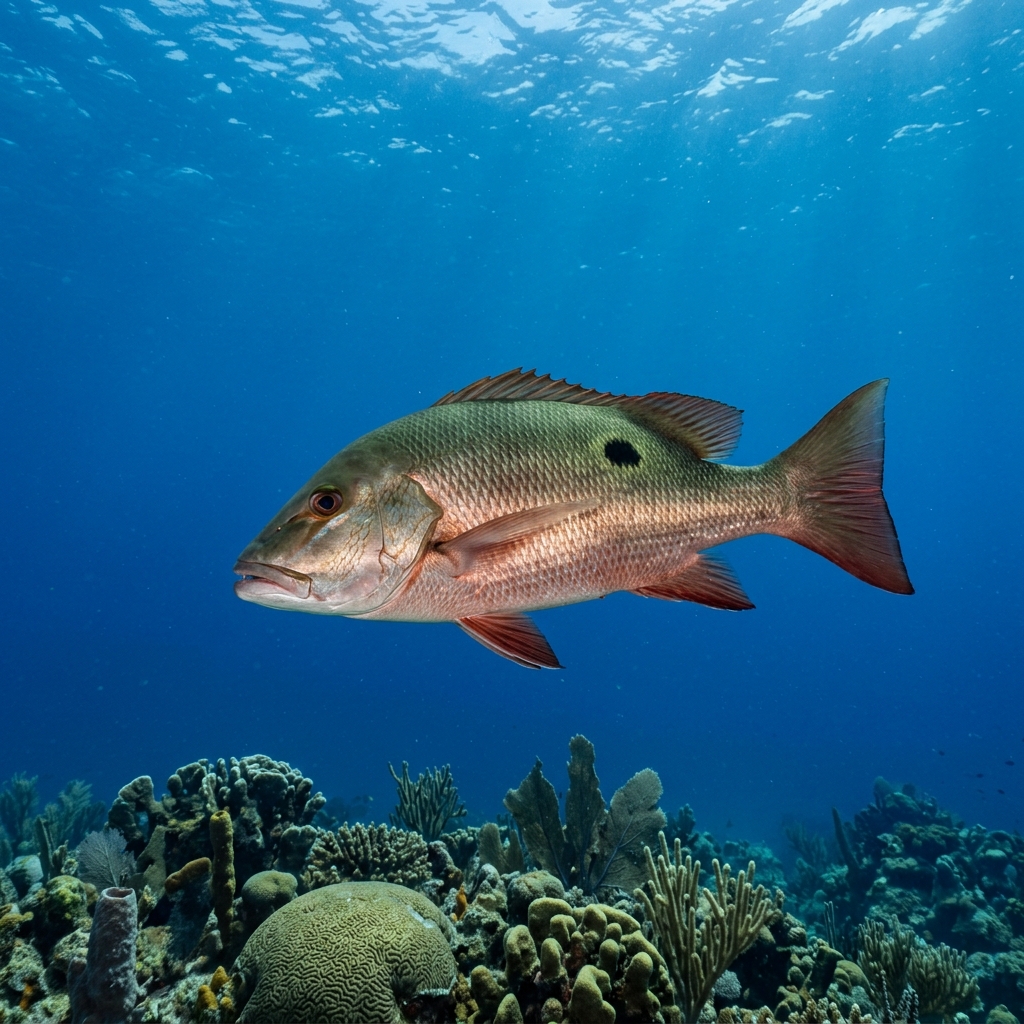
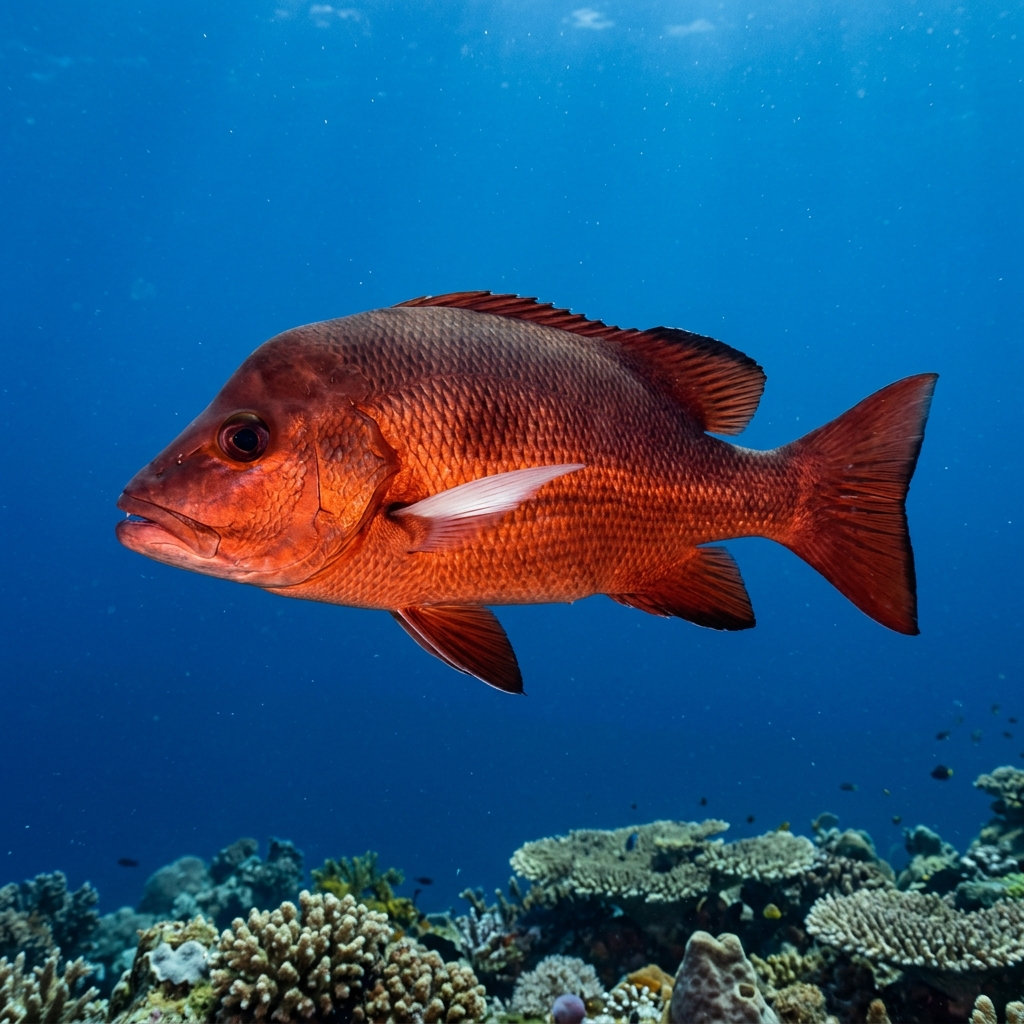
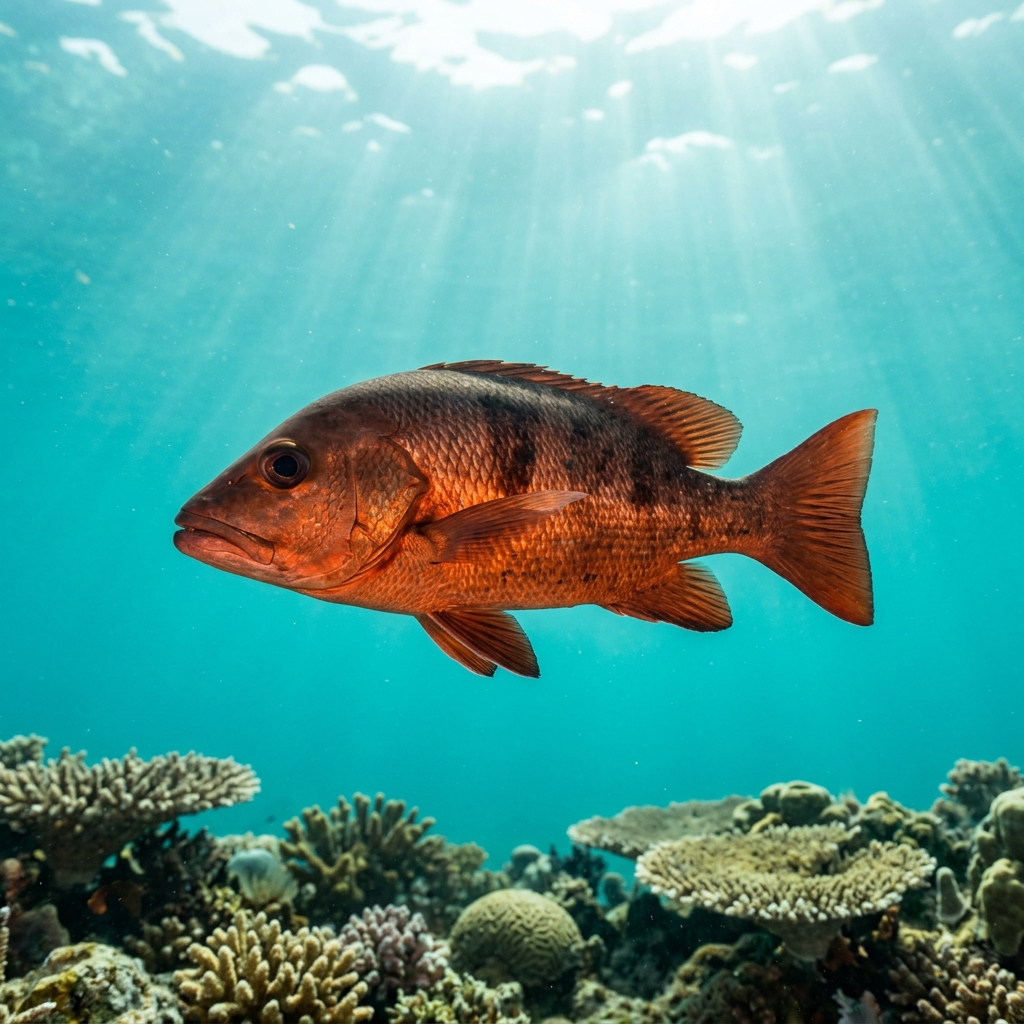
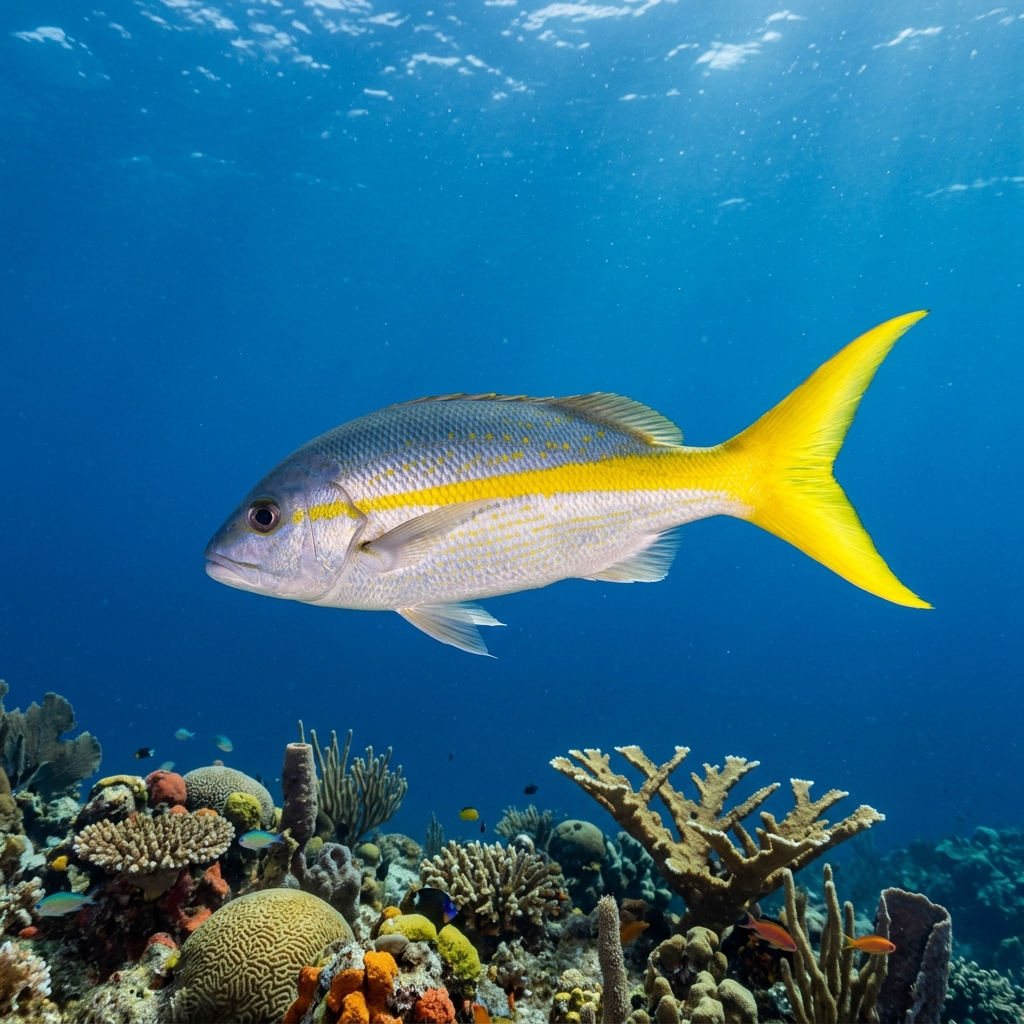
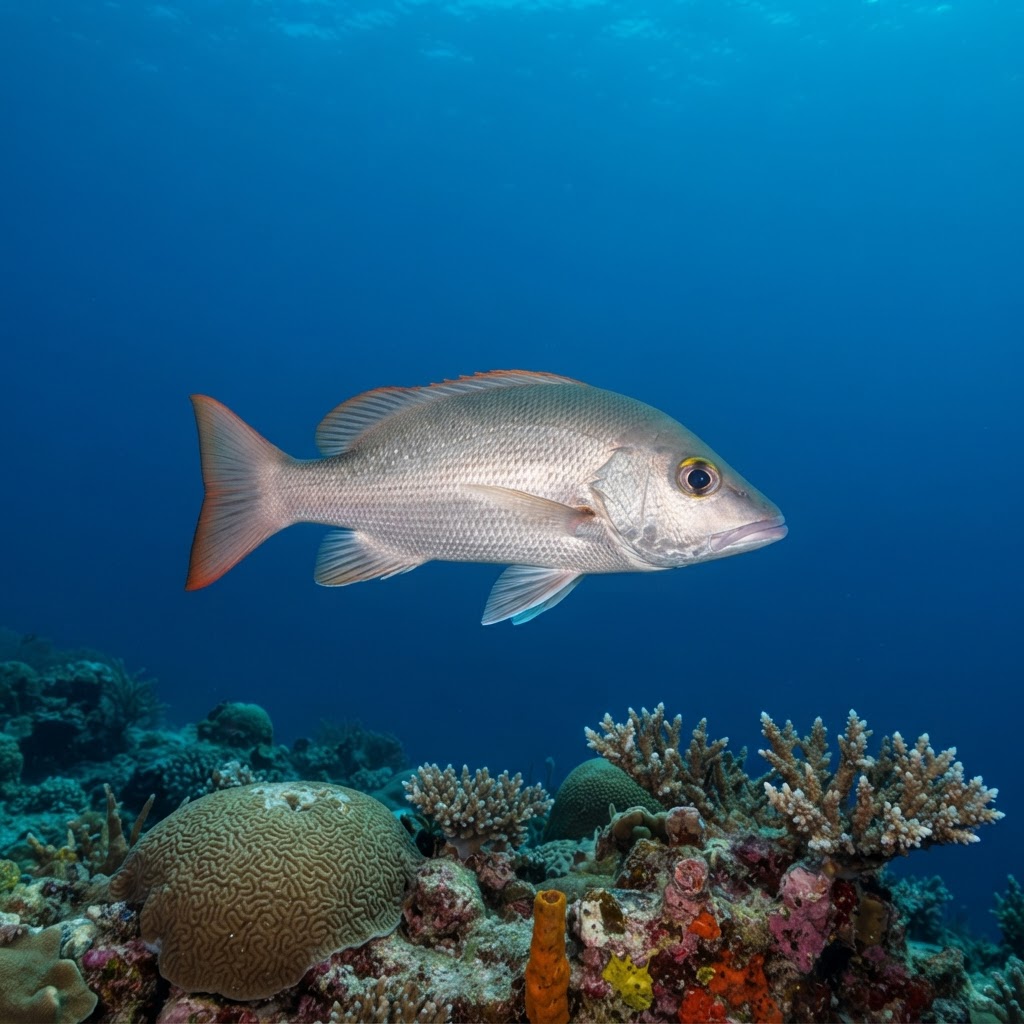
Slim, silvery-bronze body with a coppery sheen along the back, growing to around 33 cm in the water. Look for a dark spot on the upper side just below the front of the dorsal fin, a useful marker at a glance. Its large dark eye and slightly forked yellow-tinged tail help separate it from plainer reef fish sharing the same water column.
Usually spotted hovering alone or in loose small groups over reef structure, often hanging just off the bottom near ledges or coral heads rather than schooling tightly. It tends to hold its position calmly as divers approach, showing more curiosity than flight, and is commonly noted patrolling by day with more active foraging expected after dark given its carnivorous diet.
Despite showing up at well over 800 logged dive sites, it is rated uncommon rather than abundant at most of them, so sightings tend to be a handful of individuals per dive rather than a wall of fish.
No clear seasonal pattern shows in the data, and with a comfortable range of 23.9 to 28C, reefs across its Caribbean range hold this fish year-round. Plan around your destination's general dive season rather than chasing a specific month.
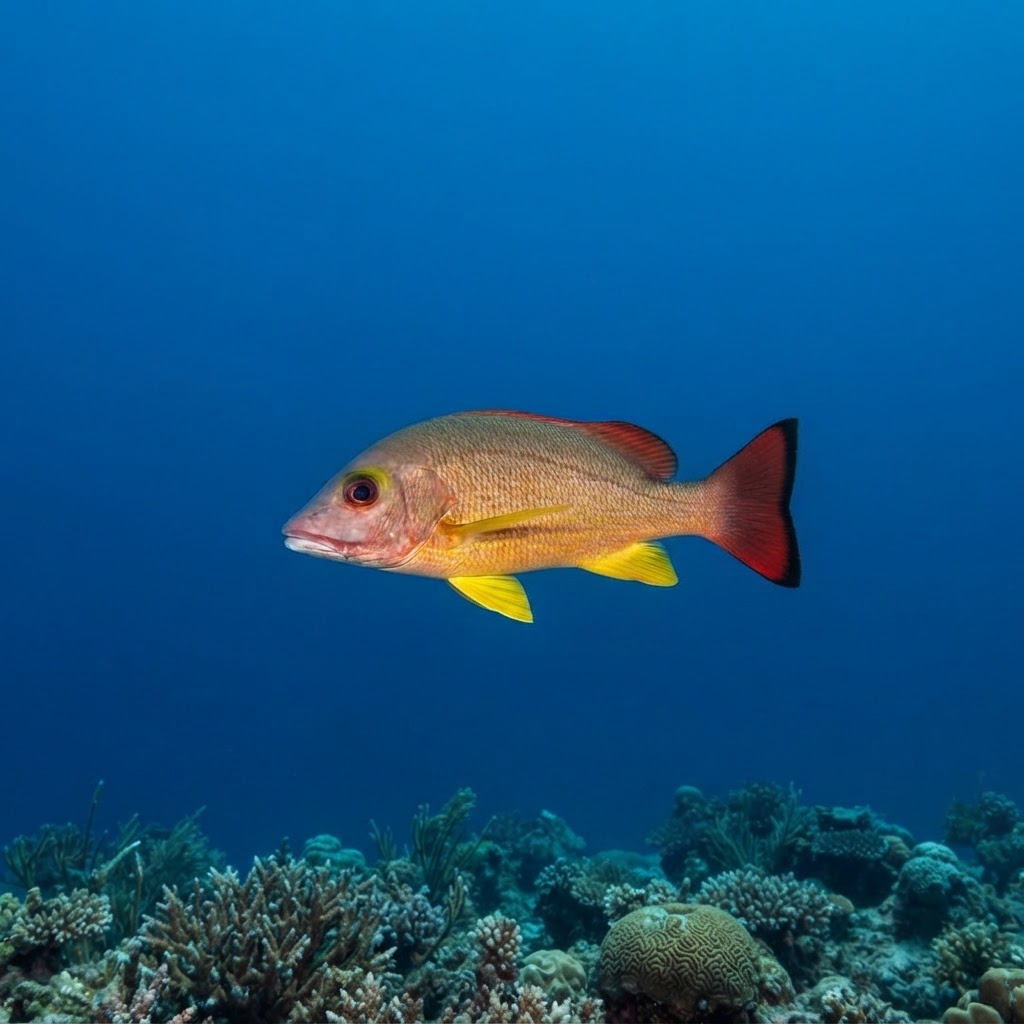
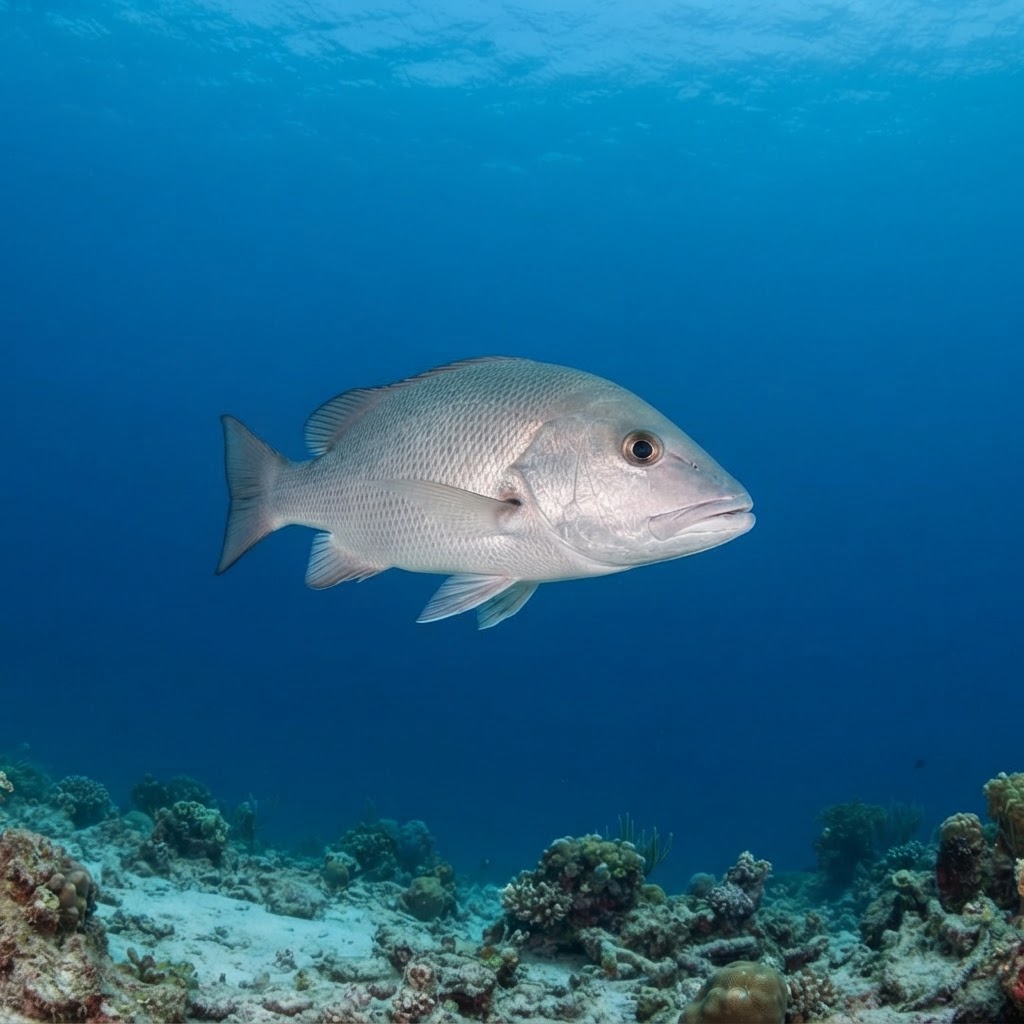
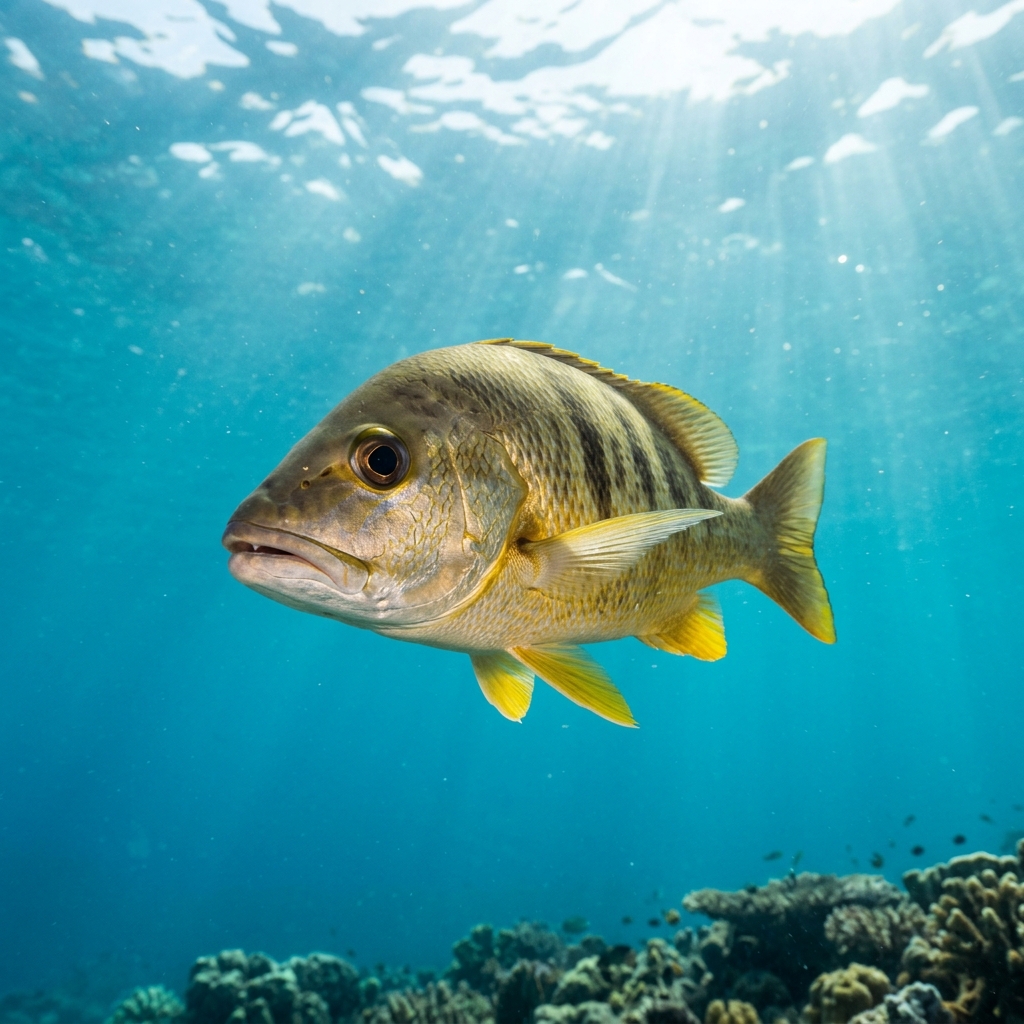
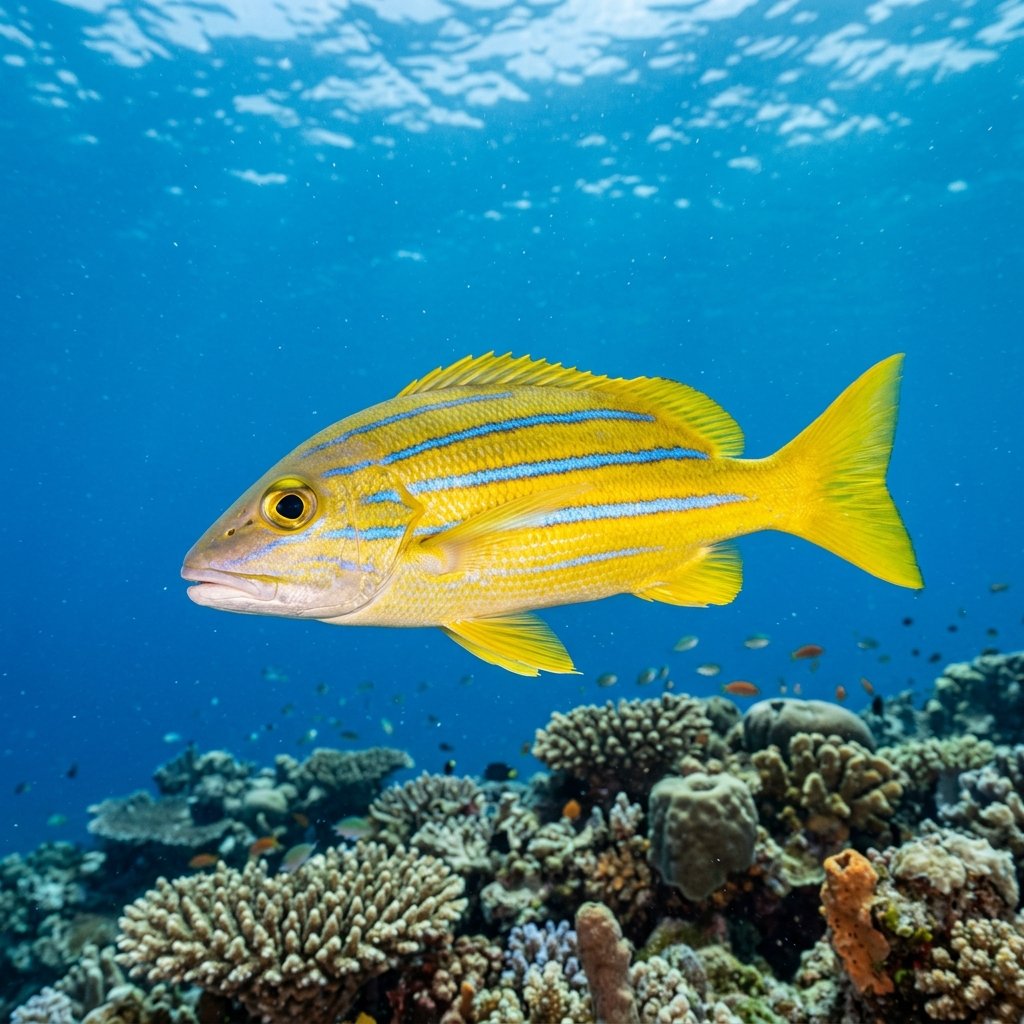
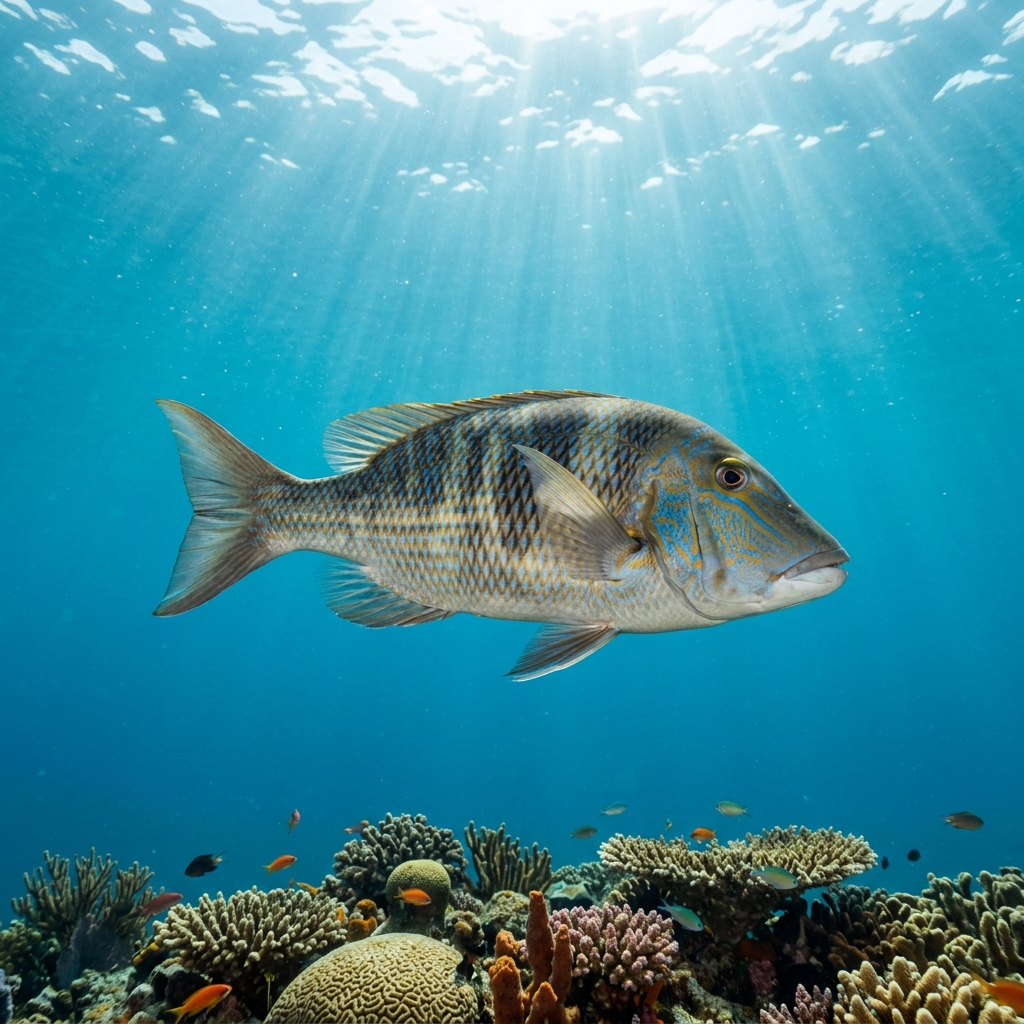
Reef neighbours a diver could mistake it for. Use the identification notes above to tell them apart.
This is a Caribbean regular, most reliably logged in Mexico's Yucatán Peninsula and Honduras's Bay Islands, with strong numbers also on Bonaire's Leeward Coast. Grenada, Curacao, Guadeloupe, Martinique and the Cayman Islands round out the range, usually turning up in ones or twos rather than big schools.
Mapping where Mahogany Snapper is logged…
Best chances are in the Caribbean, particularly Mexico's Yucatán Peninsula, Honduras's Bay Islands, and Bonaire's Leeward Coast. Grenada, Curacao, Guadeloupe, Martinique and Grand Cayman also produce regular sightings.
There's no strong seasonal signal in sightings, and it tolerates a warm 24-28C range, so it's present on Caribbean reefs throughout the year. Time your trip around general conditions at your chosen site rather than a specific snapper season.
Look for a silvery-bronze body with a coppery back, a dark eye, and a distinctive dark spot on the upper side below the front of the dorsal fin. It stays around 33 cm and is usually seen alone or in small loose groups near reef structure.
They typically reach around 33 cm in length, a modest mid-sized reef snapper rather than a trophy-sized fish.
No, they pose no threat to divers and are generally calm around approaching swimmers, making them an easy fish to photograph.
Site and sighting data is aggregated from diver logs, iNaturalist and GBIF. For taxonomy and conservation status:
Bluestriped Snapper
2,054 sites