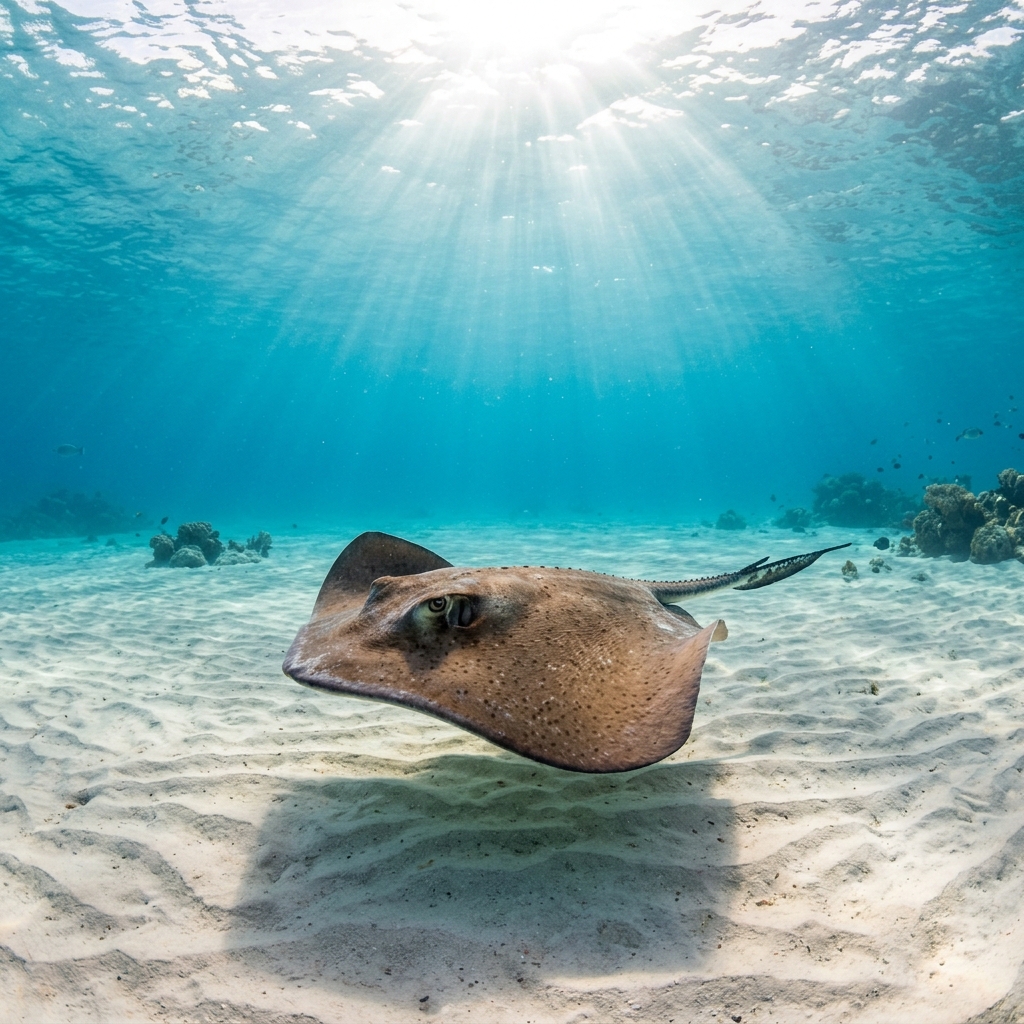
Pateobatis jenkinsii
An uncommon sandy-bottom ray found from 33 to 50m in the Philippines and Maldives' Northern Atolls, year-round in warm reef water.
If you're stung
Venomous tail barbGeneral first-aid guidance, not a substitute for professional medical care. In an emergency, call your local emergency number.
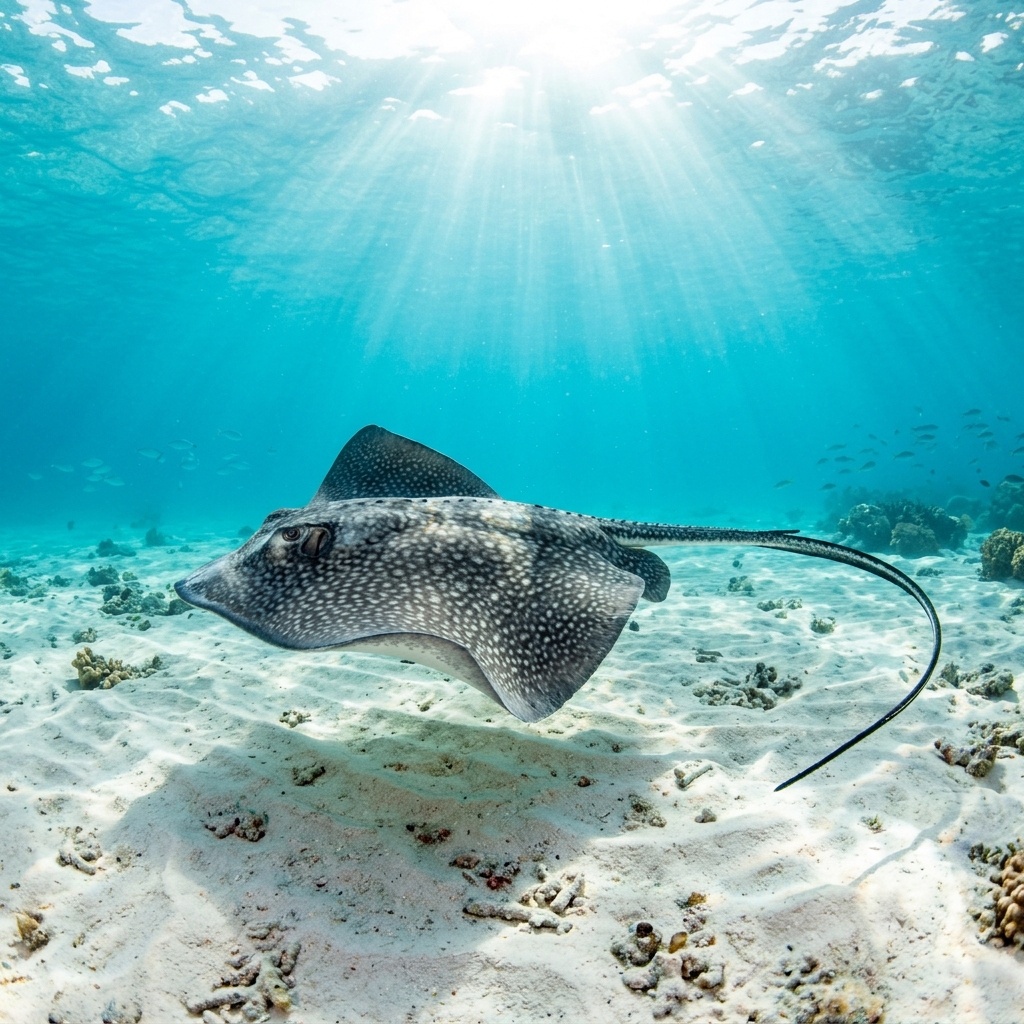
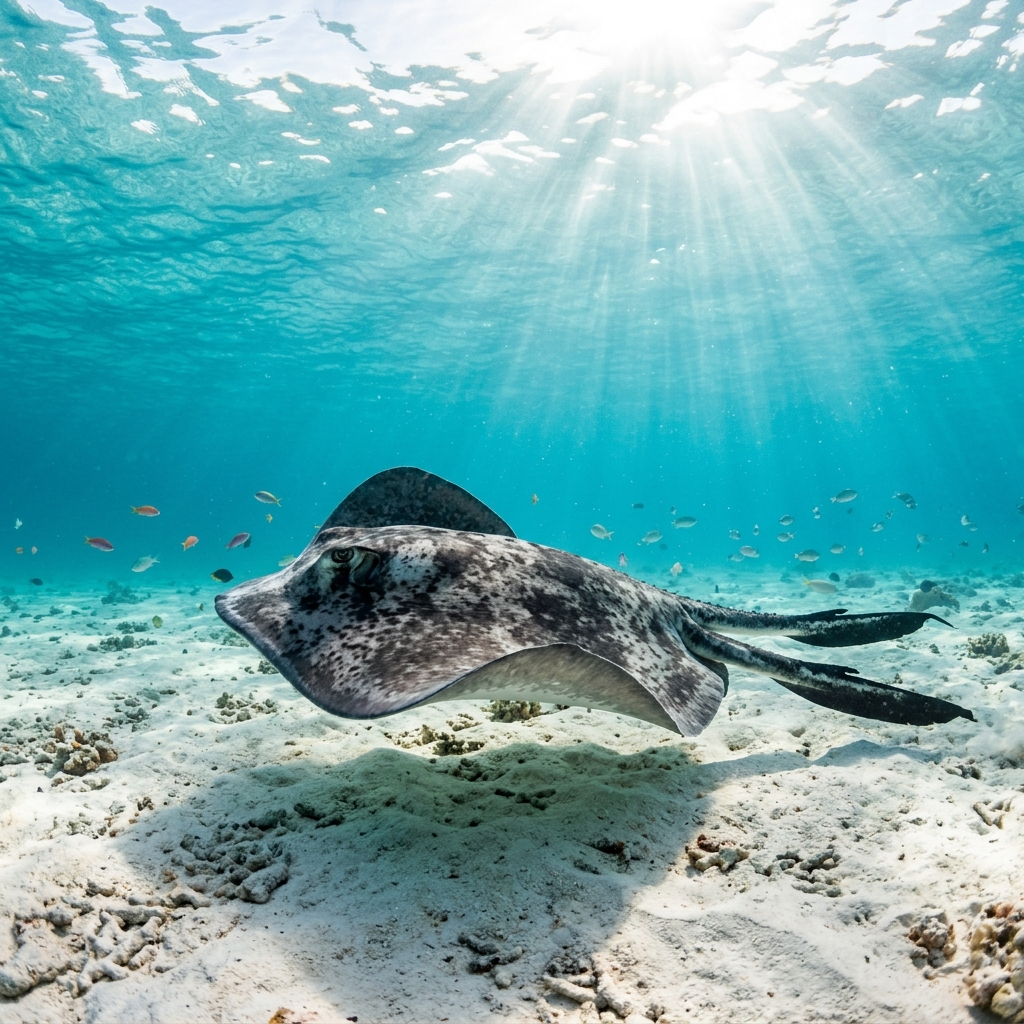
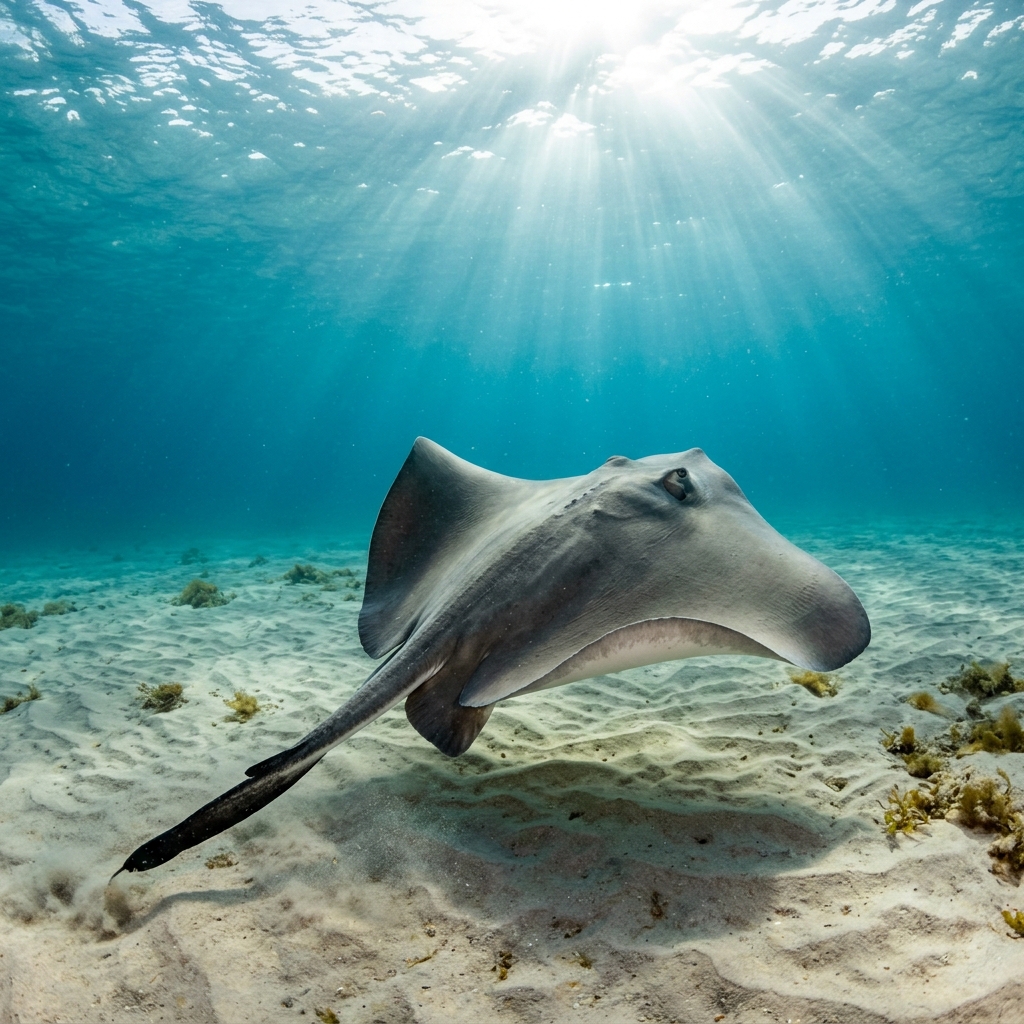
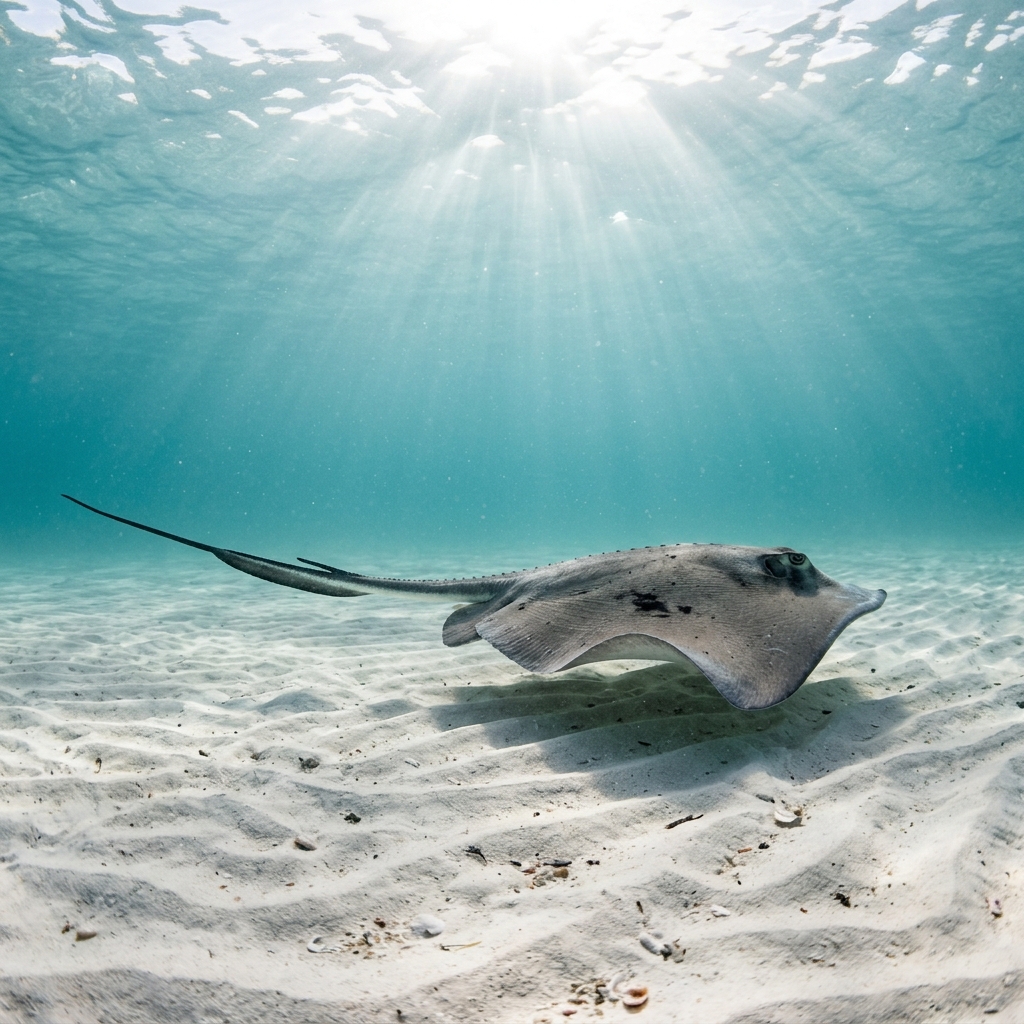
A flattened, diamond-shaped disc in plain grey to olive-brown, usually seen lying still on sand rather than swimming in open water. Grows to around 91cm across, with a long whip-like tail lacking the ornate spotting seen on many other rays. No bold pattern to key on, so the plain colouring combined with the depth (typically 33-50m) and sandy demersal habit is often the giveaway.
Expect to find it settled on sand or rubble patches at depth, often partly still and easy to swim past unnoticed if you are not scanning the bottom. It is not a fish that comes looking for divers and will typically hold position or move off slowly across the sand rather than bolt, so a calm, low approach gives the best look. Because it favours deeper sand flats (33-50m), most sightings happen on drift or wall dives that bottom out near sandy terraces rather than on shallow reef flats.
It logs as uncommon at nearly all sites where it has been recorded, with only a handful of locations reporting it as a common sighting, so most divers who see one consider it a bit of a find rather than a given.
No clear seasonal pattern shows up in the sightings, and with a comfortable range of 23 to 28.3C it sits happily on tropical reefs year-round, so any month at these depths is fair game.
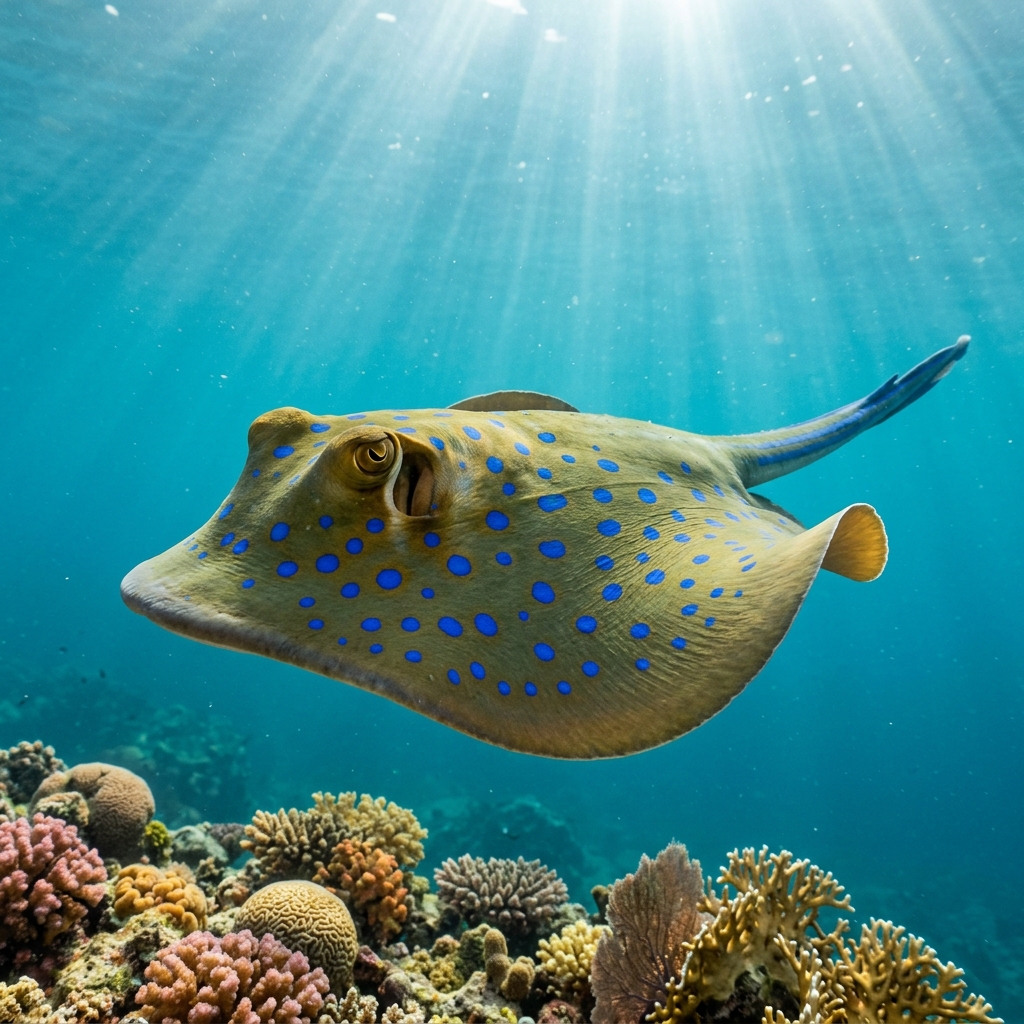
Reef neighbours a diver could mistake it for. Use the identification notes above to tell them apart.
Most reliably logged in the Philippines, spread across Luzon, Palawan, Visayas and Mindanao, and in the Maldives' Northern Atolls. Also turns up with decent regularity in Indonesia's Nusa Tenggara, Western Australia, and along South Africa's KwaZulu-Natal coast, with smaller numbers in Mozambique, Thailand and Myanmar.
Mapping where Jenkins Whipray is logged…
Best chances are in the Philippines across Luzon, Palawan, Visayas and Mindanao, and in the Maldives' Northern Atolls. Western Australia, Indonesia's Nusa Tenggara and South Africa's KwaZulu-Natal coast also produce sightings.
There is no strong seasonal signal in the data, and its warm-water comfort range of 23 to 28.3C means it can turn up on deep sand patches any month of the year.
Look for a plain grey-brown diamond-shaped disc around 91cm across, resting on sand rather than cruising open water, usually spotted between 33 and 50m deep. It lacks the bold spots or patterning of many similar rays, so habitat and depth help confirm the ID as much as colour does.
Around 91cm across the disc is typical, making it a medium-sized member of the whipray group rather than one of the giants.
No, it poses no known danger to divers and is not considered a risk species. Like any ray, give it space and avoid sudden moves near the tail.
Site and sighting data is aggregated from diver logs, iNaturalist and GBIF. For taxonomy and conservation status:
Whiptail Stingray
1,747 sites