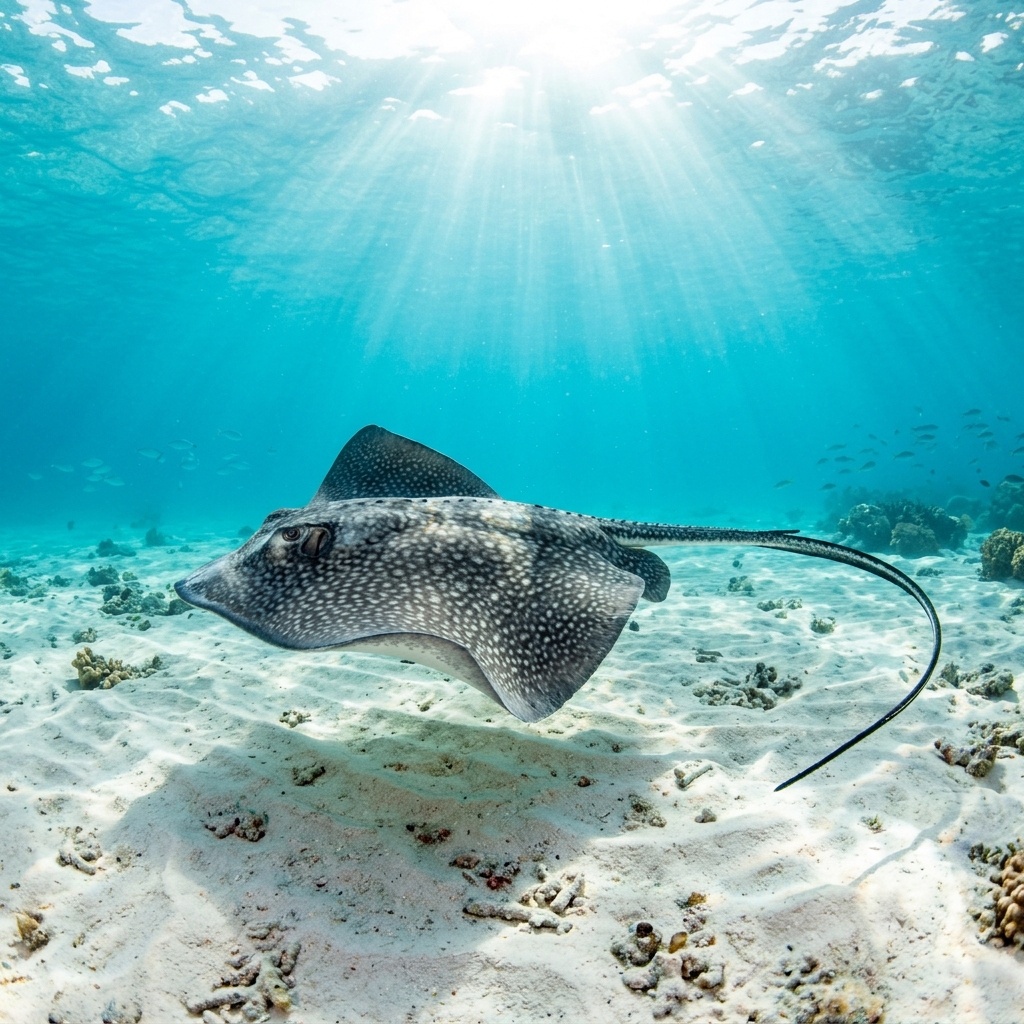
Urogymnus granulatus
Spot the Mangrove Whipray in Queensland's waters or the Maldives' atolls. A rare but real find for divers in 21-28 °C Indo-Pacific shallows.
If you're stung
Venomous tail barbGeneral first-aid guidance, not a substitute for professional medical care. In an emergency, call your local emergency number.
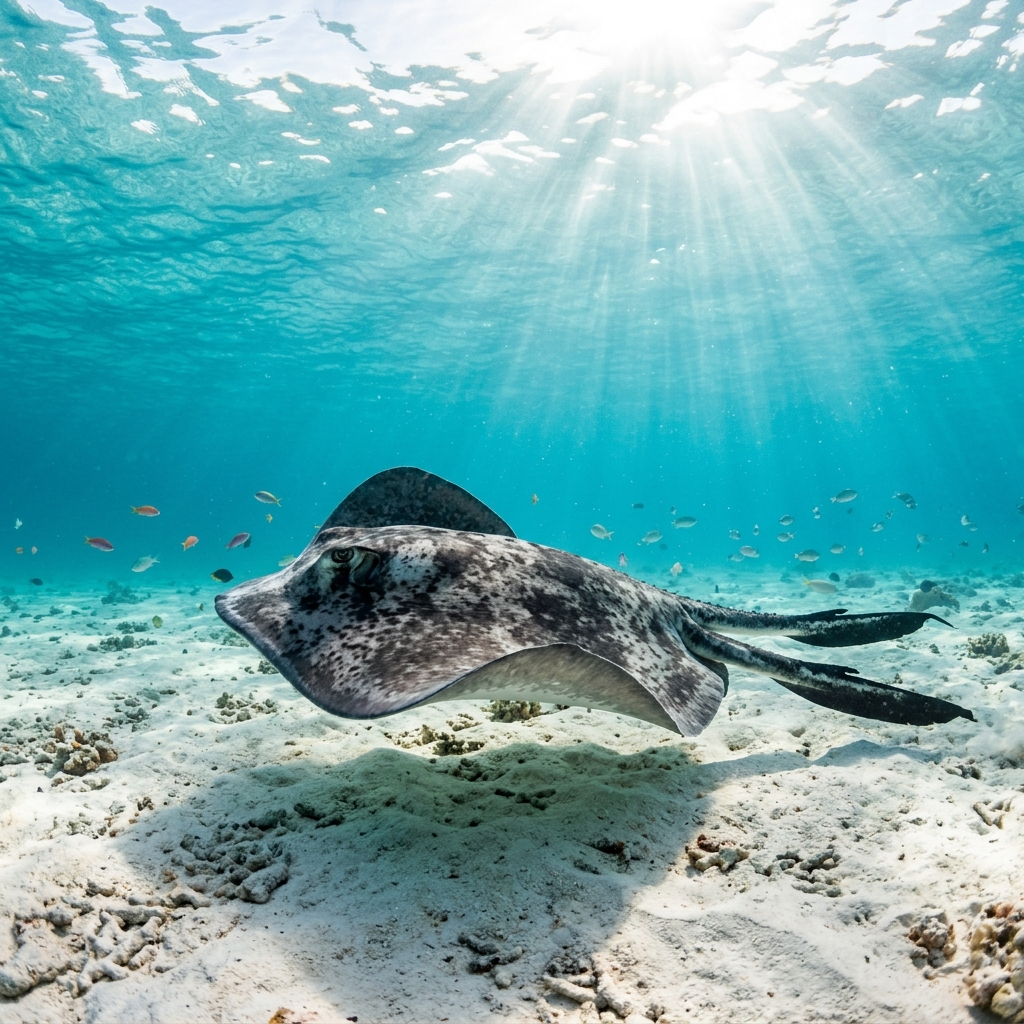
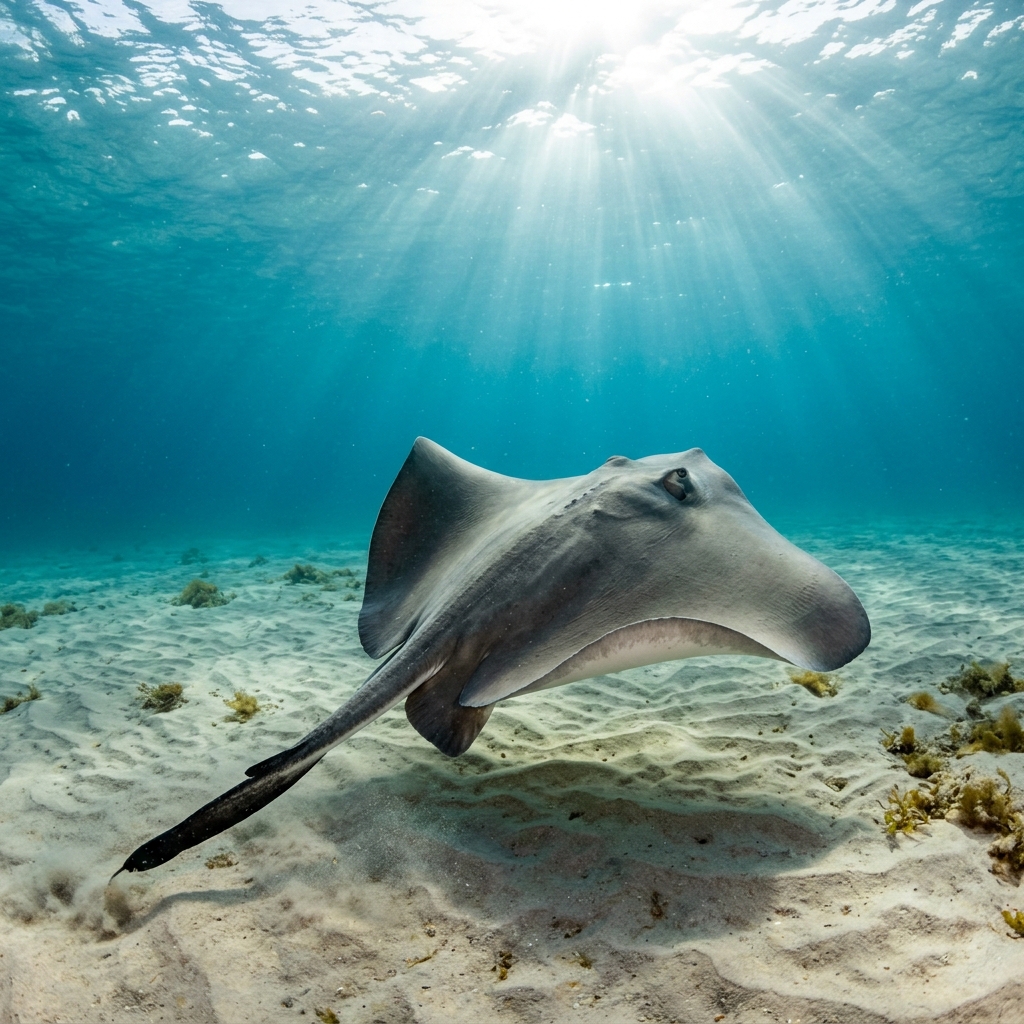
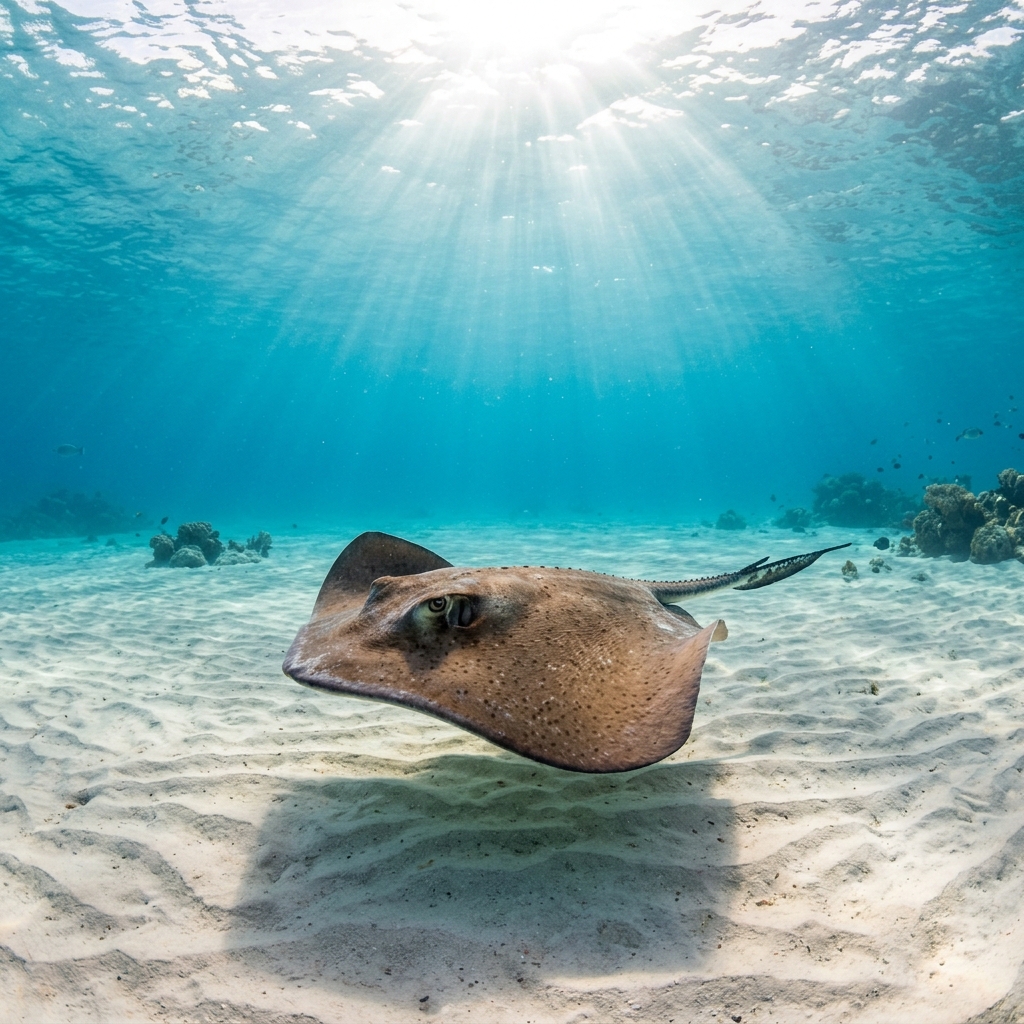
A large, flattened stingray with a roughly oval disc that appears dark grey to brownish on top, covered in small, rough granules (tiny skin denticles) that give it a coarse, sandpaper-like texture you can sometimes make out in good visibility. The tail is very long and whip-like, well beyond the disc width, and the underside is pale. That heavily granulated dorsal surface is the key underwater marker that separates it from most other large rays in the same habitat.
Mangrove whiprays are typically encountered resting or cruising slowly over sandy or silty substrates, often in sheltered coastal habitats near mangroves or reef edges. They tend to be unperturbed by divers at distance but will glide away if approached too closely. Encounters are generally brief and solitary, so spotting one requires patience and a slow, low approach.
As the name suggests, this ray has a strong association with mangrove-fringed coasts and estuaries, making it one of the few large elasmobranchs (cartilaginous fish) regularly found in these turbid, sheltered environments rather than open reef.
No clear seasonal peak has emerged from the data, so it is treated as a year-round possibility. Its observed temperature range of roughly 22 to 28 °C fits the warm tropical and subtropical conditions that Queensland and the Maldives maintain throughout the year.
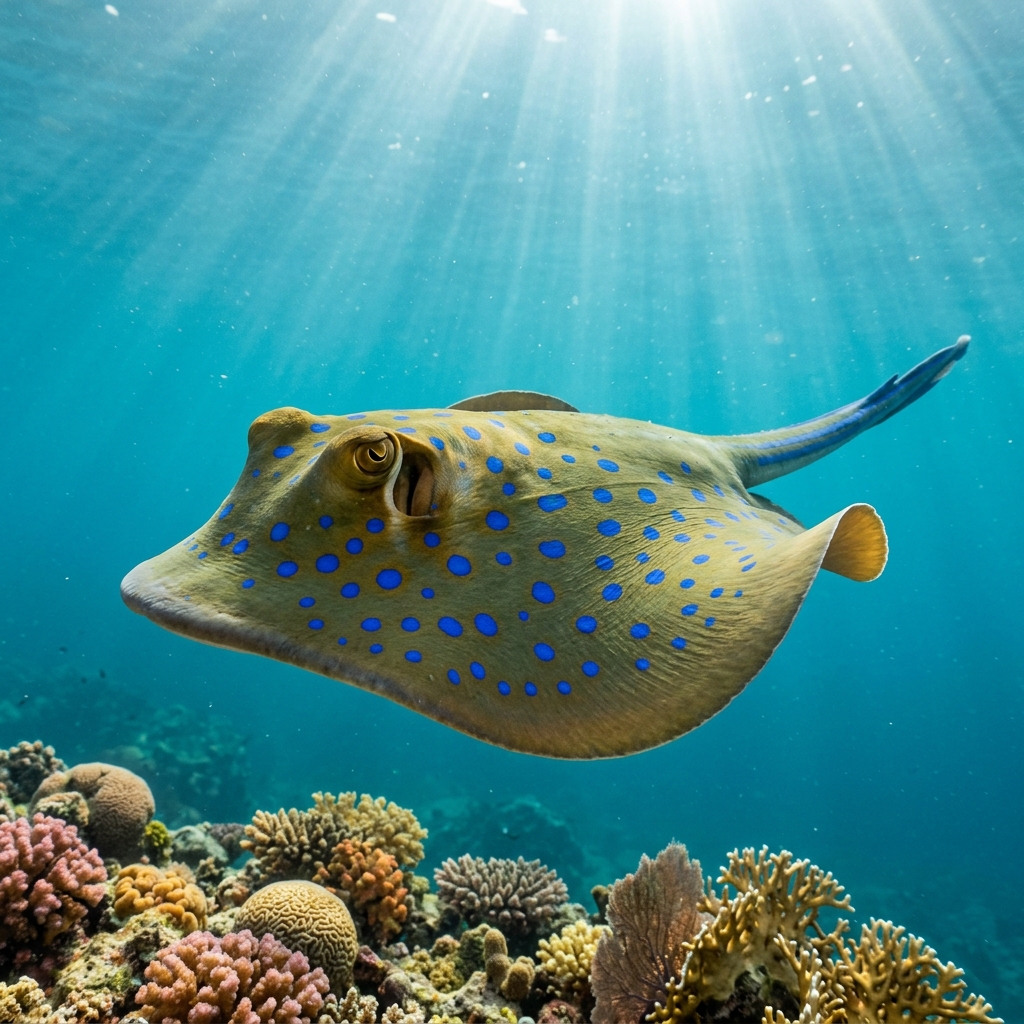
Reef neighbours a diver could mistake it for. Use the identification notes above to tell them apart.
Most logged in Australia, with Queensland accounting for the great majority of recorded sites, particularly along the coast and associated reef systems. A meaningful cluster of sightings also comes from the Male and Ari Atolls of the Maldives, making that archipelago the best non-Australian option. Western Australia contributes a smaller number of sites rounding out the Australian range.
Mapping where Mangrove Whipray is logged…
Australia is by far the most reliable place to look, with Queensland offering the most recorded sites. The Maldives, specifically the Male and Ari Atolls, is the next best option and the top choice outside Australia. Western Australia also has a handful of recorded sites.
No defined season has been identified from diver observations, so encounters are possible year-round. The ray favours water temperatures between roughly 22 and 28 °C, which tropical Queensland and the Maldives provide consistently throughout the year.
Look for a large, oval disc that is dark grey-brown on top with a noticeably rough, granular surface, almost like coarse sandpaper. The tail is extremely long relative to the body. That rough skin texture is the standout feature compared to similarly sized rays sharing its range.
Yes, the species is listed as Endangered by the IUCN. Habitat destruction in mangrove and estuarine environments, combined with incidental capture in coastal fisheries, has driven population declines across its Indo-Pacific range. Logging sightings with photos on citizen-science platforms directly supports conservation monitoring.
Expect an uncommon to rare encounter. Across the sites where it has been recorded, it is more often logged as uncommon or rare than common. Patience, local knowledge, and choosing sheltered coastal or mangrove-adjacent sites improve your chances considerably.
The Mangrove Whipray is listed as endangered by the IUCN. Observe from a distance, avoid touching or feeding it, and report sightings to local marine research organisations.
The mangrove whipray is classified as Endangered on the IUCN Red List, largely due to habitat loss in coastal mangrove systems and pressure from coastal fisheries across its range. If you photograph one, submit your sighting to iNaturalist or a citizen-science platform to help researchers track its distribution.
Site and sighting data is aggregated from diver logs, iNaturalist and GBIF. For taxonomy and conservation status:
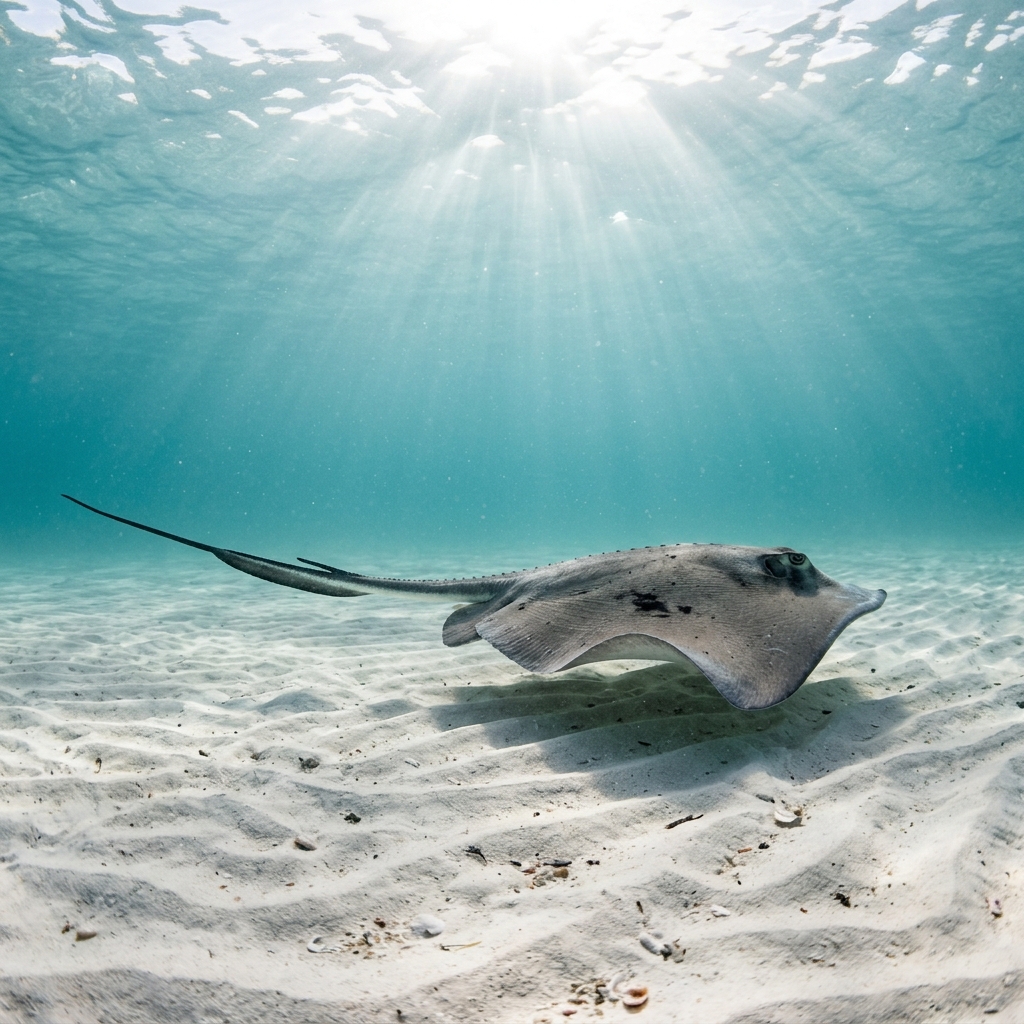
Whiptail Stingray
1,747 sites