Hemitrygon fluviorum
Spotted in cooler waters around 18-23 °C, the Estuary Stingray is a rare sighting. Here's how to ID it and what to know before you dive.
If you're stung
Venomous tail barbGeneral first-aid guidance, not a substitute for professional medical care. In an emergency, call your local emergency number.
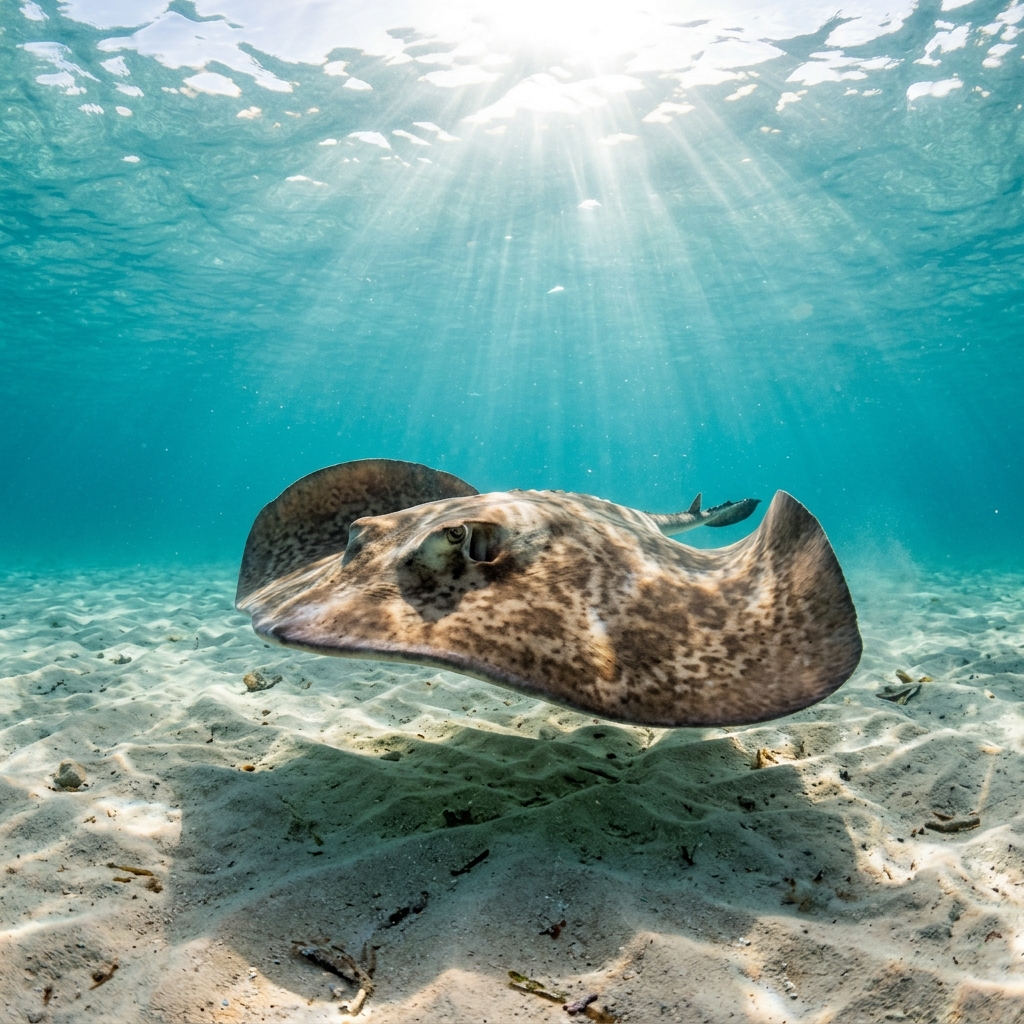
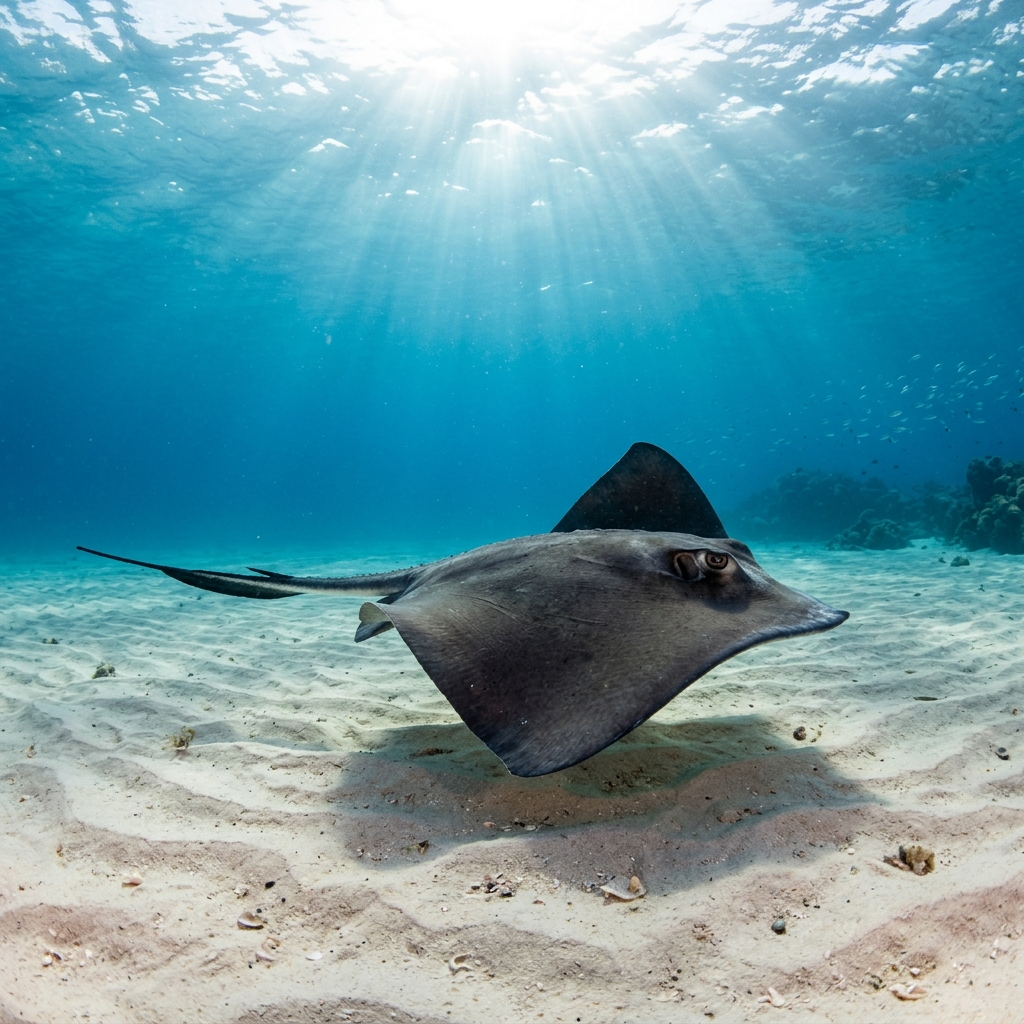
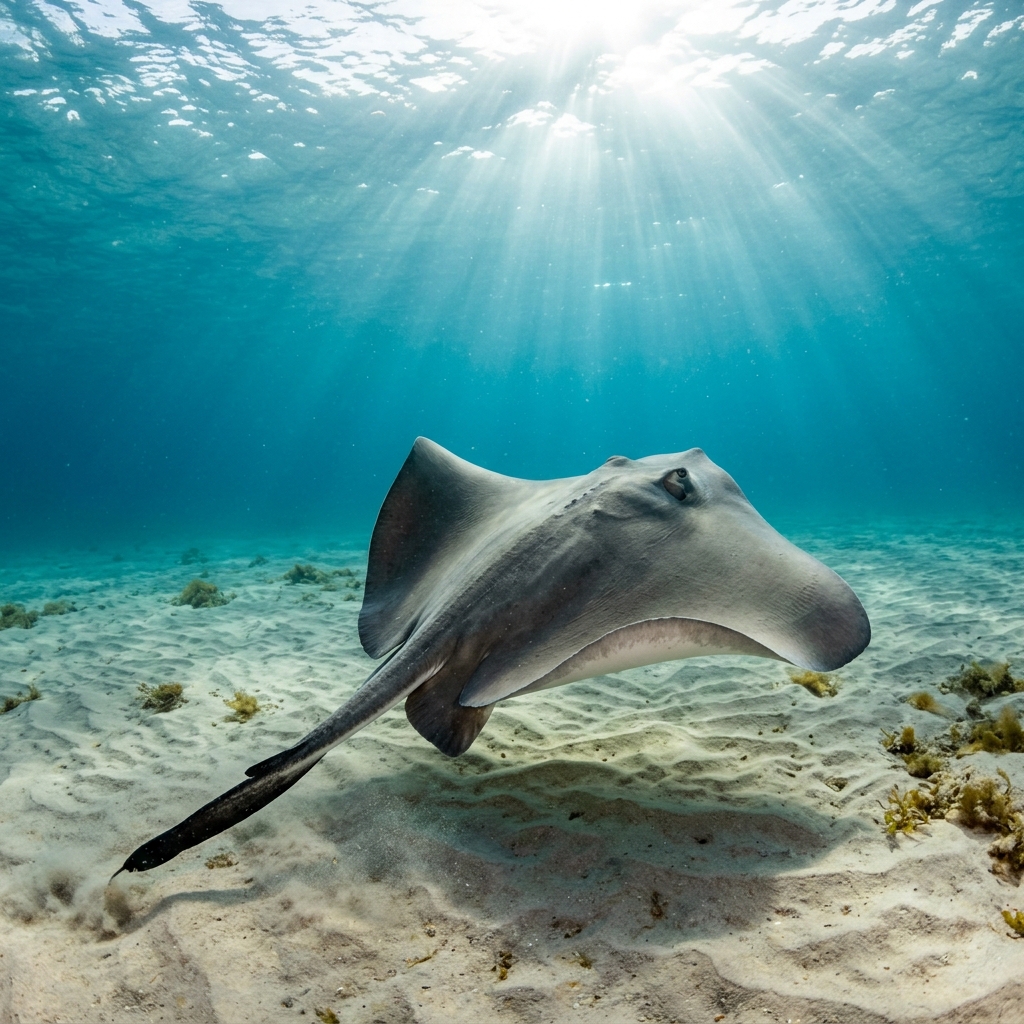
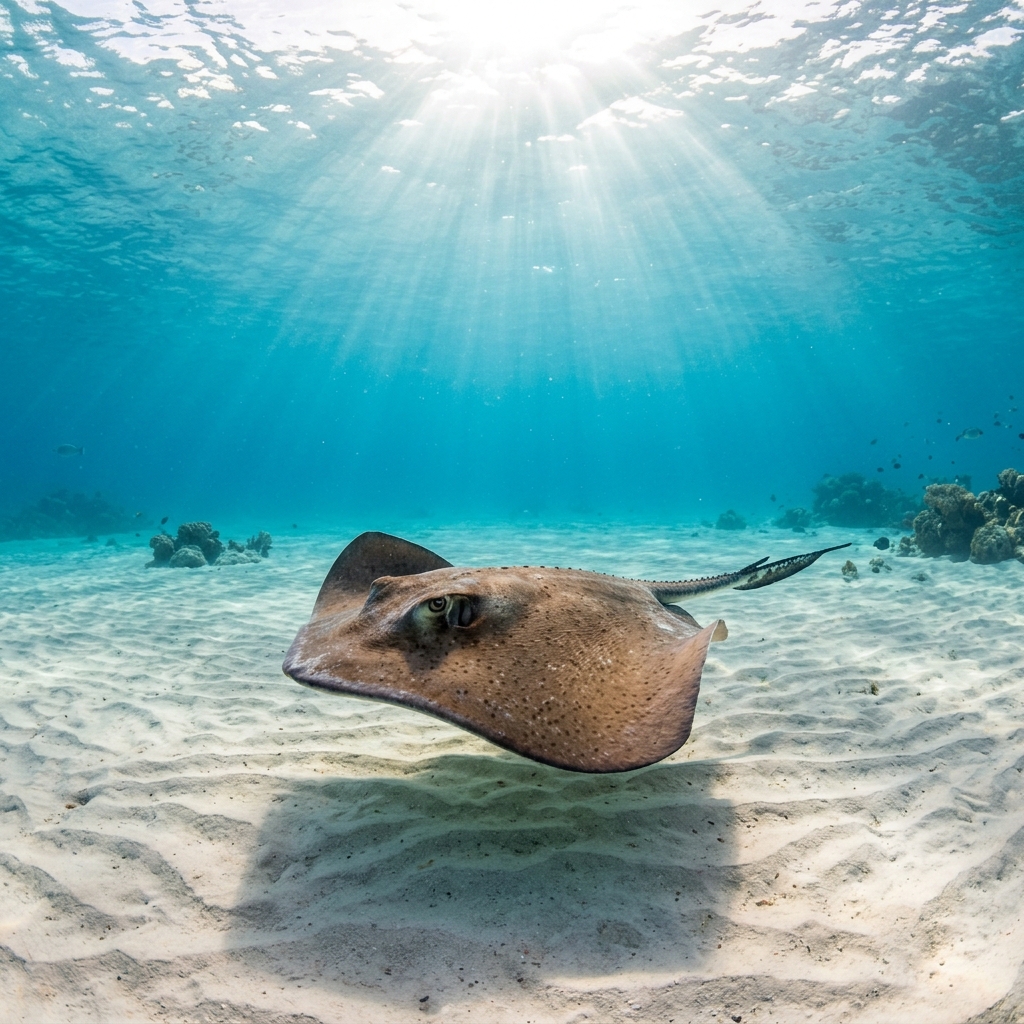
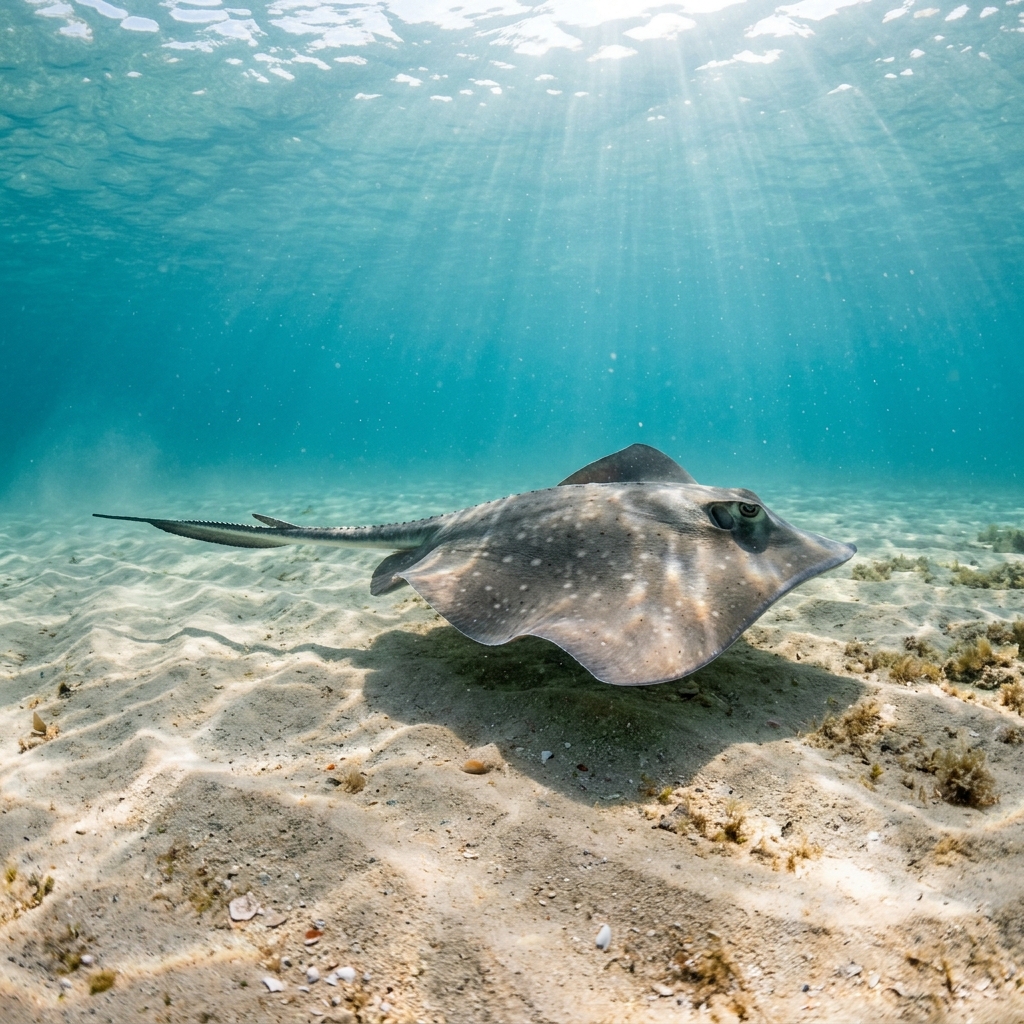
A medium-sized stingray with a roughly diamond-shaped pectoral disc that is typically dark brown to olive-grey on the dorsal surface, often with a faintly mottled or plain appearance. The underside is pale or whitish, and the slender tail carries one or more venomous spines. It favours estuarine and coastal habitats, so seeing a plain-coloured stingray resting on silty or sandy substrate in brackish or low-visibility water is your best field cue.
Like most dasyatid rays, it likely spends much of its time resting or slowly cruising just above soft sediment, foraging for invertebrates buried in the substrate. It is not considered dangerous to divers who give it space and avoid touching or startling it. Encounters are expected to be brief, with the ray moving away calmly if approached too closely.
This ray is one of the few elasmobranchs (cartilaginous fish) adapted to estuarine conditions, tolerating the reduced salinity of river mouths and tidal creeks where most marine rays would not venture.
There is not enough sighting data to identify a peak season, so it should be treated as a year-round possibility. Its observed temperature niche of roughly 18 to 23 °C points toward the temperate coastal and estuarine zones of its range.
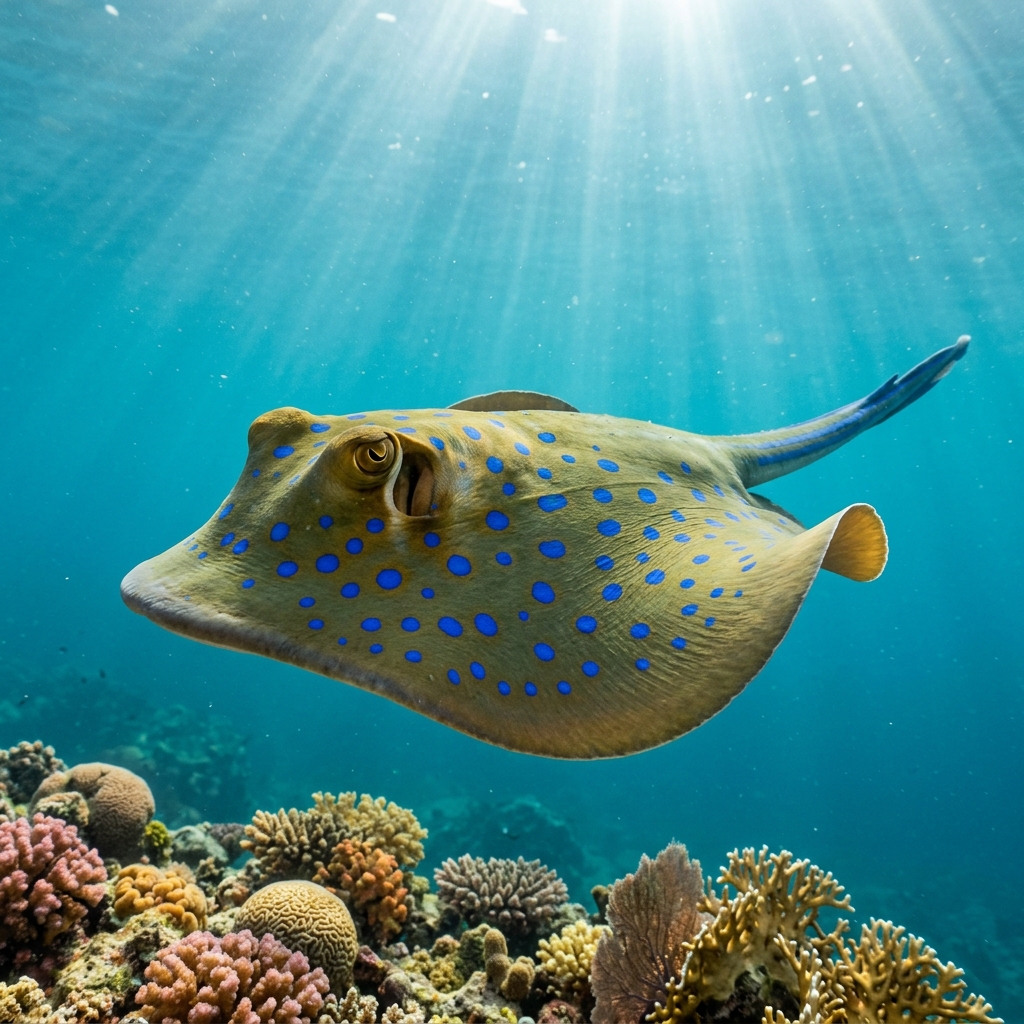
Reef neighbours a diver could mistake it for. Use the identification notes above to tell them apart.
No confirmed dive-site records exist in Fin's database for this species, which reflects how rarely it is encountered underwater. Its known range is the estuarine and coastal waters of eastern Australia, so that region is the logical starting point for anyone specifically seeking it.
Mapping where Estuary Stingray is logged…
No confirmed recreational dive sites are currently logged for this species. Its known range centres on the estuarine and coastal waters of eastern Australia, making that the most logical area to look. Encounters are likely incidental rather than targeted.
There is too little sighting data to identify a seasonal peak. Observed water temperatures of 18 to 23 °C suggest a temperate habitat, so the cooler months in its Australian range may be worth targeting, but this is not confirmed by diver observations.
Look for a plain dark brown to olive-grey diamond-shaped disc resting on silty or sandy estuarine substrate. It lacks the dramatic spots or markings of many other rays. The estuarine setting, low visibility, and plain colouration together are the strongest combined clues.
They are not considered dangerous if treated with respect. Like all stingrays, they carry a venomous tail spine used only in self-defence. Avoid standing on or touching any ray on the seabed, and give it room to swim away.
They are listed as Vulnerable by the IUCN. The main threats are habitat loss and degradation of the estuaries they inhabit. Logging sightings on iNaturalist is one of the most useful things a diver can do for this poorly documented species.
Most marine rays avoid low-salinity water, but this species is adapted to estuarine and freshwater-influenced environments such as tidal rivers and coastal wetlands. That tolerance for brackish conditions makes it ecologically distinctive within the stingray family.
The Estuary Stingray is listed as vulnerable by the IUCN. Observe from a distance, avoid touching or feeding it, and report sightings to local marine research organisations.
The Estuary Stingray is listed as Vulnerable on the IUCN Red List, largely due to habitat degradation of the estuaries it depends on. Divers should report any sightings to citizen science platforms such as iNaturalist to help build the thin dataset that exists for this species.
Site and sighting data is aggregated from diver logs, iNaturalist and GBIF. For taxonomy and conservation status:
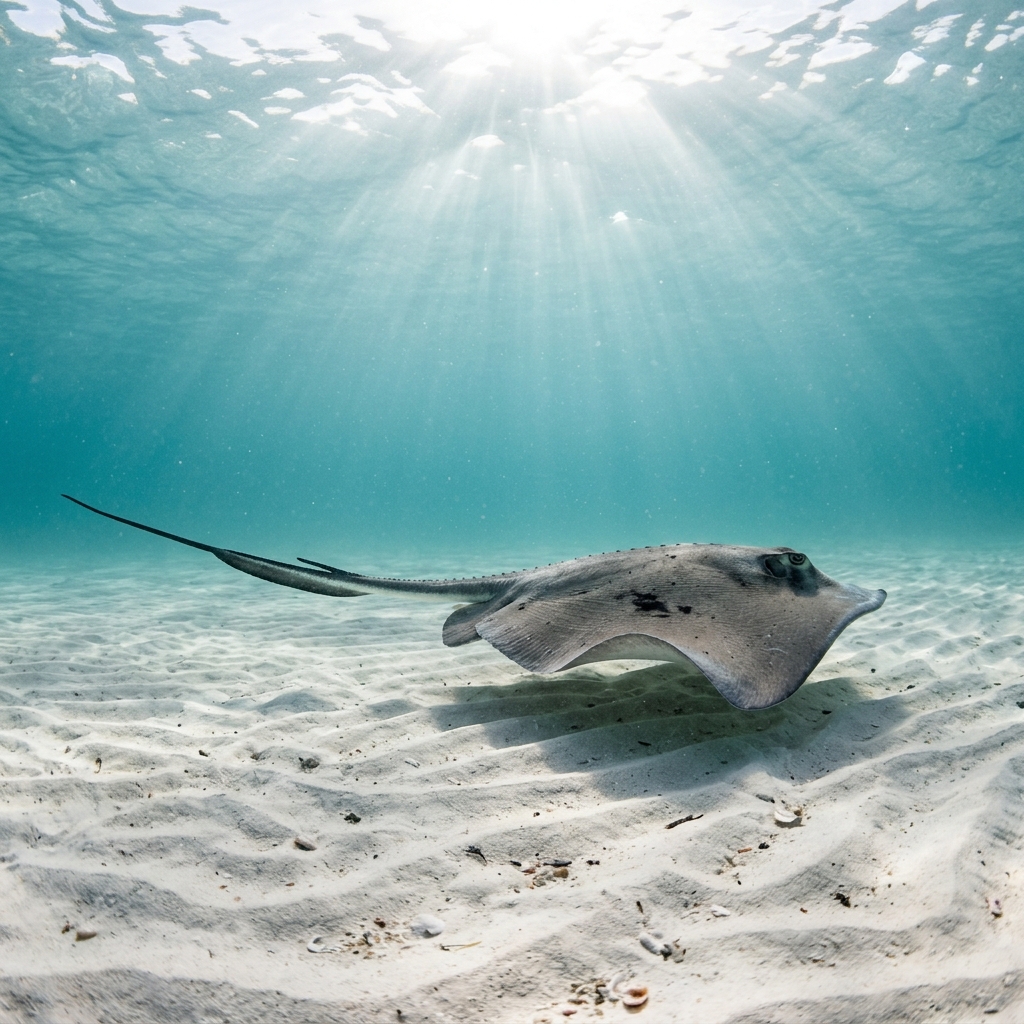
Whiptail Stingray
1,747 sites