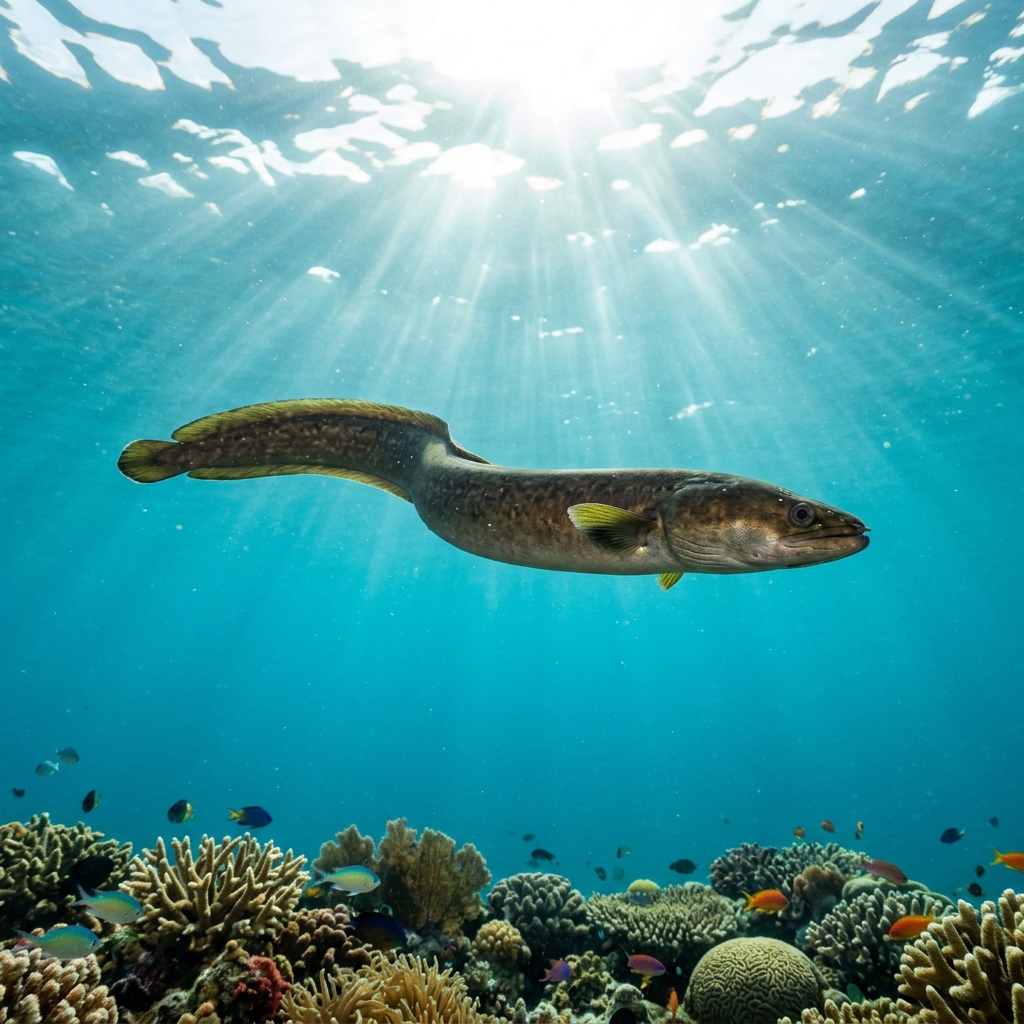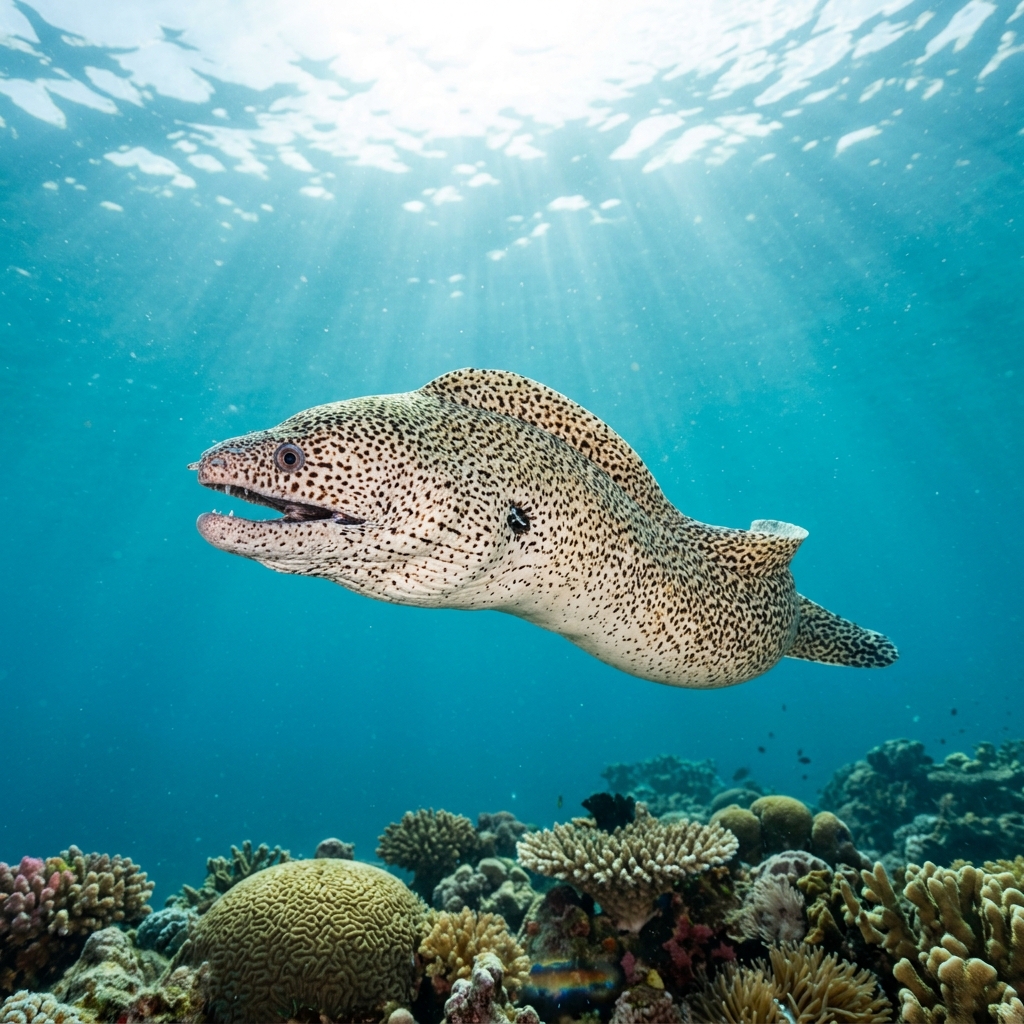
Gymnothorax pictus
Spot the Painted Moray across the Maldives, Hawaii, and Thailand's Phuket reefs. Year-round in warm 24-29 °C water, but an uncommon find, here's how to ID it.
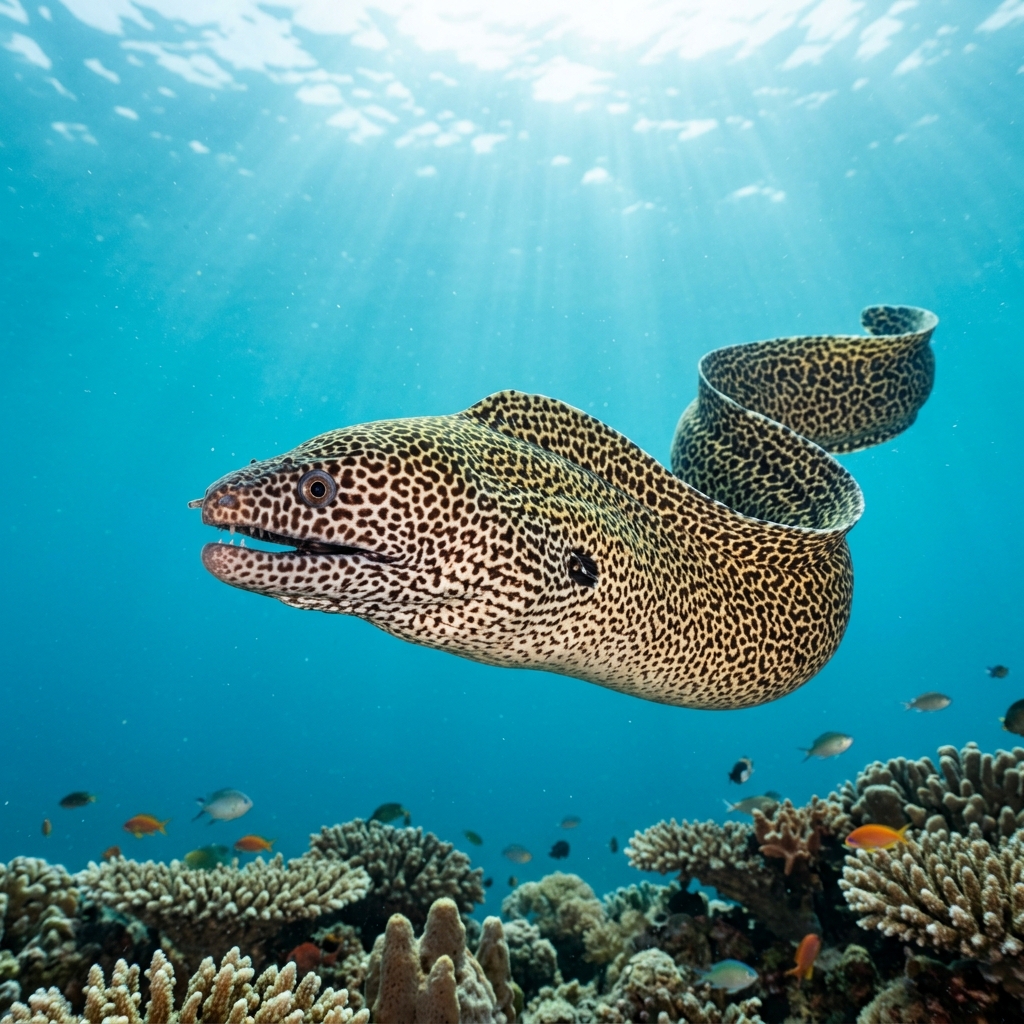
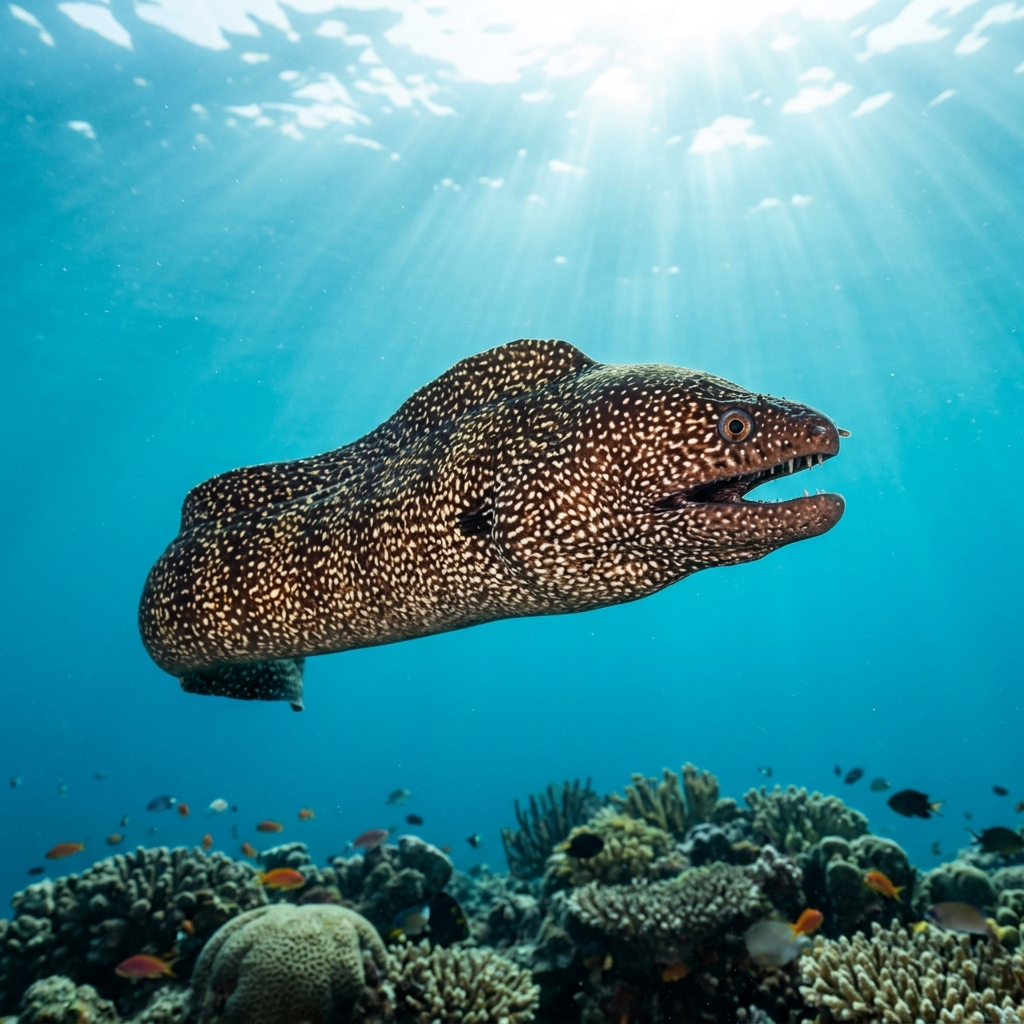
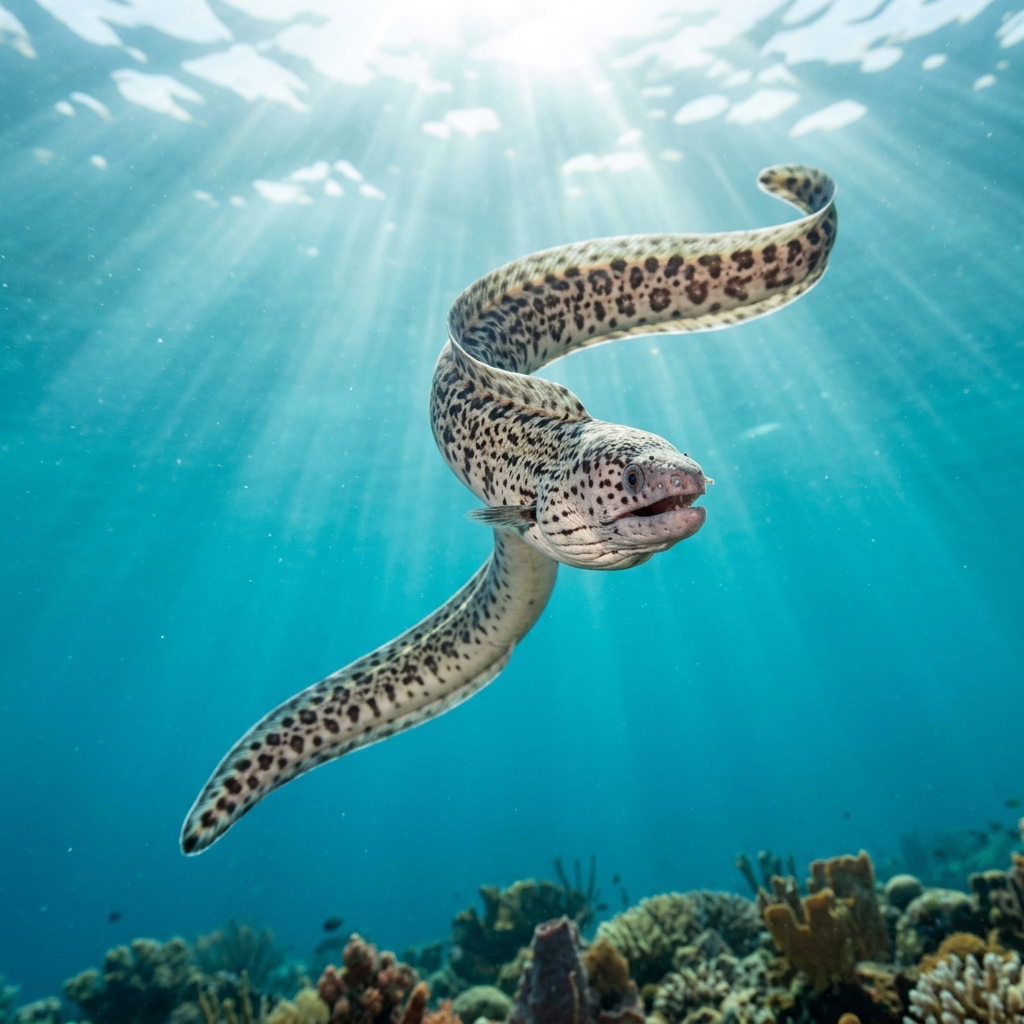
White or pale cream body covered in a dense scattering of irregular dark brown to black spots, a pattern that extends across the head and continues to the tail, unlike mottled species where the markings thin out. The spots are small and numerous, giving a speckled, almost leopard-like texture rather than the bold blotches of some relatives. Body shape is the typical stout moray build, and you'll most often see just the head and neck extended from a reef hole or coral crevice.
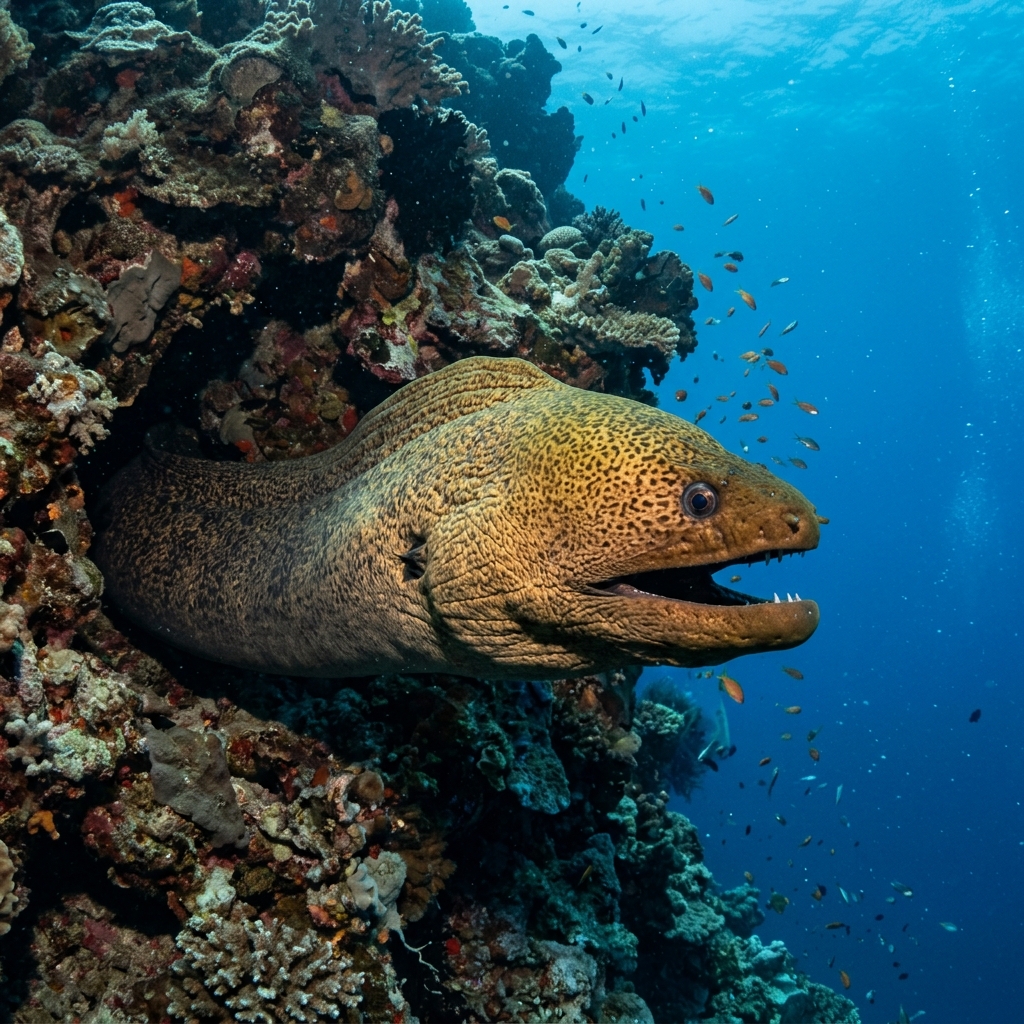
Like most morays, the painted moray spends the day wedged inside reef crevices or sheltered beneath coral heads, with just its head visible as it breathes by rhythmically opening and closing its mouth. Divers who slow down and peer into gaps are far more likely to spot one than those moving quickly along the reef wall. It is generally indifferent to careful observers and will hold its position rather than retreat.
Morays have a second set of jaws, pharyngeal jaws (a bony throat-jaw mechanism), that shoot forward to grip prey and pull it back into the throat, a feeding adaptation unique among reef fishes and the reason morays can swallow prey without being able to suction-feed like most fish.
No seasonal peak has emerged from the data, so it can be treated as a year-round resident wherever it occurs. Its observed temperature range of roughly 24 to 29 °C fits the permanently warm conditions of the tropical Indo-Pacific reefs where it lives.
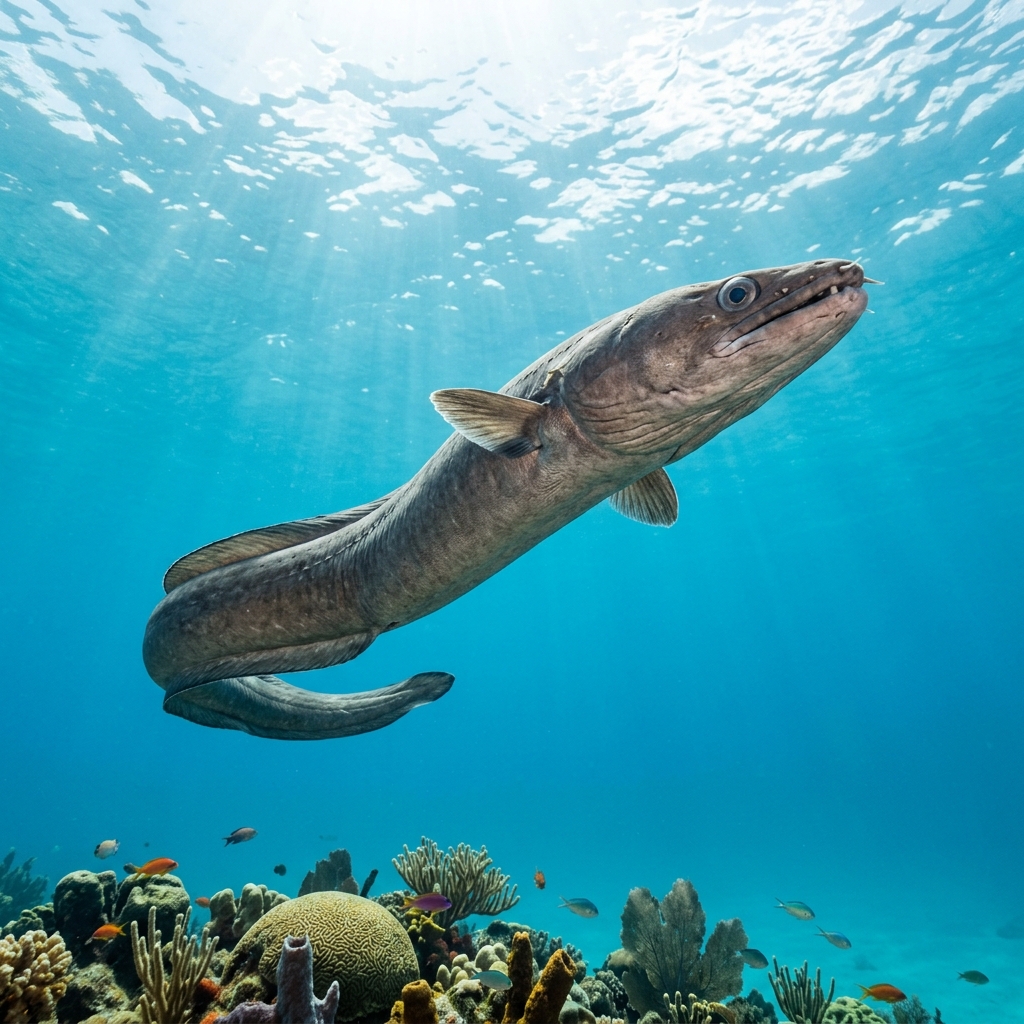
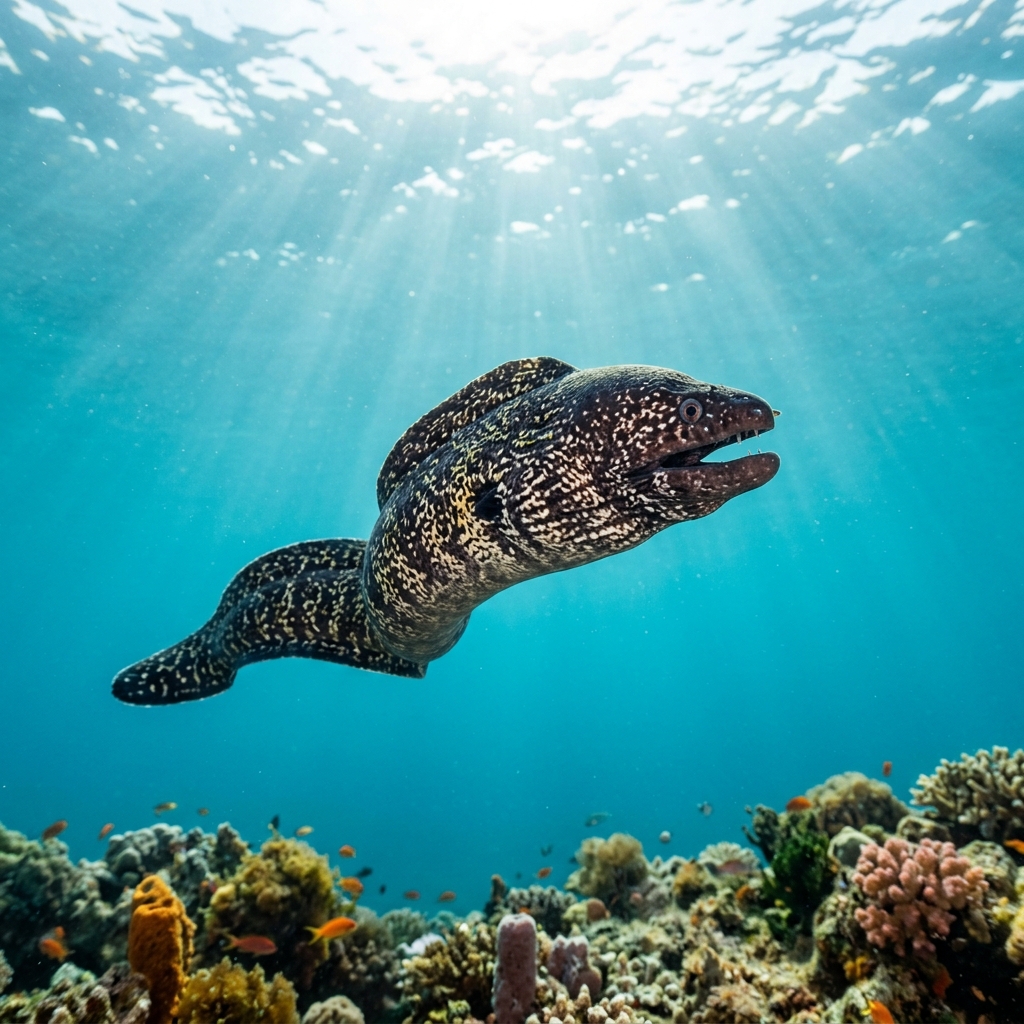
Reef neighbours a diver could mistake it for. Use the identification notes above to tell them apart.
Most commonly logged in the Maldives, where the Male and Ari Atolls account for the bulk of sightings, making it the single best destination. Hawaii is the next strongest region for the species, followed by the Phuket and Phi Phi area of Thailand, the south coast of Sri Lanka, and Ponta do Ouro in Mozambique. It also turns up regularly in the Central Visayas of the Philippines and in Lanyu, Taiwan.
Mapping where Painted Moray is logged…
The Maldives, particularly the Male and Ari Atolls, is the most reliable destination. Hawaii, Phuket and the Phi Phi Islands in Thailand, Sri Lanka's south coast, and Ponta do Ouro in Mozambique all have solid records too. The species is logged across the wider Indo-Pacific, including the Philippines and Taiwan.
There is no defined seasonal window in the dive data. It lives on warm tropical reefs year-round, comfortable in water temperatures from around 24 to 29 °C, so any time of year is a reasonable bet at the top destinations.
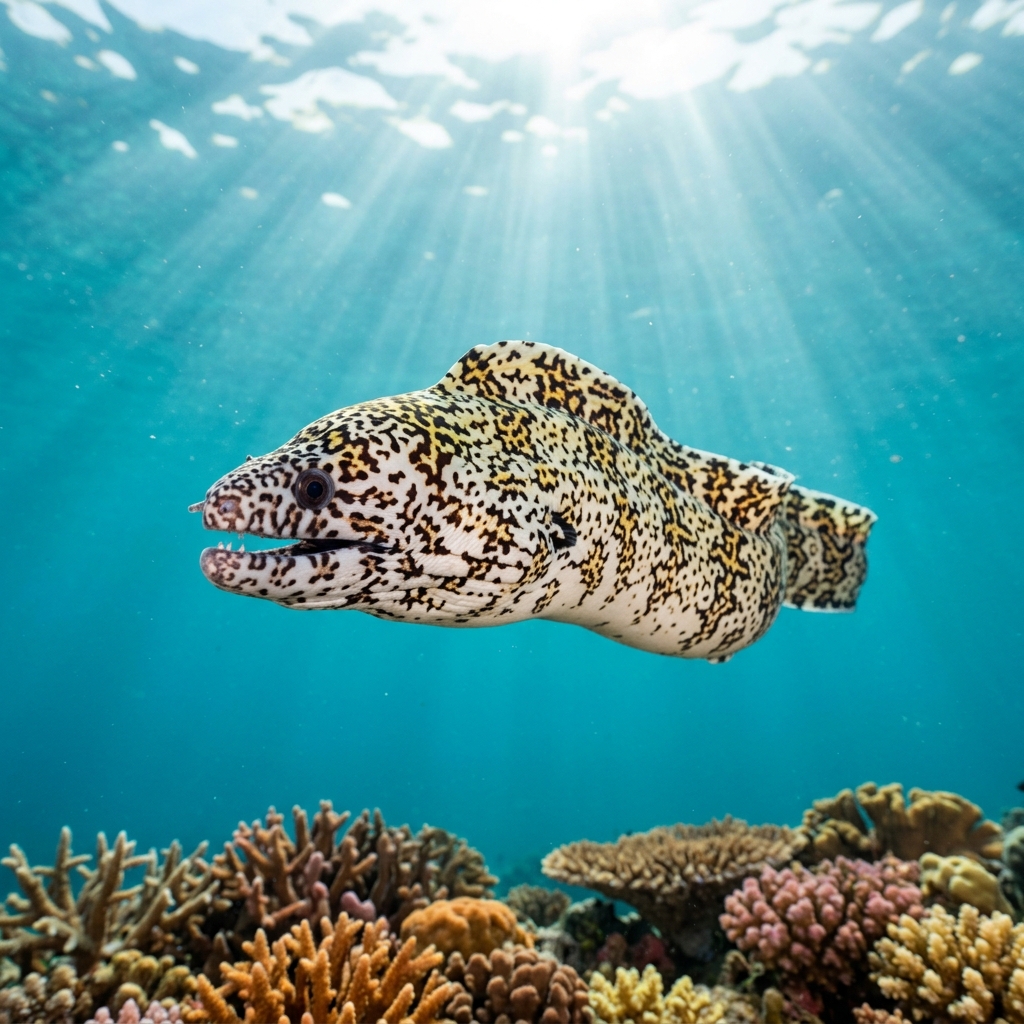
Look for a pale cream or white eel body densely covered in small, irregular dark brown to black spots from snout to tail. That consistent all-over speckled pattern is the key. The Snowflake Moray has larger, flower-shaped pale blotches on dark; the Laced Moray has a finer net-like (reticulated) pattern; and the Turkey Moray tends to show more yellowish tones with a different spot arrangement.
Specific size data for this species is limited, but like most mid-sized morays it typically reaches somewhere in the range of 80 to 120 cm in length. On the reef you will usually see only the head and front third of the body emerging from a crevice.
No. The painted moray is not considered dangerous to divers. Morays in general only bite when provoked or when a diver mistakenly places a hand near their shelter. Give it space, avoid reaching into crevices, and it will simply watch you pass.
It is listed as uncommon at the majority of sites where it has been recorded, and rare at many others. Only a handful of sites report it as common or very common. Patience and a slow, methodical approach to the reef, especially peering into crevices, gives you the best chance of finding one.
Site and sighting data is aggregated from diver logs, iNaturalist and GBIF. For taxonomy and conservation status:
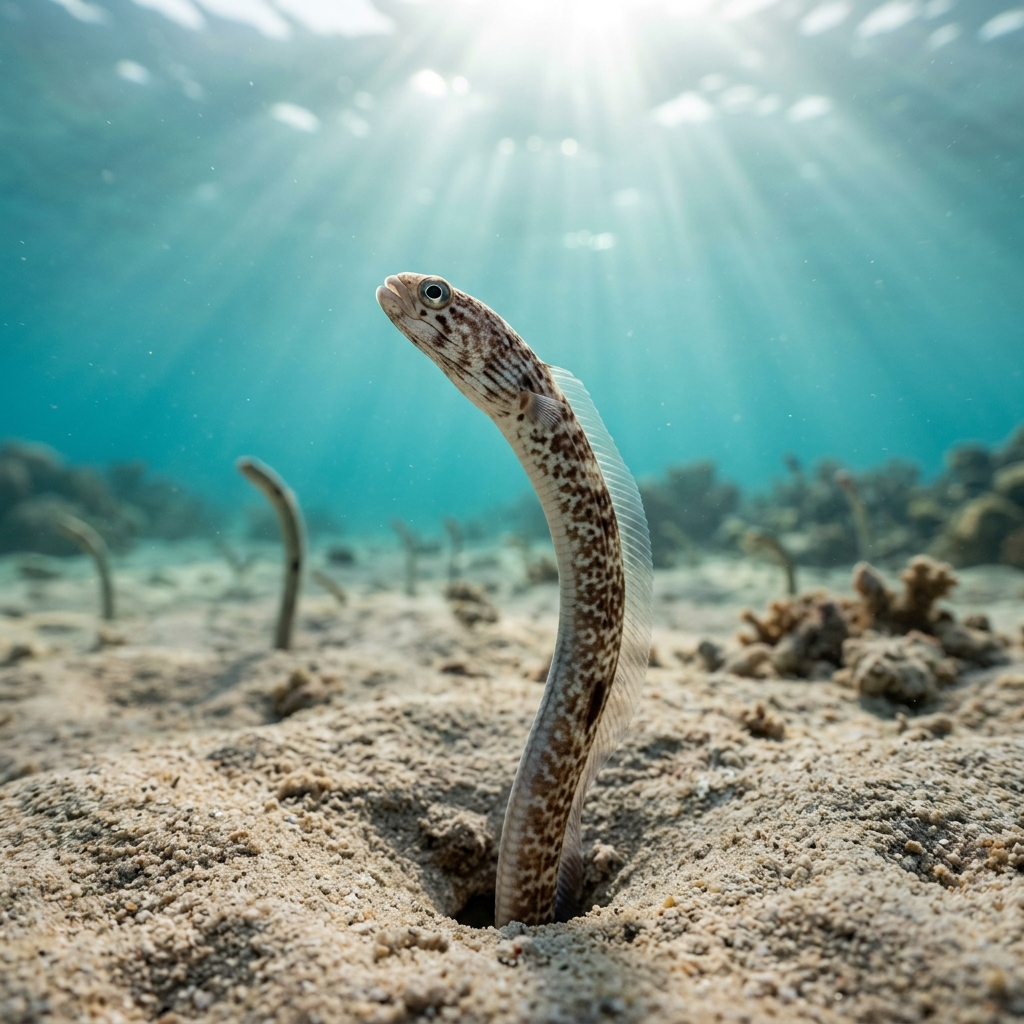
Garden Eel
2,448 sites