Haemulon scudderii
Grey Grunt shows up as an uncommon sighting around the Galápagos Islands, in water between 23 and 29C, year-round.
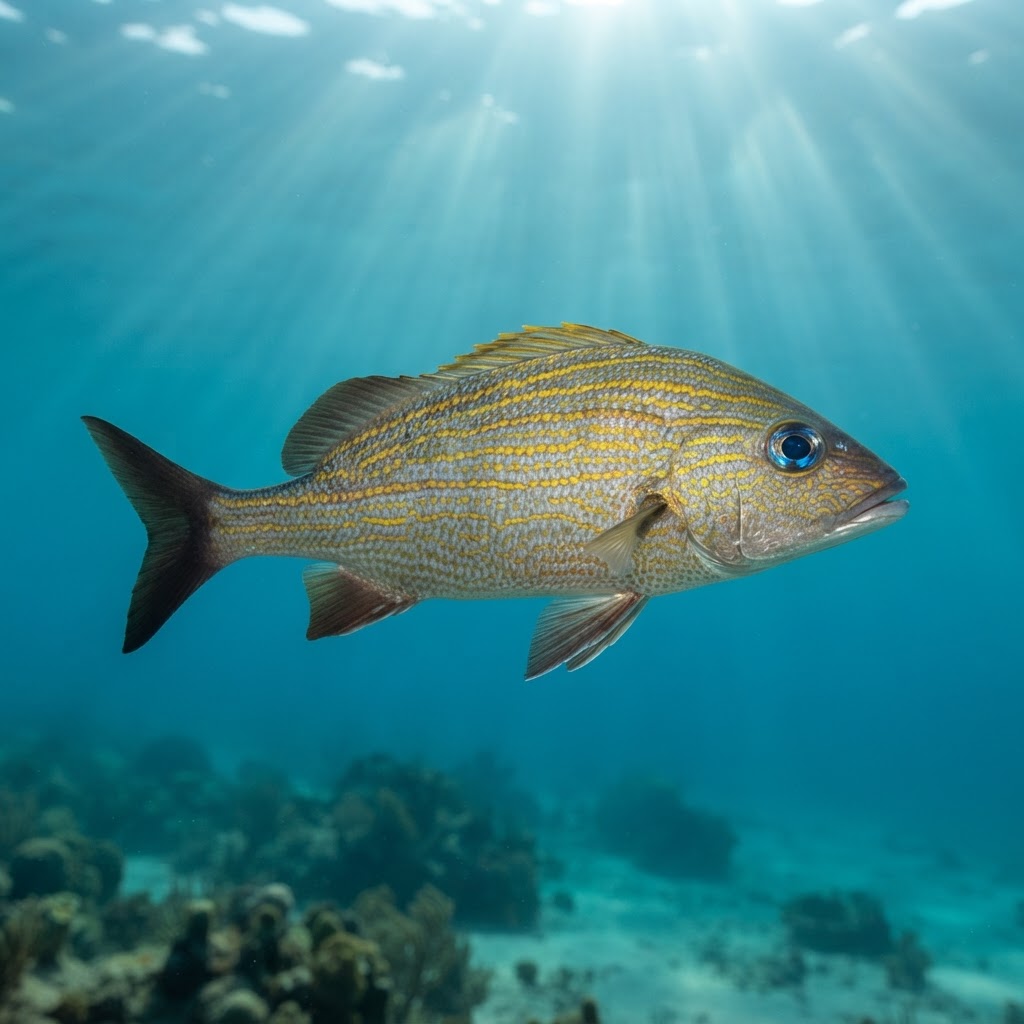
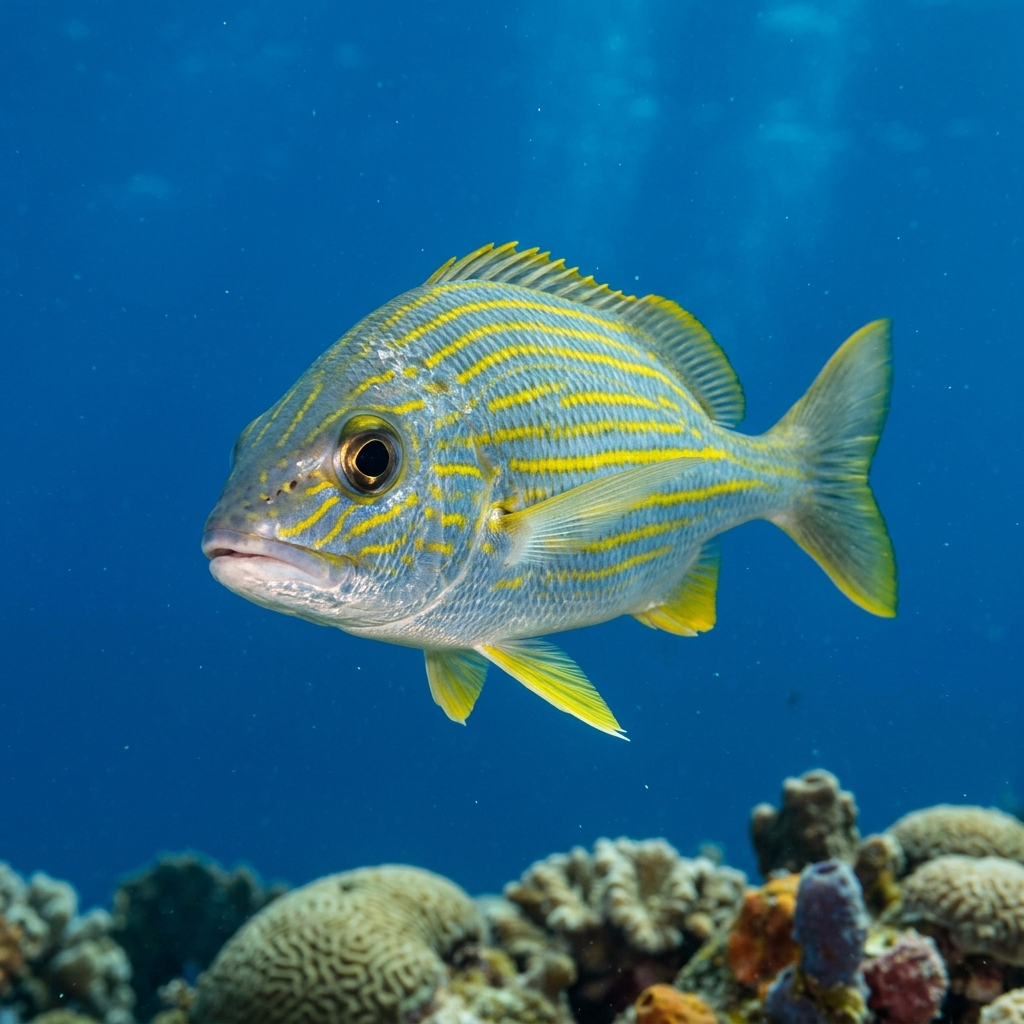
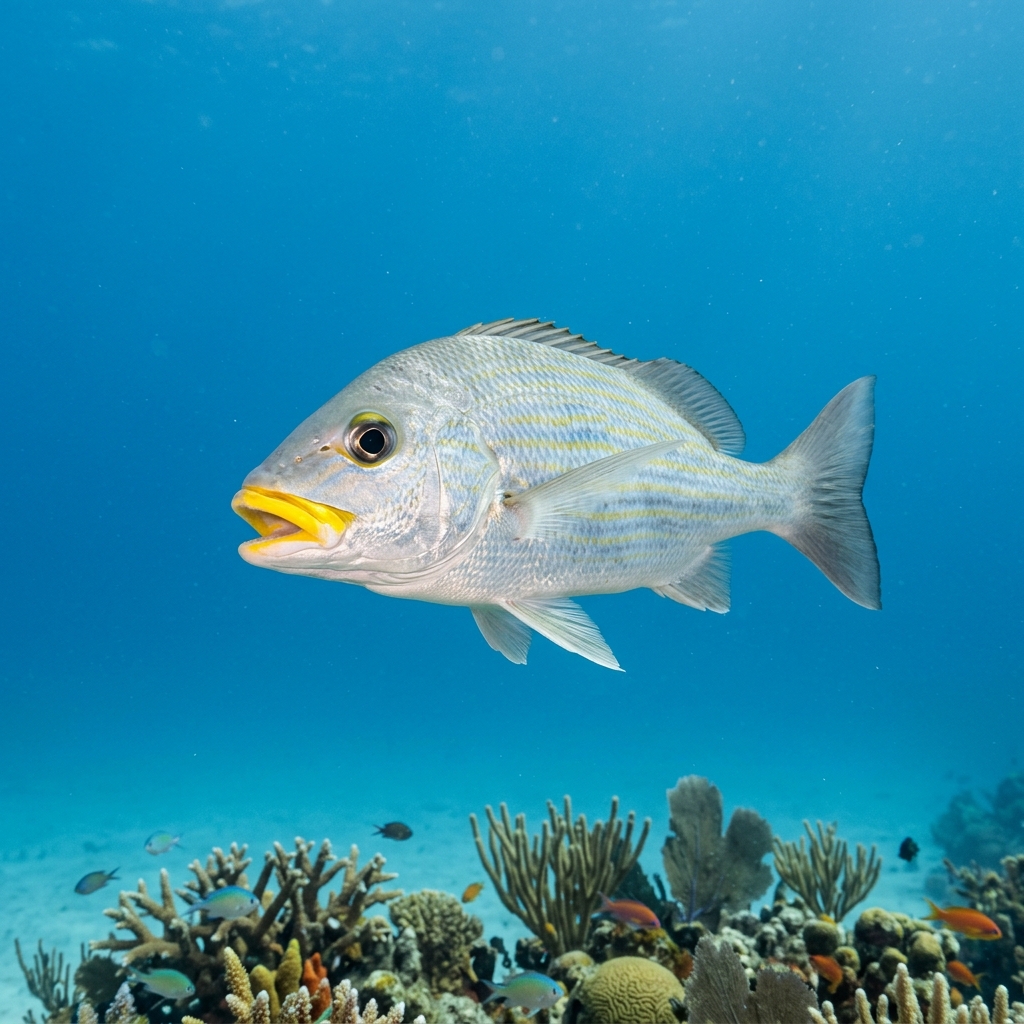
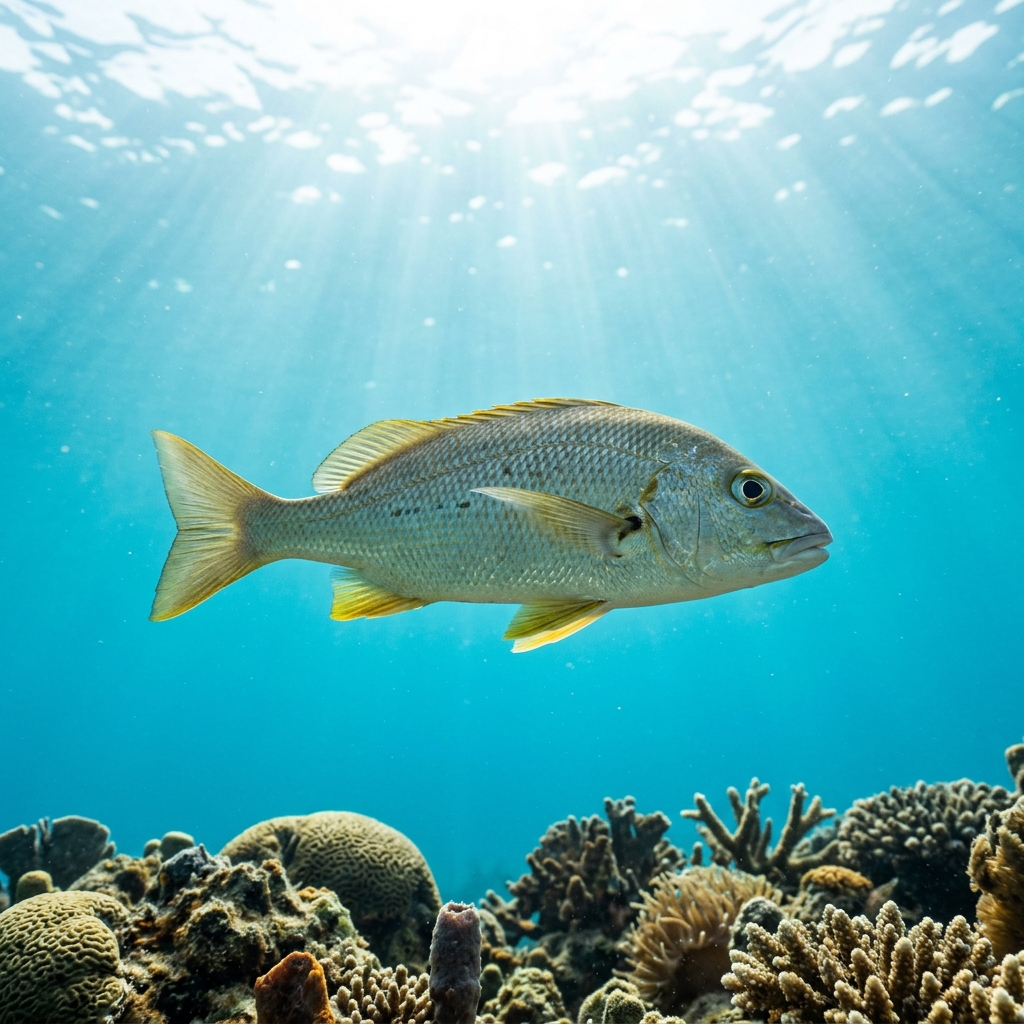
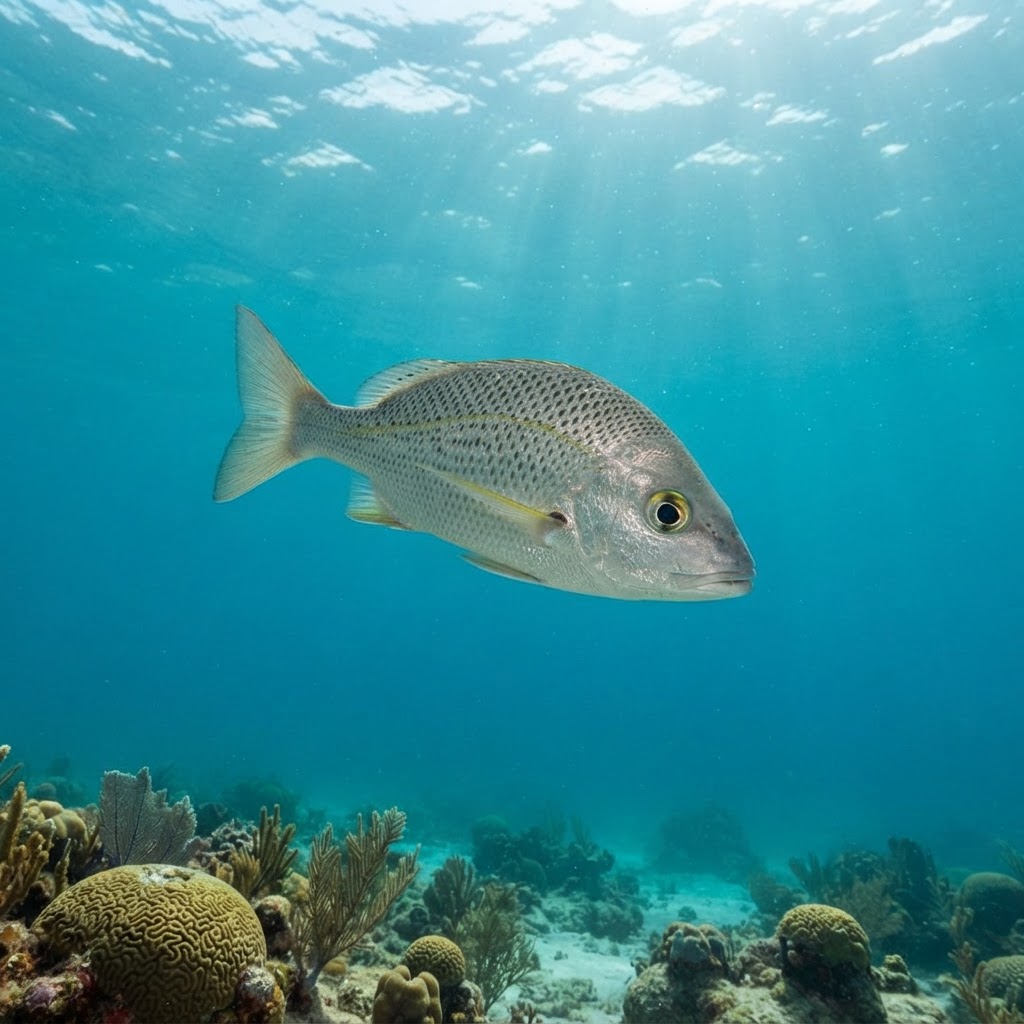
A stocky, silvery-grey fish around 24cm, usually seen holding steady near rock or reef structure rather than swimming in open water. Faint horizontal striping runs along the flanks, fading toward a plain, unmarked tail, and the body has the deep-bodied, blunt-headed profile typical of grunts. There is no strong colour contrast to key on, so body shape and its habit of sitting close to structure are your best clues.
Typically found hovering in loose groups close to rocky reef structure or under ledges, moving little and showing no particular reaction to divers passing by. Most logs describe it as an uncommon to rare find even at its core sites, so it is more often spotted tucked into a school of similar-looking grunts than seen alone in the open. Look for it during daytime dives around structure rather than out over sand or open water.
Grunts get their name from the sound they make by grinding their pharyngeal teeth, a noise amplified by the swim bladder that divers occasionally pick up on as a faint grinding or croaking underwater.
Sightings are spread across the year with no clear seasonal pattern, and the observed temperature range of 23.2 to 29.1C covers most of the diving calendar in both Galápagos and Baja California, so plan around site conditions rather than a specific month.
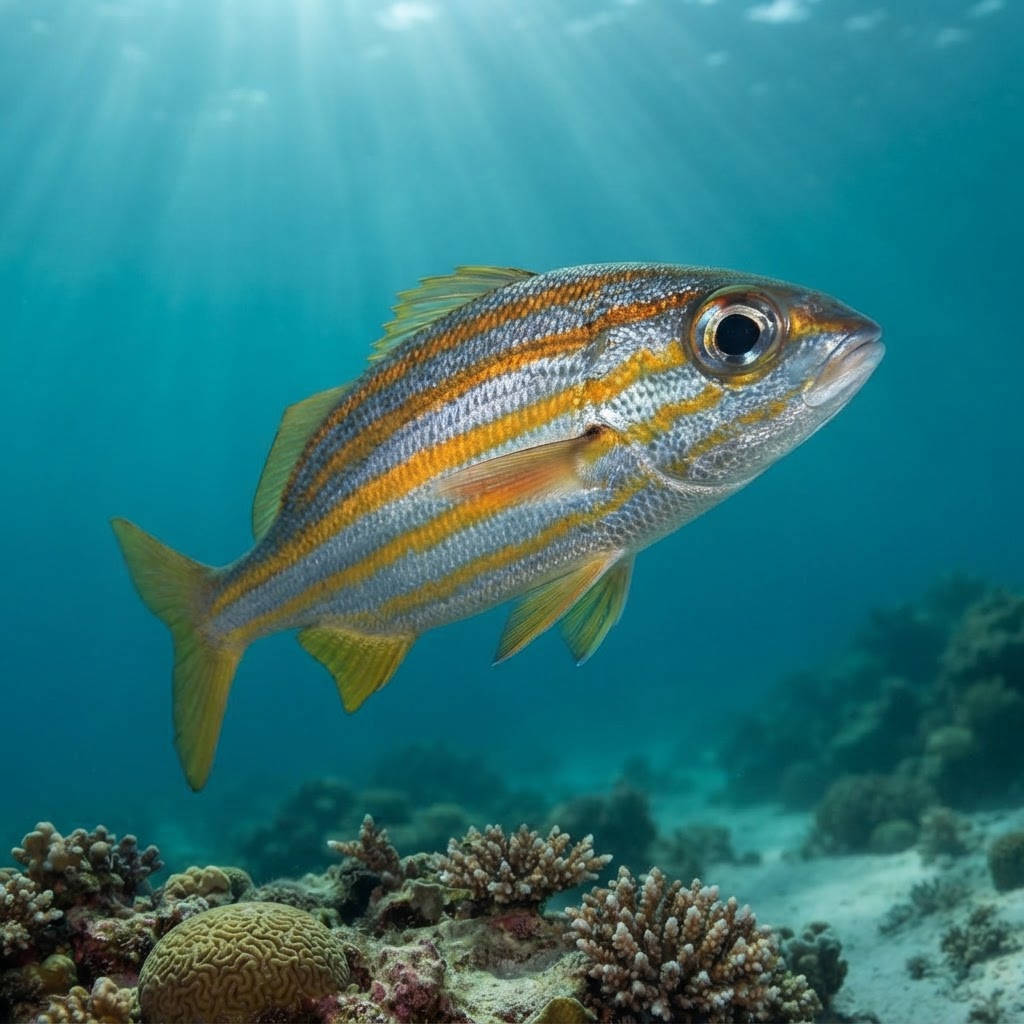
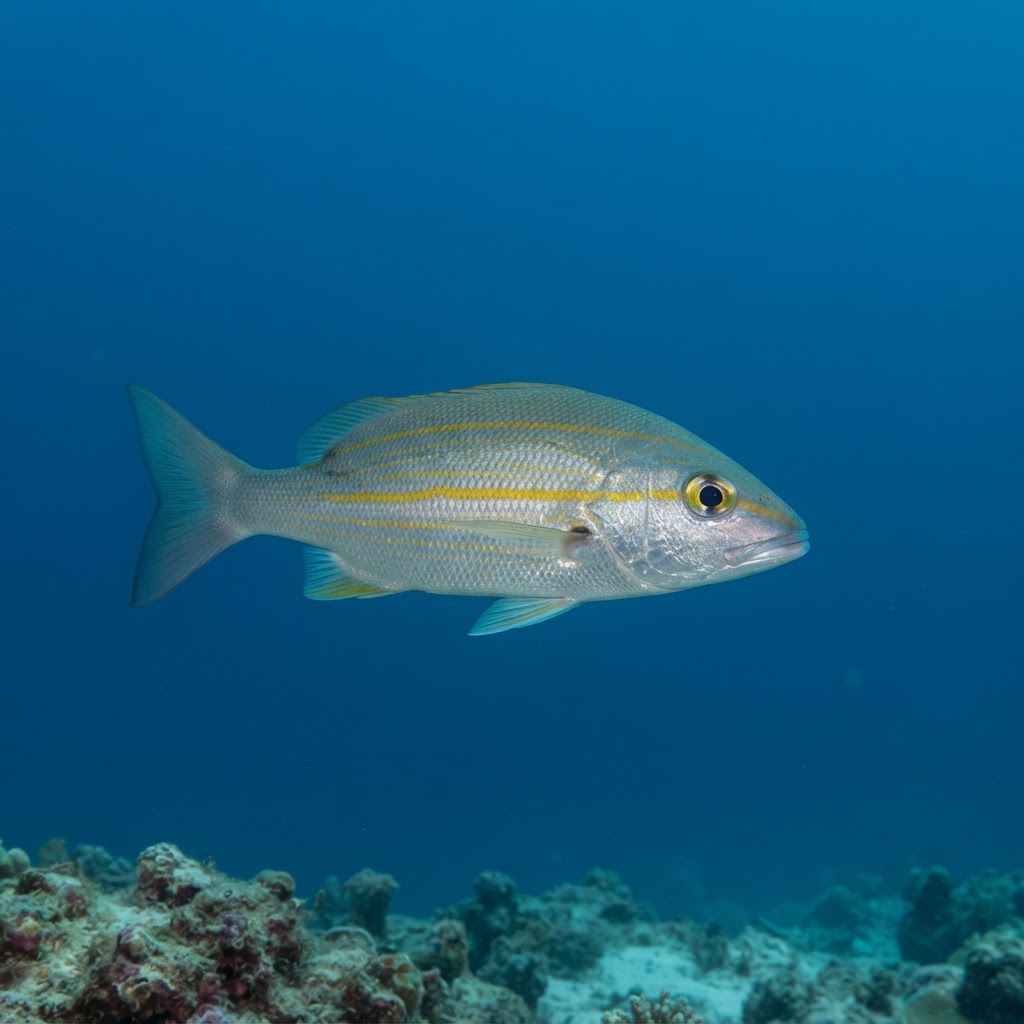
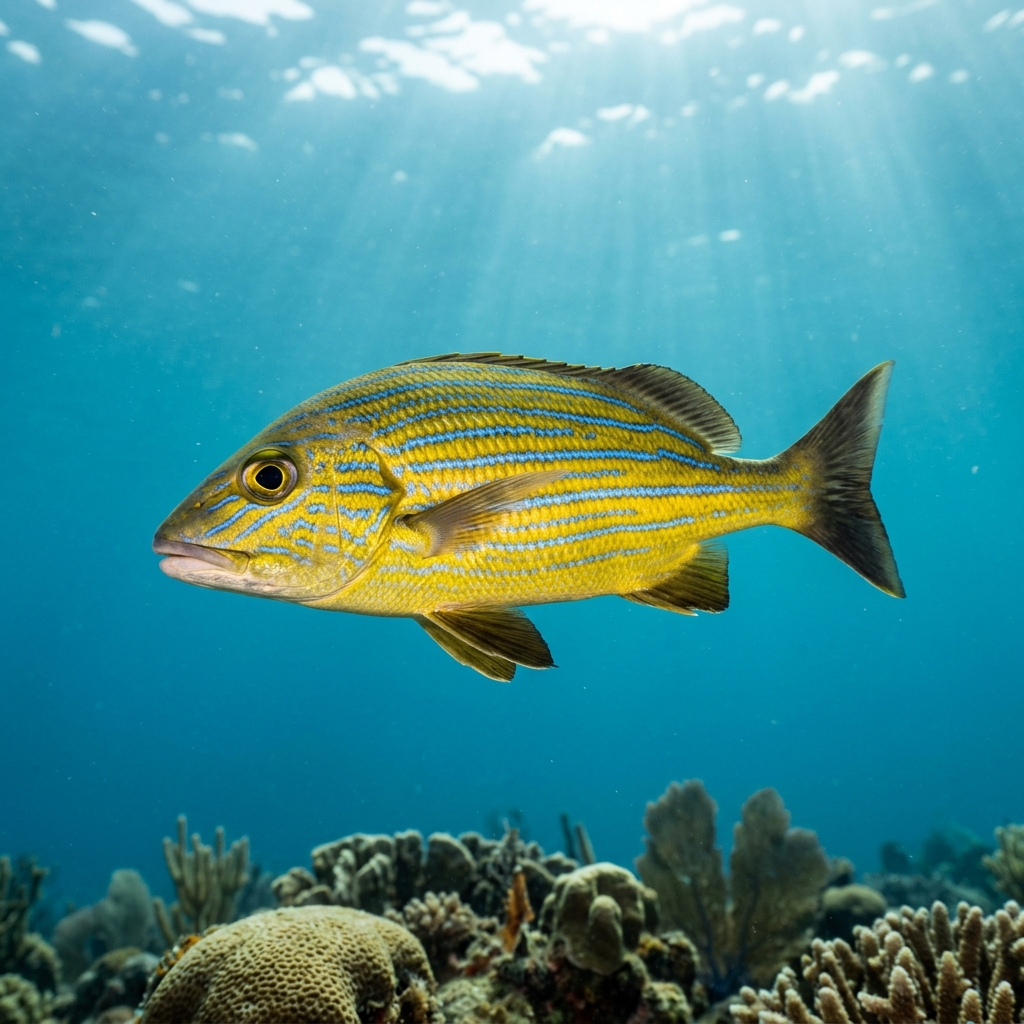
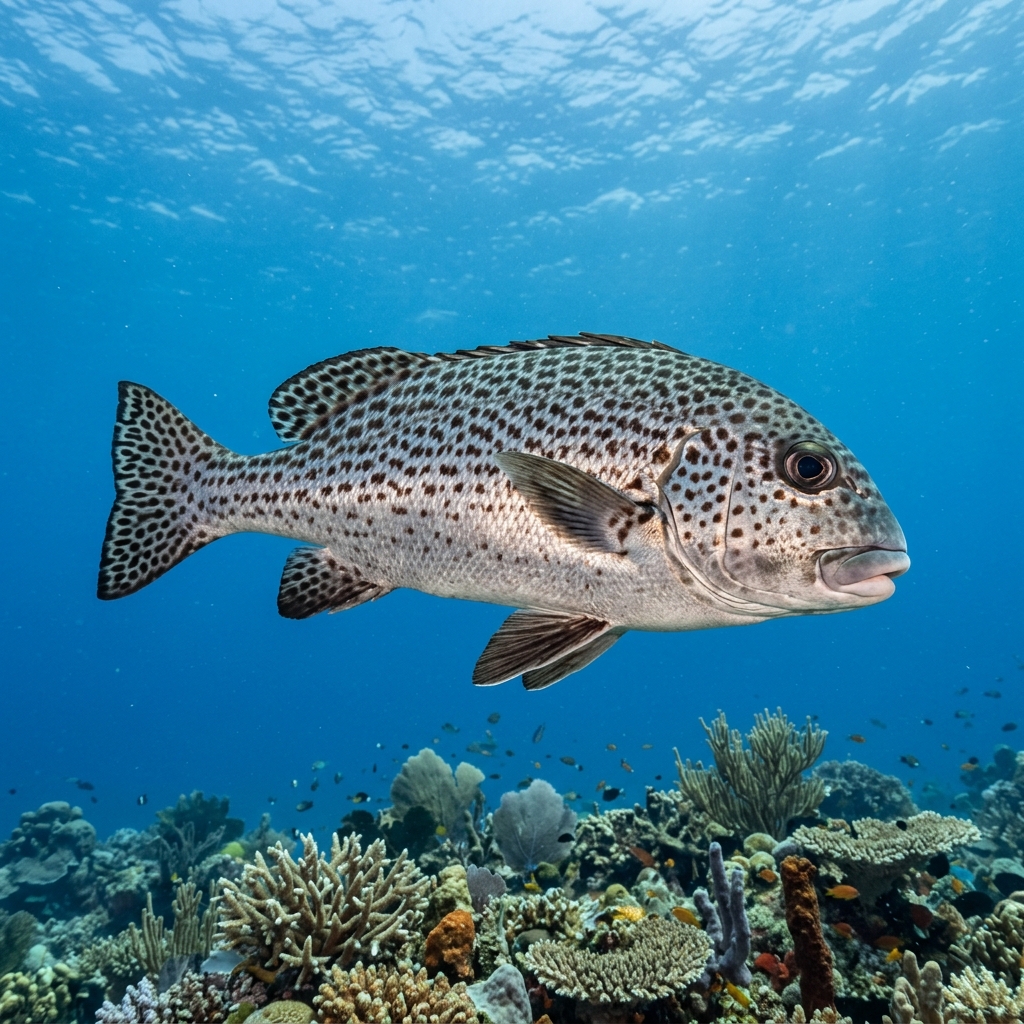
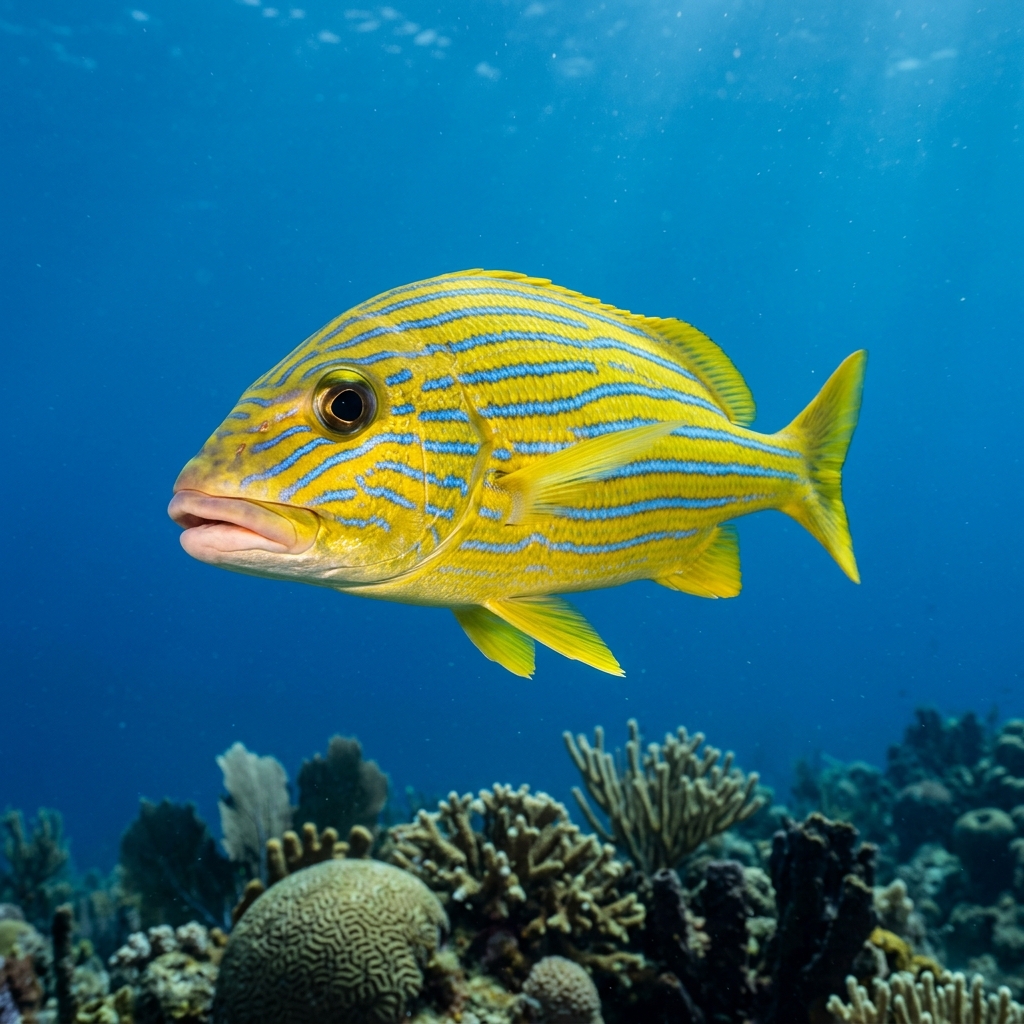
Reef neighbours a diver could mistake it for. Use the identification notes above to tell them apart.
Most reliably logged around the Galápagos Islands in Ecuador, where it turns up at far more sites than anywhere else on record, with a smaller but steady presence off Baja California, Mexico. Divers doing rocky reef and volcanic drop-off sites in these two regions have the best odds of a sighting.
Mapping where Grey Grunt is logged…
The strongest sightings come from the Galápagos Islands in Ecuador, with a smaller population also logged around Baja California, Mexico. It is an uncommon find at most sites rather than a guaranteed sighting.
There is no strong seasonal pattern in the sighting data, so it is treated as a year-round species. It has been logged in water from 23.2 to 29.1C, a range that holds for most of the year in Galápagos and Baja California.
Look for a stocky, silvery-grey fish about 24cm long with faint horizontal lines and a blunt head, usually holding position near rocky reef structure. It lacks bold markings, so its shape and habit of grouping near structure are the giveaways.
They typically reach around 24cm, a modest, reef-hugging size that keeps them close to rock and structure rather than out in open water.
No, they pose no threat to divers and simply hold near reef structure as you pass.
Like other grunts, it produces a grinding sound by rubbing its pharyngeal teeth together, amplified by the swim bladder, which divers sometimes hear as a faint croak near the reef.
Site and sighting data is aggregated from diver logs, iNaturalist and GBIF. For taxonomy and conservation status:
Bluestriped Grunt
1,907 sites