Aprion virescens
Uncommon but unmistakable: streamlined green-grey hunters logged across Maldives' Central Atolls in 24-29C water, year-round.
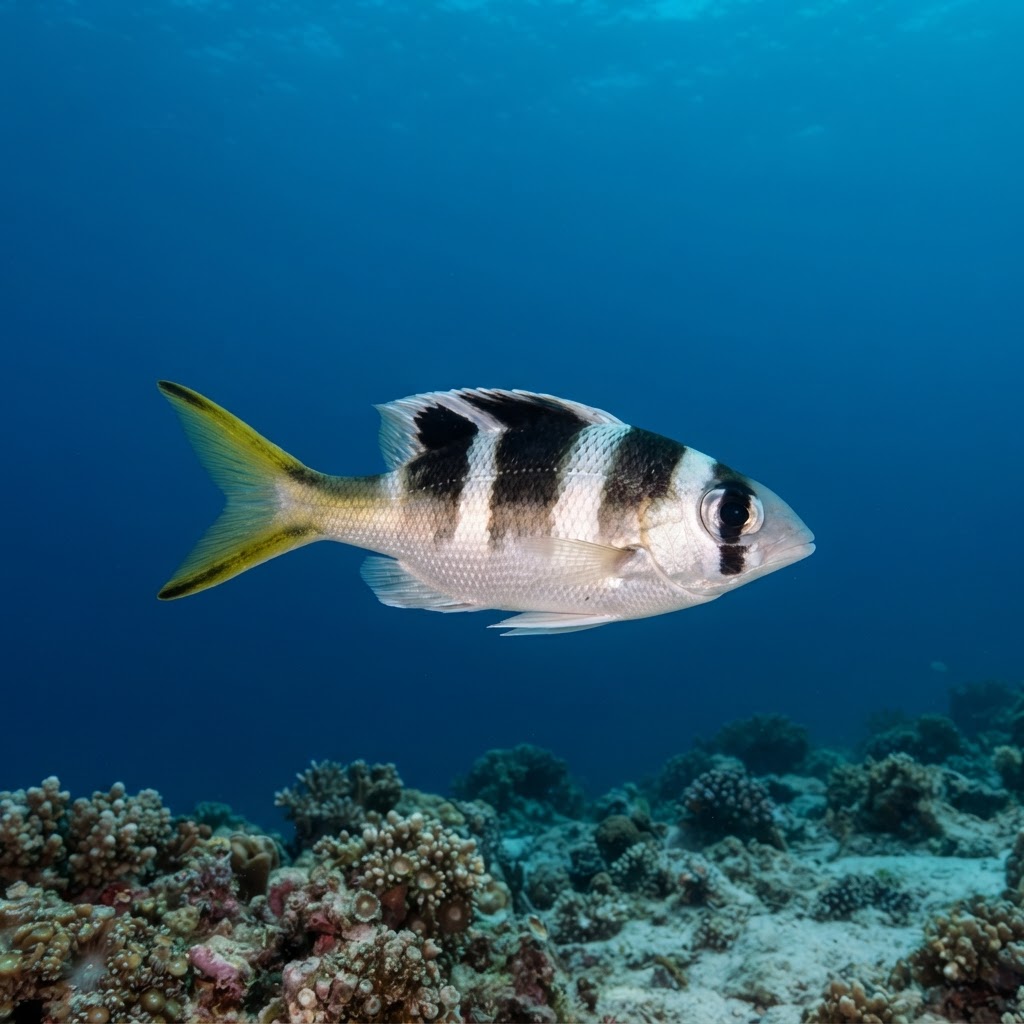
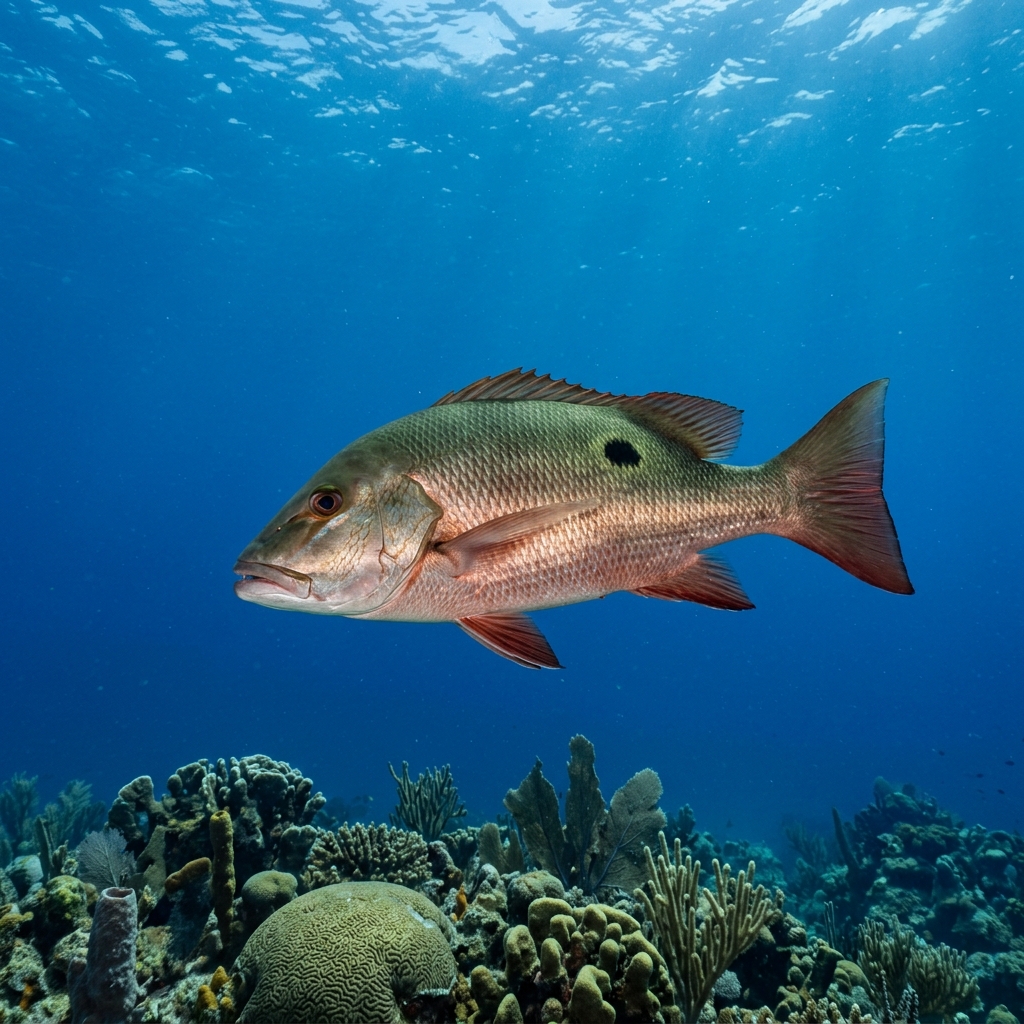
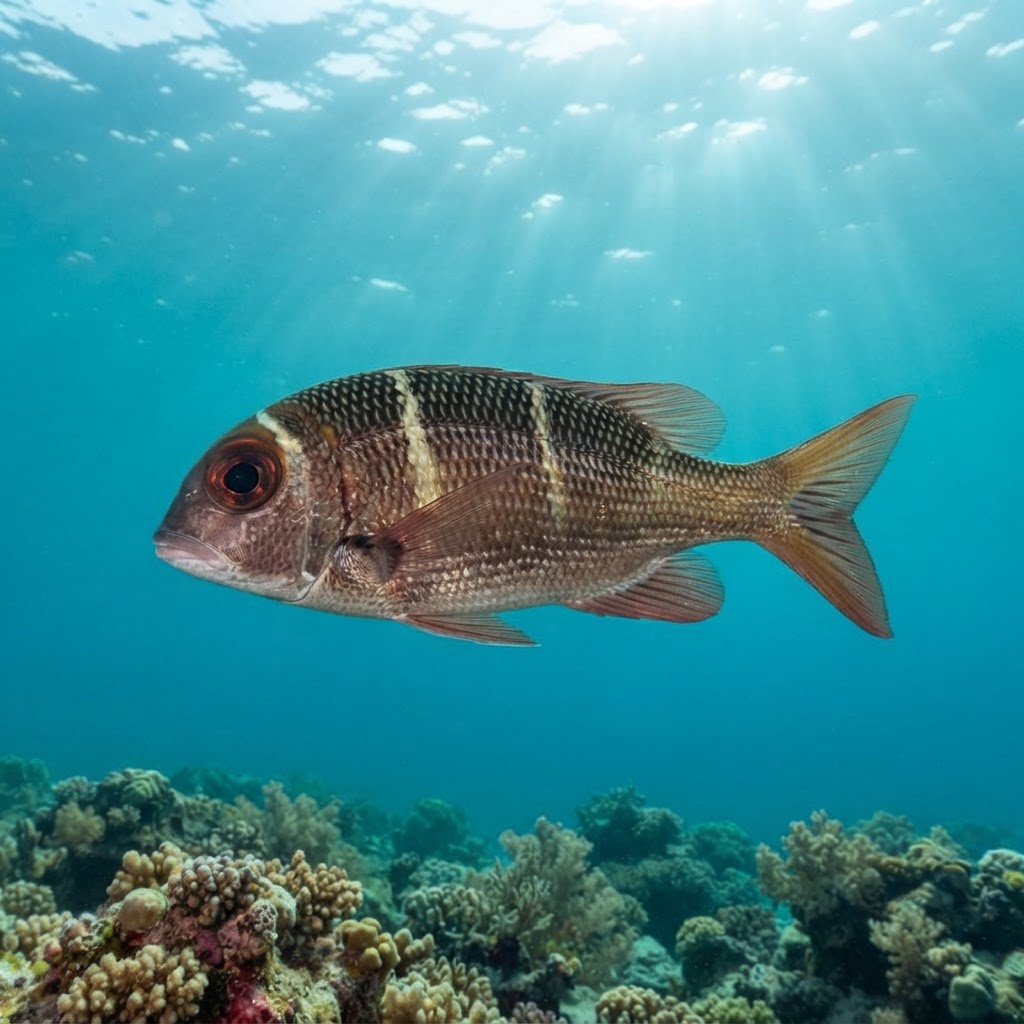
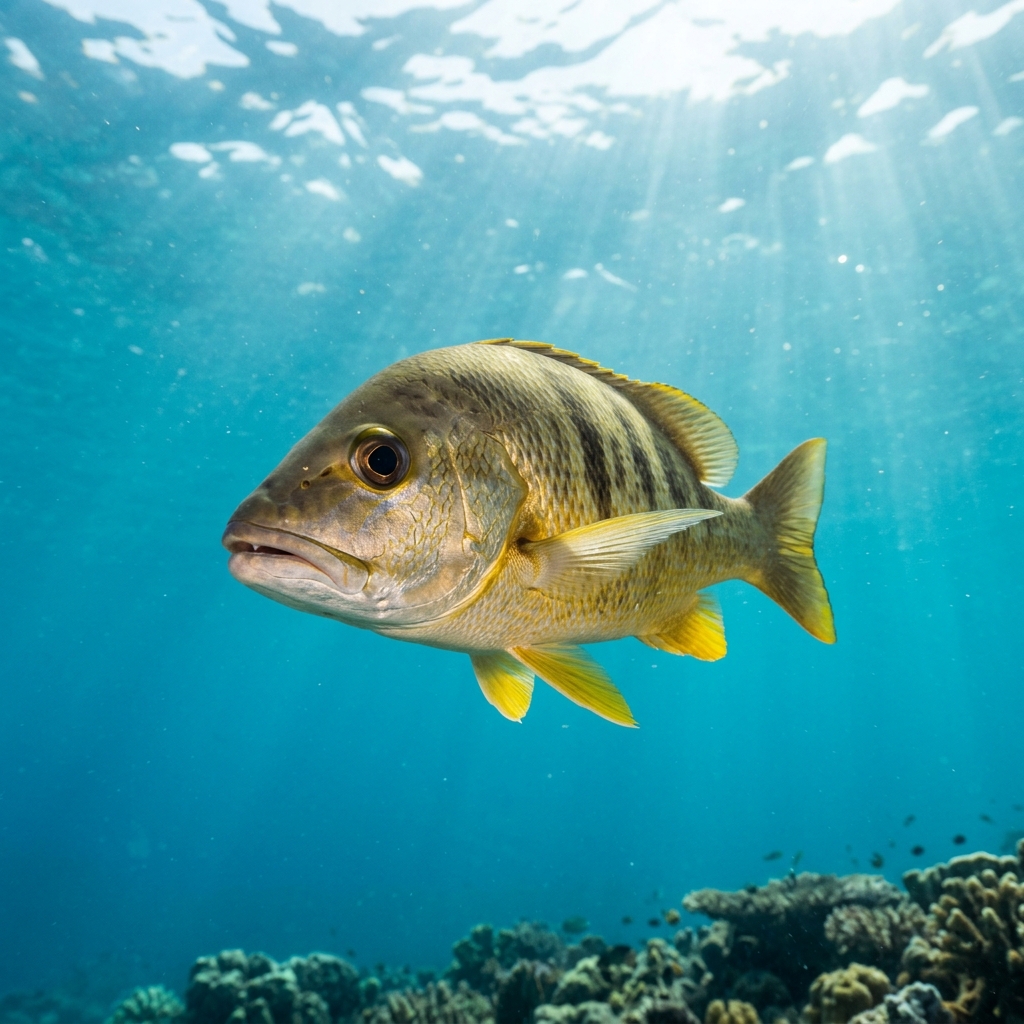
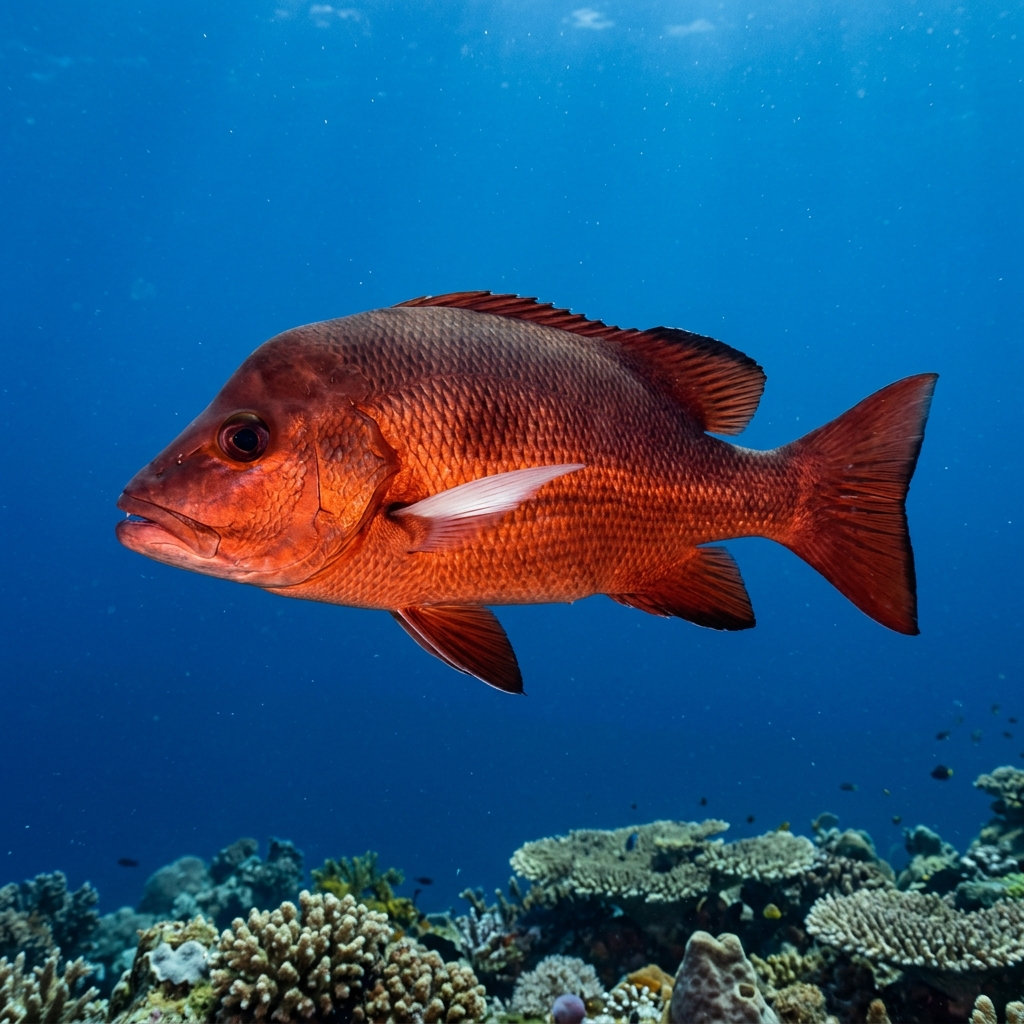
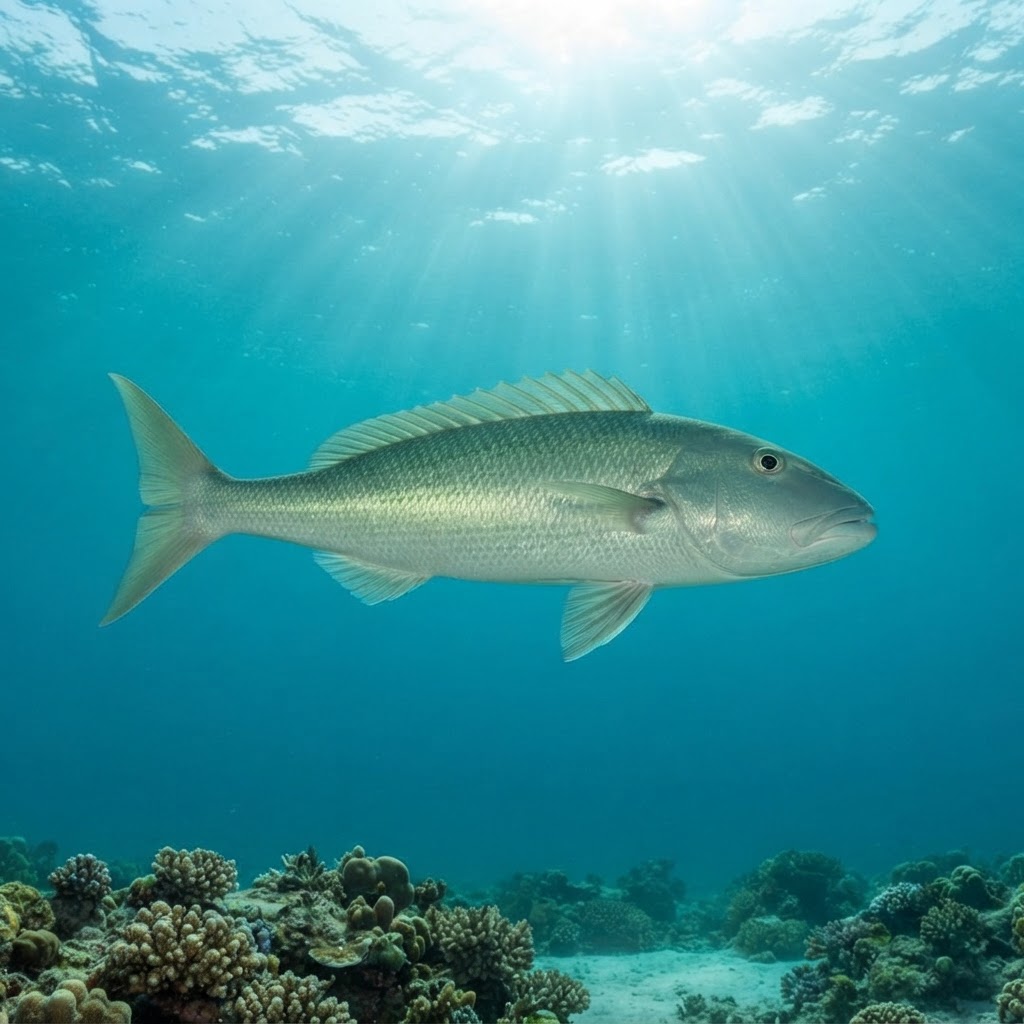
Look for a long, torpedo-shaped body in olive-green to grey-blue, with a slightly humped forehead and a blunt snout. It swims solo or in loose small groups in open water off the reef rather than hugging structure, which sets it apart from most snappers. At up to 78cm it reads as a solidly built, fast-moving fish, often seen cruising at a steady clip rather than lingering near cover.
Divers typically spot it patrolling open water near reef edges and channels, often alone or in a small loose group, cruising rather than schooling tightly. It tends to keep a comfortable distance from divers, moving off steadily instead of bolting, and is more often seen mid-water than tucked against the reef. Sightings skew toward outer reef slopes and passes where there's open water to move through.
It's a fast, opportunistic hunter that will chase down smaller reef fish in open water, a habit that separates it from the more bottom-oriented feeding style of many of its snapper relatives.
No clear seasonal pattern shows up in the data, and with a comfortable range of roughly 24 to 29C it's present on these reefs year-round. Plan around the site rather than the calendar.
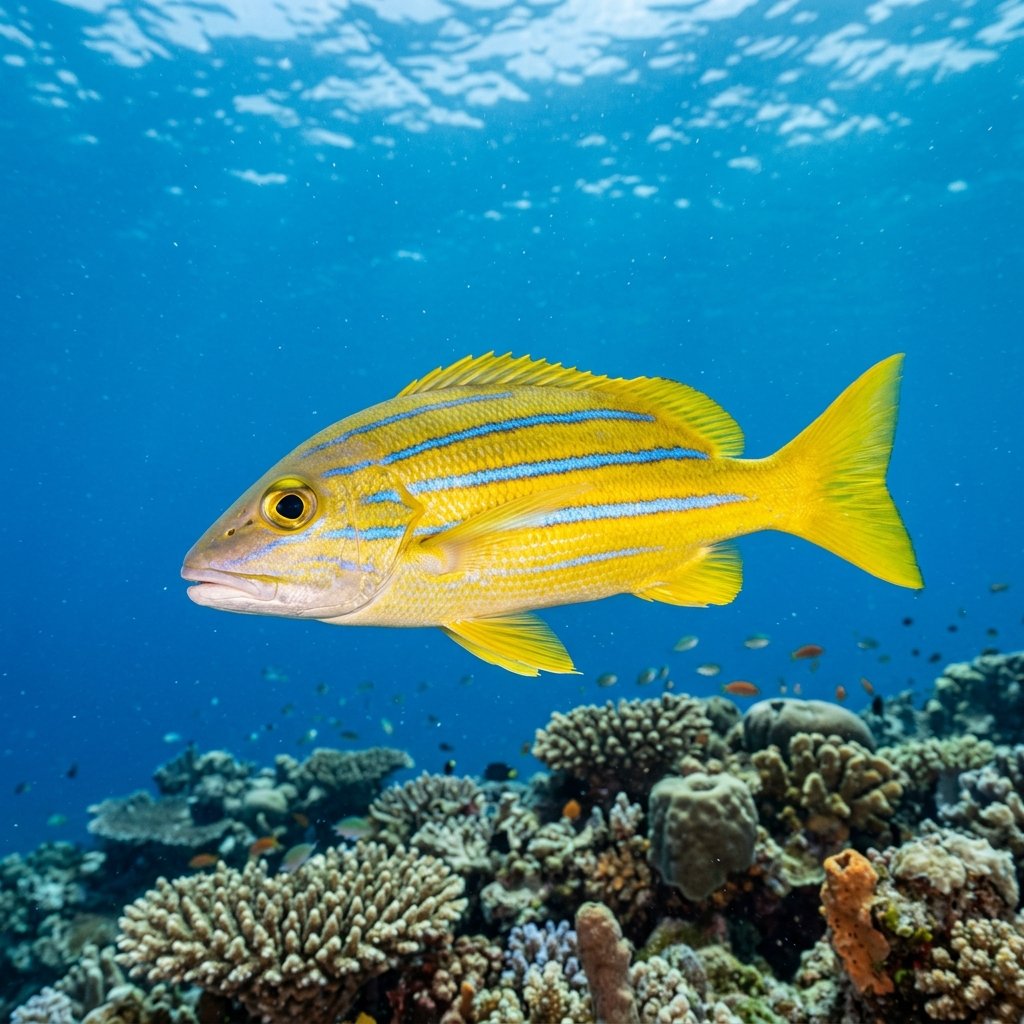
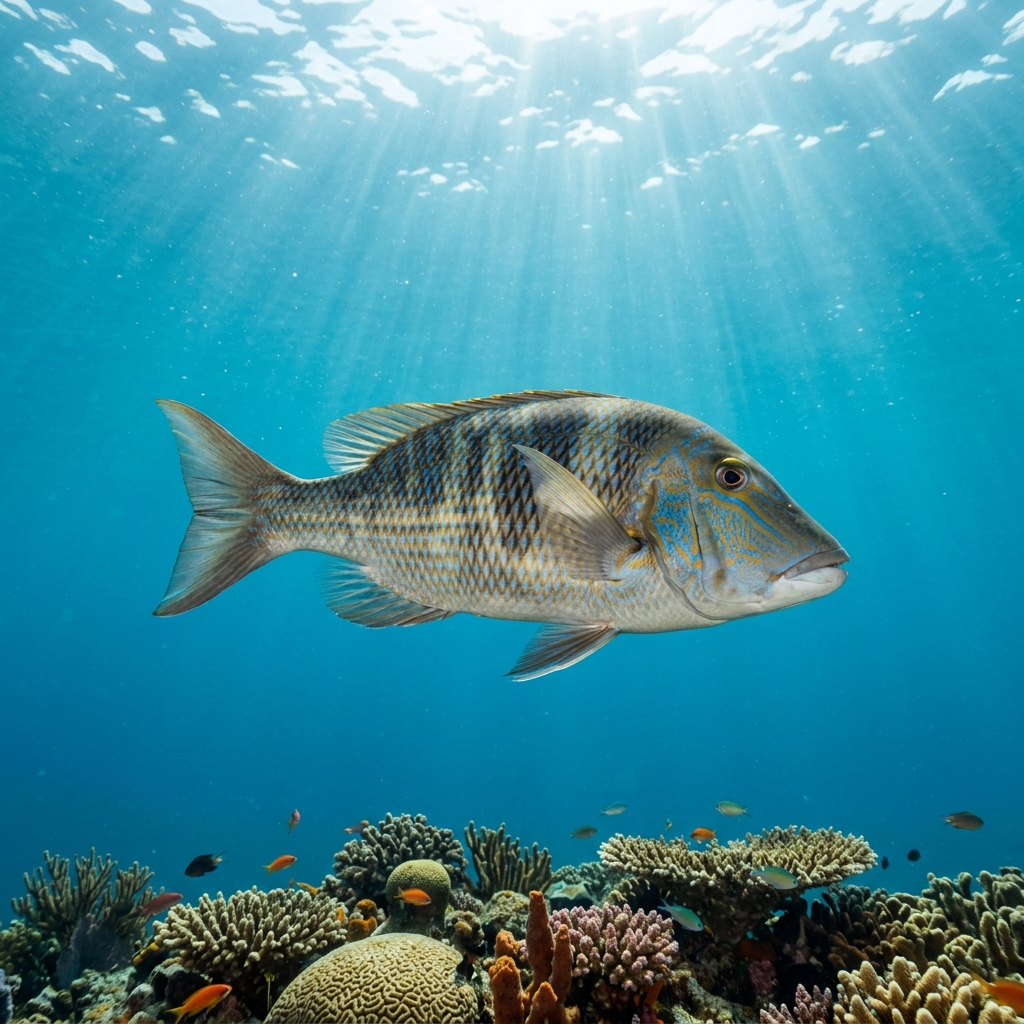
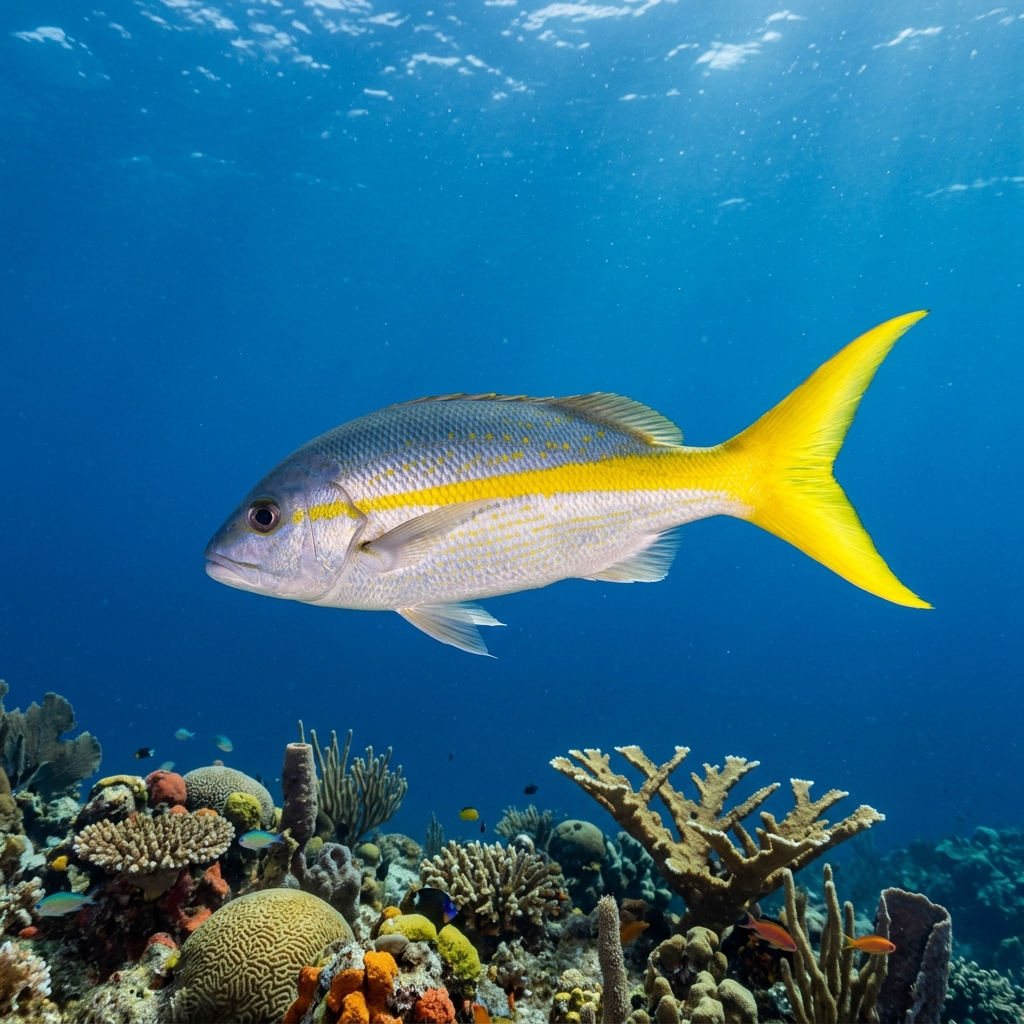
Reef neighbours a diver could mistake it for. Use the identification notes above to tell them apart.
Most reliably logged in the Maldives, especially across the Central Atolls, where it turns up as an uncommon but consistent sighting on outer reef and channel dives. It also shows up in French Polynesia's Tuamotu Islands and has been recorded in Fiji's Lomaiviti region, though sightings there are sparser.
Mapping where Green Jobfish is logged…
The most consistent sightings come from the Maldives, particularly the Central Atolls, on outer reef and channel dives. Smaller numbers have also been logged in French Polynesia's Tuamotu Islands and in Fiji's Lomaiviti region.
There's no strong seasonal pattern in the sightings data, and the water temperatures it's found in (roughly 24 to 29C) hold steady year-round on these reefs, so any month is a fair bet.
Look for an olive-green to grey-blue, torpedo-shaped body with a slightly humped forehead, cruising in open water off the reef rather than staying close to structure. It's usually alone or in a small loose group and swims with a purposeful, steady pace.
They typically reach around 78cm in length, making them one of the larger, more solidly built fish you'll spot cruising the reef edge.
No, they're not considered dangerous to divers. They tend to keep their distance and move off steadily rather than approach.
Site and sighting data is aggregated from diver logs, iNaturalist and GBIF. For taxonomy and conservation status:
Emperor
2,052 sites