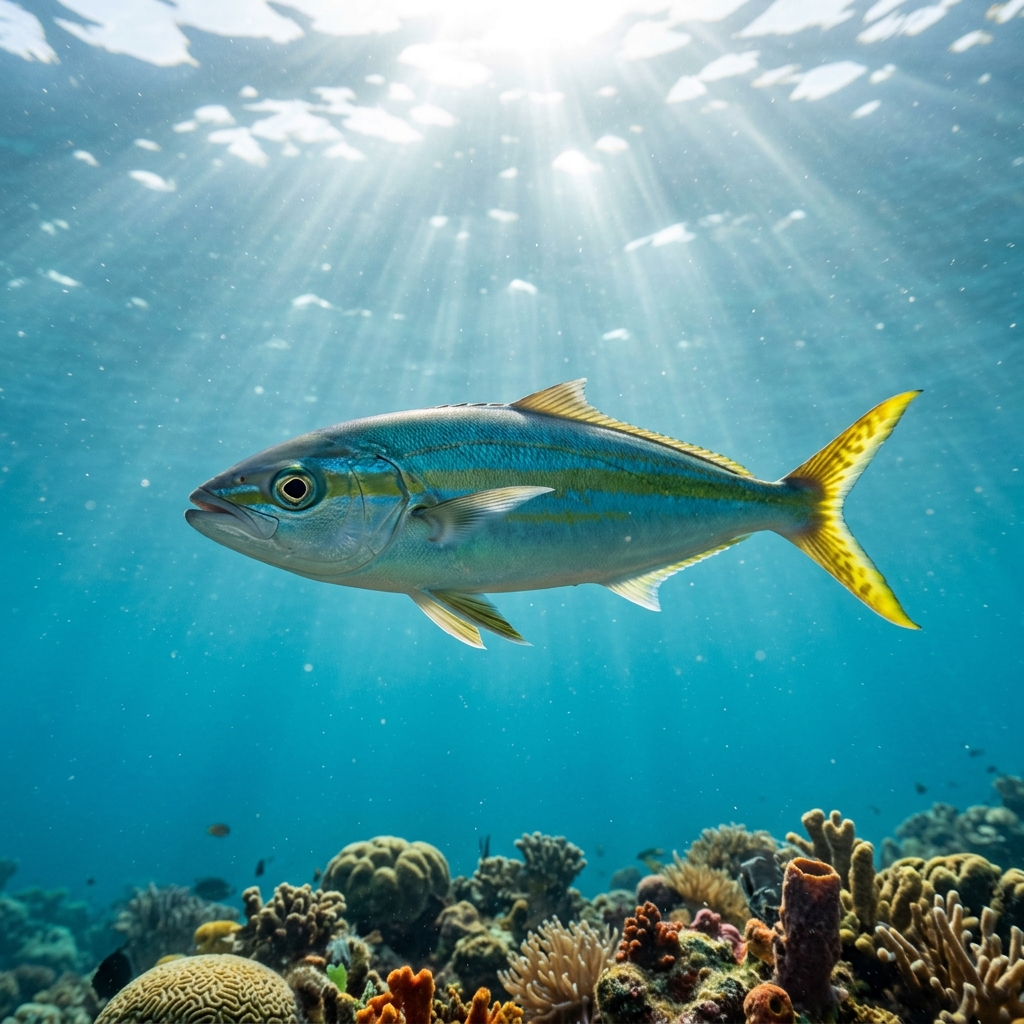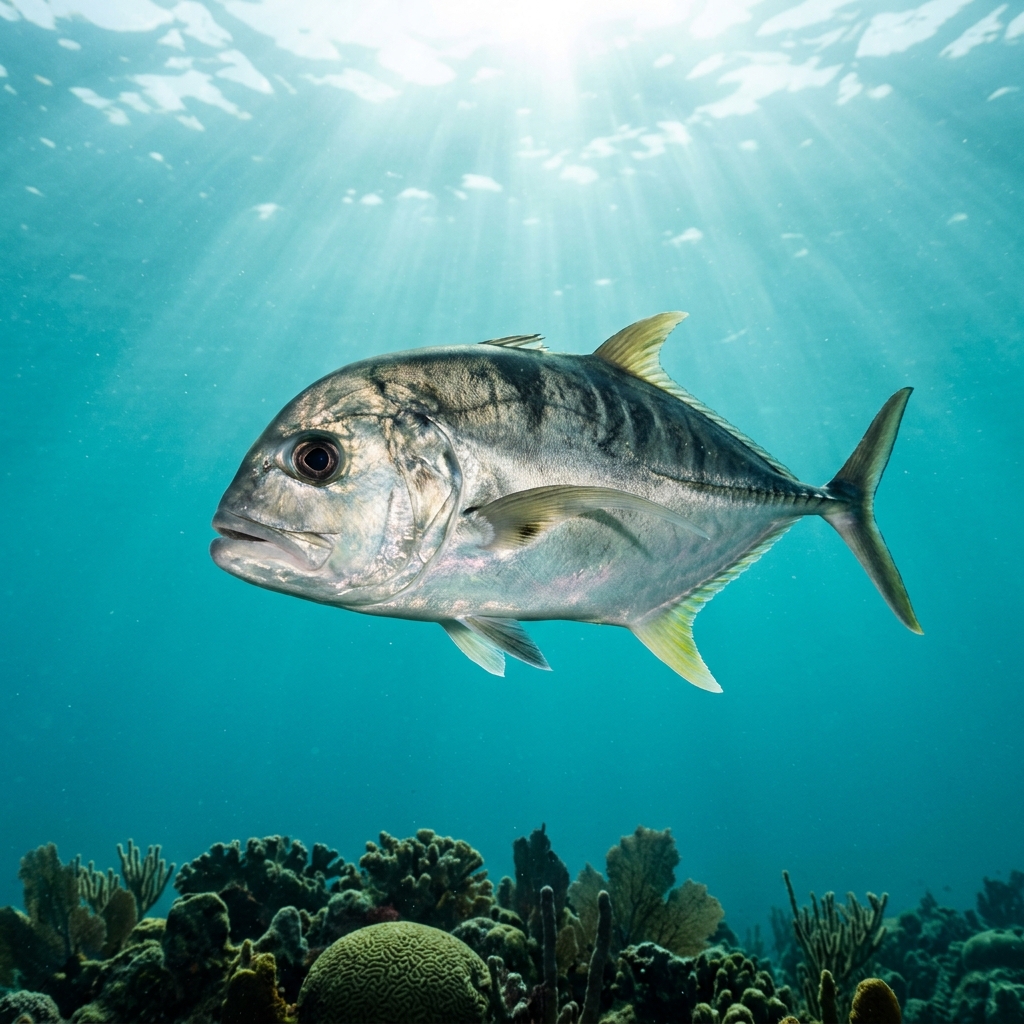
Caranx latus
Horse Eye Jack roam tropical reefs from Grand Cayman to the Visayas year-round. Learn to spot them by their oversized eyes and forked silver tail.
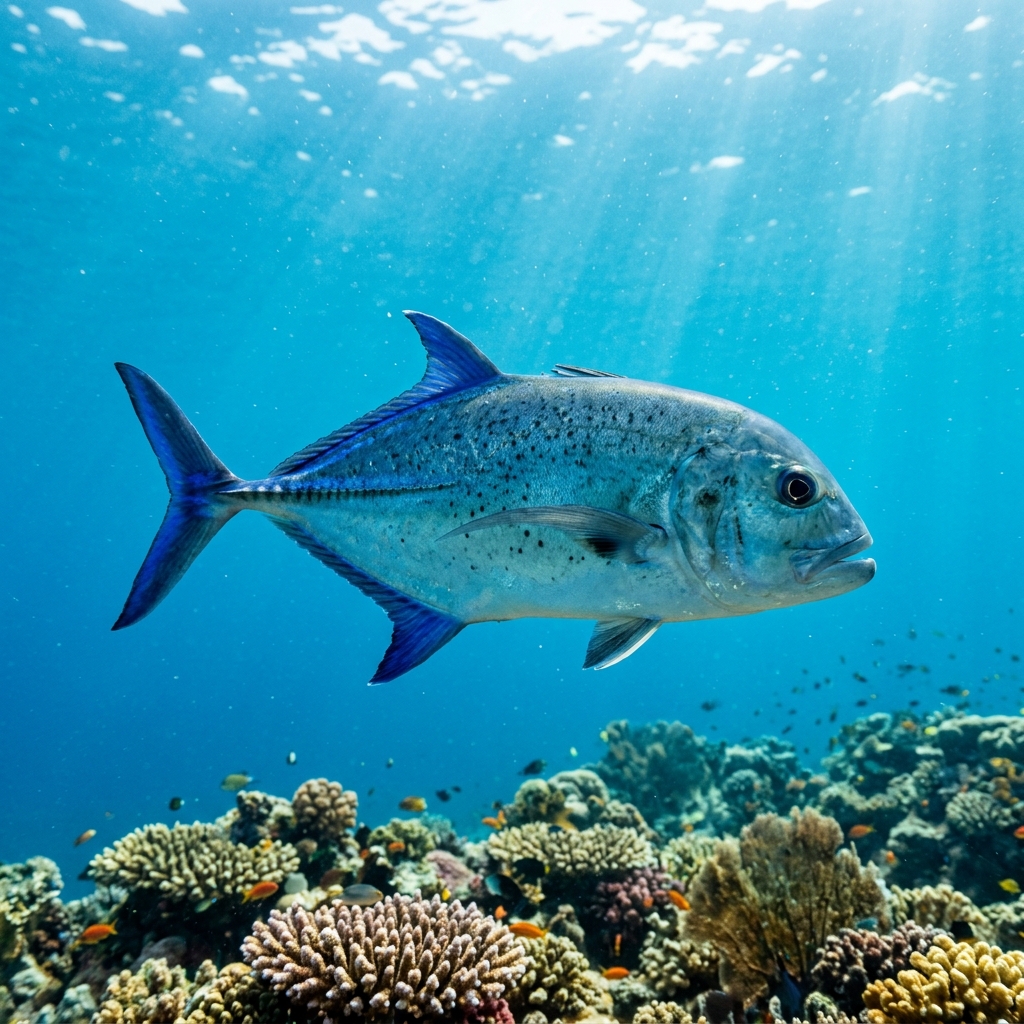
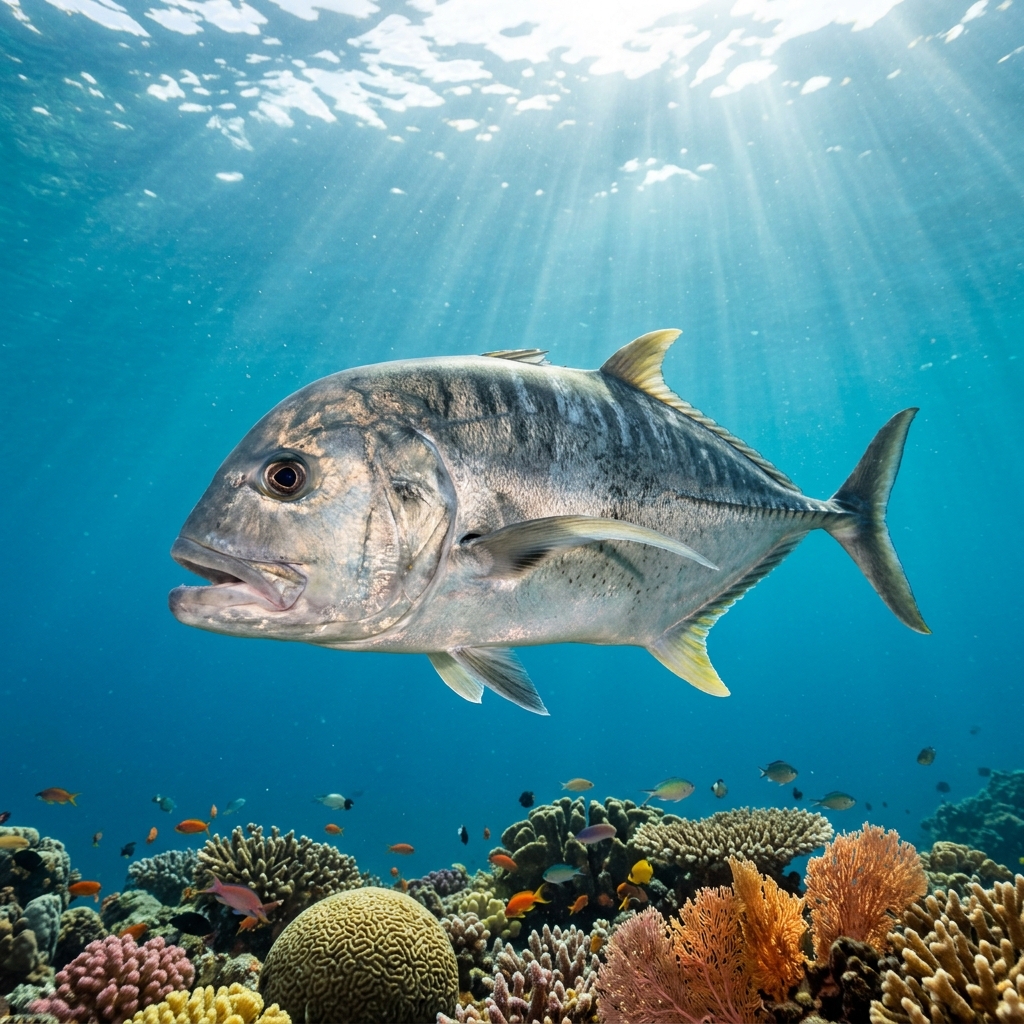
Those oversized, dark eyes are the giveaway, noticeably large relative to the head, which is how the species earned its name. In the water it presents as a robust, deep-bodied silver jack, typically around 60-70 cm, with a bluntly rounded snout and a strongly forked tail that often shows a yellowish tinge. The scutes (hardened, keel-like scales) running along the lateral line near the tail are another reliable field mark if you get close enough. Schools form loose, swirling aggregations above reef structure, while larger individuals often cruise mid-water solo or in small groups.
Horse eye jacks are a mid-water species, often seen patrolling above coral heads or circling reef walls in loose schools, a behaviour that makes them easy to spot against open water. They tend to be curious rather than skittish, and will frequently hold position while divers approach, giving good viewing time. Larger individuals are often solitary and may shadow other larger animals or hover near cleaning stations.
The species is one of the few larger jacks regularly recorded inside coral lagoons and at very shallow reef crests as well as down to 140 m, giving it an unusually broad depth range for a carangid this size.
In the Northern Hemisphere the species is present year-round on tropical reefs, which matches its comfort in water between about 23 and 28 °C. Southern Hemisphere divers see the most sightings from June through March.
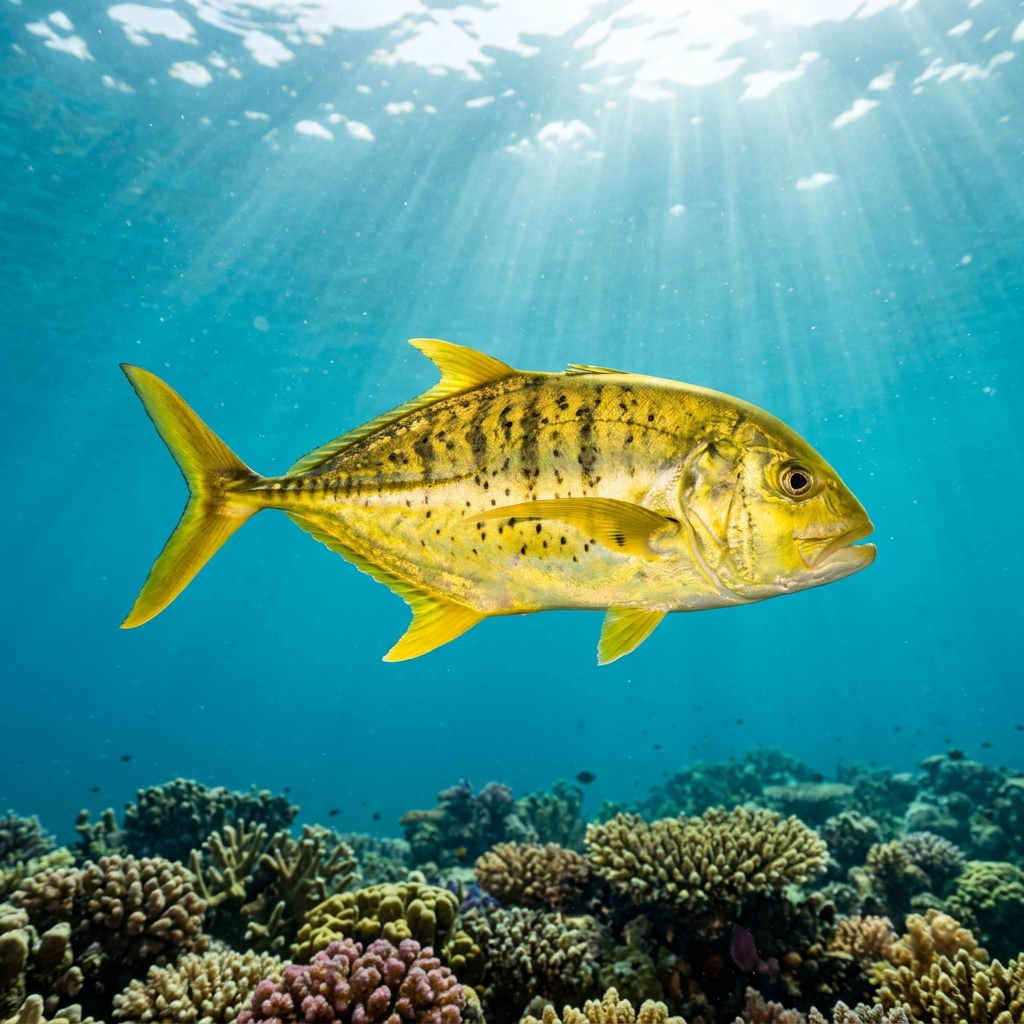
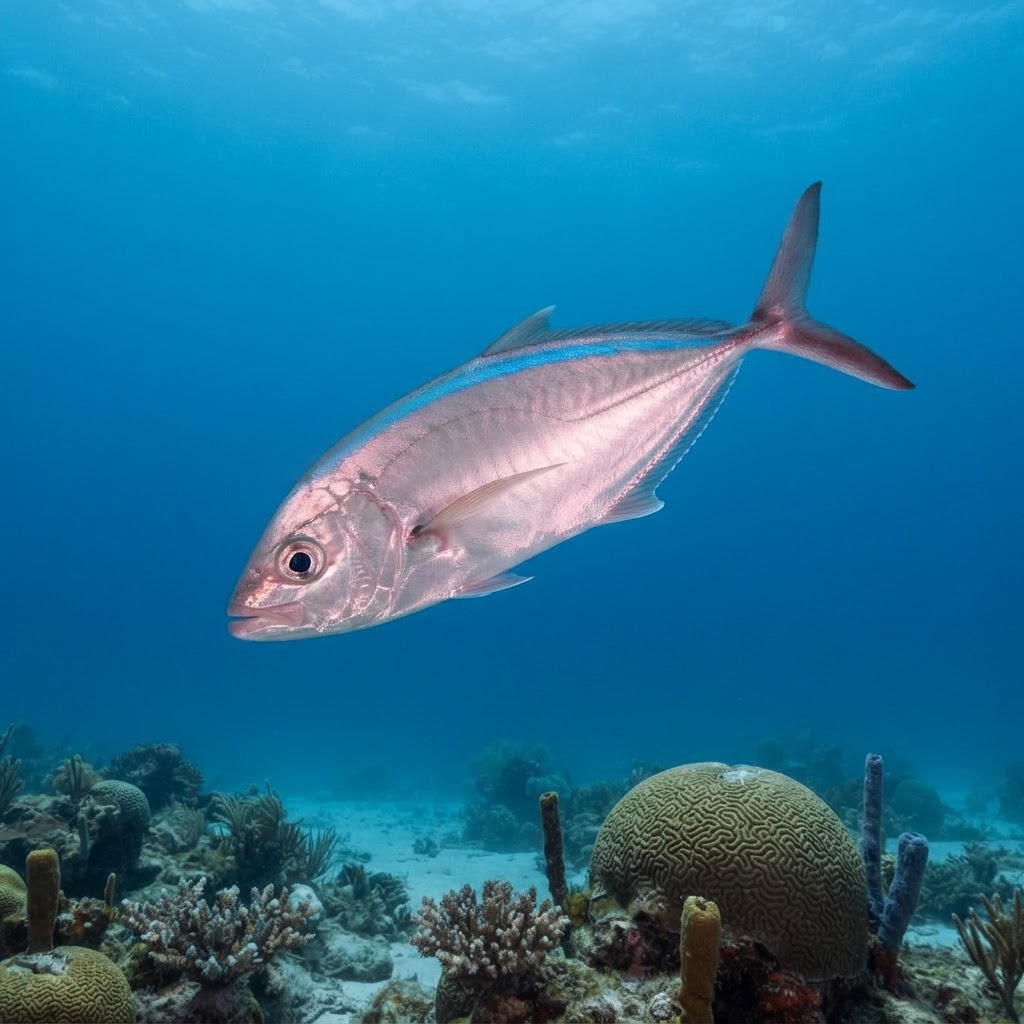
Reef neighbours a diver could mistake it for. Use the identification notes above to tell them apart.
Most commonly logged across the wider Caribbean and tropical Atlantic, with particularly strong sightings in the Cayman Islands, Florida and the Yucatán Peninsula. Outside the Atlantic, populations show up consistently in the Philippines' Visayas and in Indonesia's Maluku and Papua regions, plus solid records from Sipadan and East Sabah in Malaysia and from Queensland, Australia.
Mapping where Horse Eye Jack is logged…
They are most reliably found across the Caribbean, especially around Grand Cayman, the Yucatán Peninsula, and Florida. Strong sightings also come from the Philippines' Visayas, Sipadan in Malaysia, and Indonesia. Bonaire and the British Virgin Islands are also well-documented spots.
In the Caribbean and other Northern Hemisphere destinations they are present all year round. In the Southern Hemisphere, Queensland and parts of Indonesia, sightings concentrate between June and March.
Look for the disproportionately large, dark eye set in a silver, deep-bodied fish with a forked tail that can show a yellowish tinge. The blunt snout and robust build set it apart from slimmer jacks. If you get close, the prominent scutes near the tail base confirm the ID.
Most individuals divers encounter are in the 50-70 cm range. The species can reach around 100 cm at maximum, though fish that large are uncommon on recreational dives.
No. They are not considered dangerous and typically behave with calm curiosity around divers. You can approach them fairly closely without triggering a flight response, making them rewarding subjects for underwater photography.
Site and sighting data is aggregated from diver logs, iNaturalist and GBIF. For taxonomy and conservation status:
Bigeye Trevally
2,591 sites