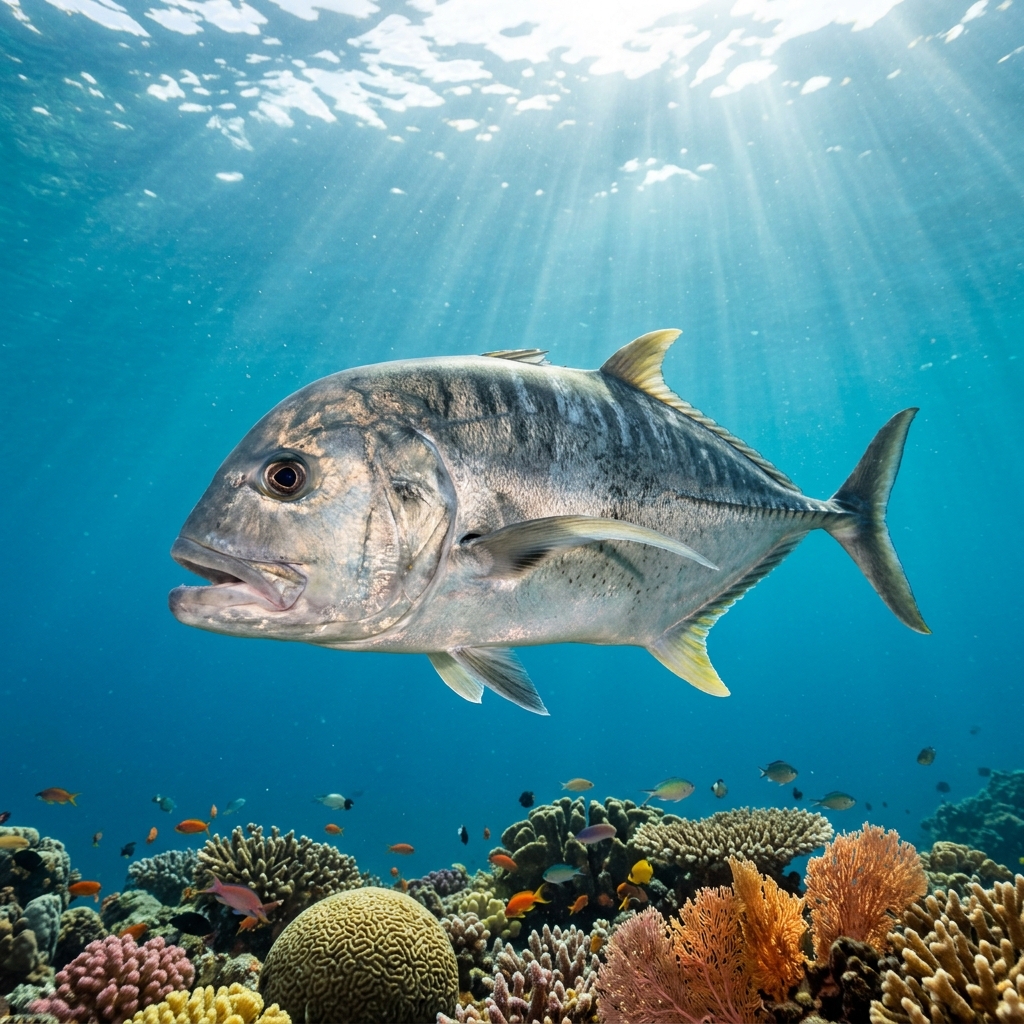
Caranx ignobilis
Giant Trevally are most reliably logged in the Maldives and Red Sea. Know where to spot them, when to go, and how to tell them apart underwater.
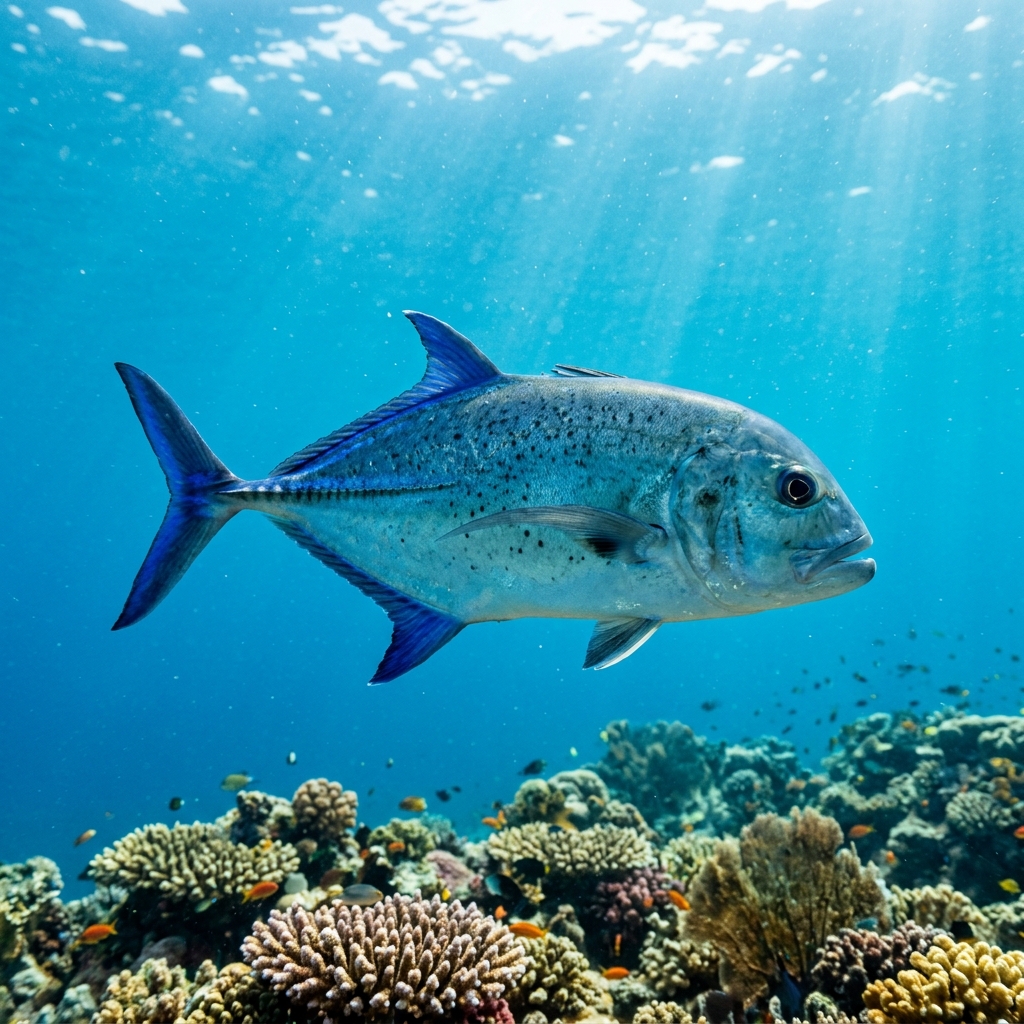
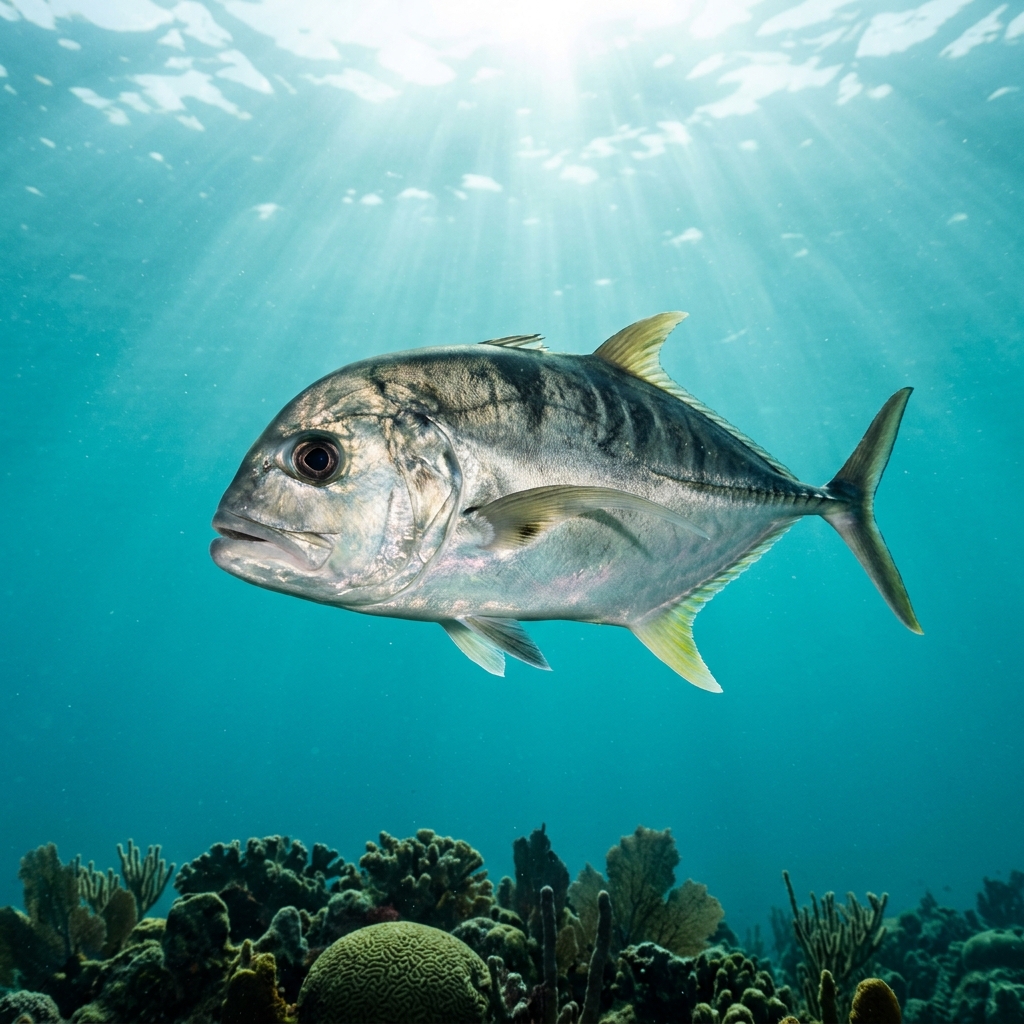
A steep, almost vertical forehead profile is the quickest underwater giveaway, no other large trevally in the Indo-Pacific has quite that blunt, hatchet-like face. Adults are big, barrel-chested fish with a strongly forked tail and a silvery body that can carry a scattering of dark spots on the flanks. Older males often develop a dark, almost blackish colouration across the head and back. The lateral line arches sharply near the front then straightens, visible at close range as a curved ridge running toward the tail.
Giant trevally typically appear as solitary cruisers or in loose groups patrolling reef edges, channels, and drop-offs, they are hunters, and you often encounter them moving purposefully rather than hovering. They are generally unafraid of divers and will circle or pass close, though they are not reliably approachable; slow, still hovering on your part gives the best chance of a close pass. Current-swept channels and reef passes, especially during incoming tides, are classic spots.
Giant trevally are one of the few fish documented hunting birds, they are known to track and ambush low-flying terns near the surface at coral atolls, a rarely witnessed but well-recorded behaviour.
Observed across warm tropical waters in the 23-29 °C range, so they appear year-round at most Indo-Pacific sites. For Southern Hemisphere locations such as Queensland, sightings concentrate between April and August.
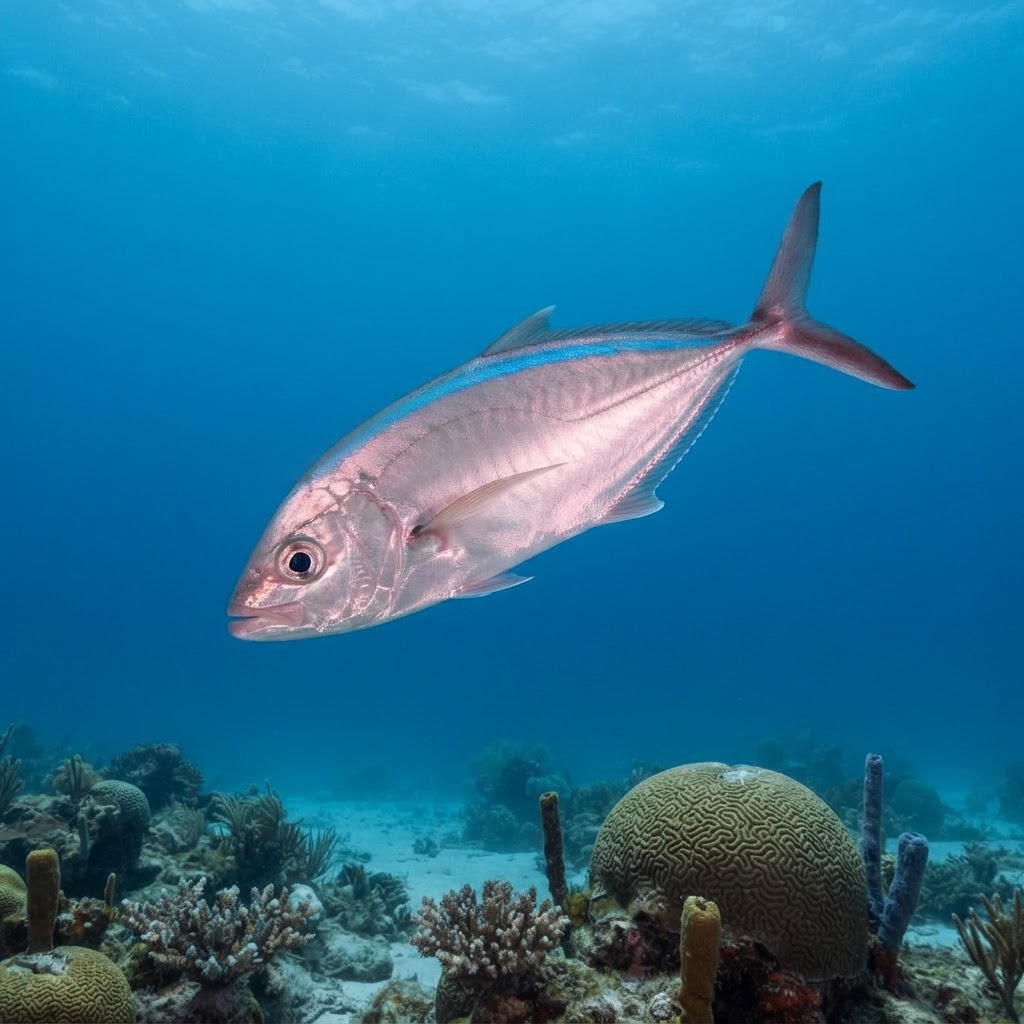
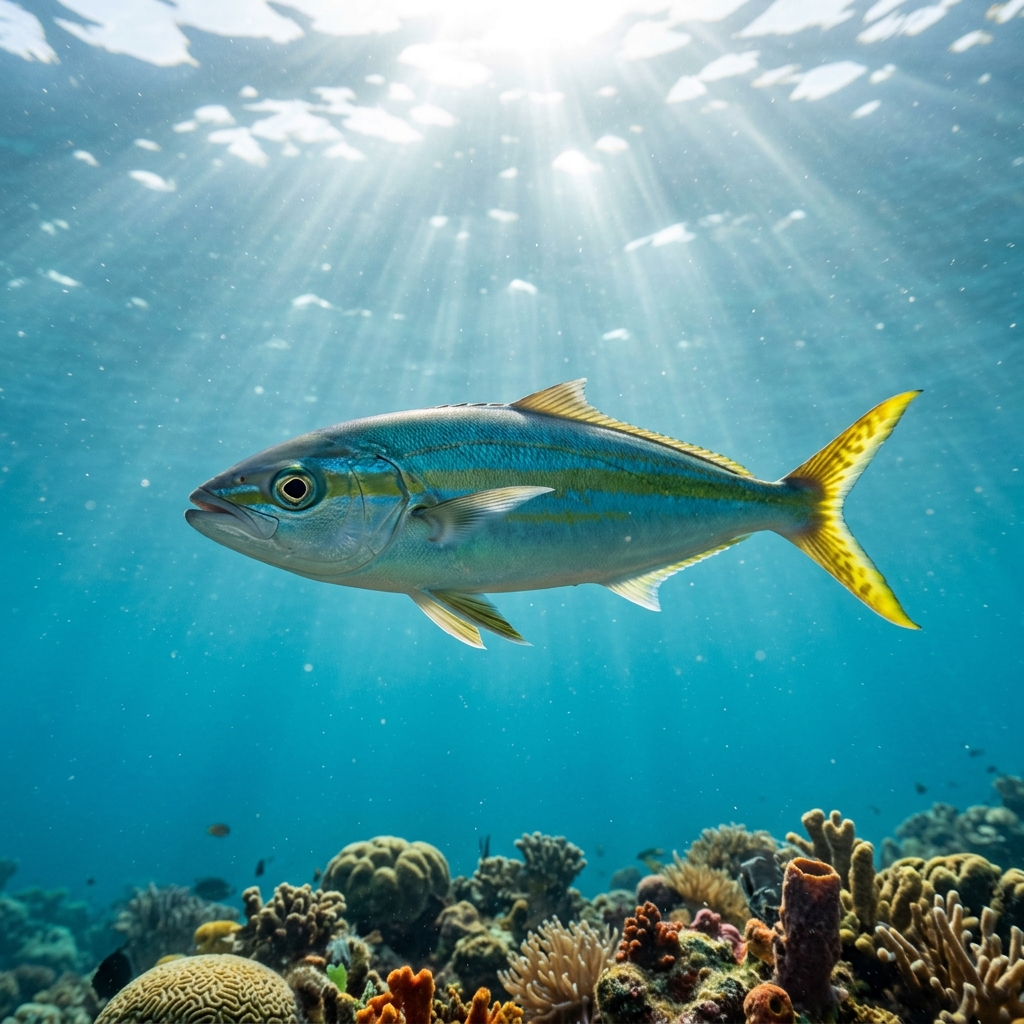
Reef neighbours a diver could mistake it for. Use the identification notes above to tell them apart.
Most commonly logged in the Maldives, where Male and Ari Atolls account for a large share of all records, making it the single best destination for this species. Strong sightings are also reported across Queensland in Australia, the Palawan and Apo Reef area of the Philippines, and Sharm el Sheikh in Egypt. Sipadan and East Sabah in Malaysia round out the reliable destinations.
Mapping where Giant Trevally is logged…
The Maldives, particularly Male and Ari Atolls, is the top destination by a clear margin. Other strong locations include Queensland in Australia, Palawan and Apo Reef in the Philippines, Sharm el Sheikh in Egypt, and Sipadan in Malaysia. They are logged across a wide stretch of the Indo-Pacific and Red Sea.
At most tropical sites they can appear year-round, as they are comfortable across the 23-29 °C water temperatures typical of Indo-Pacific reefs. Divers in Queensland and other Southern Hemisphere spots tend to see them most frequently between April and August.
Focus on the steep, blunt forehead, it gives the fish a distinctive hatchet-faced profile shared by no other common large trevally. Adults are heavily built and silver, often with dark spotting, and older males go noticeably dark across the head. Size helps too; these are among the largest jacks on the reef.
They are the largest species in the Caranx genus. Adults commonly reach 60-80 cm on the reef, and large individuals can exceed 150 cm and weigh over 80 kg. Most divers encounter fish in the 60-100 cm range.
Yes, it is one of the most unusual predatory behaviours documented in any reef fish. Giant Trevally at coral atolls have been observed tracking low-flying seabirds such as terns and exploding out of the water to catch them at the surface. It appears to be a learned, site-specific behaviour rather than routine feeding.
Site and sighting data is aggregated from diver logs, iNaturalist and GBIF. For taxonomy and conservation status:
Bigeye Trevally
2,591 sites