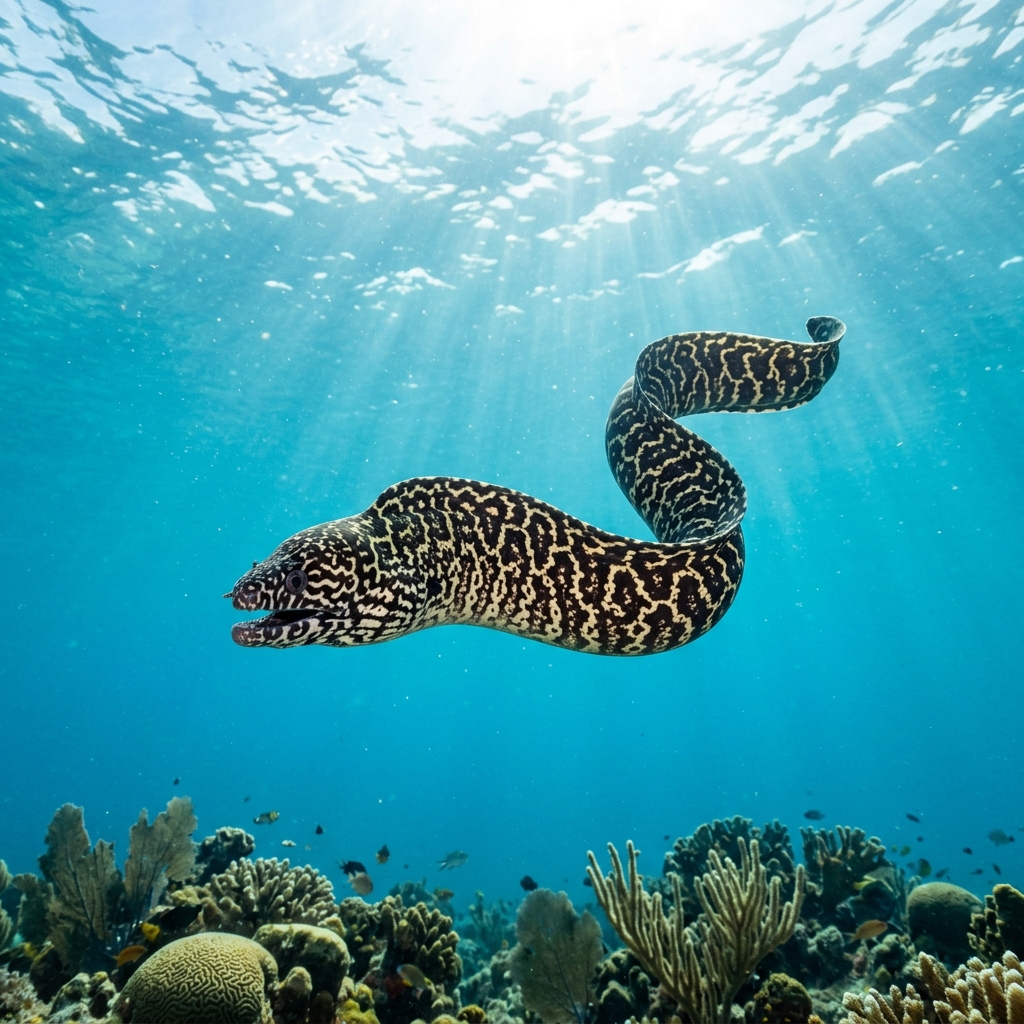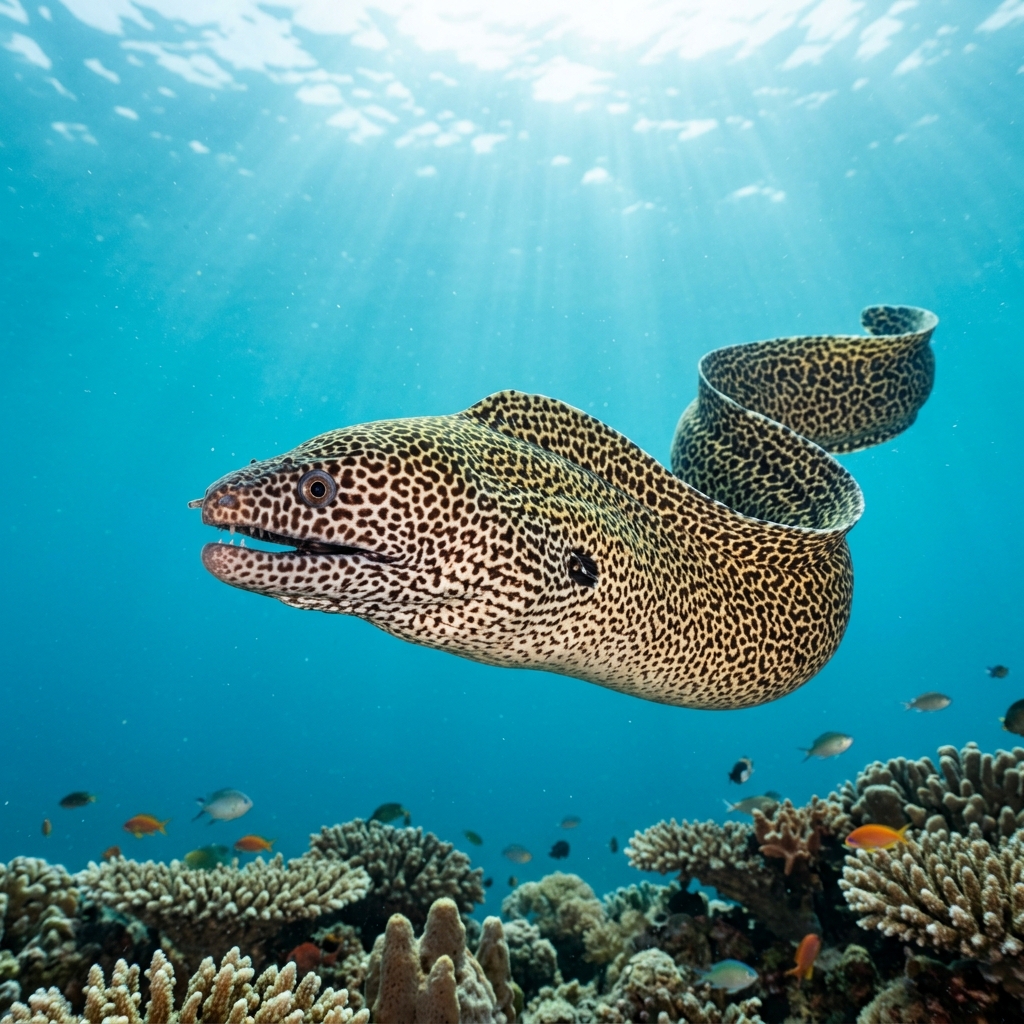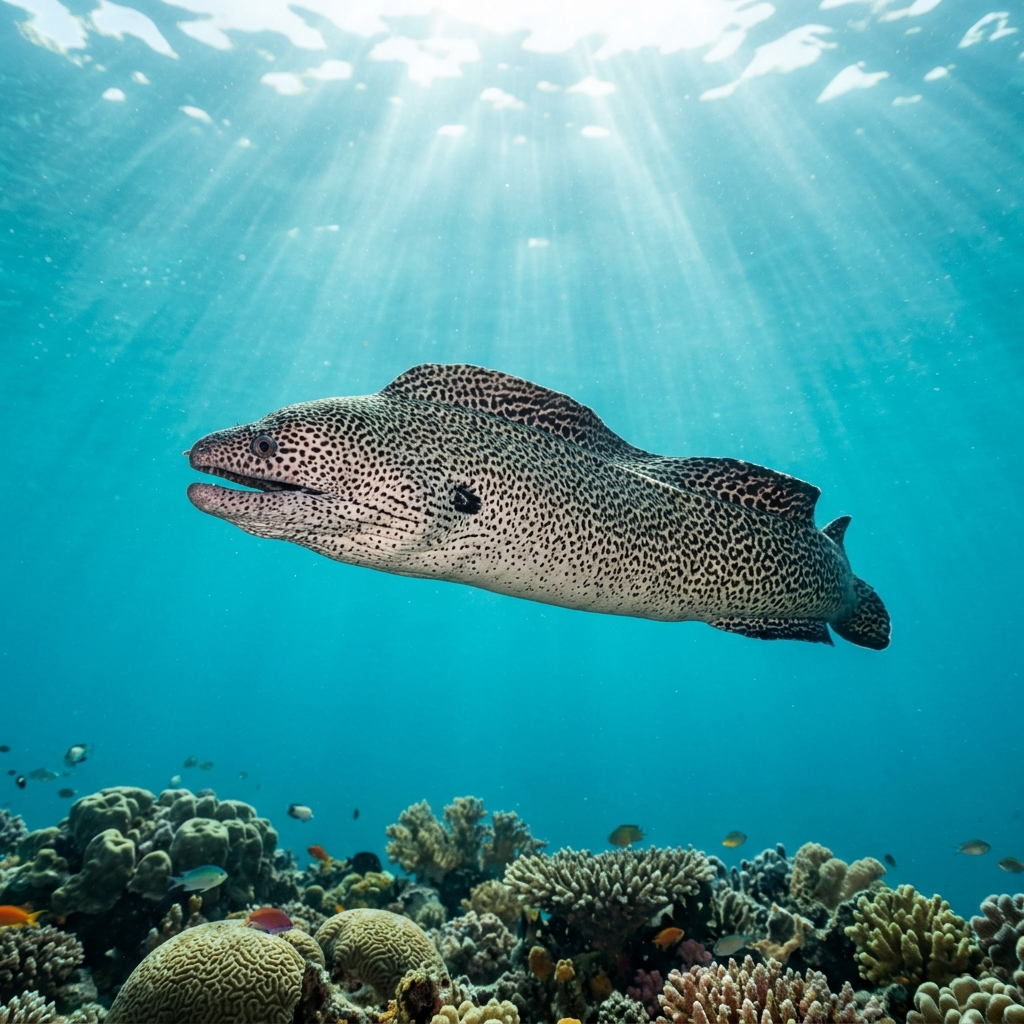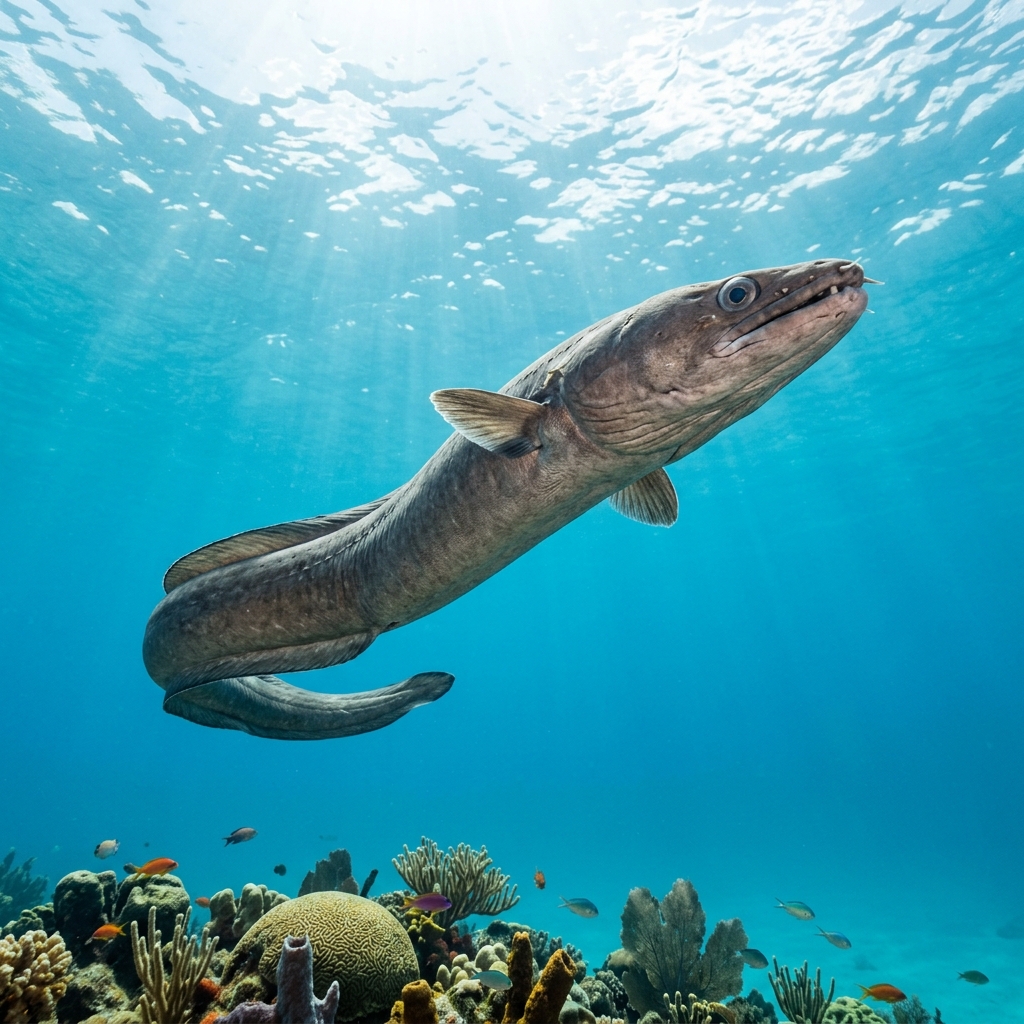
Myrichthys ocellatus
Cream body with dark gold-ringed spots, cruising sandy patches in Grenada and Colombia year-round at 26.5 to 28.2 C.
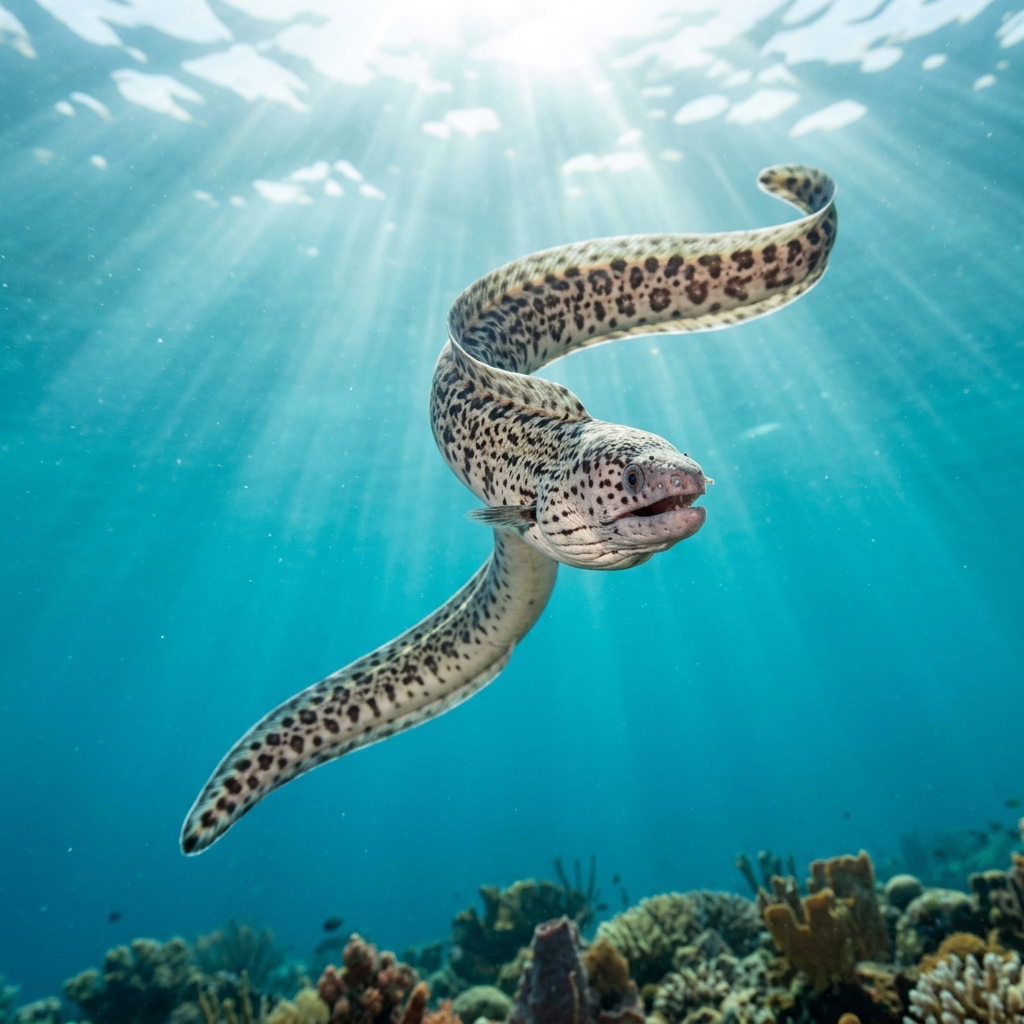
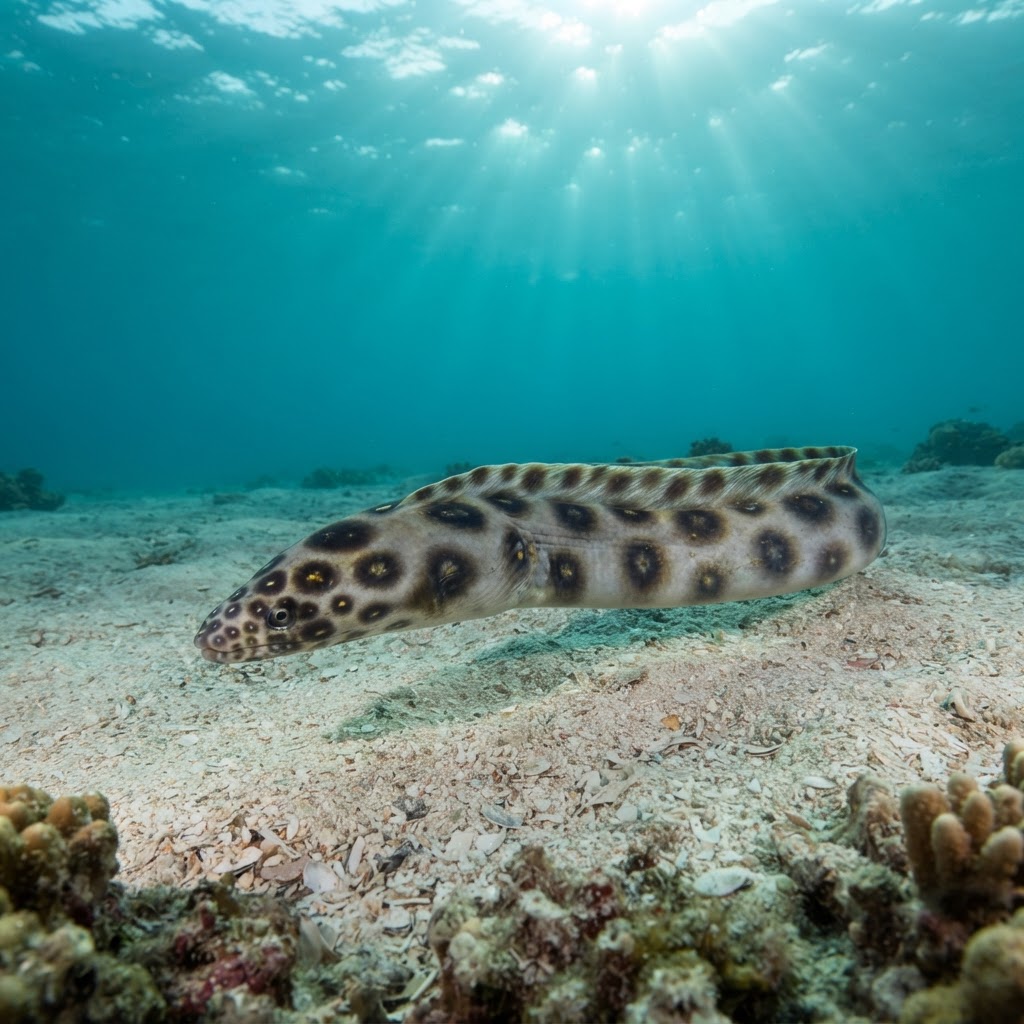
Long, slender, pale cream to tan body marked with a row of dark spots each ringed in gold, giving it a chain-like patterning down the length of the body. It grows to around 77 cm but looks slimmer and more snake-like than a moray, with a pointed snout used for digging into sand. No dorsal fin frills or gaping mouth display like reef morays, and it is usually seen partly buried with just the head and forebody showing.
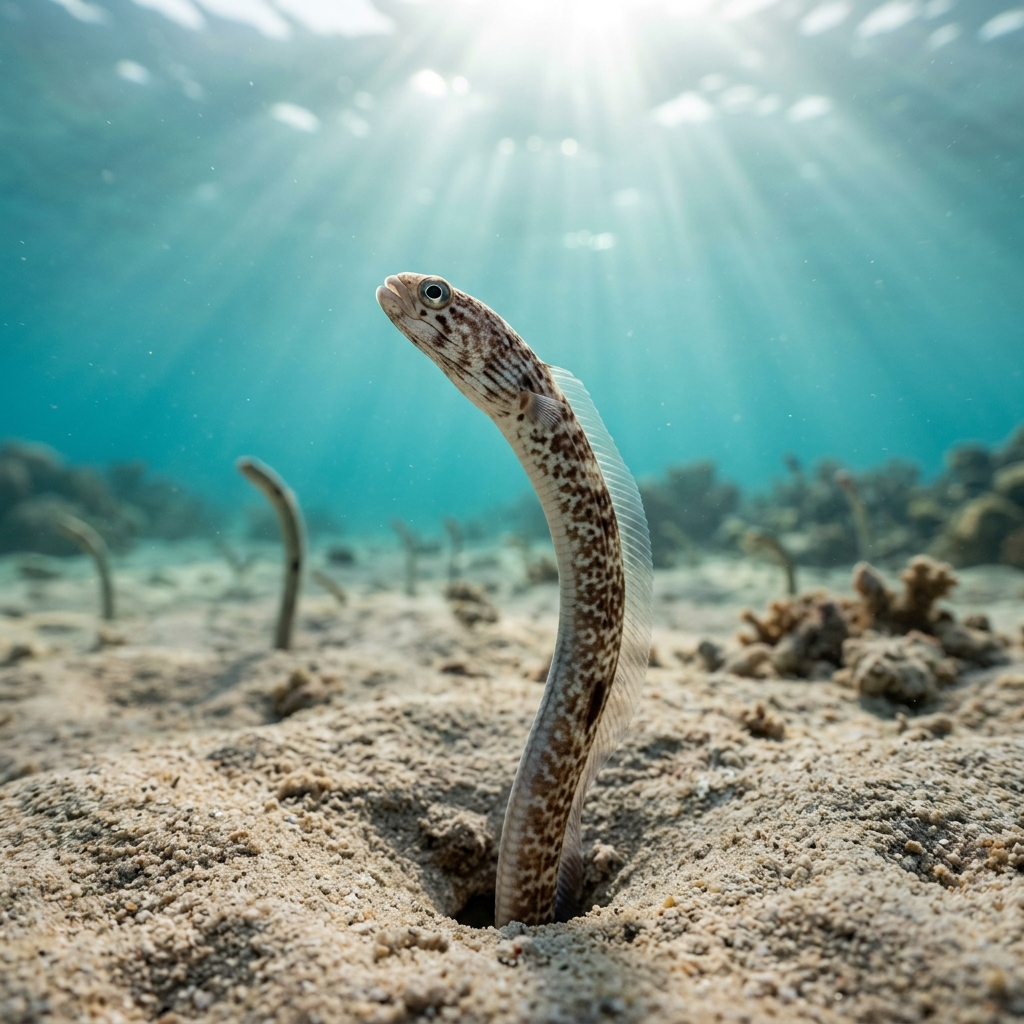
Divers usually spot it cruising or half-buried over sandy patches and rubble near reef edges, poking its head out to hunt by scent rather than sight. It moves with a smooth, snake-like glide across open sand and tends to ignore divers entirely unless approached closely, at which point it slips back into the substrate. Most sightings are during the day on the sand flats bordering reef structure rather than up on the reef itself.
Like other snake eels it can burrow tail-first into sand almost instantly, using a hardened, pointed tail tip as a digging tool, which is why it often appears to vanish mid-swim.
No clear seasonal pattern shows up in the sightings, and with a comfortable range of 26.5 to 28.2 C it is present on these Caribbean and Brazilian reefs all year round.
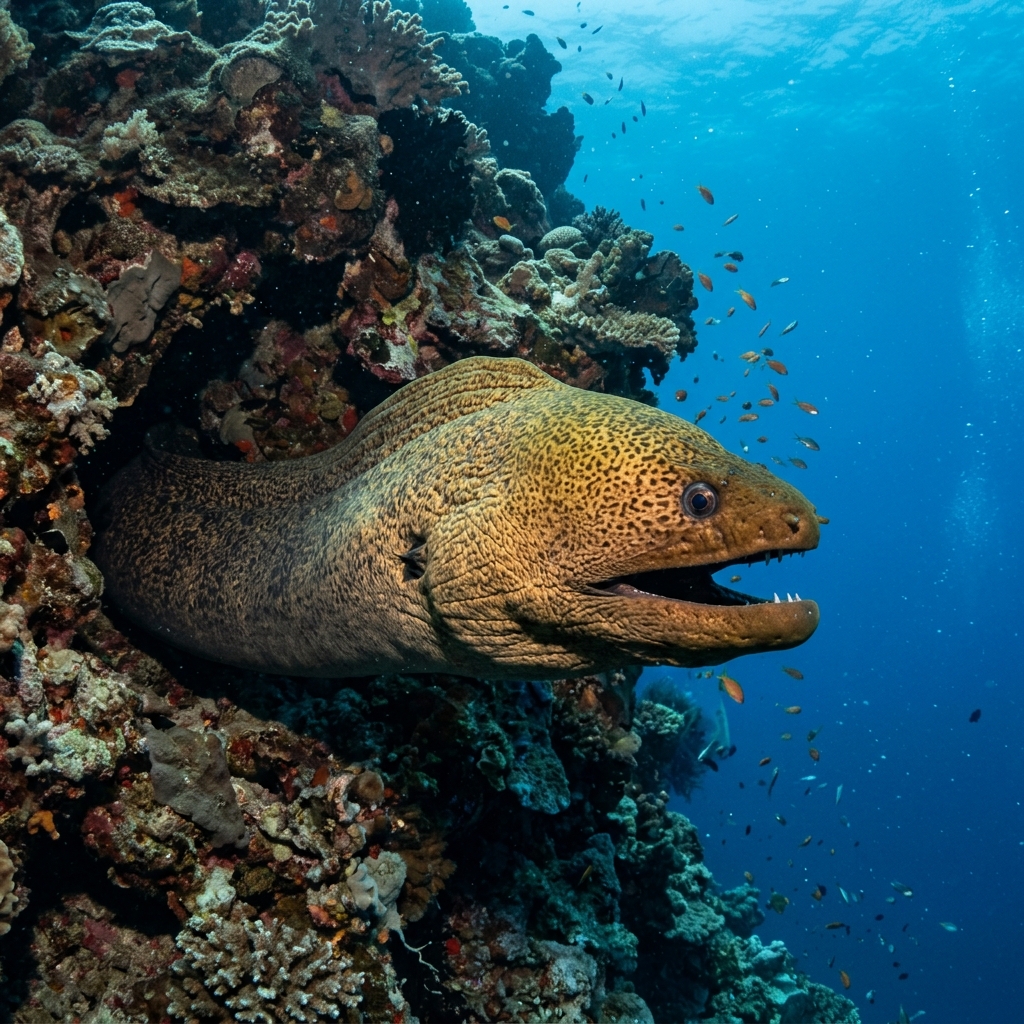
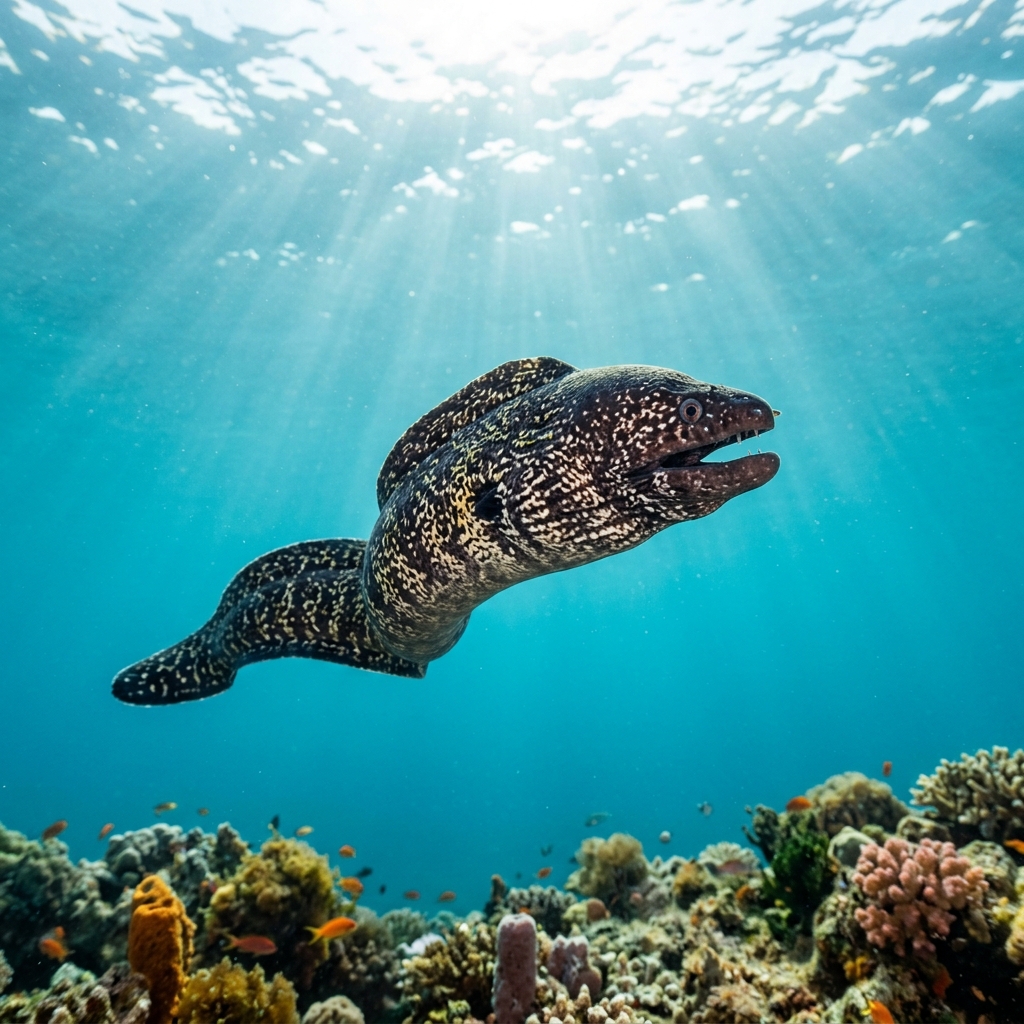
Reef neighbours a diver could mistake it for. Use the identification notes above to tell them apart.
Most reliably logged around Grenada Island, where it turns up more often than almost anywhere else in the data, and along Colombia's Caribbean coast. Good numbers also show up in Brazil (Santa Catarina and Bahia), Aruba (Arashi and Boca Catalina), Martinique (Saint-Pierre), Saint Lucia, Barbados (Carlisle Bay), and Florida.
Mapping where Goldspotted Snake Eel is logged…
Grenada Island is the strongest spot for sightings, followed by Colombia's Caribbean coast. It also shows up regularly in Brazil, Aruba, Martinique, Saint Lucia, Barbados, and Florida.
There is no strong seasonal pattern in the sightings, and it tolerates a warm 26.5 to 28.2 C range, so it is seen on these reefs year-round.
Look for a slender, snake-shaped body in cream or tan covered in dark spots each ringed with gold, often seen half-buried in sand with just the head visible. It lacks the thick body and gaping jaws of reef morays.
They typically reach around 77 cm in length, giving them a long, thin, rope-like profile in the water rather than the bulk of a true moray.
No, they are not considered dangerous to divers. They tend to retreat into the sand rather than confront anyone who gets close.
Site and sighting data is aggregated from diver logs, iNaturalist and GBIF. For taxonomy and conservation status:
Garden Eel
2,448 sites