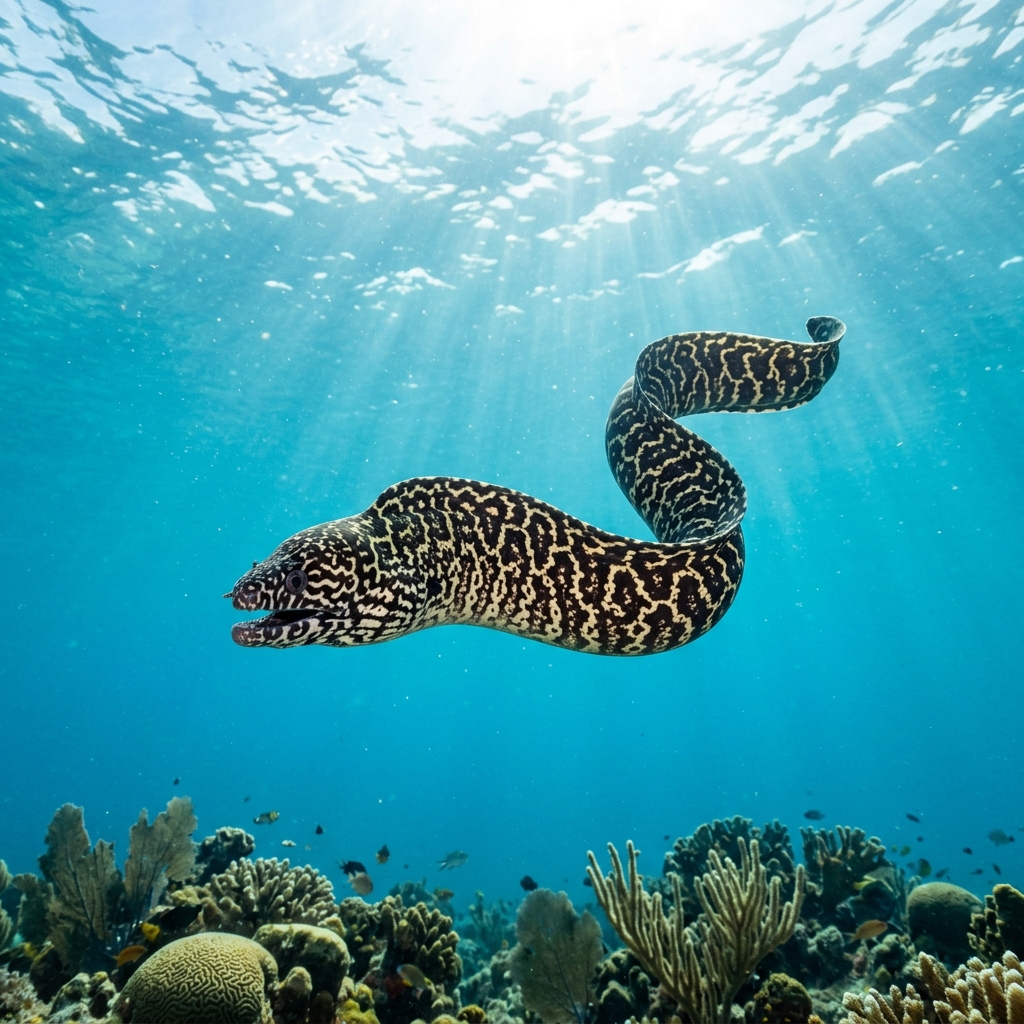
Gymnothorax moringa
Spot the Spotted Moray across Caribbean reefs from the Yucatán to Grenada. Warm waters, year-round presence, and a pattern no other eel quite matches.
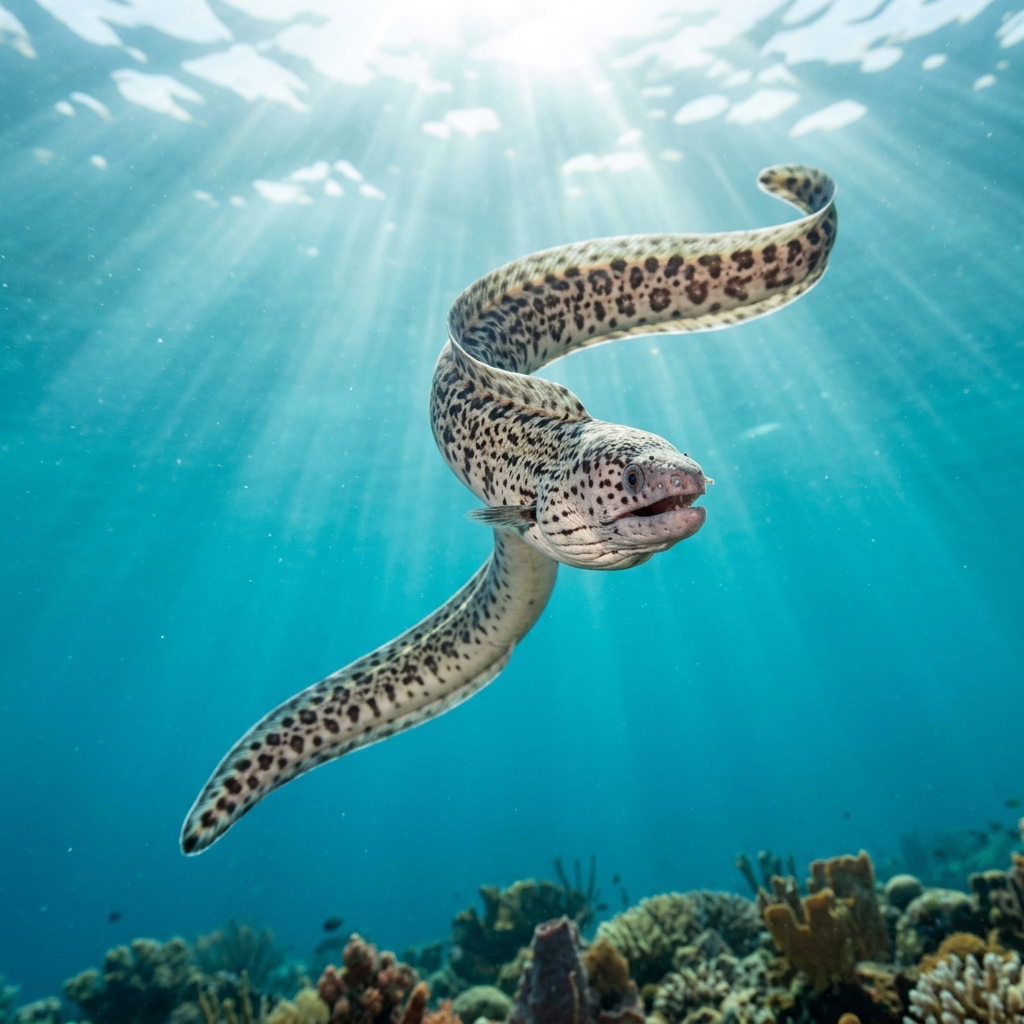
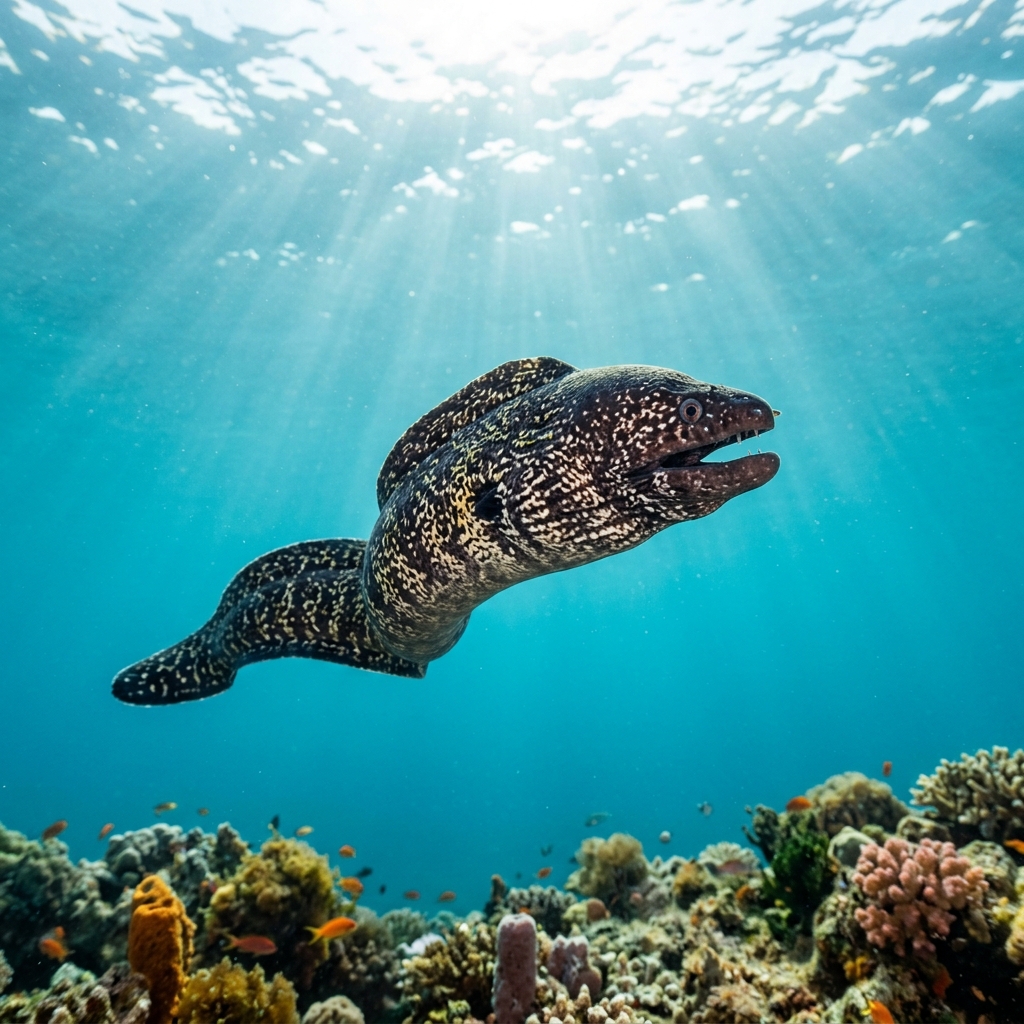
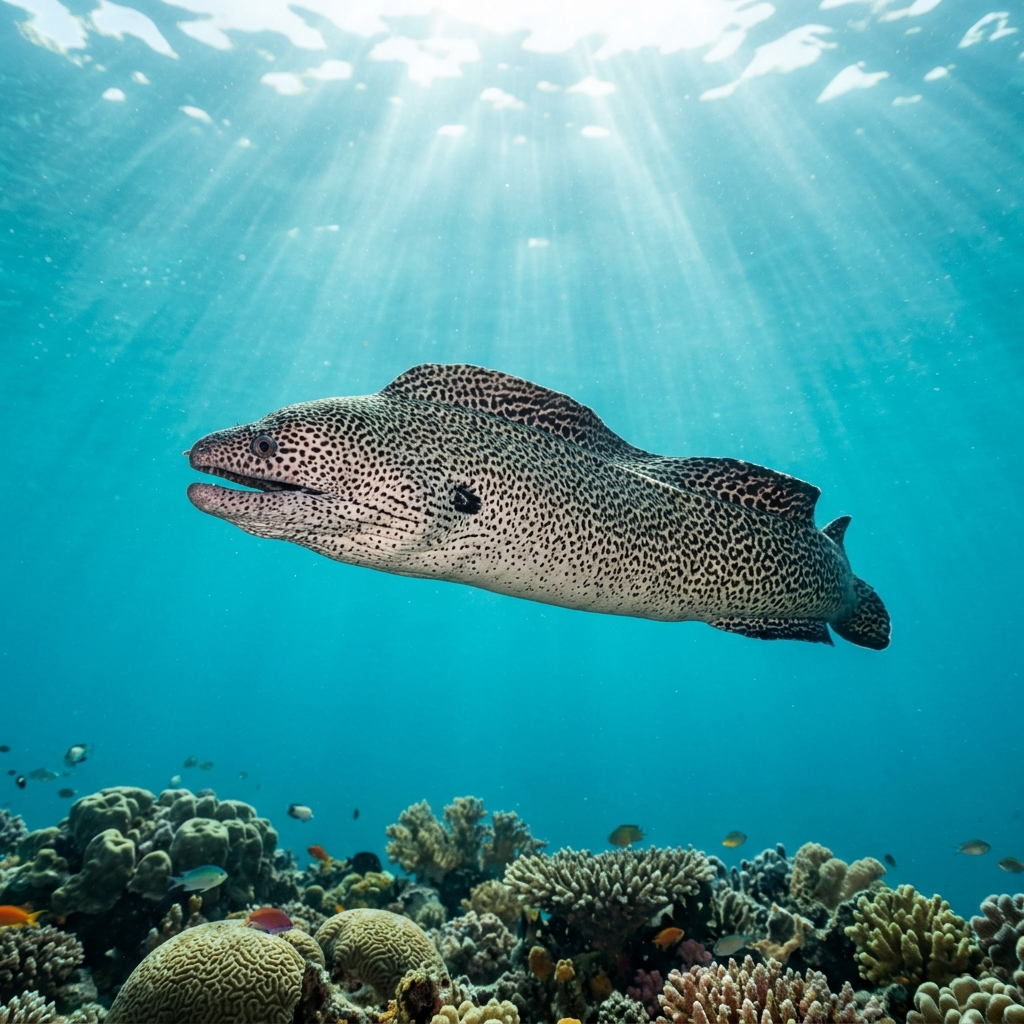
White to yellowish skin covered densely in irregular dark brown spots gives this moray a peppered look that extends all the way to the tip of the tail and inside the mouth. The spots vary in size and often cluster to form a mottled pattern, helping it stand out from the reef when it opens its jaws. It is a mid-sized moray, typically encountered with the head and anterior body extending from a crevice, the rest of the body hidden. That spotted interior of the mouth is the single most reliable field mark when it gapes at you.
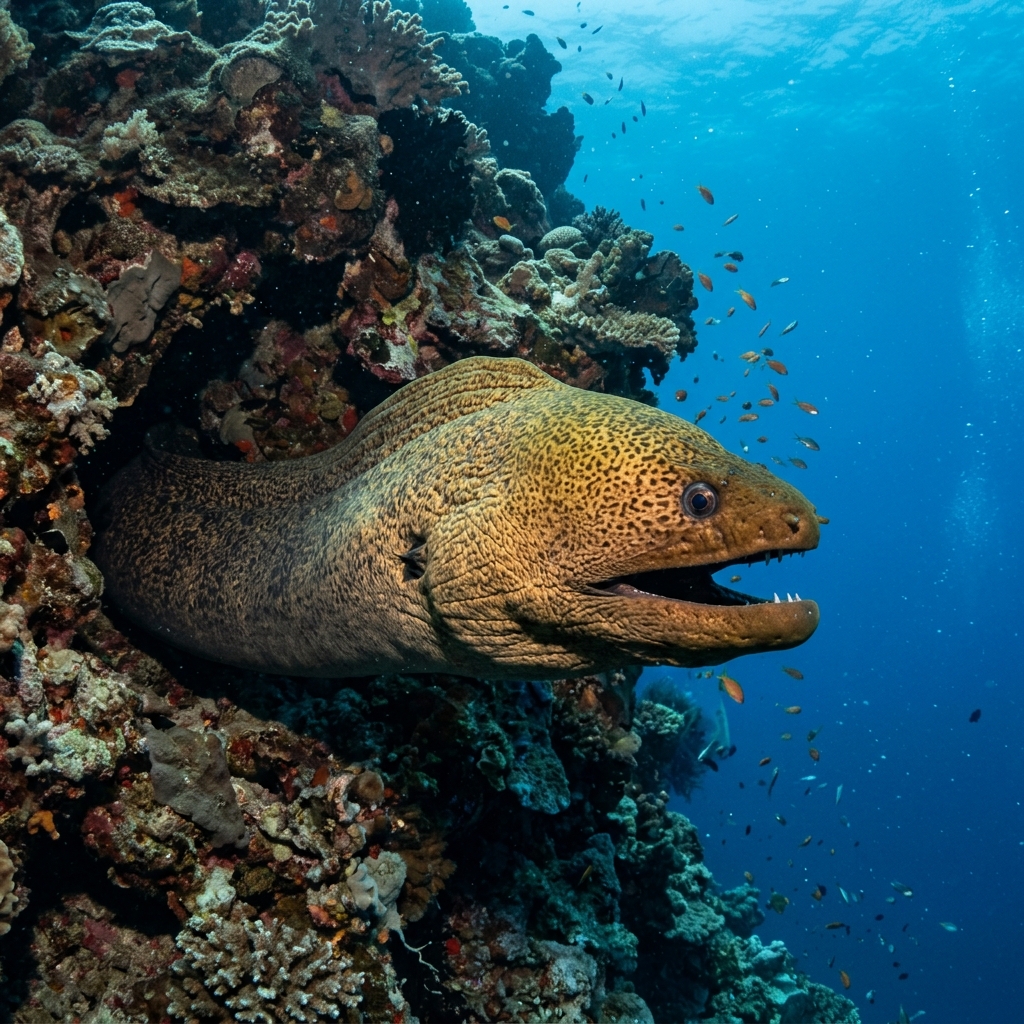
You will almost always see it wedged head-out in a reef crack or coral head, steadily working its jaws open and closed to pump water across its gills, a normal breathing motion, not aggression. It tends to hold its position when divers approach slowly, retreating deeper into the crevice only if approached too closely or disturbed. Cleaning stations can draw it out more fully, and patient divers occasionally watch a cleaner shrimp work along its body in plain view.
Like all morays, it has a second set of jaws, pharyngeal jaws deep in its throat, that shoot forward to drag prey backwards when the outer jaws have made a catch. It is one of the more visible demonstrations of a feeding adaptation found nowhere else among jawed vertebrates.
Sightings concentrate from October through August across Northern Hemisphere sites, making it broadly available for most of the year. The species sits comfortably in water between about 26 and 29 °C, which describes typical Caribbean reef conditions throughout the dry and wet seasons alike.
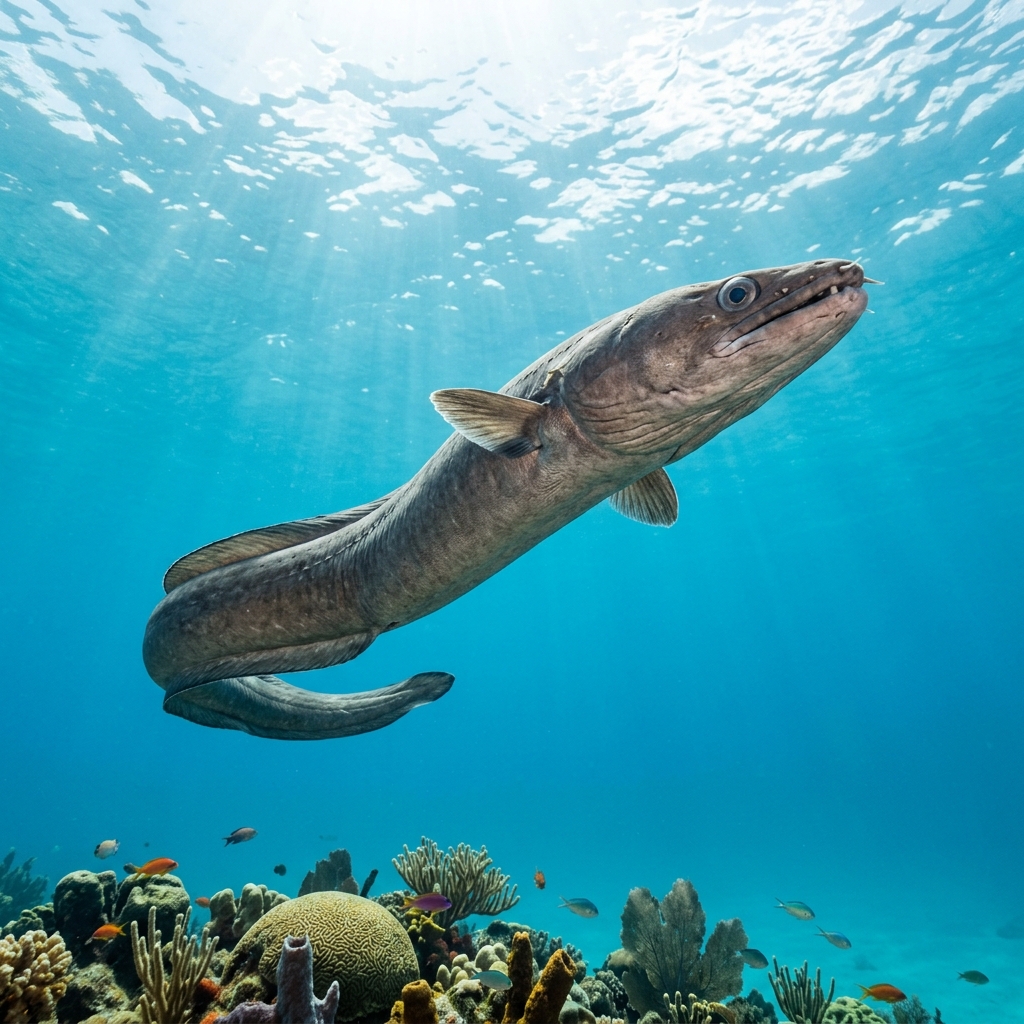
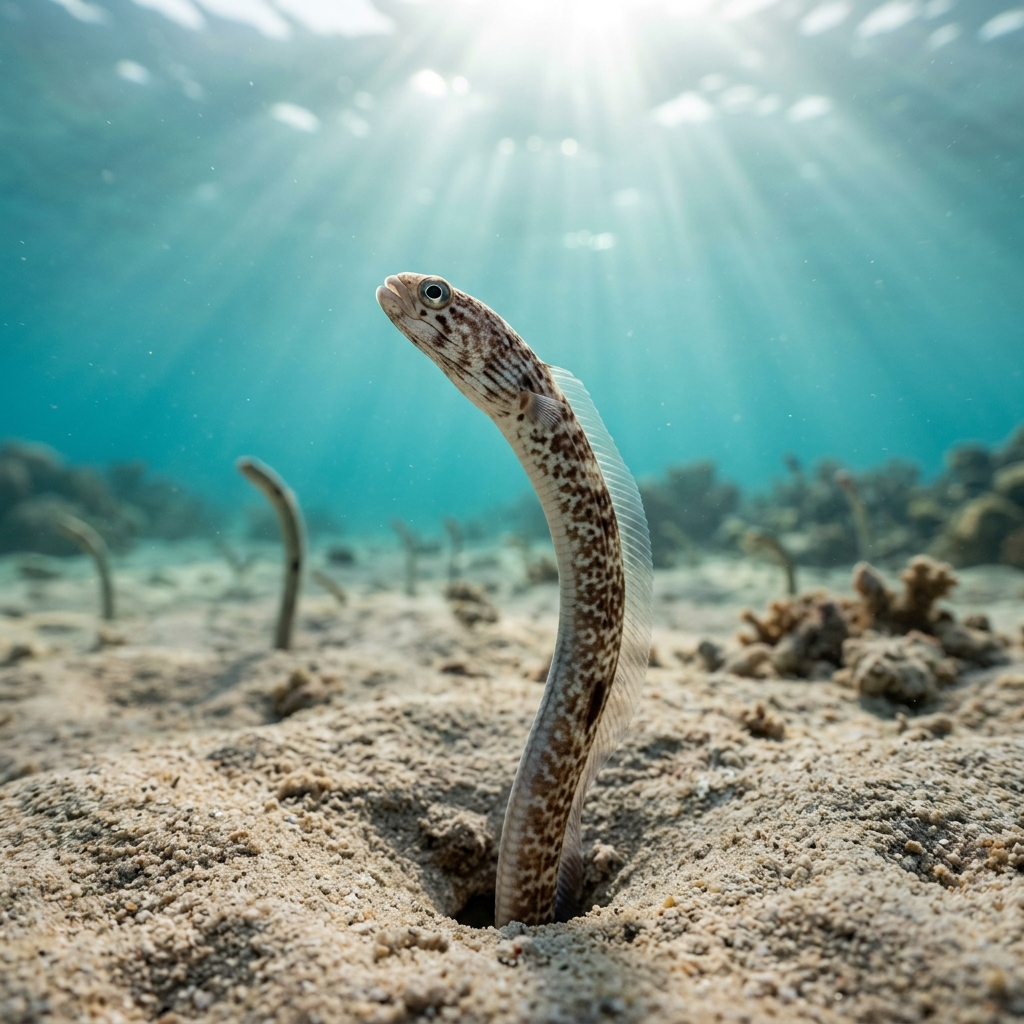
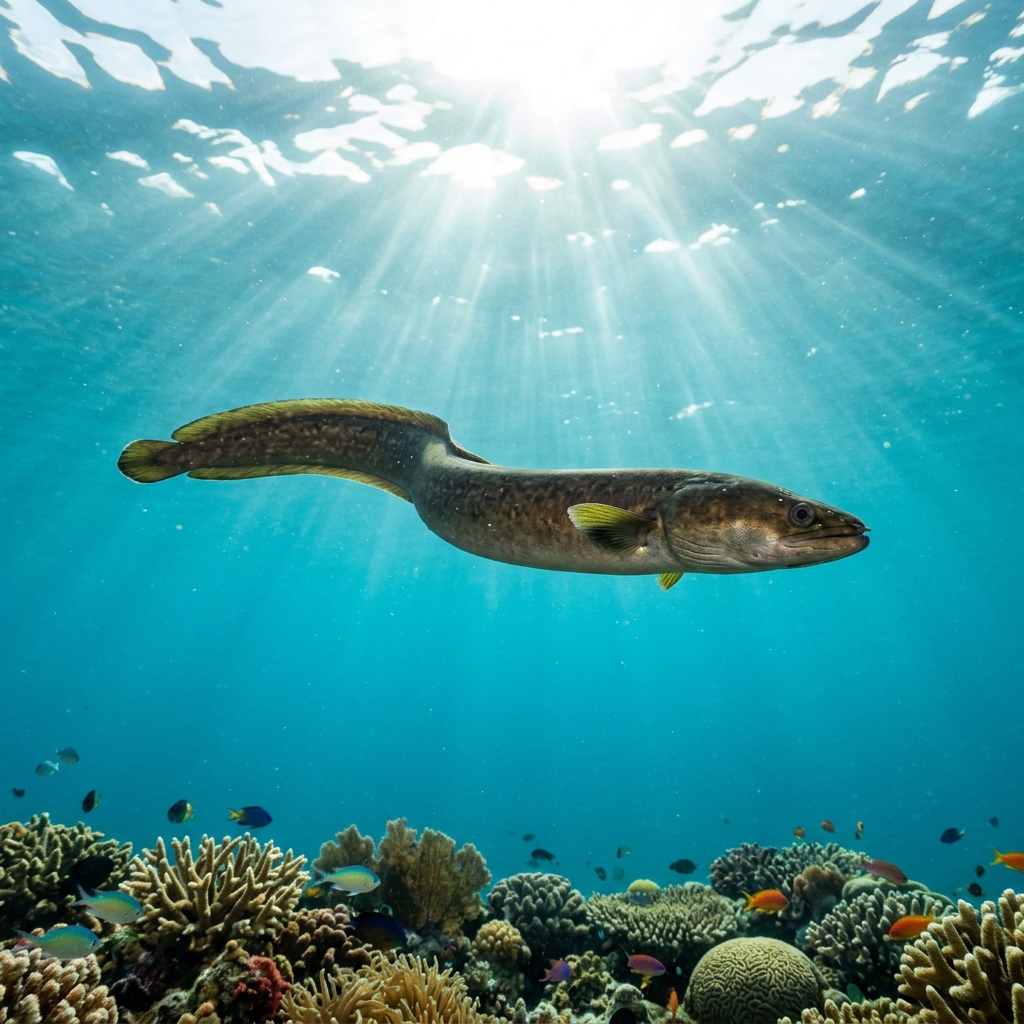
Reef neighbours a diver could mistake it for. Use the identification notes above to tell them apart.
Most commonly logged across the Caribbean and Gulf of Mexico, with particularly strong records from the Yucatán Peninsula and Grenada Island. Bonaire, Grand Cayman, Colombia's San Andrés and Providencia archipelago, and Roatán in Honduras are all reliable spots, and populations also appear in the US Virgin Islands and Guadeloupe. Outside the Caribbean, divers encounter it along the Atlantic coast of the Americas as far north as the Florida reefs.
Mapping where Spotted Moray is logged…
The Caribbean is the core of its range. The Yucatán Peninsula, Grenada, Bonaire, Grand Cayman, and Roatán are among the most frequently logged sites, with additional strong records from the US Virgin Islands, Guadeloupe, and Colombia's San Andrés and Providencia islands. Florida's reef tract is the northernmost reliable area.
Across Northern Hemisphere sites, sightings are recorded from October through August, so most dive trips to the Caribbean will coincide with active periods. The species prefers water around 26 to 29 °C, temperatures that Caribbean reefs maintain for much of the year, keeping resident individuals present and visible.
Look for a white or pale yellowish body blanketed in irregular dark brown spots of varying sizes, continuing right to the tail tip. The inside of the mouth is also spotted, visible when it gapes, a detail no other common Caribbean moray shares. The dense, all-over spotting rather than a chain-link or uniform colour separates it from its neighbours on the reef.
Spotted Morays typically reach around 90 to 120 cm in length, though most individuals you encounter on a reef will look shorter because they are partially hidden inside a crevice. They are noticeably slimmer and shorter than a Green Moray but larger than a Chain Moray.
No. Spotted Morays are not considered dangerous to divers under normal conditions. Like any animal with teeth, they can bite if grabbed or cornered, so the standard rule applies: keep hands away from reef gaps and observe from a respectful distance. Their jaw-opening behaviour is breathing, not a threat display.
Site and sighting data is aggregated from diver logs, iNaturalist and GBIF. For taxonomy and conservation status:
Garden Eel
2,448 sites