Ctenogobiops pomastictus
A tiny, easy-to-miss sand goby most often logged around Visayas, Philippines, hovering over its shrimp burrow in warm 25-29C water.
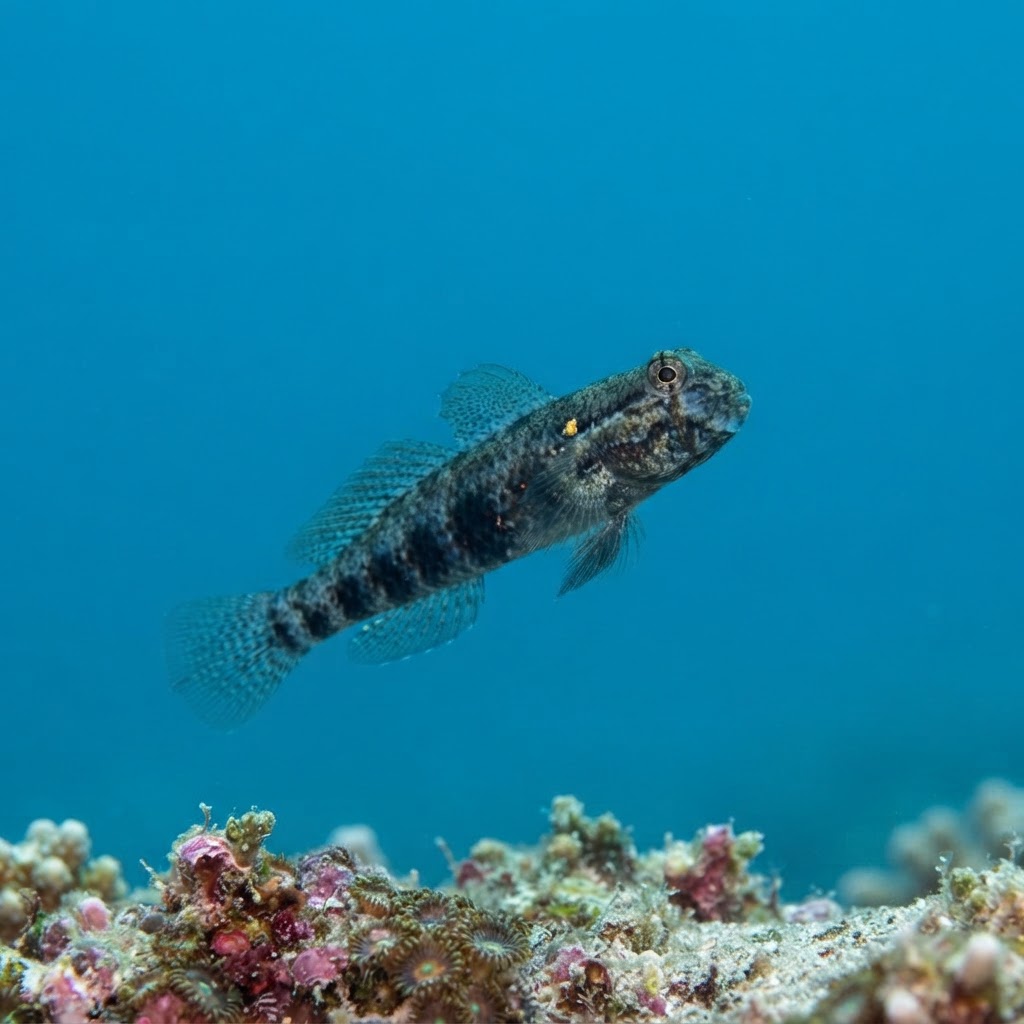
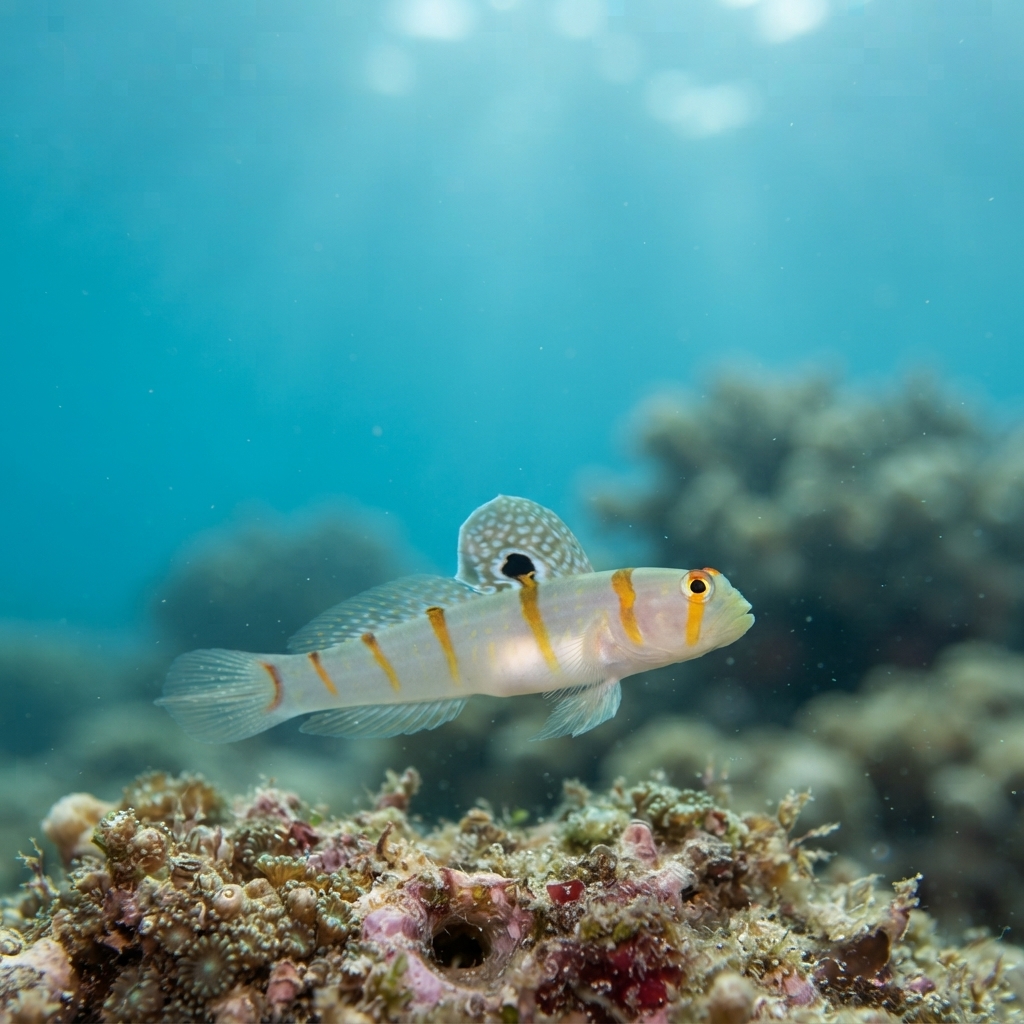
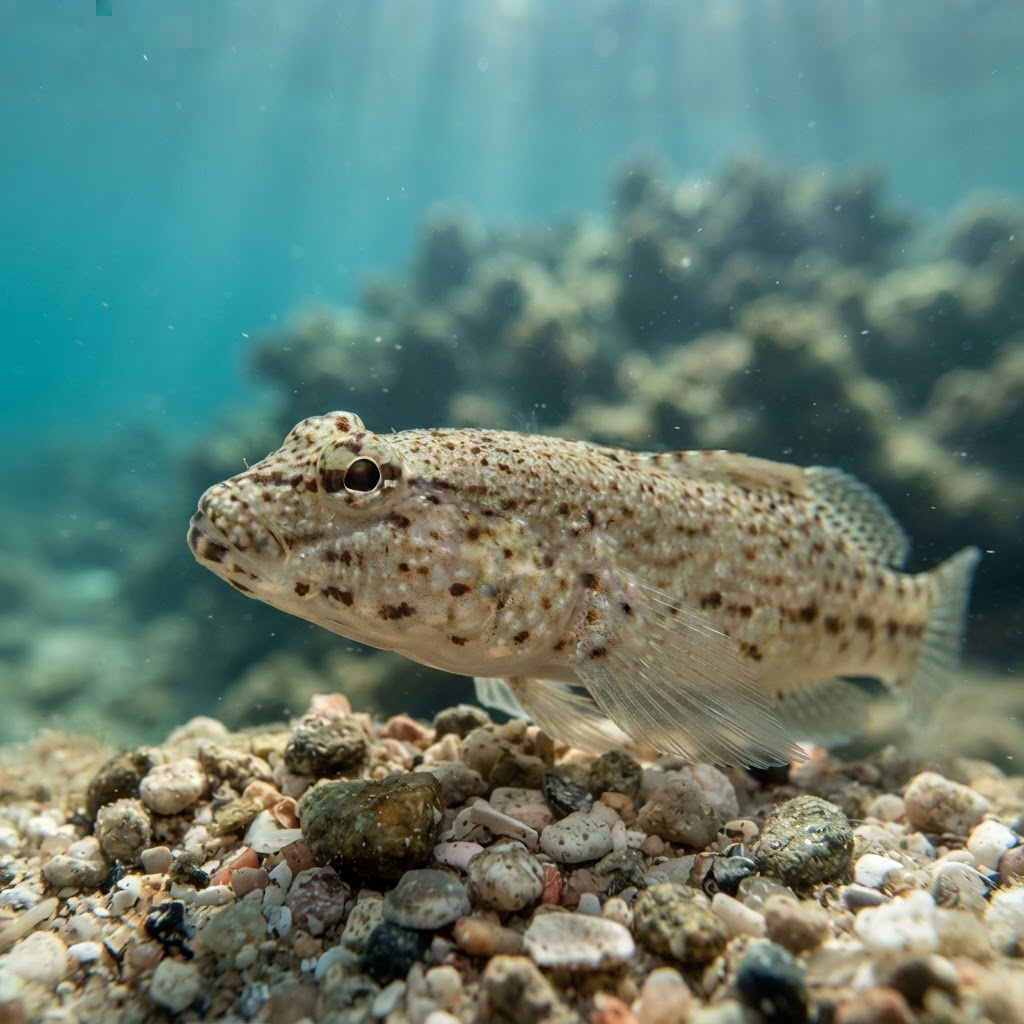
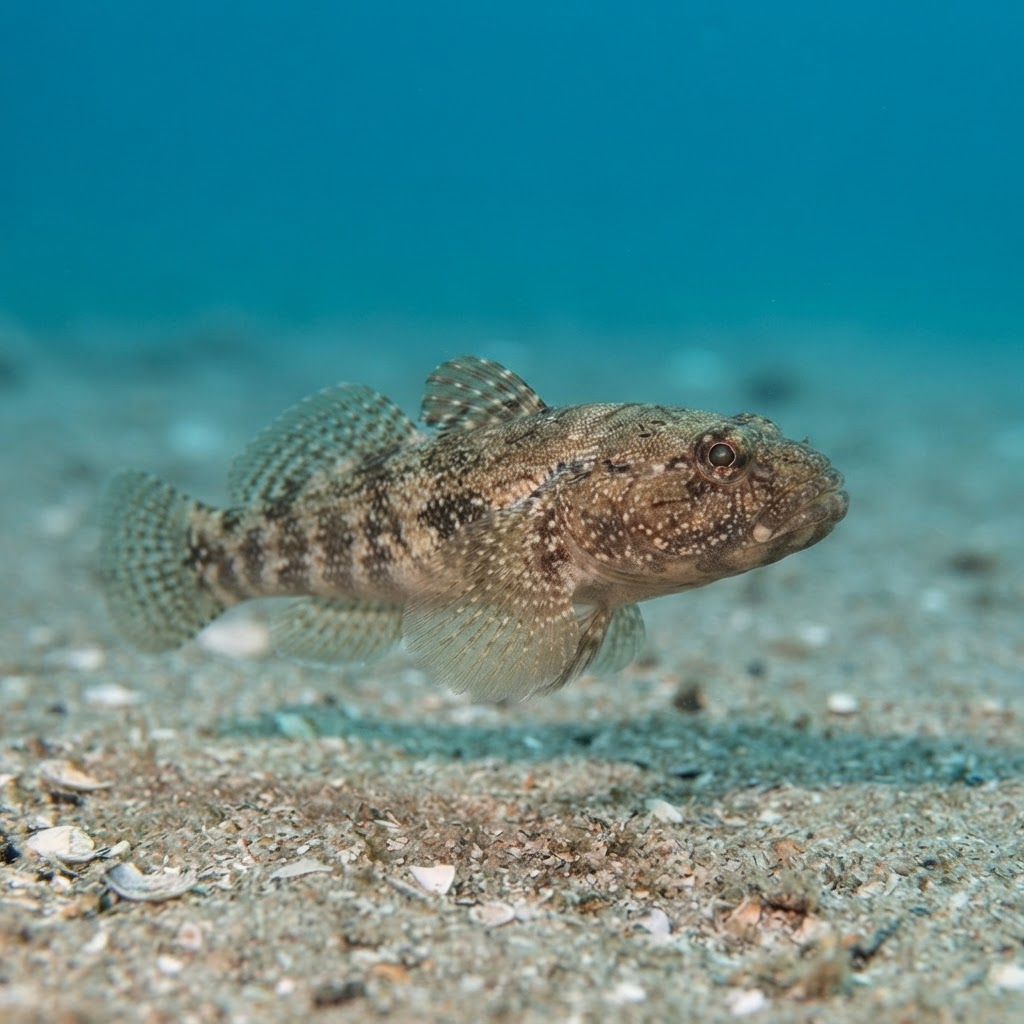
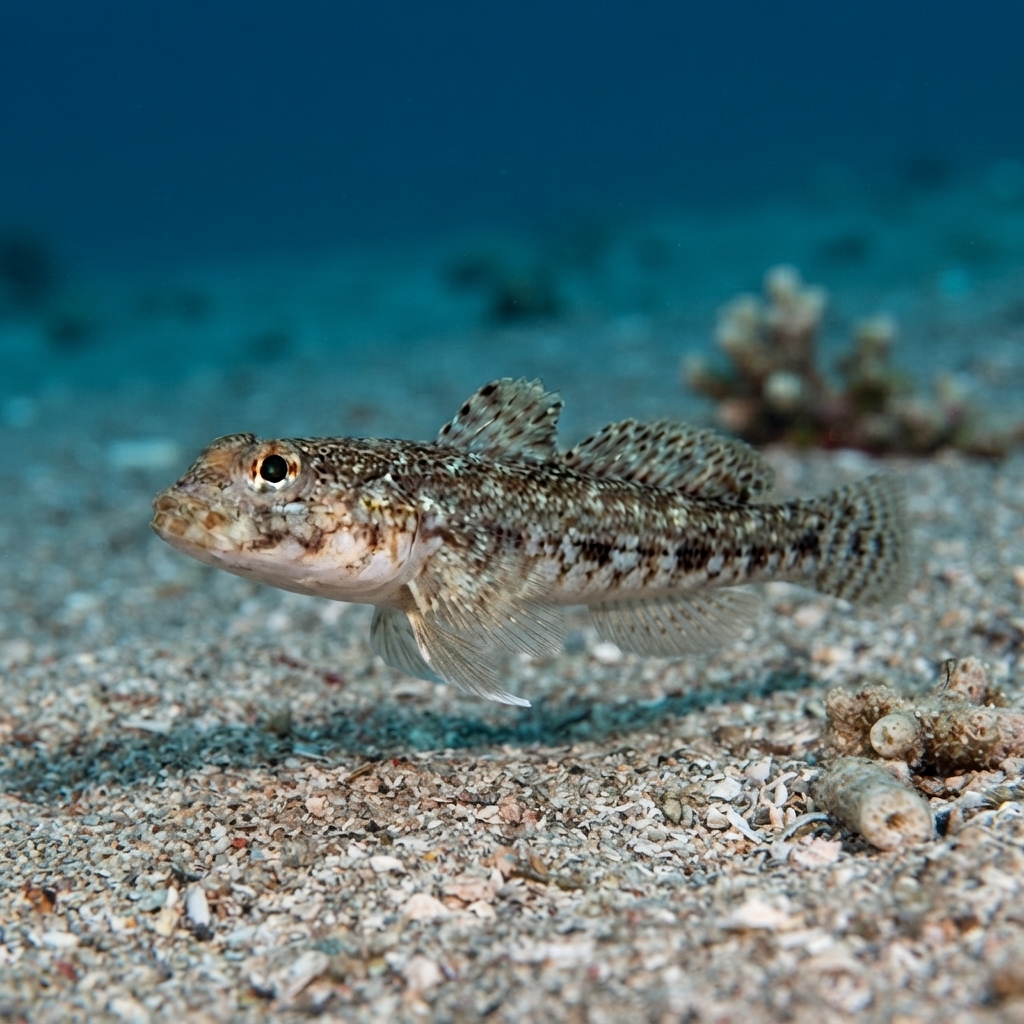
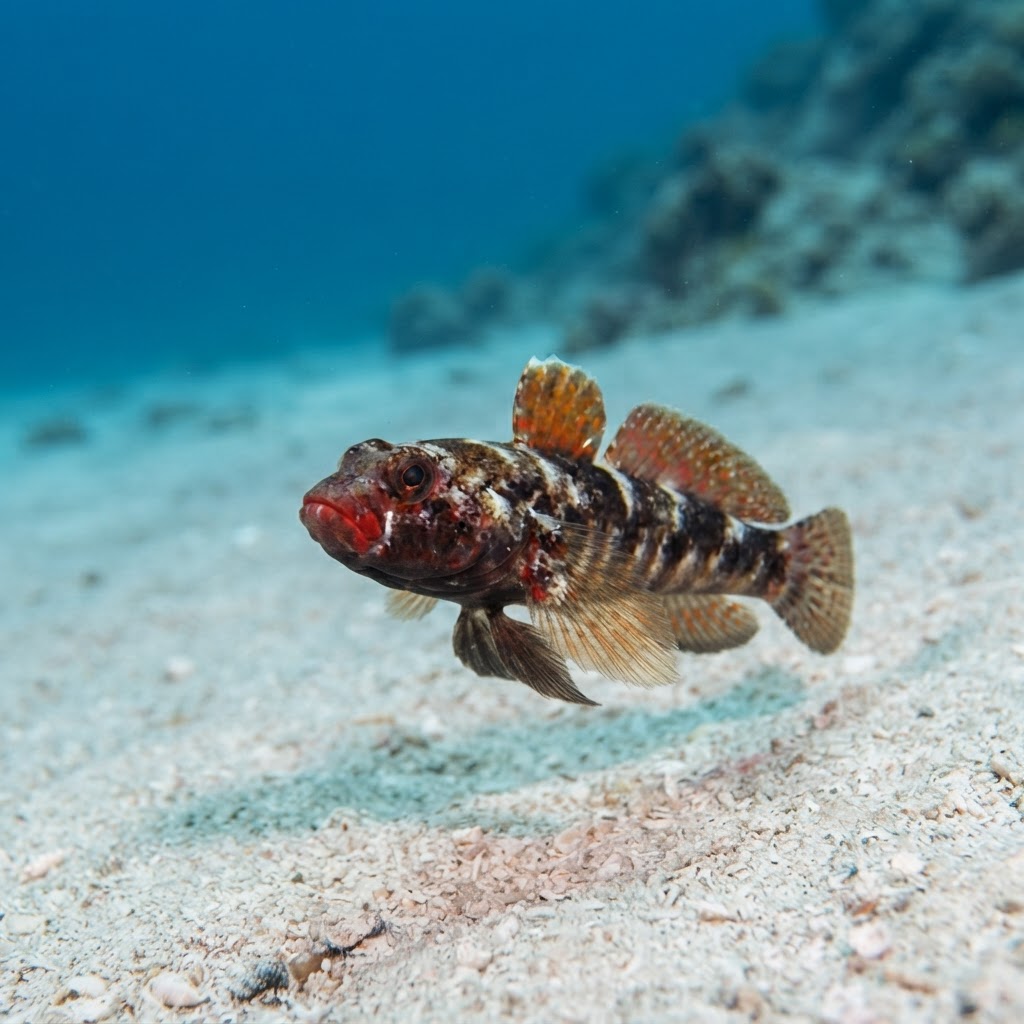
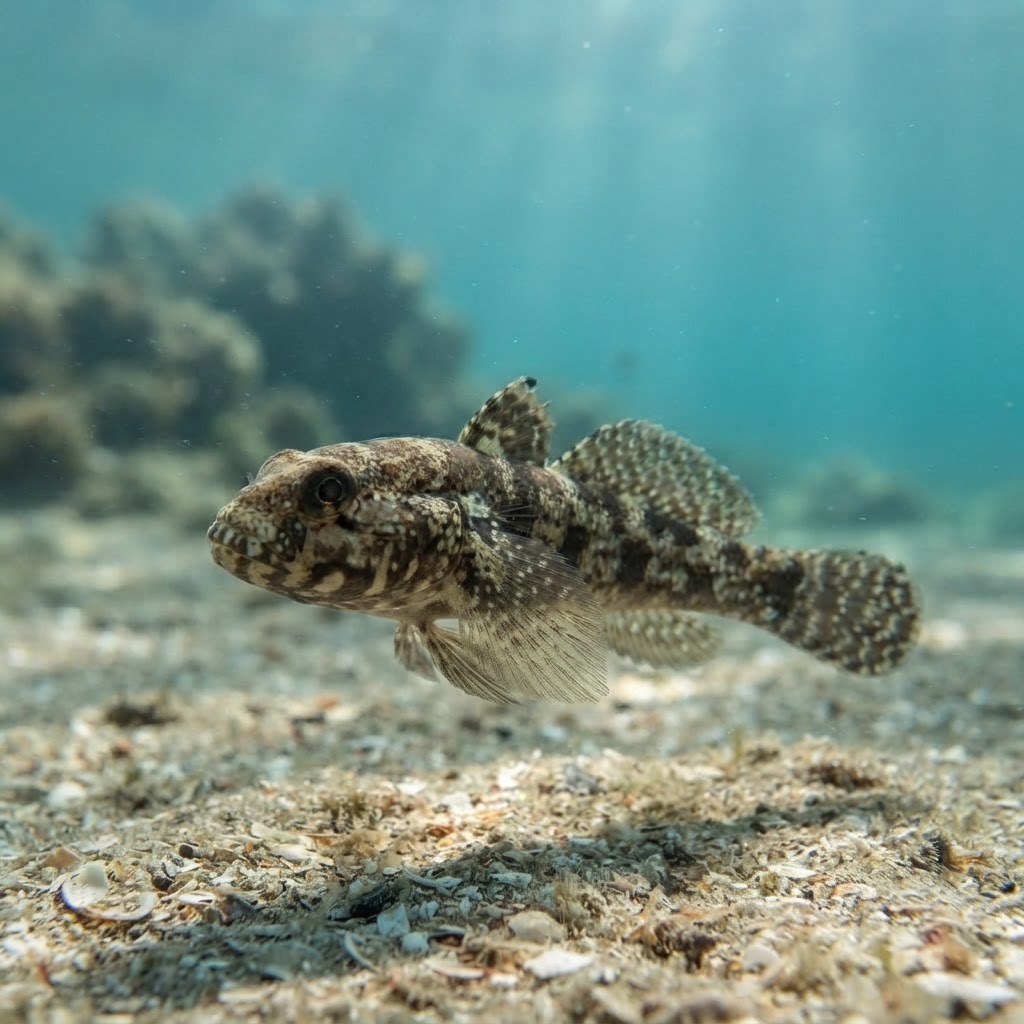
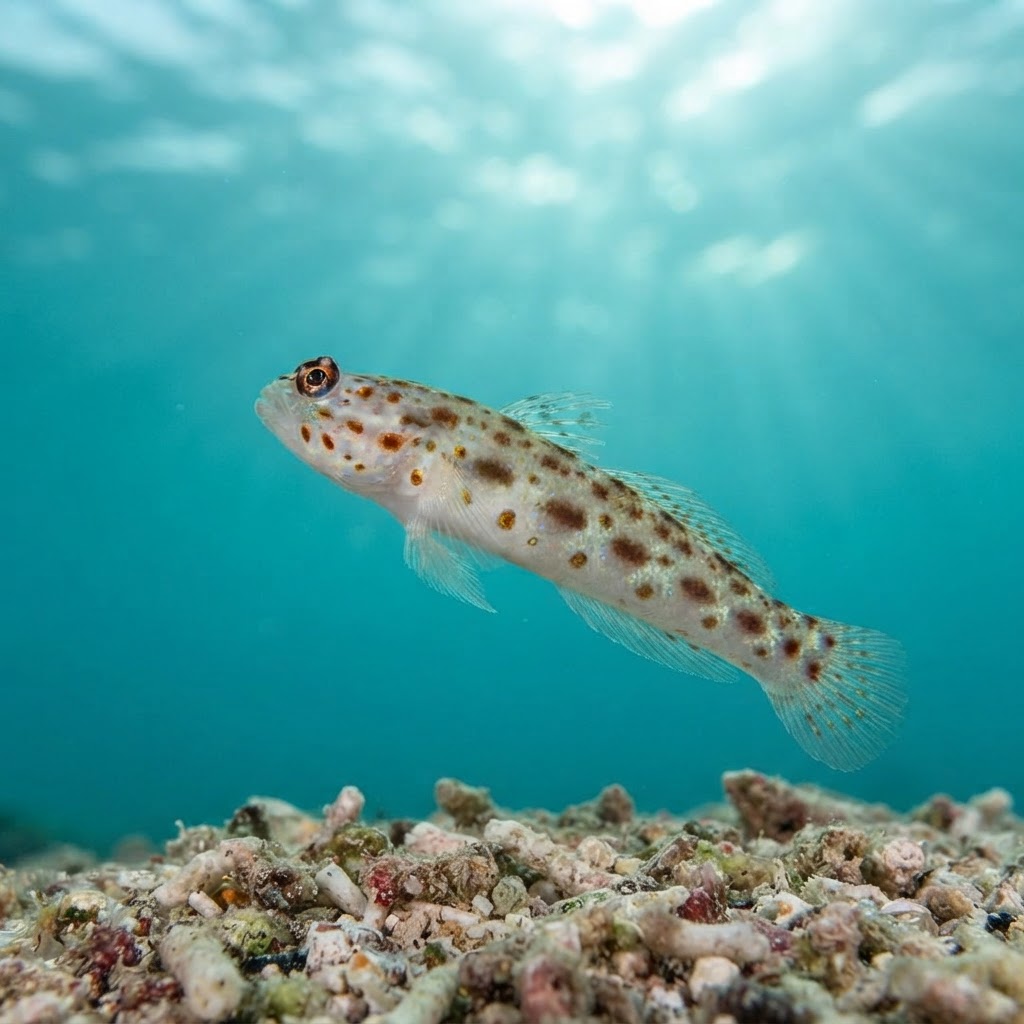
A slim, pale grey-white goby around 6 cm long with faint gold speckling scattered across the upper body and a row of dusky blotches along the flank. It hovers just above the sand rather than perching flat like many gobies, angled slightly upward and ready to bolt. Look for the small size and washed-out colouring against the sand rather than any single bold mark.
Spends most of its time hovering a few centimetres above its burrow entrance on sandy or rubble-strewn reef flats, darting down inside at the first sign of a diver getting close. Like other prawn-gobies it shares its burrow with a burrowing shrimp that keeps the tunnel clear while the goby watches for danger. Divers usually spot it by slowing down and scanning open sand patches rather than the reef structure itself, since it holds station low and still until approached.
It lives in a cooperative burrow partnership with a burrowing shrimp: the shrimp digs and maintains the tunnel while the goby stands guard outside, flicking its tail to warn the shrimp when a diver or predator gets too close.
Sightings show no detectable season, and the 25.3 to 29.3C range it's recorded in matches warm tropical reef conditions year-round, so there's no particular month to target.
Reef neighbours a diver could mistake it for. Use the identification notes above to tell them apart.
Most reliably logged on sand and rubble slopes around the Visayas region in the Philippines, where the bulk of recorded sightings come from. A smaller number of sightings come from Queensland, Australia, so it turns up on Indo-Pacific sand flats well beyond just one country.
Mapping where Gold-specked Prawn-goby is logged…
It's most commonly logged on sandy reef slopes in the Visayas region of the Philippines, with additional sightings from Queensland, Australia. It favours open sand and rubble patches rather than dense coral.
There's no strong seasonal pattern in sightings, and it's found in water from about 25 to 29C year-round, so any time you're diving warm Indo-Pacific reefs is fair game.
Look for a small, pale grey-white goby around 6 cm long hovering just above a burrow entrance on sand, with faint gold flecking and a few dusky blotches along the side. It sits angled upward, ready to dive into its burrow at the slightest disturbance.
They stay small, typically reaching around 6 cm in length, so they're easy to swim past without noticing on a busy sand flat.
It shares its burrow with a species of burrowing shrimp in a classic goby-shrimp partnership: the shrimp digs and maintains the tunnel while the goby keeps watch outside and signals danger with a flick of its tail.
Site and sighting data is aggregated from diver logs, iNaturalist and GBIF. For taxonomy and conservation status:
Slender Goby
806 sites