Moolgarda crenilabis
Silvery schooling fish seen in the Maldives' Central Atolls and Eilat, comfortable year-round in warm 24-29C reef water.
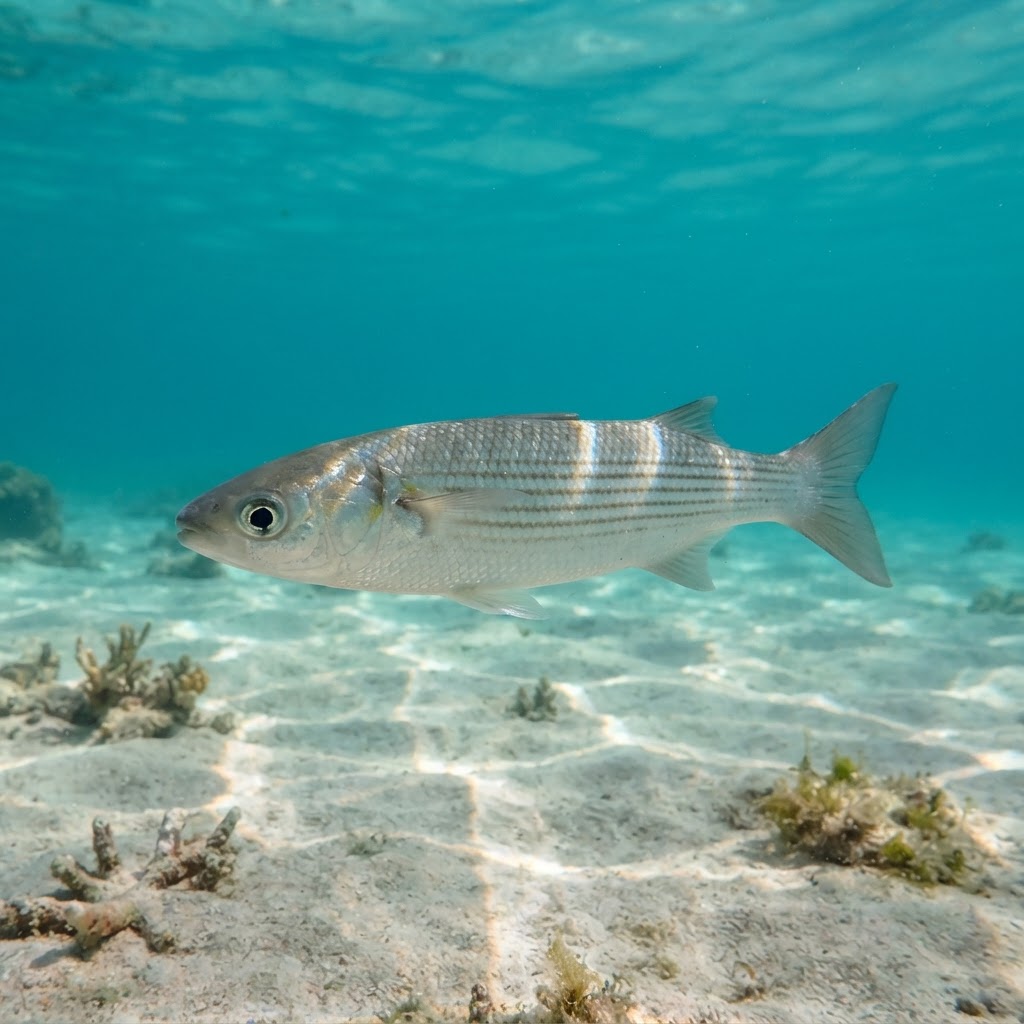
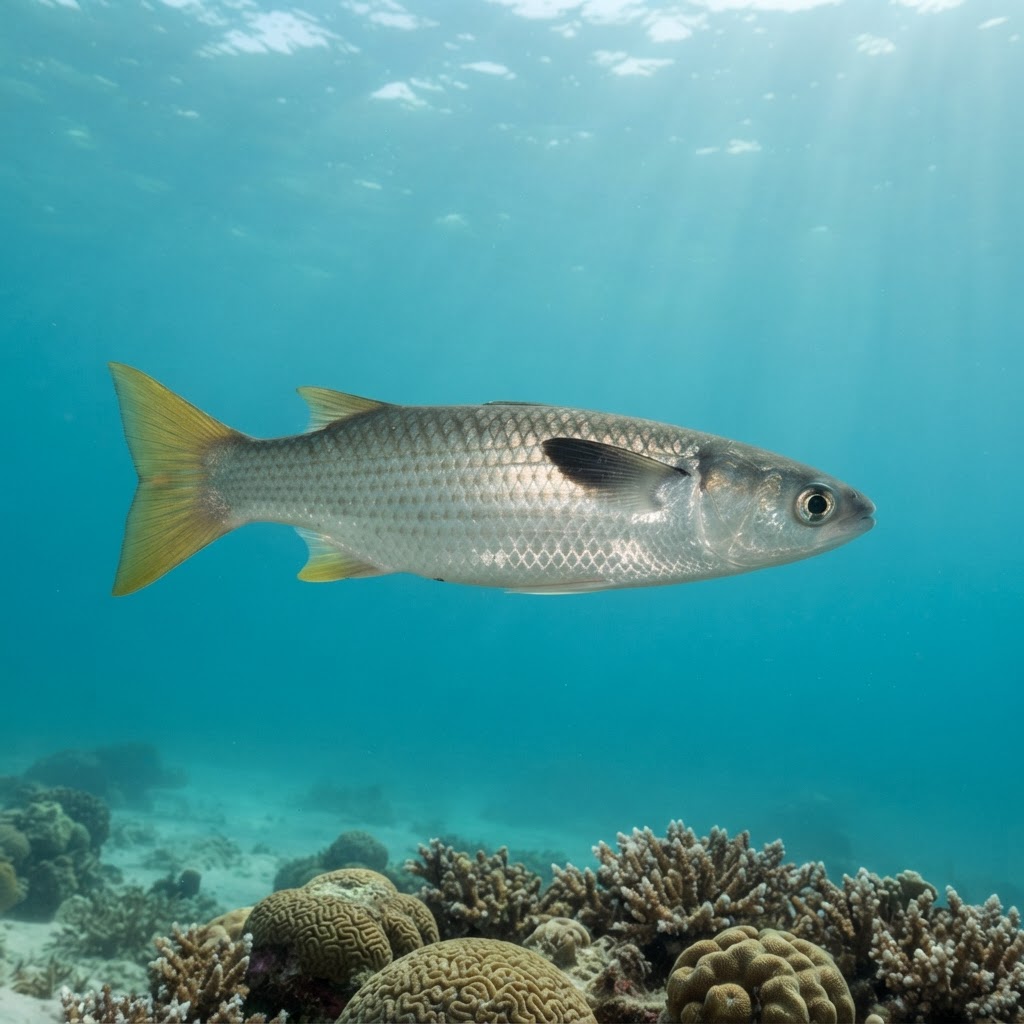
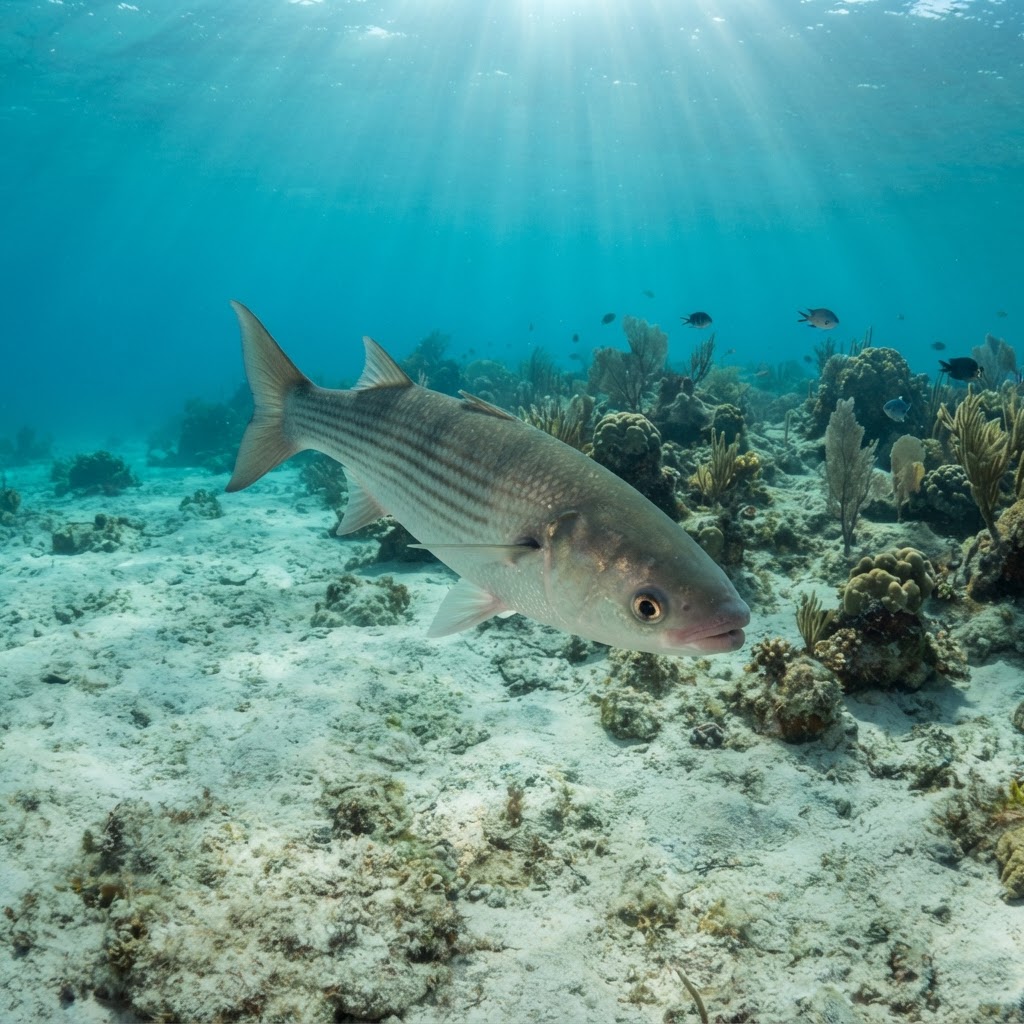
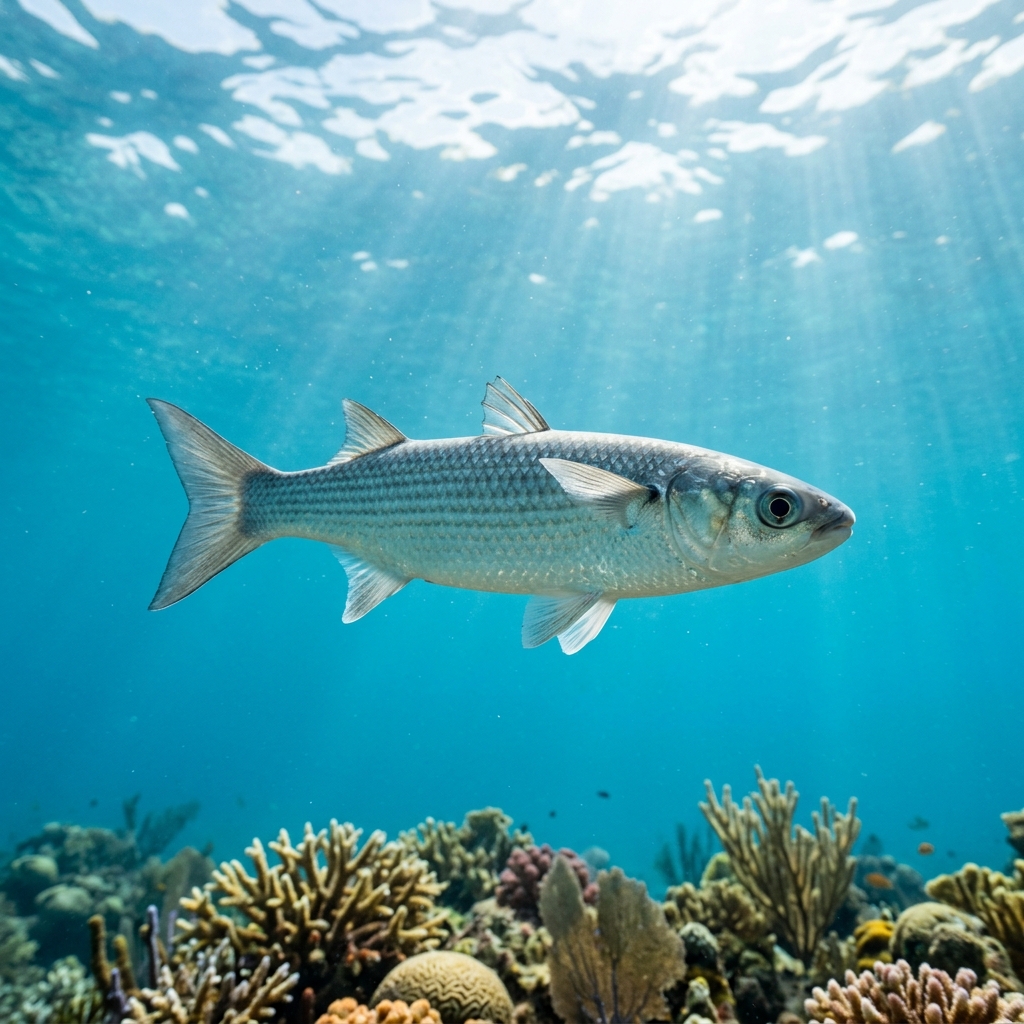
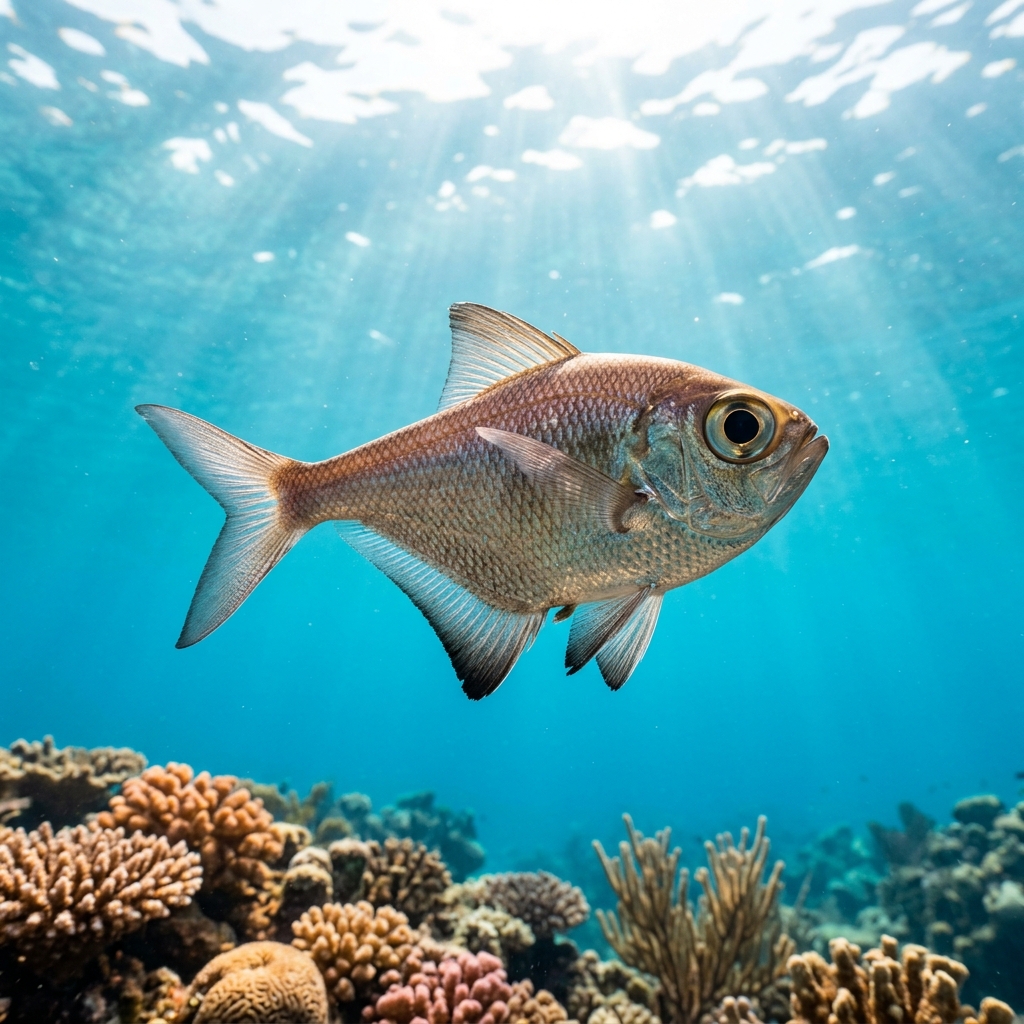
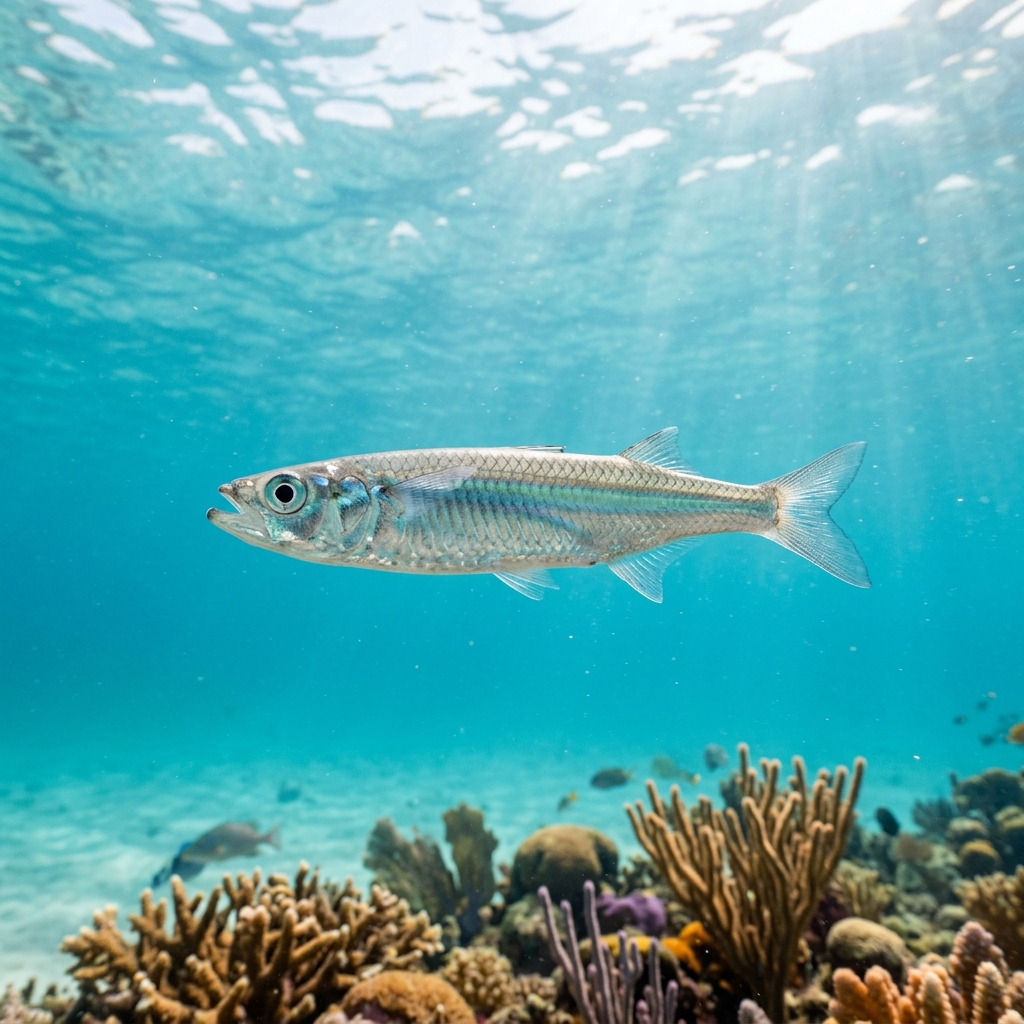
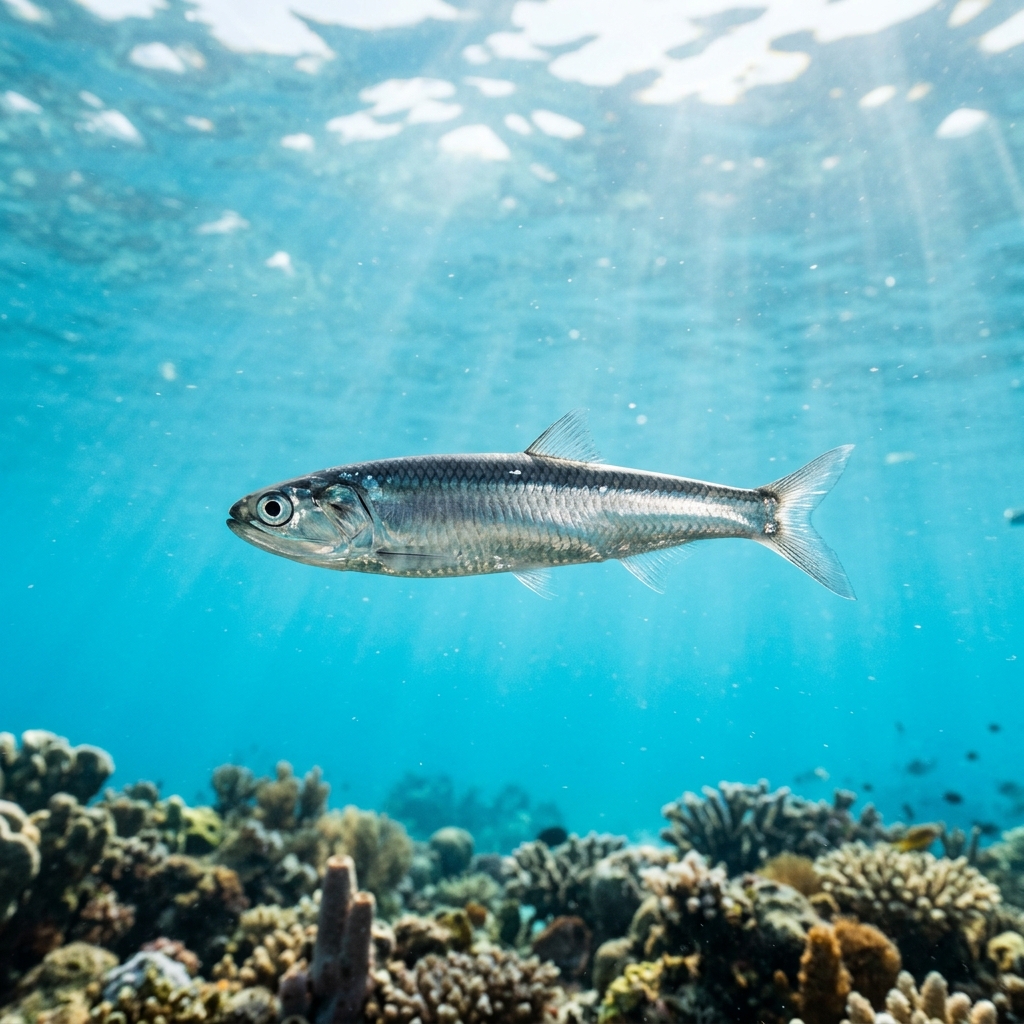
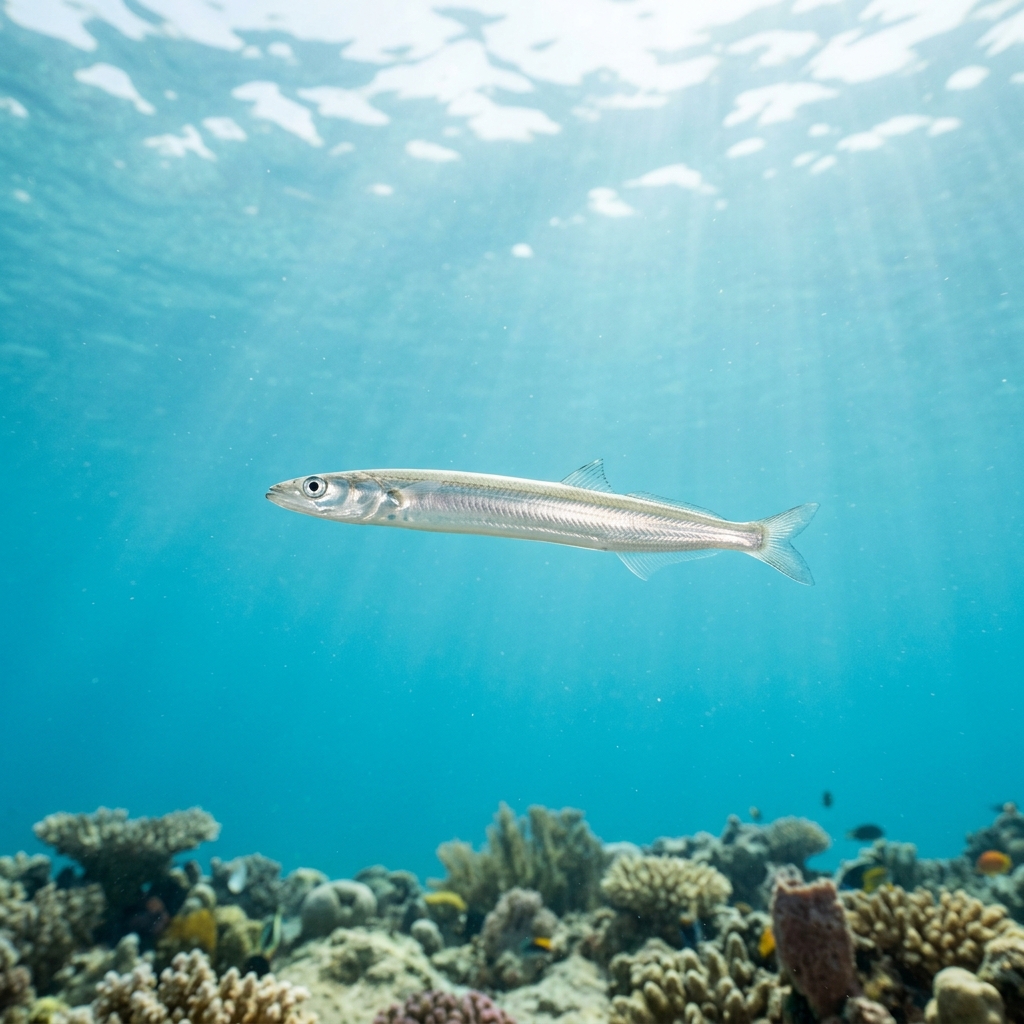
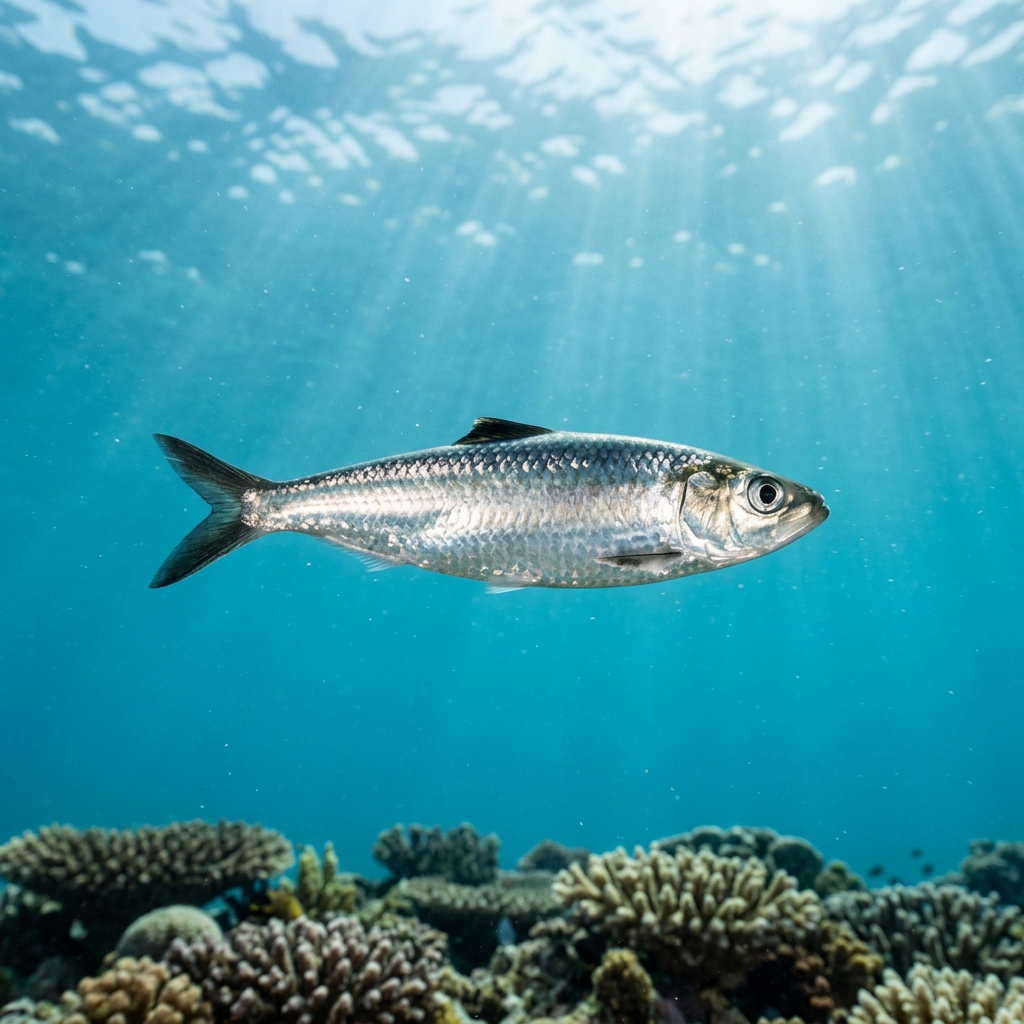
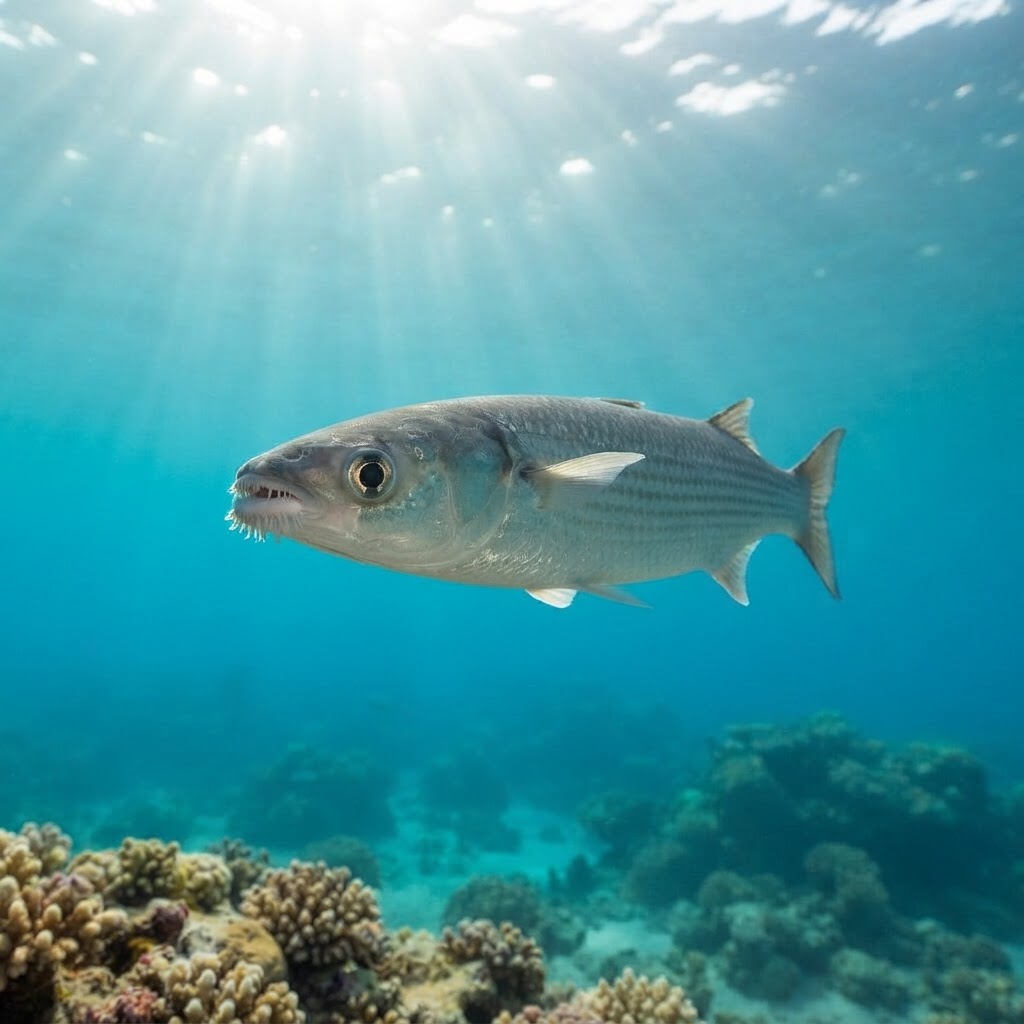
Grows to around 42cm, with a slim, torpedo-shaped body and silvery flanks that flash pale gold or greenish along the back. Look for the thick, fleshy upper lip that gives this mullet its name, a feature you can usually pick out if it lets you get close enough. It tends to hang in loose schools just off the reef rather than tight against structure, cruising with steady, unhurried tail beats.
Divers typically spot fringelip mullet moving in loose, unhurried schools over reef flats and sandy patches rather than tucked into crevices. They keep a fairly relaxed distance from divers, drifting past rather than scattering, and seem to feed by grazing over the substrate as they go. Sightings are logged as uncommon even at the sites where they occur, so a school passing by is worth pausing for rather than something to expect on every dive.
Mullets like this one feed by sifting organic material and algae from sand and sediment, making them one of the reef's quiet cleanup crews even though they're rarely the fish divers come looking for.
No clear seasonal pattern shows up in the sighting data, and with a comfortable range of 24.6 to 29.3C, this is a year-round sighting on the reefs where it occurs rather than a seasonal visitor.
Reef neighbours a diver could mistake it for. Use the identification notes above to tell them apart.
Logged sites are scattered but consistent: the Maldives' Central Atolls carry the strongest record, with single sightings also confirmed at Eilat in Israel and the Inner Islands of the Seychelles. It's not a species tied to one region, more one you bump into as a schooling presence on reef flats and slopes across the Indian Ocean and northern Red Sea.
Mapping where Fringelip Mullet is logged…
The most consistent sightings come from the Central Atolls of the Maldives, with additional confirmed records from Eilat in Israel and the Inner Islands of the Seychelles.
There's no strong seasonal pattern in the data, and they tolerate a wide warm-water range of roughly 24.6 to 29.3C, so sightings are possible year-round on the reefs where they're found.
Look for a silvery, torpedo-shaped body up to about 42cm, a greenish-gold sheen along the back, and a noticeably thick, fleshy upper lip. It's usually seen cruising in loose schools over reef flats rather than hovering near structure.
They typically reach around 42cm in length, giving them a solid, torpedo-like presence when seen schooling in open water.
No, they pose no threat to divers and will simply cruise past or move off calmly if approached.
Site and sighting data is aggregated from diver logs, iNaturalist and GBIF. For taxonomy and conservation status:
Anchovy
2,433 sites