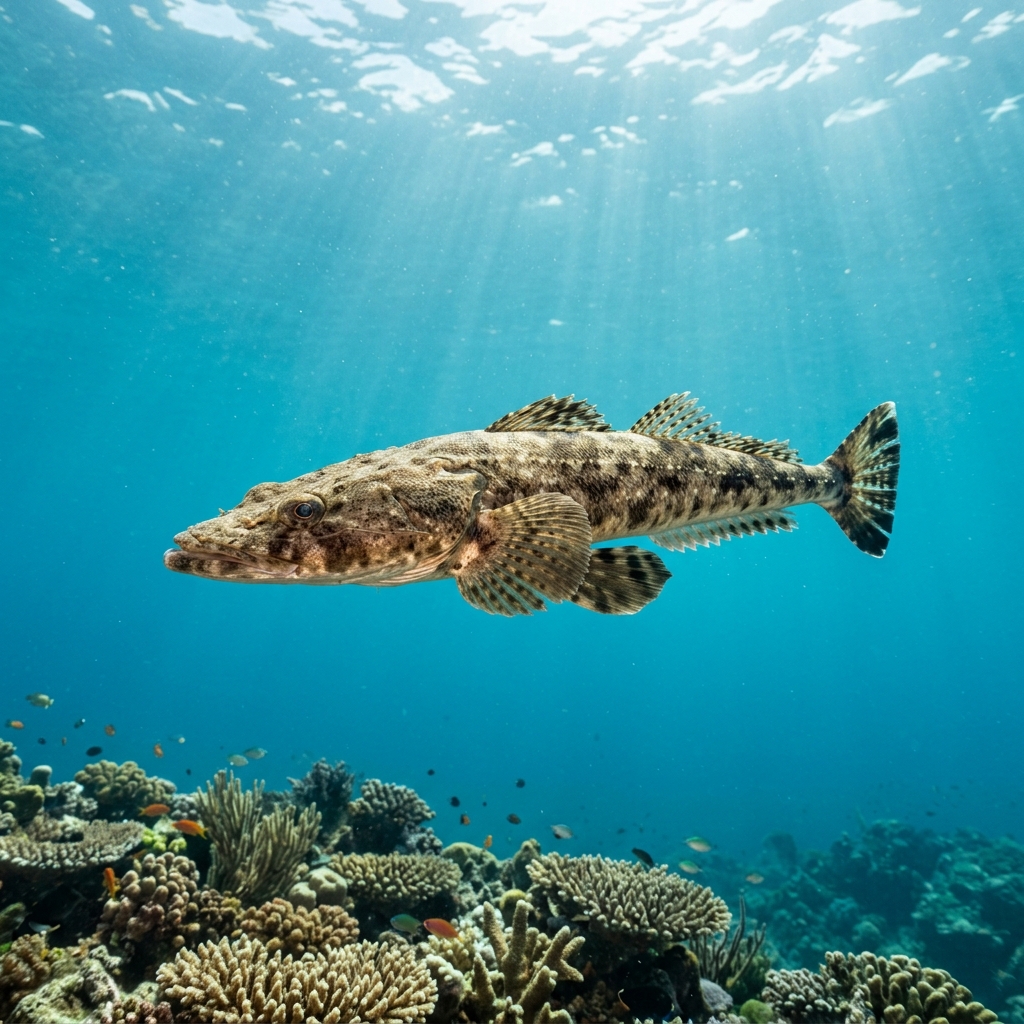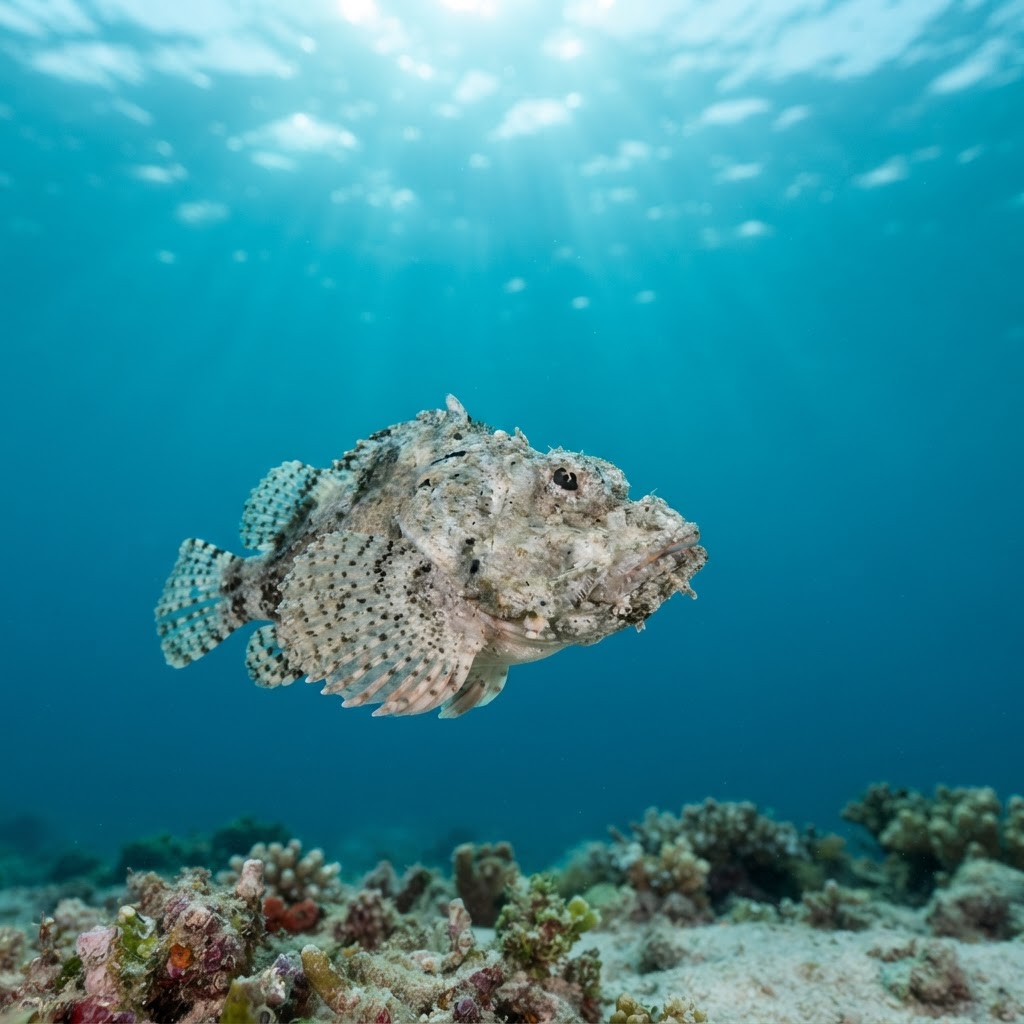
Scorpaenopsis macrochir
A rare, camouflaged find on Luzon reefs at 25-29C, this tiny scorpionfish rewards divers who slow down and scan the rubble.
Safety warning
Carries venomous spines along its dorsal fin, and its camouflage means the real risk is accidental contact from a hand or knee placed on rubble without looking first. Keep buoyancy tight near the bottom, avoid touching the substrate in muck-diving areas, and treat any sting as a medical issue requiring prompt attention, not a shrug-off.
If you're stung
Venomous spinesGeneral first-aid guidance, not a substitute for professional medical care. In an emergency, call your local emergency number.
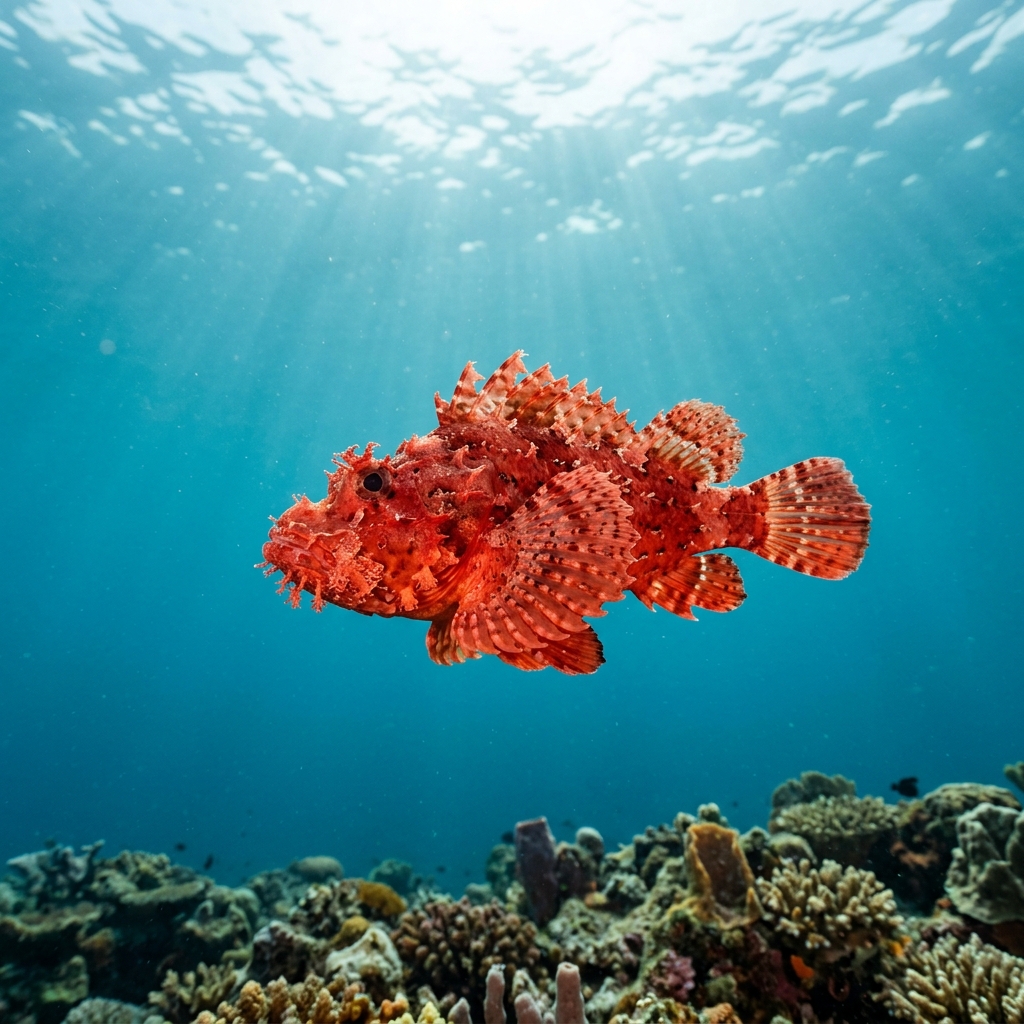
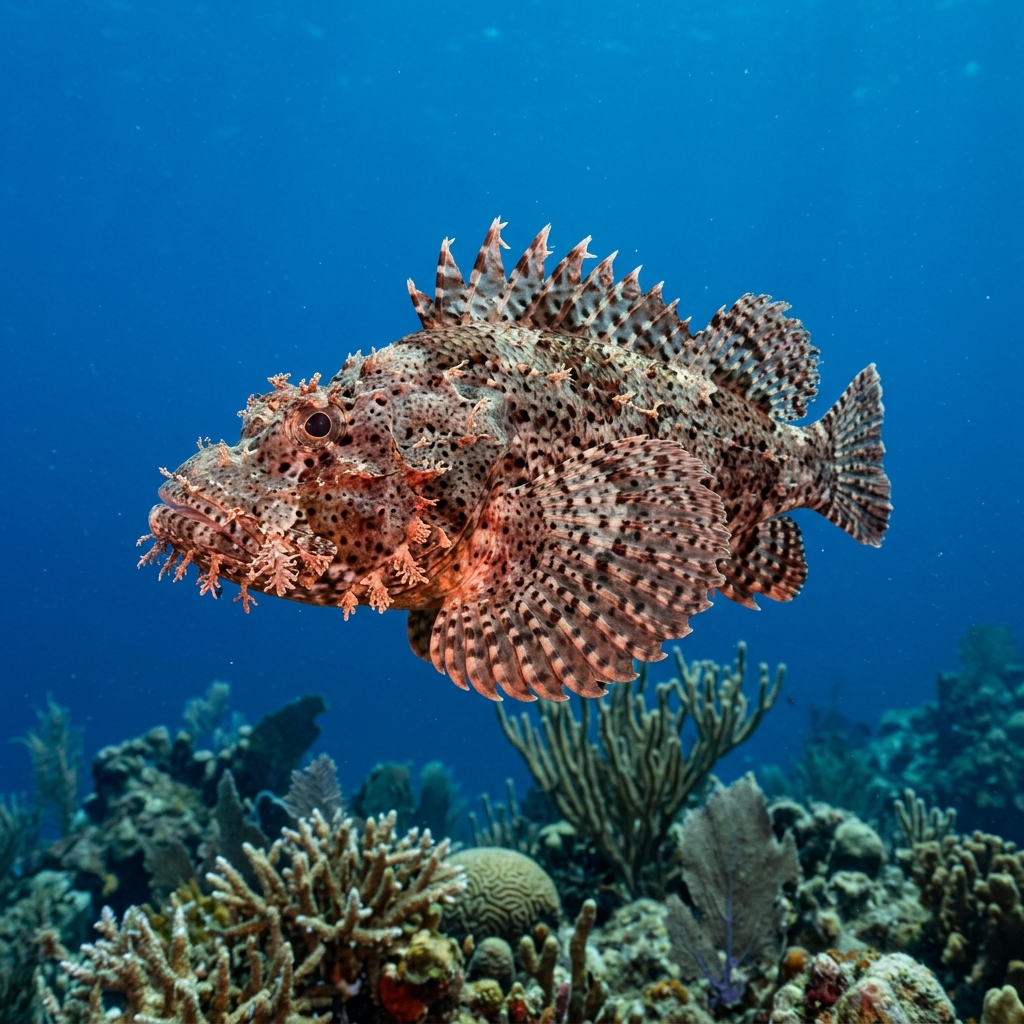
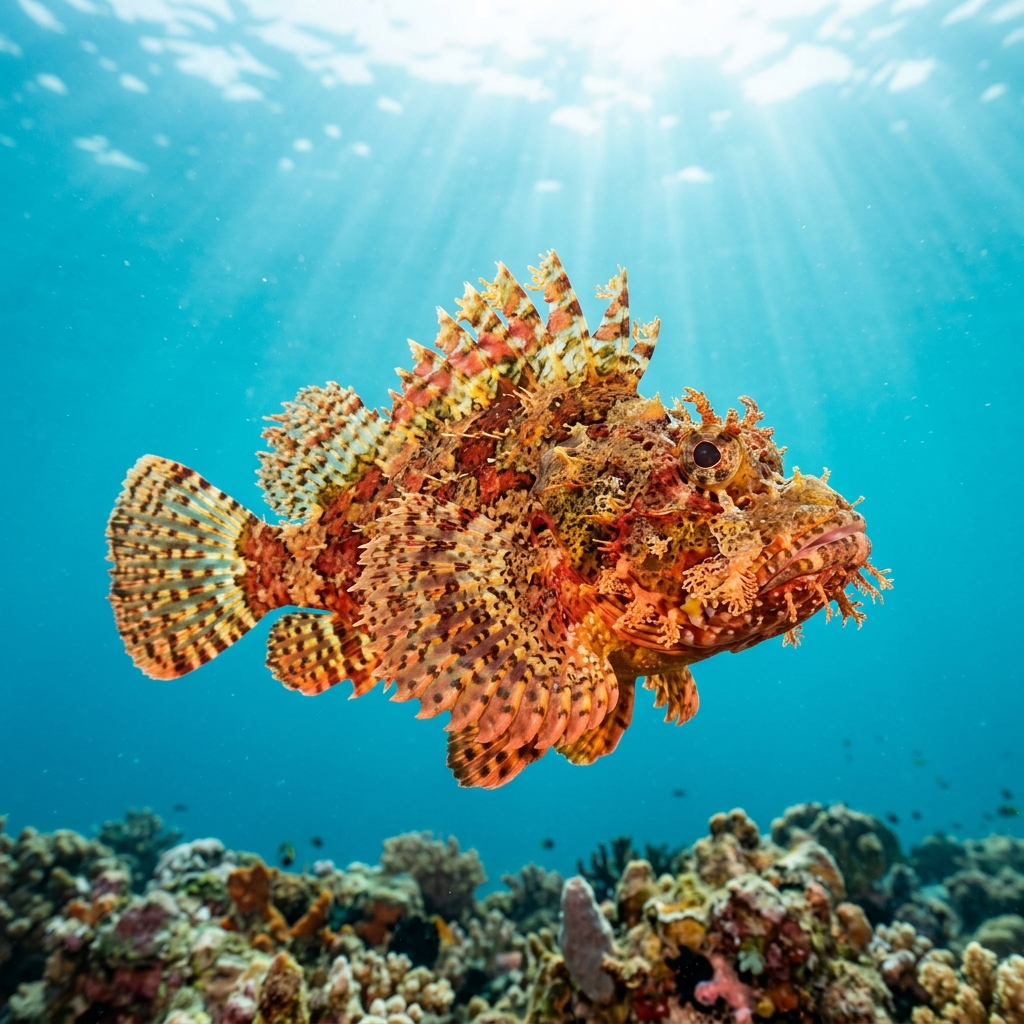
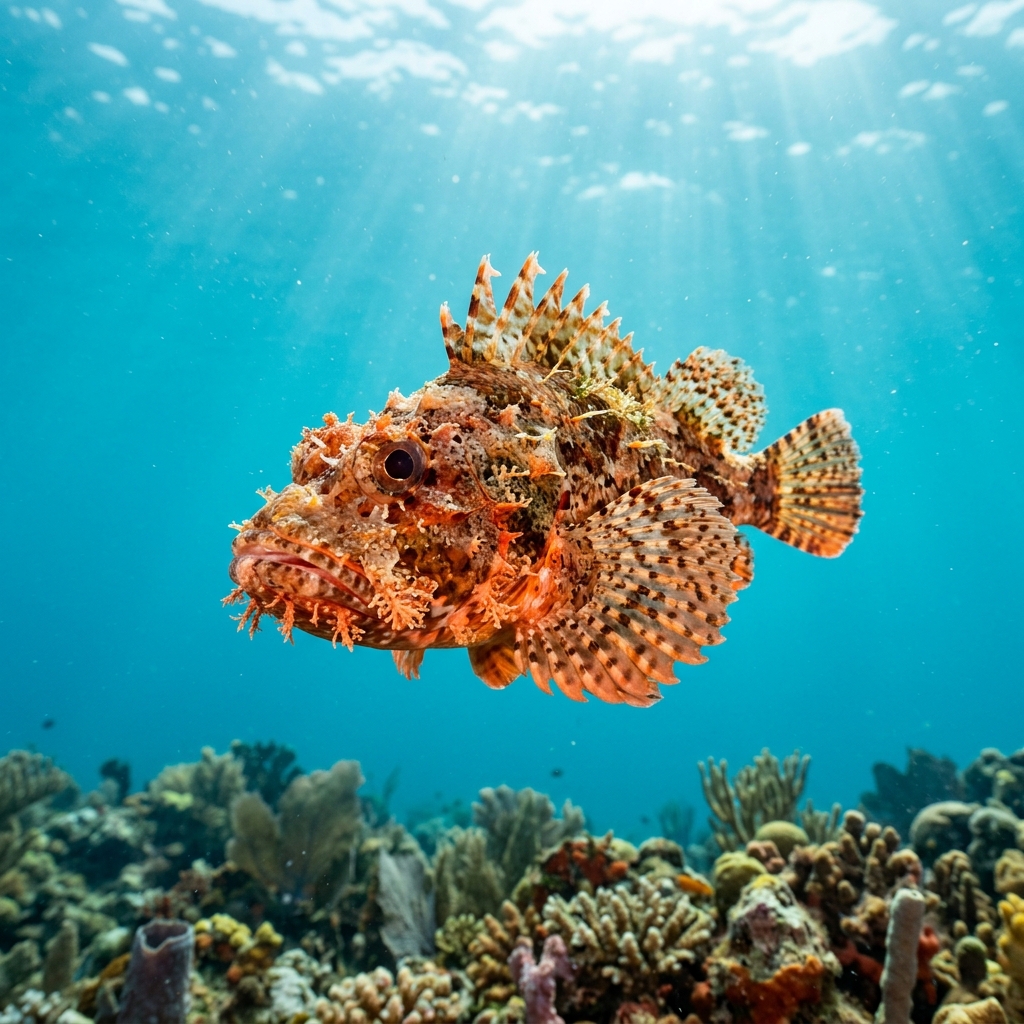
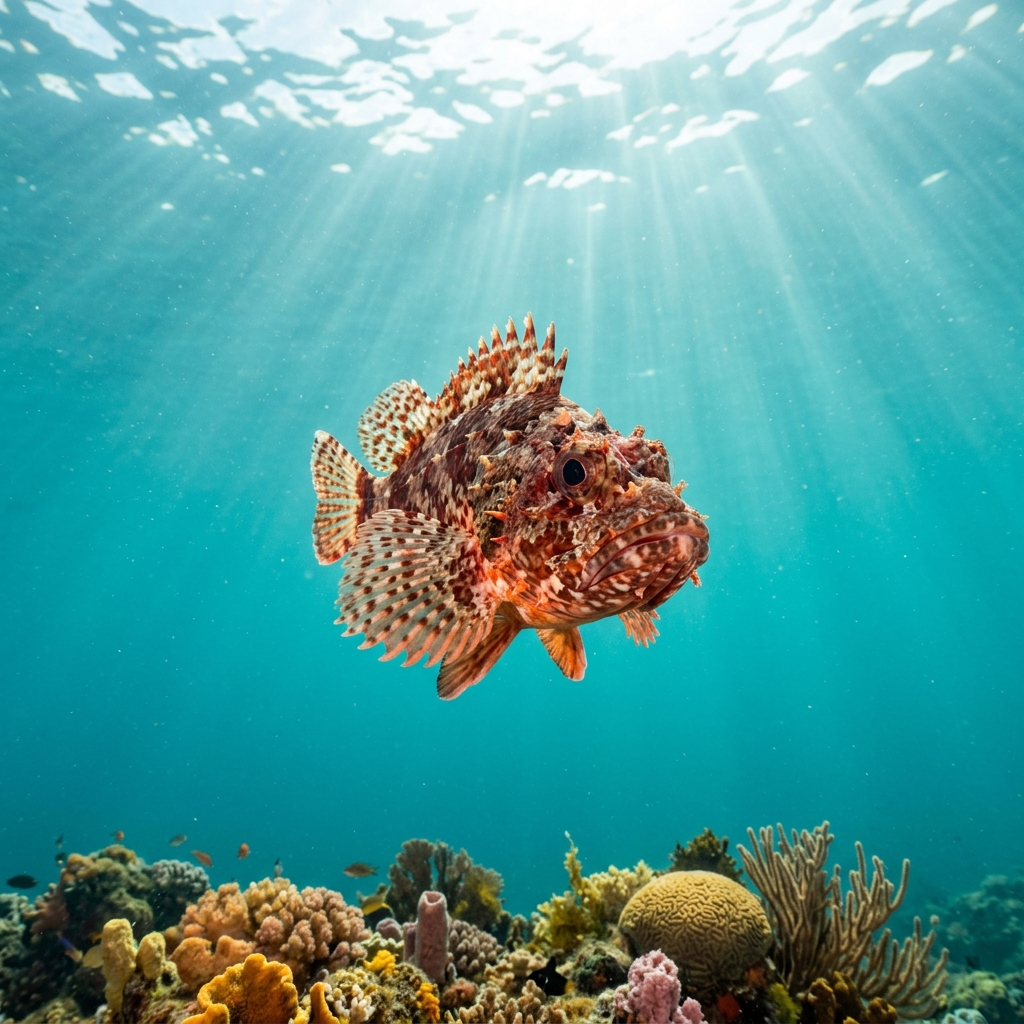
Tops out around 10 cm, with a mottled brown, reddish and grey body that breaks up its outline against rock and rubble. Like other scorpionfish it has a heavy, spiny head and a stocky, tapered body built for sitting motionless rather than swimming. The main giveaway is the lack of any obvious pattern to lock onto: it reads as a lump of algae-covered rubble until something about the shape looks slightly too symmetrical.
Expect it sitting still on rubble or low reef structure, relying on camouflage rather than movement to avoid attention. Like most scorpionfish it will hold its position even as divers approach closely, only shifting if directly disturbed. Best found by slow, methodical scanning of the substrate rather than mid-water searching.
Scorpionfish in this genus ambush prey by staying motionless for long stretches, letting small fish and crustaceans wander close enough to be taken in a single quick strike.
No clear seasonal pattern shows up in the sighting data, and the observed water temperature range of 25 to 28.9C sits comfortably within Luzon's year-round tropical conditions, so there's no strong reason to time a trip around a particular month.
Reef neighbours a diver could mistake it for. Use the identification notes above to tell them apart.
Sightings logged so far come from Luzon in the Philippines, currently the only confirmed spot for divers targeting this species. It's listed as rare even at the sites where it has been recorded, so this is very much a patient-search, muck-diving target rather than a reliable headline sighting.
Mapping where Flasher Scorpionfish is logged…
Confirmed sightings so far come from Luzon in the Philippines, where it turns up rarely on rubble and reef substrate. It's a species worth briefing your guide about in advance, since it takes a trained eye to spot.
There's no detected season in the sighting data, and water temperatures where it's been logged stay in the 25 to 28.9C range typical of Luzon reefs year-round, so any time of year is a fair shot.
Yes, it carries venomous dorsal spines like other scorpionfish. The danger is almost always accidental contact from divers not spotting it against rubble, so watch hand and knee placement near the bottom.
Look for a small, stocky fish around 10 cm with a mottled brown and reddish body and a spiny head, sitting motionless on rubble. There's no bold pattern to key on, so it's identified more by shape and stillness than colour.
They're small, typically reaching around 10 cm in length, which adds to how easily they disappear against rubble and broken reef.
They rely on ambush, staying completely still on the substrate until small fish or crustaceans come within striking range, then taking them in a single fast lunge.
Site and sighting data is aggregated from diver logs, iNaturalist and GBIF. For taxonomy and conservation status:
Madeira Rockfish
2,773 sites