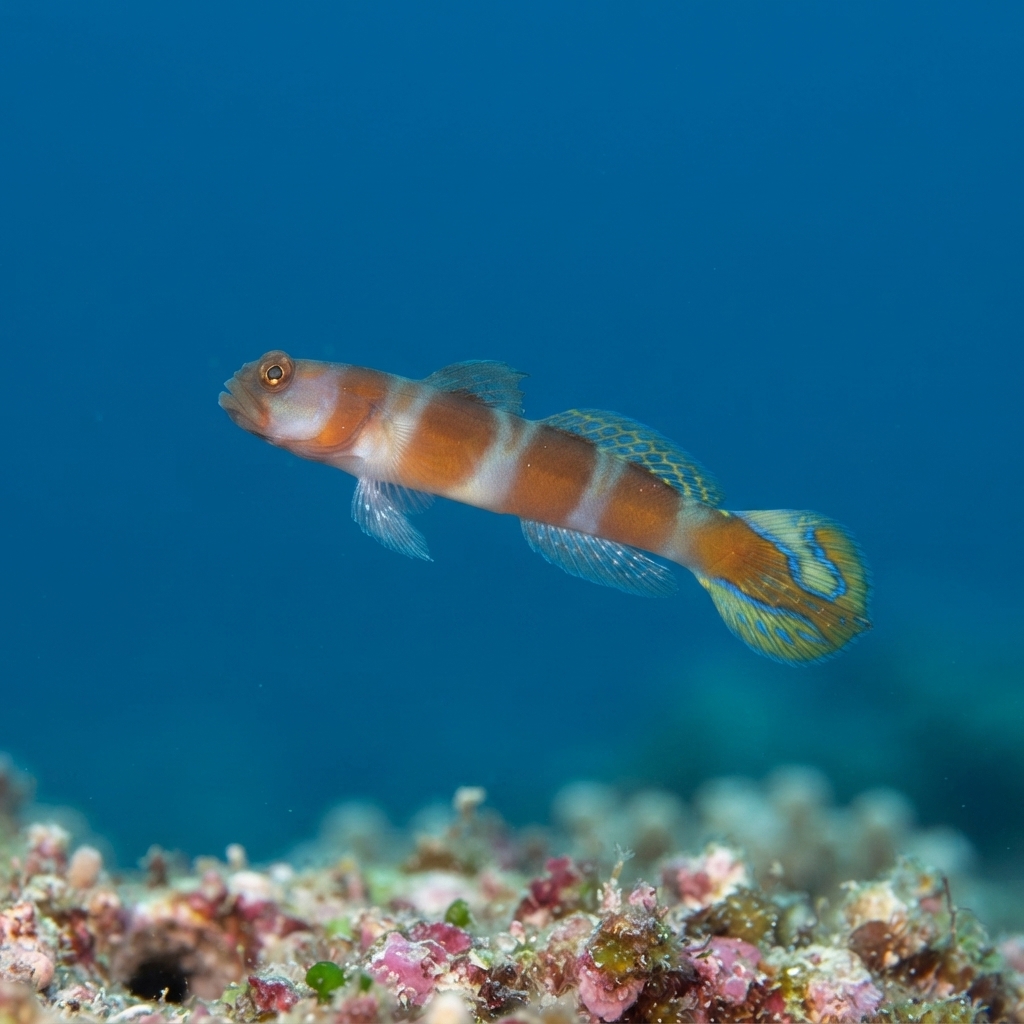
Amblyeleotris yanoi
A small, sandy-reef goby most reliably found in Bali, Indonesia, hovering near its burrow at 26.9-29°C year-round.
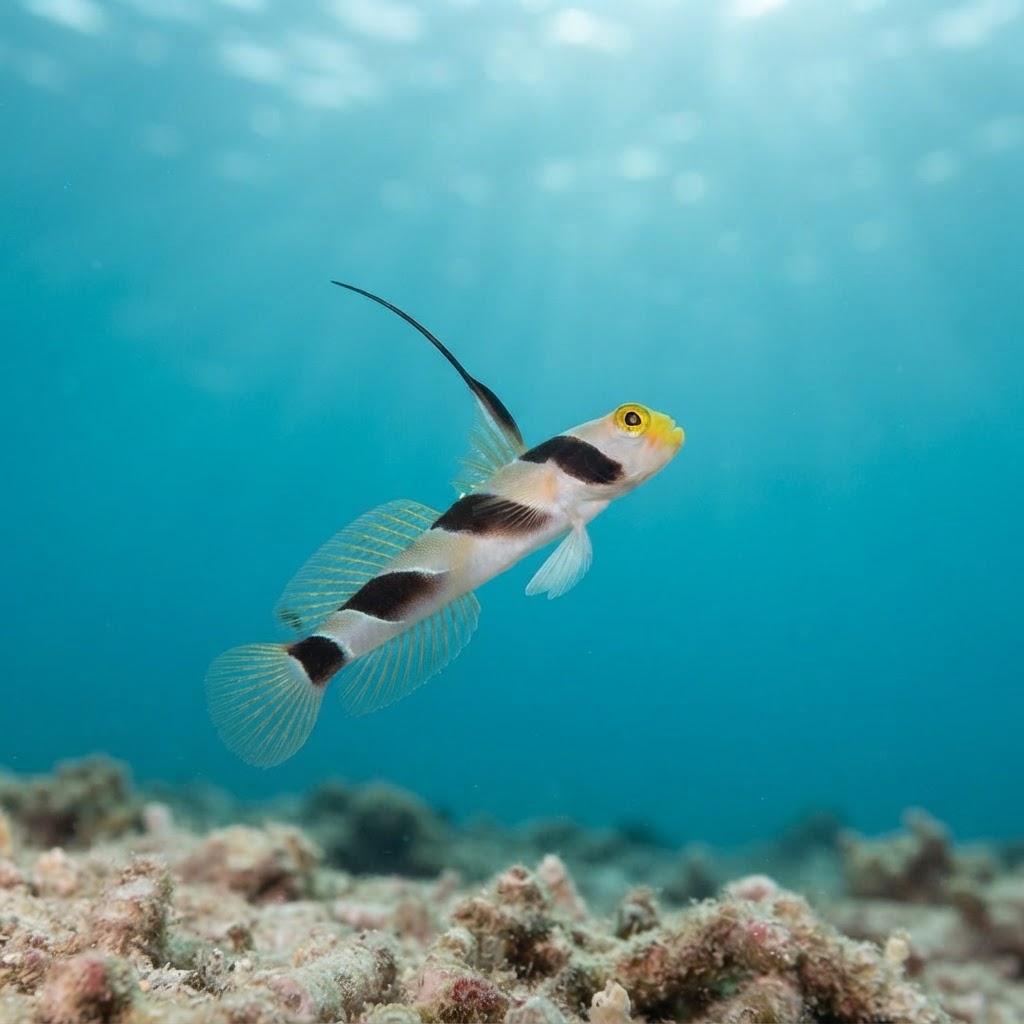
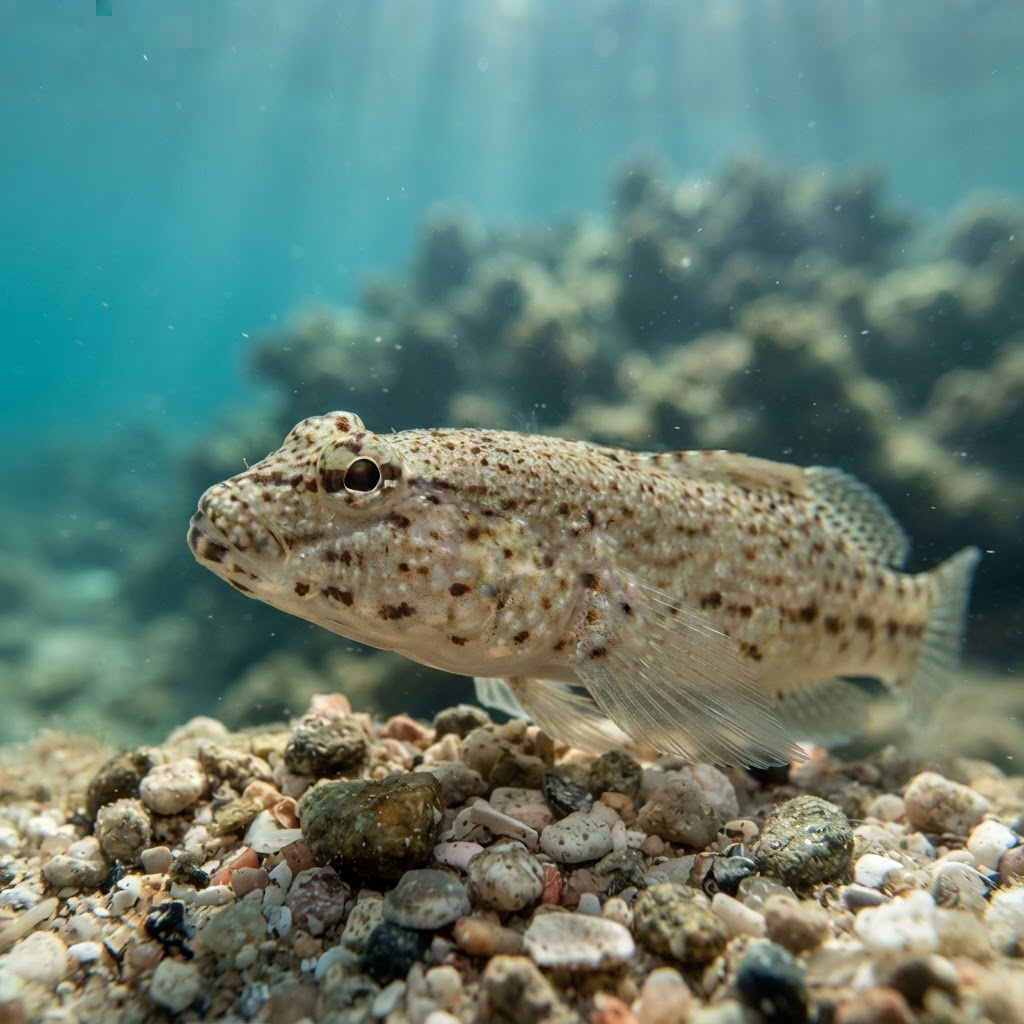
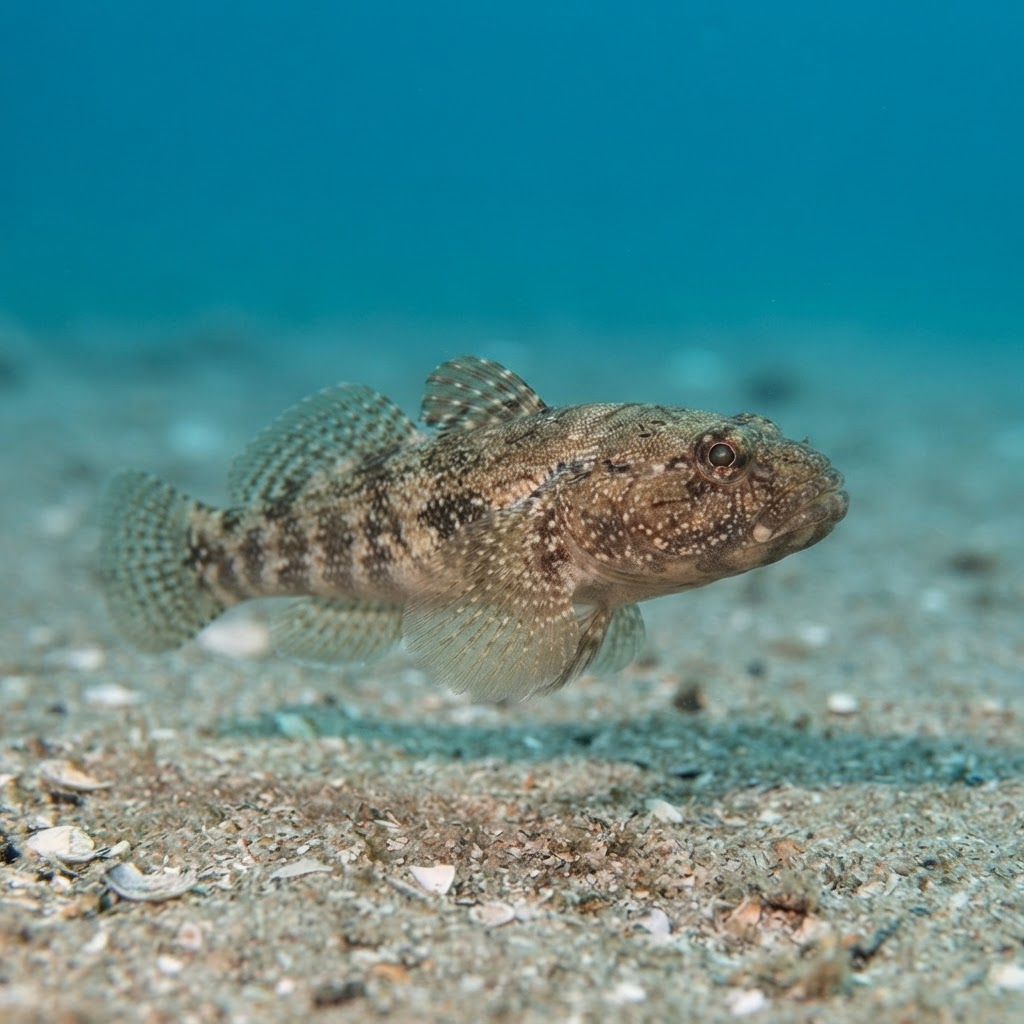
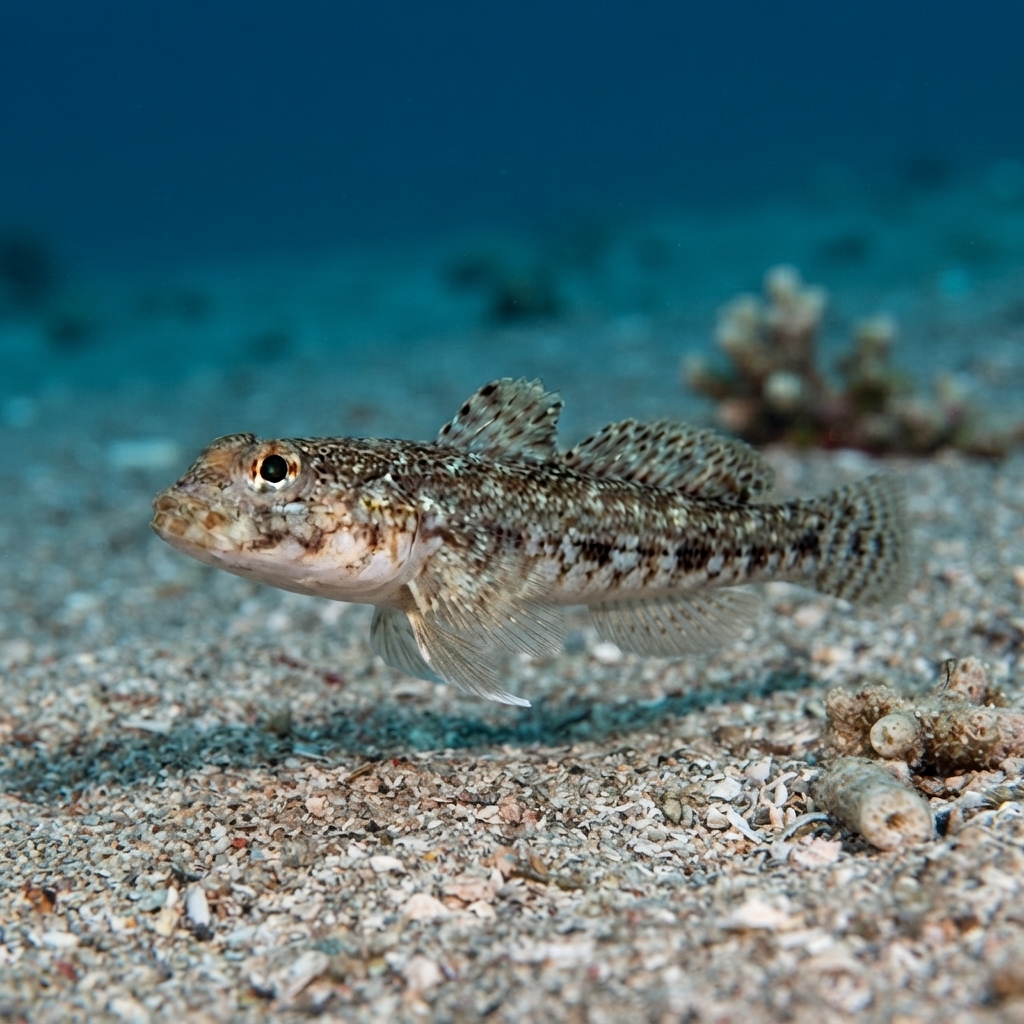
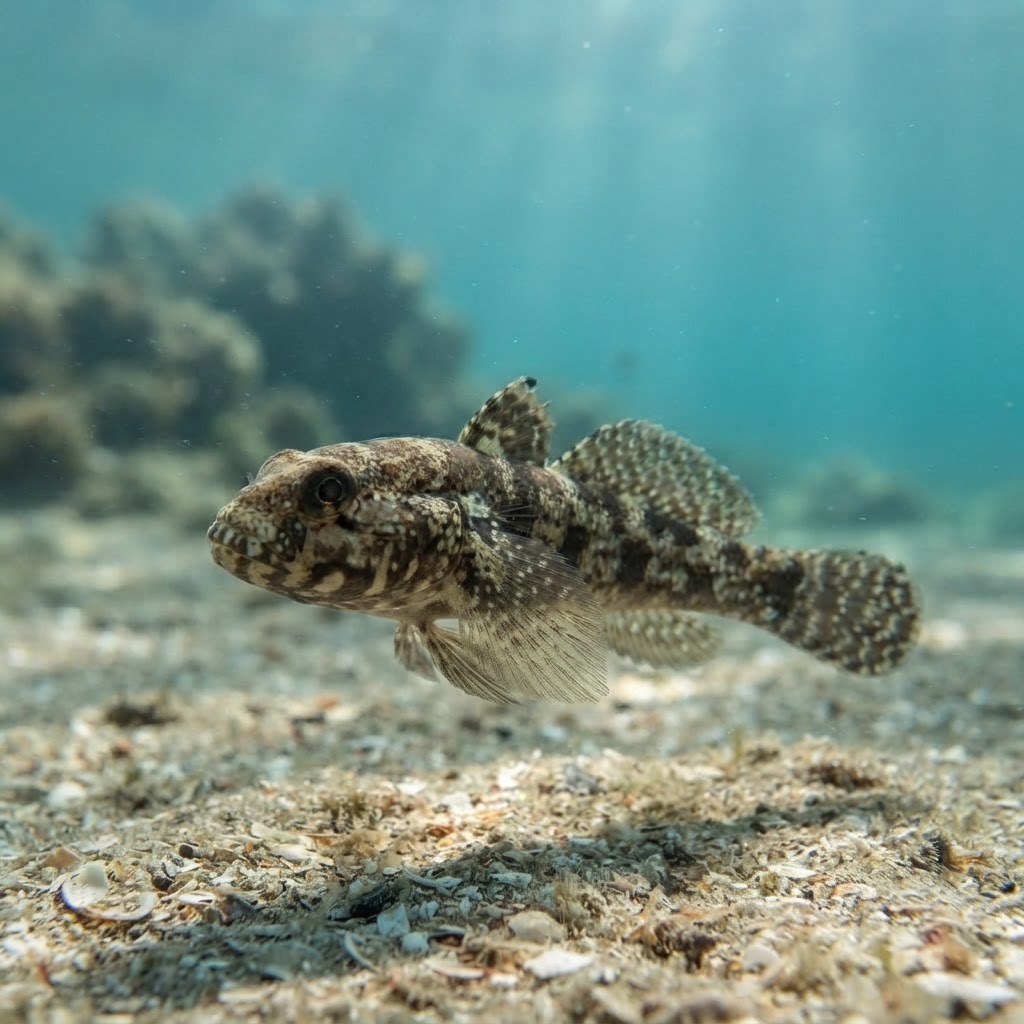
A slender, pale grey to sandy-coloured goby around 9 cm long, easiest to spot by its tall, dark-barred dorsal fin and a tail marked with bold dark bands or a flag-like blotch pattern. It holds a near-vertical posture just above its burrow entrance on sand or rubble, propped on extended pectoral fins. Look for the faint rows of dark spots along the flank that break up its outline against a light sandy bottom.
Spends most of its time hovering at the mouth of a shared burrow dug into sand or rubble, usually paired with a goby-blind shrimp that keeps the tunnel clear. It flicks back into the burrow at the first sign of a diver getting close, so a slow approach and low profile give you the best look before it retreats. Divers log it as uncommon at nearly every site where it appears, meaning a patient scan of sandy patches near reef edges is usually needed to turn one up.
Like other shrimpgobies, it shares its burrow with a burrowing shrimp in a cleaning-and-shelter partnership: the shrimp digs and maintains the tunnel while the goby stands guard and signals danger with a flick of its tail.
No clear seasonal pattern shows up in the sighting data, and it lives comfortably in the 26.9 to 29°C range typical of Indonesian and Philippine reefs year-round, so any month is fair game.
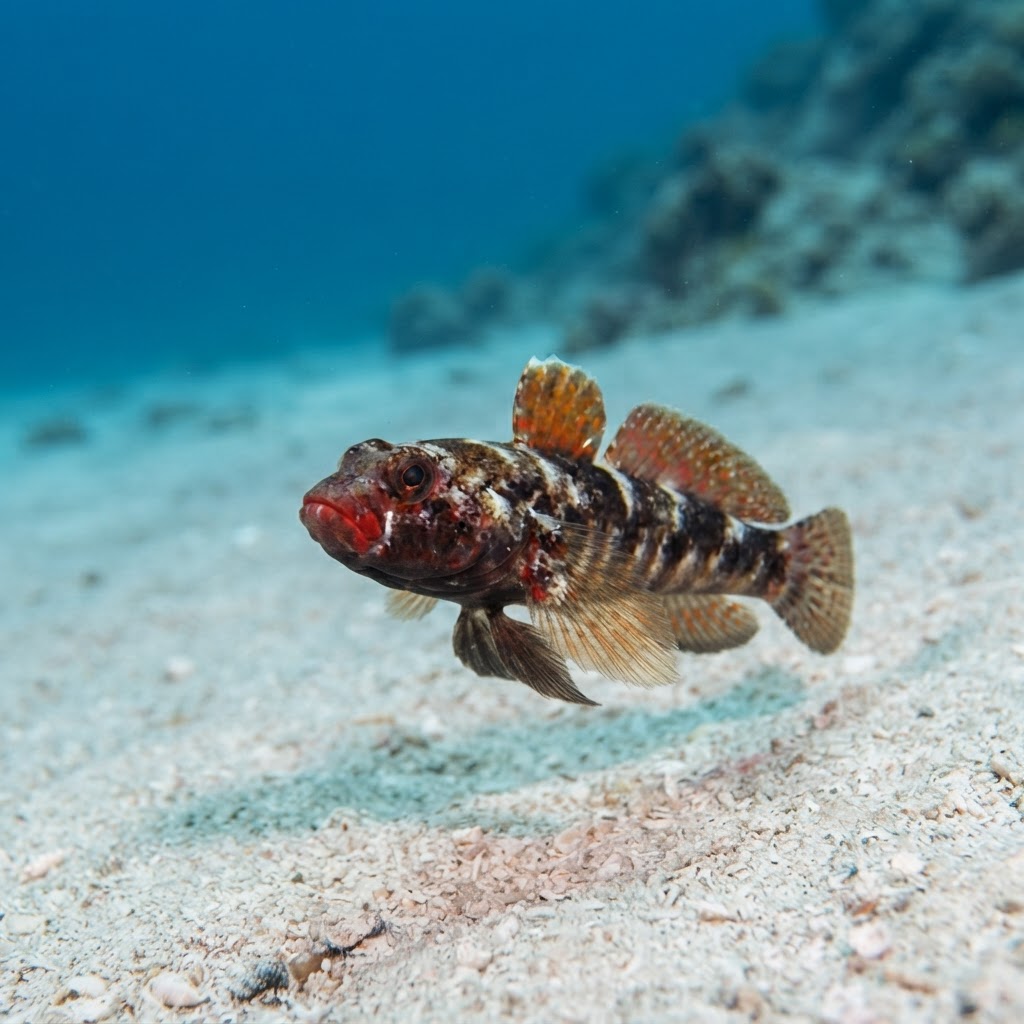
Reef neighbours a diver could mistake it for. Use the identification notes above to tell them apart.
Most reliably logged in Bali, Indonesia, which accounts for the bulk of recorded sightings, with further records from Sulawesi. Outside Indonesia, it turns up on sandy reef slopes in Luzon, Philippines, so both countries are solid bets if you search sand patches carefully.
Mapping where Flagtail Shrimpgoby is logged…
Bali, Indonesia is the most consistent location, with additional sightings from Sulawesi and from Luzon in the Philippines. Look on sandy slopes and rubble patches near reef structure rather than on the coral itself.
There is no strong seasonal signal in the sighting data, and water temperatures on its home reefs stay in a comfortable 26.9 to 29°C range all year, so it can be looked for on any dive trip to Bali or the Philippines.
Look for a small, pale grey goby around 9 cm long hovering upright at a burrow entrance on sand, with a tall barred dorsal fin and a dark-banded tail. It darts into its burrow quickly, so spotting the tail pattern before it disappears is the key ID moment.
They reach about 9 cm in length, making them one of the smaller shrimpgobies divers encounter on sandy reef flats.
It shares its burrow with a burrowing shrimp that excavates and maintains the tunnel while the goby watches for predators, a partnership typical of the whole shrimpgoby group.
Site and sighting data is aggregated from diver logs, iNaturalist and GBIF. For taxonomy and conservation status:
Slender Goby
806 sites