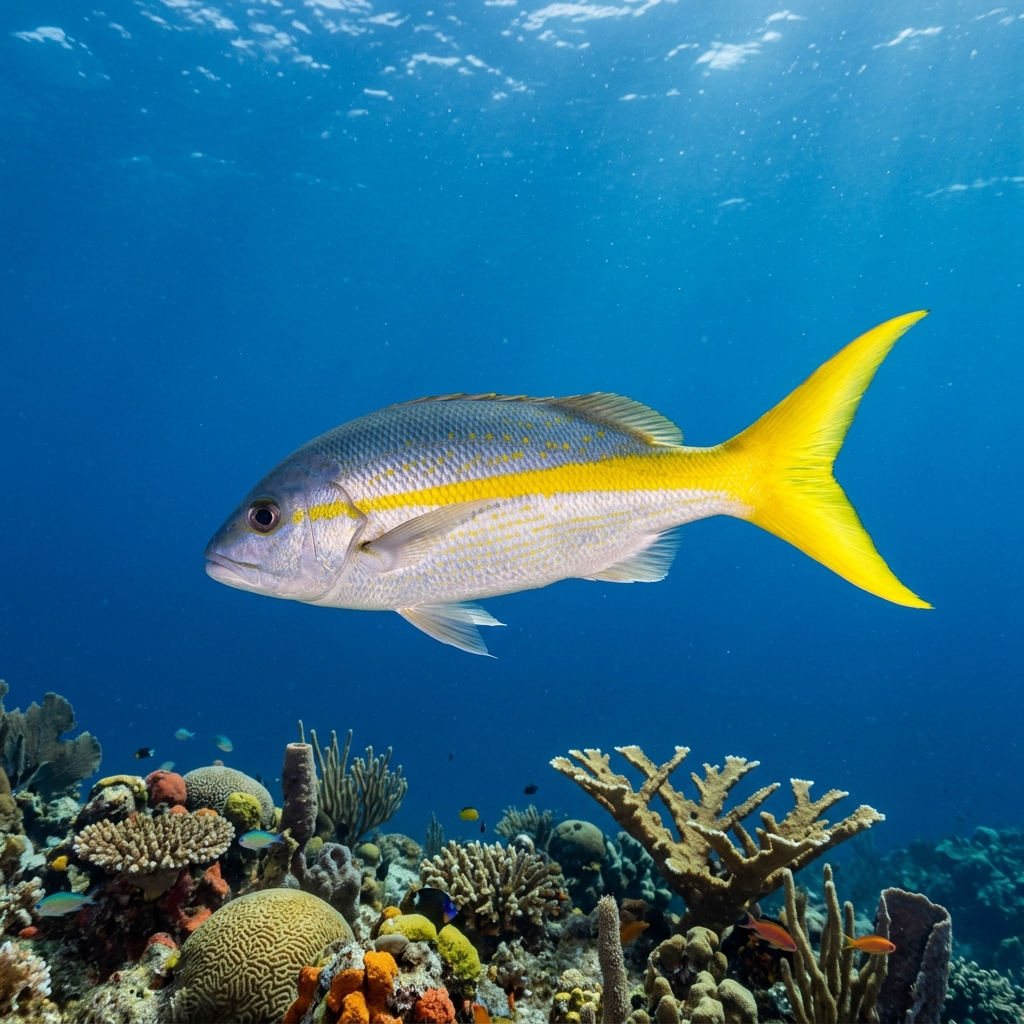
Lutjanus quinquelineatus
Yellow-striped reef fish common on Indo-Pacific reefs; look for it schooling in Queensland, Palawan and Sulawesi year-round.
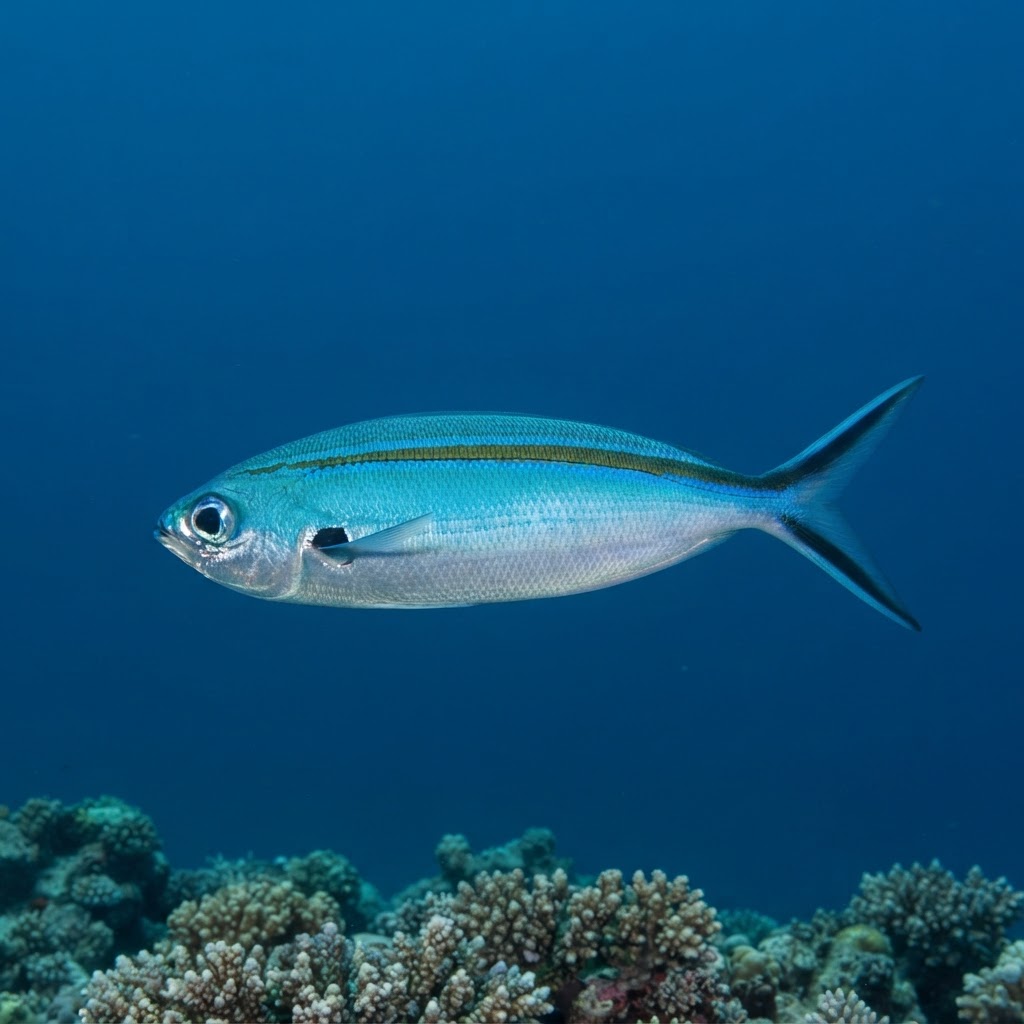
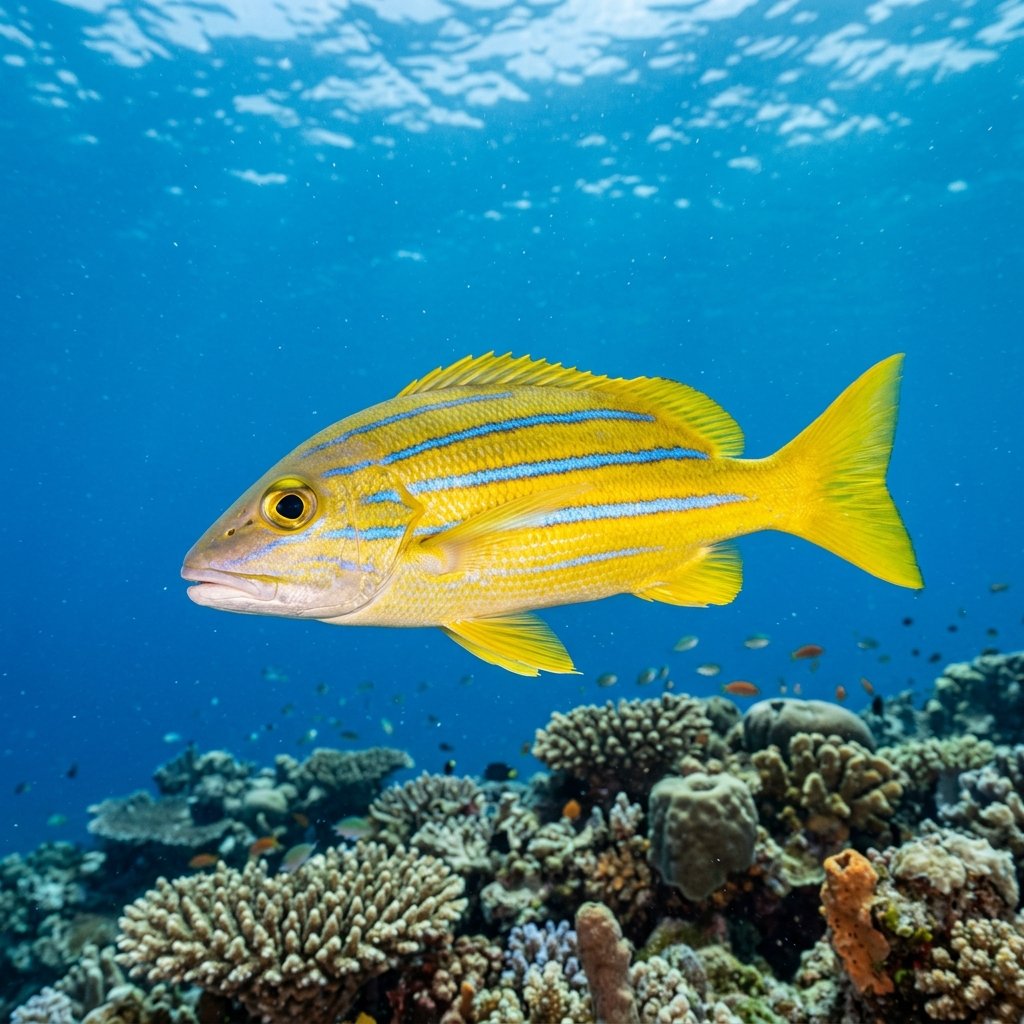
A slim, silvery-blue snapper with five bright yellow stripes running the length of its body from nose to tail, plus a small black spot near the base of the dorsal fin that some individuals lose with age. It grows to around 26 cm, so in the water it reads as a compact, fast-moving reef fish rather than a bulky snapper. The clean, evenly spaced stripes and pale blue background are the main things to key on.
Usually spotted hovering in loose groups over reef slopes and around coral bommies, sticking fairly close to structure rather than roaming open water. It tends to hold its distance from divers without bolting, making it an easy fish to watch and photograph if you approach slowly. Sightings skew toward daytime reef dives at moderate depth rather than the shallows or the deep edge of its range.
Despite the name, stripe count on individual fish can vary slightly, so divers sometimes mistake it for close relatives until they check the black dorsal spot and overall stripe pattern together.
No strong seasonal pattern shows up in the data, and with a comfortable range of roughly 23 to 29 C it stays on tropical reefs year-round, so any month works for a dive trip.
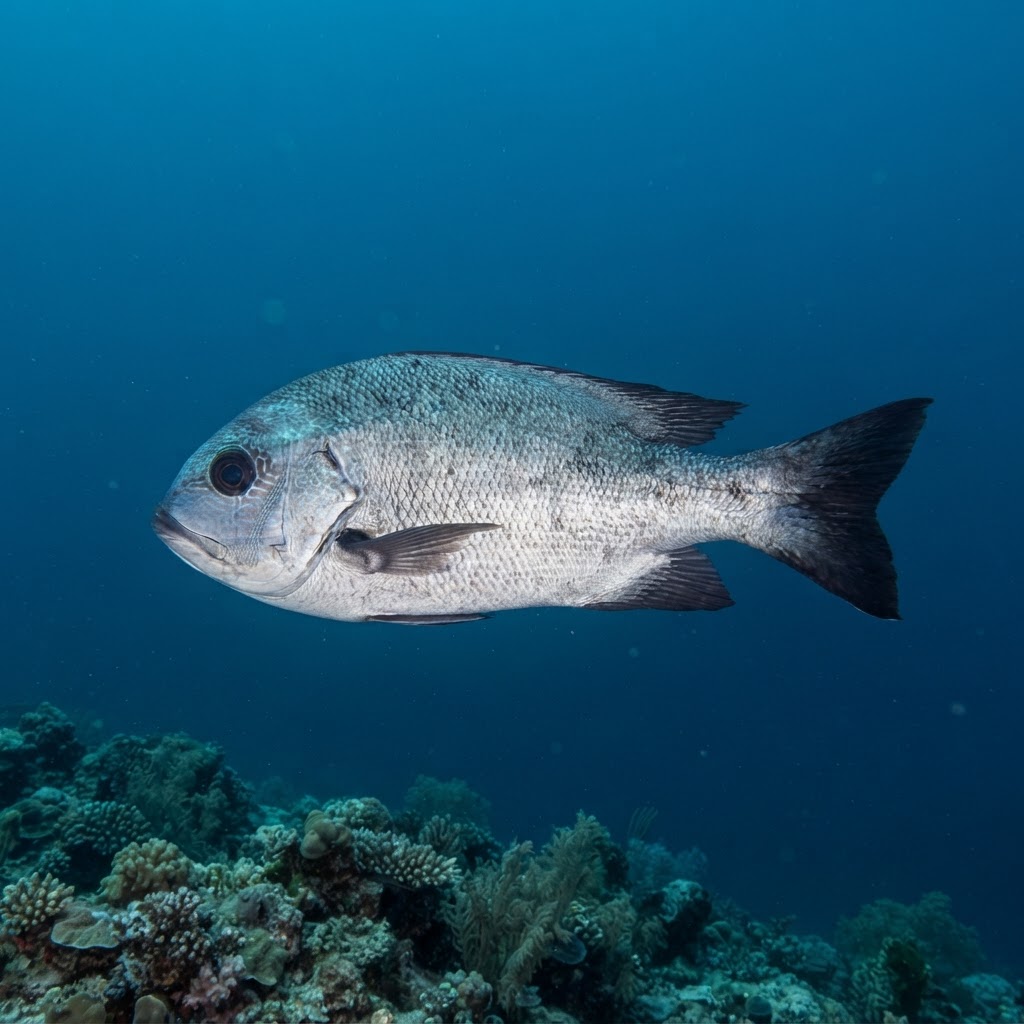
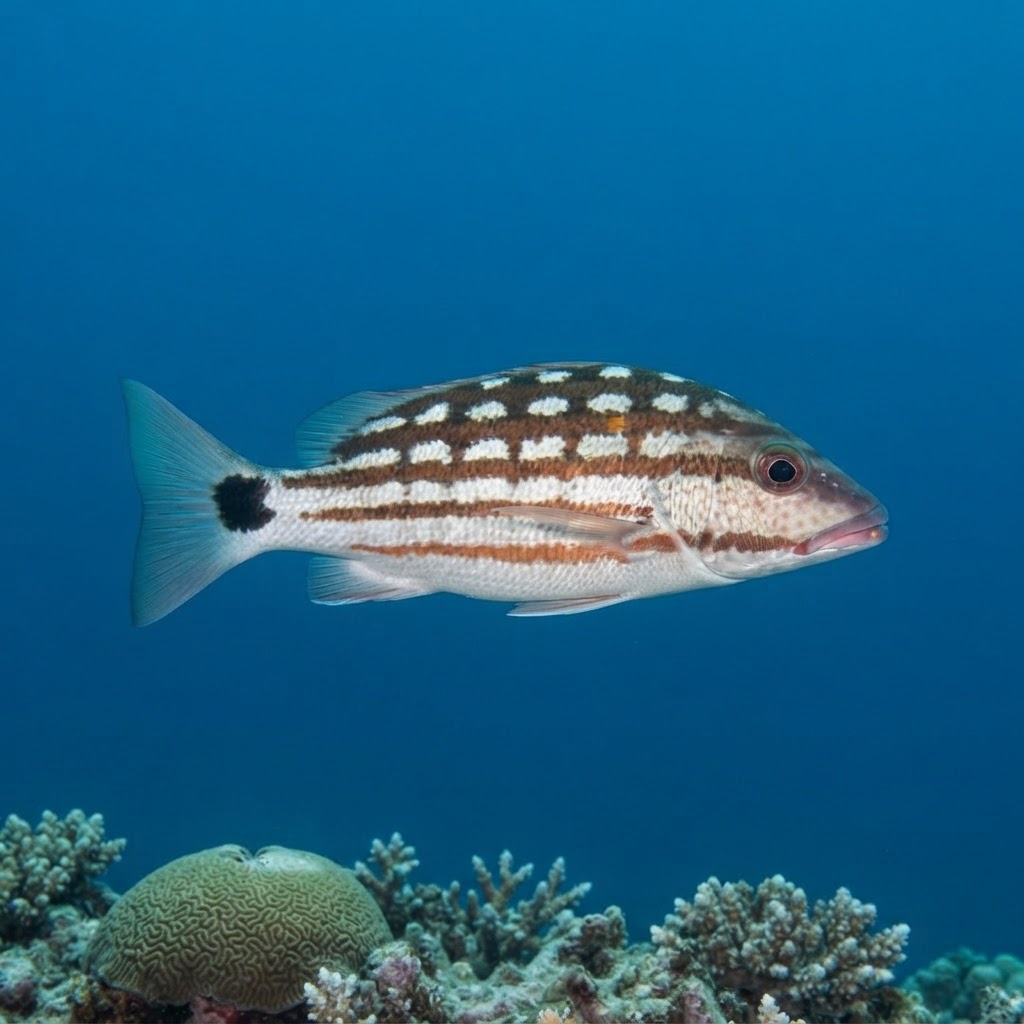
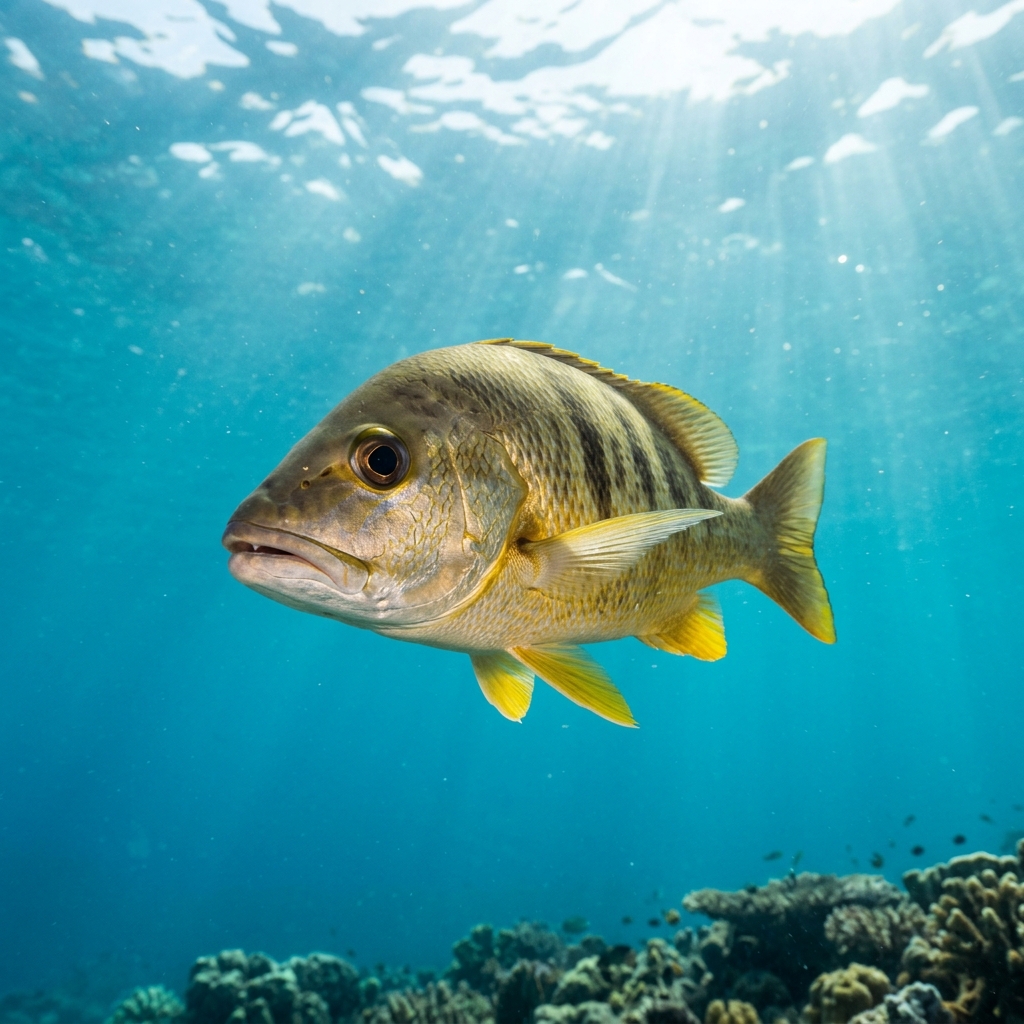
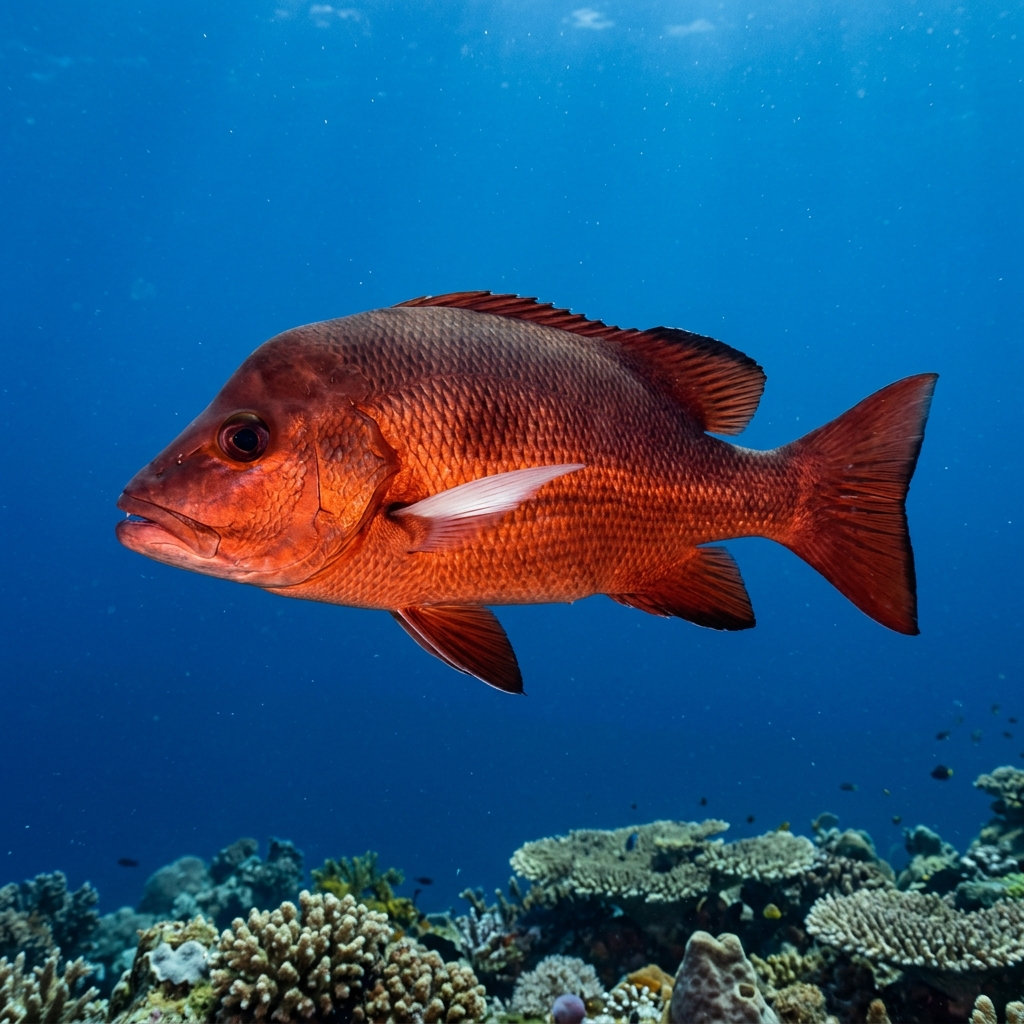
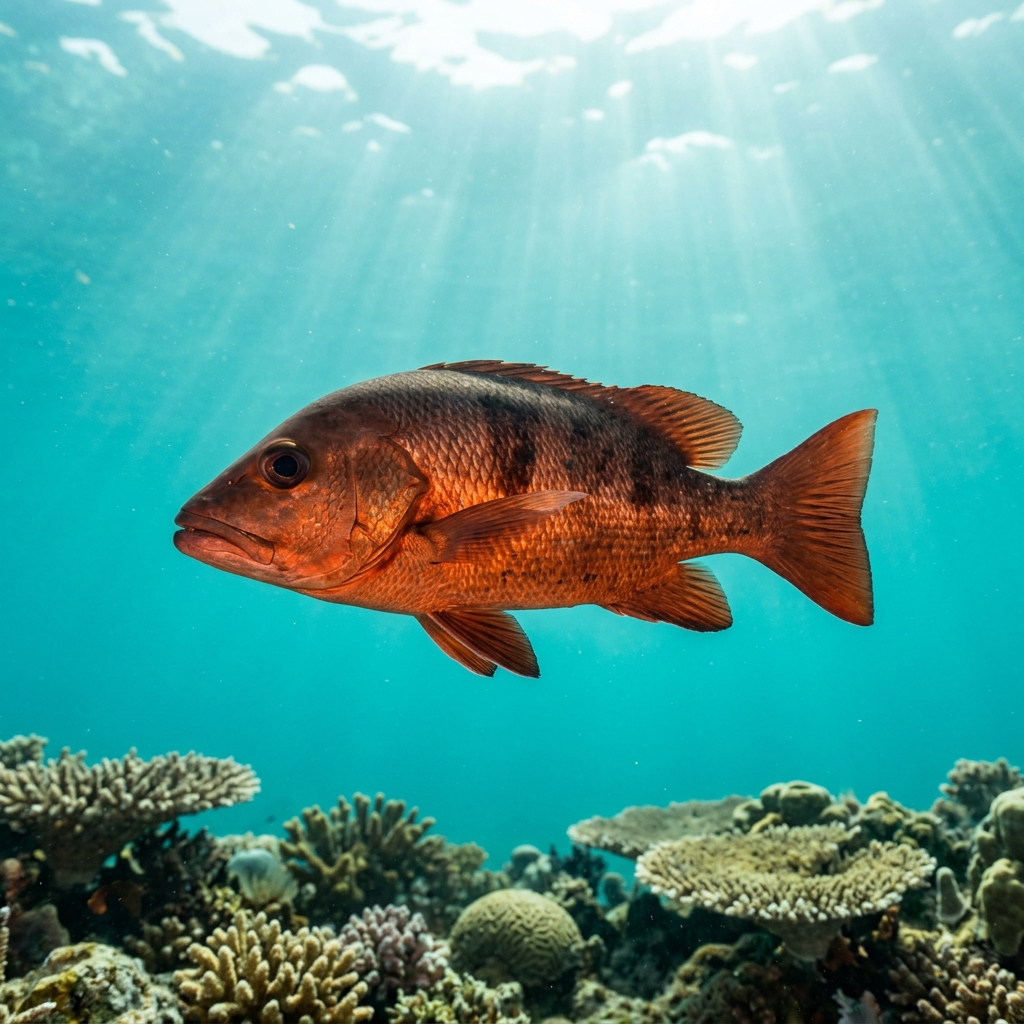
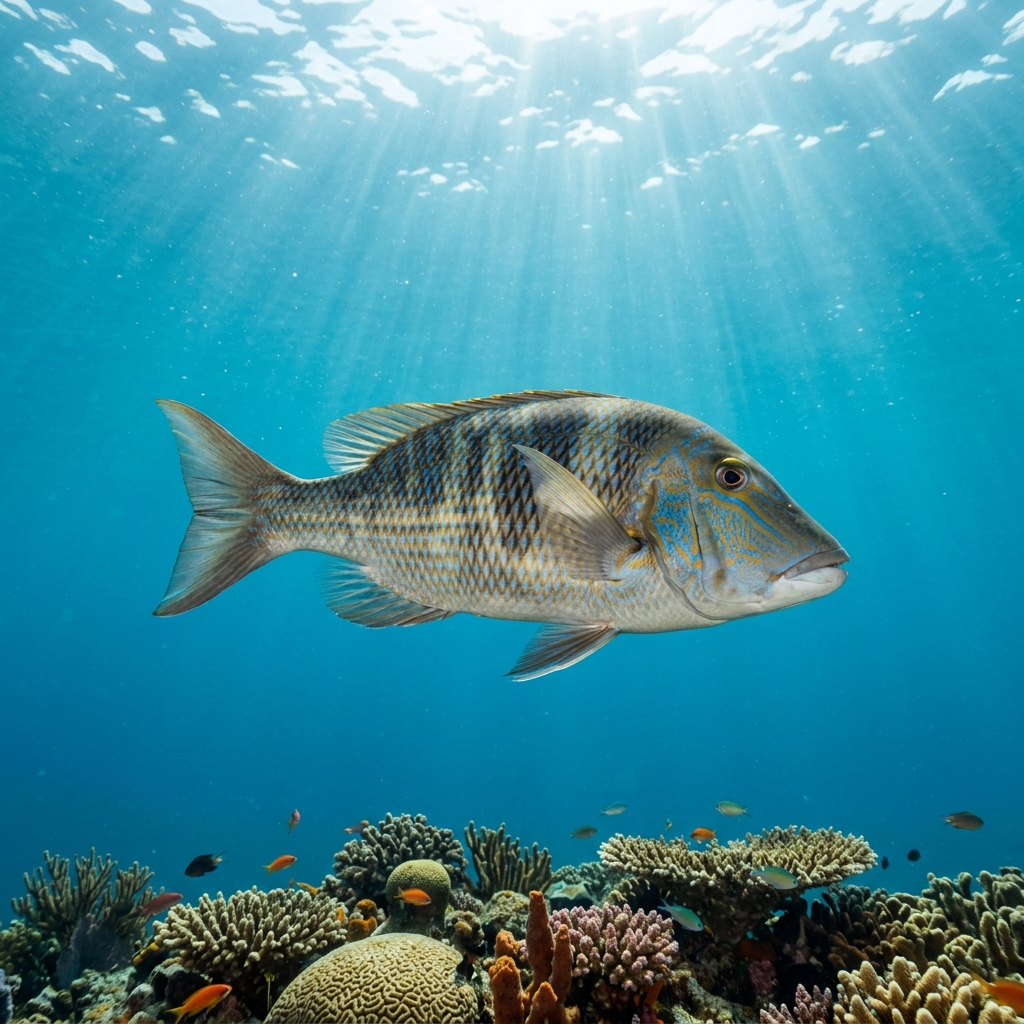
Reef neighbours a diver could mistake it for. Use the identification notes above to tell them apart.
Most reliably logged across the Philippines, particularly Luzon, Palawan, Mindanao and the Visayas, with strong populations also recorded in Indonesia (notably Sulawesi and Sumatra) and Australia, especially Queensland. Thailand, Malaysia, Japan's Okinawa and Ryukyu Islands, India and Vietnam also produce regular sightings.
Mapping where Five-lined Snapper is logged…
Best chances are in the Philippines (Luzon, Palawan, Mindanao, Visayas), Indonesia's Sulawesi and Sumatra, and Queensland in Australia. It also turns up regularly in Thailand, Malaysia, Japan's Ryukyu Islands, India and Vietnam.
There is no clear seasonal spike in sightings, and its warm-water niche of roughly 23 to 29 C means it stays put on tropical reefs all year, so you can plan a trip any month.
Look for a slim, silvery-blue body about 26 cm long with five bright yellow stripes running head to tail and a small black spot near the dorsal fin. It usually hovers in small groups close to reef structure rather than swimming in open water.
They typically reach around 26 cm, making them a mid-sized reef fish that is easy to overlook among bigger snappers and fusiliers on the same reef.
No, they pose no threat to divers and are not known for aggressive or defensive behaviour around people. You can approach and photograph them without any special precautions.
Site and sighting data is aggregated from diver logs, iNaturalist and GBIF. For taxonomy and conservation status:
Bluestriped Snapper
2,054 sites