Caesio caerulaurea
Torpedo-shaped reef fish with a gold stripe, schooling year-round in warm water from Malaysia's east coast to the Visayas and Raja Ampat.
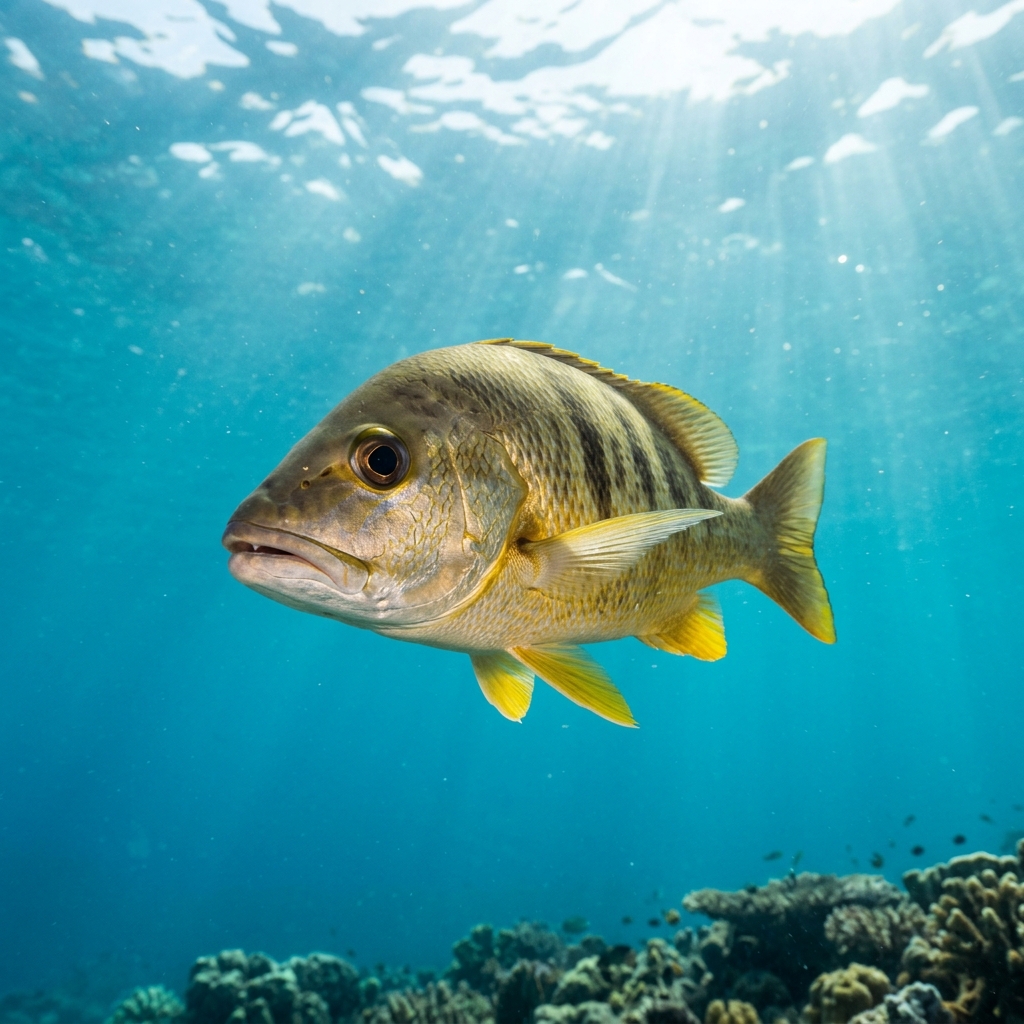
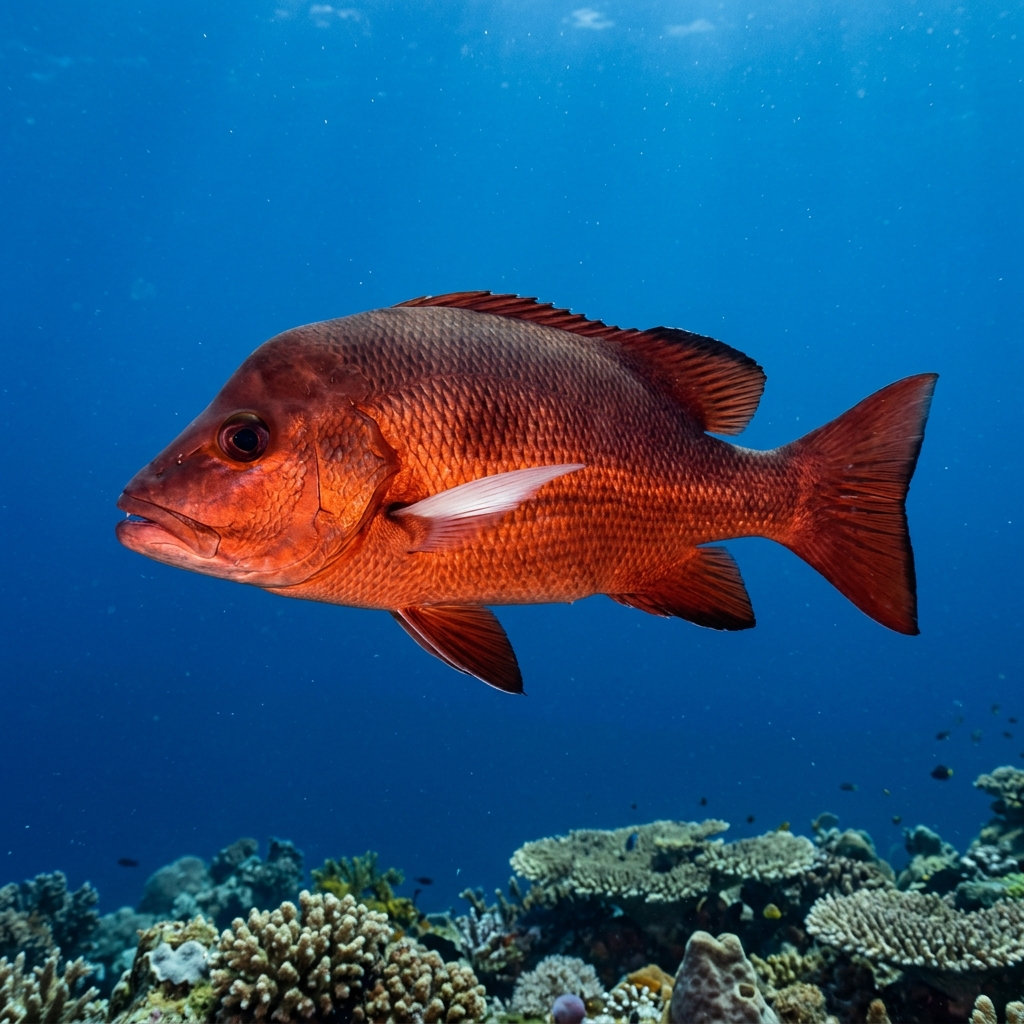
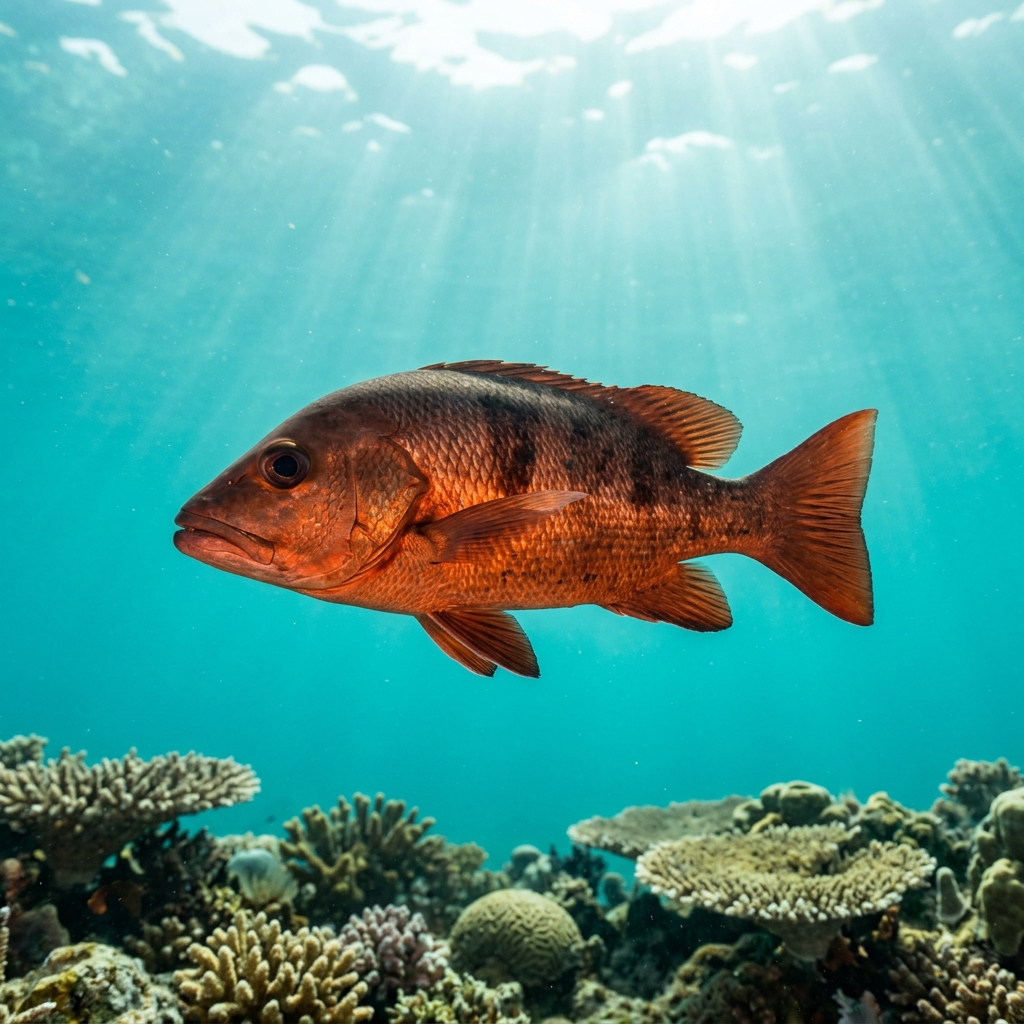
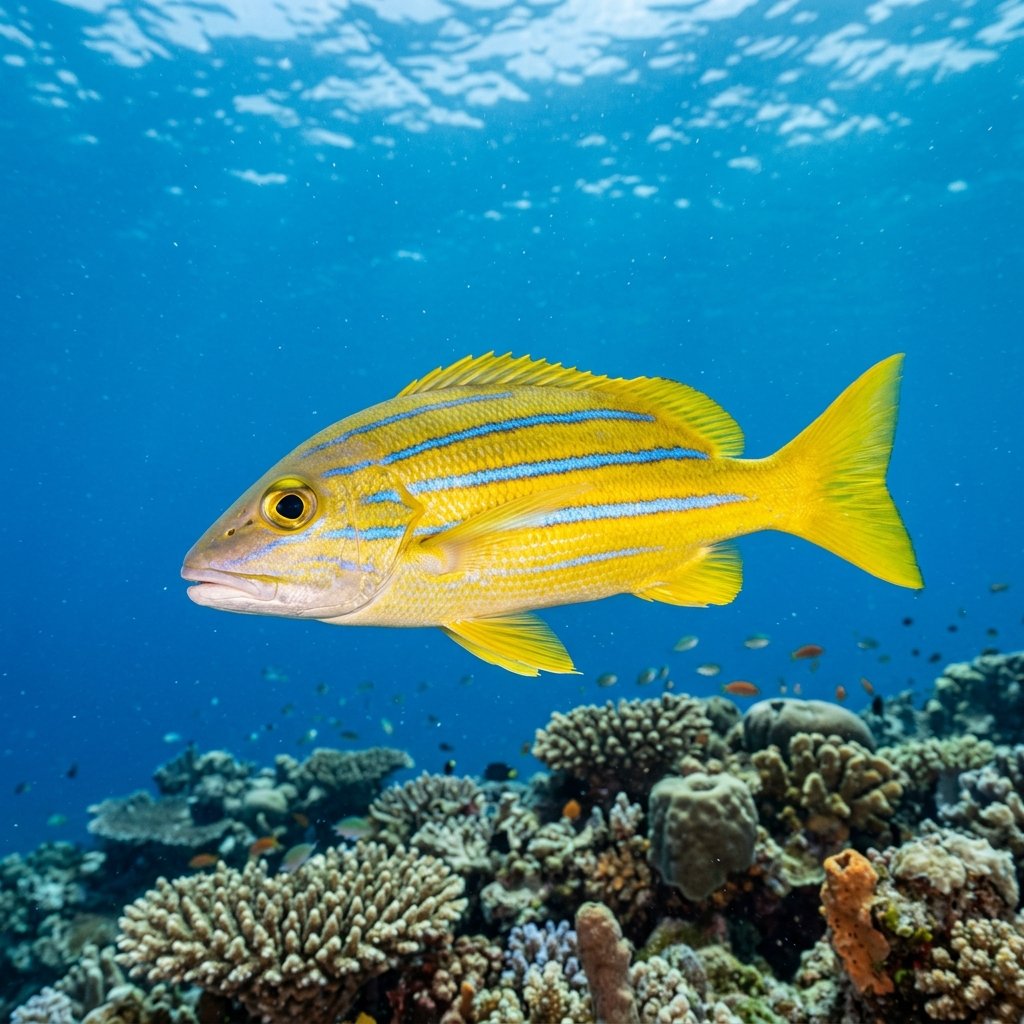
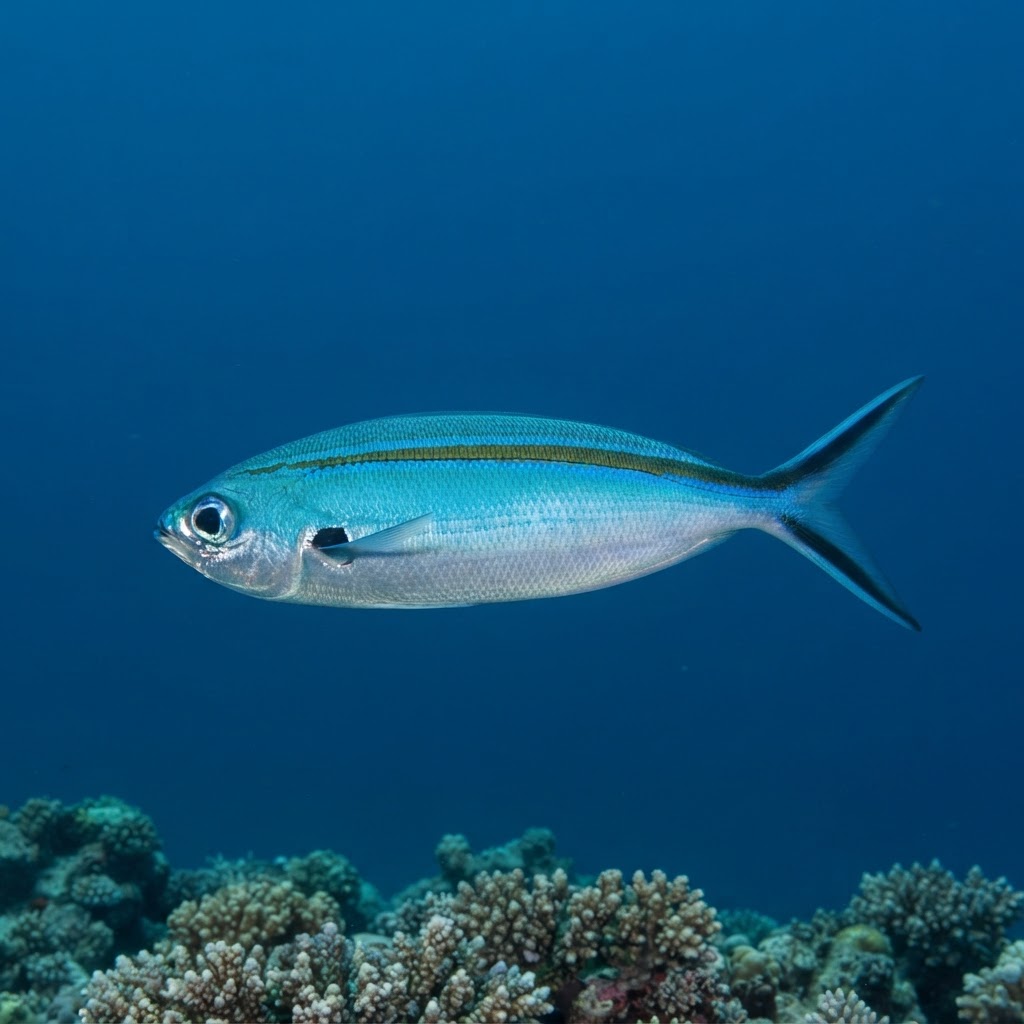
Look for a slim, torpedo-shaped body around 30 cm long with a blue-green back and a bright gold-yellow stripe running along the upper side from eye to tail. The tail fin is deeply forked and often edged in black, which helps separate it from plainer schooling fish at a distance. It almost always turns up in loose to tight schools hanging over reef slopes rather than as a lone fish.
Expect to find it schooling in mid-water off reef slopes and drop-offs, often mixing with other fusiliers and small snappers while picking plankton out of the current. Schools generally hold their shape and drift away from divers rather than scattering, so a slow approach keeps them close. Most sightings are on daytime dives, with activity picking up wherever current sweeps food past the reef edge.
Fusiliers feed by picking zooplankton straight out of open water rather than off the reef itself, which is why you'll usually see them stationed in the current just off the drop-off instead of grazing the substrate.
No strong seasonal pattern shows up in the data, and with a comfort range of roughly 24.7 to 29 C it stays on tropical reefs year-round, so any month works at these destinations.
Most reliably logged along Peninsular Malaysia's east coast and across the Visayas in the Philippines, with strong numbers also in Indonesia's Raja Ampat and Nusa Tenggara, Queensland's reefs, and around Koh Tao in Thailand. Smaller but consistent populations show up in Bali and Palau's Rock Islands, making this a species you can plan around in most Coral Triangle destinations.
Mapping where Blue and Gold Fusilier is logged…
It's most consistently seen along Malaysia's east coast, through the Visayas in the Philippines, and across Raja Ampat and Nusa Tenggara in Indonesia. Queensland's reefs and Koh Tao in Thailand are also reliable spots, with smaller populations in Bali and Palau.
There's no strong season in the sighting data, and it tolerates a wide warm-water range, so it's present on reefs across the Coral Triangle and northern Australia all year round.
Look for a slender, torpedo-shaped fish about 30 cm long with a blue-green back, a gold stripe running along its side, and a forked tail often edged in black. It's almost always seen schooling in open water off the reef rather than alone.
They typically reach around 31 cm in length, a size that's easy to judge underwater since they school in groups of similarly sized fish.
No. They're harmless plankton feeders that shoal in open water and pose no threat to divers or snorkellers.
Unlike many reef fish that graze the substrate, fusiliers feed by picking zooplankton directly from open water, which is why divers usually spot them hovering in current just off the reef edge rather than nosing around coral.
Site and sighting data is aggregated from diver logs, iNaturalist and GBIF. For taxonomy and conservation status:
Bluestriped Snapper
2,054 sites