Macolor niger
Bold black and white banded snapper seen in loose schools across the Maldives, Egypt's Red Sea and Queensland reefs year-round.
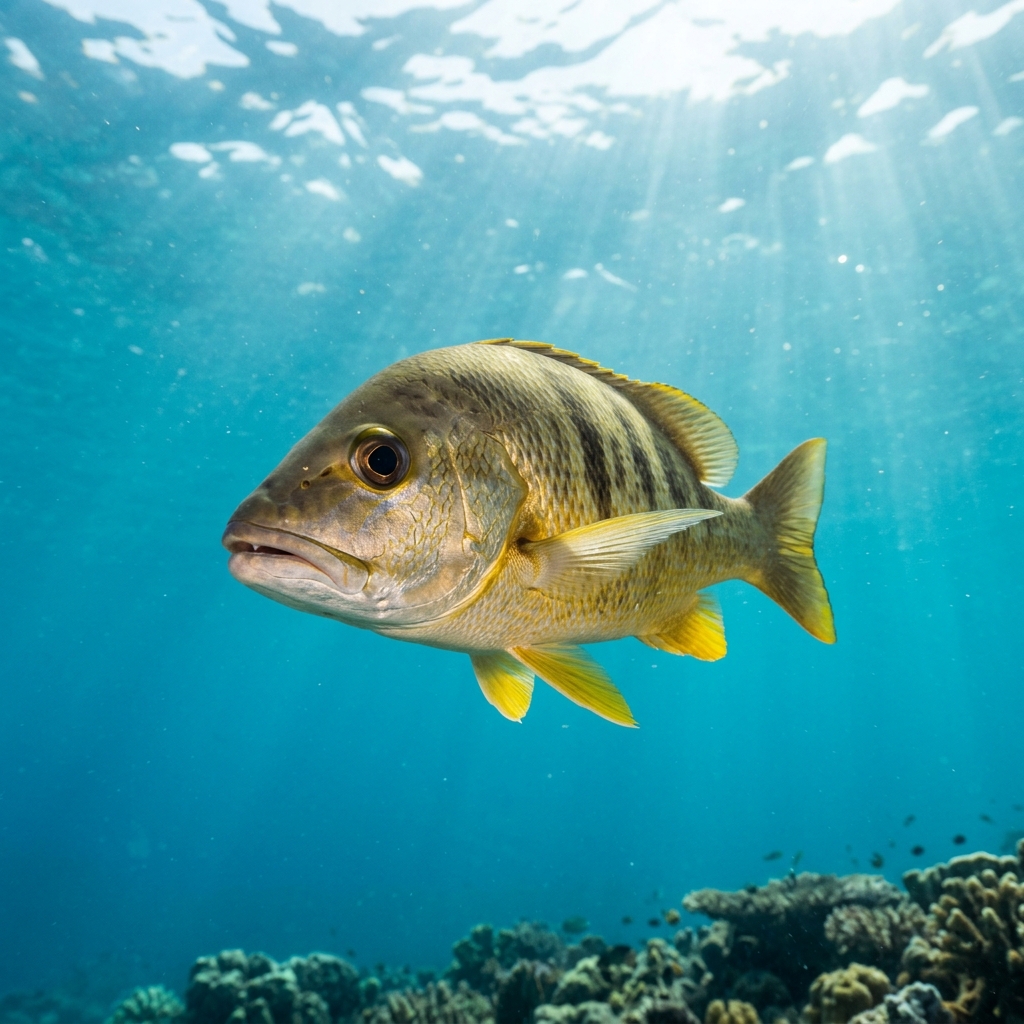
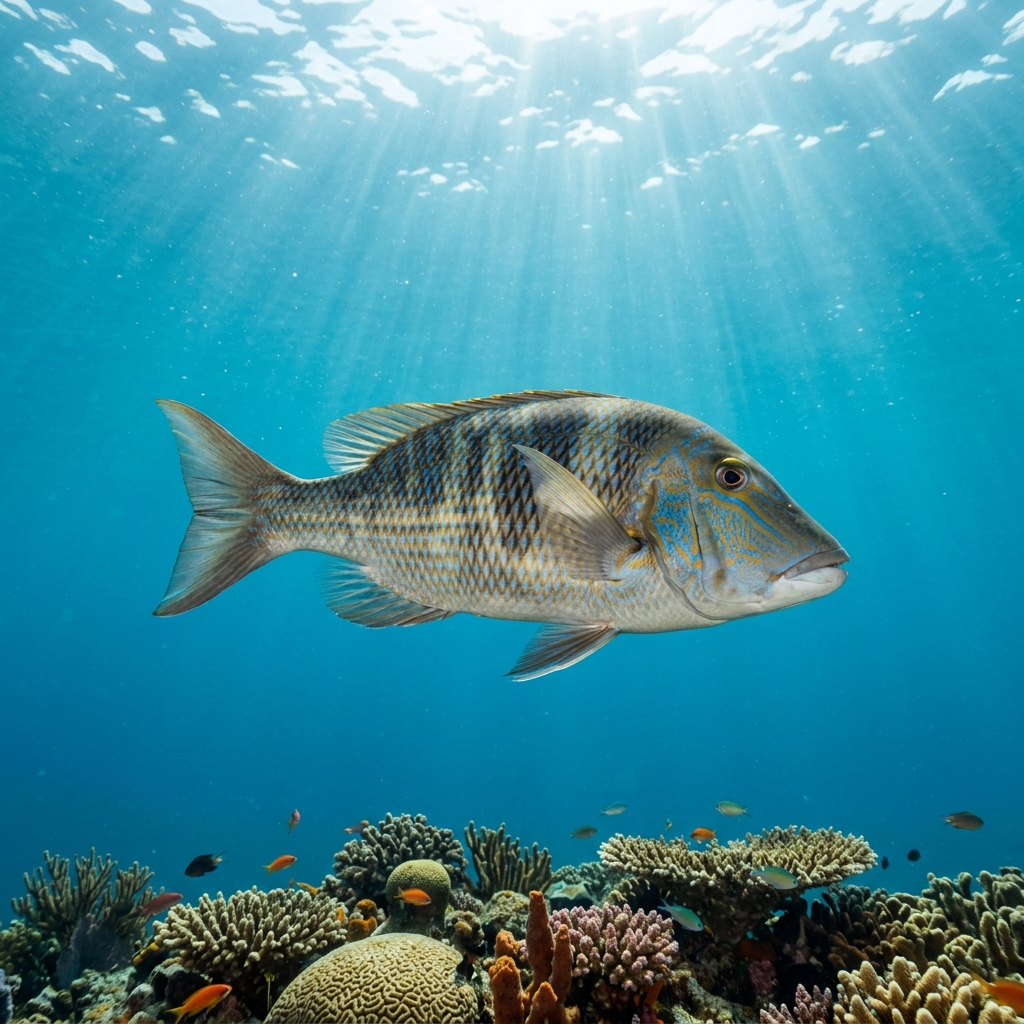
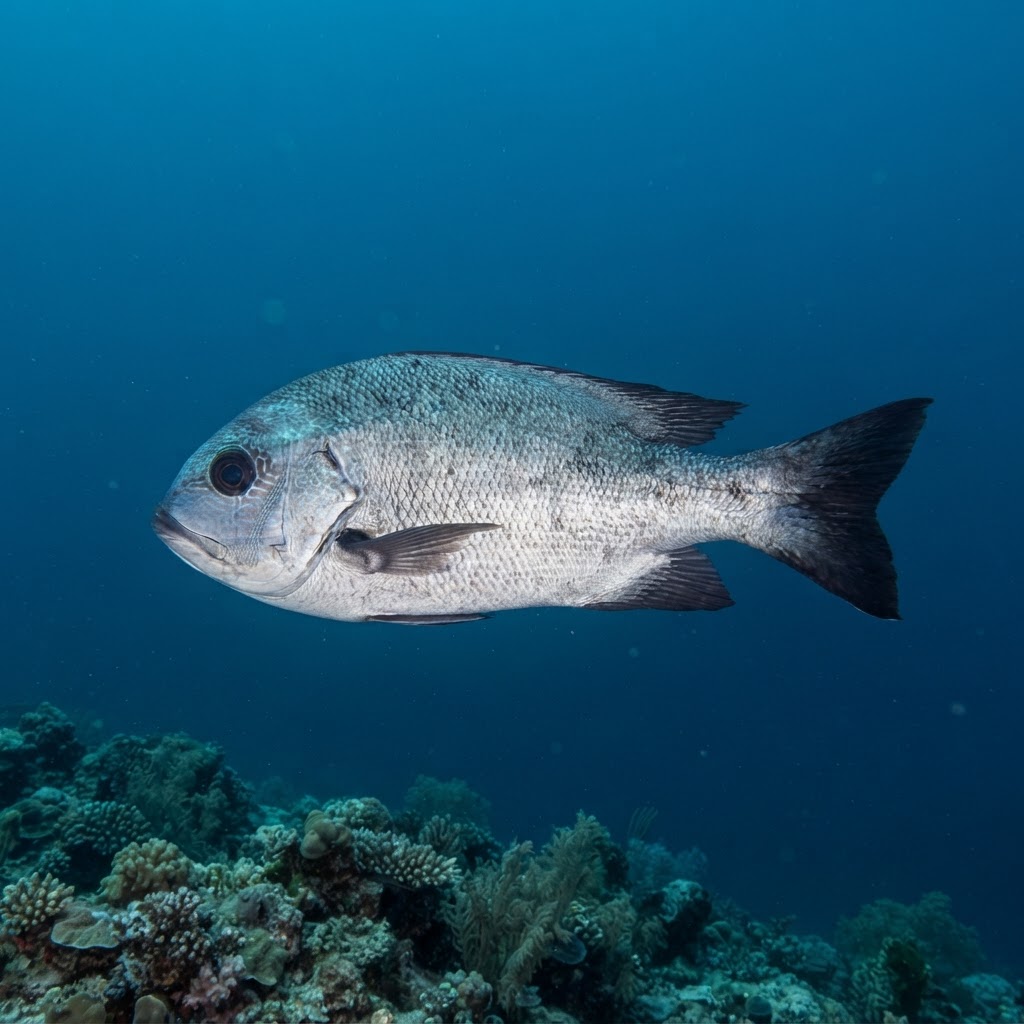
Look for a deep-bodied fish, up to about 52cm, boldly patterned in alternating black and white or grey bands running down the flanks. The high forehead and steep snout profile give it a blunt, almost bream-like face compared to sleeker snappers. Adults often show a more muted, smoky grey-and-white pattern than the sharper black bars of juveniles, which tend to hold closer to shelter. They're usually spotted hovering just off the reef rather than tight against it.
Divers most often find it hanging in loose, slow-moving groups just off the reef face or over drop-offs, drifting rather than darting. It's generally unbothered by divers, holding station in midwater or near overhangs rather than fleeing into cover like some snappers. Sightings span a wide depth range from shallow reef flats down past 90 metres, though it's most commonly logged on typical recreational reef dives.
Juveniles have a much bolder, high-contrast black-and-white pattern than the greyer adults, which can make young and old individuals look like different species on the same reef.
No clear seasonal pattern shows up in the data, and with a comfortable range of roughly 24.7 to 29.1C, reefs across its range stay within that window most of the year, so it's a fair bet on any dive trip to these regions.
This is a reliable sighting across the Maldives, particularly the Central Atolls, and a strong presence on Egyptian Red Sea reefs around Marsa Alam and the Deep South. It also turns up regularly on Queensland's reefs in Australia, and has solid pockets in Indonesia, Palau's Rock Islands, the Seychelles' Inner Islands, Taiwan's Orchid Island, and Sabah in Malaysia.
Mapping where Black and White Snapper is logged…
It's most consistently logged in the Maldives' Central Atolls and Egypt's Marsa Alam and Deep South region, with strong sightings also in Queensland, Australia, Palau's Rock Islands, and the Seychelles' Inner Islands.
There's no strong seasonal pattern in sighting data, and it tolerates a fairly wide tropical temperature range, so it's seen on reefs across its range throughout the year rather than in a narrow season.
Look for a deep, bream-shaped body with bold black and white or grey banding and a steep, blunt-nosed profile. It's typically seen loosely grouped in midwater near the reef edge rather than tucked into crevices.
They reach around 52cm in length, making them a mid-sized, easily noticeable presence among reef fish rather than a tiny species you need to search for.
Juveniles show a much sharper, higher-contrast black-and-white pattern than the softer grey tones of adults, so young and mature fish on the same reef can look surprisingly different.
No, they're not considered dangerous to divers and are generally calm around people, often holding position nearby rather than reacting defensively.
Site and sighting data is aggregated from diver logs, iNaturalist and GBIF. For taxonomy and conservation status:
Bluestriped Snapper
2,054 sites