Gymnothorax fimbriatus
A speckled reef eel common in the Visayas and Luzon, snug in cracks year-round in 25-29C water. Here's how to tell it apart.
Safety warning
Bites happen almost exclusively when a diver puts a hand into a crevice to feed it or pose for a photo, since its poor eyesight means it strikes at anything that smells or feels like food. Keep hands and fingers away from holes and let it stay in its hiding spot and there is no real risk.
If you're bitten
BiteGeneral first-aid guidance, not a substitute for professional medical care. In an emergency, call your local emergency number.
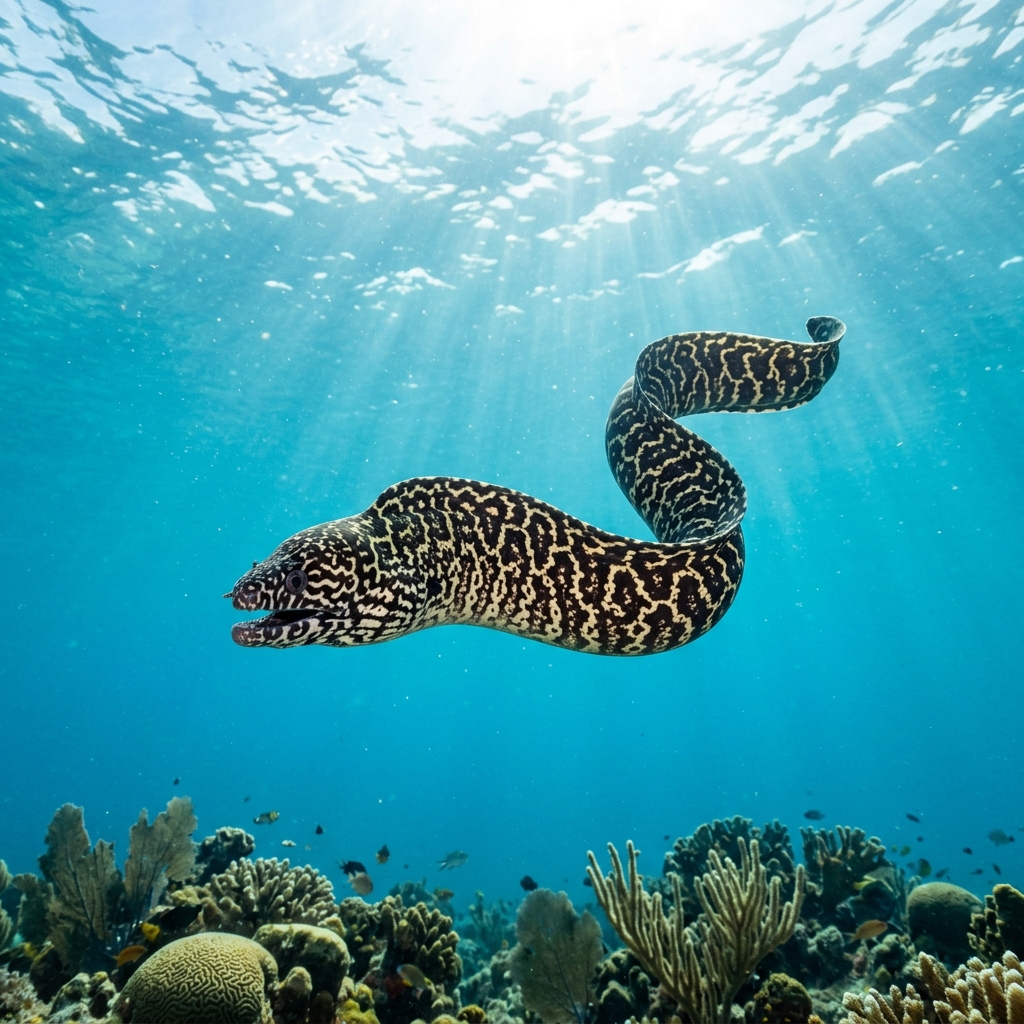
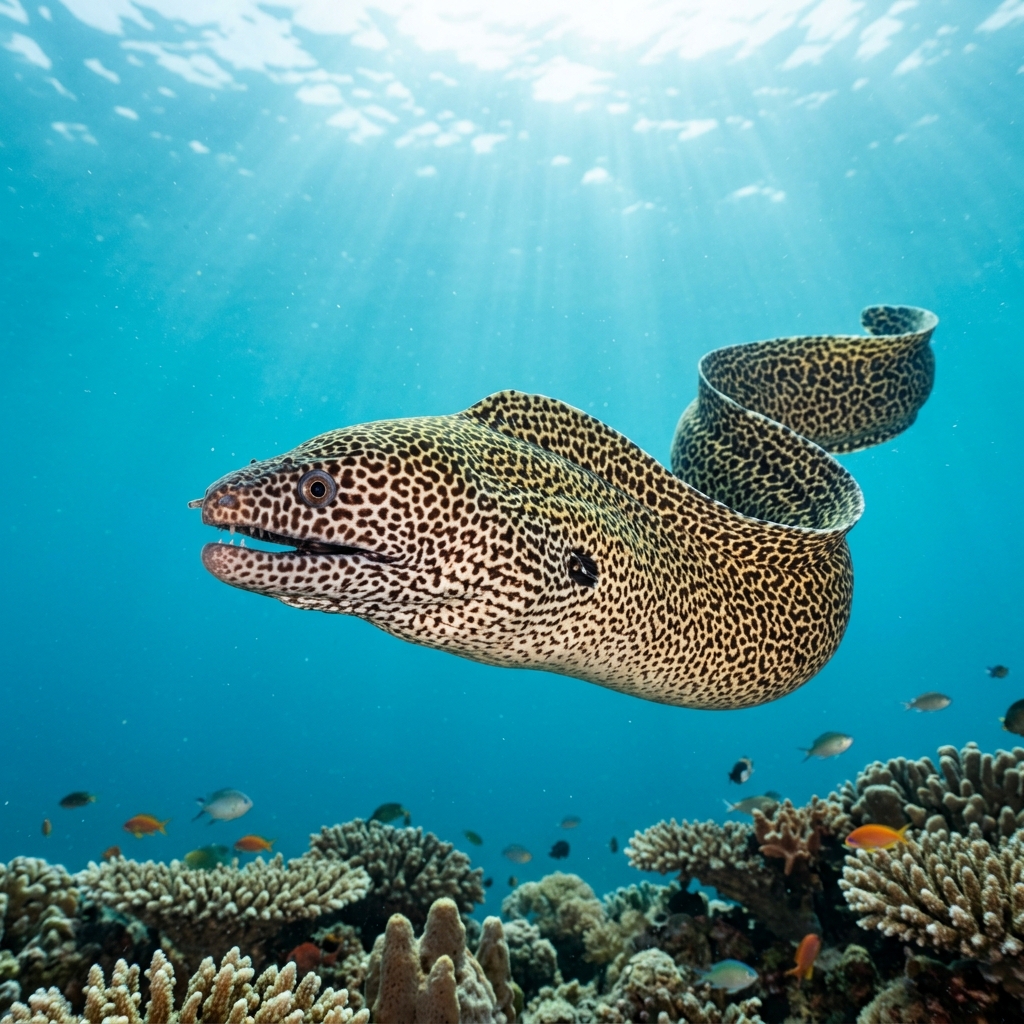
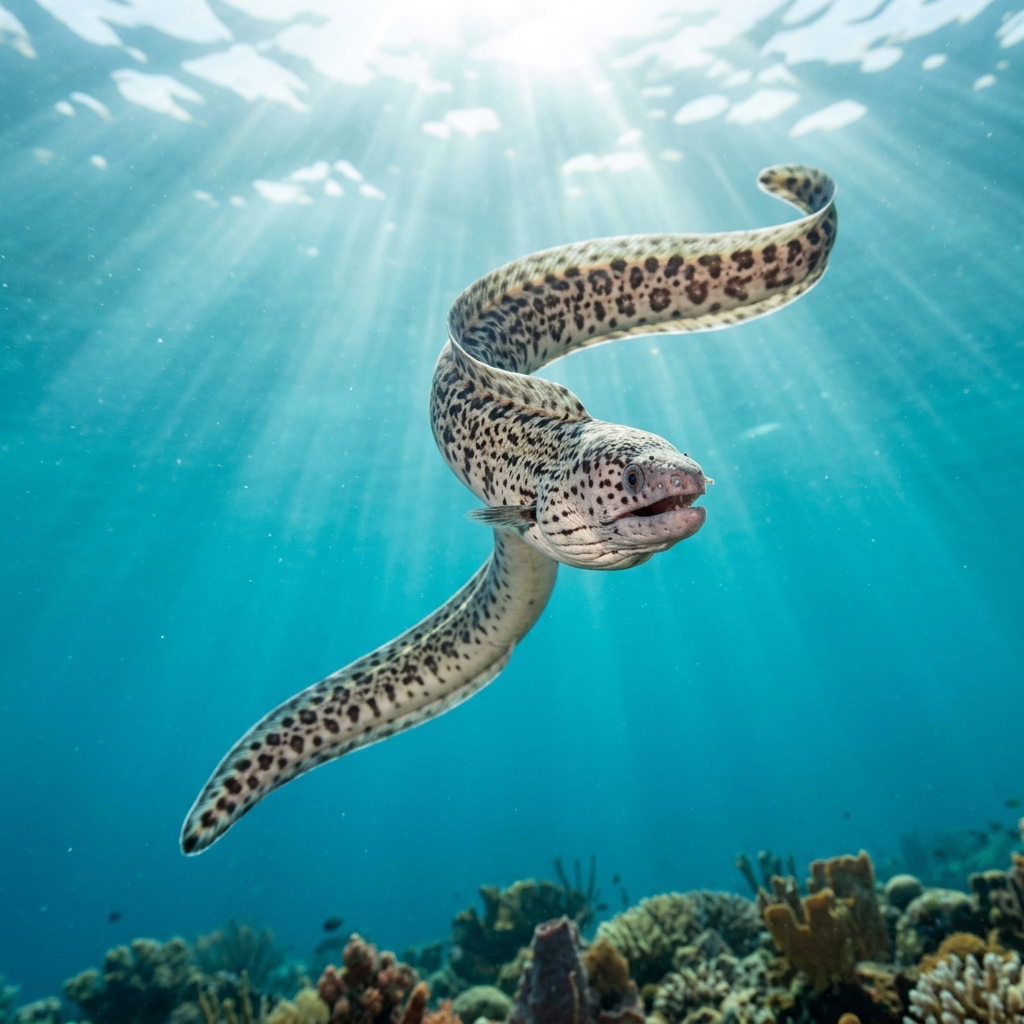
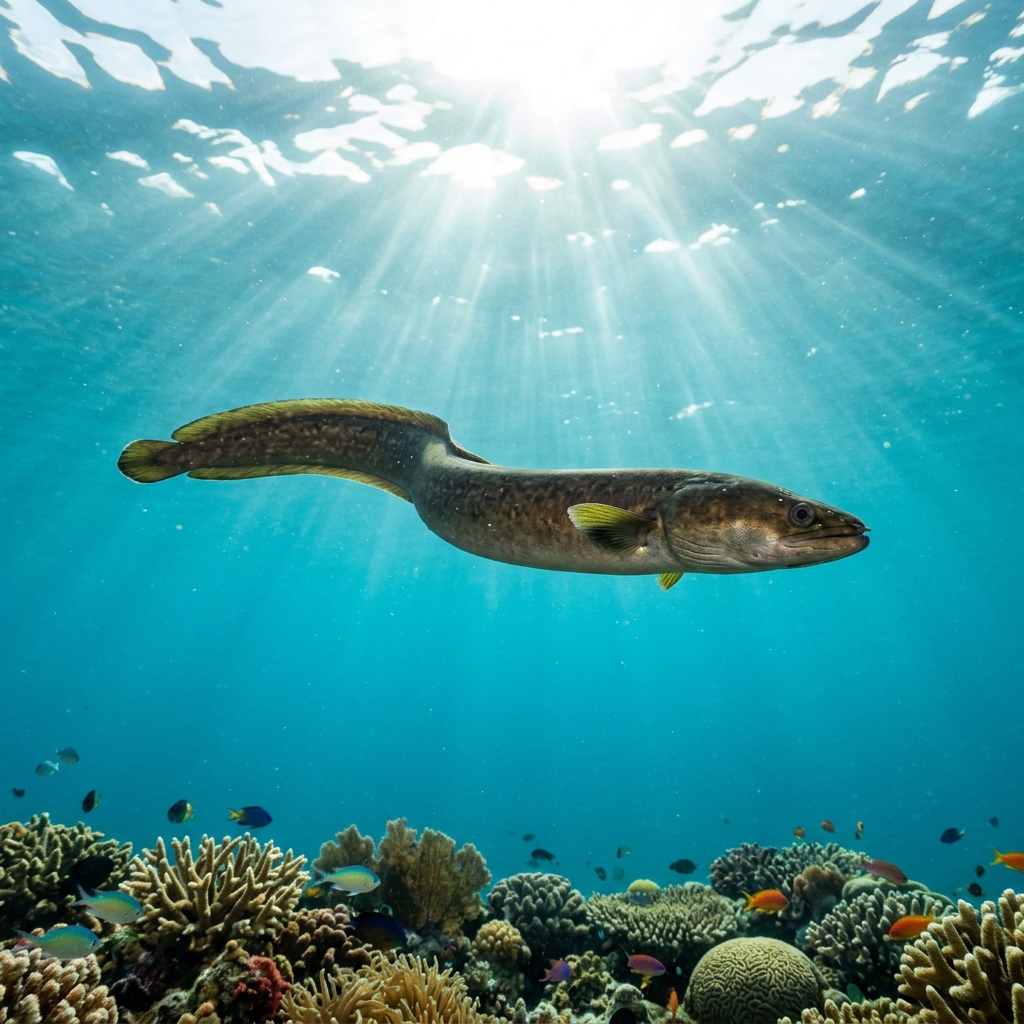
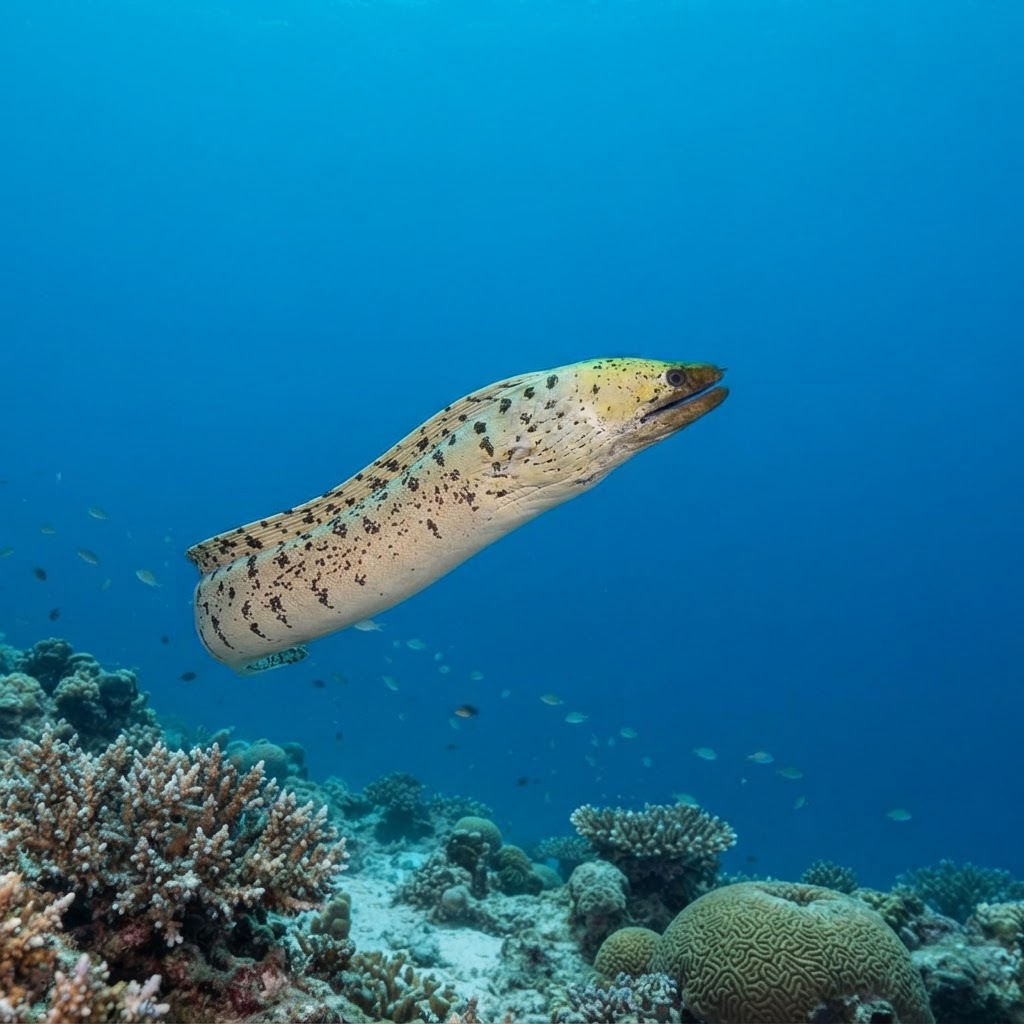
Grows to about 65cm, with a slim body covered in a fine dark reticulated (net-like) pattern over a pale yellowish-grey base, giving a speckled or lace-like look rather than bold blotches. The head is narrow with a pointed snout, and the pattern usually fades toward a plainer, paler tail tip. Most sightings are of the head and forebody poking from a crevice, jaws working slowly as it breathes.
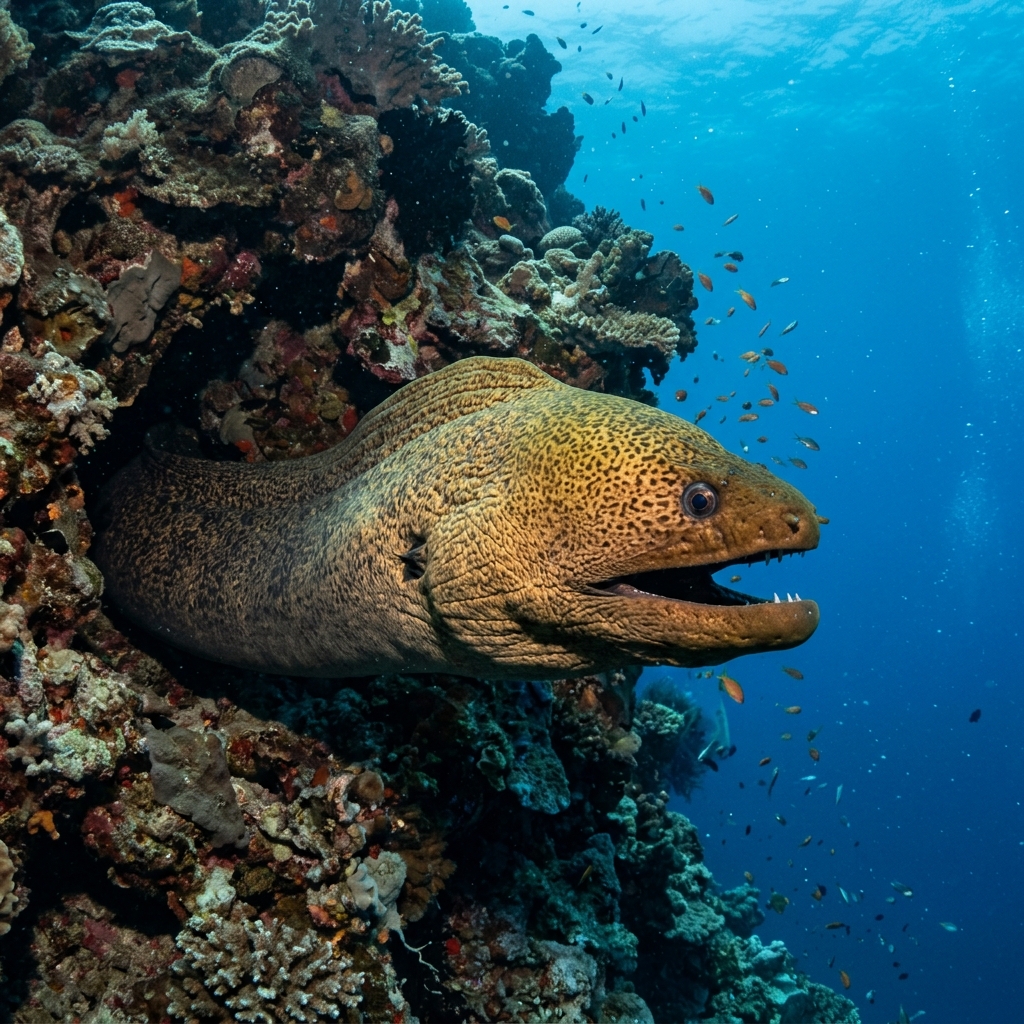
Spends most daylight hours wedged into a coral crevice or under a ledge with just its head and part of the body showing, mouth opening and closing steadily as it moves water over its gills. It tends to hold its ground rather than bolt when divers approach slowly, though it will pull back into cover if crowded. Night dives tend to show more of the body out hunting over the reef.
Like other morays it has a second set of jaws deep in its throat, called pharyngeal jaws, which shoot forward to grip prey and drag it down the throat since it cannot swallow using suction the way most fish do.
No clear seasonal pattern shows up in the data, and with a comfort range of roughly 25 to 29C it stays active on these reefs all year, so any month works for a dive trip built around it.
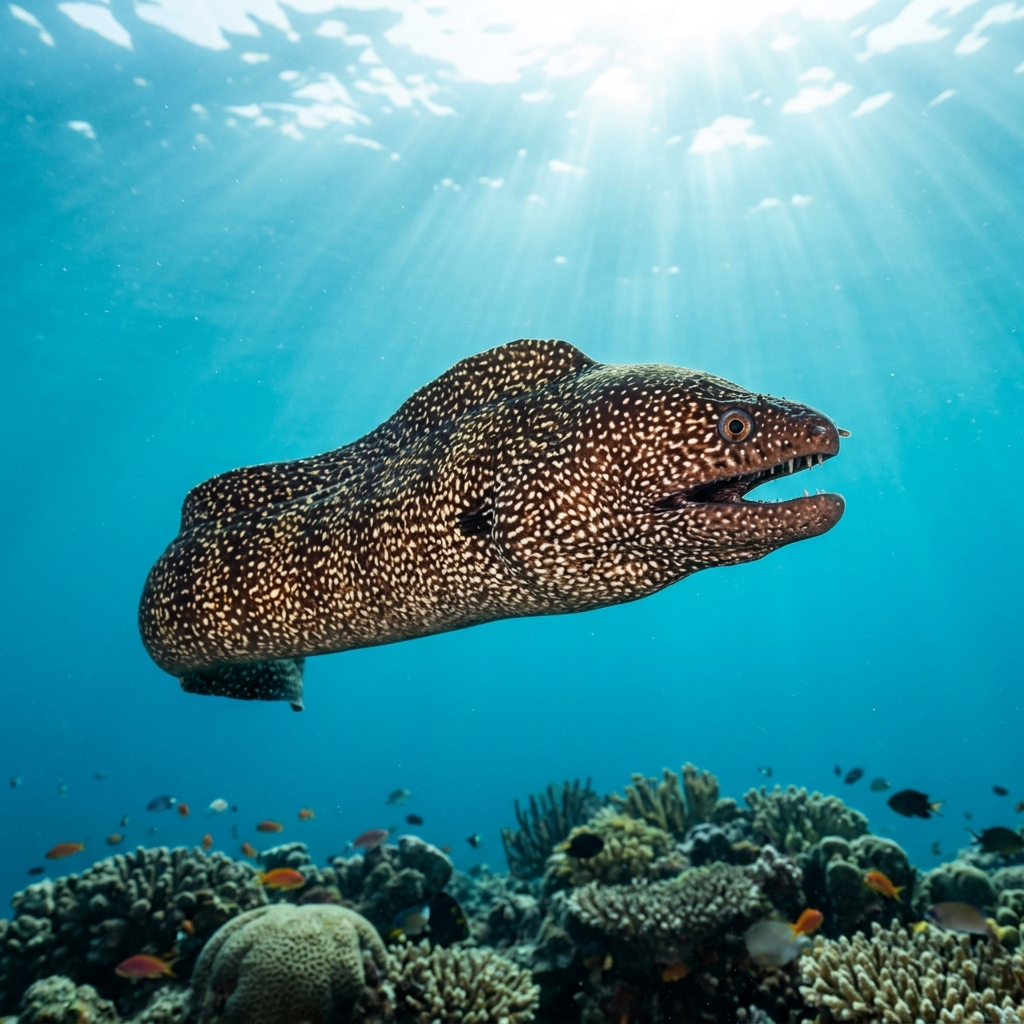
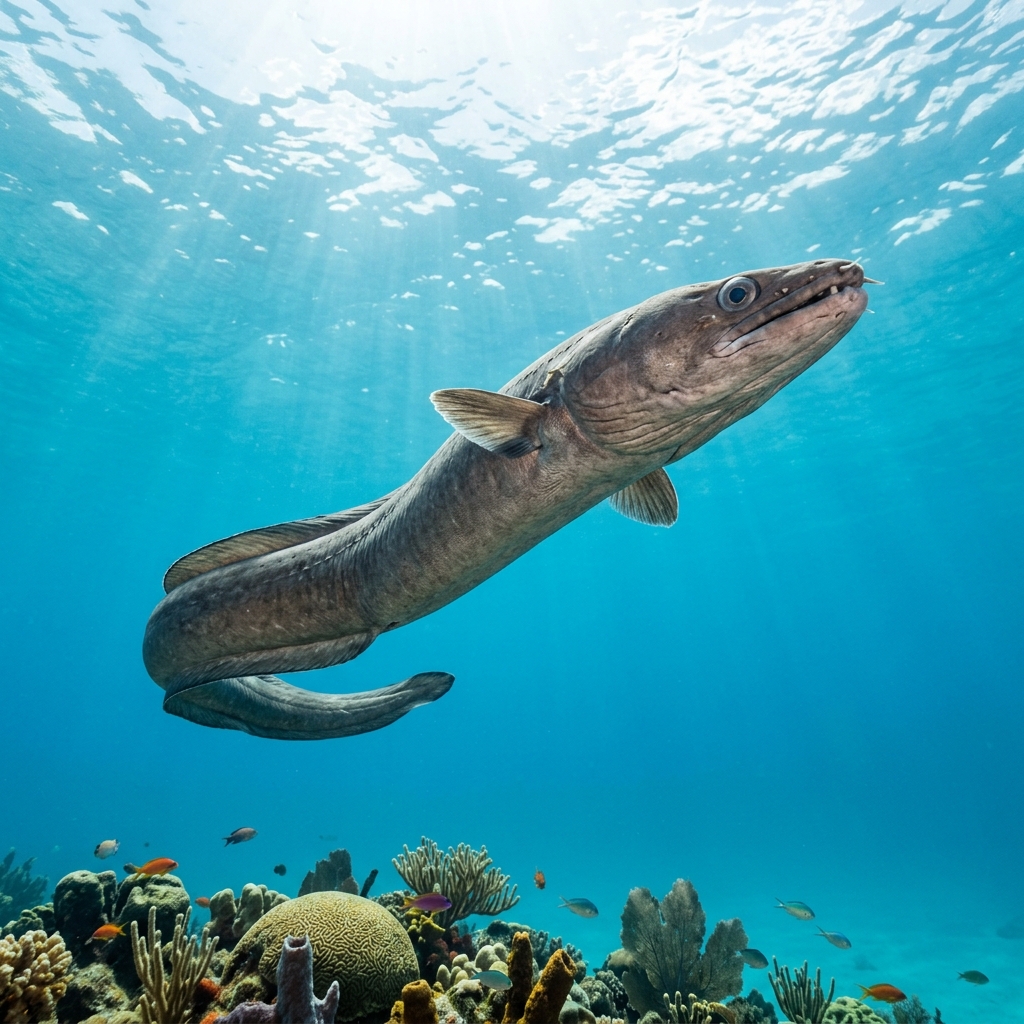
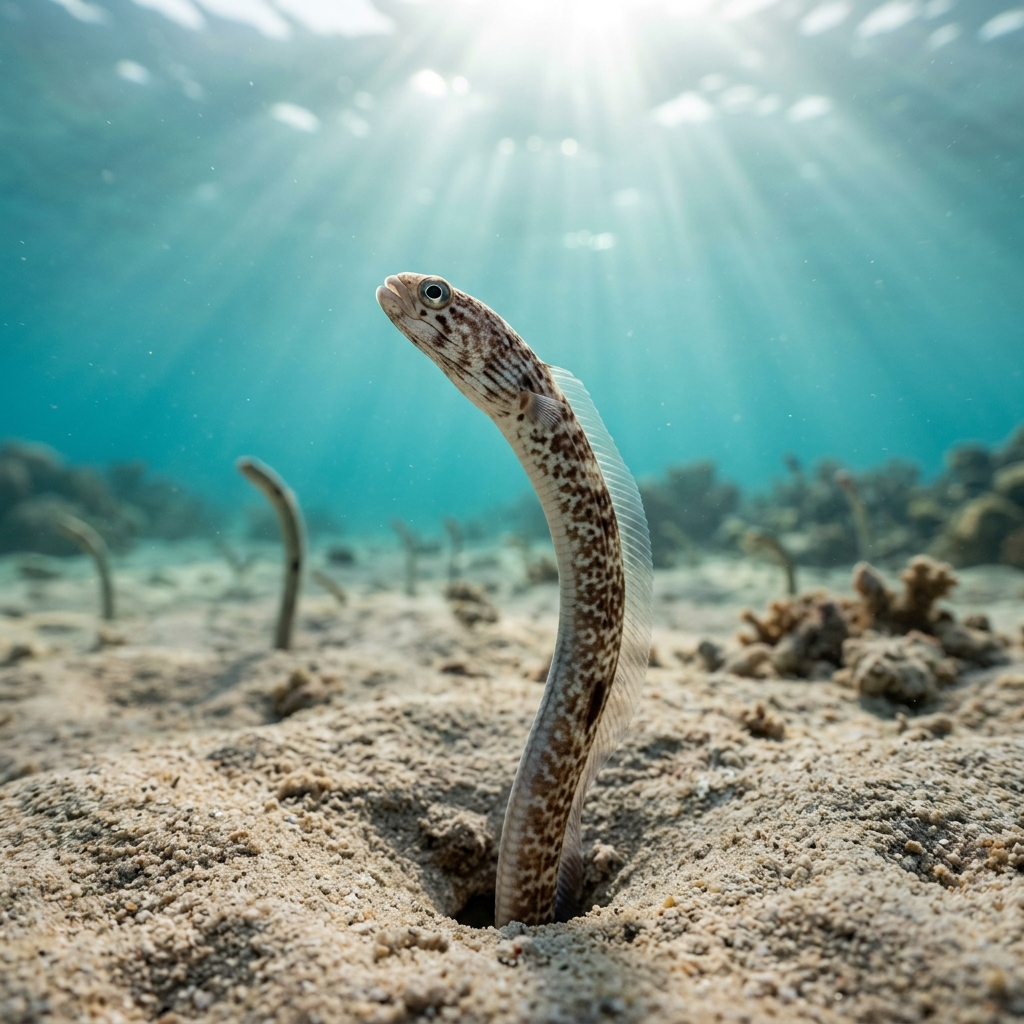
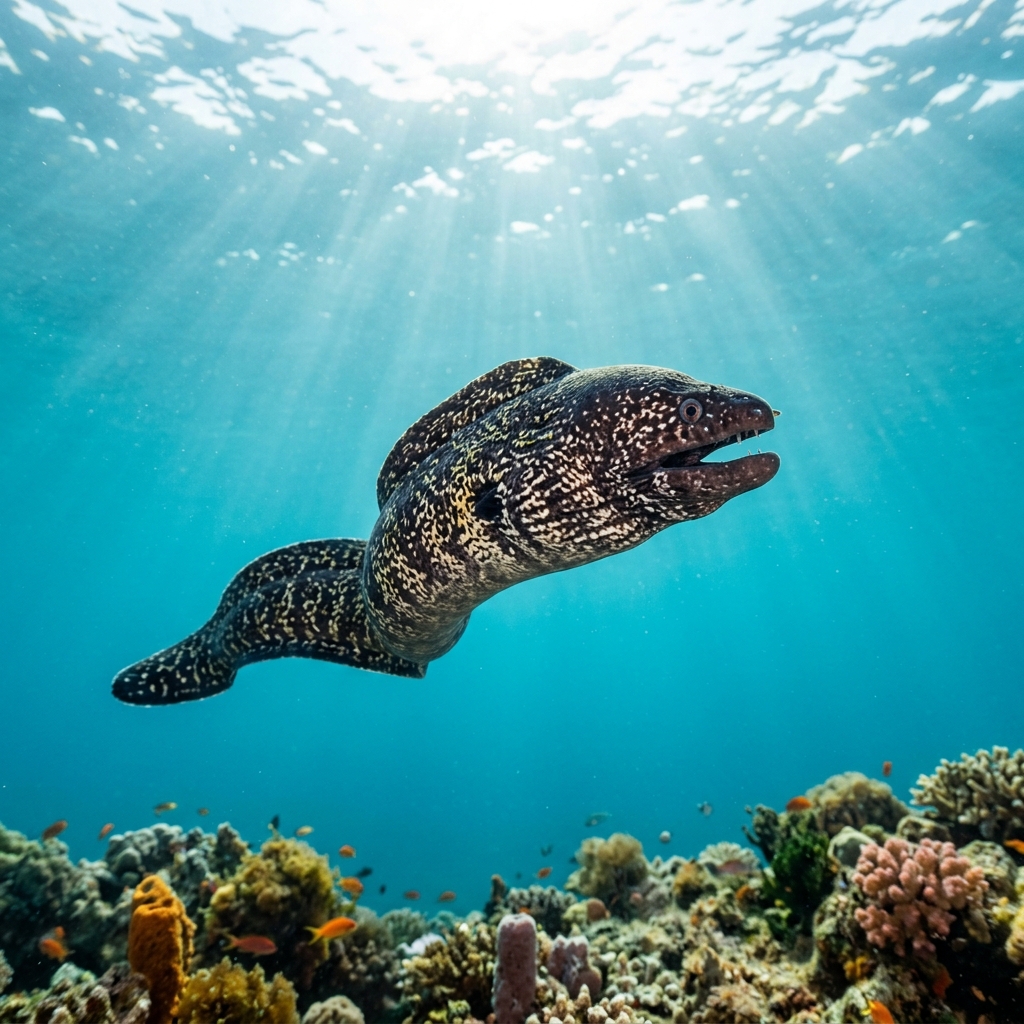
Reef neighbours a diver could mistake it for. Use the identification notes above to tell them apart.
Most reliably logged across the Philippines, especially the Visayas and Luzon, and a strong presence in Indonesia's Nusa Tenggara, Bali and Maluku regions. Also a regular find in Okinawa and the Ryukyu Islands in Japan, Sabah in Malaysia, and around Phuket in Thailand.
Mapping where Fimbriated Moray is logged…
The Philippines is the strongest region, particularly the Visayas and Luzon, with good numbers also in Indonesia's Nusa Tenggara and Bali, Japan's Okinawa and Ryukyu Islands, and Sabah in Malaysia.
There's no strong seasonal signal in the sightings, and it tolerates the 25 to 29C range typical of these reefs year-round, so it's a fair bet on any month.
They can bite if provoked or fed by hand, since they strike at anything smelling like food and have poor eyesight, but they leave divers alone if hands stay clear of their crevice.
Look for a slim eel around 65cm with a fine dark net-like pattern over a pale body and a pointed snout, usually with just the head showing from a reef crevice.
They typically reach around 65cm in length, making them a mid-sized reef moray rather than one of the bulkier giants.
They use a second set of jaws in the throat, called pharyngeal jaws, which launch forward to grab prey and pull it down since they can't swallow by suction like most fish.
Site and sighting data is aggregated from diver logs, iNaturalist and GBIF. For taxonomy and conservation status:
Garden Eel
2,448 sites