Ctenogobiops feroculus
Watch for this pale, dot-marked goby hovering over sand burrows in the Society Islands and Fiji's Mamanuca Islands, year-round in warm water.
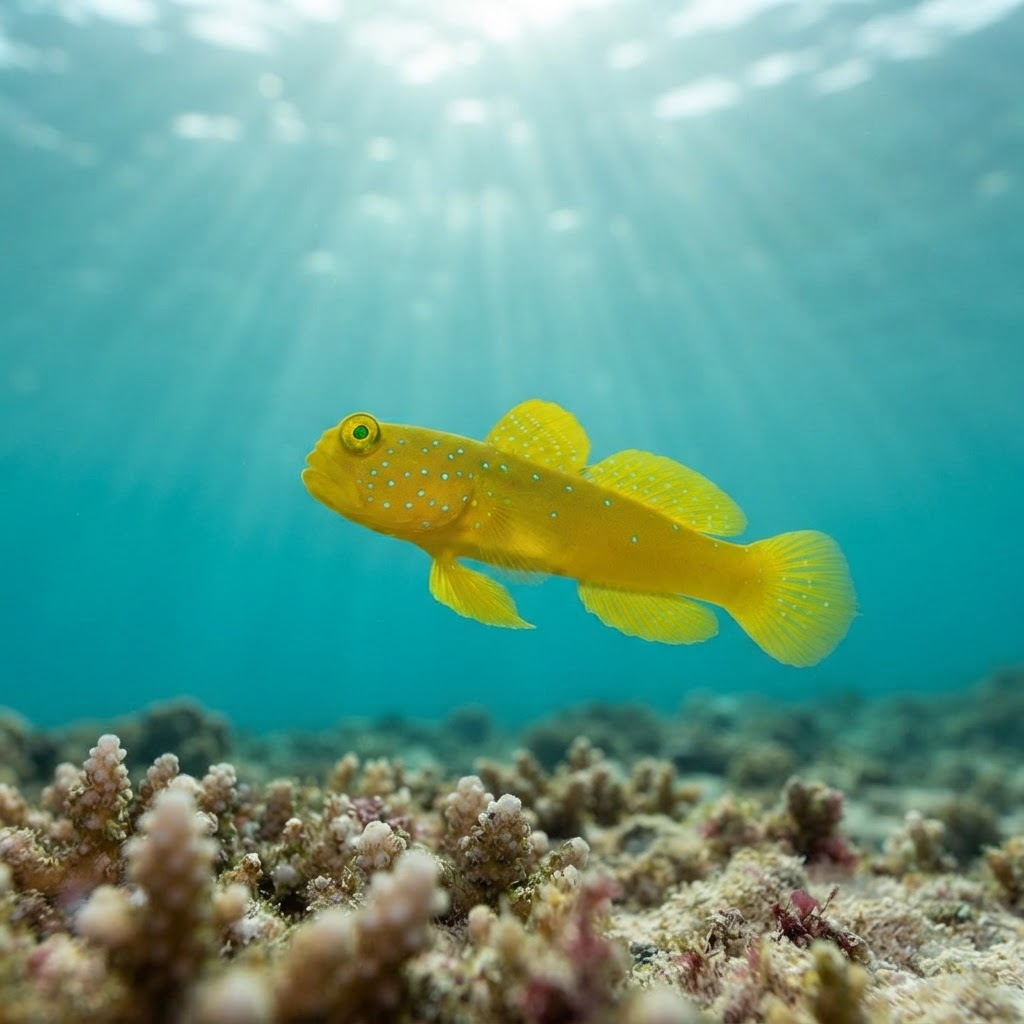
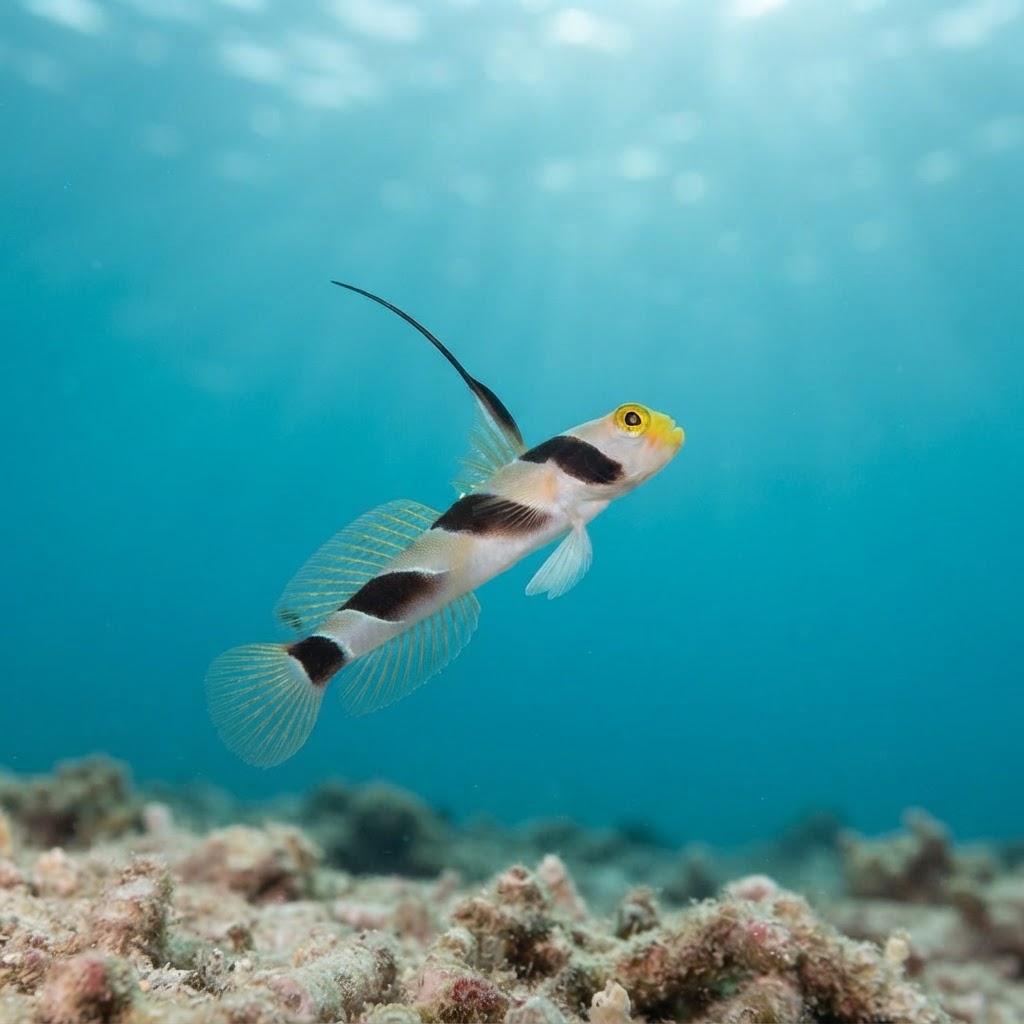
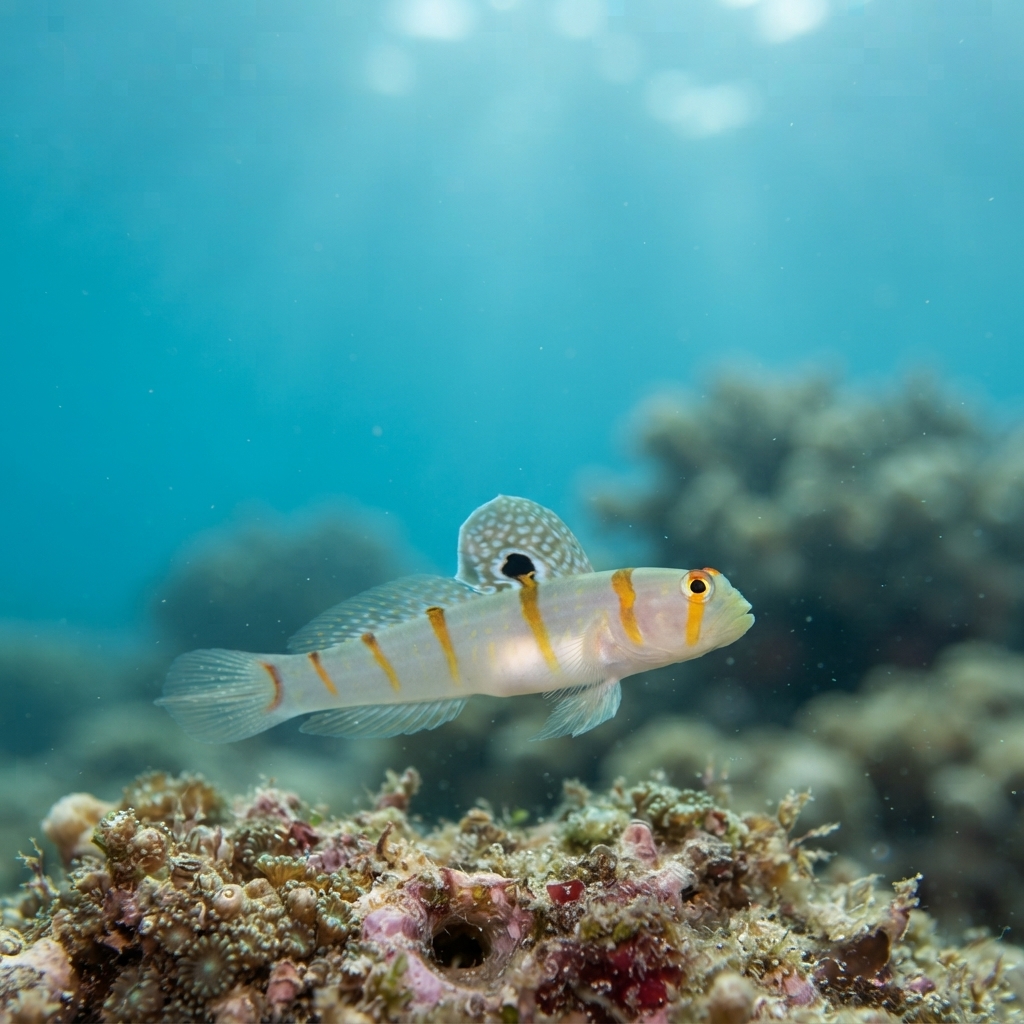
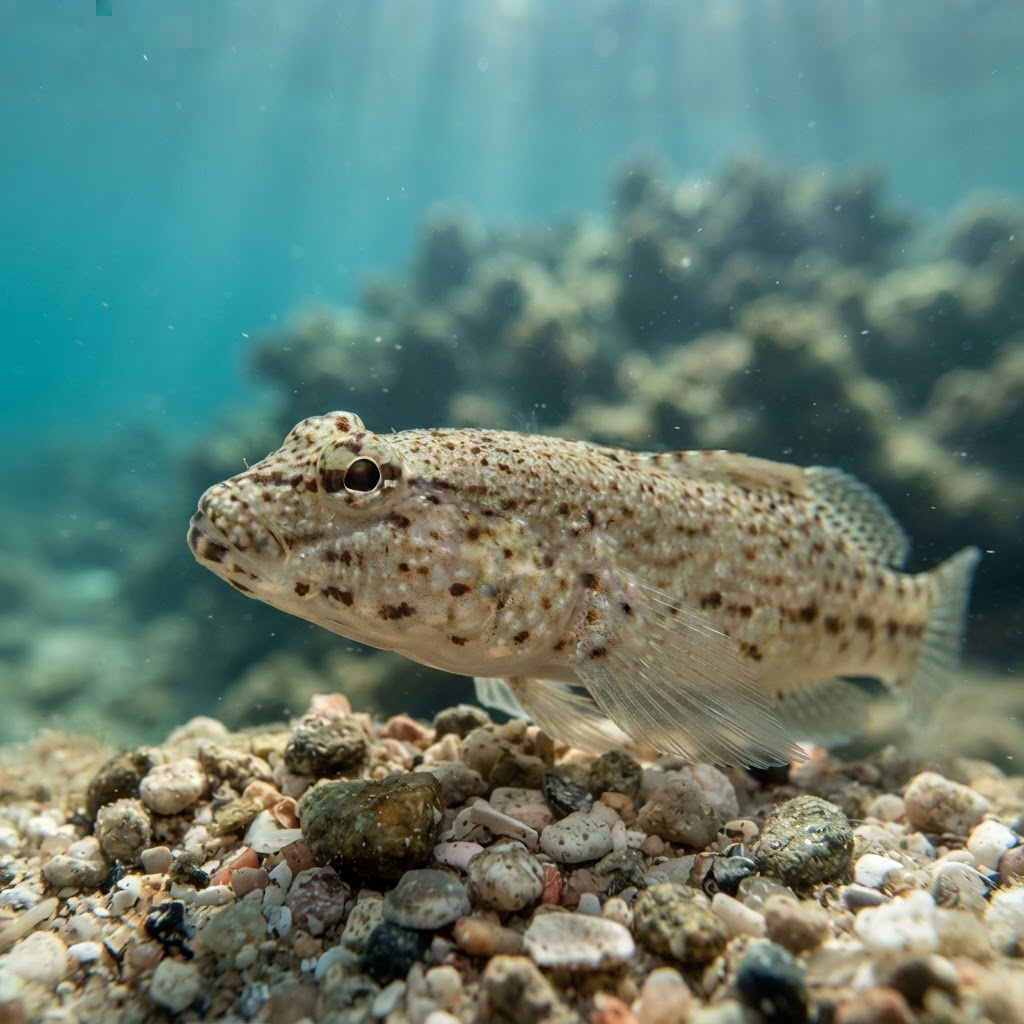
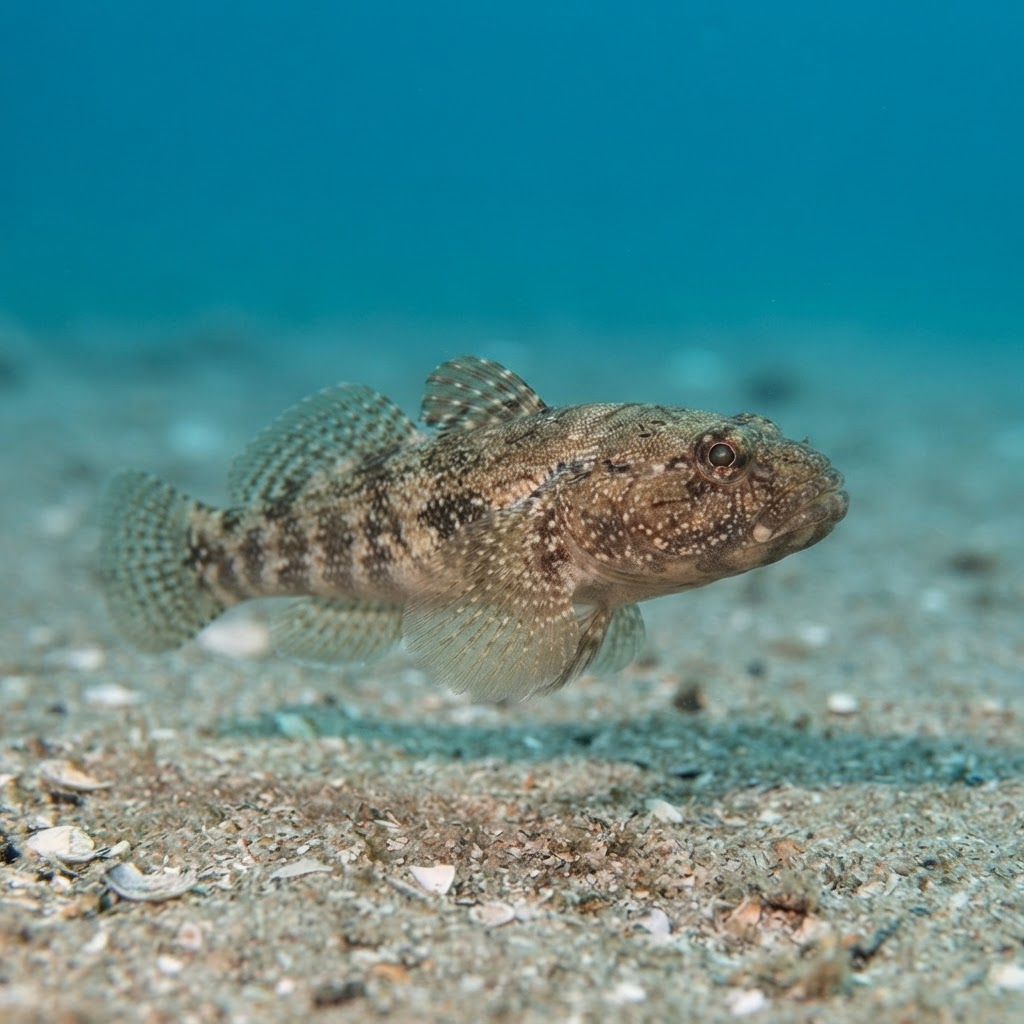
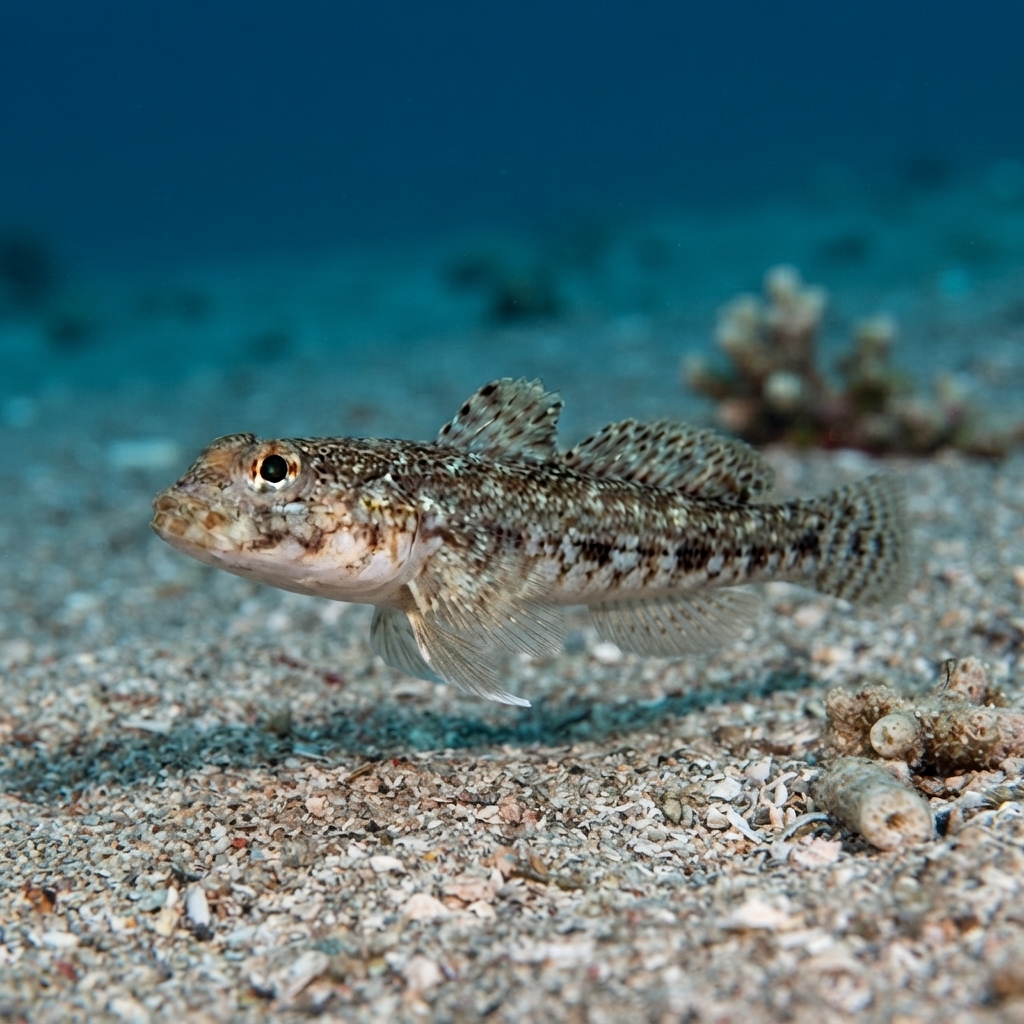
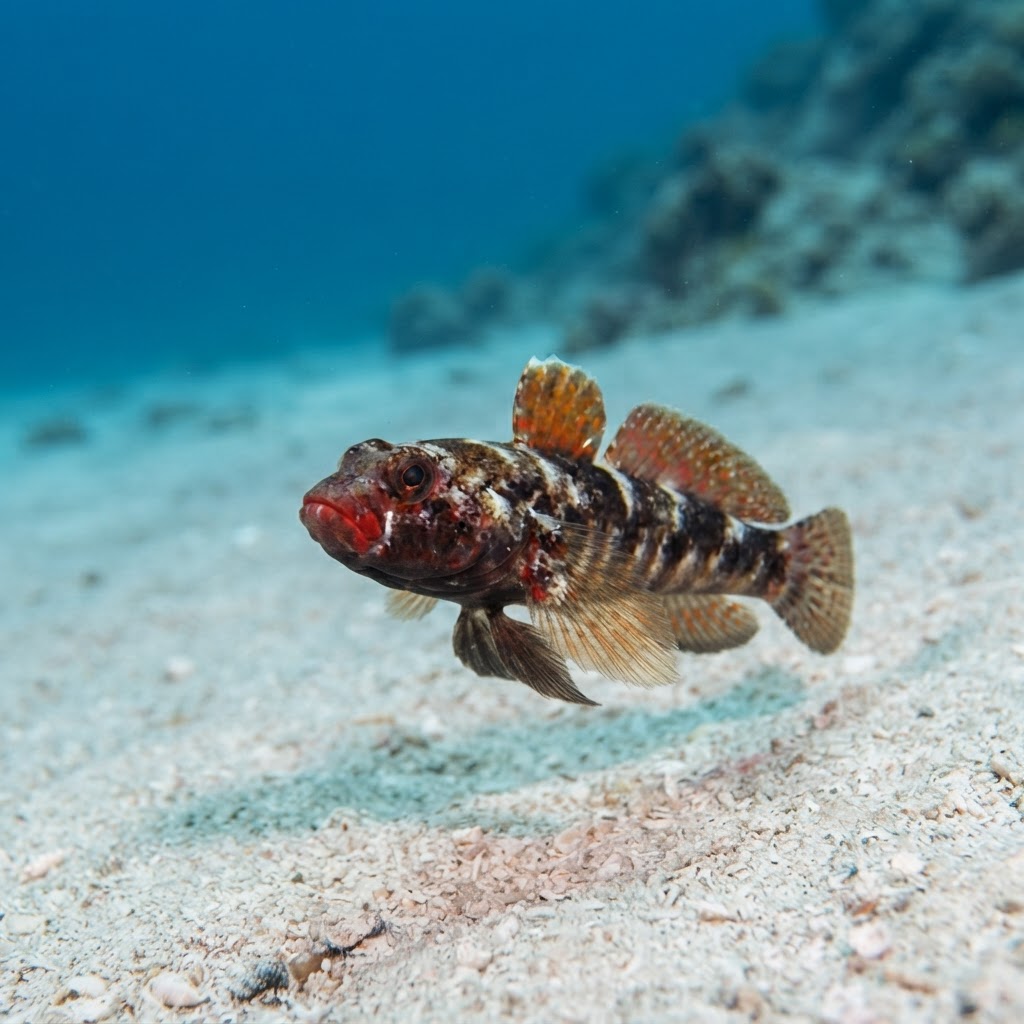
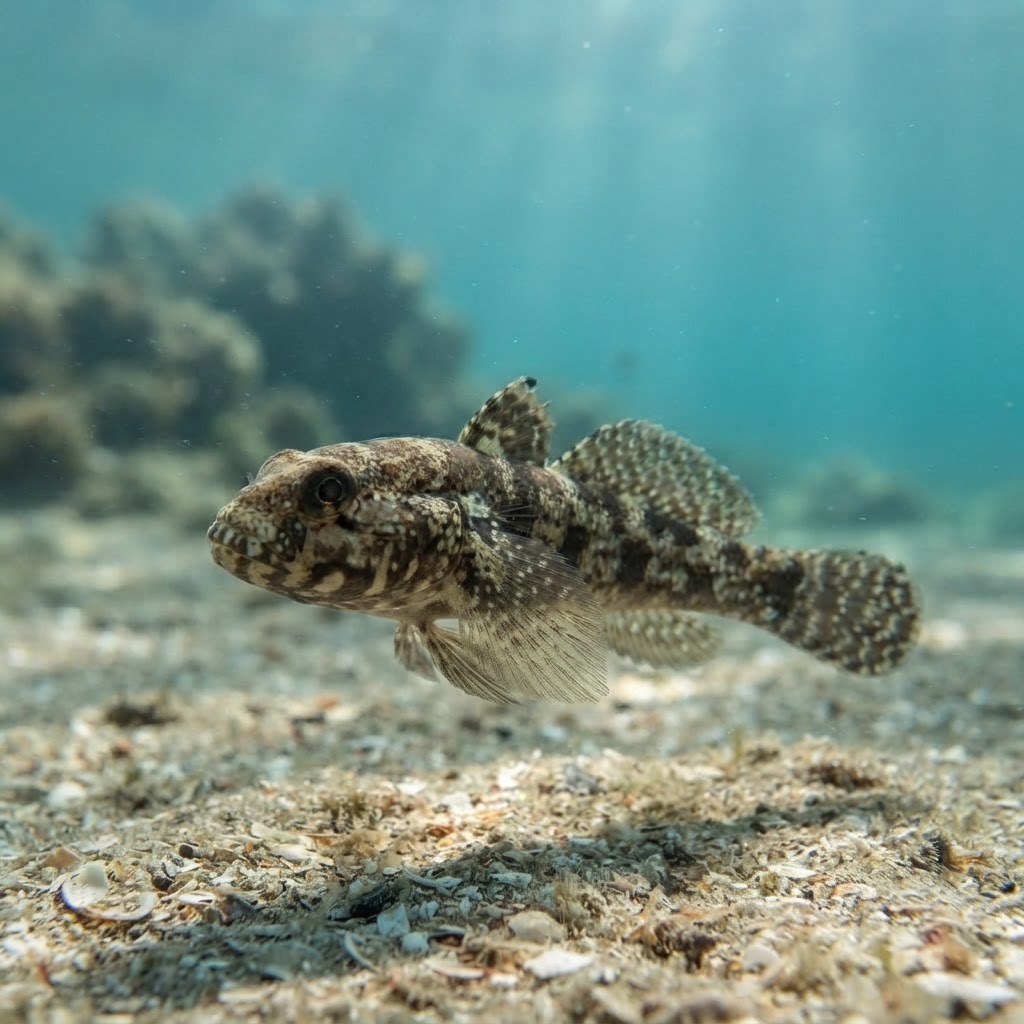
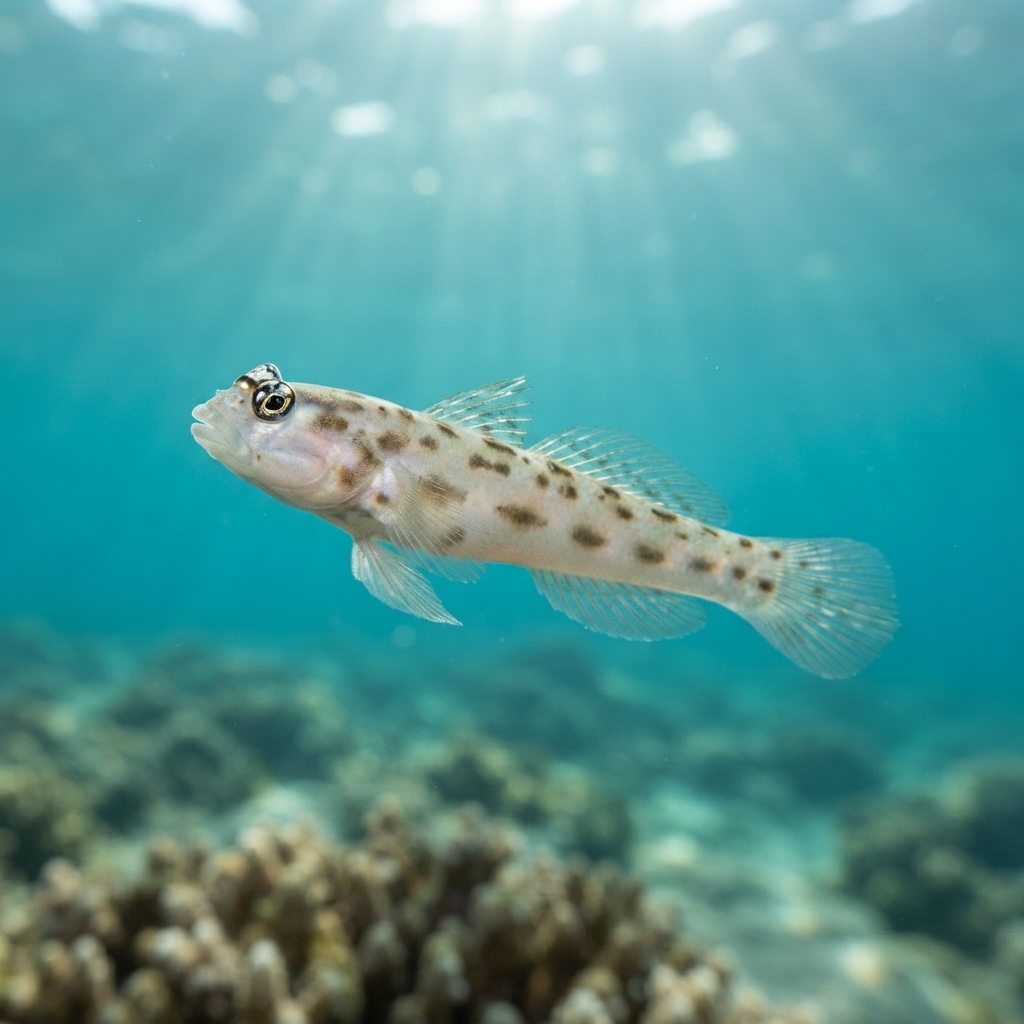
A small, slender goby, around 6 cm, that hovers just above its burrow with fins constantly flicking rather than resting flat on the sand. Body colour is pale grey to translucent white, marked with scattered fine dark speckling and a row of faint dusky blotches along the flank rather than bold bands. The tall, slightly rounded first dorsal fin and its habit of never straying far from a burrow entrance are the two things to key on underwater.
Look for it stationed over a burrow shared with a symbiotic shrimp, usually on open sand or rubble patches at the base of a reef slope rather than tucked into coral. It hovers a few centimetres above the entrance, dipping down at the slightest disturbance and vanishing into the burrow if you approach too fast. Divers who hang back and move slowly get the best look, since it will often re-emerge within a minute or two once it decides you're not a threat.
Like other shrimpgobies, it shares its burrow with a burrowing shrimp that digs and maintains the tunnel while the goby stands guard, flicking its tail as an early-warning signal the shrimp feels through touch.
No clear seasonal pattern shows up in sighting data, and with a comfortable range of 25.2 to 29.3 C, reefs across the Society Islands and Mamanuca Islands stay within that window all year, so any month works.
Reef neighbours a diver could mistake it for. Use the identification notes above to tell them apart.
Most reliably logged in French Polynesia, especially around the Society Islands, where sandy reef flats and lagoon slopes hold the bulk of recorded sightings. It also turns up with a smaller but consistent presence in Fiji's Mamanuca Islands, so both South Pacific regions are solid bets if you're specifically hunting this goby.
Mapping where Fierce Shrimpgoby is logged…
Best chances are in French Polynesia, particularly around the Society Islands, with a smaller but reliable population in Fiji's Mamanuca Islands. Look on sandy patches near reef bases rather than on the coral itself.
There's no strong season in the sighting data, and water temperatures in its range stay within its comfortable 25.2 to 29.3 C niche year-round, so it can be found on any dive trip regardless of month.
Look for a small, pale, speckled goby about 6 cm long hovering just above a sand burrow entrance rather than resting on the substrate. Its constant fin-flicking and quick retreat into the burrow when approached are strong identification clues.
They stay small, typically around 6 cm in length, which is normal for the shrimpgoby group and makes careful close-focus looking worthwhile.
It lives in a burrow dug and maintained by a shrimp partner, standing guard at the entrance while the shrimp works below, and signals danger to its shrimp housemate by flicking its tail.
No, they pose no danger to divers. They're shy, retreat into their burrow when approached, and have no venom or aggressive behaviour toward people.
Site and sighting data is aggregated from diver logs, iNaturalist and GBIF. For taxonomy and conservation status:
Slender Goby
806 sites