Tomiyamichthys latruncularius
A small, uncommon goby paired with a shrimp burrow, best logged in Sulawesi's sandy flats in warm 26-29C water.
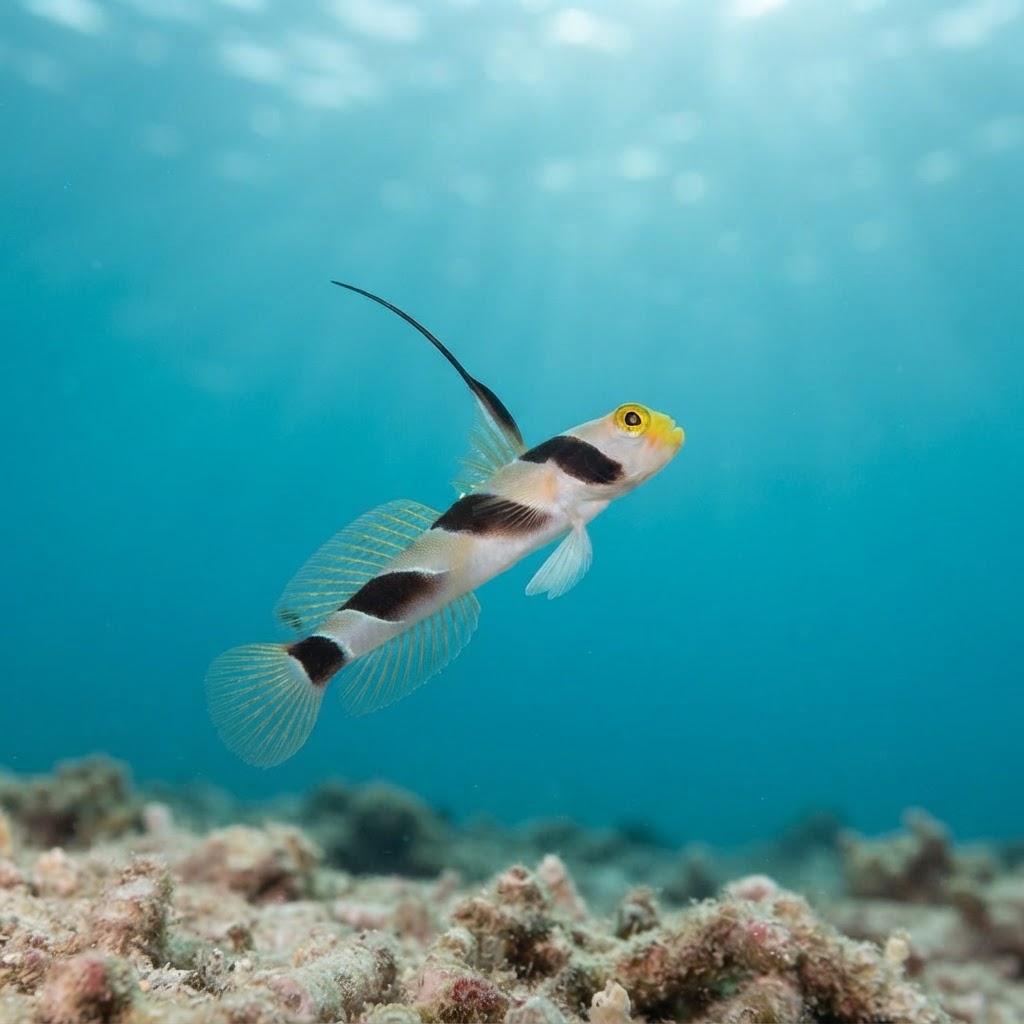
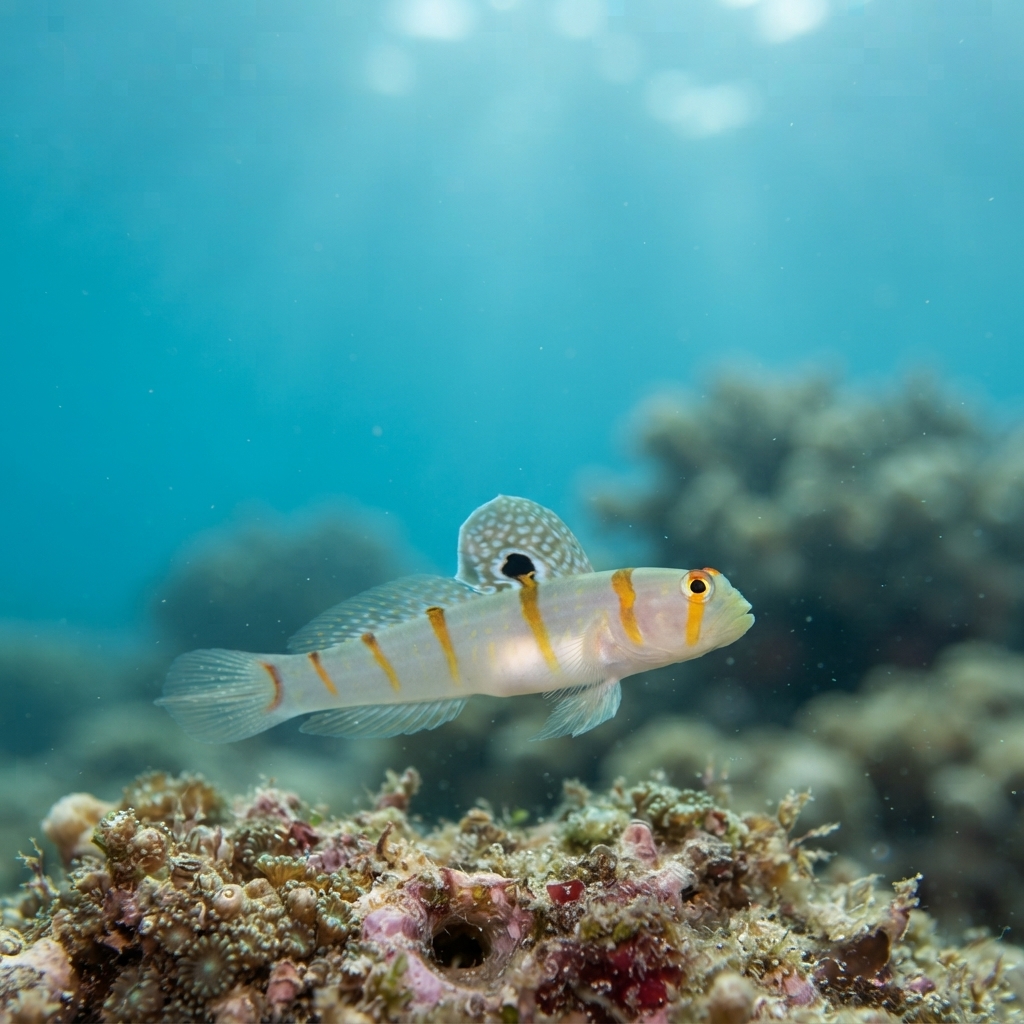
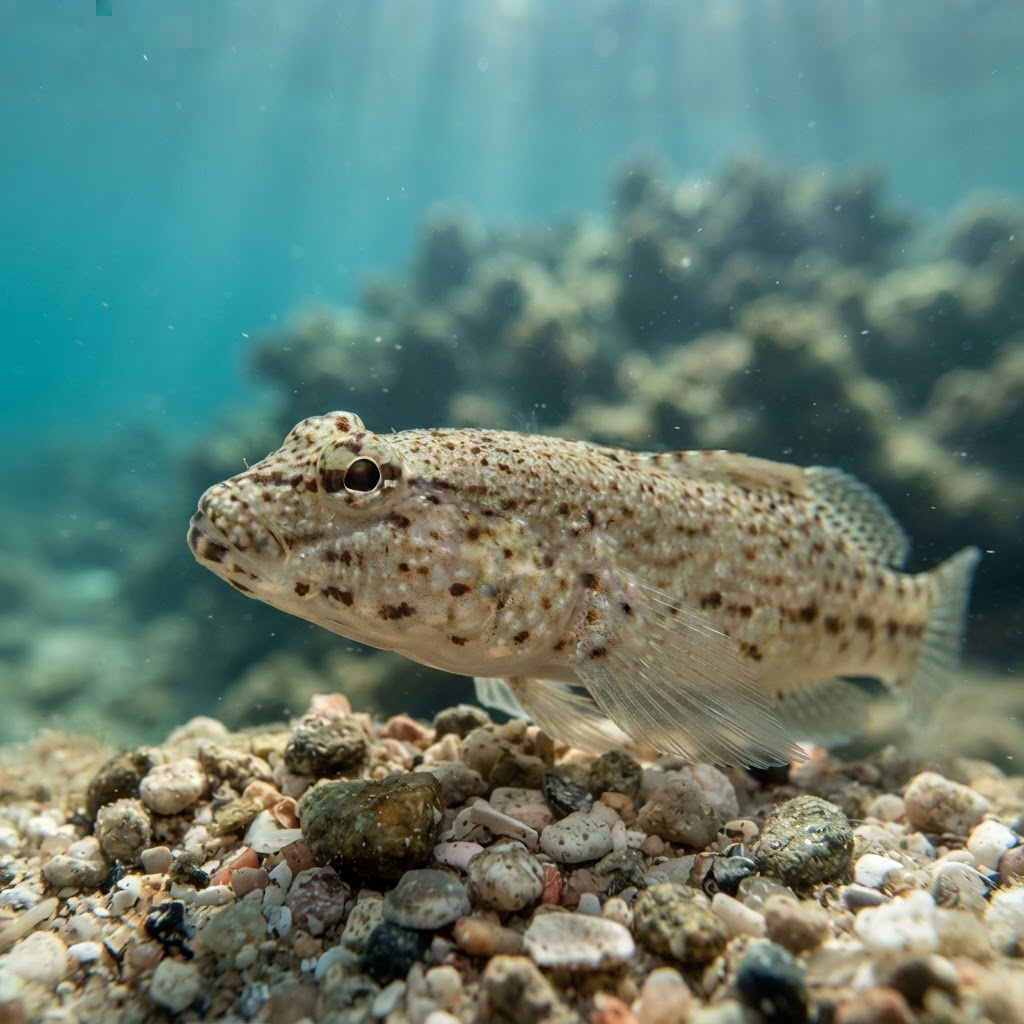
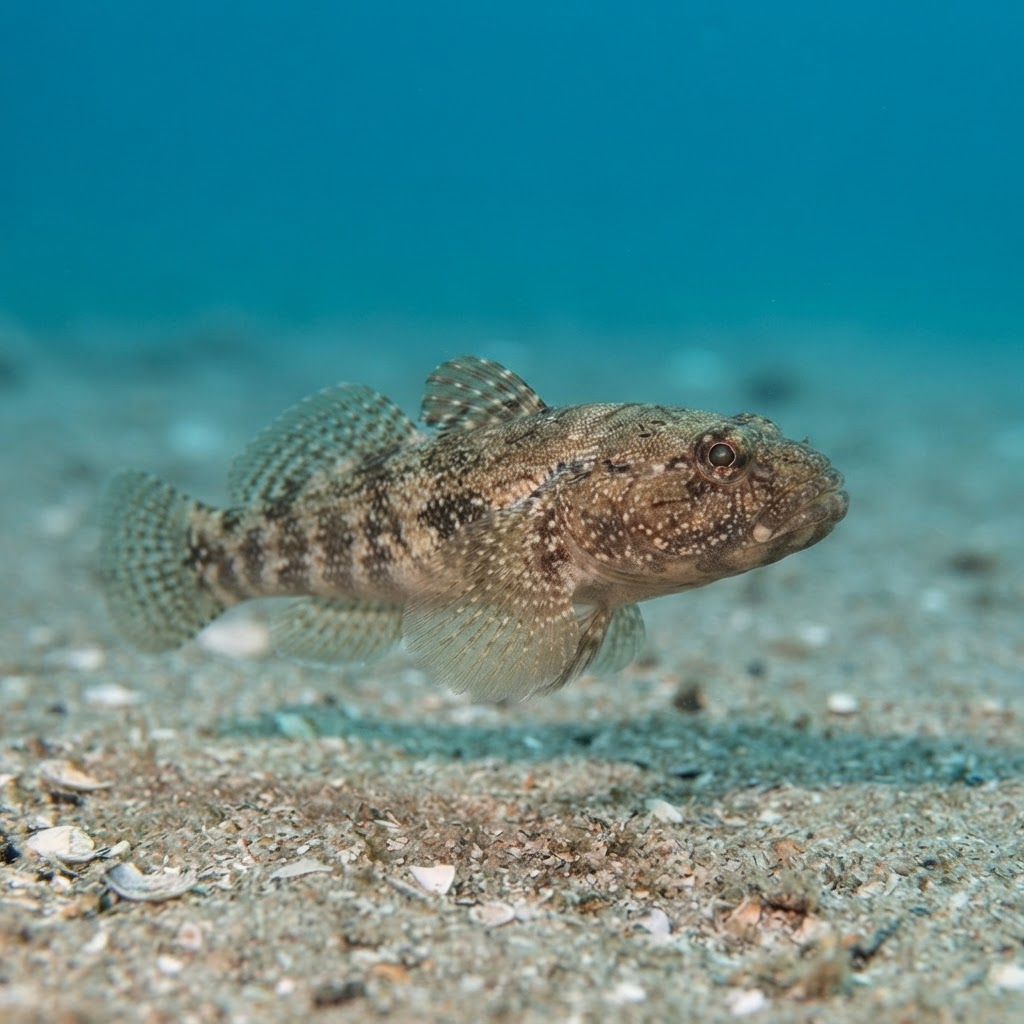
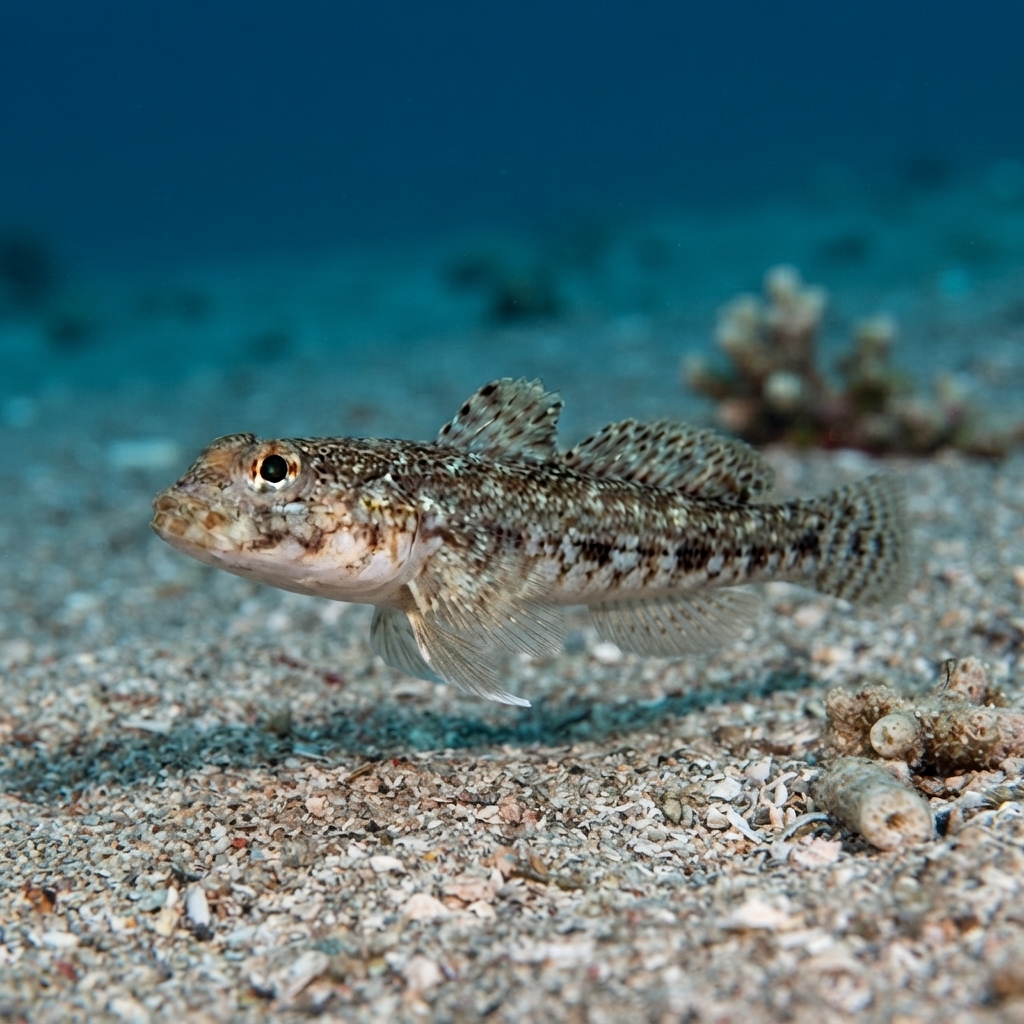
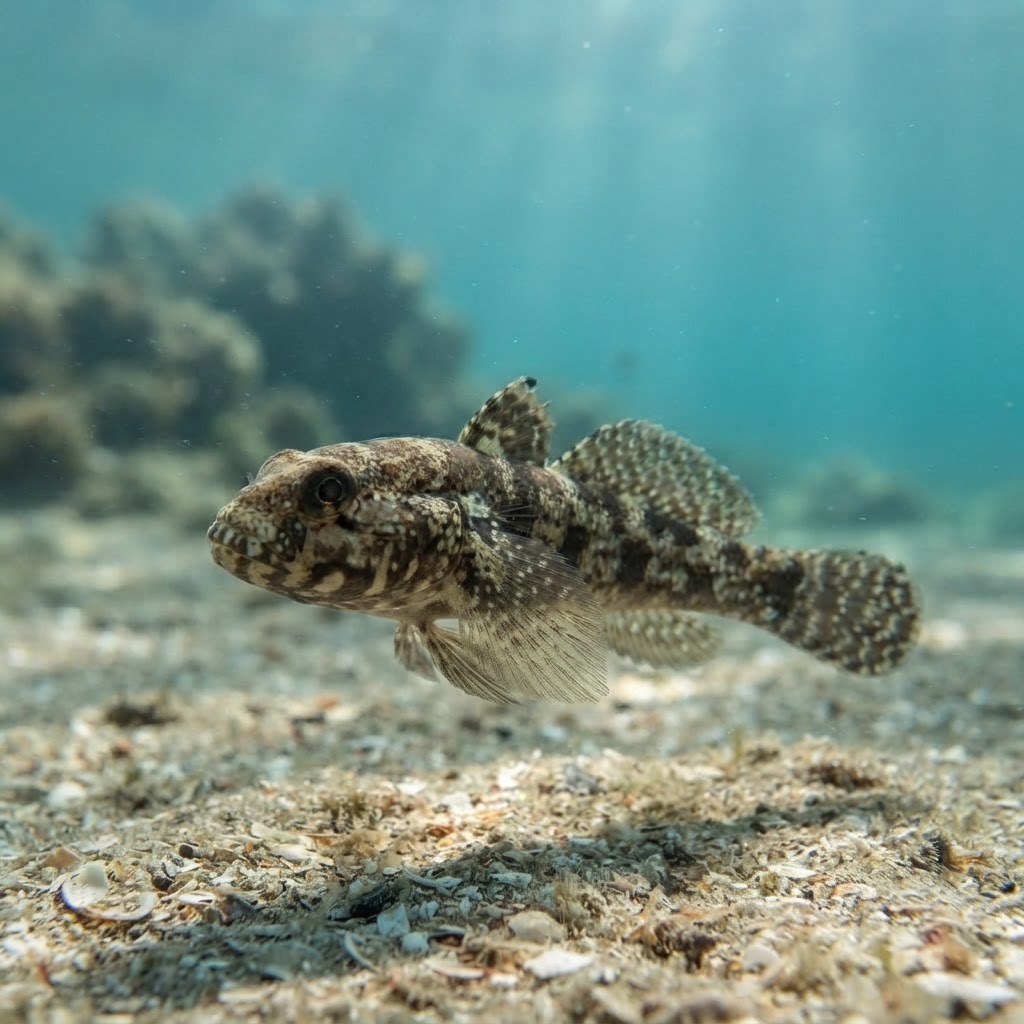
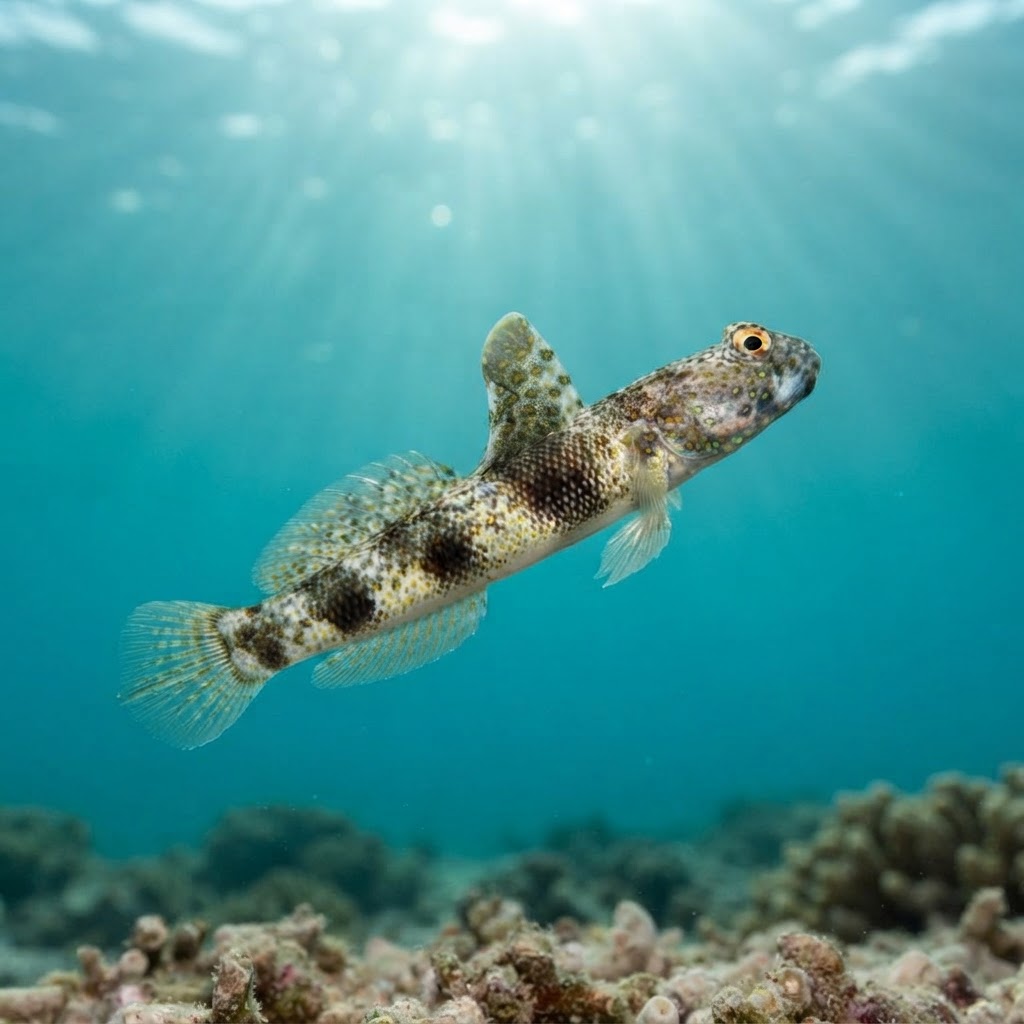
A slender goby around 7 cm long, pale grey to sandy in colour with fine dark speckling scattered across the body and an elongated, sail-like first dorsal fin it flicks upright as a signal. It hovers just above a burrow opening rather than resting flat on the sand, tail cocked and ready to dart in backwards. Look for the close association with a shrimp working the sand at the burrow mouth, a giveaway shared by the whole shrimpgoby group.
Spends its time hovering at or just above the entrance to a shared burrow, maintained jointly with a symbiotic shrimp that does the digging while the goby keeps watch. Divers who approach slowly and stay low get the best look, since any sudden movement sends it diving tail-first into the burrow. Most sightings come from sand and rubble patches on gentle slopes rather than hard coral, and it tends to sit still for long stretches, only flicking that raised dorsal fin as a signal to its shrimp partner.
The shrimp maintains the burrow by shovelling sand while keeping a constant antenna on the goby, which watches for predators and flicks its fin to warn the shrimp back underground, a partnership typical of the whole shrimpgoby group.
There is not enough seasonal data to call a peak season, so treat it as a year-round sighting. Water where it has been observed sits between 25.7 and 28.6C, comfortable tropical reef temperatures found through most of the year in Sulawesi and Timor-Leste.
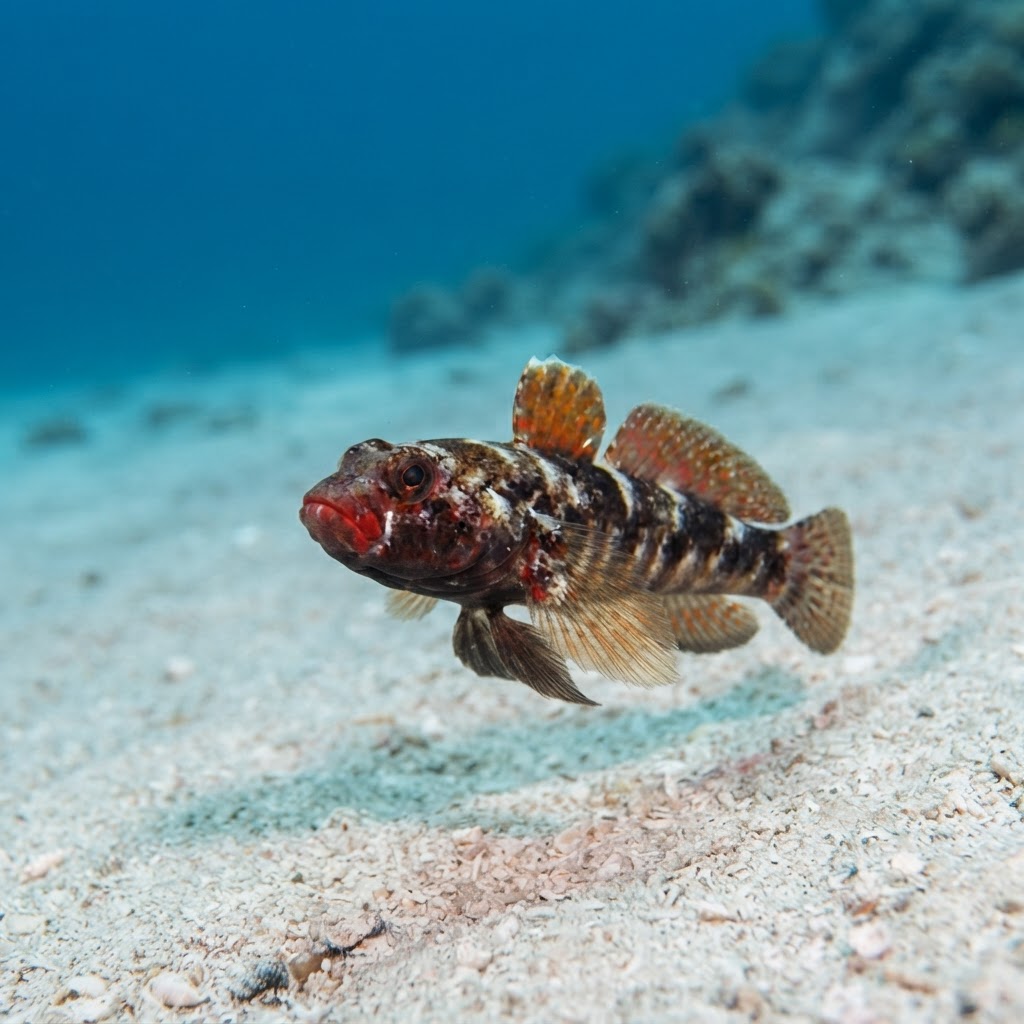
Reef neighbours a diver could mistake it for. Use the identification notes above to tell them apart.
Logged sightings cluster in Indonesia, particularly around Sulawesi, with a further record from Dili in Timor-Leste. It is a small, sand-loving species best sought on the muck and rubble slopes that these two regions are known for rather than open reef.
Mapping where Fan Shrimpgoby is logged…
Most records come from Sulawesi in Indonesia, with an additional sighting from Dili in Timor-Leste. Both are muck and sand-slope destinations rather than classic hard coral reef sites.
There is no detected seasonal pattern, so it can turn up year-round. It has been recorded in water between roughly 25.7 and 28.6C, typical of tropical reefs through most of the year.
Look for a small, pale speckled goby around 7 cm long hovering near a sand burrow with an elongated dorsal fin held upright. Its close pairing with a burrowing shrimp is the clearest giveaway.
They stay small, typically reaching about 7 cm in length, which is average for the shrimpgoby group.
The shrimp digs and maintains the shared burrow while the goby stands guard outside, watching for predators. If danger approaches, the goby signals with a fin flick and both retreat underground together.
Site and sighting data is aggregated from diver logs, iNaturalist and GBIF. For taxonomy and conservation status:
Slender Goby
806 sites