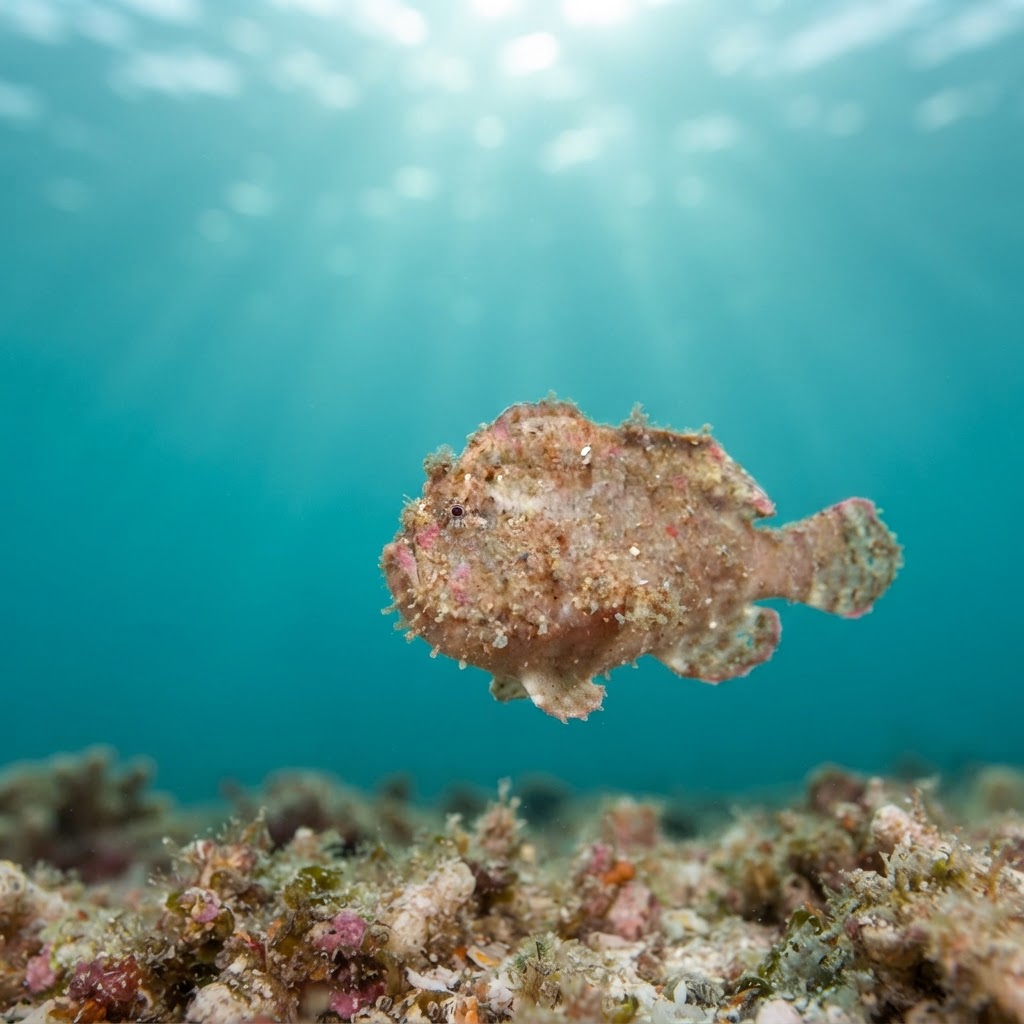
Antennarius pauciradiatus
Barely 4cm and easy to swim past: find dwarf frogfish on sponges and rubble around Grand Cayman, in water 24 to 28C, year-round.
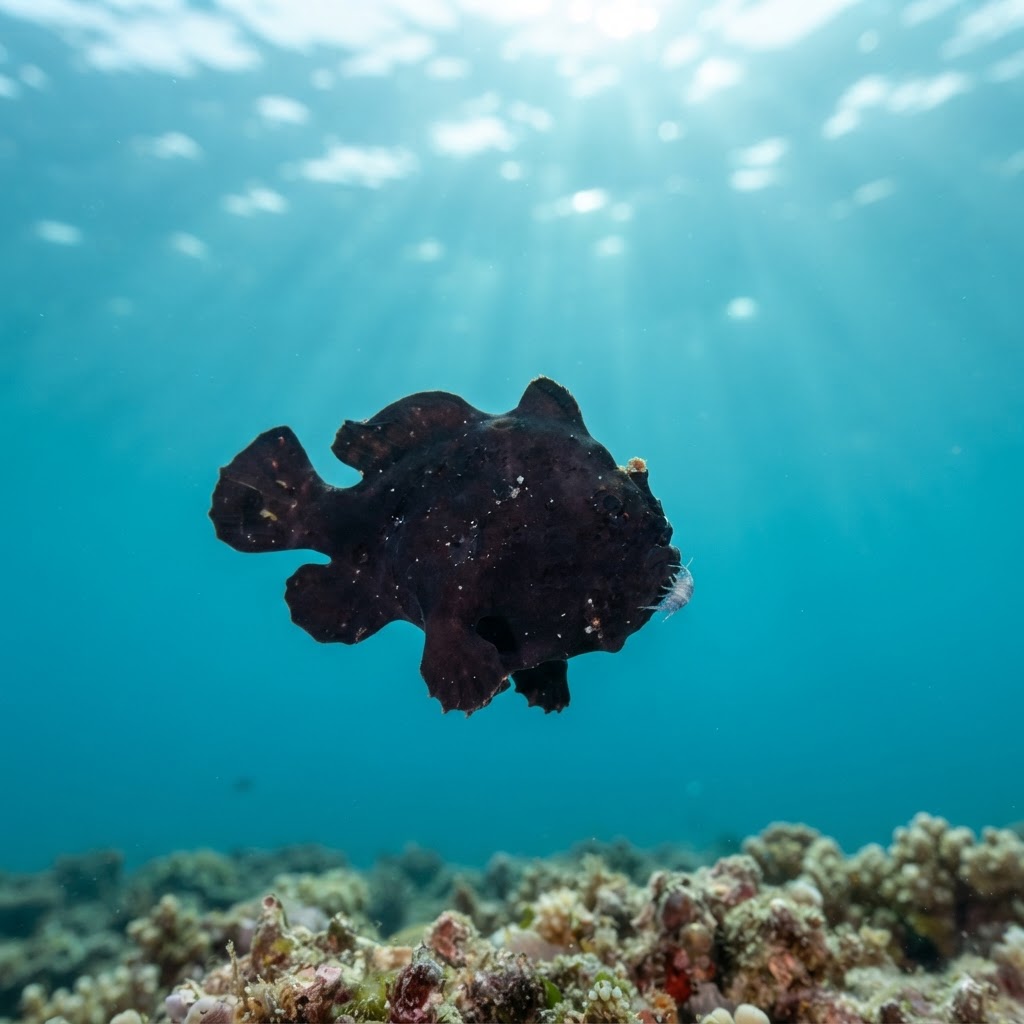
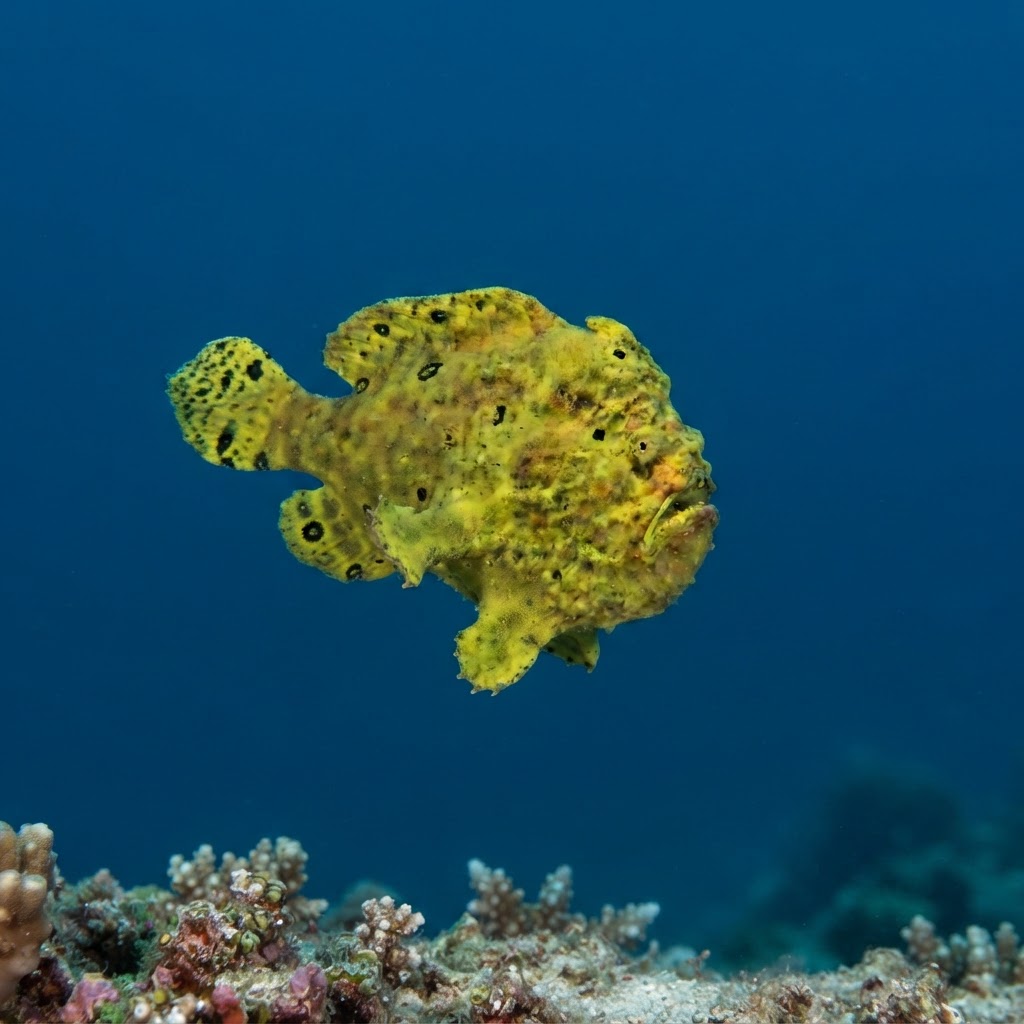
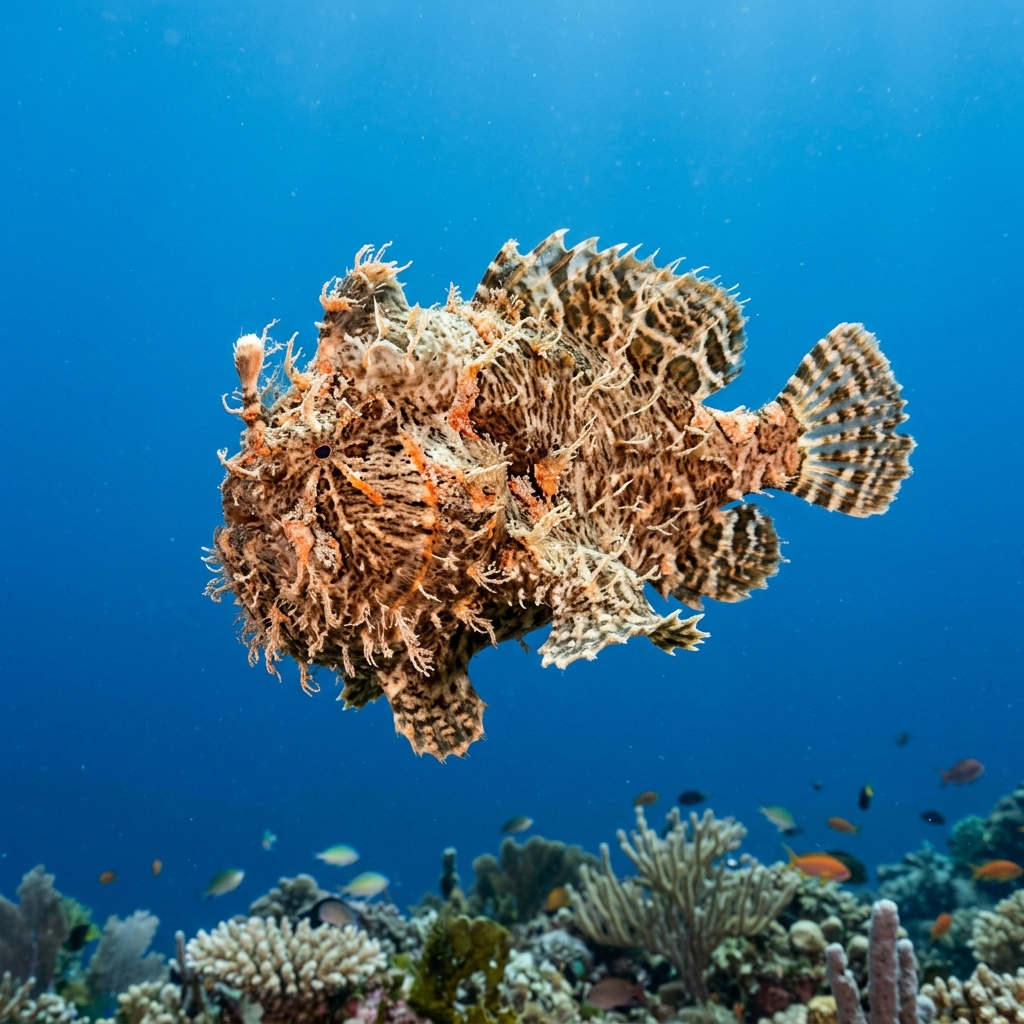
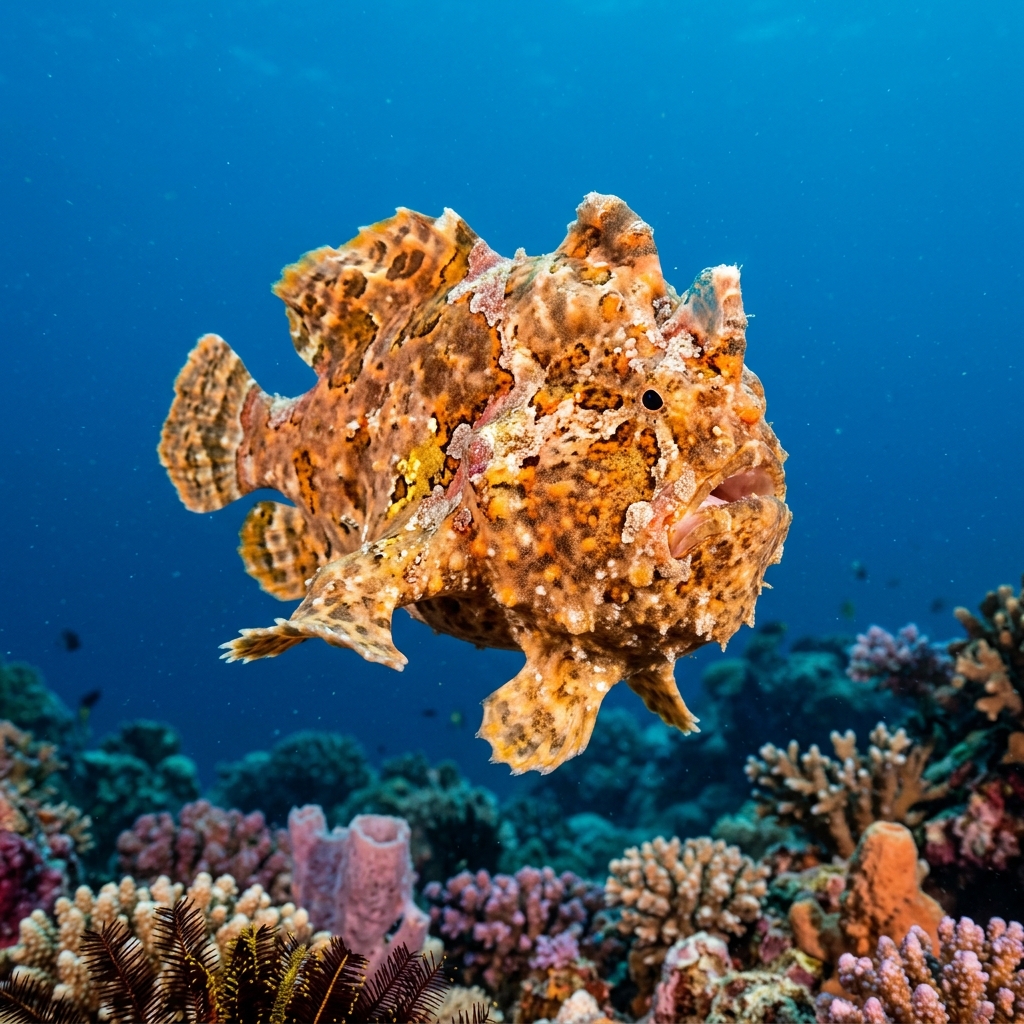
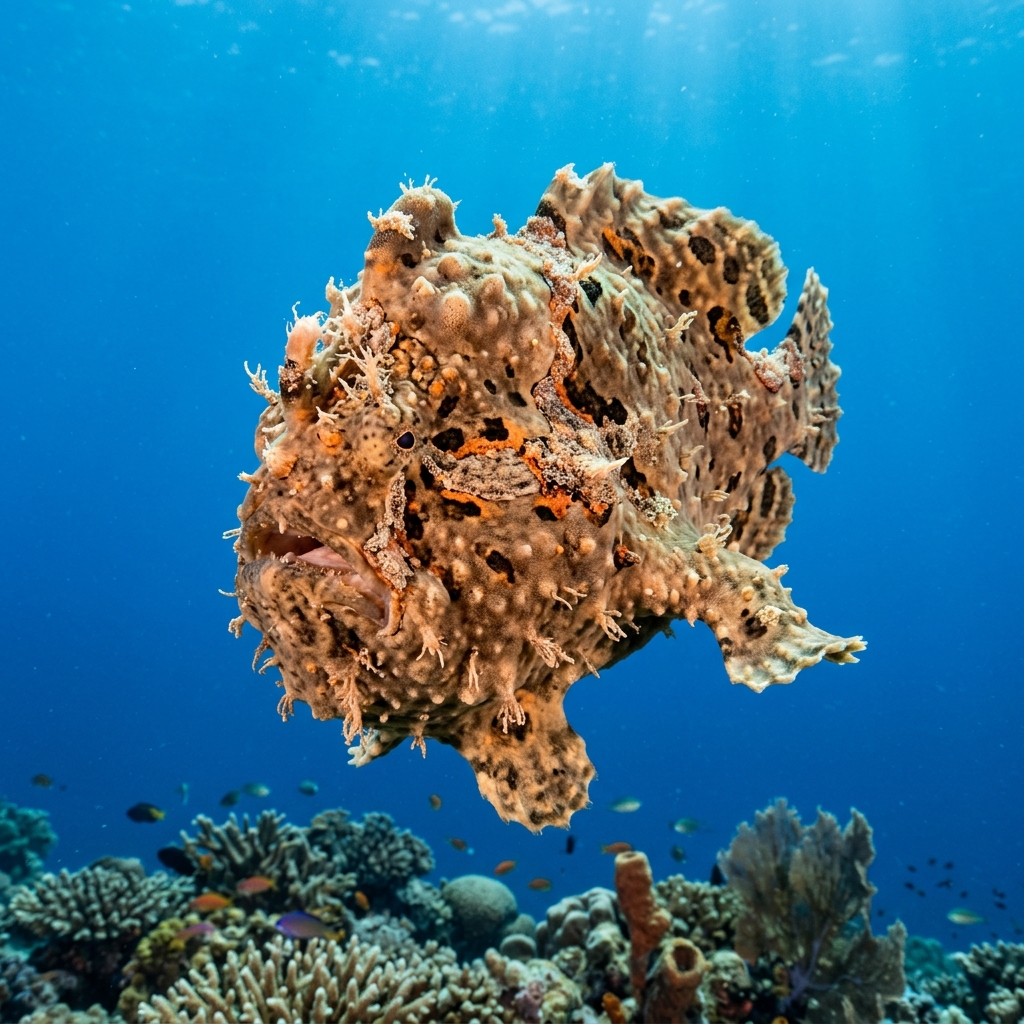
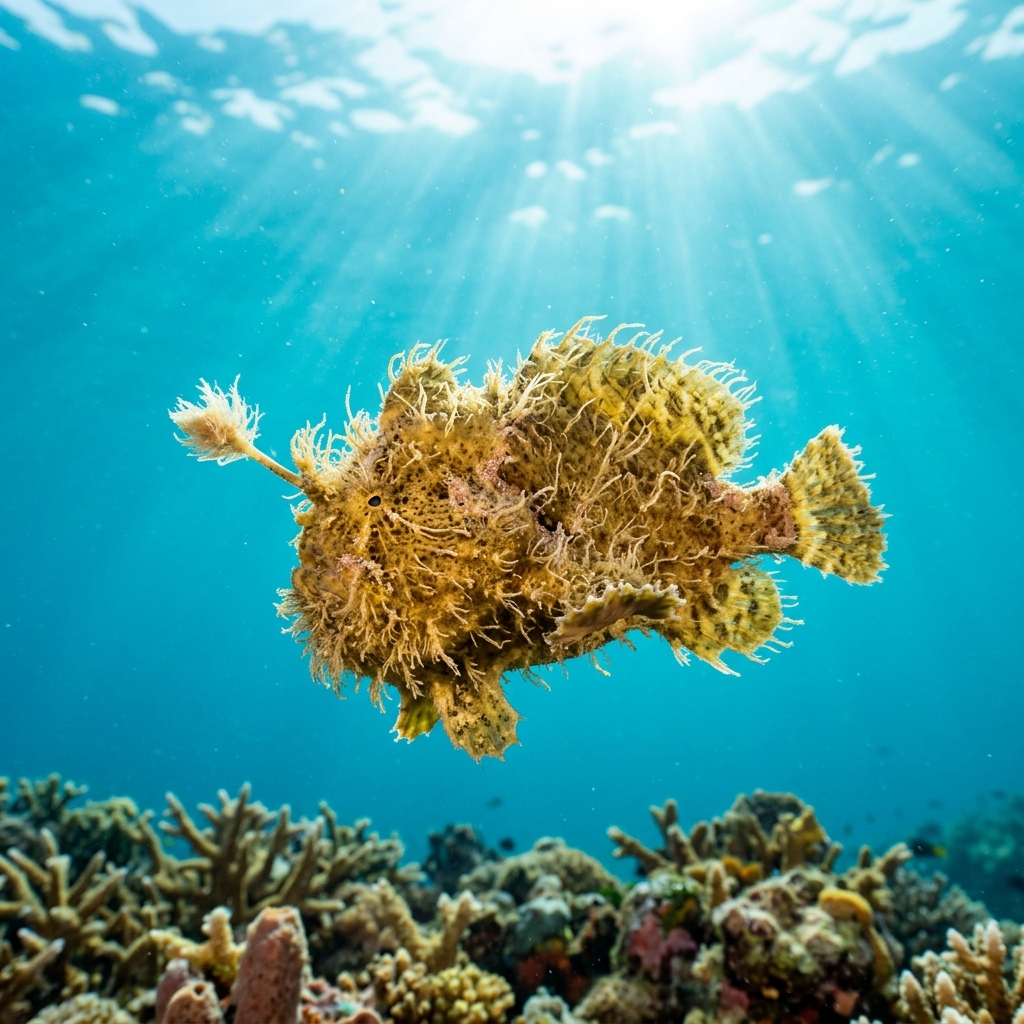
Barely the size of a thumbnail at around 4cm, this frogfish is one of the smallest you'll find on a reef, so most divers spot it only after a guide points it out. Body colour runs from pale cream to orange or red-brown, blotched irregularly to match whatever sponge or rubble patch it's sitting on. It has the classic squat, warty frogfish shape with a large upward-facing mouth, but lacks any of the long shaggy skin filaments seen on some relatives, giving it a smoother, rounder outline. Look for a small dark spot at the base of the dorsal fin, a useful marker on such a tiny fish.
Expect to find it sitting dead still on a sponge, rubble patch, or bit of coral debris, relying on its blotchy camouflage rather than moving away from divers. It's logged as rare to uncommon even at its known sites, so sightings tend to come from slow, close looks along the substrate rather than mid-water scanning. Dive guides in Grand Cayman often know specific perches where one has been holding station for days or weeks.
Like other frogfish, it hunts by twitching a modified first dorsal spine (the illicium) as a lure to draw small prey within striking range, then swallows it whole in a fraction of a second.
No clear season shows up in the sightings, and with a comfortable range of 23.7 to 28C it likely sits on the reef year-round. Plan around good visibility and a patient guide rather than a particular month.
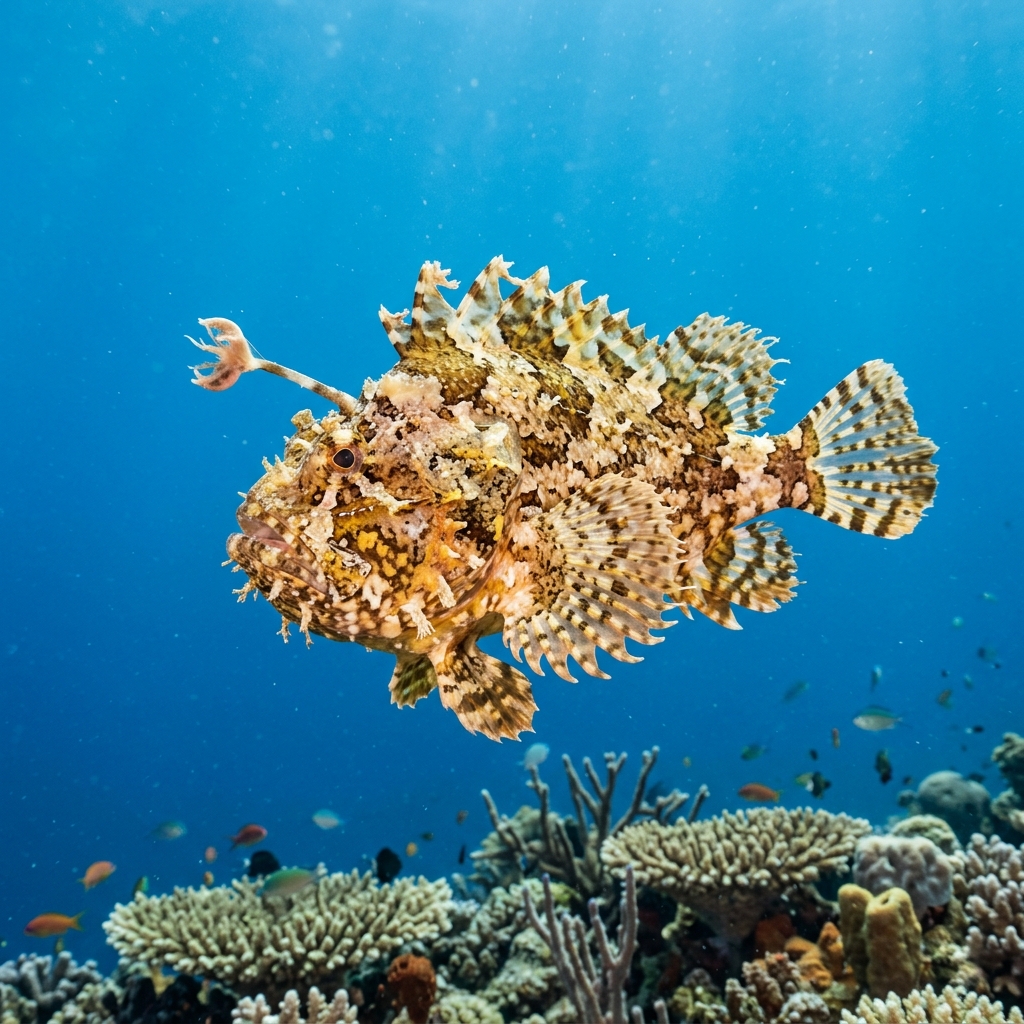
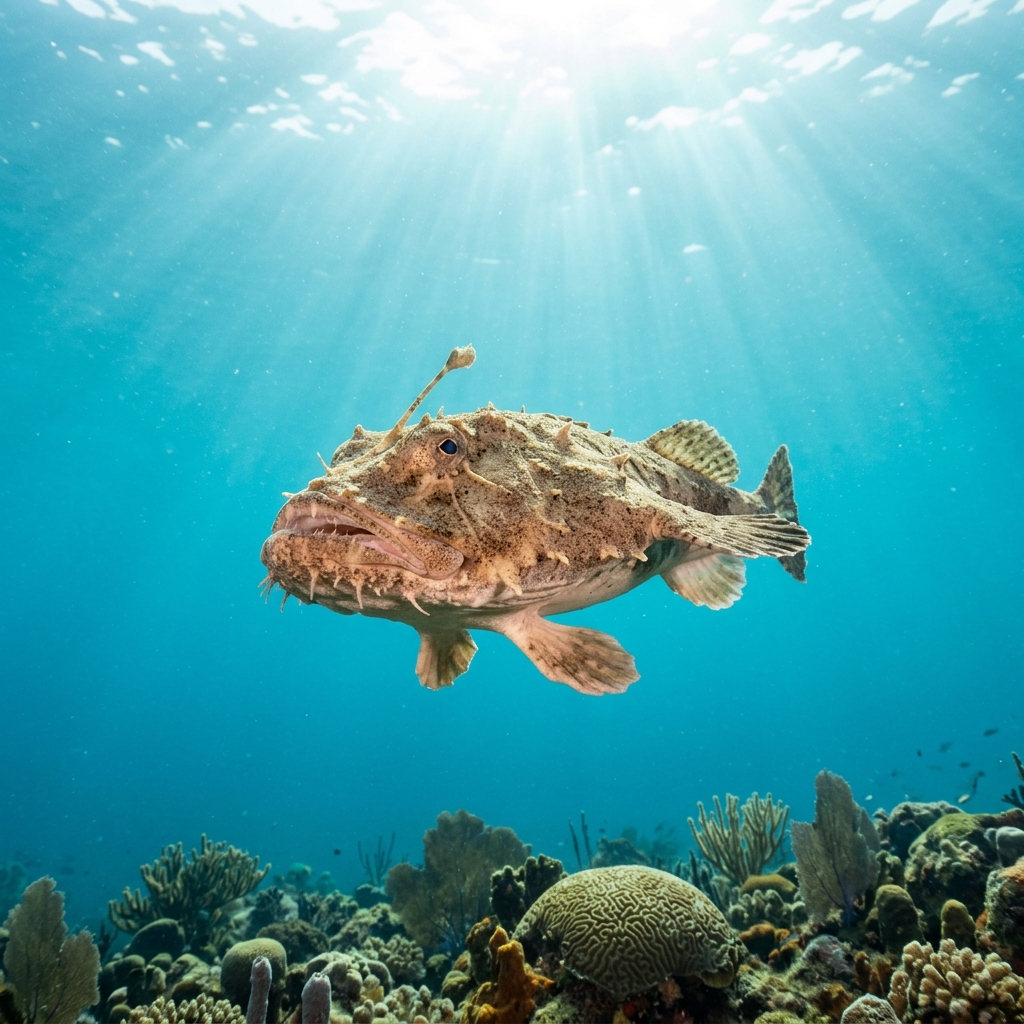
Reef neighbours a diver could mistake it for. Use the identification notes above to tell them apart.
Grand Cayman in the Cayman Islands is the most reliable place to look, with sightings logged across a good spread of its sites, and it also turns up along Mexico's Yucatán Peninsula. Outside these two areas it's rarely reported, so Caribbean reef dives with a sharp-eyed guide are your best bet.
Mapping where Dwarf Frogfish is logged…
Grand Cayman in the Cayman Islands is the strongest area for sightings, with additional records from Mexico's Yucatán Peninsula. Elsewhere it's rarely logged, so these two regions are the places to focus a search.
There's no detected season in the sightings data, and its comfortable temperature range of 23.7 to 28C suggests it's present on reefs year-round. Any time you can dive Grand Cayman or the Yucatán with a guide who knows current perches works.
Look for a fish barely 4cm long, blotched cream, orange or red-brown, sitting motionless on a sponge or rubble patch. It has a smooth, rounded frogfish body without long skin filaments, plus a small dark spot at the base of the dorsal fin.
They top out at roughly 4cm, making them one of the smallest frogfish species divers regularly encounter. Their tiny size is exactly why they're logged as rare even at sites where they're known to occur.
They fish with a built-in lure, twitching a modified fin spine to mimic a small worm or shrimp and drawing prey close before an ultra-fast gulp. It's the same ambush trick used across the frogfish family, just on a miniature scale.
Site and sighting data is aggregated from diver logs, iNaturalist and GBIF. For taxonomy and conservation status:
Giant Frogfish
1,292 sites