Antennarius multiocellatus
Palm-sized and expertly disguised, longlure frogfish turn up on sponges across Grenada and Guadeloupe in 27 to 28 C water year-round.
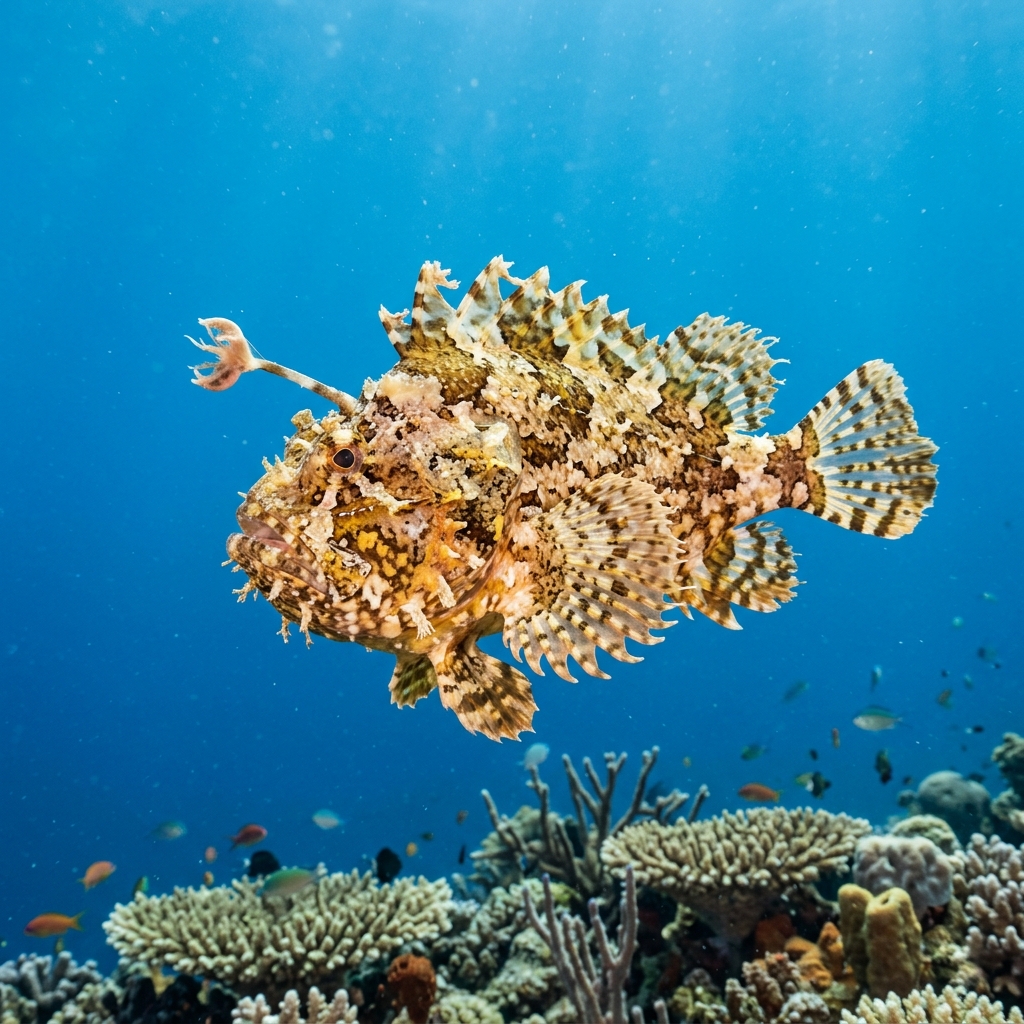
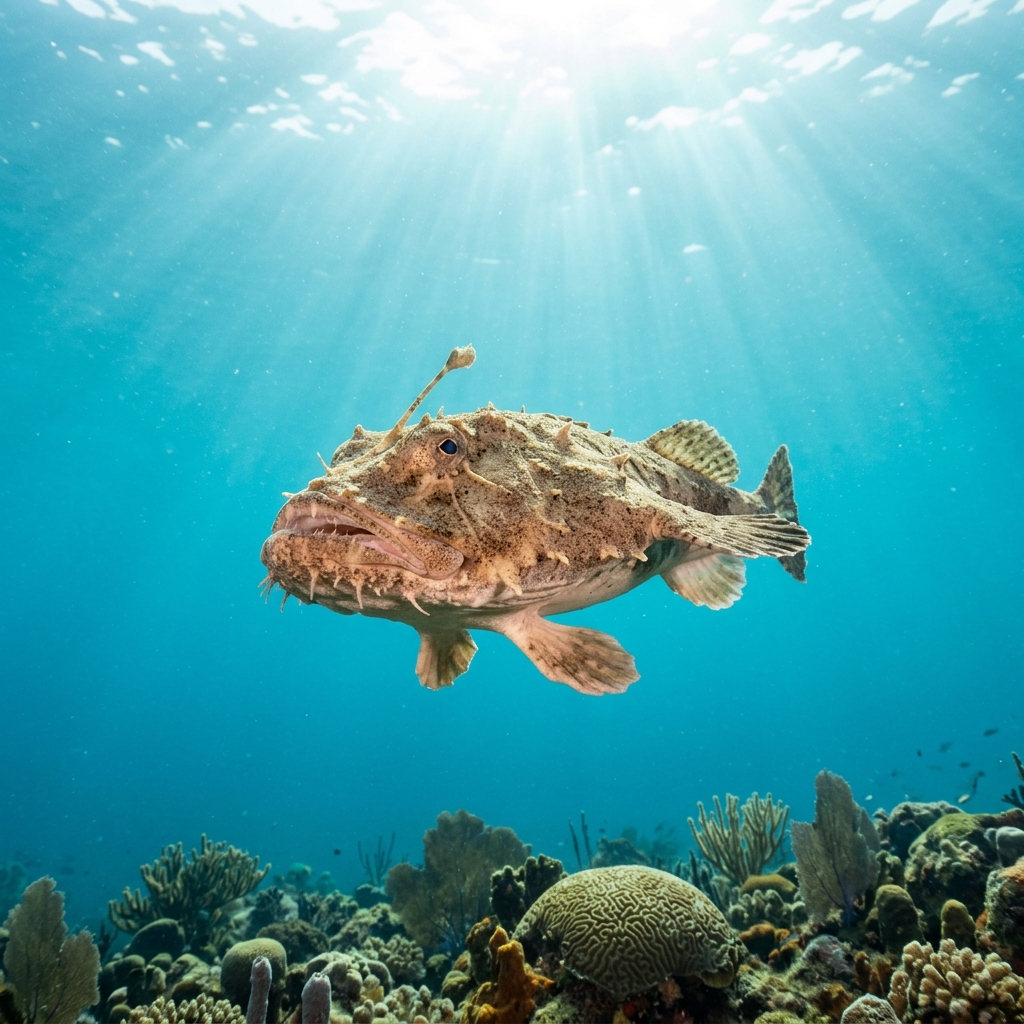
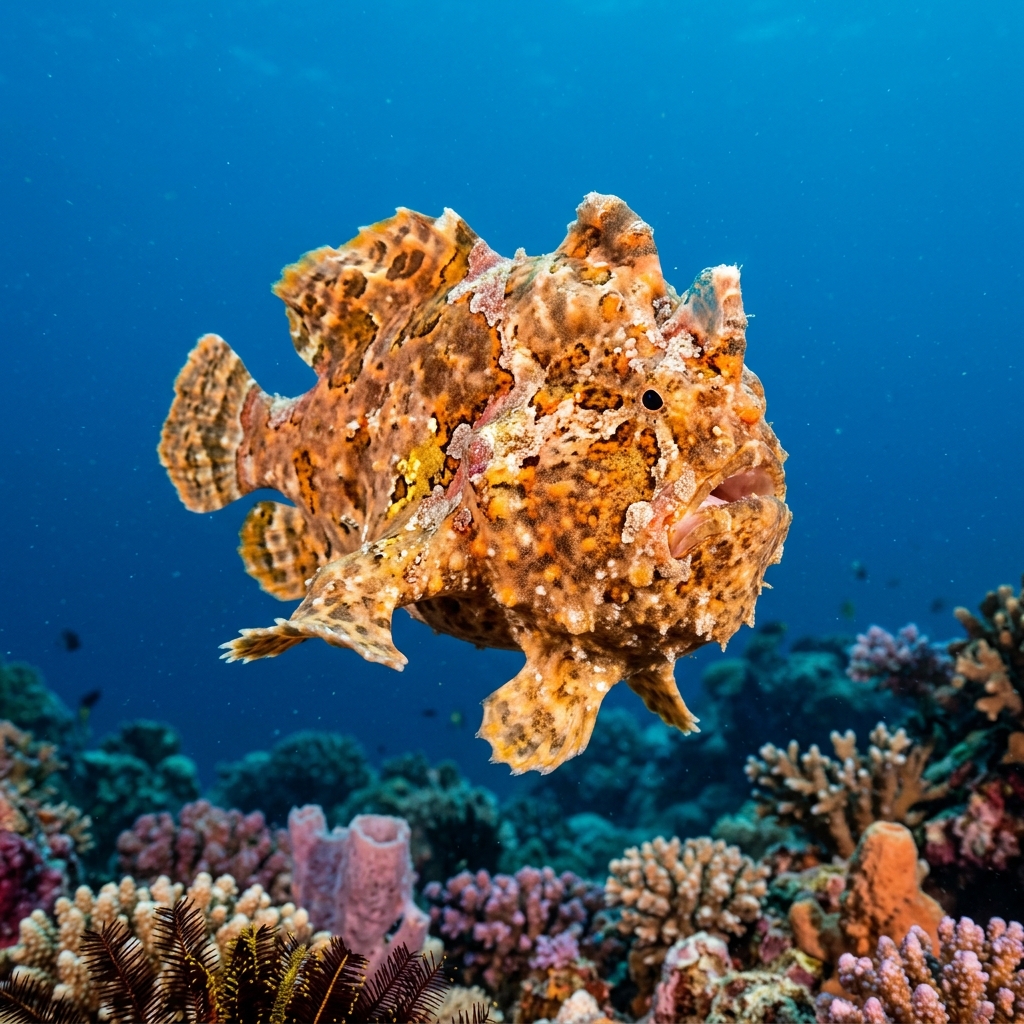
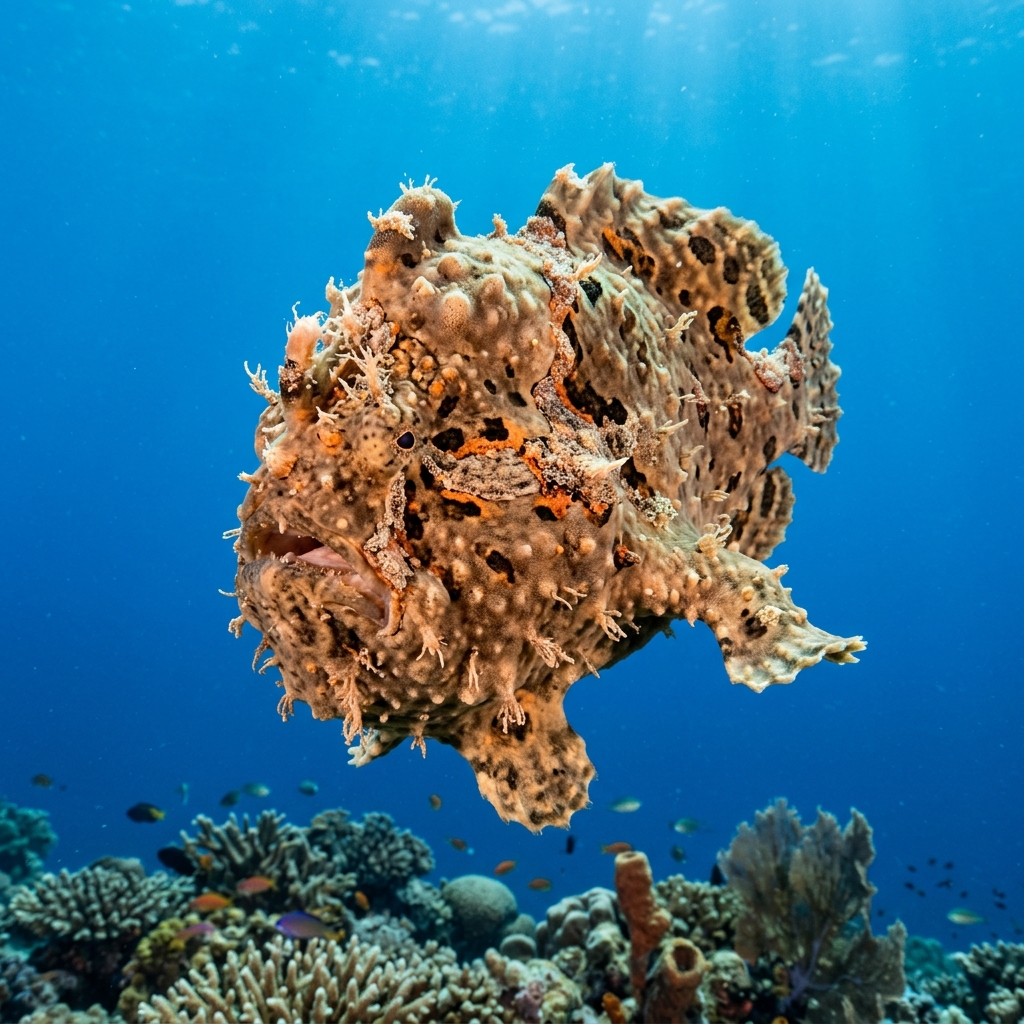
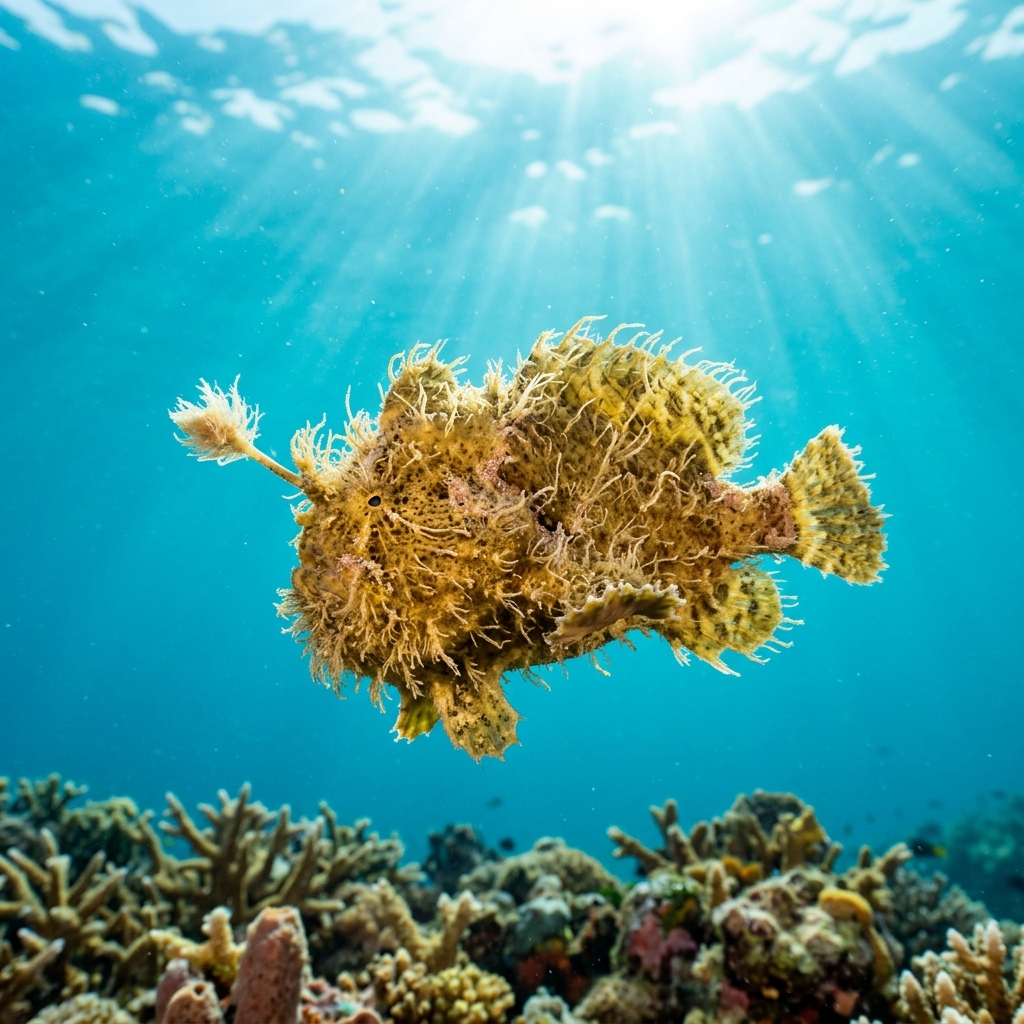
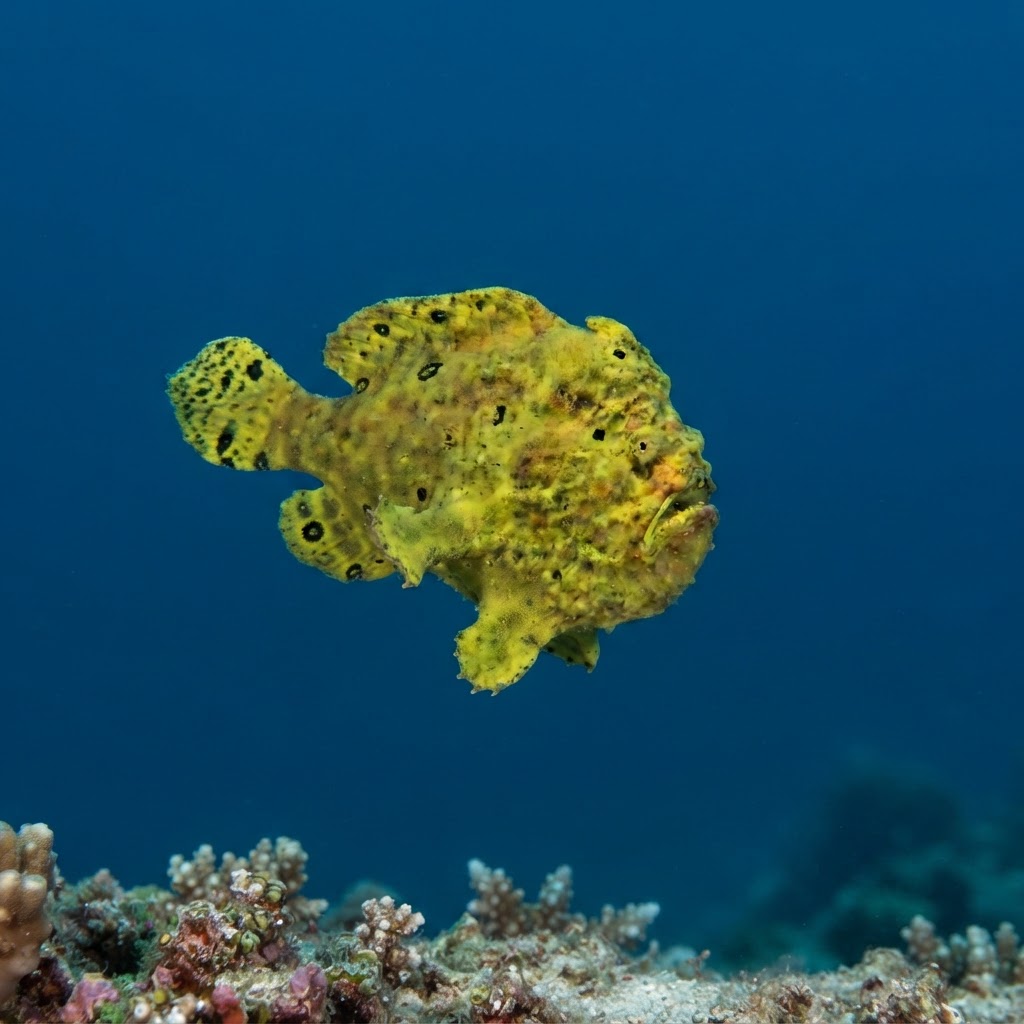
A stocky, warty body no longer than about 14 cm, usually yellow, orange or occasionally lavender with dark ocellated (eye-like) spots scattered along the flank. It sits still on sponges or rubble, using its lure-tipped first dorsal spine (the illicium) held out in front of its mouth to twitch and attract prey. The lure itself has a distinctive elongated worm-like tip, which is where the common name comes from and is one of the better clues separating it from other small Caribbean frogfish.
Expect to find it parked motionless on a sponge, rope or piece of rubble, blending in so well that most divers swim past it without noticing. When prey wanders close it flicks its lure and can strike in a fraction of a second, but around divers it mostly just sits tight rather than fleeing. Dive guides on Grenada and Guadeloupe reefs often know specific perches where the same individual has been logged for weeks at a time.
That worm-like lure tip is a real fishing rod: it is wiggled independently of the body to mimic a small prey item and pull in fish several times the frogfish's own effort to catch normally.
No clear seasonal pattern shows up in the sightings data, so treat this as a year-round find. Water in its core range sits at a steady 27.1 to 28.3 C, comfortable for it on the reef in any month.
Reef neighbours a diver could mistake it for. Use the identification notes above to tell them apart.
Most reliably logged in Grenada, especially around Grenada Island and Carriacou, with strong numbers also coming out of Guadeloupe's Grande-Terre and Basse-Terre coasts. Saba's Tent Reef, Saint Croix in the US Virgin Islands, and Bonaire's Leeward Coast are other solid bets, with a smaller but consistent presence in Dominica around Portsmouth and in Saint Lucia.
Mapping where Longlure Frogfish is logged…
Grenada is the strongest spot, particularly around Grenada Island and Carriacou, with Guadeloupe, Saba, Bonaire, the US Virgin Islands and Dominica also producing regular sightings.
There is no strong seasonal signal in sightings, so they are found year-round on Caribbean reefs where water holds around 27 to 28 C.
Look for a squat, warty, sponge-coloured fish under 14 cm with dark eye-like spots and a lure held forward of the mouth ending in a distinctive elongated tip. It rarely moves, so scanning sponges and rubble patches carefully is the key to spotting one.
They top out at around 14 cm, small enough to disappear against a sponge of similar size and colour.
They fish for their food, wiggling a worm-shaped lure on the tip of a modified dorsal spine to draw prey close before an extremely fast strike.
No, they are not dangerous. They stay still and pose no threat, though divers should avoid touching them or disturbing their perch.
Site and sighting data is aggregated from diver logs, iNaturalist and GBIF. For taxonomy and conservation status:
Giant Frogfish
1,292 sites