Histrio histrio
Spot the Sargassum fish in Florida, the Philippines, or Indonesia, a master of camouflage hiding in drifting sargassum weed, year-round in warm water.
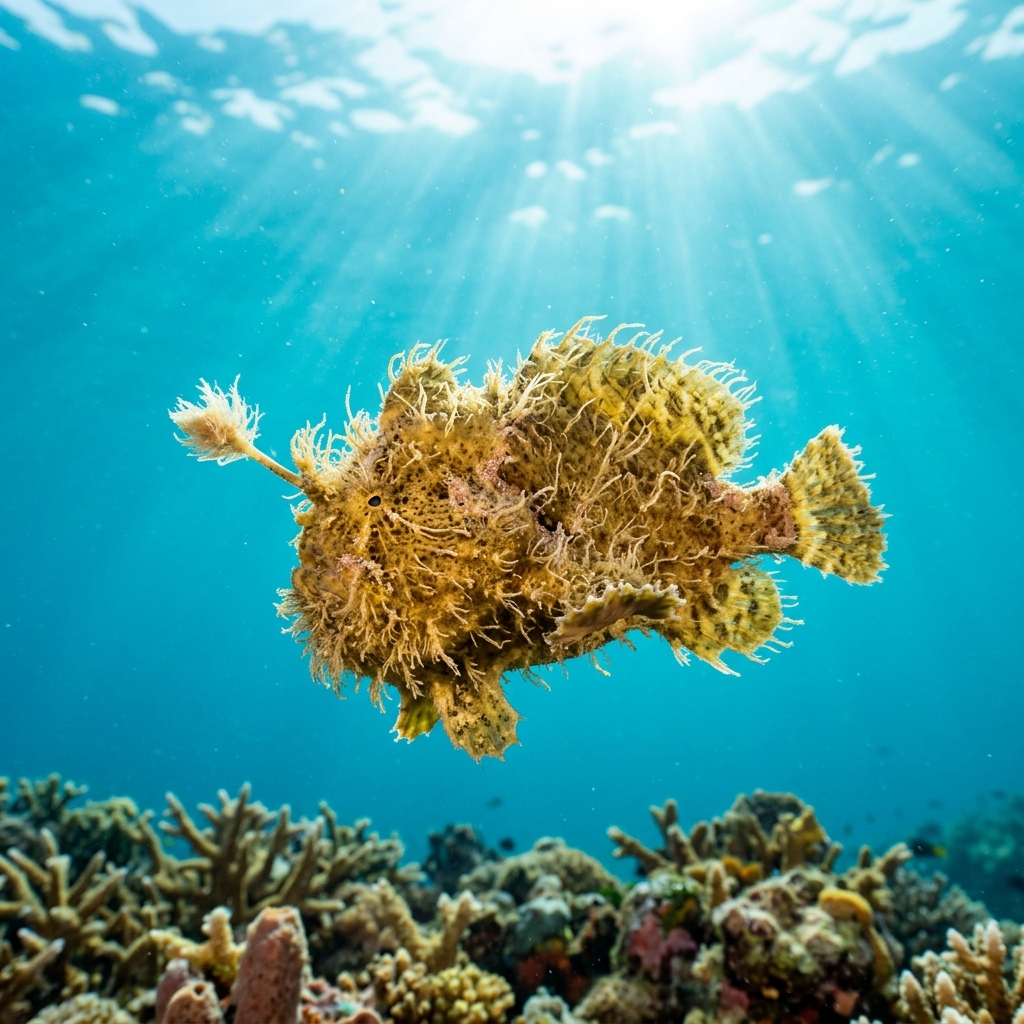
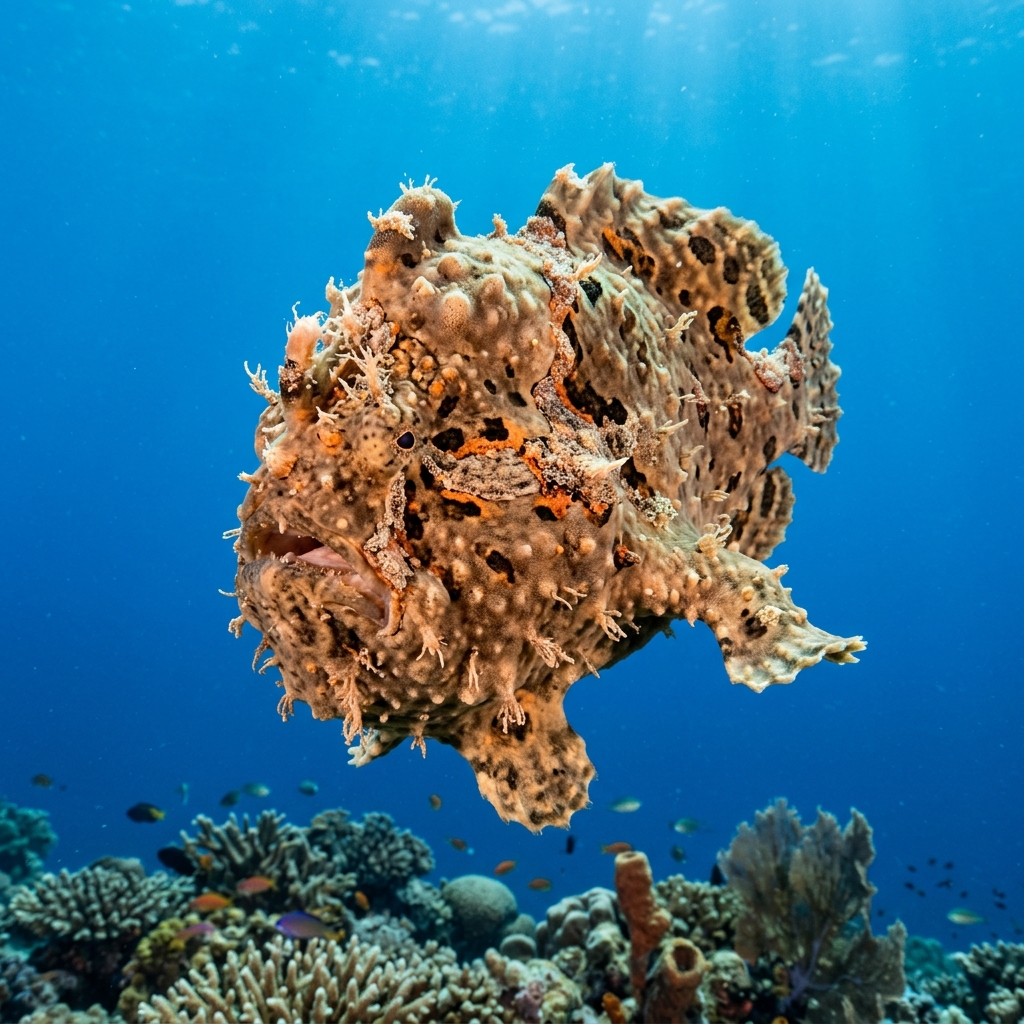
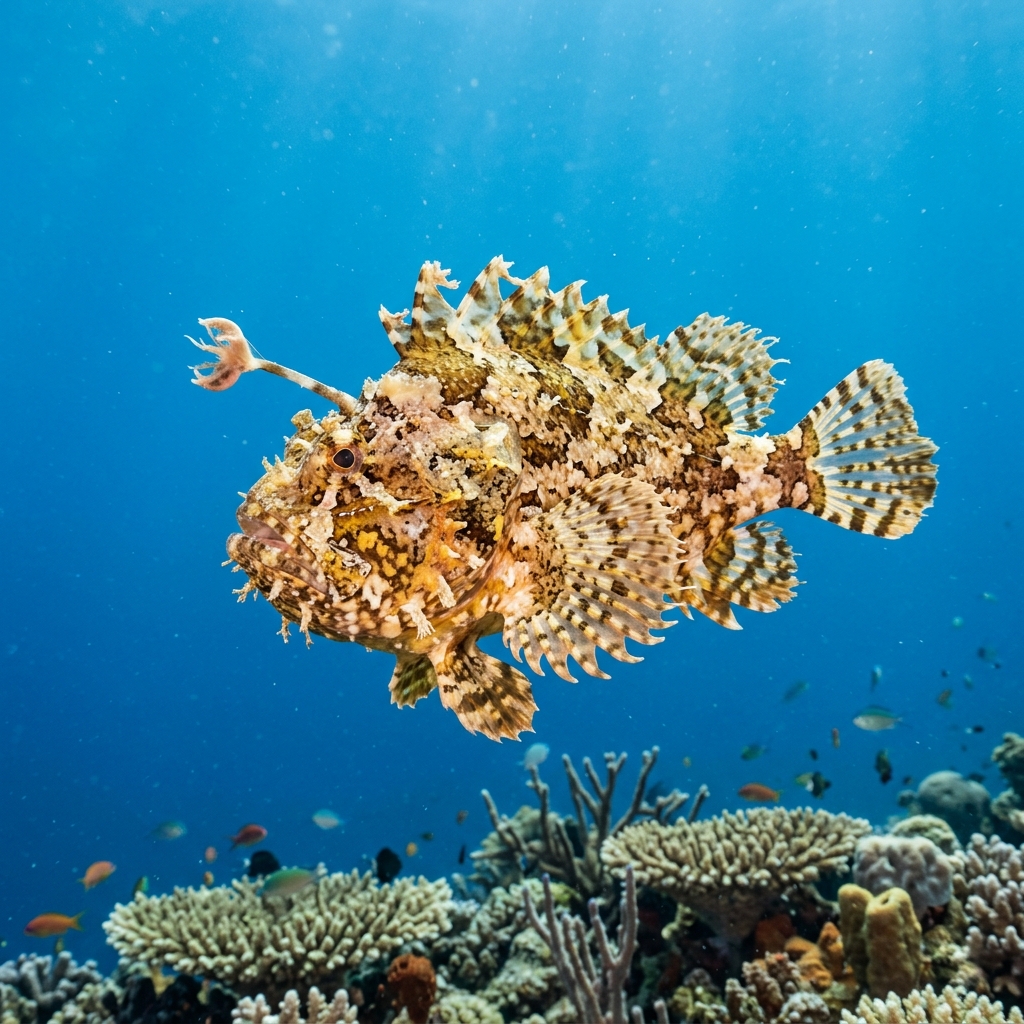
About the size of a fist at full length, the sargassum fish is built for one environment: floating sargassum weed (mats of free-drifting brown algae). Its body is smothered in irregular yellow-brown blotches, skin flaps, and weed-mimicking fleshy appendages that make it almost impossible to see until it moves. Like other frogfish, it has a modified first dorsal spine that doubles as a lure above the mouth, and it "walks" on pectoral fins rather than swimming. If you do spot one outside a sargassum mat, look for the stocky, compressed body shape and mottled patterning that sets it apart from any reef-dwelling frogfish.
Expect it to do absolutely nothing, and do it convincingly. Sargassum fish are ambush predators that hold perfectly still in sargassum clumps, relying on camouflage rather than flight; most individuals will sit tight even as you edge closer. When prey drifts near, the lure twitches above the upturned mouth, and the strike itself is almost too fast to follow. They are daytime hunters, so that's when you have the best chance of watching them feed.
A sargassum fish can engulf prey nearly as large as itself: the mouth expands to roughly twelve times its resting volume in a strike that takes as little as six milliseconds, one of the fastest feeding strikes in the vertebrate world.
No strong seasonal peak has emerged from the sighting data, so it can turn up year-round. It is most comfortable in water between about 21 and 29 °C, which means tropical and warm-temperate reefs hold it consistently across all seasons.
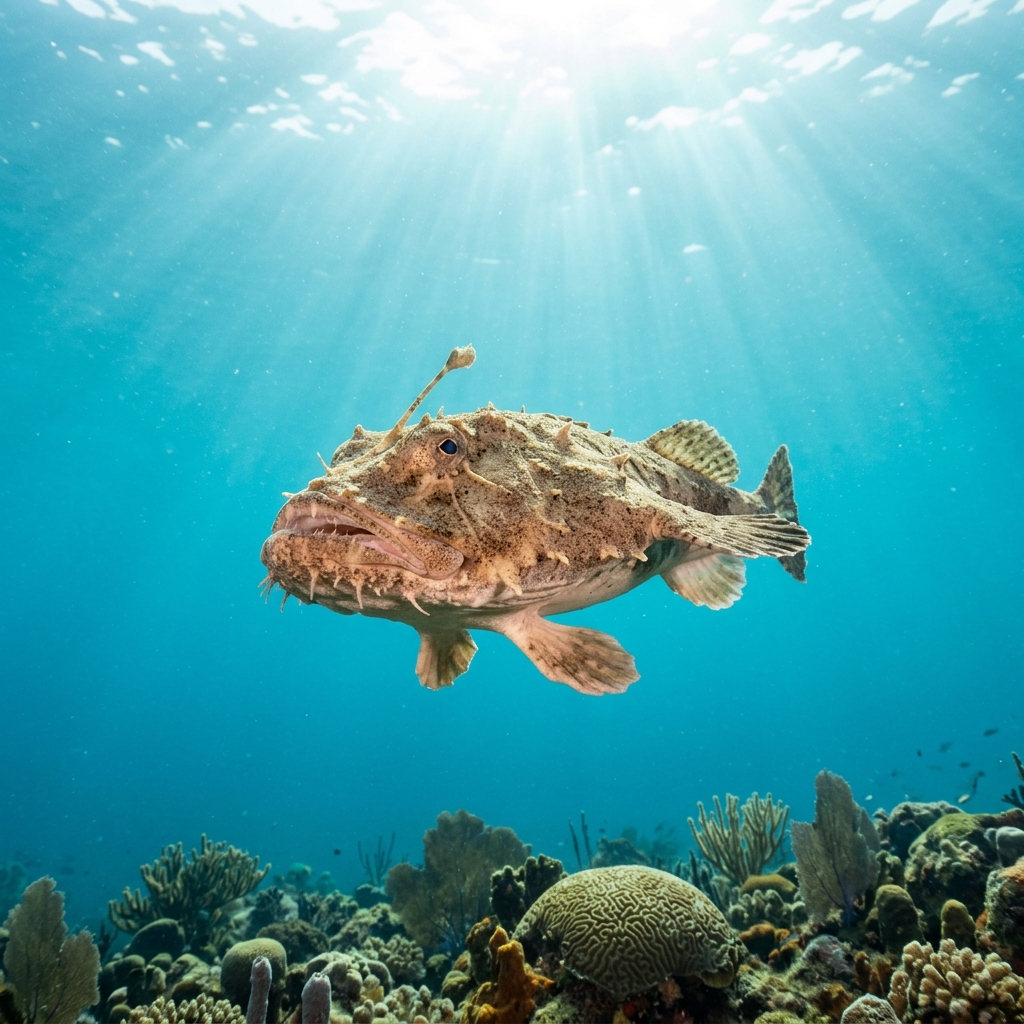
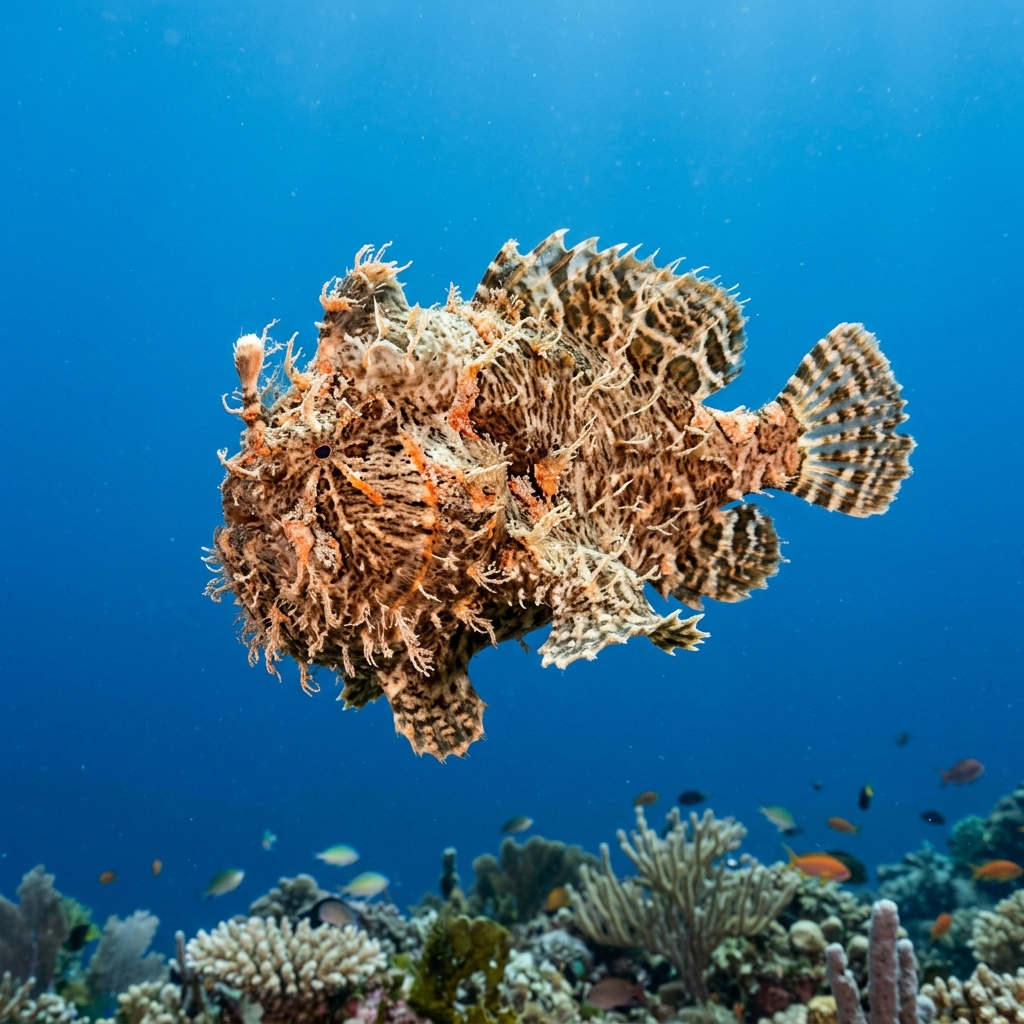
Reef neighbours a diver could mistake it for. Use the identification notes above to tell them apart.
Most sightings are logged in the United States (particularly Florida and the Southeast), the Philippines (especially around Palawan and Apo Reef), and Indonesia (Maluku, Papua, and Nusa Tenggara). Australia, both Queensland and Western Australia, also has solid site coverage. Cuba, Colombia, and the Bahamas round out the Atlantic-Caribbean range.
Mapping where Sargassum Fish is logged…
The strongest site coverage sits in Florida and the US Southeast, Palawan and Apo Reef in the Philippines, and the Maluku and Papua regions of Indonesia. Queensland and Western Australia, plus the Bahamas and Cuba, also feature regularly in logged sightings.
There is no single peak season in the data. Because the species tolerates a wide warm-water range of roughly 21 to 29 °C, it is present on tropical reefs throughout the year. Dive whenever conditions are calm enough to spot drifting sargassum mats at the surface.
Look for a fist-sized fish with a mottled yellow-brown body covered in skin flaps and fleshy weed-like tabs, sitting motionless inside floating sargassum weed. The lure on its forehead and the way it props itself on pectoral fins like hands are the key giveaways. No other frogfish routinely lives in open-ocean sargassum mats.
They typically reach around 14 cm, roughly the length of a playing card. Despite that modest size, they can swallow prey almost as large as themselves thanks to a hugely expandable mouth.
Rare is the most common frequency rating logged by divers. The challenge is partly the species itself and partly knowing where to look, it lives in drifting sargassum rather than on a fixed reef, so encounters depend on surface weed being present near the dive site.
Site and sighting data is aggregated from diver logs, iNaturalist and GBIF. For taxonomy and conservation status:
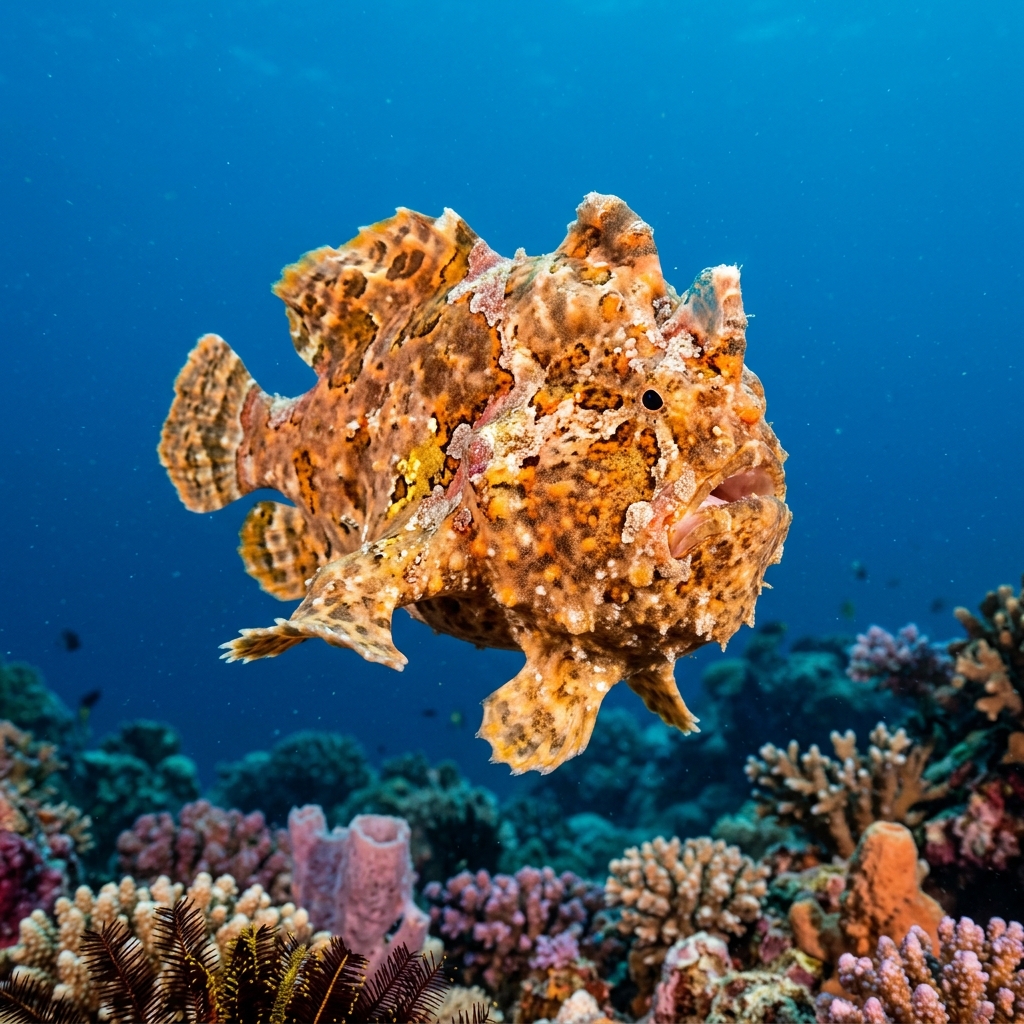
Giant Frogfish
1,292 sites