Antennarius striatus
One of diving's hardest fish to spot, find Striate Anglerfish in Florida, the Philippines and Queensland, and learn the ID tricks that actually work.
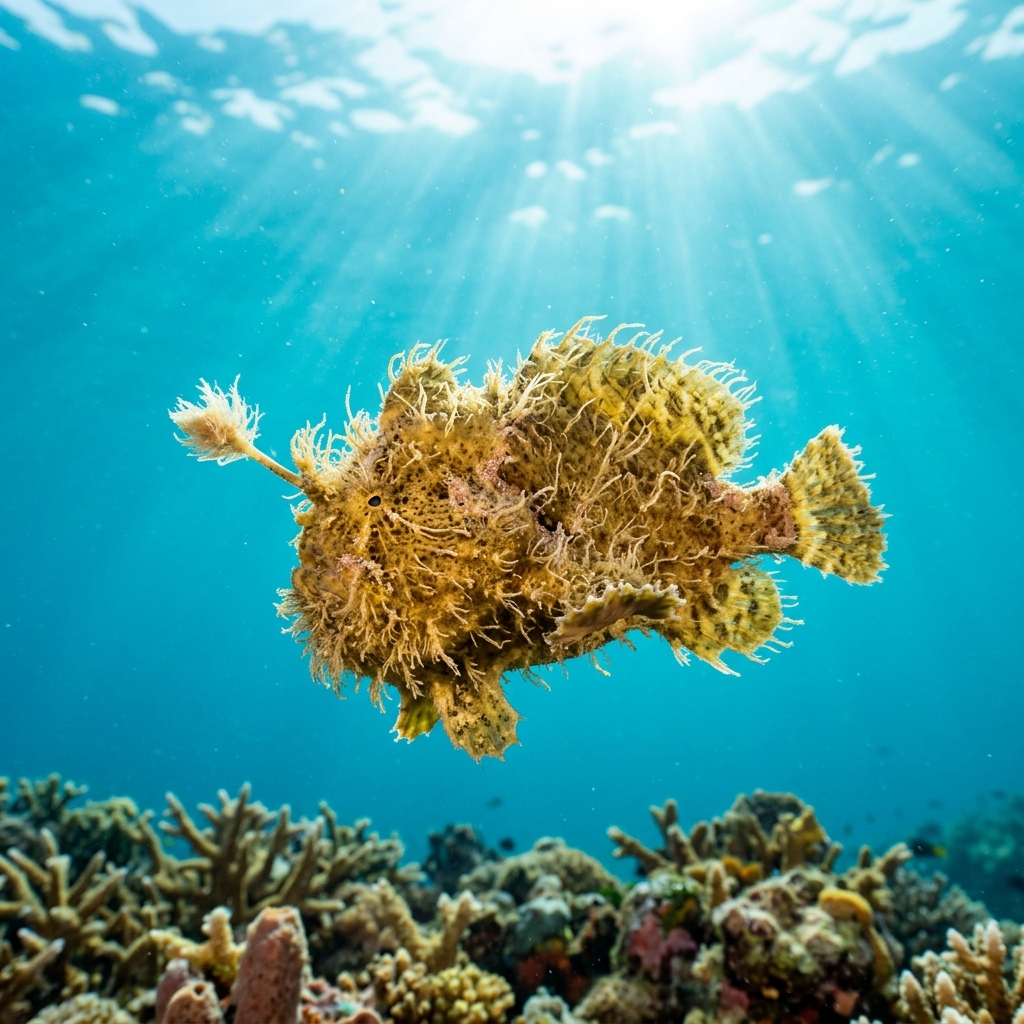
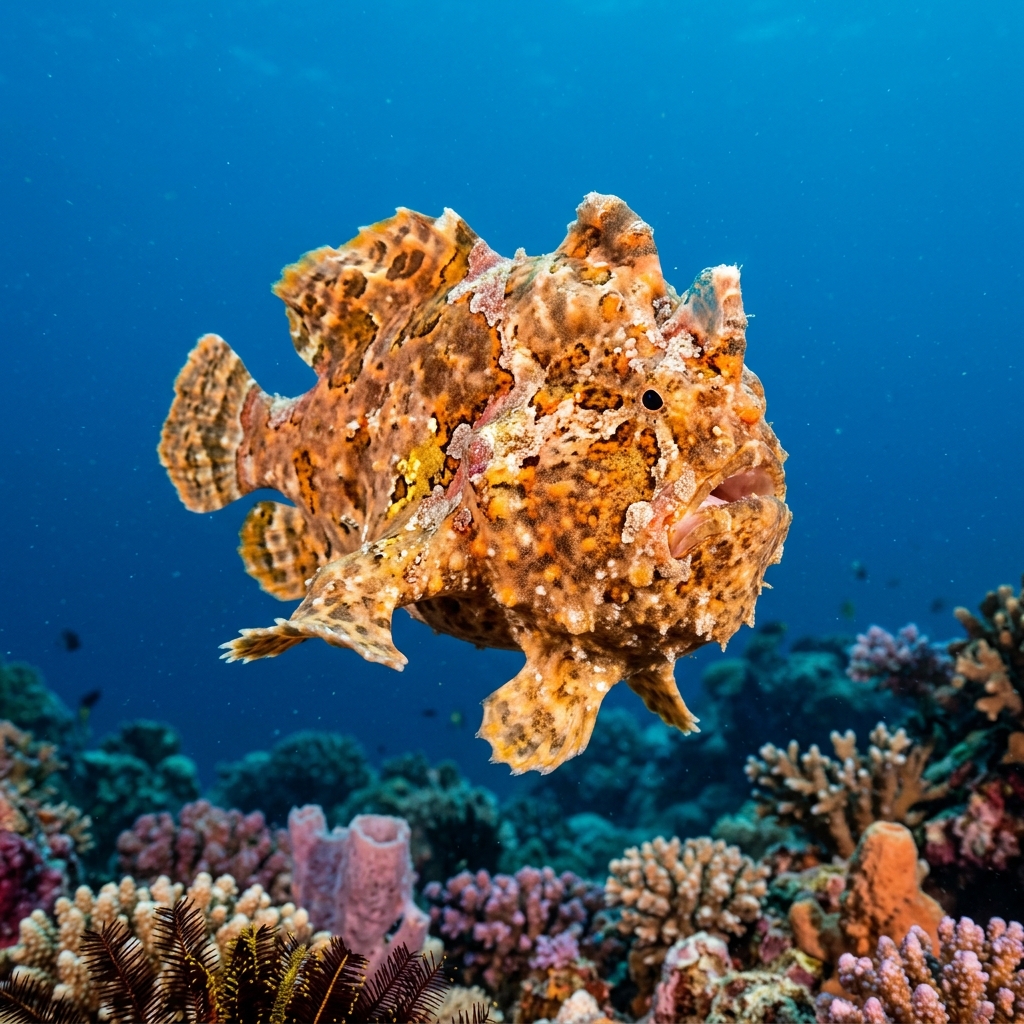
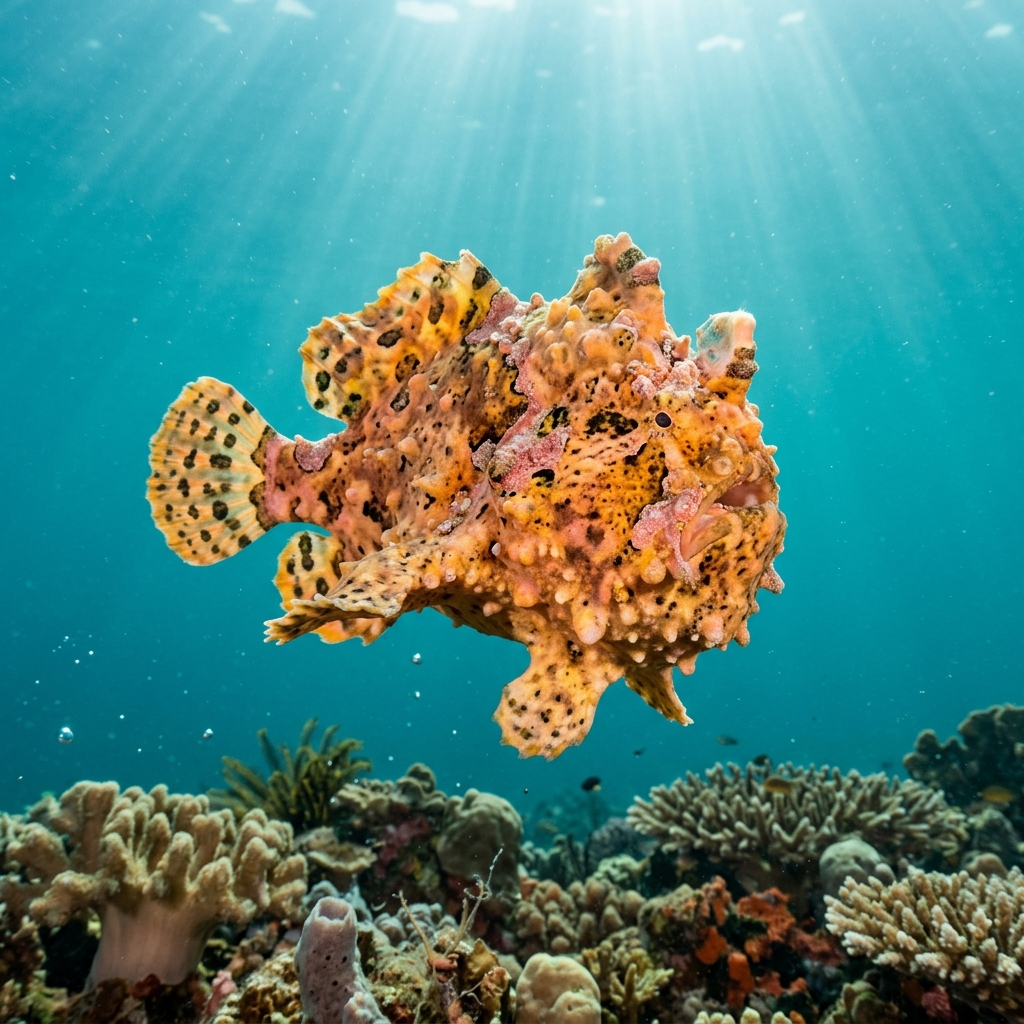
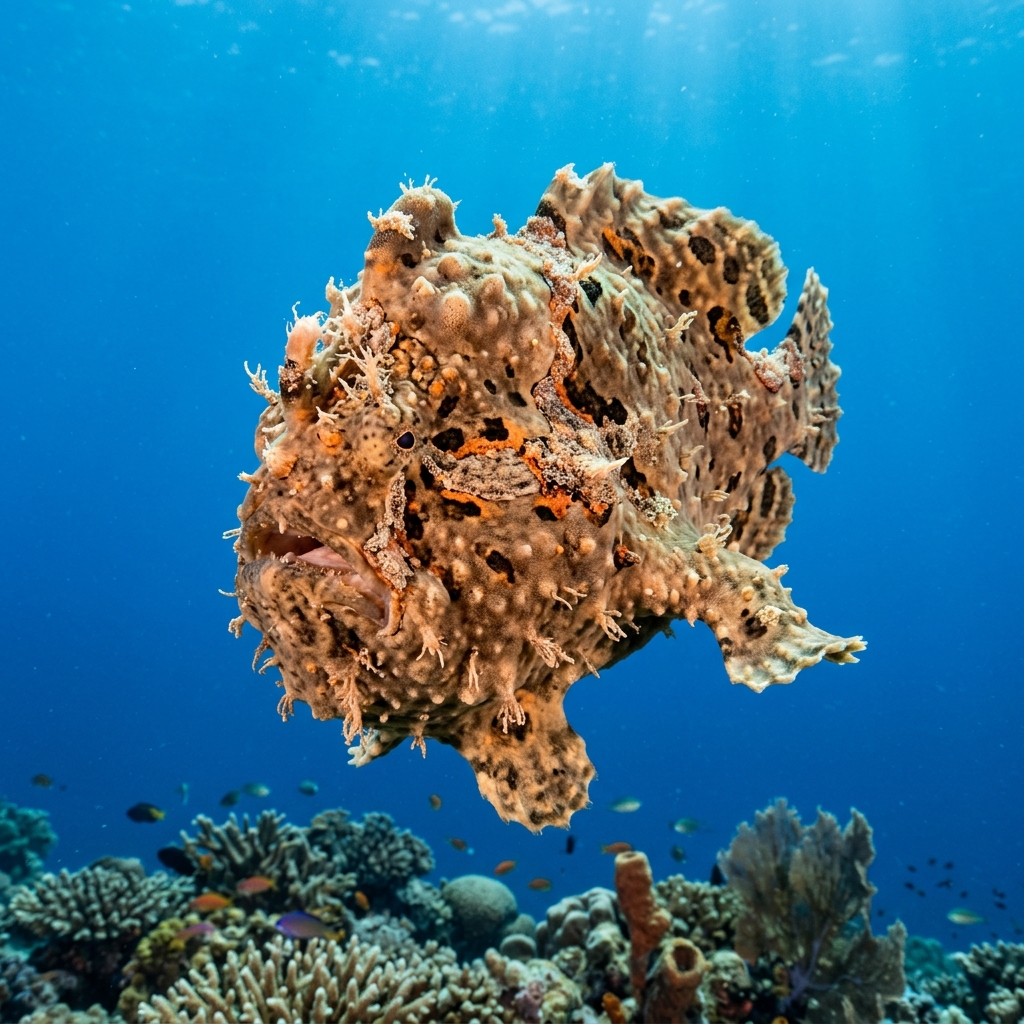
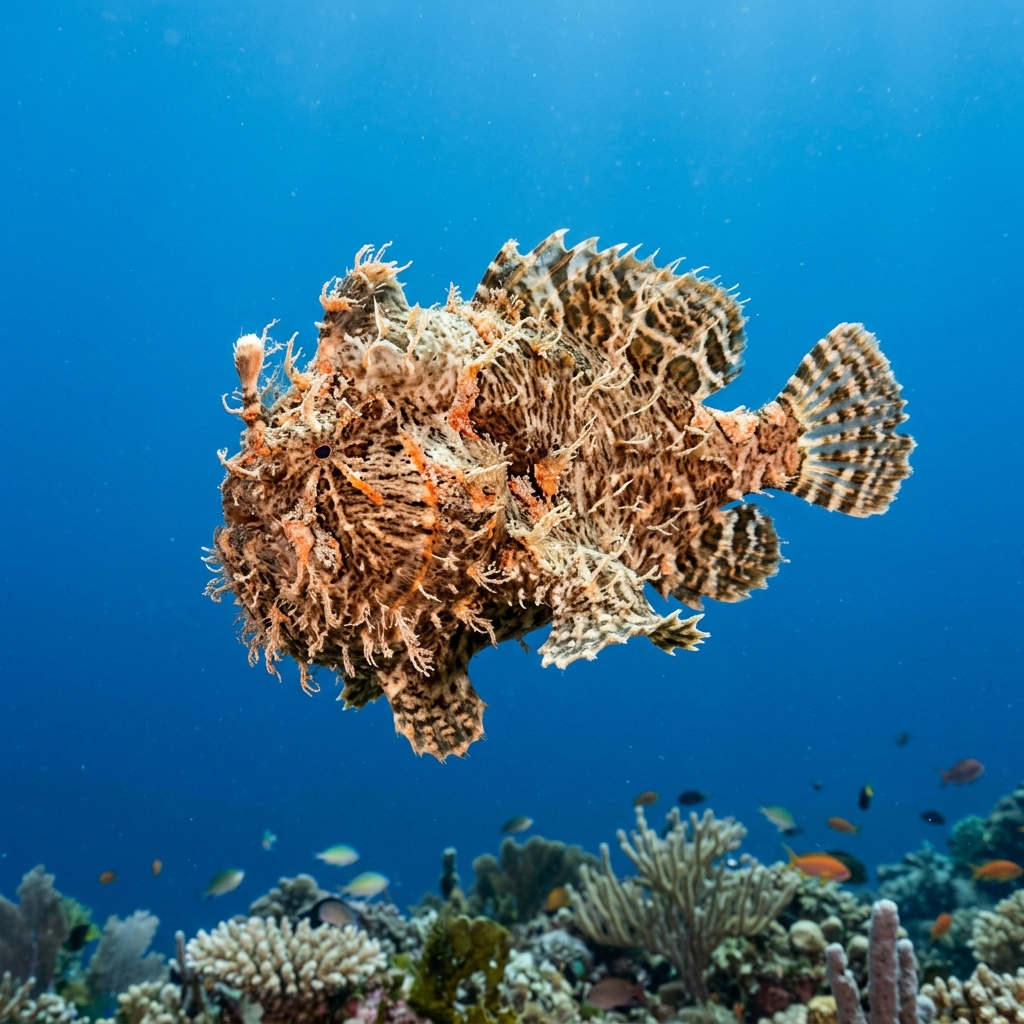
Around 17 cm long, this stocky, lumpy fish sits motionless on the reef and is almost always the same colour as whatever it has parked itself on, tan, brown, orange, yellow, or near-black. The key feature to look for is the illicium (modified first dorsal spine) tipped with a worm-like or tentacled esca (lure), which it wiggles above its head to attract prey. Body surface is covered in fine, hair-like spinules that break up the outline and enhance camouflage. If you spot what looks like an irregularly textured clump of sponge or algae with tiny eyes, look for that dangling lure.
Expect to find it completely still, relying entirely on camouflage rather than flight when a diver approaches, it will often sit tight even when you get very close. Watch the top of its head: the worm-like esca twitches and wriggles to lure small fish and crustaceans within gulping range. Encounters happen during daylight hours, when it actively hunts from the same resting spot, sometimes for days at a stretch.
Frogfish can lunge and engulf prey in as little as six milliseconds, one of the fastest predatory strikes of any vertebrate. The striate anglerfish's cryptic sit-and-wait strategy means the prey never sees it coming.
Northern Hemisphere and tropical sites hold this species across many months given its tolerance for water between roughly 18 and 29 °C. In the Southern Hemisphere, the limited data available points to sightings concentrating between January and May.
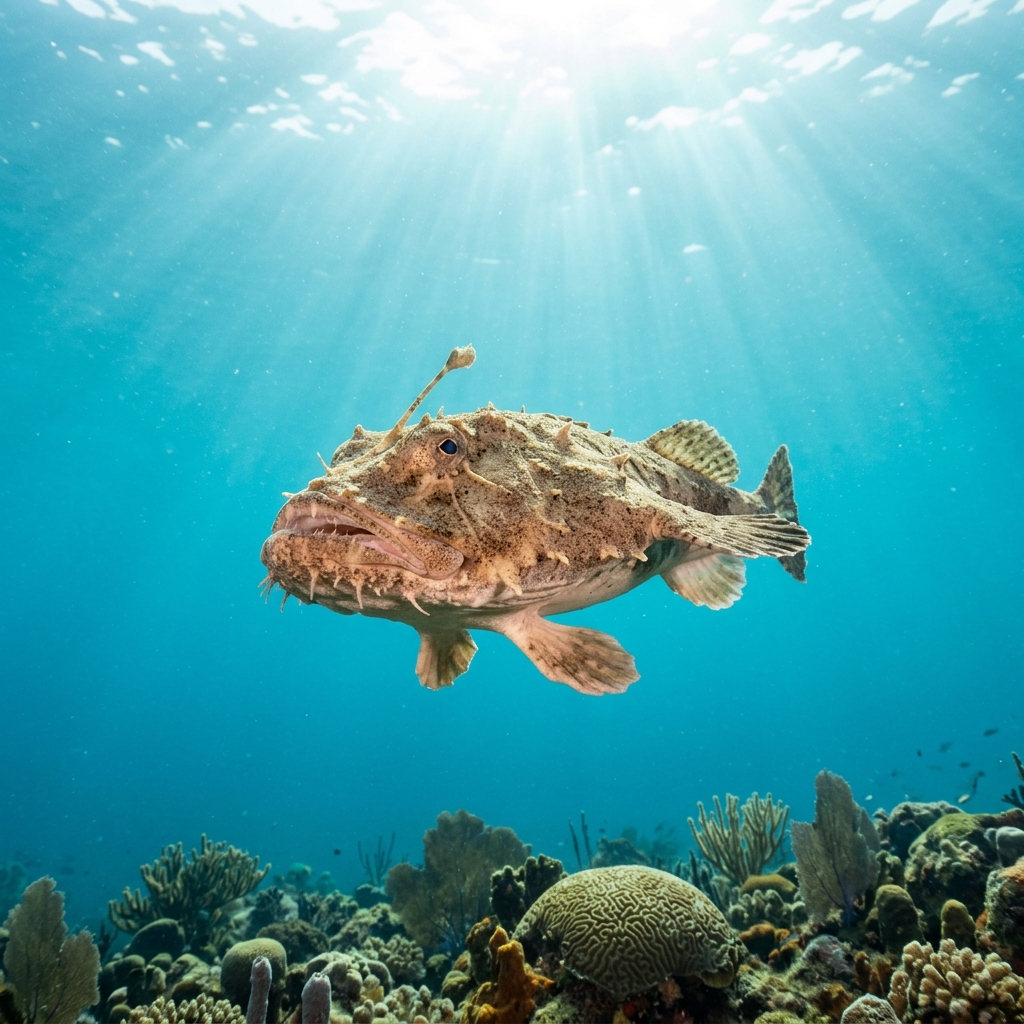
Reef neighbours a diver could mistake it for. Use the identification notes above to tell them apart.
Most logged in the United States, particularly across Florida and the Southeast, and in the Philippines, especially the Visayas and Palawan regions. Australia, Queensland and Western Australia in particular, and Japan's Izu Peninsula are also strong areas. Brazil's Northeast Coast and Indonesia round out the best-represented locations.
Mapping where Striate Anglerfish is logged…
They are most reliably reported in Florida and the Southeast United States, the Philippine Visayas and Palawan, Queensland and Western Australia, Japan's Izu Peninsula, and Brazil's Northeast Coast. The species has a wide global range but sightings are scattered, so targeted searches at known frogfish sites pay off.
On tropical and subtropical reefs in the Northern Hemisphere, the species is present across much of the year within its preferred water temperature range of roughly 18 to 29 °C. In the Southern Hemisphere, available sighting records concentrate between January and May.
Look for a lumpy, motionless lump on rubble or sponge that appears to have tiny eyes and a wriggling worm dangling from above its head. That dangling appendage, the esca, is the clincher. Colour alone is unreliable as individuals match their background closely, ranging from pale yellow to near-black.
Adults typically reach around 17 cm, making them a medium-sized frogfish. Their compact, globe-shaped body makes them appear even smaller when tucked against a sponge or rock.
Yes, across sites where they have been recorded, the most typical sighting frequency is rare. Their camouflage is so effective that they are almost certainly encountered far less often than they actually occur. Slow, methodical searches of rubble slopes and sponge-encrusted rock give the best chance of a sighting.
Site and sighting data is aggregated from diver logs, iNaturalist and GBIF. For taxonomy and conservation status:
Hairy Frogfish
987 sites