Ogcocephalus cubifrons
Flat, sand-coloured and oddly shaped, this reef walker turns up on sandy patches in Florida and the Carolinas year-round in warm water.
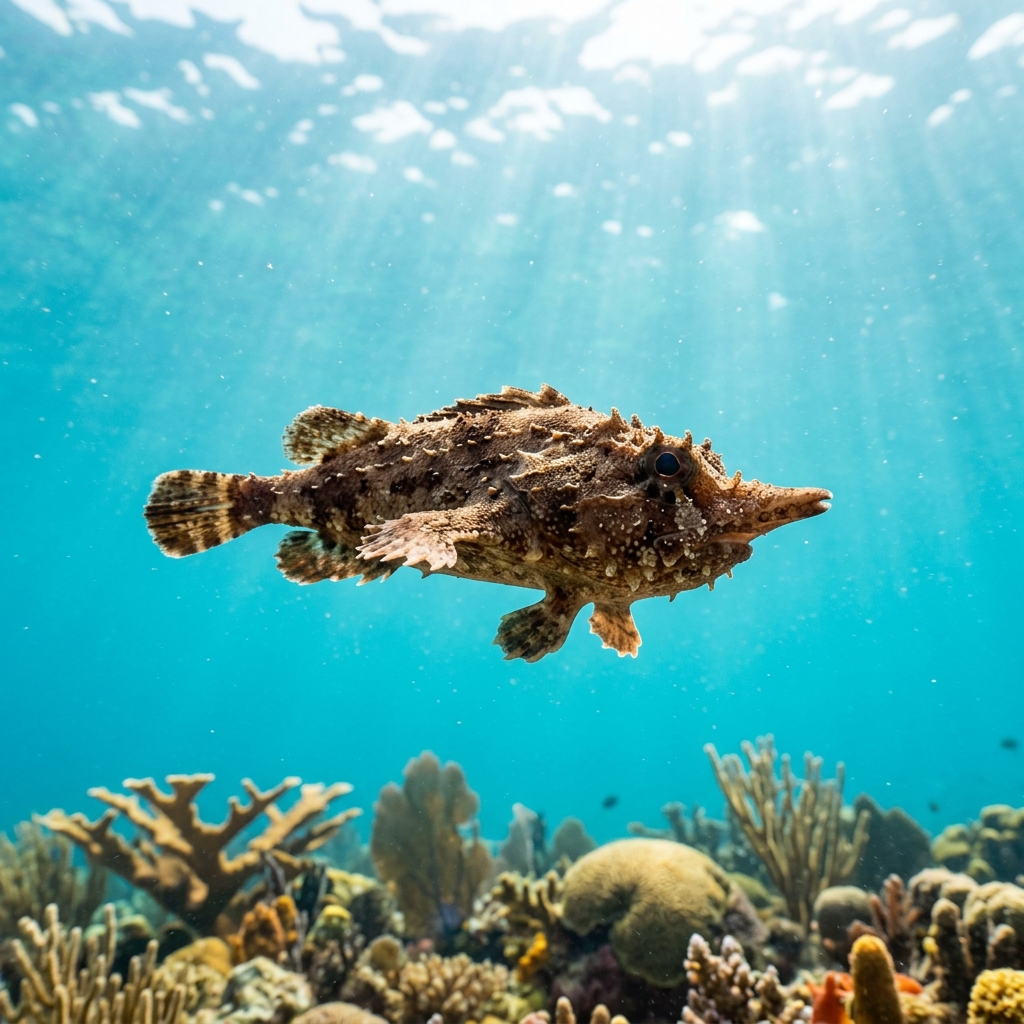
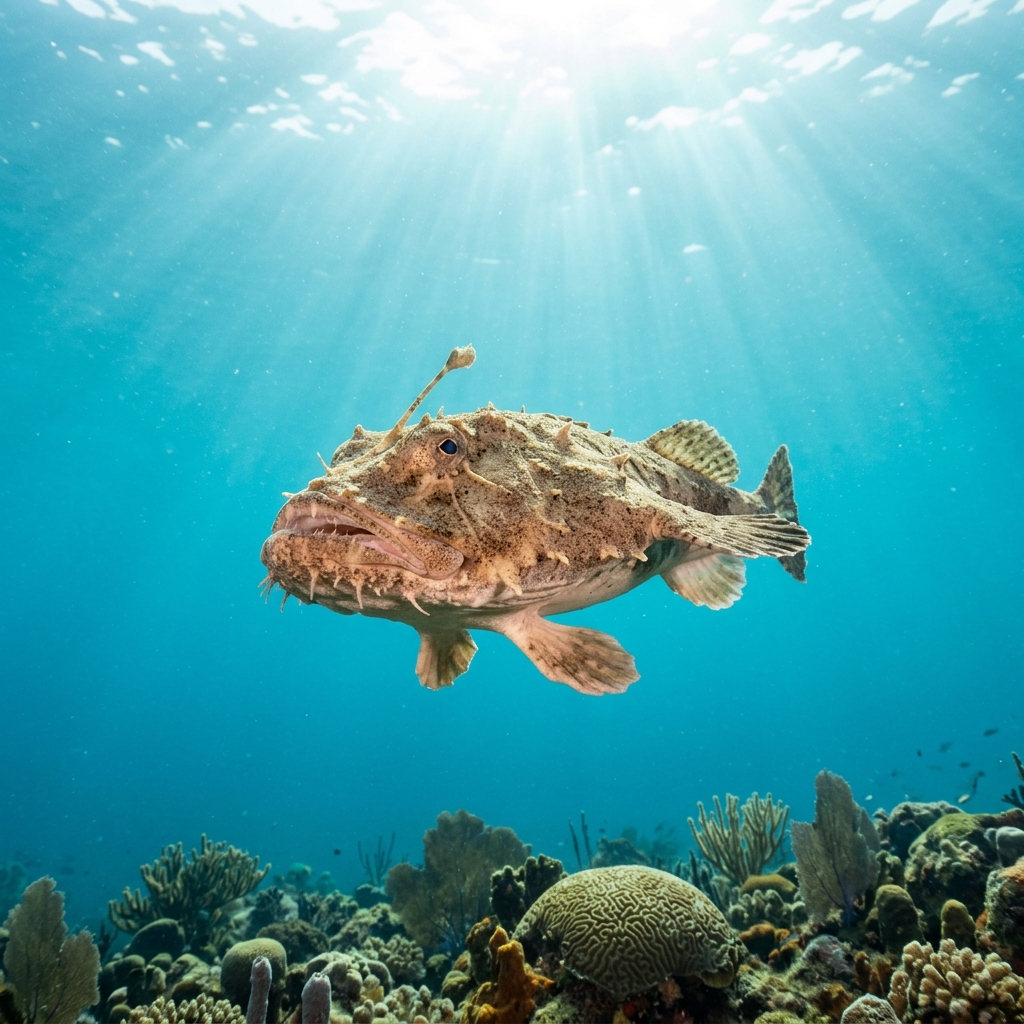
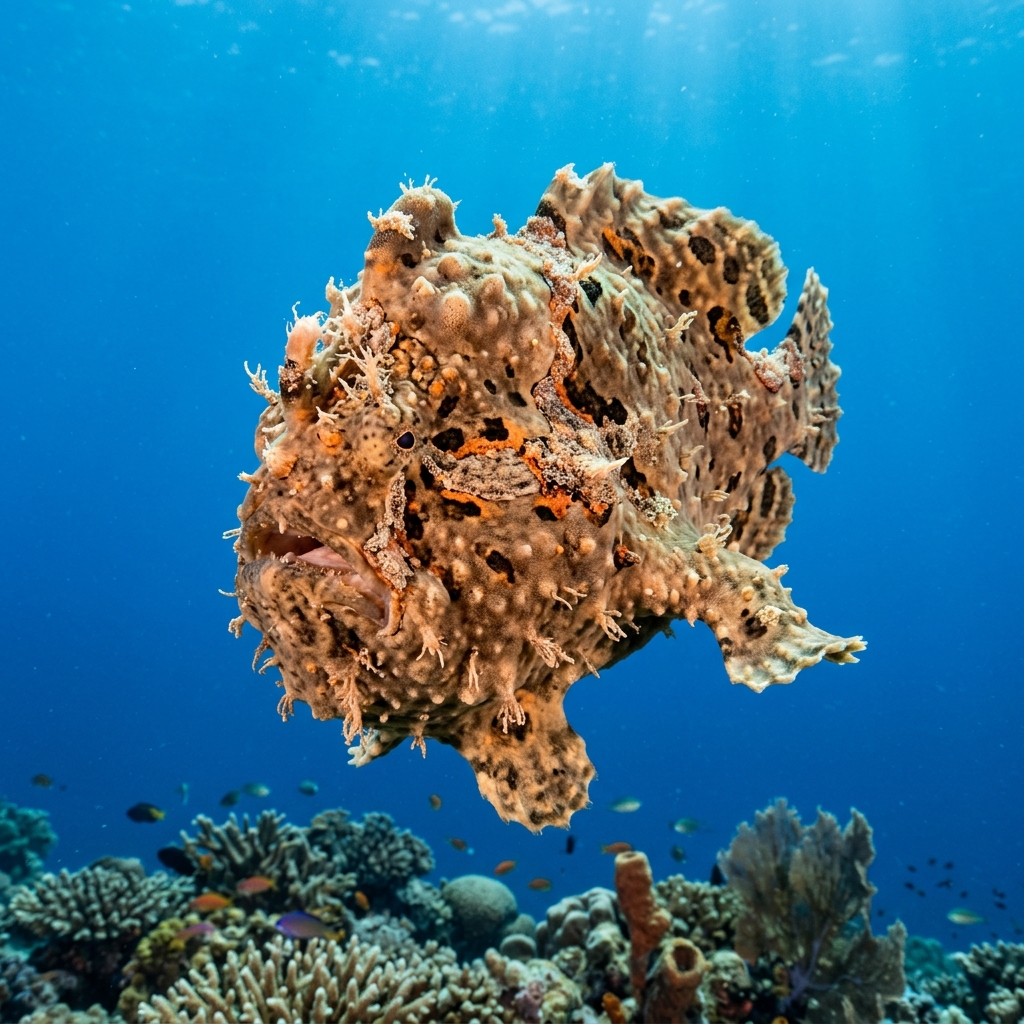
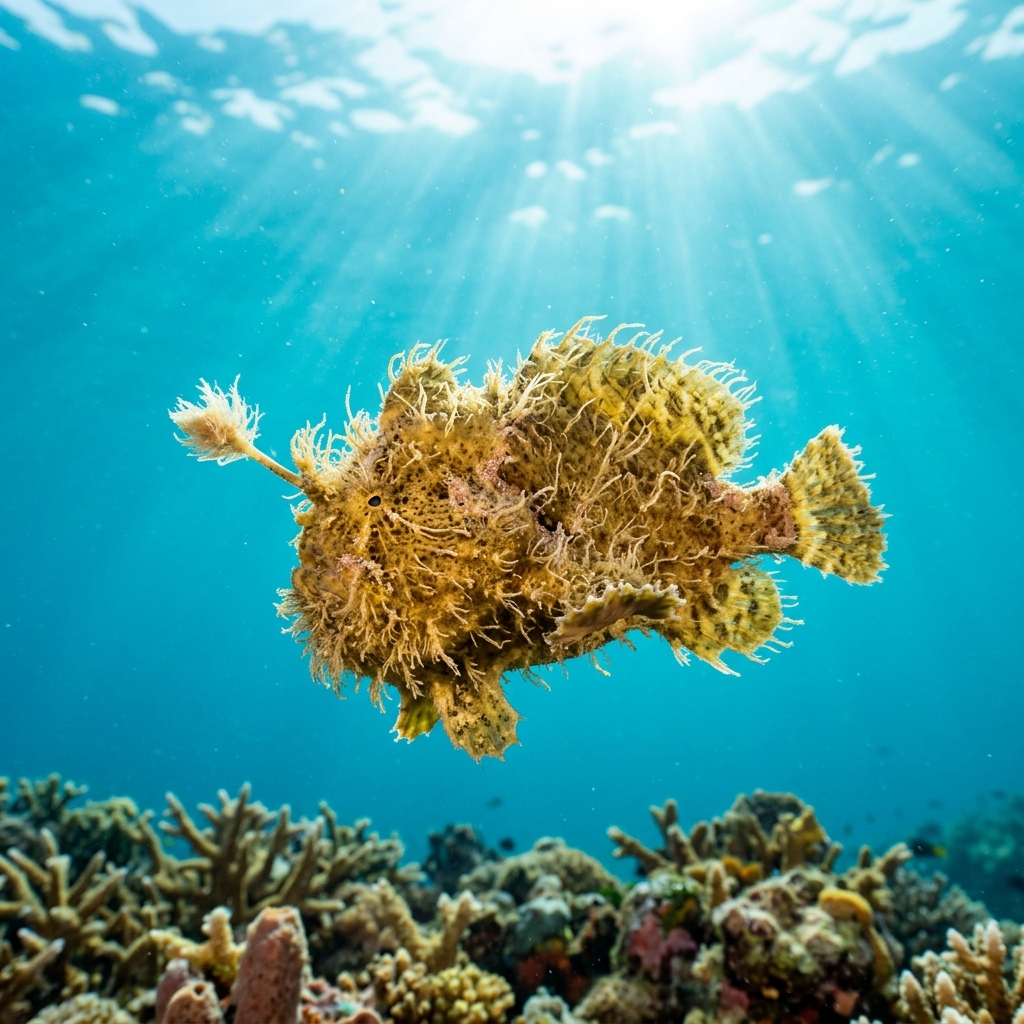
Flat, triangular body shaped almost like a fan or a leaf, coloured in mottled sandy brown to grey with darker spots scattered across the back that give it its common name. Grows to around 26 cm, and sits still on the bottom rather than swimming in open water, propped on paired pelvic fins that act almost like tiny legs. Look for a small upturned mouth and a stubby lure-like projection near the snout, a feature shared across batfish species.
Spends most of its time parked motionless on sand or rubble bottoms, relying on its camouflage rather than fleeing when divers approach. It shuffles short distances using its fins like stubby legs instead of swimming, which is often the giveaway that separates it from a rock or a shadow. Divers usually spot it during slow bottom scans on sandy patches between reef sections rather than up on the coral itself.
That stubby structure near its snout is a modified fin ray tipped with a lure it can wiggle to attract small prey, the same trick anglerfish use, just adapted for a bottom-walking lifestyle instead of an ambush-from-above one.
No clear seasonal pattern shows up in sightings, and its comfort range of roughly 20.6 to 29.3 C spans most of the Caribbean and southeastern US year, so it is worth watching for on any dive in these regions regardless of month.
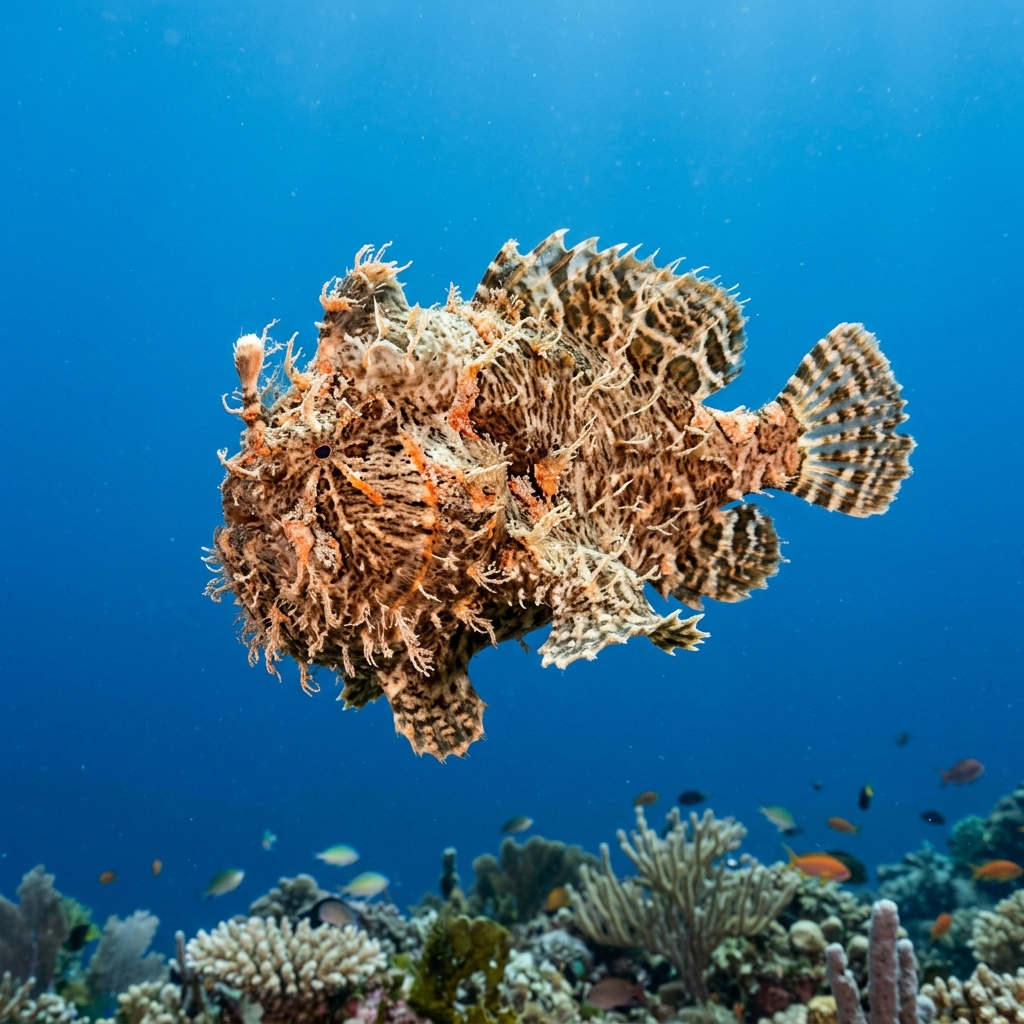
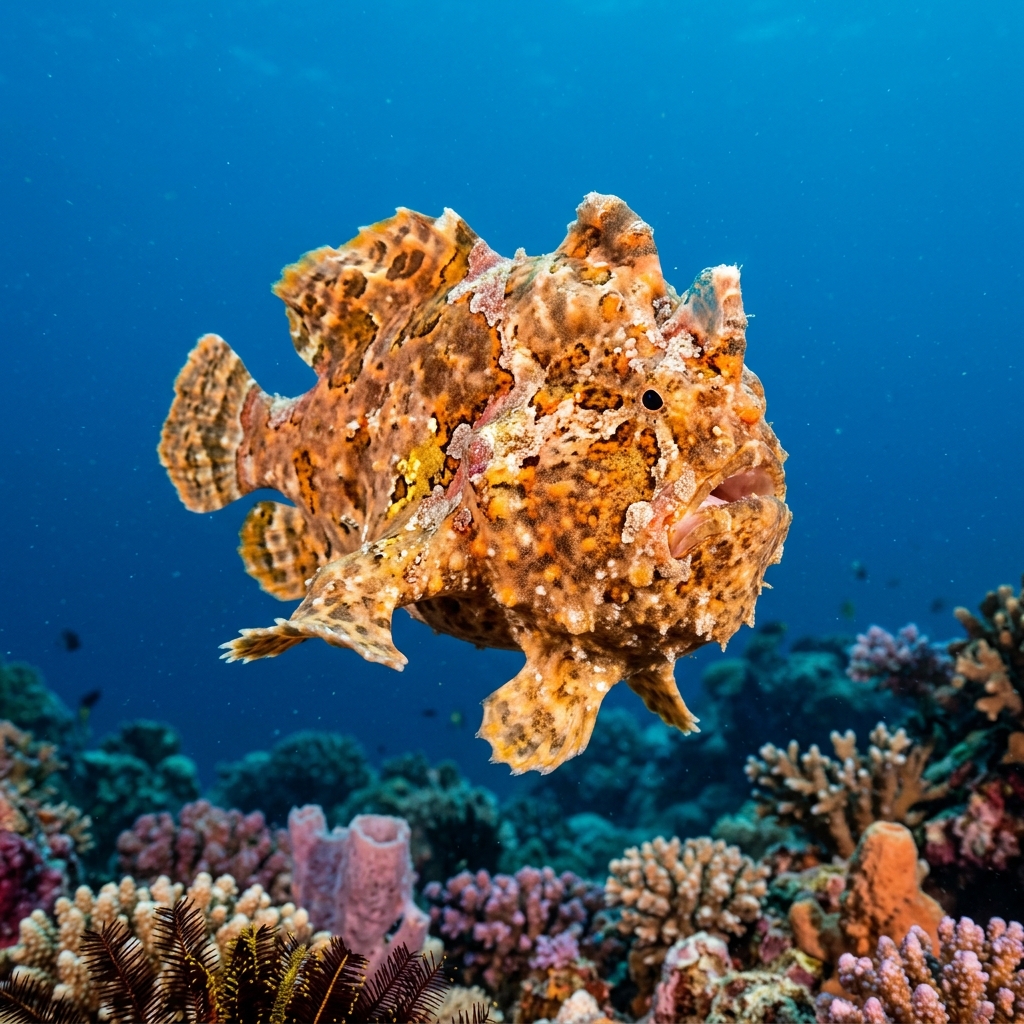
Reef neighbours a diver could mistake it for. Use the identification notes above to tell them apart.
Most reliably found in the United States, particularly Florida and the Carolinas, with a strong secondary presence in Cuba's Jardines del Rey, Venezuela's Isla Margarita, and along Colombia's Caribbean coast. It also turns up in the Bahamas, Mexico's Yucatán Peninsula, Belize's Turneffe Atoll, and the Dominican Republic, generally on sandy or rubble patches near reef structure rather than on the reef itself.
Mapping where Polka-dot Batfish is logged…
Florida and the Carolinas in the United States are the most consistent locations, with good numbers also logged in Cuba, Venezuela, Colombia, and the Bahamas. Look for sandy or rubble patches near reef structure rather than the reef face itself.
There is no strong seasonal pattern in sightings, and its warm-water comfort range means it can be found year-round wherever water stays between roughly 21 and 29 C.
Look for a flat, fan-shaped body in mottled sandy brown with scattered darker spots, sitting motionless on the seabed rather than swimming. A small upturned mouth and a stubby snout lure help confirm it against similar bottom-dwelling fish.
They typically reach around 26 cm, making them roughly the size of a dinner plate, and their flat shape makes them look larger from above than they actually are.
They carry a small worm-like lure near the snout that they wiggle to draw in prey, an ambush trick borrowed from anglerfish but used by a fish that walks on the bottom instead of hovering.
No, they pose no threat to divers. They are slow, bottom-dwelling, and rely on camouflage rather than any defensive behaviour, so they can be observed calmly at close range.
Site and sighting data is aggregated from diver logs, iNaturalist and GBIF. For taxonomy and conservation status:
Giant Frogfish
1,292 sites