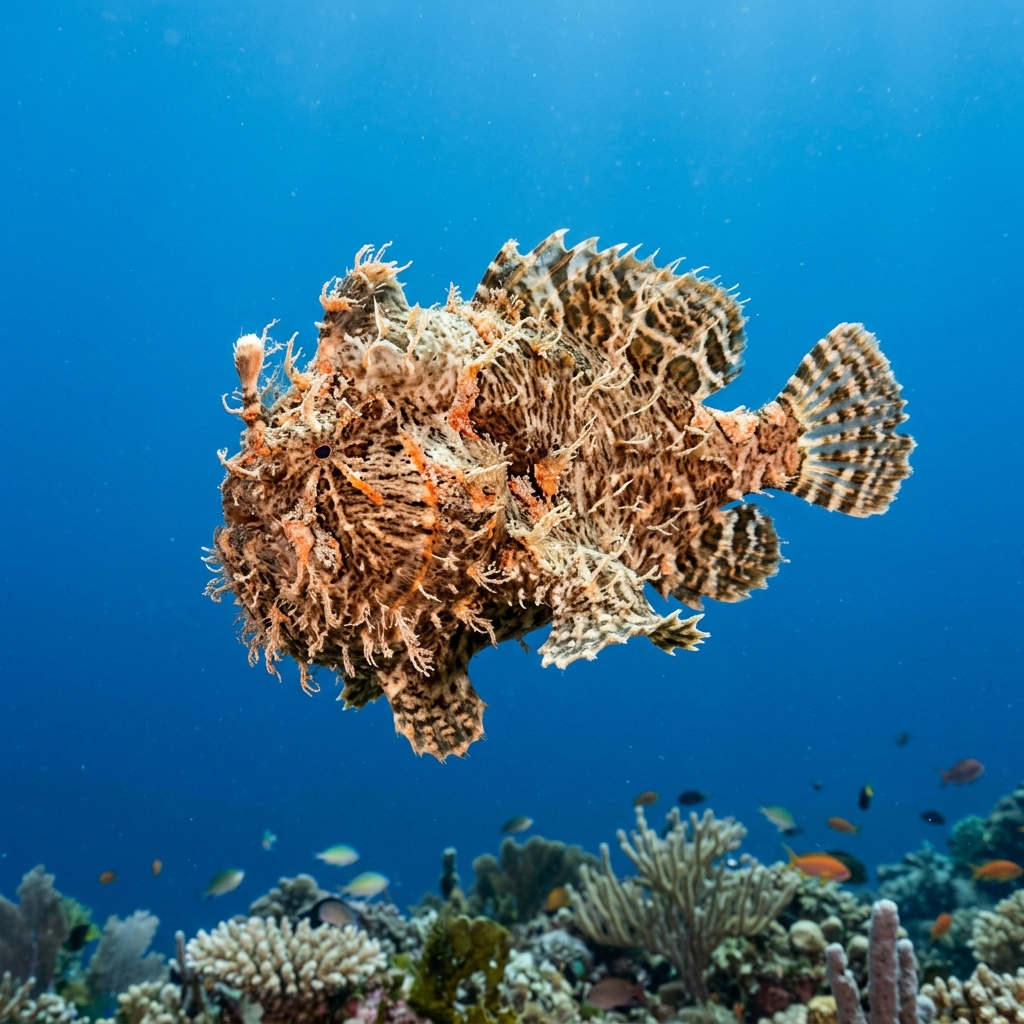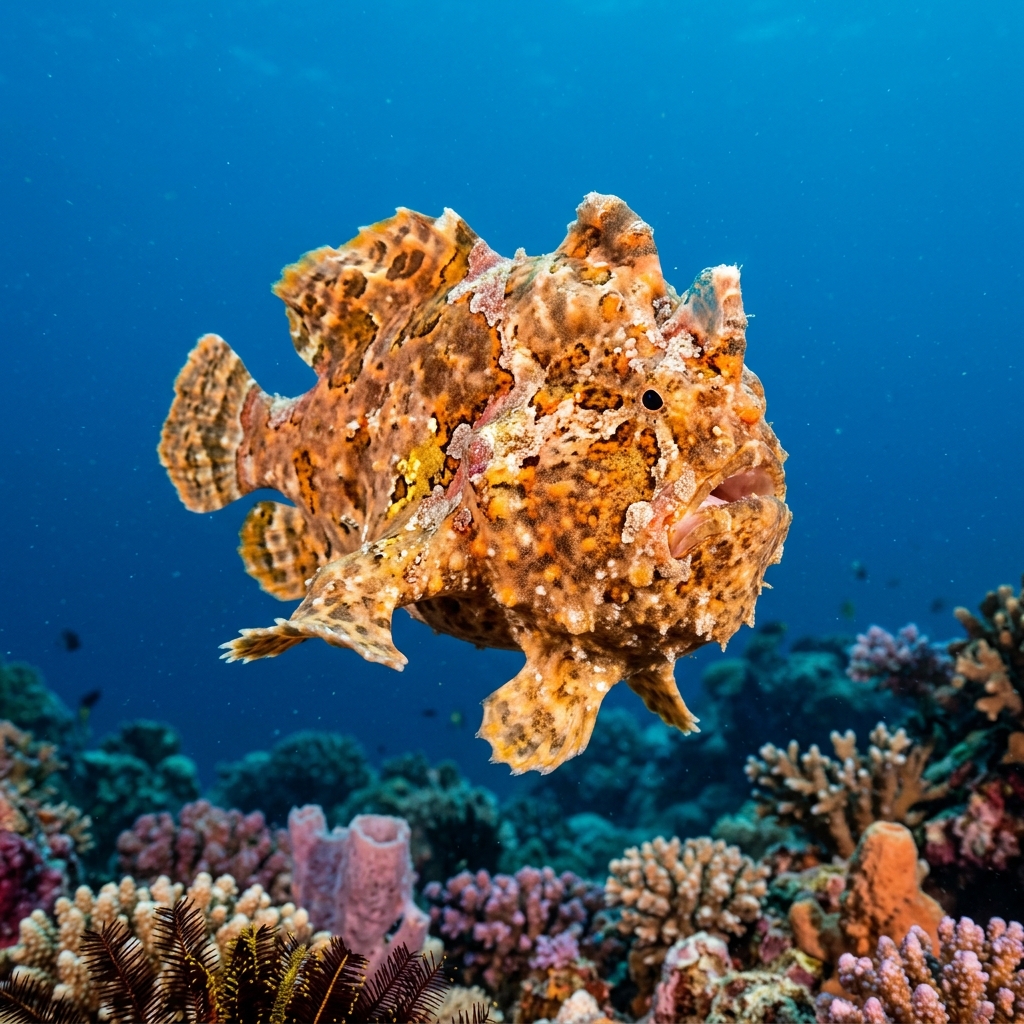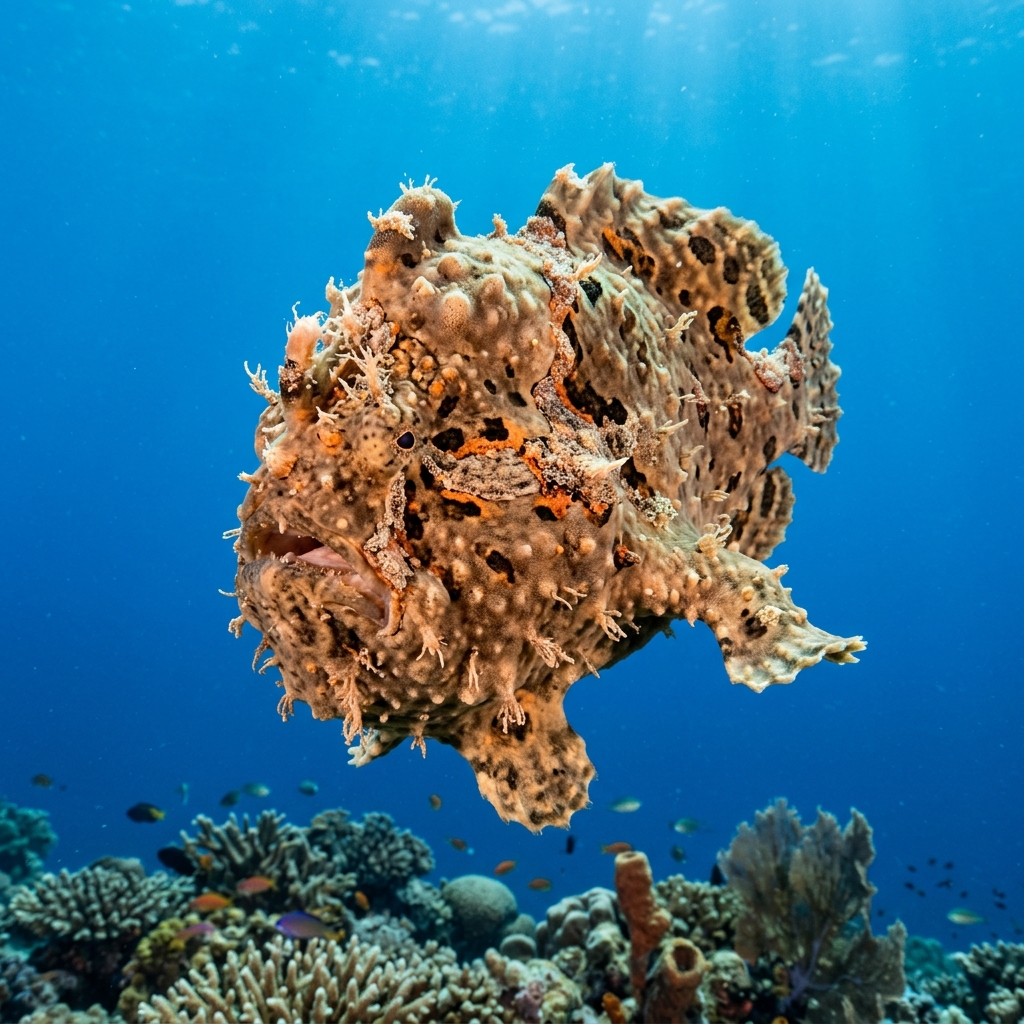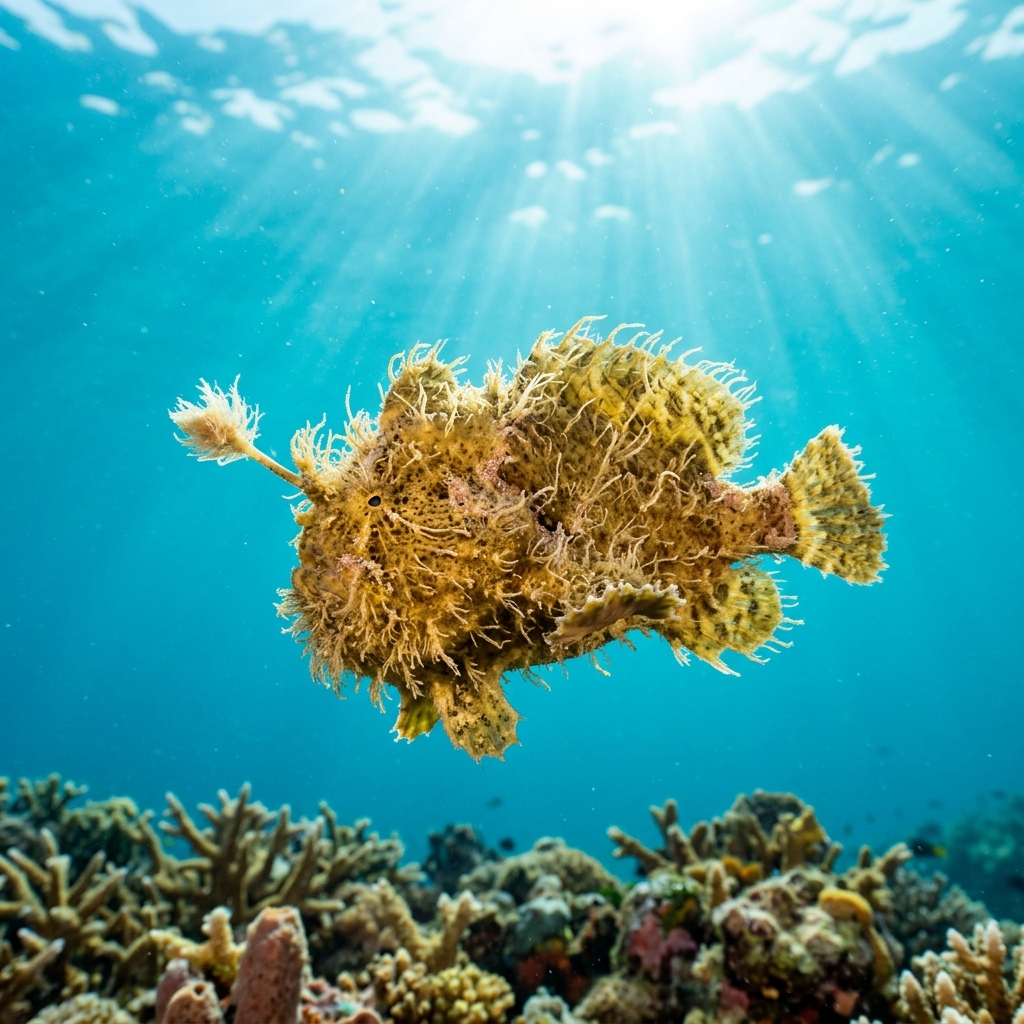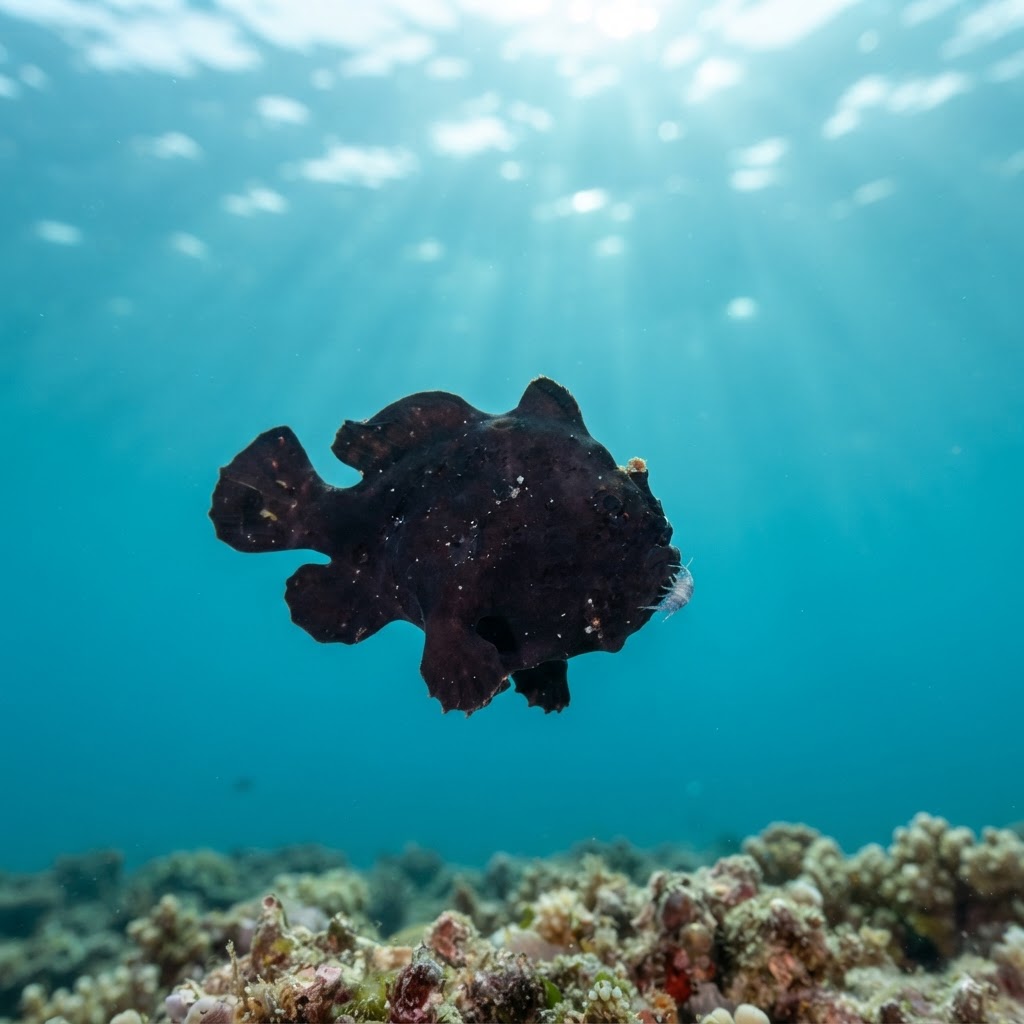
Nudiantennarius subteres
A pinhead-sized frogfish that lurks between 25.5 and 31.5 C on warm tropical reefs, logged year-round and easy to swim straight past.
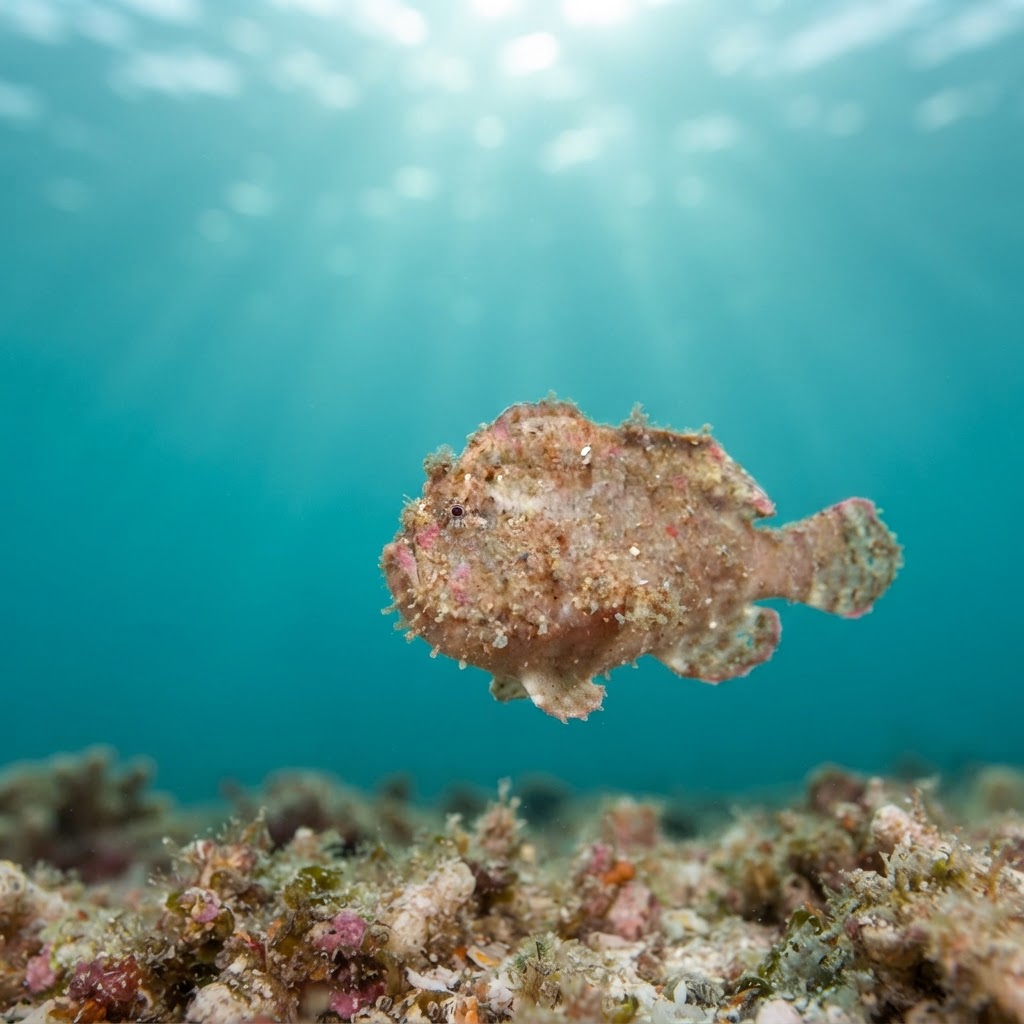
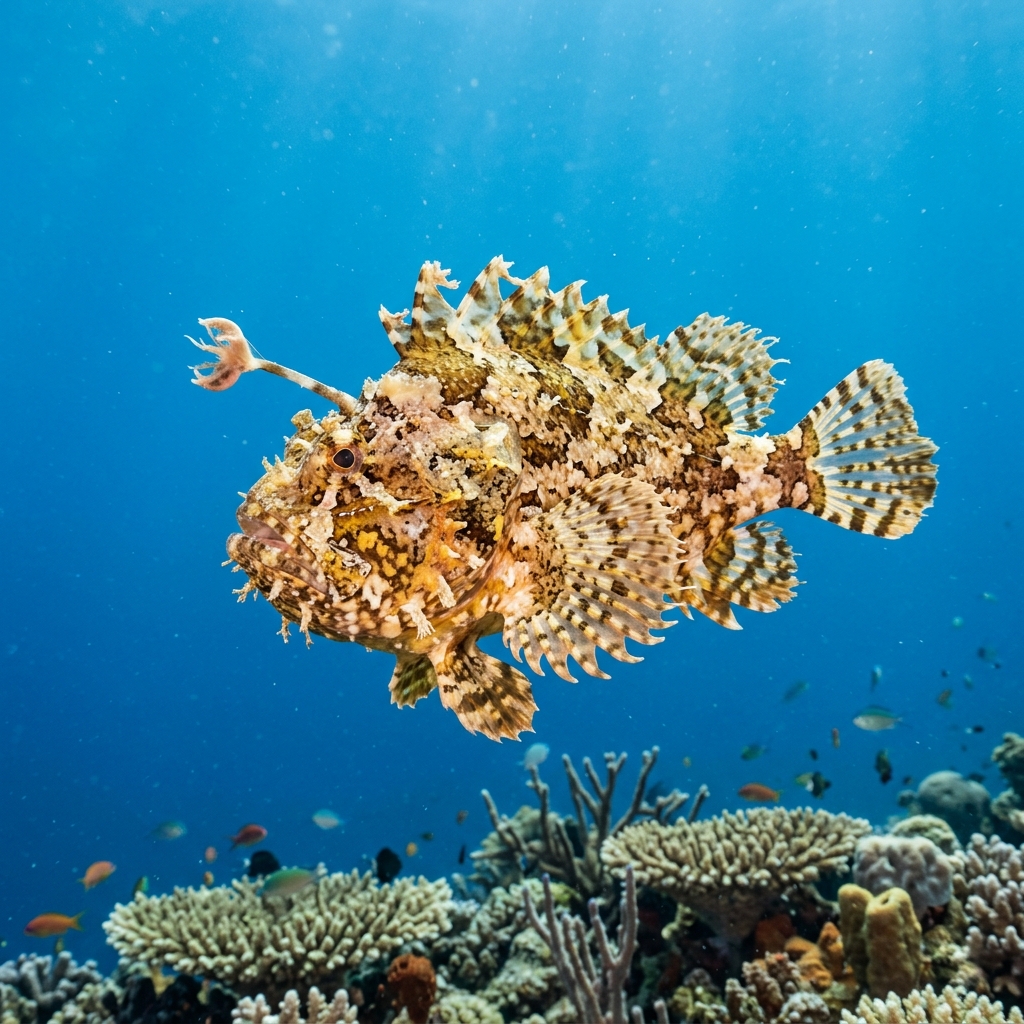
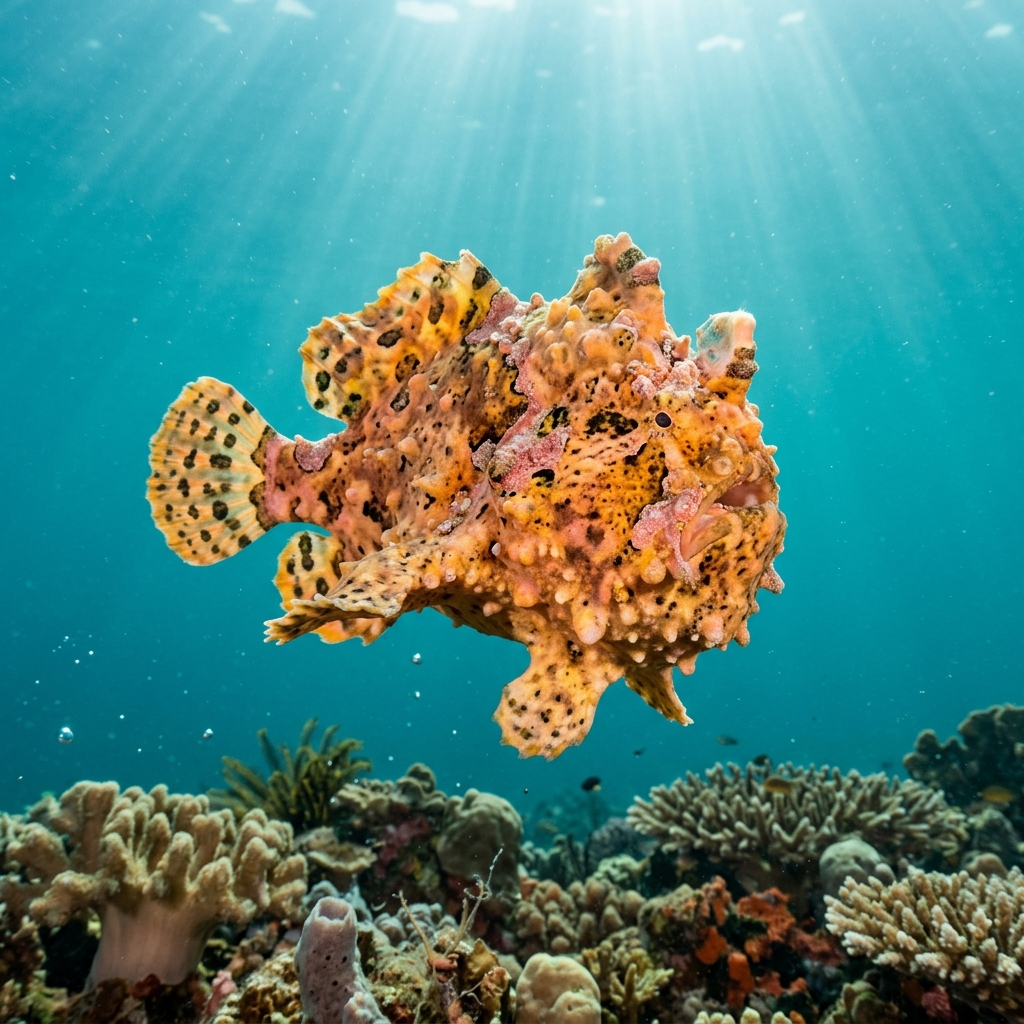
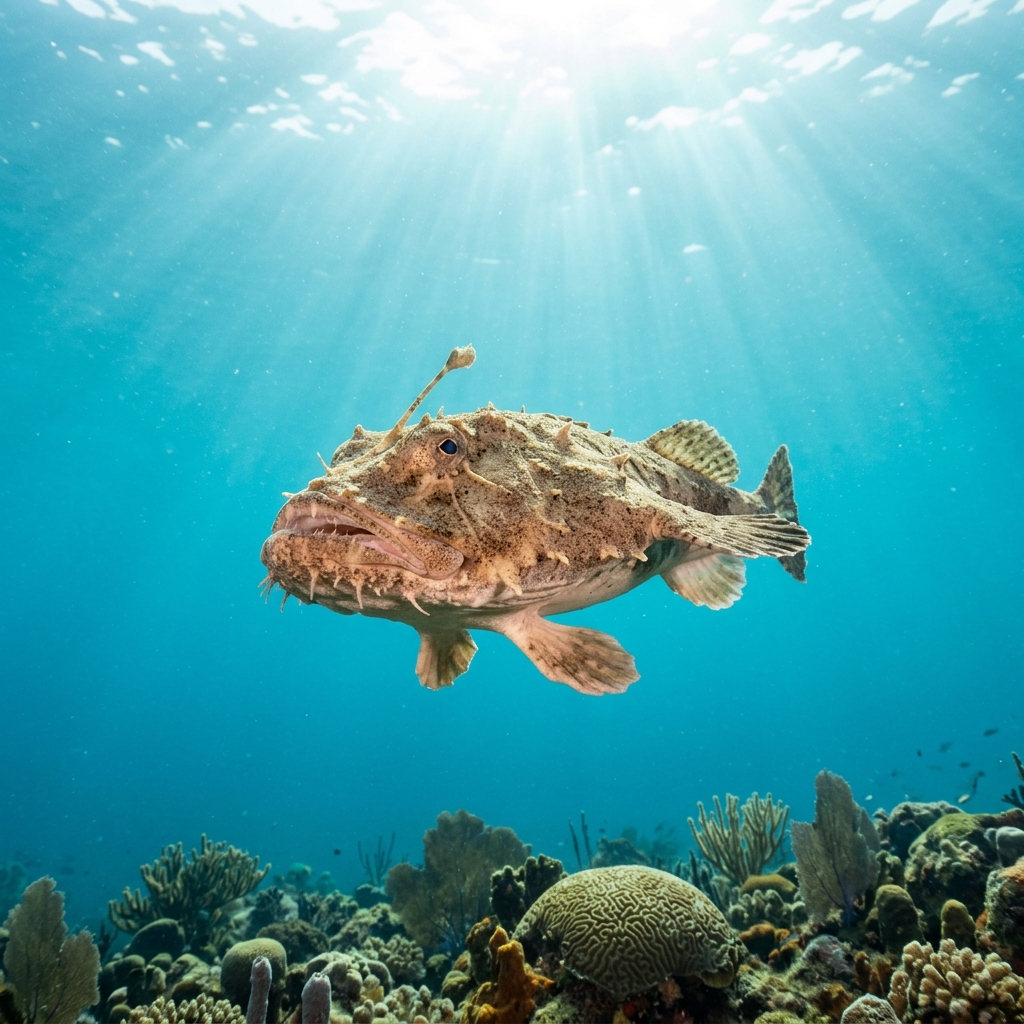
Tops out around 6 cm, so it reads underwater as a small lumpy blob rather than a fish-shaped fish. Body is squat and covered in mottled skin that breaks up its outline against sponge and rubble, and it sits still using its pectoral fins like little feet rather than swimming. Look for the characteristic frogfish face: forward-set eyes and a wide, downturned mouth over a rounded, warty body.
Like other frogfish, it is an ambush predator that spends most of its time parked motionless on the substrate, relying on camouflage rather than flight to stay safe. Divers who find one usually do so by accident, scanning slowly over rubble or sponge rather than spotting movement. Expect little to no reaction to a diver's presence as long as you keep your distance and don't disturb the substrate around it.
Frogfish in this family hunt by staying still and luring or ambushing prey at extremely close range, striking with one of the fastest gape-and-suck feeding actions in the fish world.
Recorded only in warm water, between 25.5 and 31.5 C, which points to a year-round presence on the tropical reefs it inhabits rather than a specific season. There is not yet enough logged data to pin down a seasonal peak.
Reef neighbours a diver could mistake it for. Use the identification notes above to tell them apart.
Logged sightings for this species are too sparse right now to name reliable regions with confidence. As more divers report it, this section will fill in with the countries and dive sites where it actually turns up.
Mapping where Deepwater Frogfish is logged…
They stay tiny, typically reaching around 6 cm, so they're one of the smaller frogfish species divers might encounter and easy to miss on a reef scan.
Look for a small, mottled, lump-shaped fish around 6 cm long sitting motionless on rubble or sponge, with a wide downturned mouth and forward-facing eyes typical of frogfish.
Sightings occur in warm water between 25.5 and 31.5 C year-round, so there's no strong seasonal window identified yet, just consistently warm tropical conditions.
No, they pose no danger to divers. They are small, slow-moving, and rely entirely on camouflage rather than any aggressive or venomous defence against people.
Like other frogfish, it stays perfectly still and ambushes prey with an extremely fast gape-and-suck strike, one of the quickest feeding actions among reef fish.
Site and sighting data is aggregated from diver logs, iNaturalist and GBIF. For taxonomy and conservation status:
Giant Frogfish
1,292 sites