Parupeneus trifasciatus
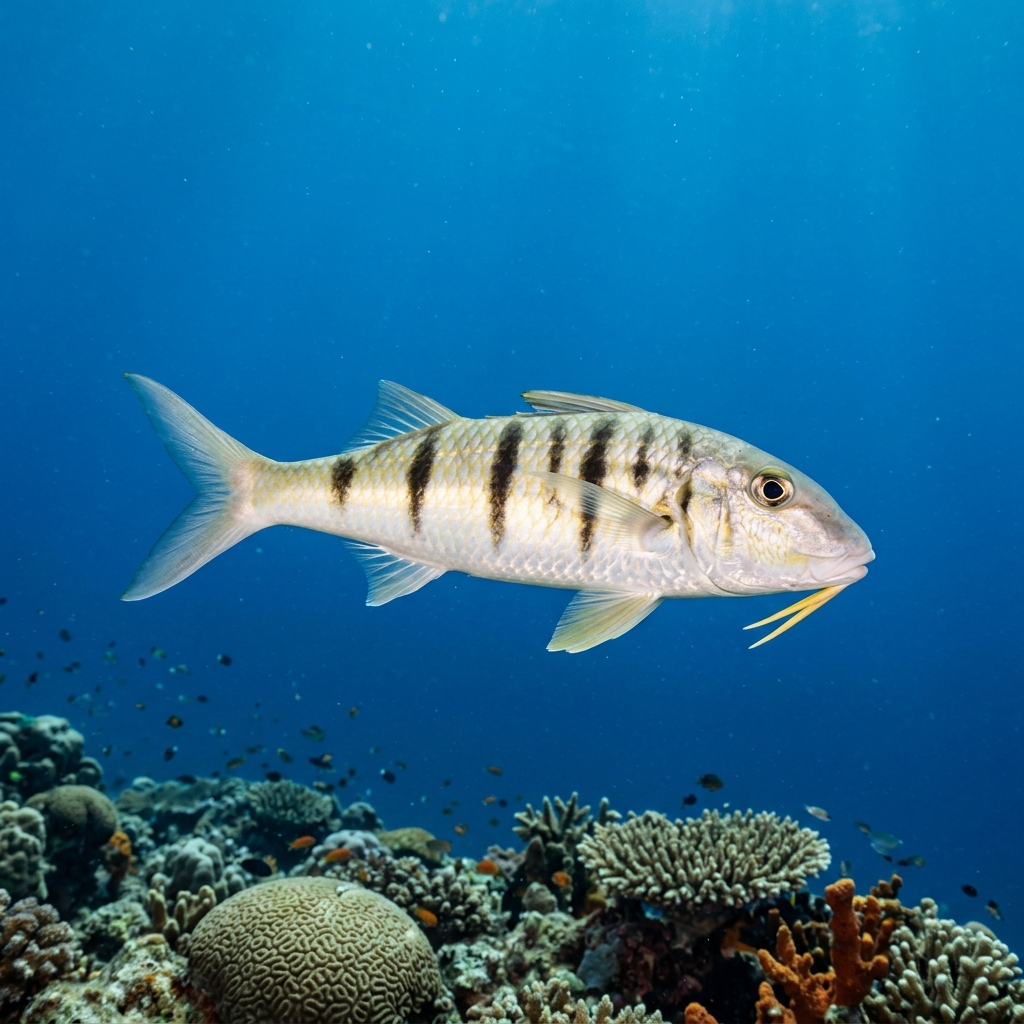
Look for the two dark saddle bars and chin barbels of this goatfish across the Maldives' Central Atolls and Mauritius reefs.
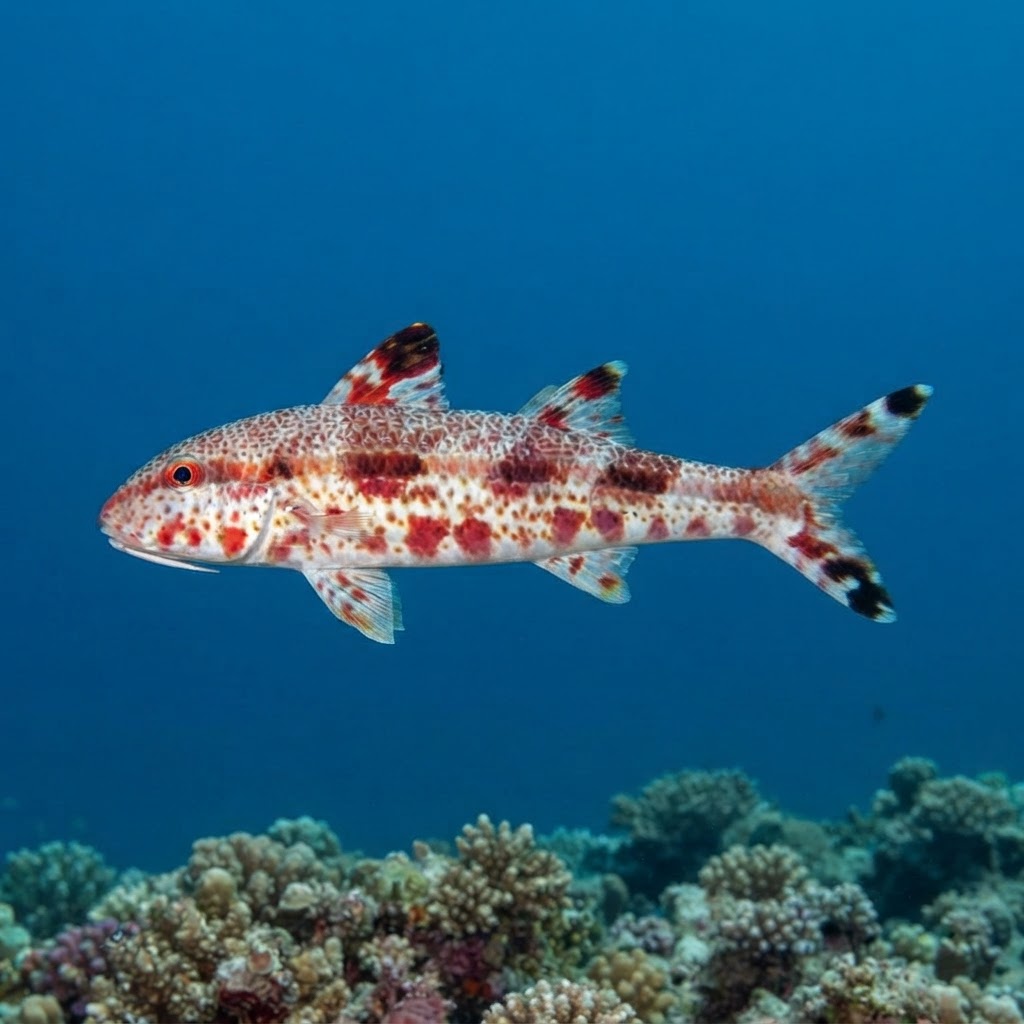
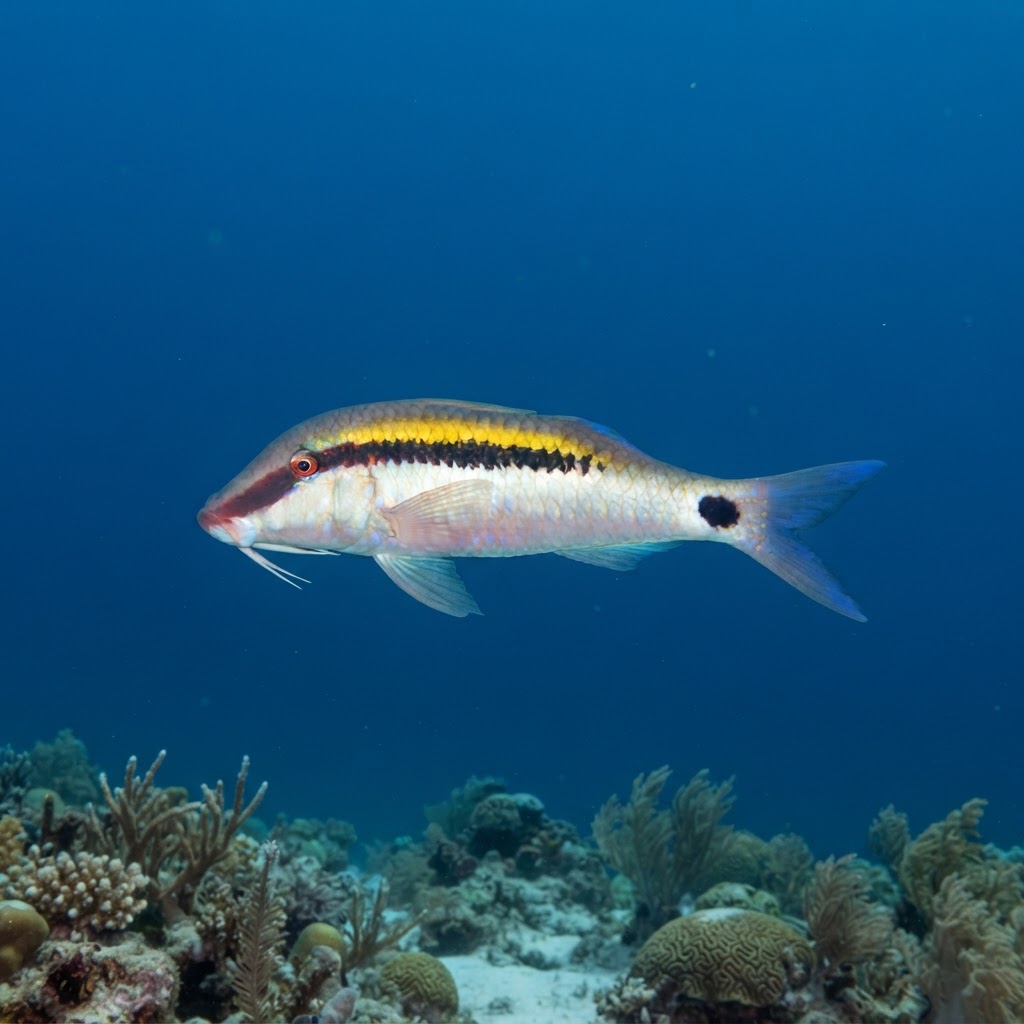
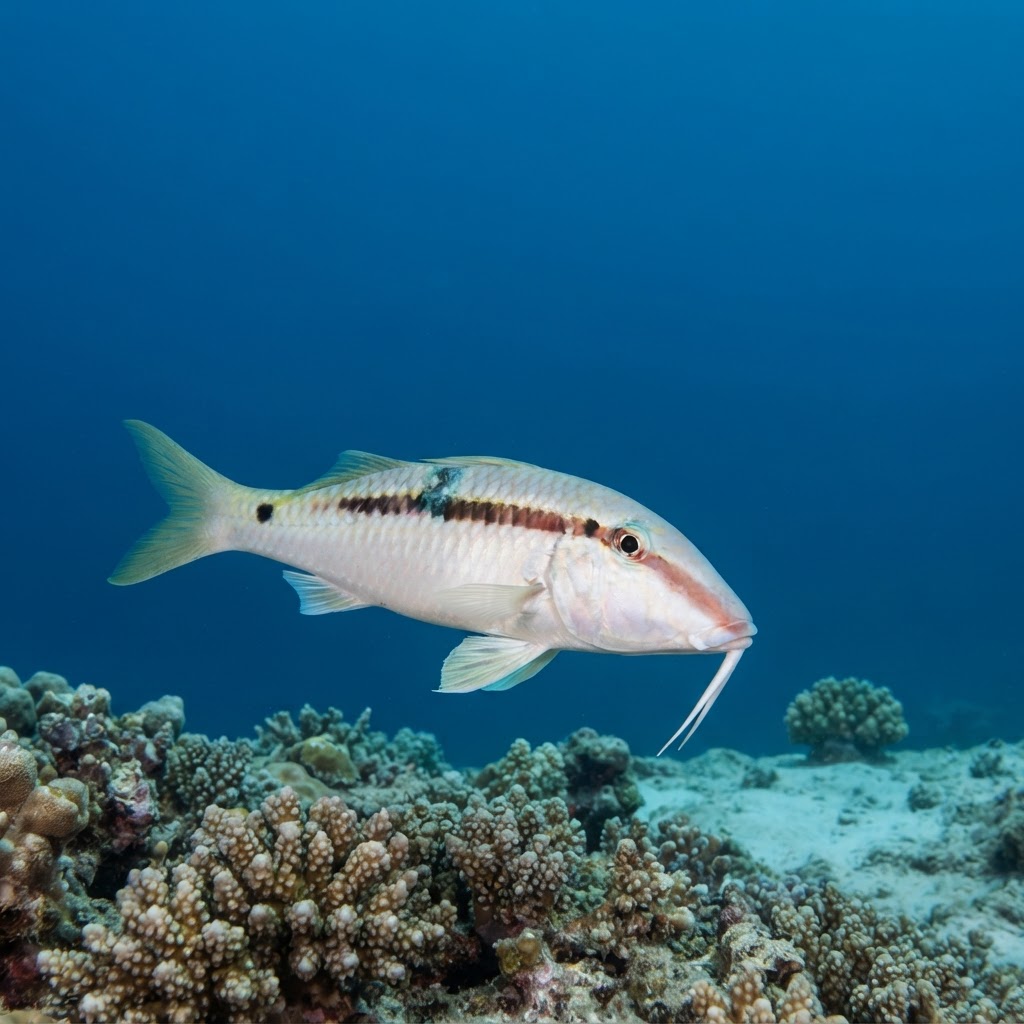
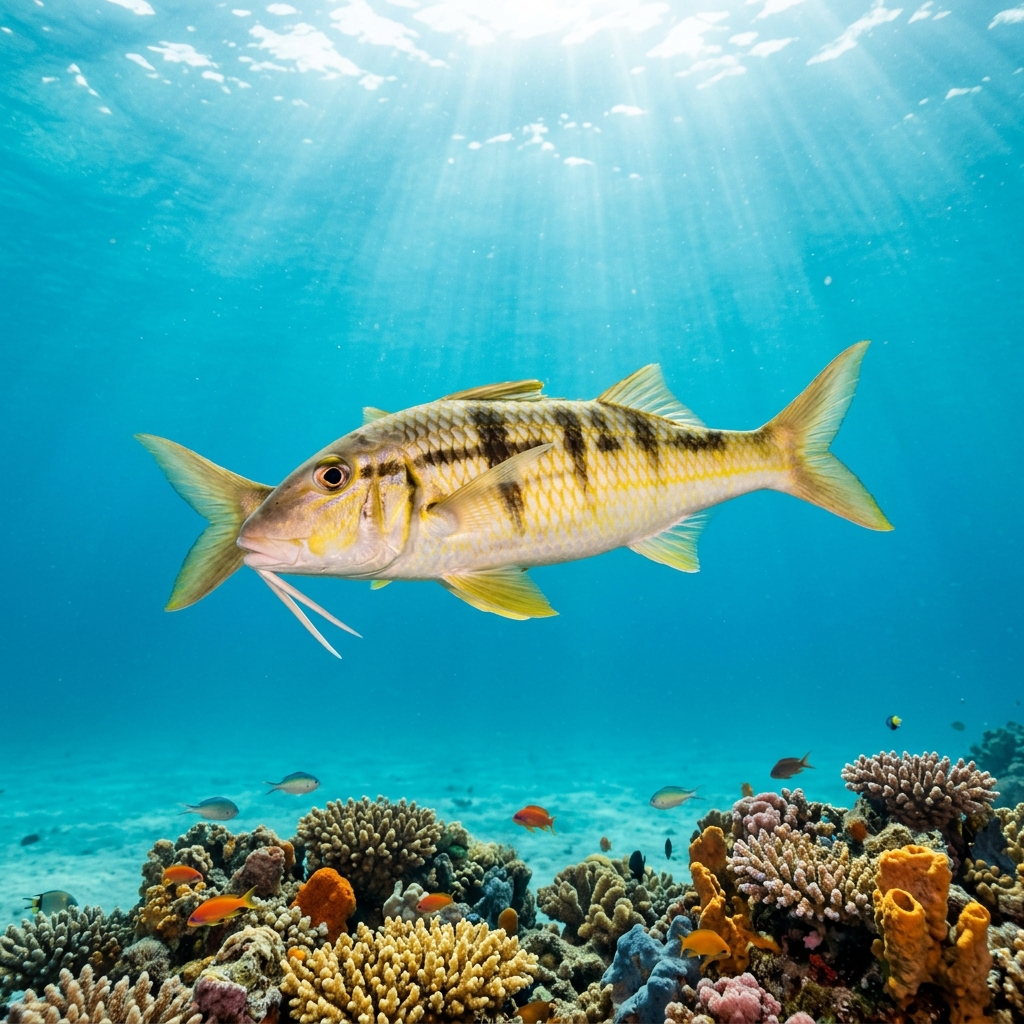
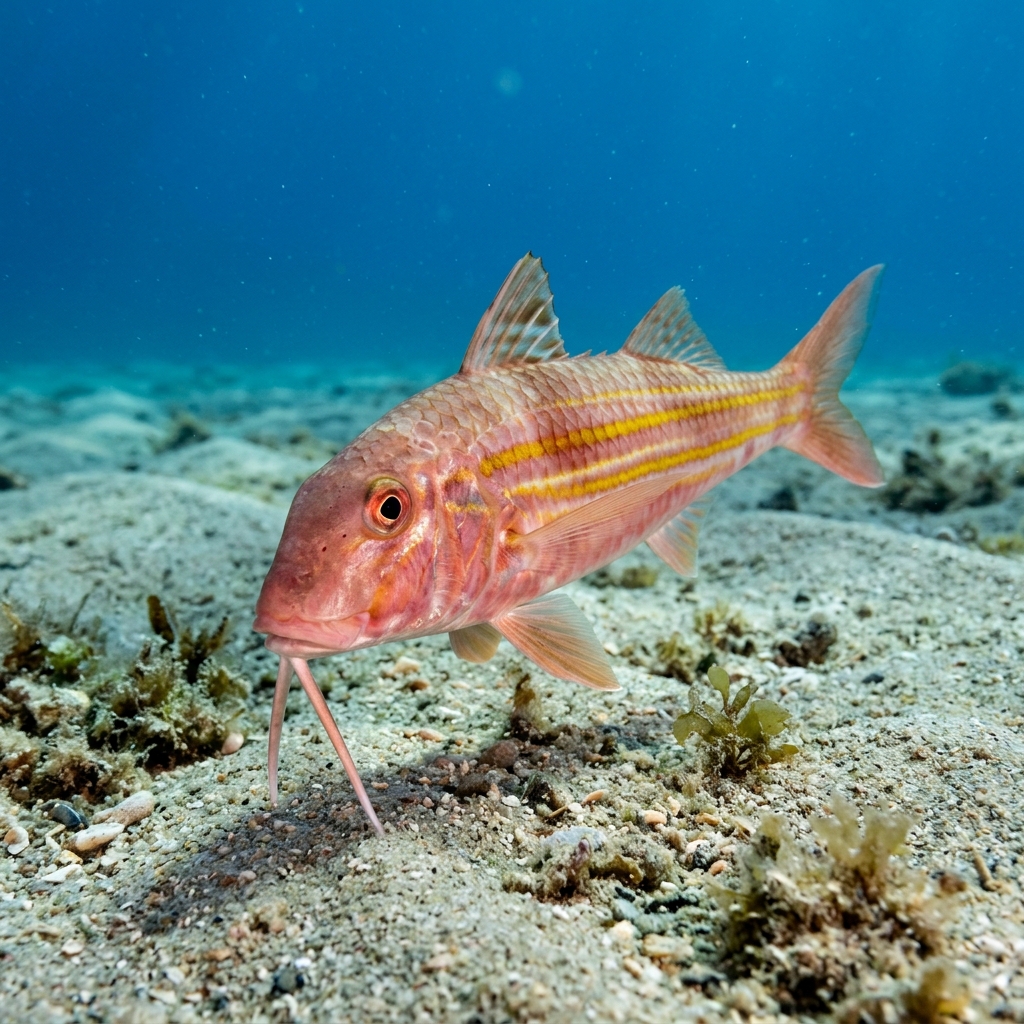
Grows to around 24 cm, with an elongated, torpedo-shaped body that's pale grey to reddish-brown overall. The name-giving feature is a pair of dark bars crossing the rear half of the body, one below the dorsal fin and one near the tail base. Like all goatfish it carries two long chin barbels used to probe the sand, which it tucks away when not feeding.
Usually spotted alone or loosely associating with other bottom feeders, nosing along sand and rubble patches with its barbels while it hunts for small invertebrates buried just under the surface. It's an unhurried, low-key fish that rarely bolts from divers, though it will move off a few metres if you get too close while it's feeding. Most sightings come from open sandy stretches near reef edges rather than deep in coral structure.
Those chin barbels are packed with taste buds, letting the fish detect buried prey by touch and chemical cues alone, a trick shared across the whole goatfish family.
No clear seasonal pattern shows up in the sightings, and with a comfortable range of 23.6 to 29 C it's on these reefs year-round, so any month works for a dive.
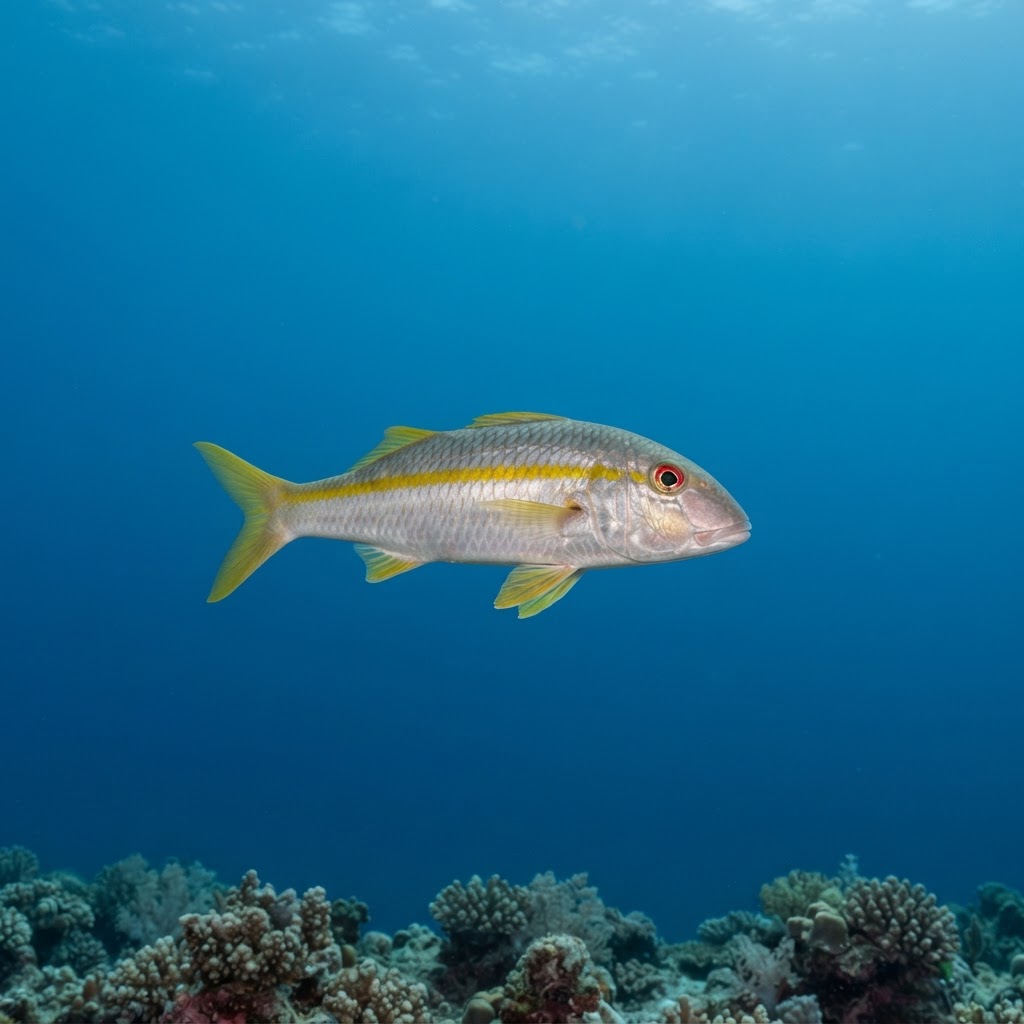
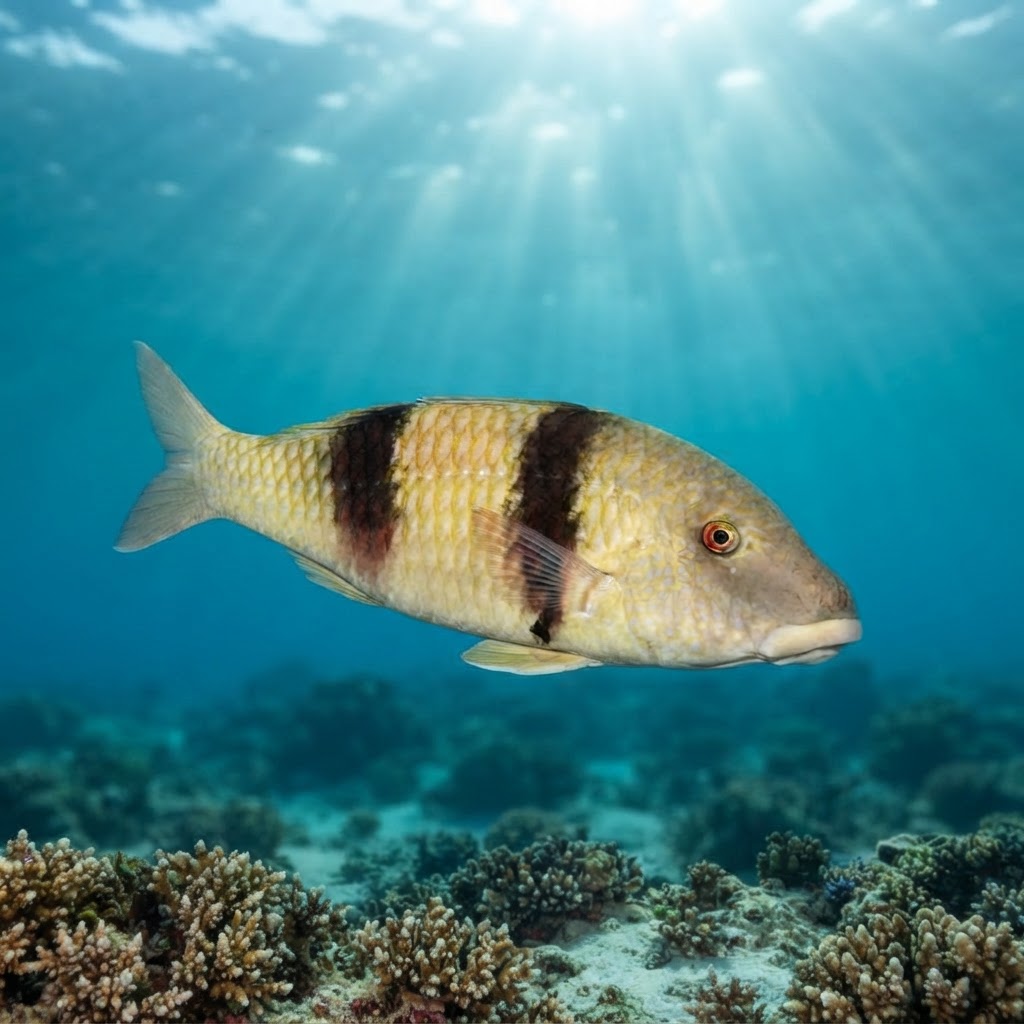
Reef neighbours a diver could mistake it for. Use the identification notes above to tell them apart.
Most reliably logged in the Maldives, especially across the Central Atolls, with strong populations also in Mauritius around Flic-en-Flac, Grand Baie and Trou aux Biches. Reunion is another solid bet, particularly Saint-Paul and Saint-Leu, with occasional records further afield in the Cocos Islands.
Mapping where Indian Doublebar Goatfish is logged…
The Maldives' Central Atolls are the most consistent location, with good numbers also around Flic-en-Flac and Grand Baie in Mauritius and Saint-Paul and Saint-Leu in Reunion.
There's no strong seasonal signal in the sightings, and the species tolerates a wide temperature range, so it's seen on these reefs throughout the year.
Look for a pale, elongated fish around 24 cm with two dark bars crossing the back half of its body and a pair of long barbels under the chin used for sifting sand.
They typically reach about 24 cm in length, a modest, easily overlooked size on a reef full of larger fish.
No, they pose no threat to divers and simply continue foraging in the sand when approached calmly.
Site and sighting data is aggregated from diver logs, iNaturalist and GBIF. For taxonomy and conservation status:
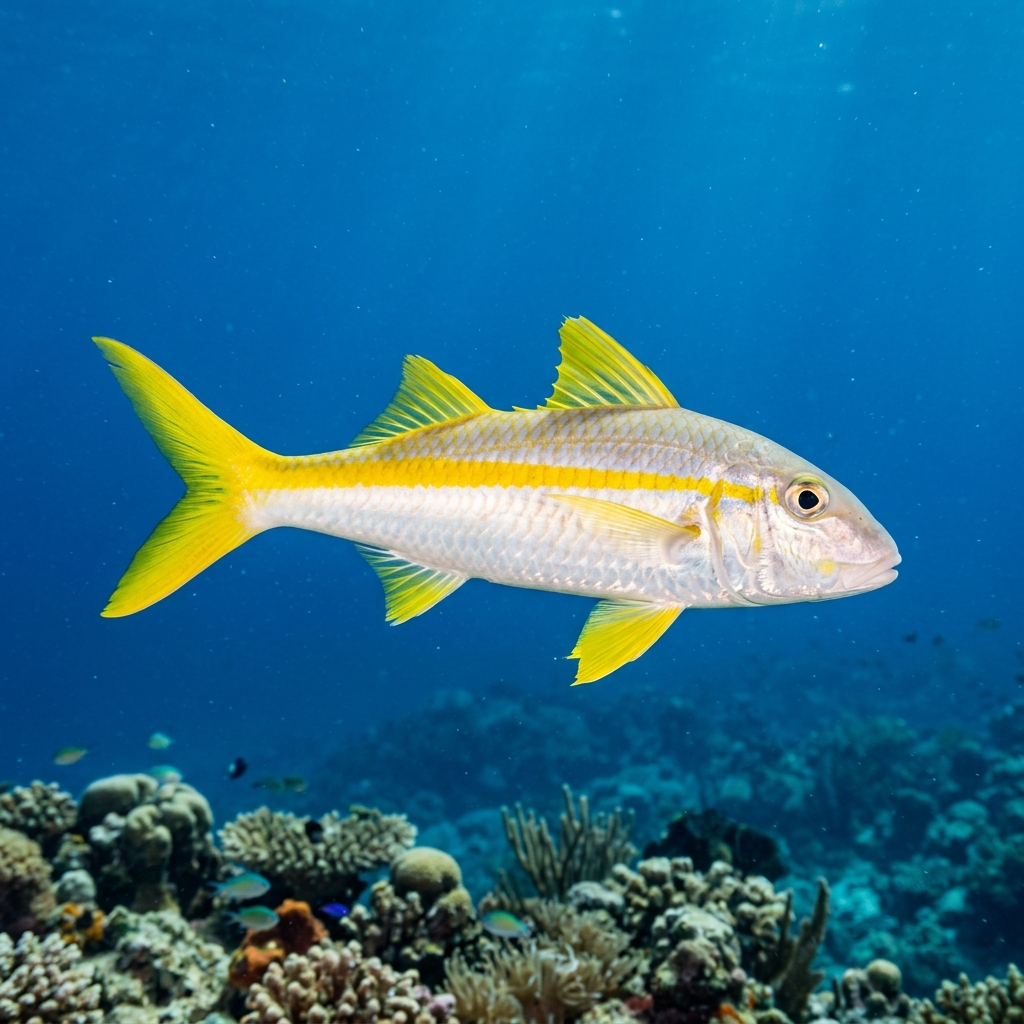
Yellowfin Goatfish
2,241 sites