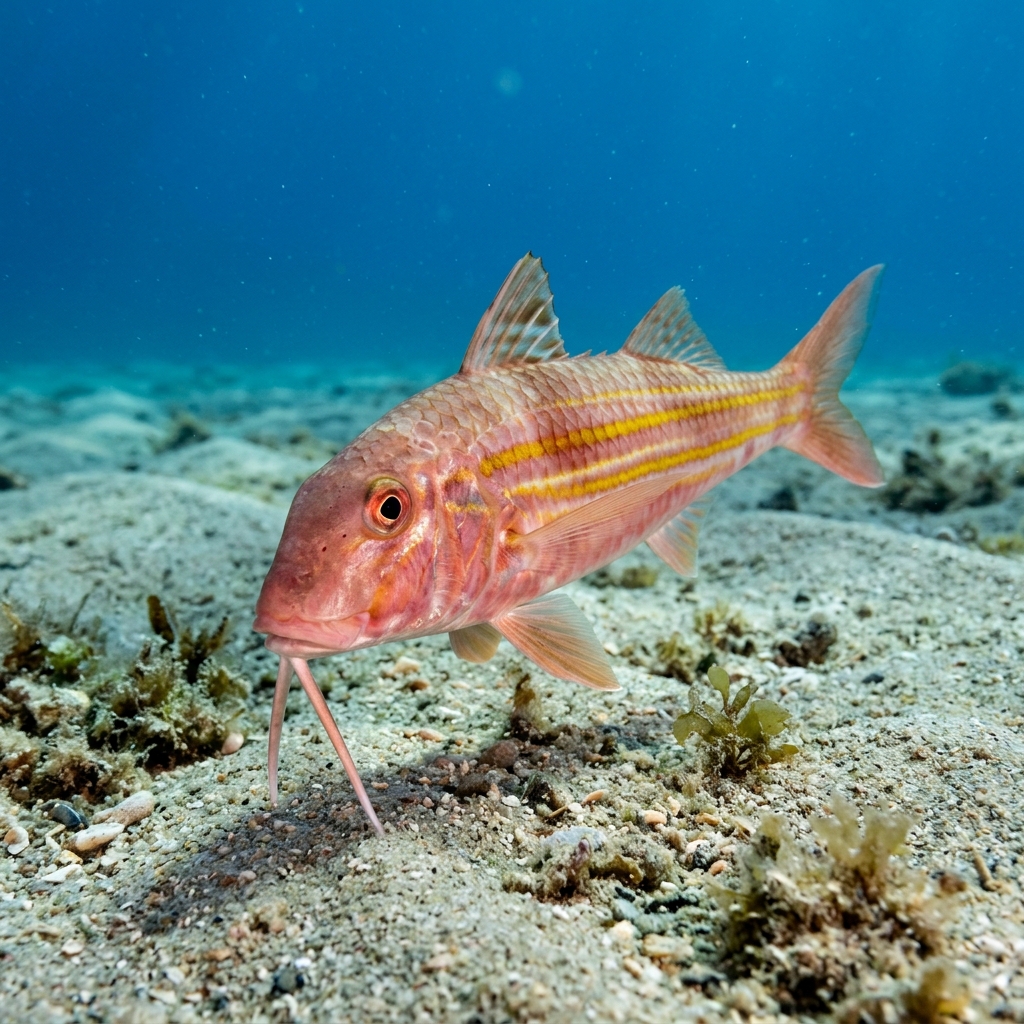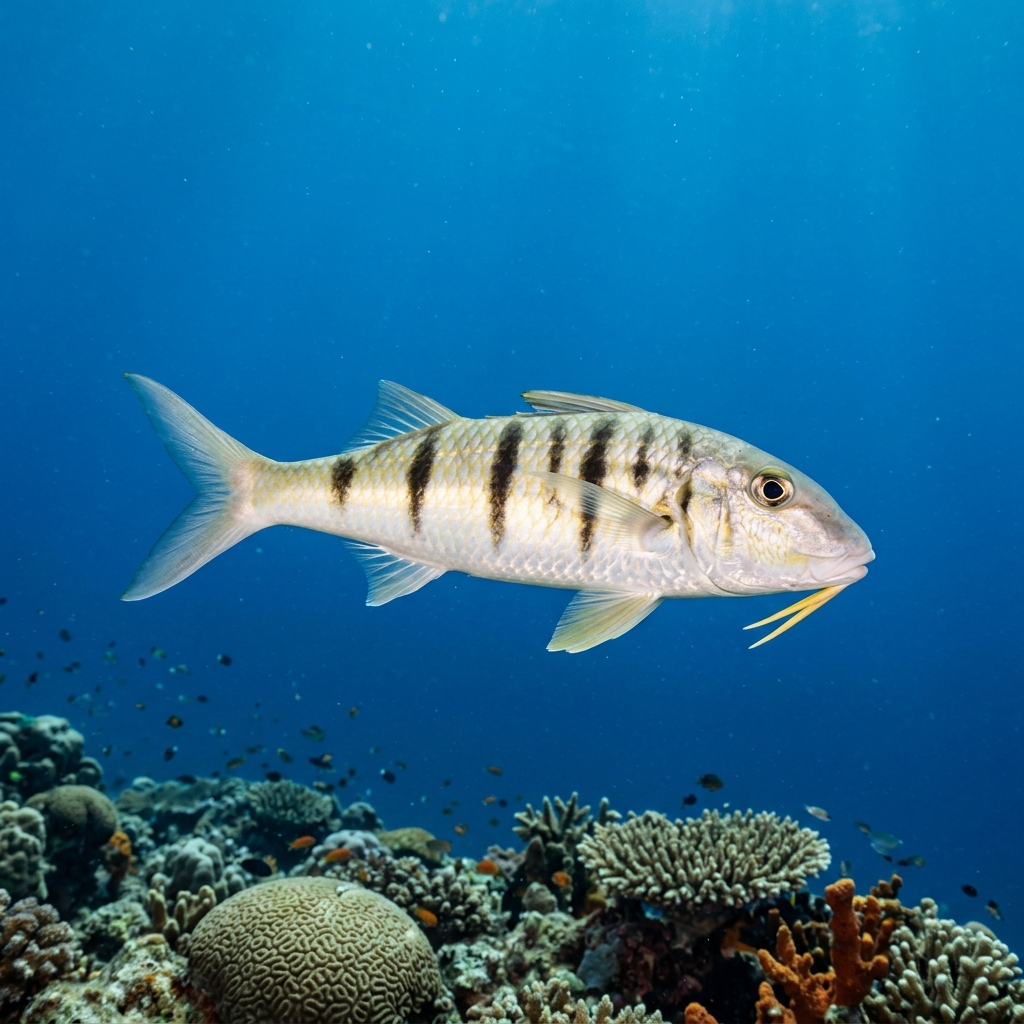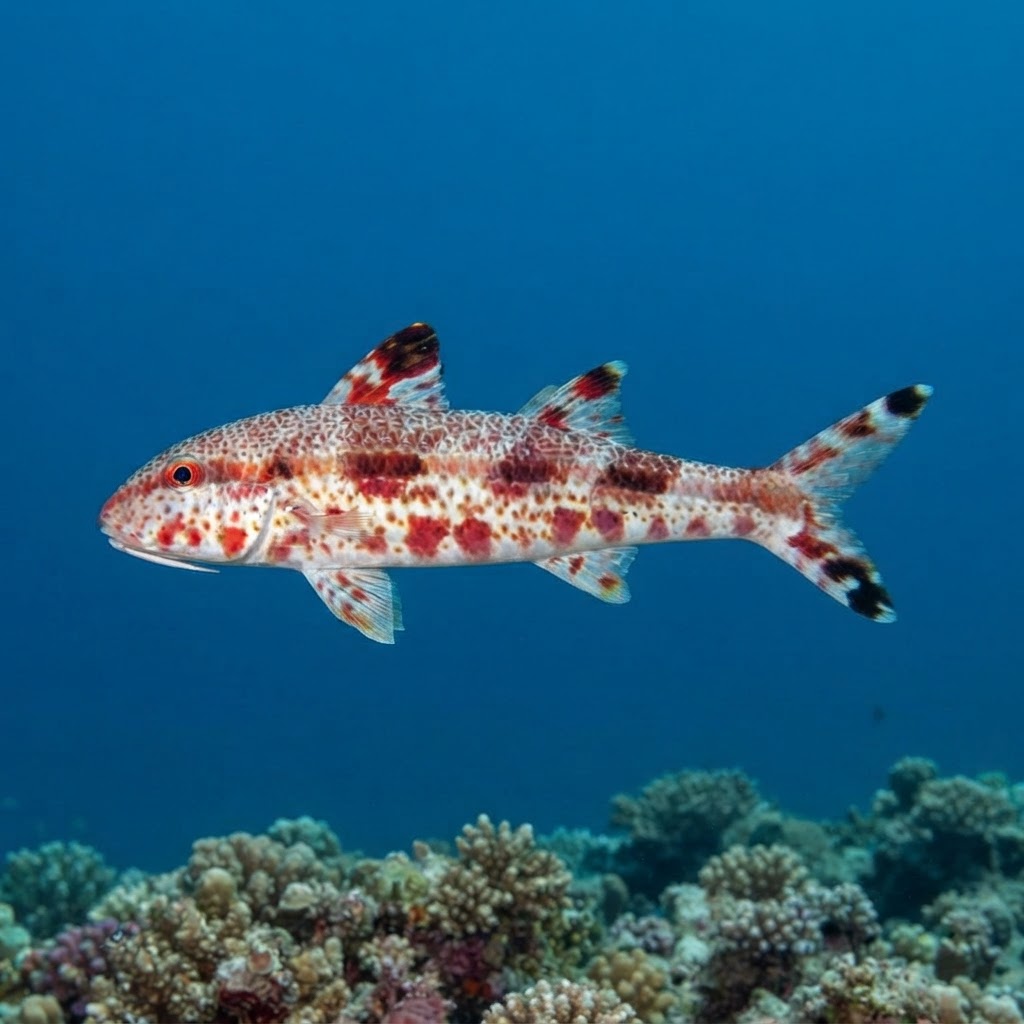
Upeneus tragula
Reddish, barred bottom-feeder common on reefs from Malaysia's east coast to Koh Phi Phi, active in 25-29C water year-round.
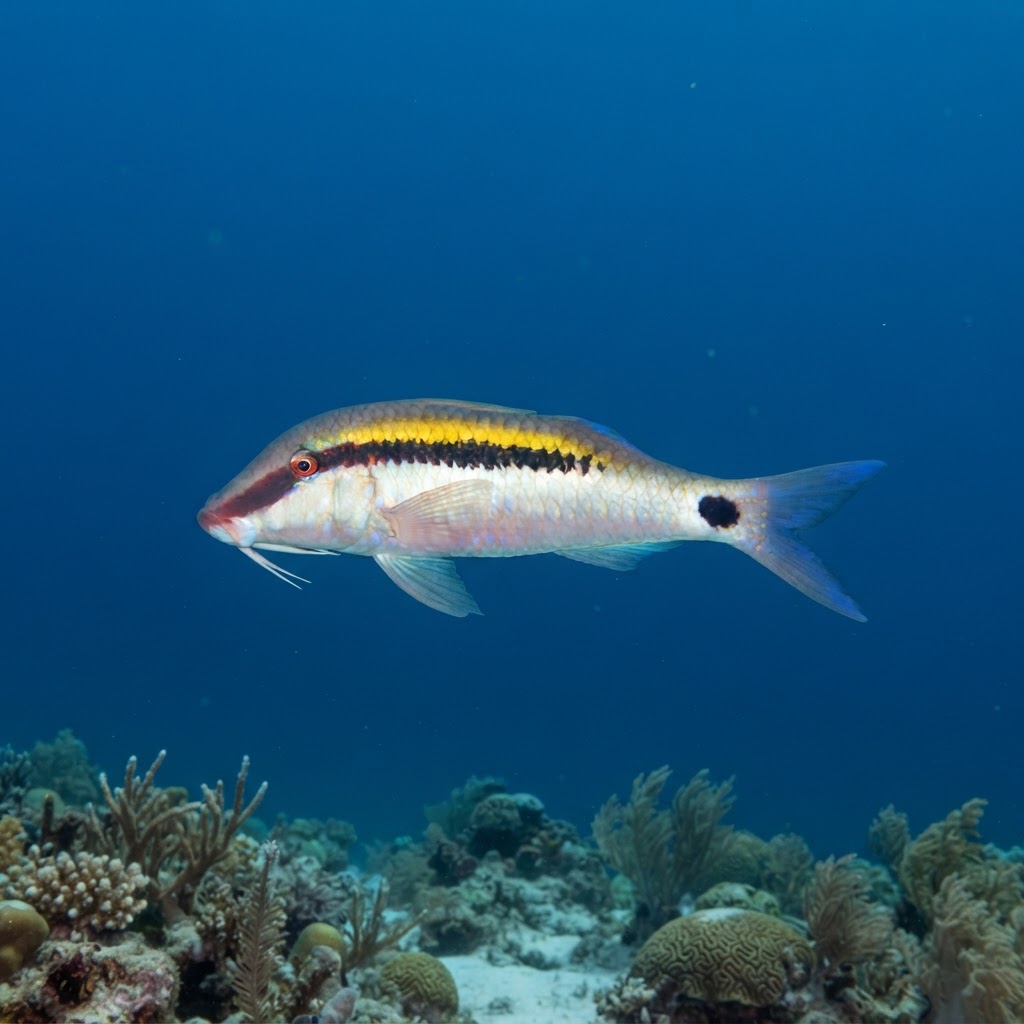
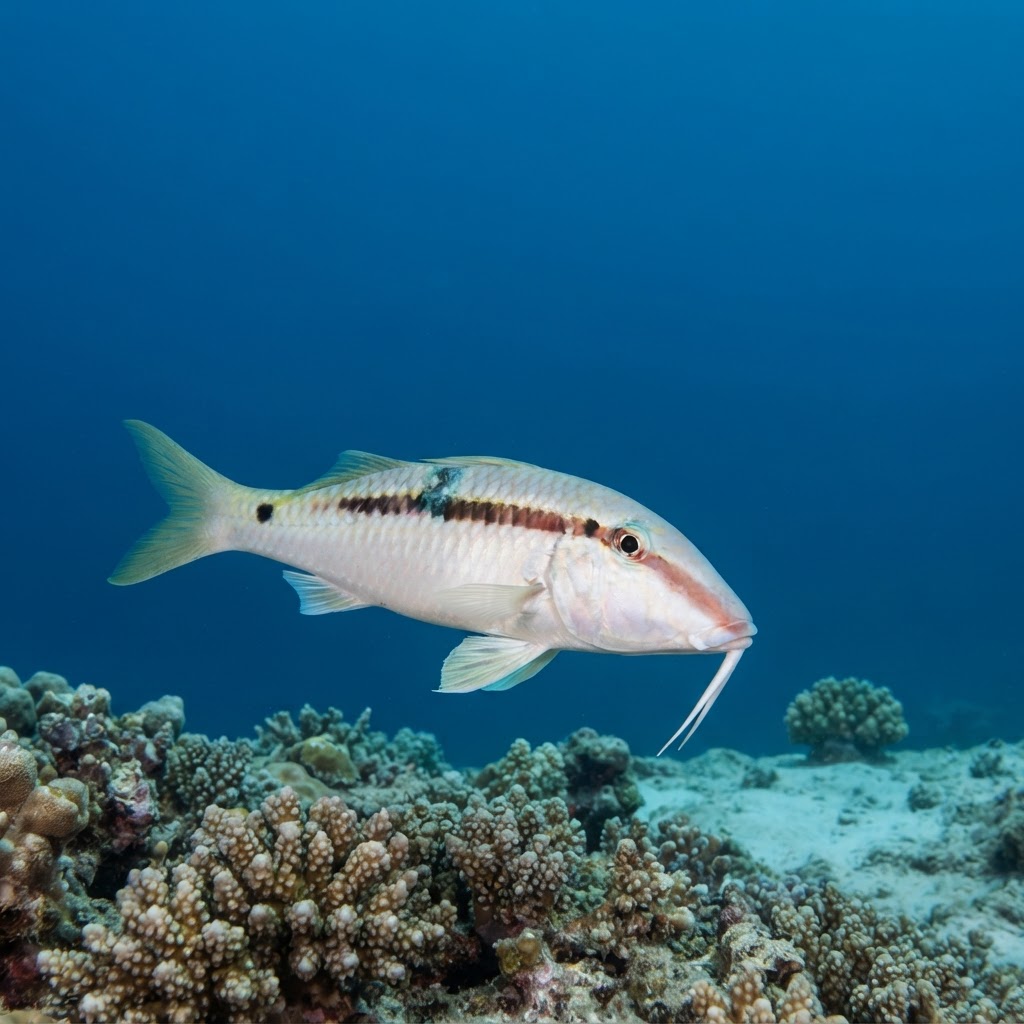
Look for a slender, reddish-brown body marked with dark diagonal bars, especially near the tail, which is where the common name comes from. A pair of long chin barbels (whisker-like feelers) is constantly probing the sand as it feeds. At around 21 cm it is a modest-sized reef fish, usually seen hovering just above or nosing into the substrate rather than out in open water.
Watch the sandy patches and rubble edges near reef bases and you will usually find one working the bottom, barbels sweeping side to side to flush out small invertebrates. They tend to ignore divers completely, more interested in the substrate than in you, and are often seen solo or loosely associating with other bottom feeders during the day. Most sightings are logged as uncommon rather than common, so it rewards a diver who checks the sand rather than just the reef wall.
Those chin barbels are packed with taste buds, letting the fish detect buried prey by touch and chemical cues alone, useful over sand where sight is no help.
No clear seasonal pattern shows up in the sightings, and with a comfortable range of about 25 to 29 C it stays active on tropical reefs all year, so any month works.
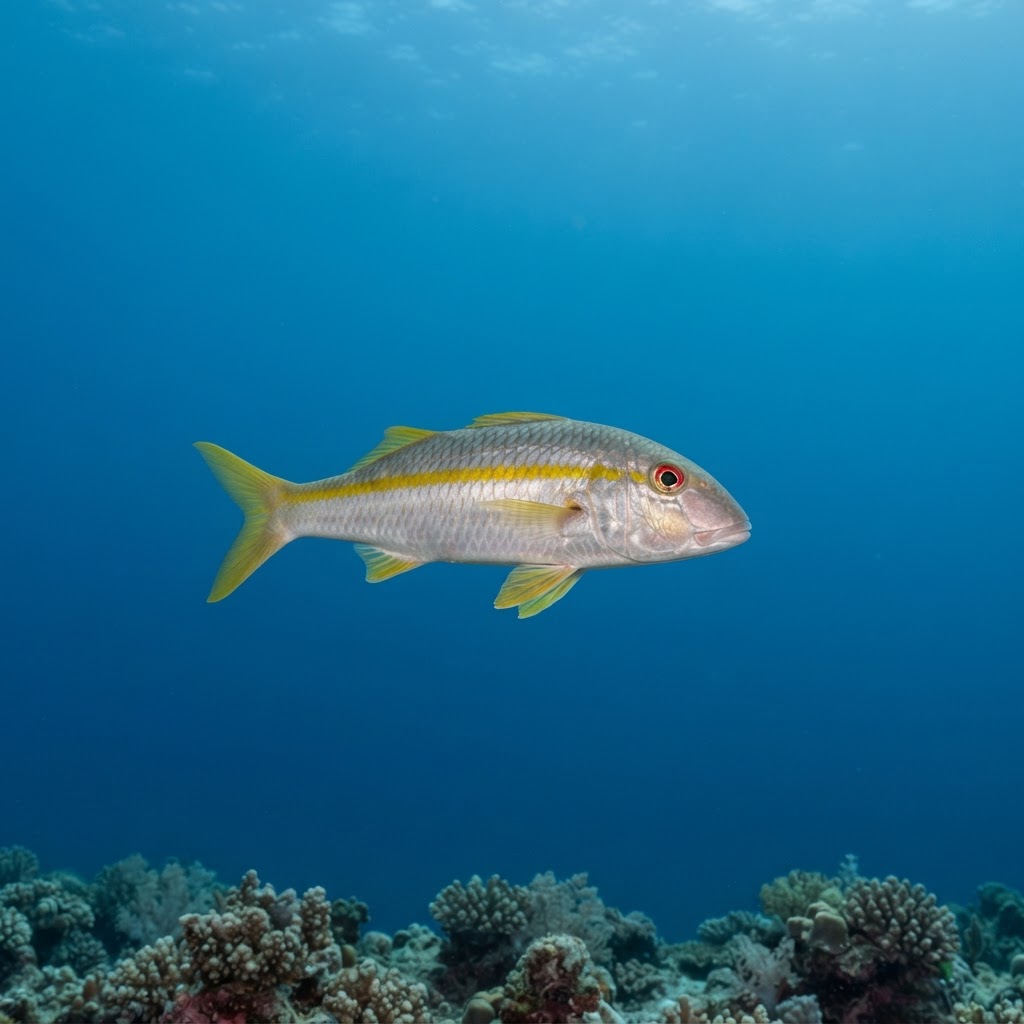
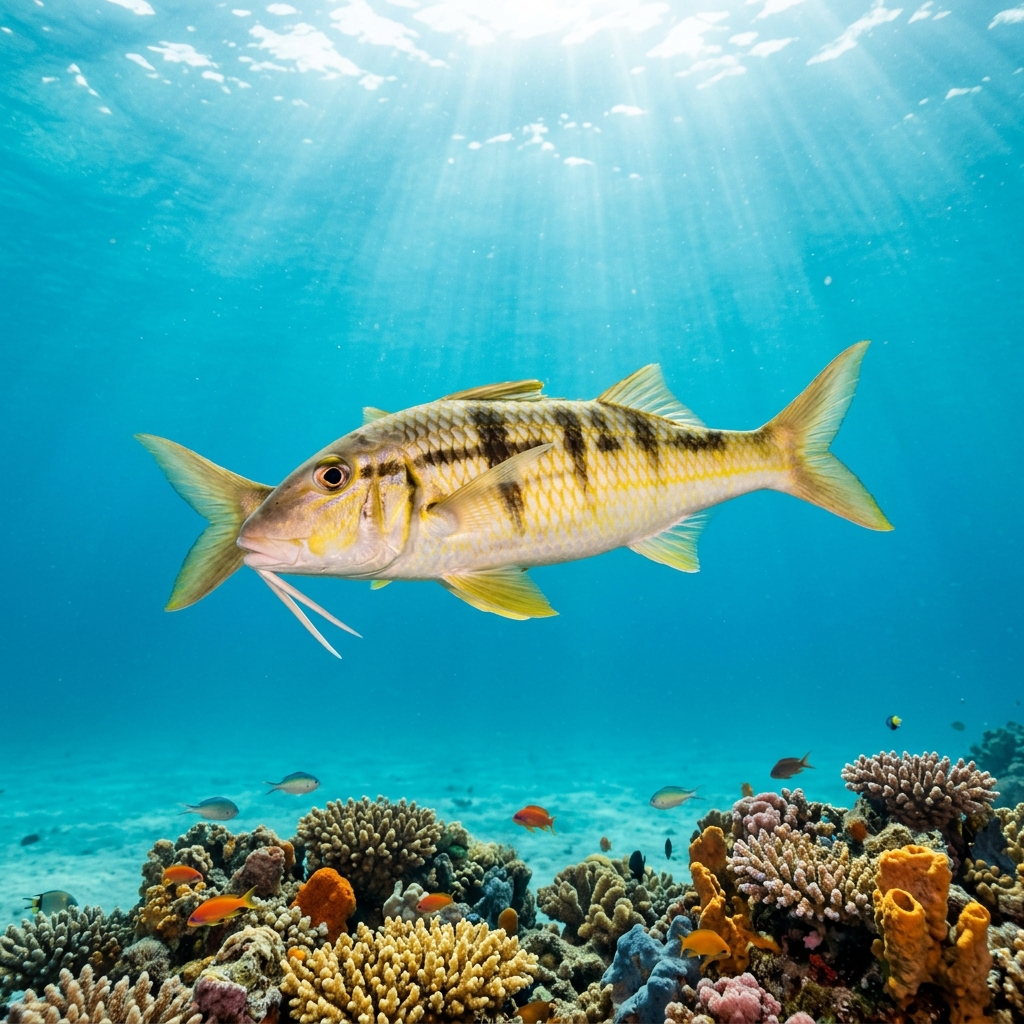
Reef neighbours a diver could mistake it for. Use the identification notes above to tell them apart.
Most reliably logged on reefs along Peninsular Malaysia's east coast and in Sabah, with strong numbers also out of Bali in Indonesia and around Koh Phi Phi, Koh Chang and Koh Tao in Thailand. It also turns up regularly in the Philippines at Palawan and Luzon, and in smaller numbers in Hong Kong, Taiwan, India and Australia.
Mapping where Bartail Goatfish is logged…
Best bet is Peninsular Malaysia's east coast and Sabah, where sightings are strongest, followed by Bali in Indonesia and Koh Phi Phi, Koh Chang and Koh Tao in Thailand. Palawan and Luzon in the Philippines are also solid options.
There is no strong seasonal pattern in the data, and the species tolerates a wide 25 to 29 C range, so it is present on reefs year-round.
Look for a reddish-brown, barred body with dark markings concentrated toward the tail, plus a pair of long barbels under the chin used to probe sand. It is usually seen hovering low over sand or rubble rather than swimming in open water.
They typically reach around 21 cm, a modest size compared to many reef fish, making them easy to overlook against sand and rubble.
No, they pose no threat to divers. They are focused entirely on foraging in the sand and pay little attention to people nearby.
They use a pair of chin barbels covered in taste-sensing cells to detect buried prey in sand, essentially tasting the seabed rather than relying on sight.
Site and sighting data is aggregated from diver logs, iNaturalist and GBIF. For taxonomy and conservation status:
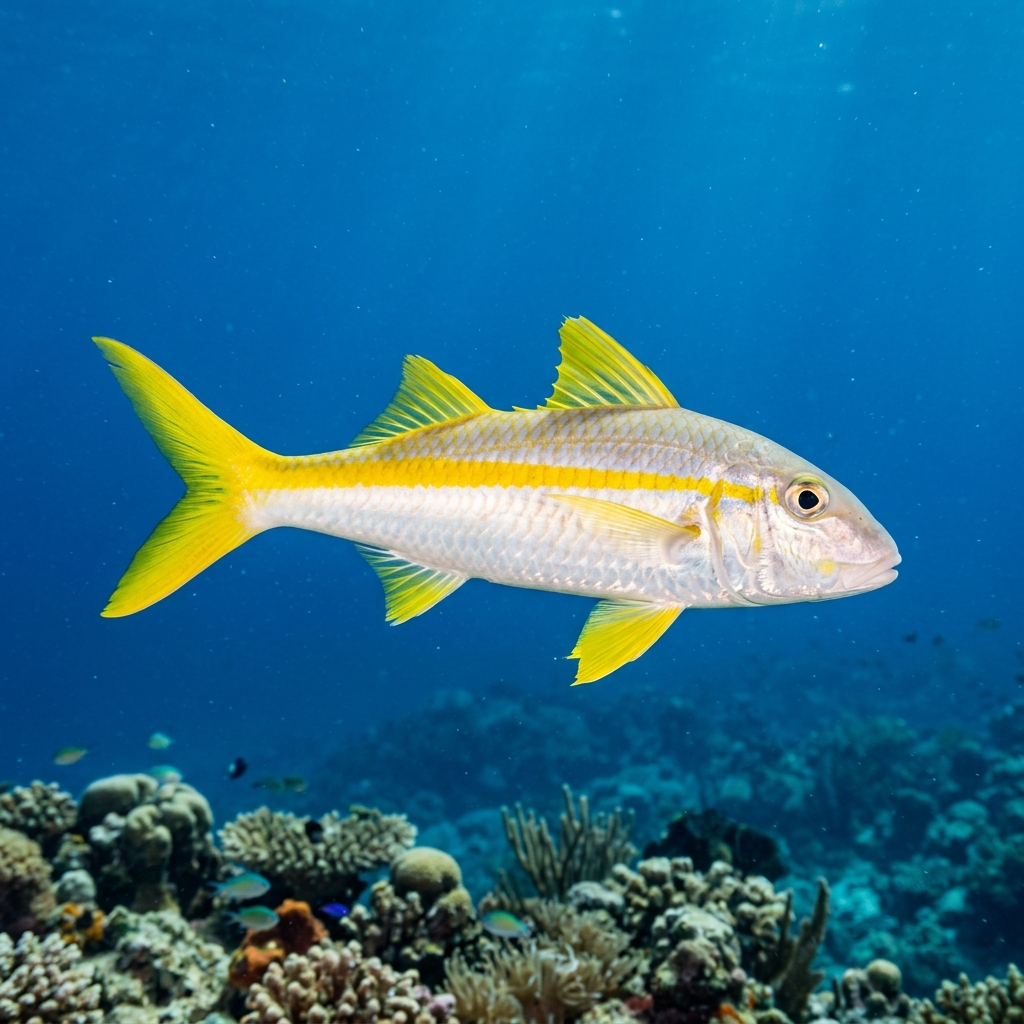
Yellowfin Goatfish
2,241 sites