Parupeneus barberinus
Pale-bodied goatfish with a black-and-white tail patch, logged reef-wide from the Maldives to Queensland year-round in warm tropical water.
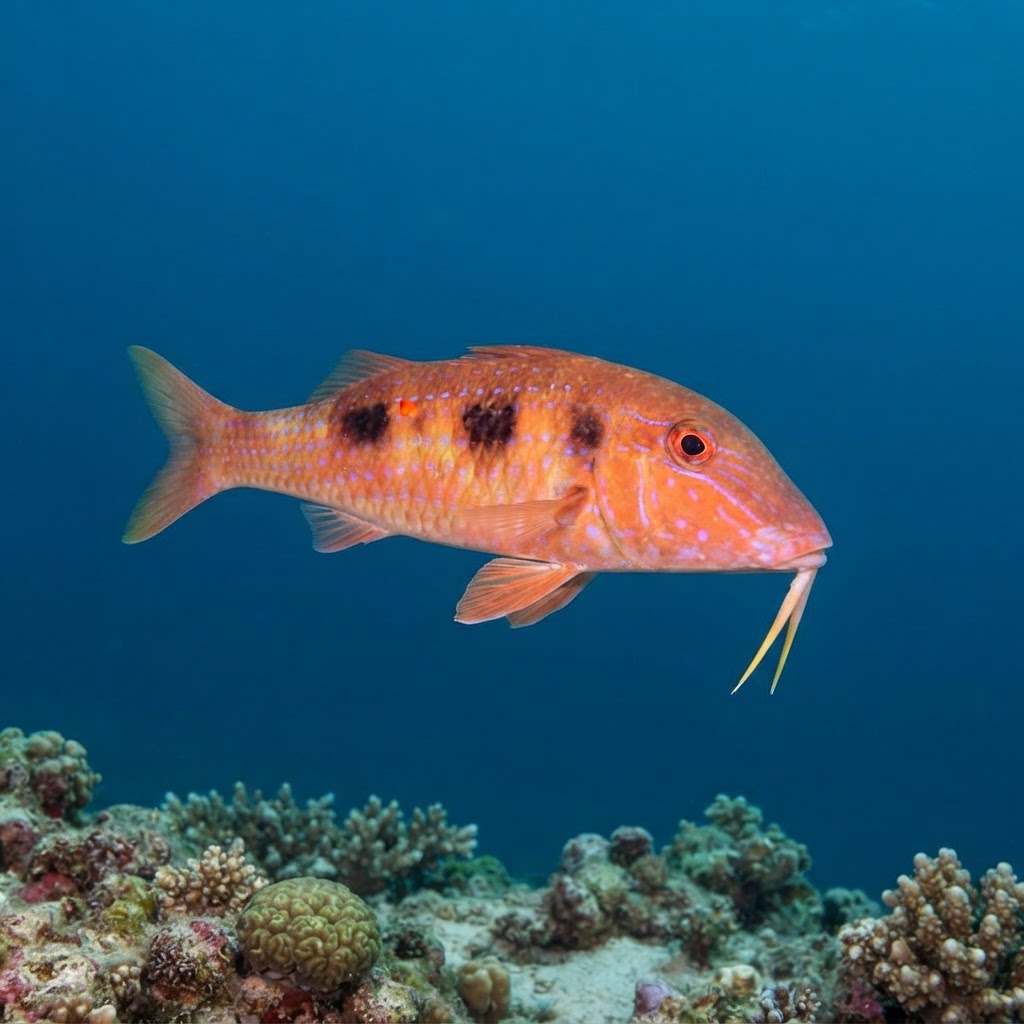
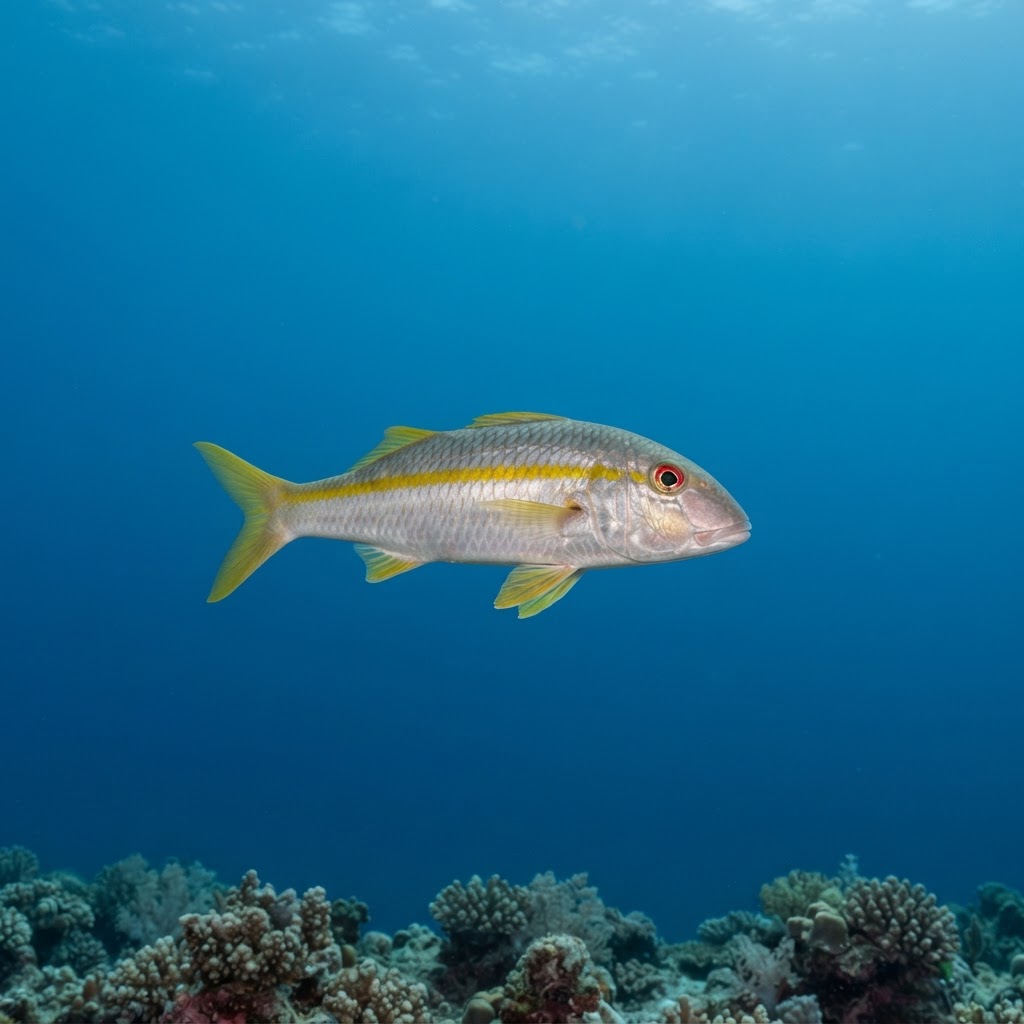
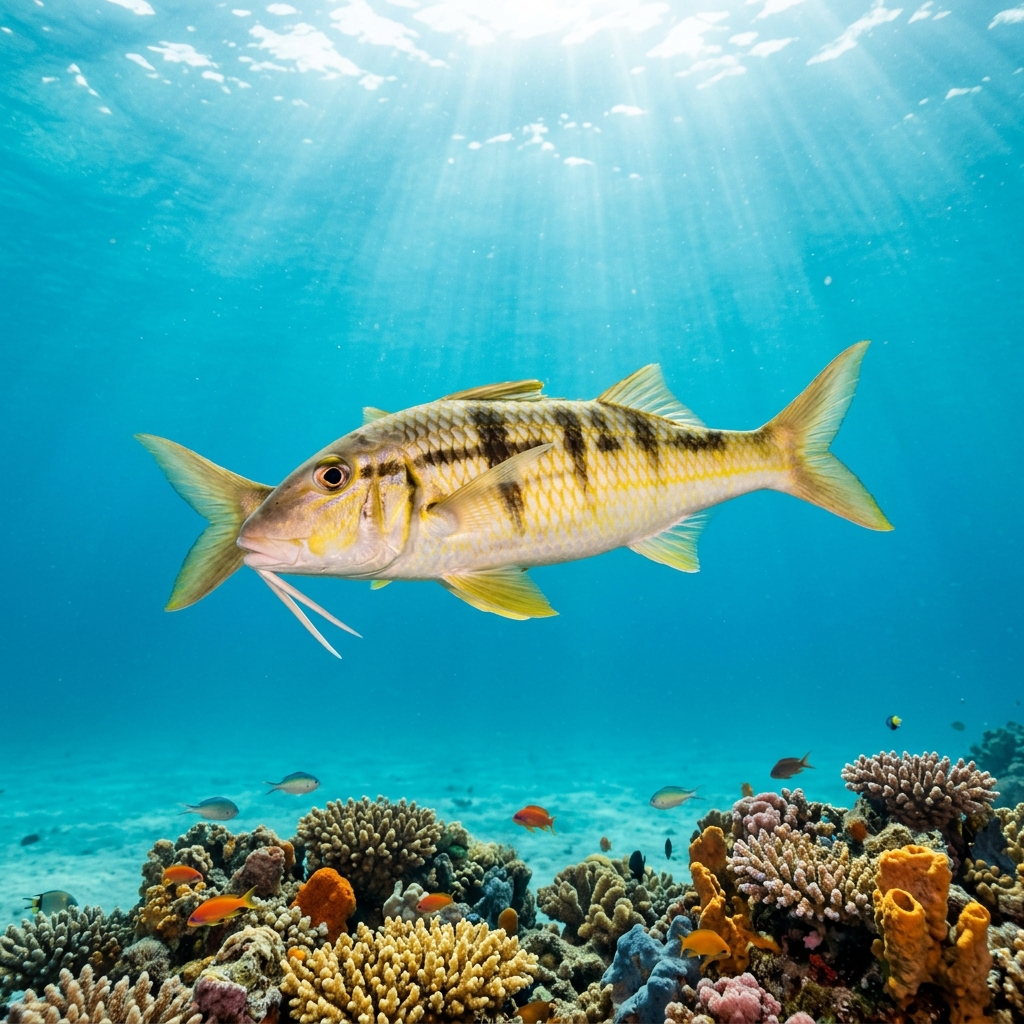
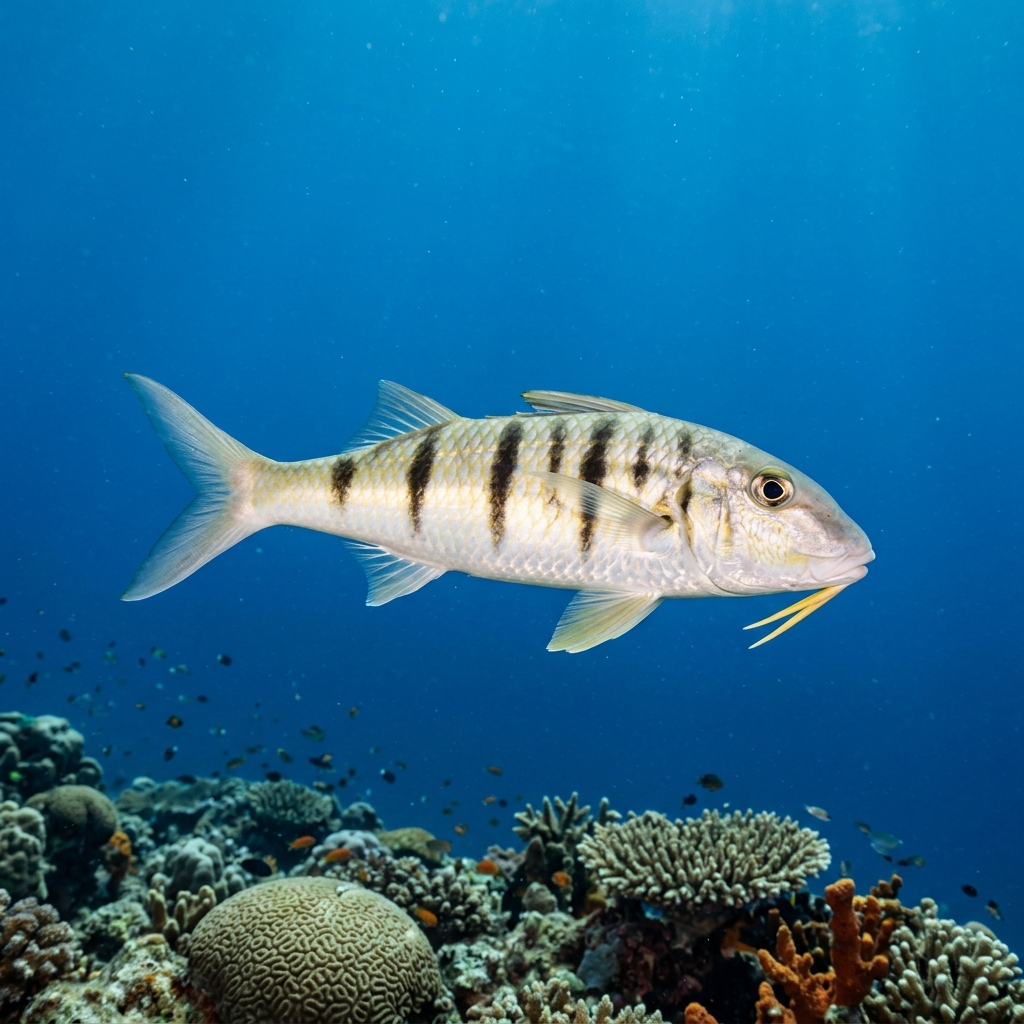
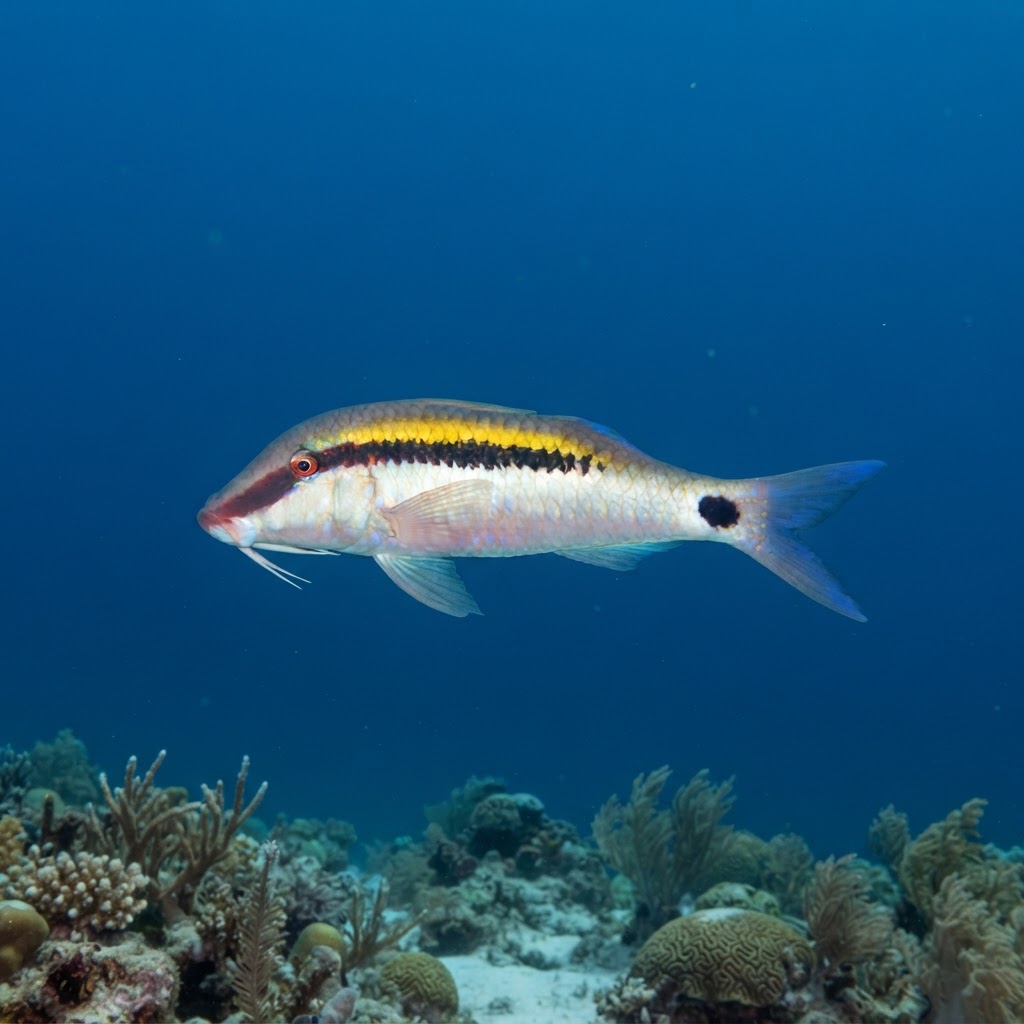
Look for a long, pale grey-to-white body reaching over 40cm with a pair of chin barbels it drags through the sand to feel for prey. The giveaway is at the tail: a black dash mark followed by a white spot then a black dot, stacked along the base of the tail fin. The snout is elongated and slightly downturned, built for probing rather than biting.
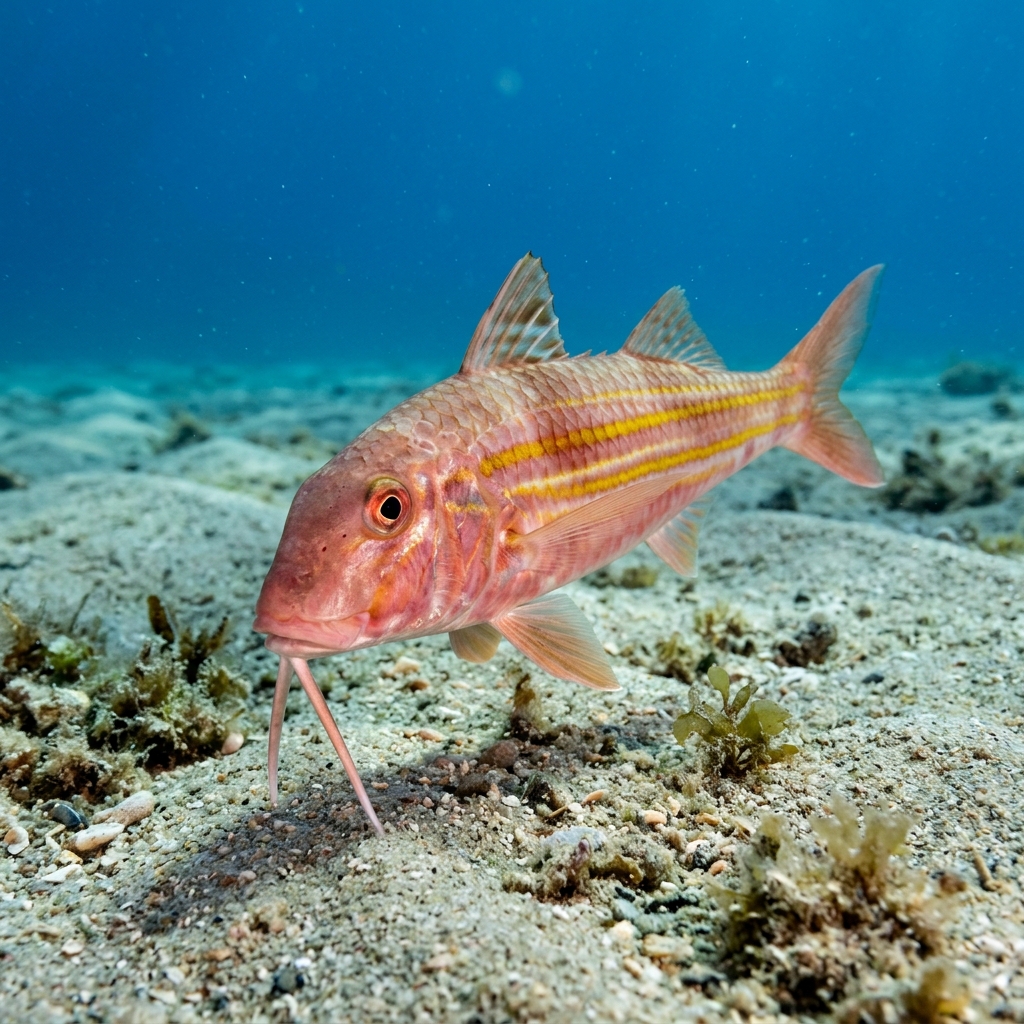
Spend most dives watching it work sand and rubble patches with its barbels, sweeping side to side to flush out worms and small crustaceans hiding just under the surface. It's usually solitary or in loose pairs, cruising slowly over open sand near reef edges rather than tucked into coral, and it rarely spooks at a diver's approach, letting you get a good close look before moving off.
Those chin barbels aren't just feelers: they're covered in chemosensory cells that let the fish taste prey buried in sand, meaning it can find a worm without ever seeing it.
No clear seasonal pattern shows up in the sighting data, so it's a year-round find. Water in its comfort range (24.6 to 29C) holds steady across most of its Indo-Pacific range, meaning any month works on a typical tropical reef dive.
Reef neighbours a diver could mistake it for. Use the identification notes above to tell them apart.
Most reliably logged across the Central Atolls of the Maldives and the Visayas region of the Philippines, with strong numbers also in Seychelles' Inner Islands and Queensland, Australia. Also a regular sighting in Thailand's Koh Lipe, Palau's Koror and Malakal, and Fiji, making it one of the more widely distributed goatfish on Indo-Pacific reef dives.
Mapping where Dash-and-dot Goatfish is logged…
The Maldives and the Philippines' Visayas region turn them up most often, with good numbers also in Seychelles, Queensland, Thailand's Koh Lipe, and Palau. They favour sandy patches near reef structure rather than deep coral.
There's no strong season in the sighting data, so they're seen year-round on tropical reefs. Their comfort range of roughly 24.6 to 29C stays stable across most dive destinations all year.
Check the tail base for a black dash, a white gap, then a black dot in a row, a pattern unique to this species. Pair that with a pale grey body, elongated snout, and a set of chin barbels used to probe sand.
They reach around 42cm, making them one of the larger goatfish regularly seen on Indo-Pacific reef dives.
They hunt using chemosensory barbels under the chin that can taste buried prey in sand, letting them locate worms and small crustaceans without any visual contact.
Site and sighting data is aggregated from diver logs, iNaturalist and GBIF. For taxonomy and conservation status:
Yellowfin Goatfish
2,241 sites