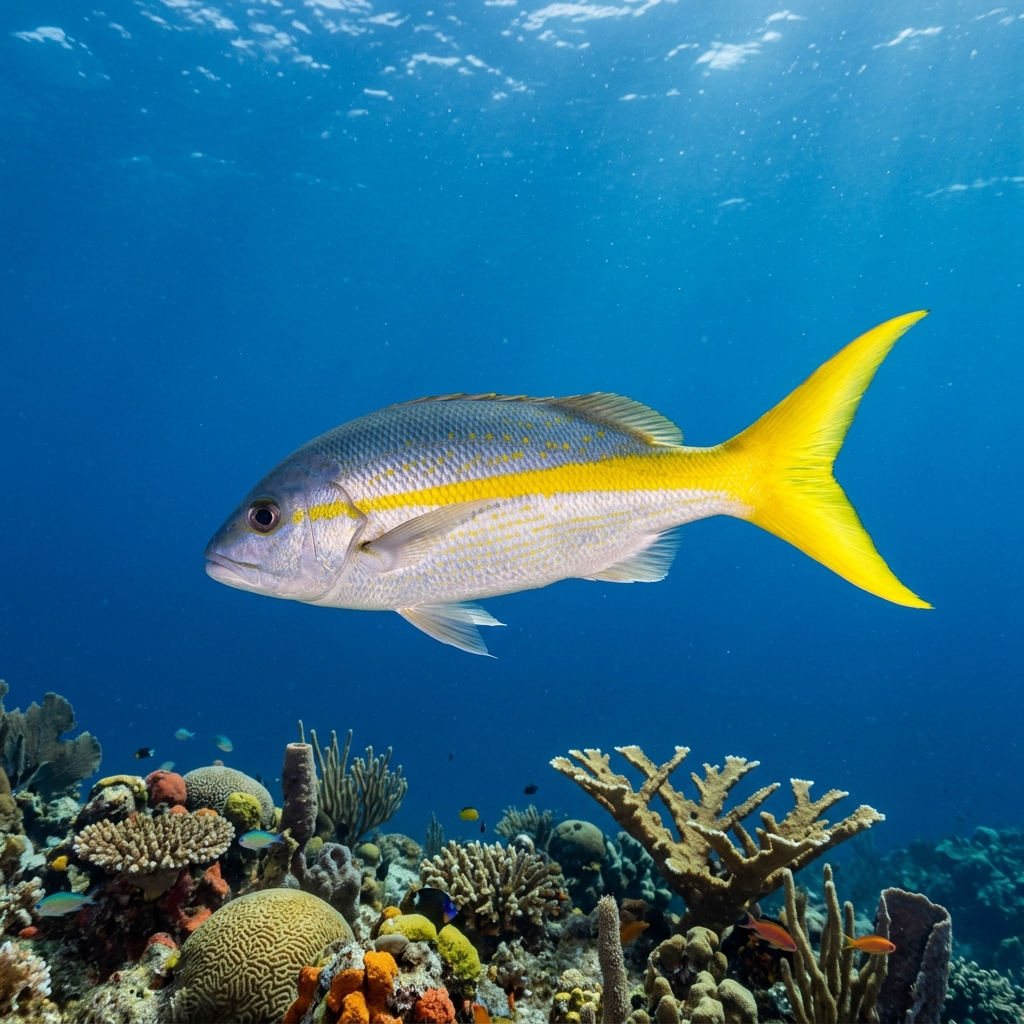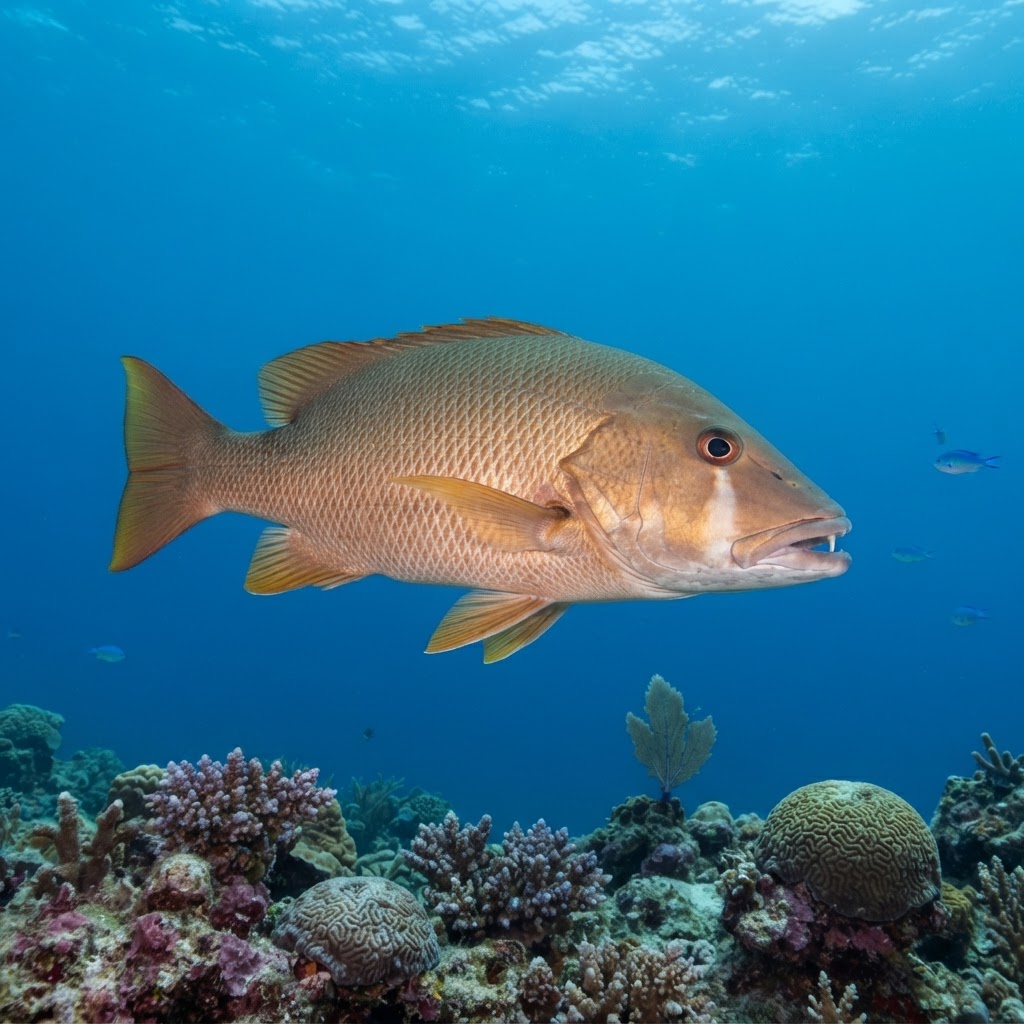
Lutjanus jocu
A reef fixture in Honduras's Bay Islands and the British Virgin Islands, dog snapper turns up on tropical reefs in 23-28C water all year.
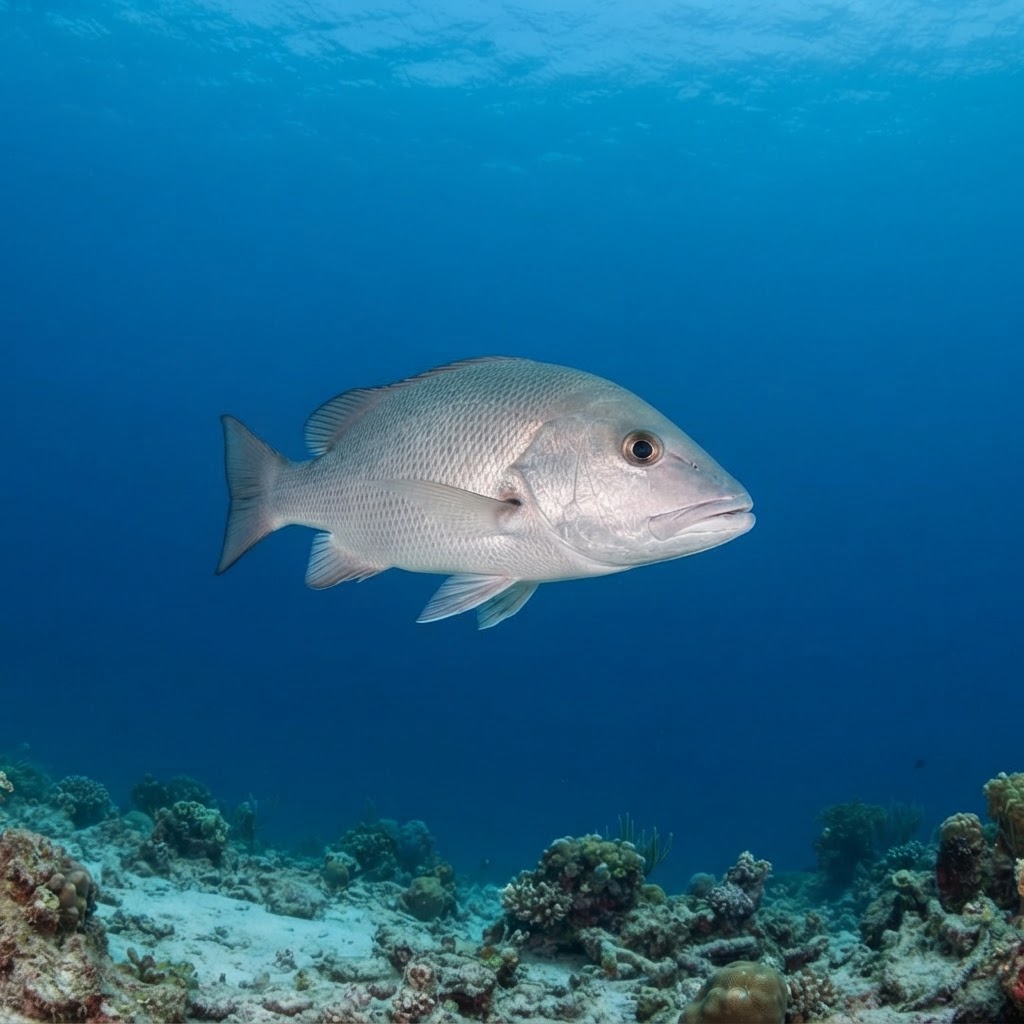
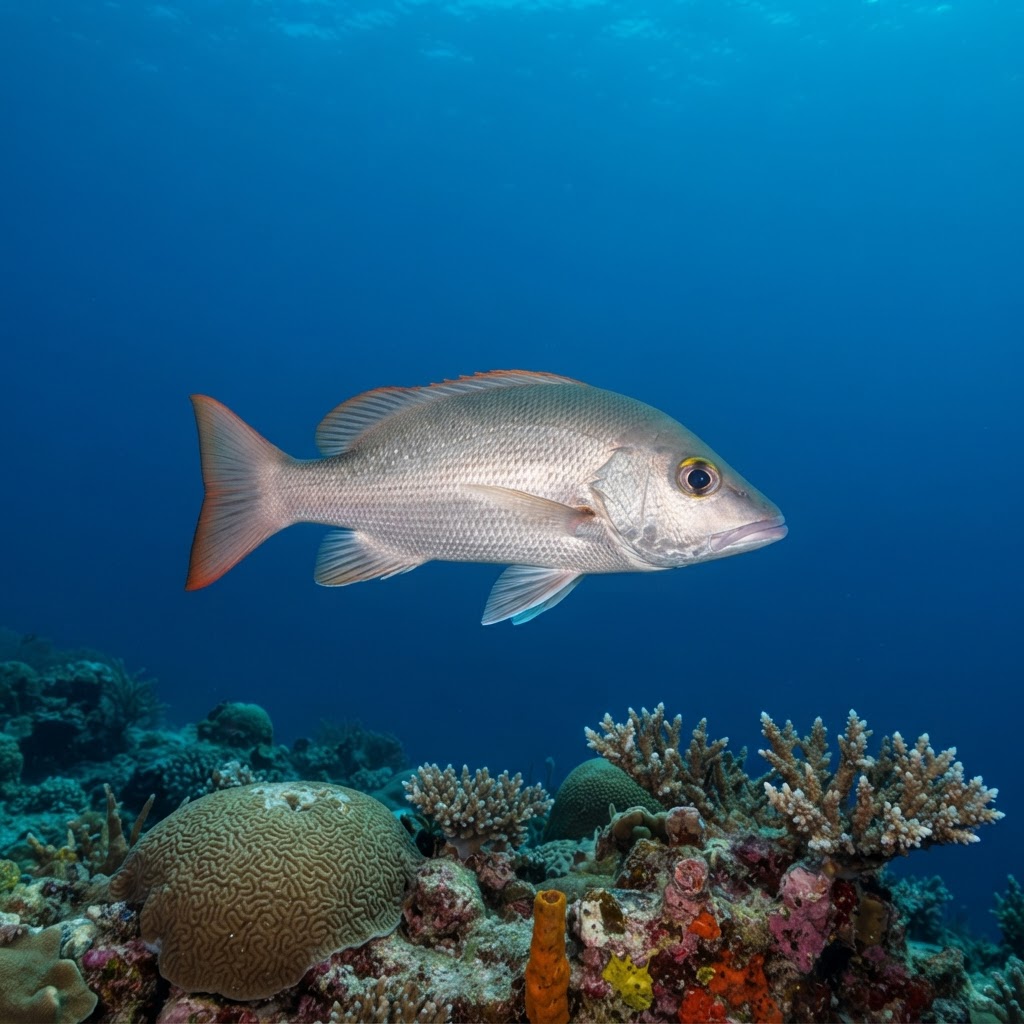
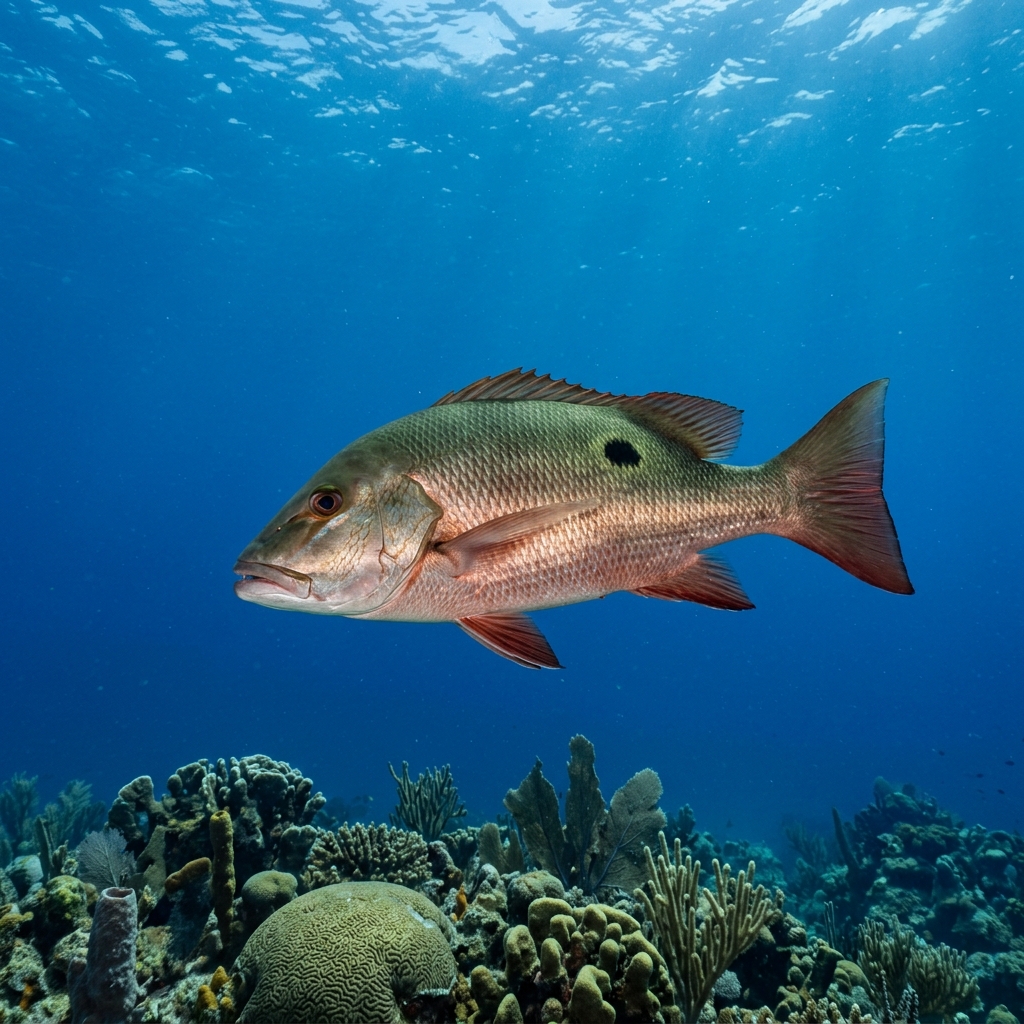
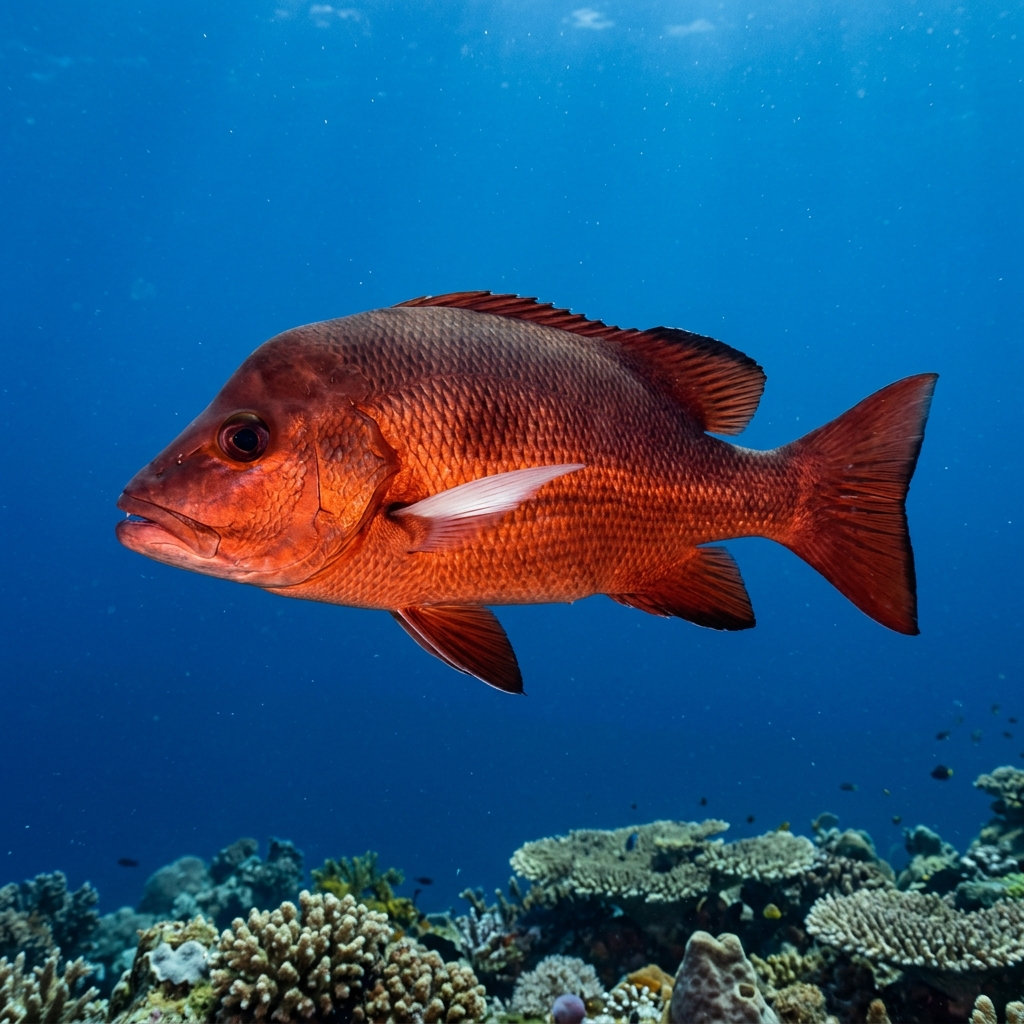
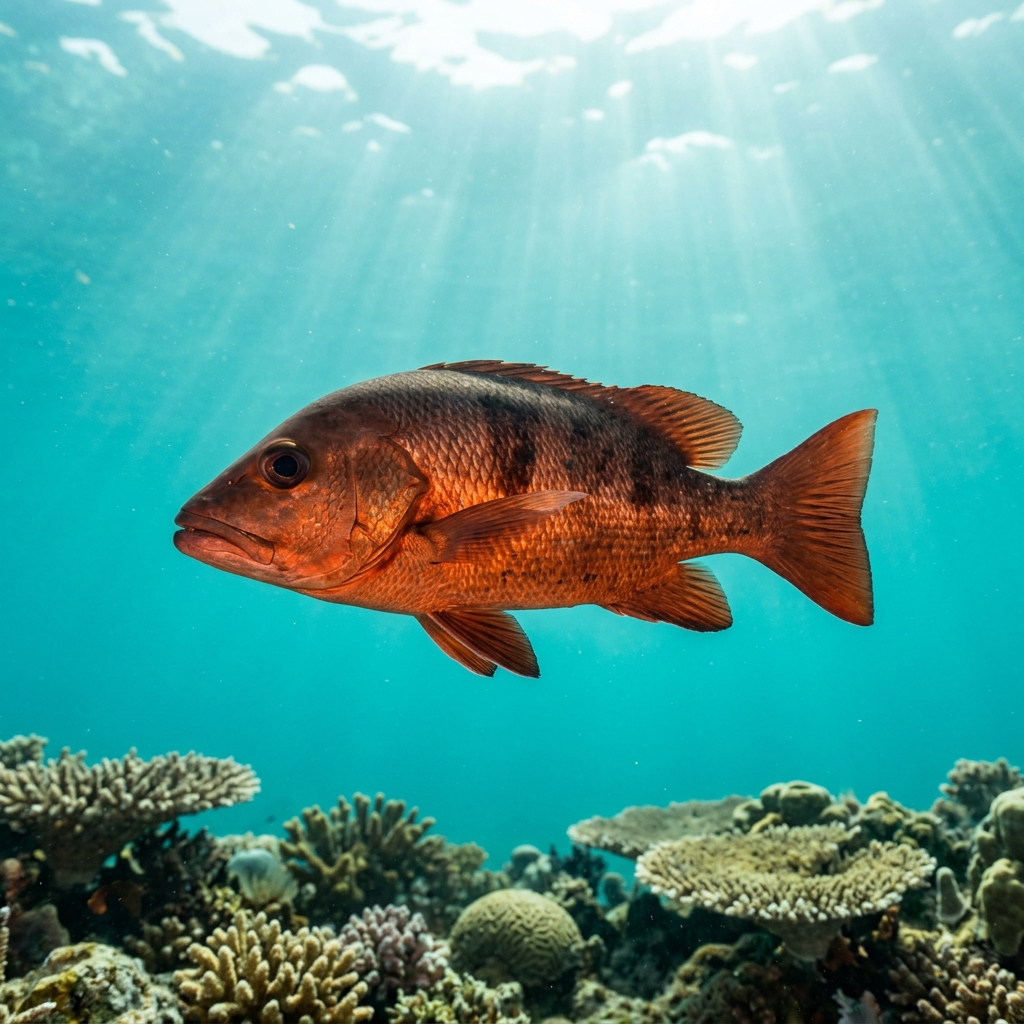
Grows to around 89cm and shows a thick-set, deep-bodied snapper shape with a slightly pointed snout. Colour runs copper-brown to reddish on the back fading to a paler, coppery-white belly, with a diagnostic pale blue streak running under each eye and canine-like teeth visible when the mouth is open. Larger adults often look almost bronze in open water but flush darker red-brown when resting near reef structure.
Usually seen alone or in small loose groups hovering near reef ledges, wrecks or drop-offs rather than out in open water, often hanging in the shadow of an overhang during the day. It tends to keep a cautious distance from divers rather than approach, and is more active hunting over the reef and adjacent sand flats around dusk. Most logs describe it as an uncommon but steady sighting rather than something that shows up in numbers.
Dog snapper are known to form large spawning aggregations at specific reef sites and times, a behaviour pattern shared with several other Caribbean snappers that makes those gatherings notable when divers stumble onto one.
No clear seasonal pattern shows up in the sightings, and its comfort range of 23.2 to 28C covers Caribbean and Brazilian reef temperatures year-round, so any month is fair game.
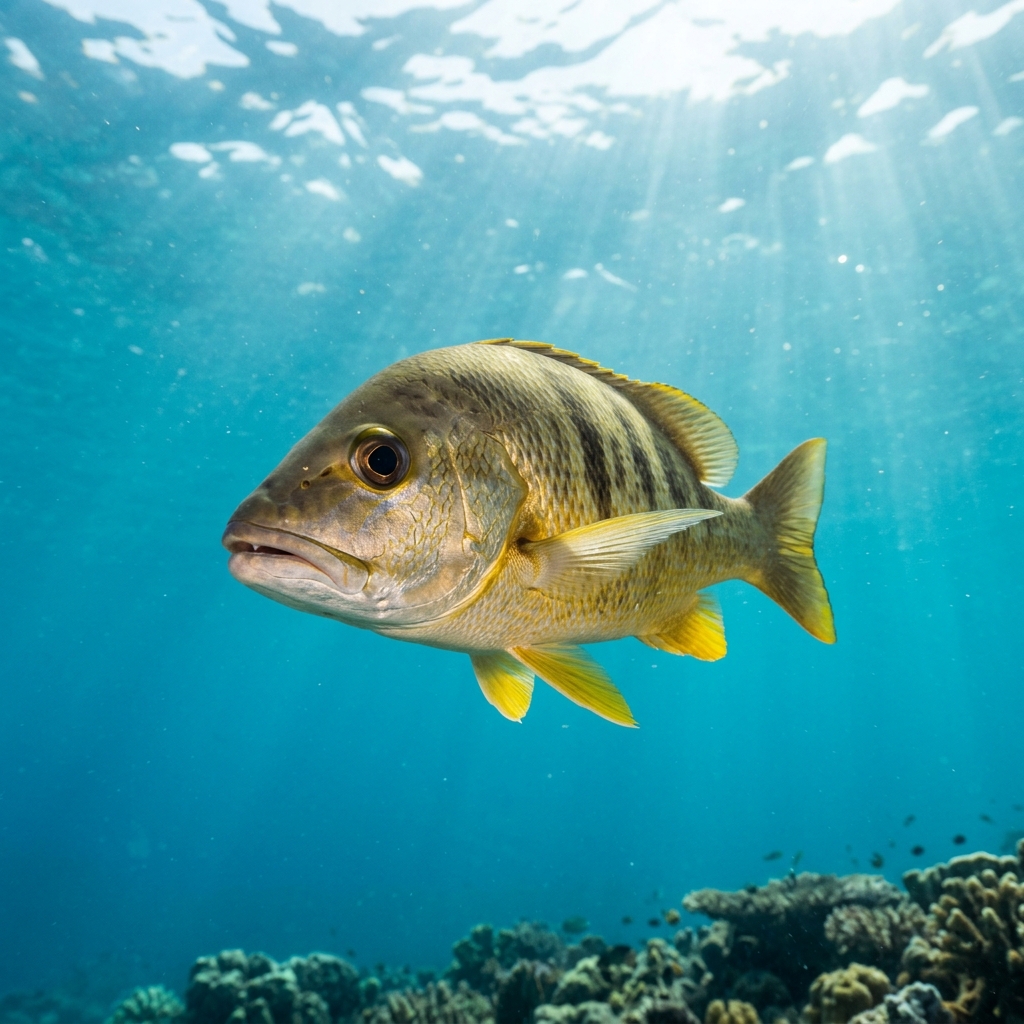
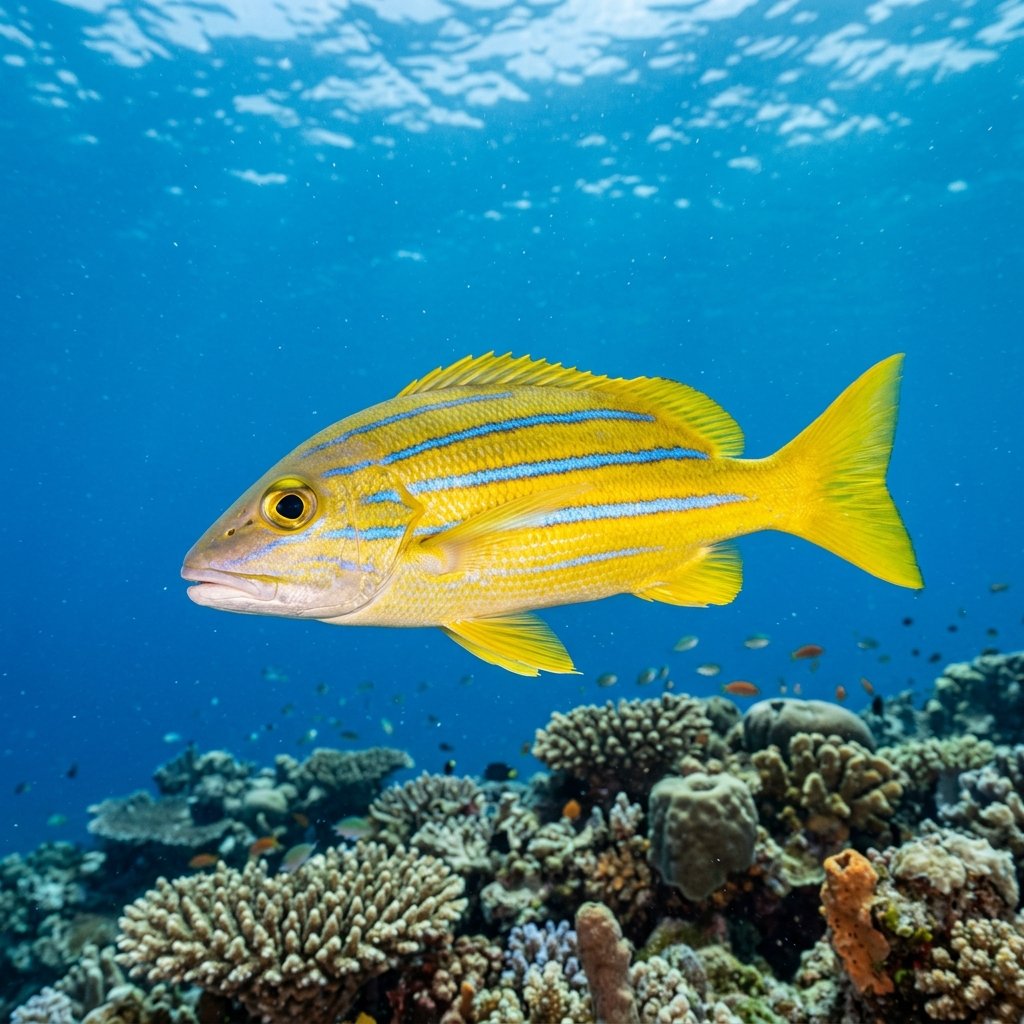
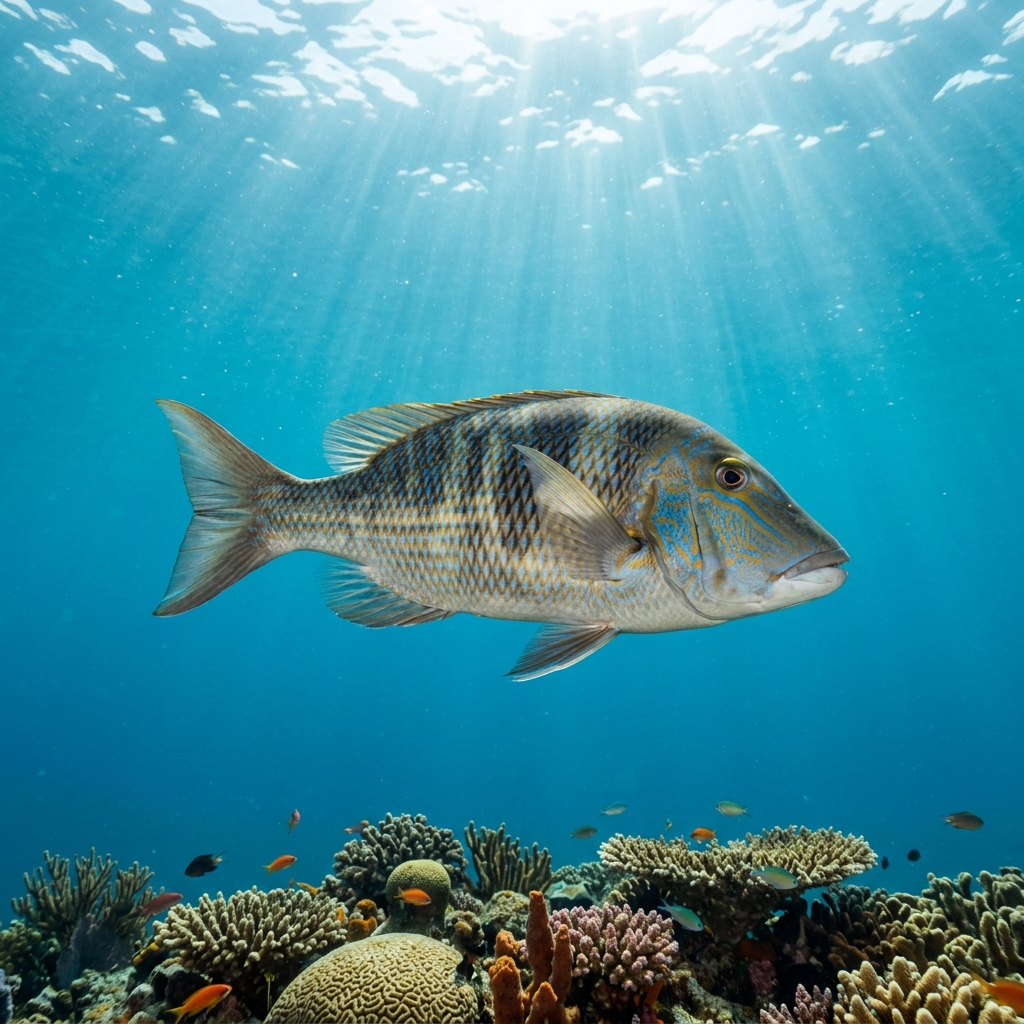
Reef neighbours a diver could mistake it for. Use the identification notes above to tell them apart.
Most reliably logged in the Bay Islands of Honduras and around Tortola and the Southern Islands in the British Virgin Islands, with strong numbers also around Grand Cayman. Belize (especially Ambergris Caye and Caye Caulker), Fernando de Noronha in Brazil, and reefs off Florida and Panama's Caribbean coast are other solid bets.
Mapping where Dog Snapper is logged…
Best odds are in Honduras's Bay Islands and the British Virgin Islands around Tortola, plus Grand Cayman. Belize's Ambergris Caye and Caye Caulker, Fernando de Noronha in Brazil, and Florida and Panama's Caribbean coast also produce regular sightings.
There's no strong season in the data, and the water temperatures it favours, 23.2 to 28C, hold year-round across its Caribbean and Brazilian range, so it's a reasonable sighting on any dive trip.
Look for a heavy-bodied, copper-brown snapper with a pale belly and a distinctive blue line running under each eye. It typically sits near reef ledges or wreck structure rather than schooling in open water.
They reach around 89cm in length, making them one of the larger reef-associated snappers a diver is likely to encounter close up.
No, they're not considered dangerous to divers. They tend to keep their distance and are typically seen resting near structure rather than approaching.
Site and sighting data is aggregated from diver logs, iNaturalist and GBIF. For taxonomy and conservation status:
Bluestriped Snapper
2,054 sites