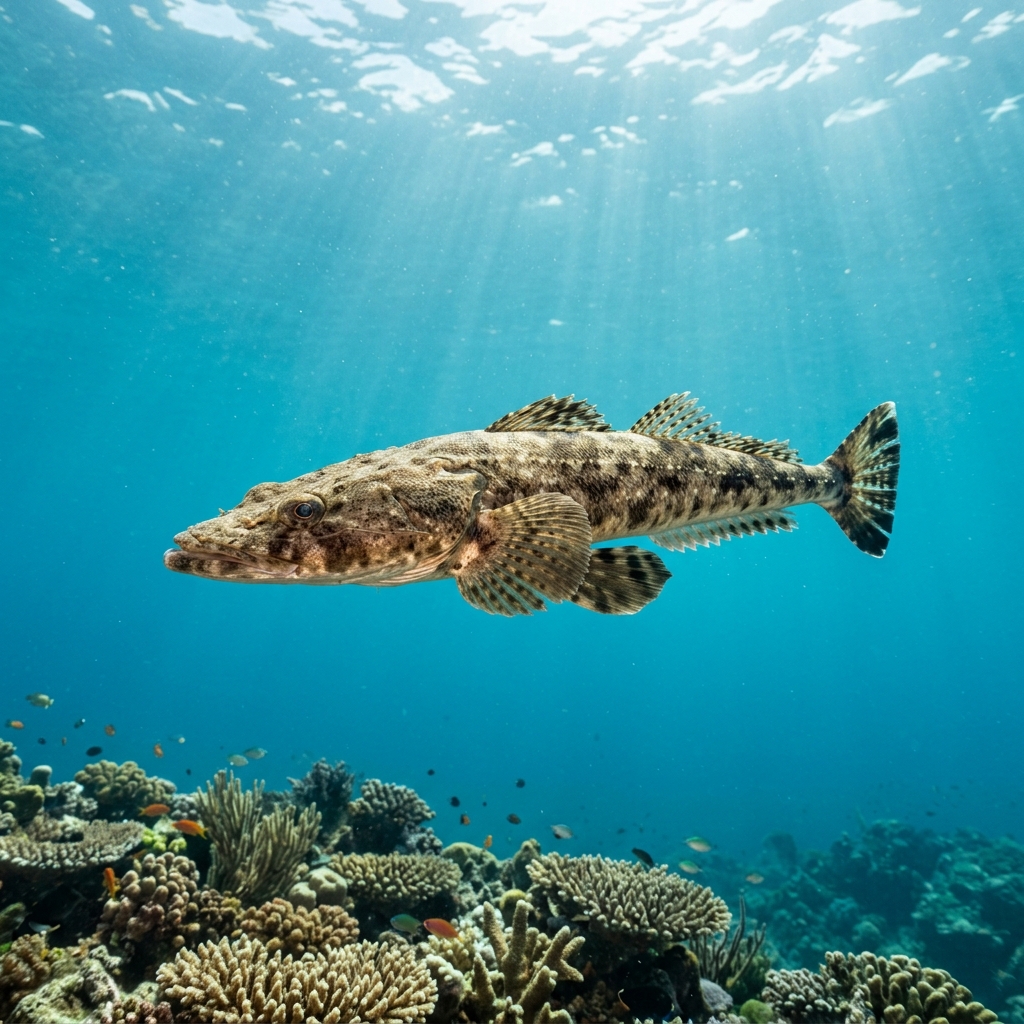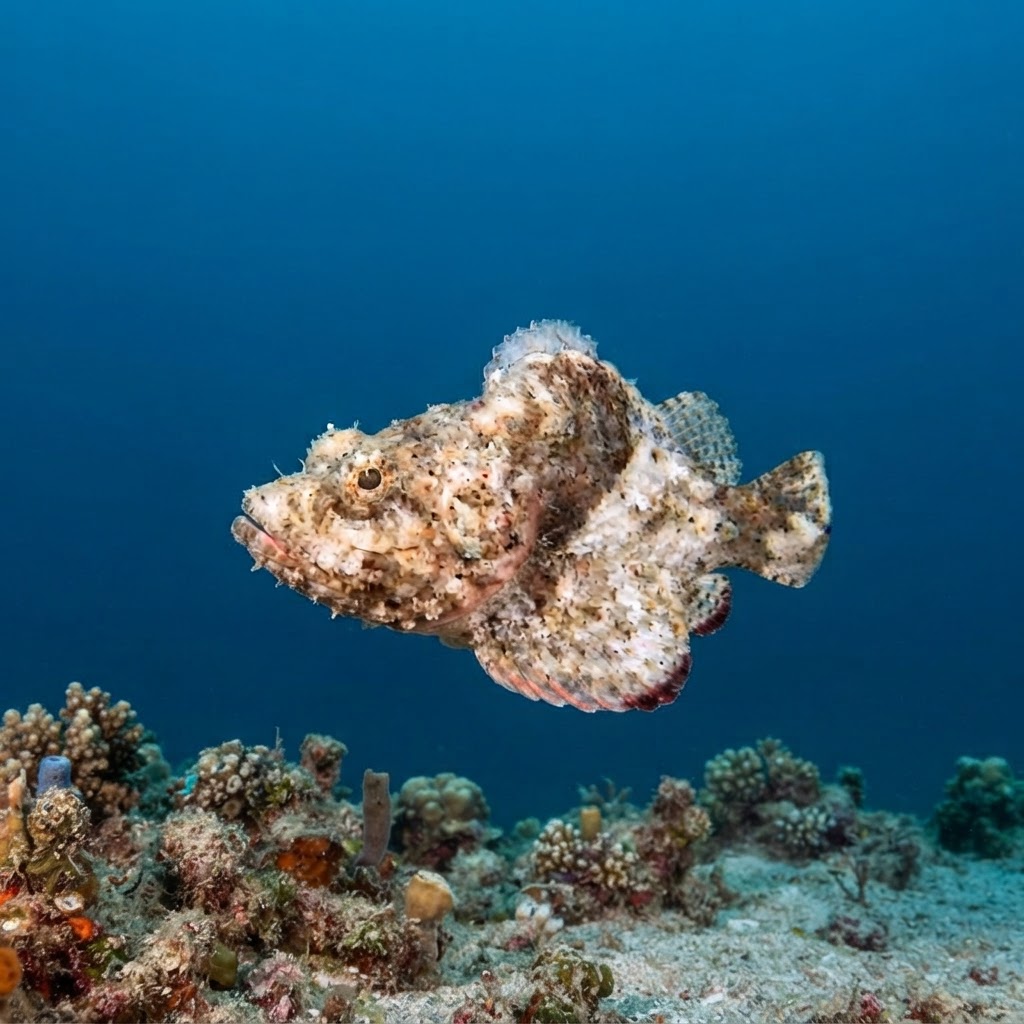
Scorpaenopsis diabolus
Camouflaged on Red Sea reefs at 24-29 C, Devil Scorpionfish are a year-round, uncommon find across South Sinai and Aqaba.
Safety warning
Carries venomous spines along its back that deliver a serious sting if grabbed, knelt on, or handled, and its camouflage means it is easy to miss on rock or rubble. Keep hands and knees off the substrate on hard-bottom dives, watch buoyancy near reef walls, and if stung seek medical attention rather than treating it as a minor scrape.
If you're stung
Venomous spinesGeneral first-aid guidance, not a substitute for professional medical care. In an emergency, call your local emergency number.
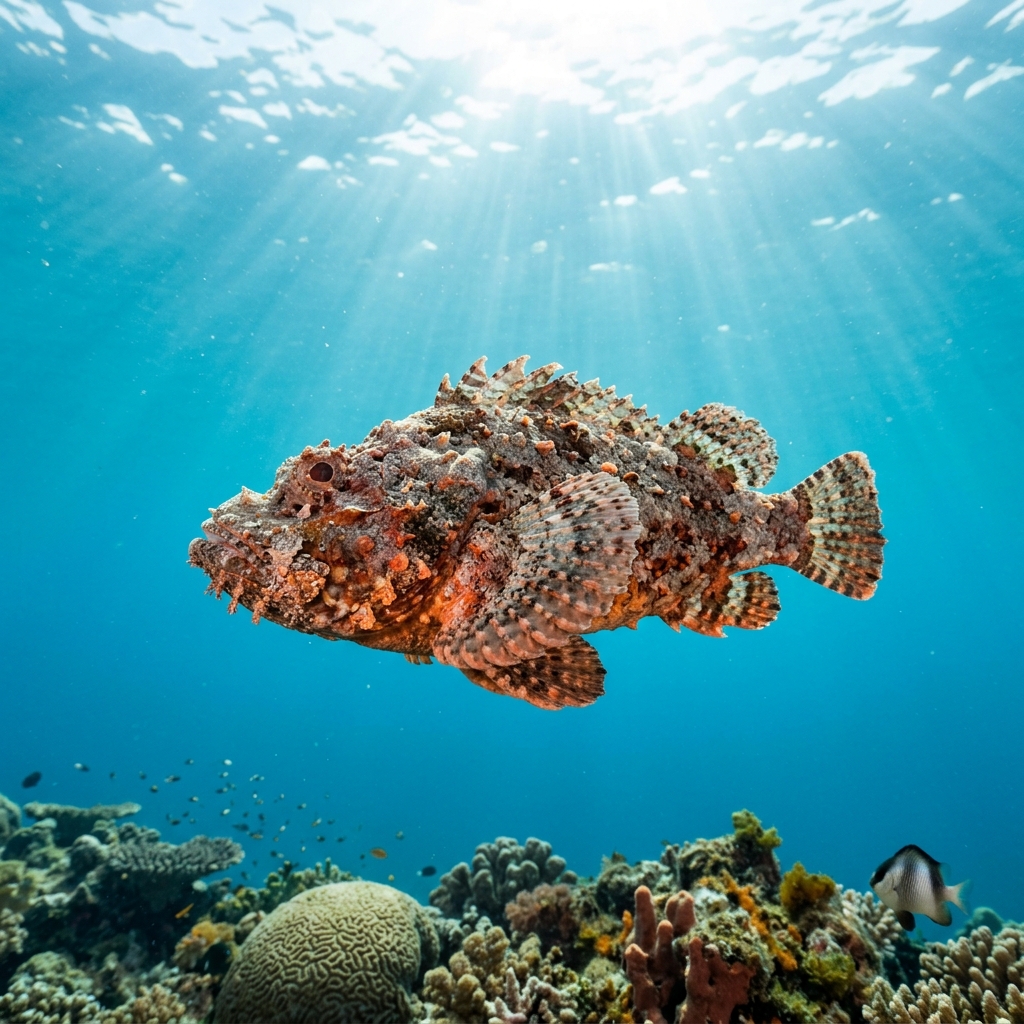
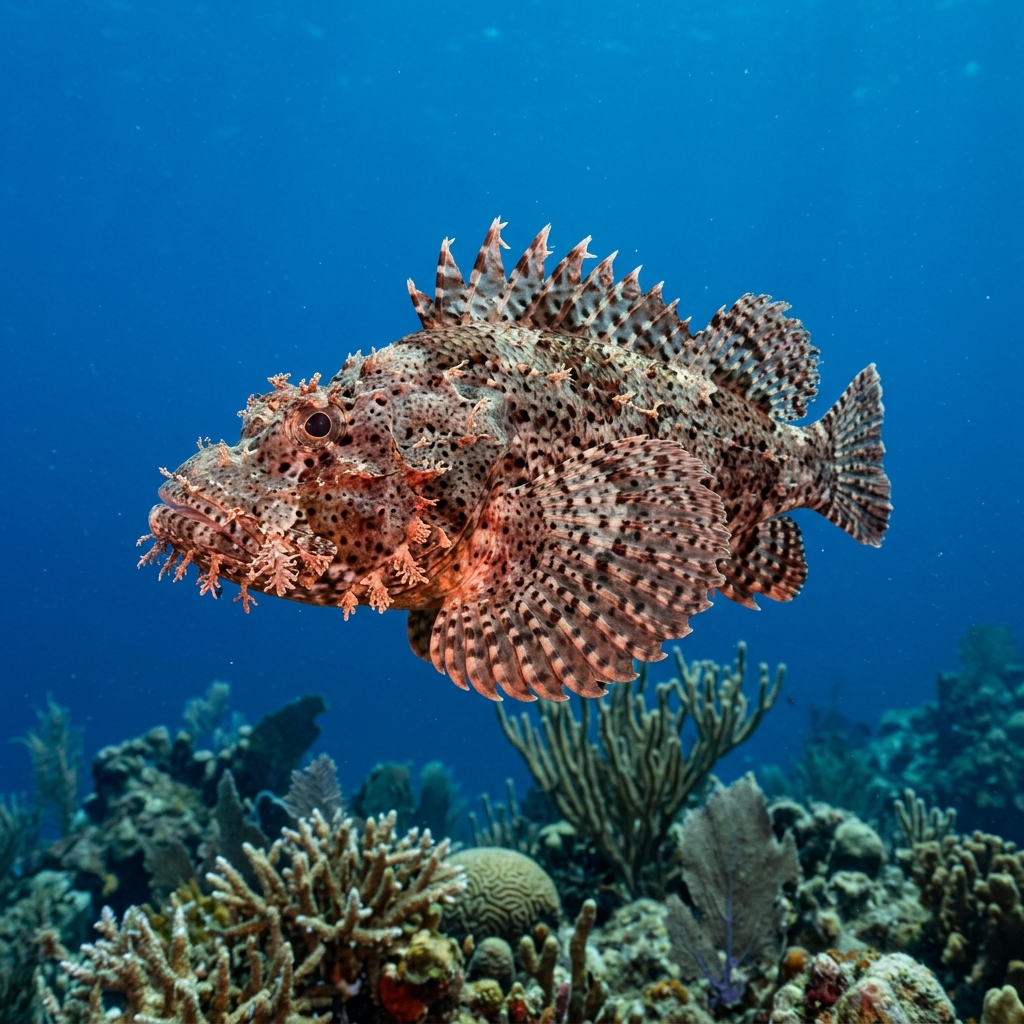
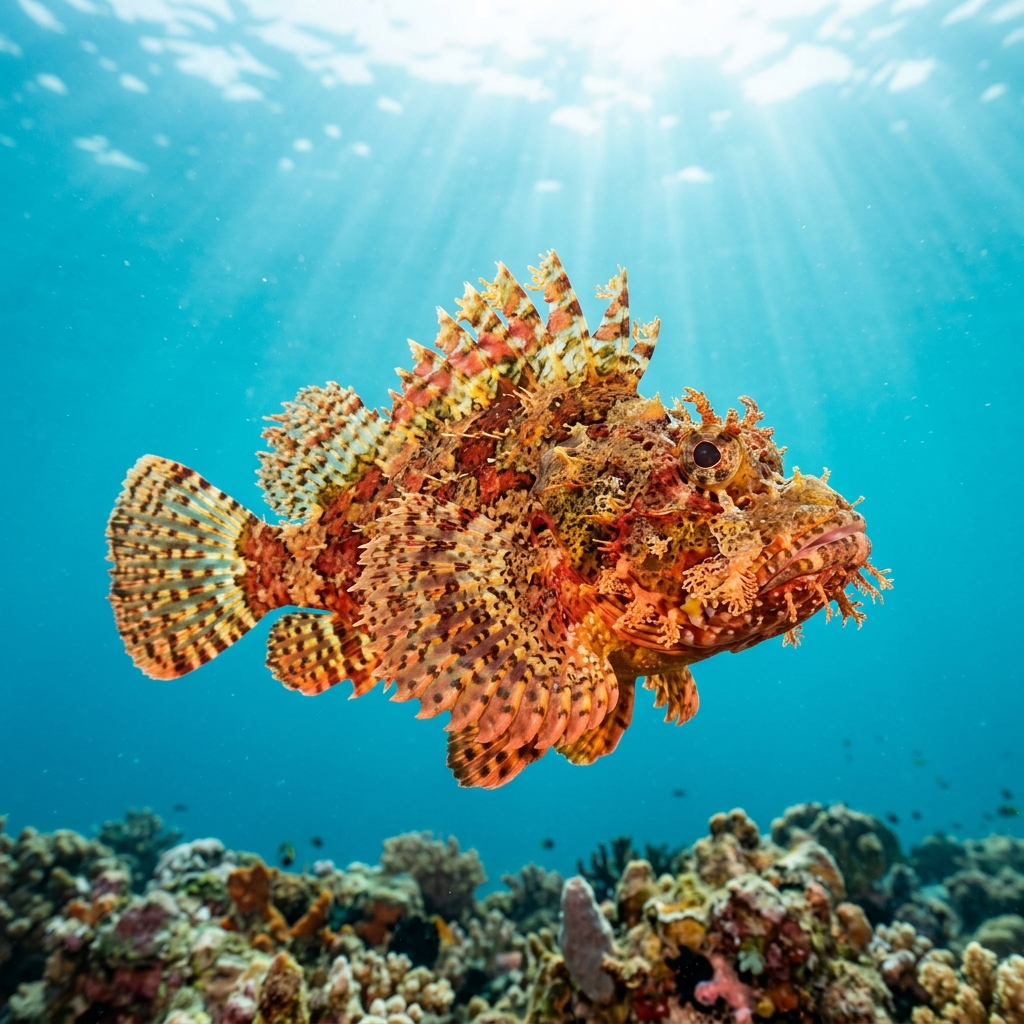
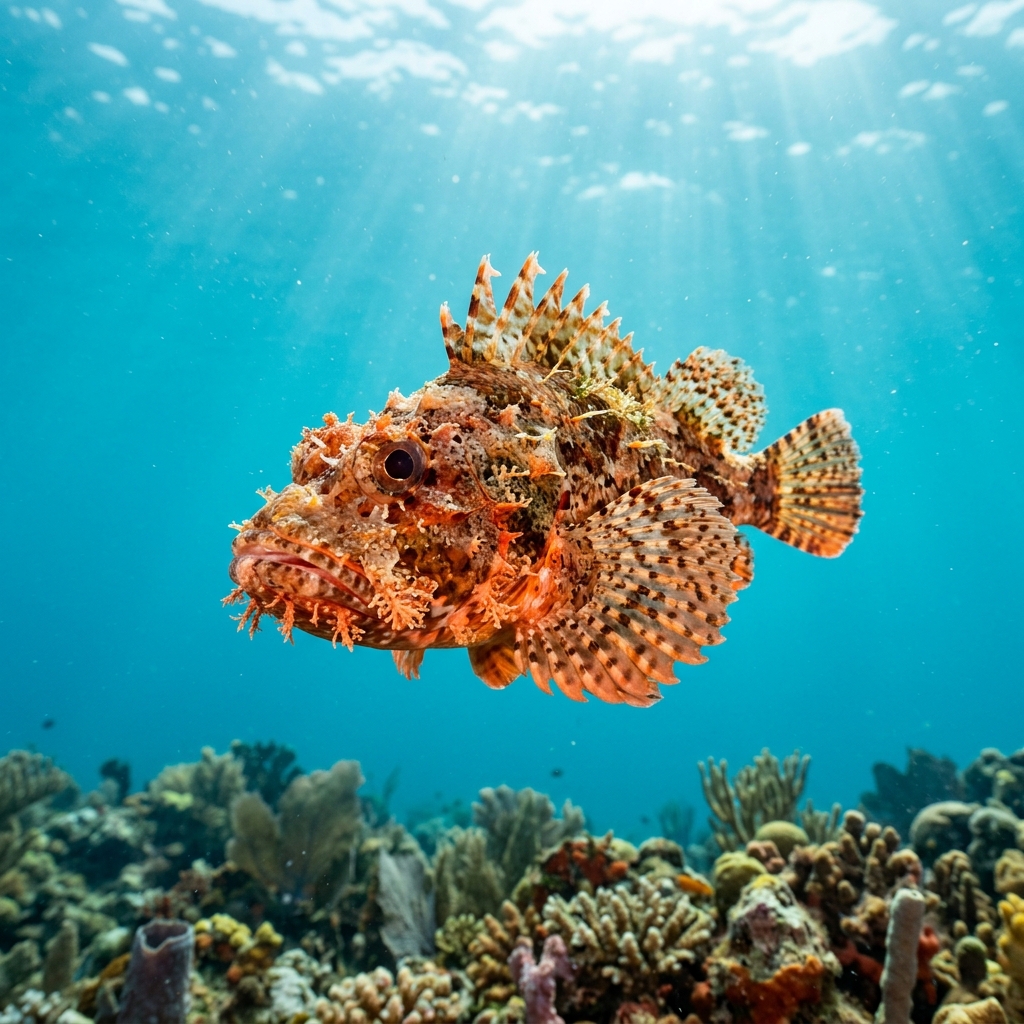
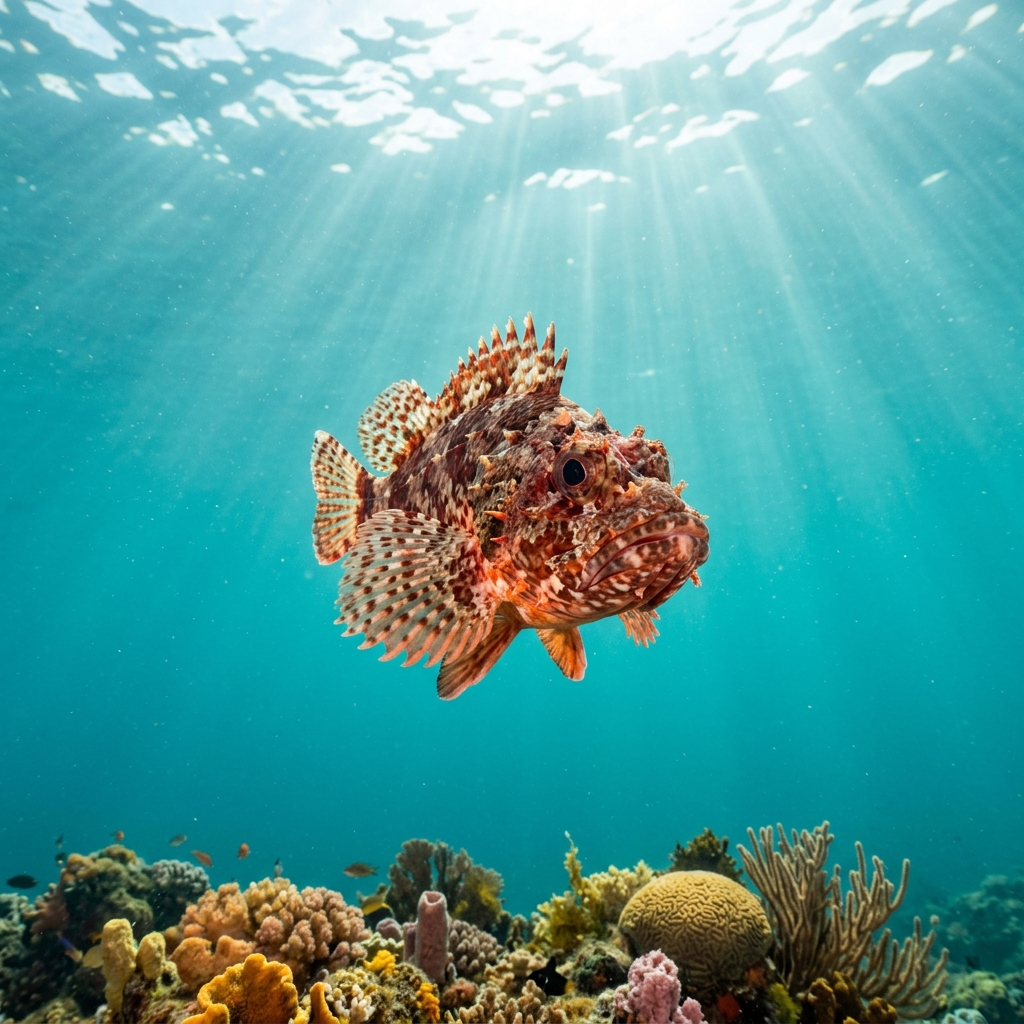
Squat, heavy-bodied fish around 21 cm, covered in warty, mottled skin that blends into rock and rubble, so it reads as a lump on the reef rather than a fish. Look for the ragged outline of raised spines along the back and the bright orange, yellow or pink flash on the inside of the pectoral fins, only visible when it flares them. Colour otherwise runs through greys, browns and reds depending on the substrate it is sitting on, which is exactly why it is so easy to swim past.
Spends most of a dive sitting motionless on rock, rubble or sand, relying on camouflage rather than movement to avoid notice. Divers usually find it by accident, hovering close to a reef wall or slope and only noticing the fish when it shifts or flares a pectoral fin. It is not shy of divers so much as indifferent, staying put unless something actually touches or corners it.
Those flared pectoral fins are a startle display, a sudden flash of colour meant to surprise a predator (or an unwary hand) for the split second it needs to escape or strike.
No clear seasonal pattern shows up in sightings, and with a comfortable range of 24.6 to 29 C it sits happily on tropical reefs all year, so any month works for a dive plan built around this species.
Reef neighbours a diver could mistake it for. Use the identification notes above to tell them apart.
Most reliably logged in Egypt, especially South Sinai and the Red Sea Riviera, with a strong secondary population around Hawaii and further sightings in the Philippines (Mindanao and the Visayas) and Jordan's Aqaba coast. Smaller numbers turn up in Eilat, Israel, and it has also been recorded in Australia and India.
Mapping where Devil Scorpionfish is logged…
Egypt is the strongest hotspot, particularly South Sinai and the Red Sea Riviera, with Hawaii also producing regular sightings. Smaller but consistent numbers come from the Philippines, Jordan's Aqaba coast, and Eilat in Israel.
There is no strong seasonal signal in sightings, and the species tolerates a wide 24.6-29 C range, so it is a year-round find on the reefs where it occurs.
Yes, they carry venomous dorsal spines that cause a painful sting if touched or stepped on. The real risk is their camouflage: divers often do not see them until they are very close, so careful buoyancy and not touching the reef are the best precautions.
Look for a squat, warty, rock-like fish around 21 cm long, sitting still on reef rubble or sand with a jagged spiny outline along its back. The giveaway is a flash of bright orange, yellow or pink on the inside of the pectoral fins when it flares them.
They typically reach around 21 cm, a compact, thickset fish rather than a large one, which adds to how easily they disappear against rock and rubble.
When threatened, it suddenly flares its pectoral fins to reveal bright hidden colour, a startle display that buys it a split second to escape or ambush whatever disturbed it.
Site and sighting data is aggregated from diver logs, iNaturalist and GBIF. For taxonomy and conservation status:
Madeira Rockfish
2,773 sites