Periclimenes scriptus
A translucent little shrimp turning up in the cool waters of Occitanie and Northern Greece, most often as an uncommon find on rocky reefs.
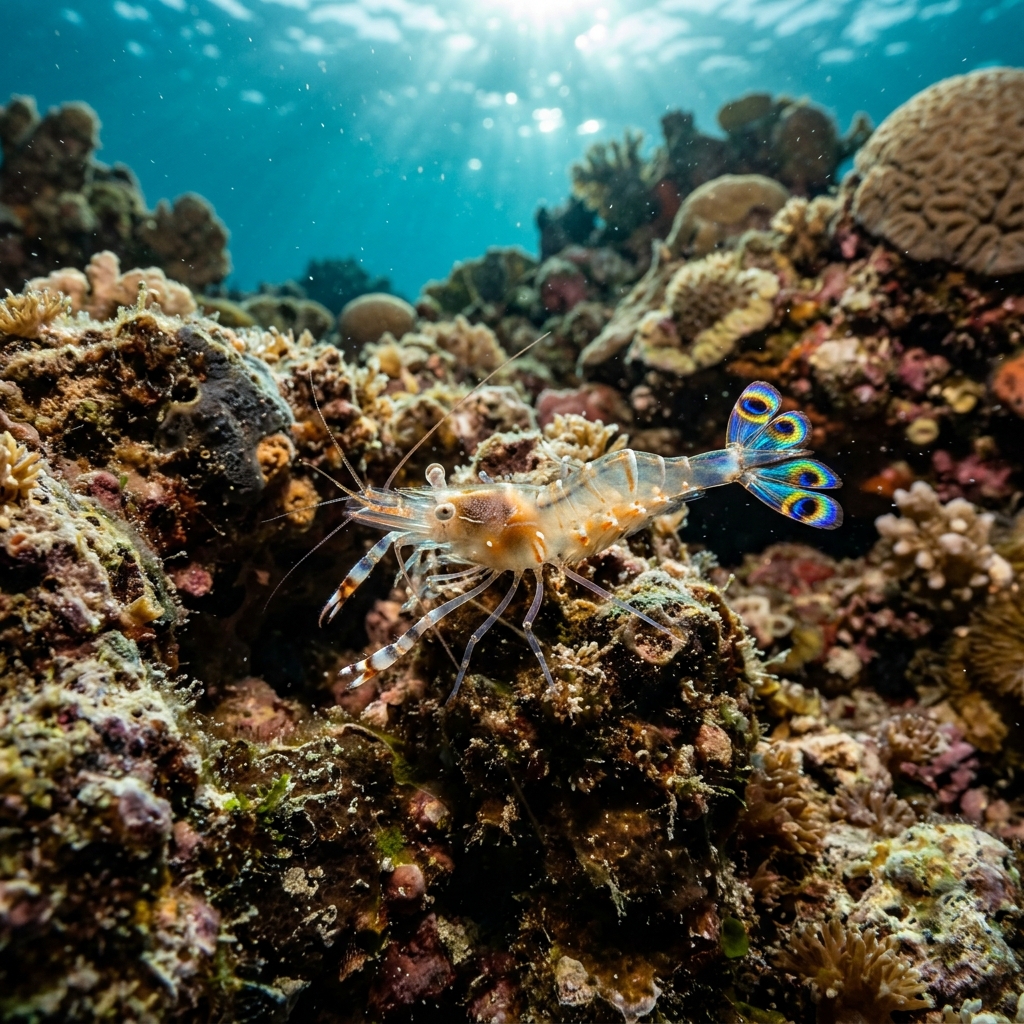
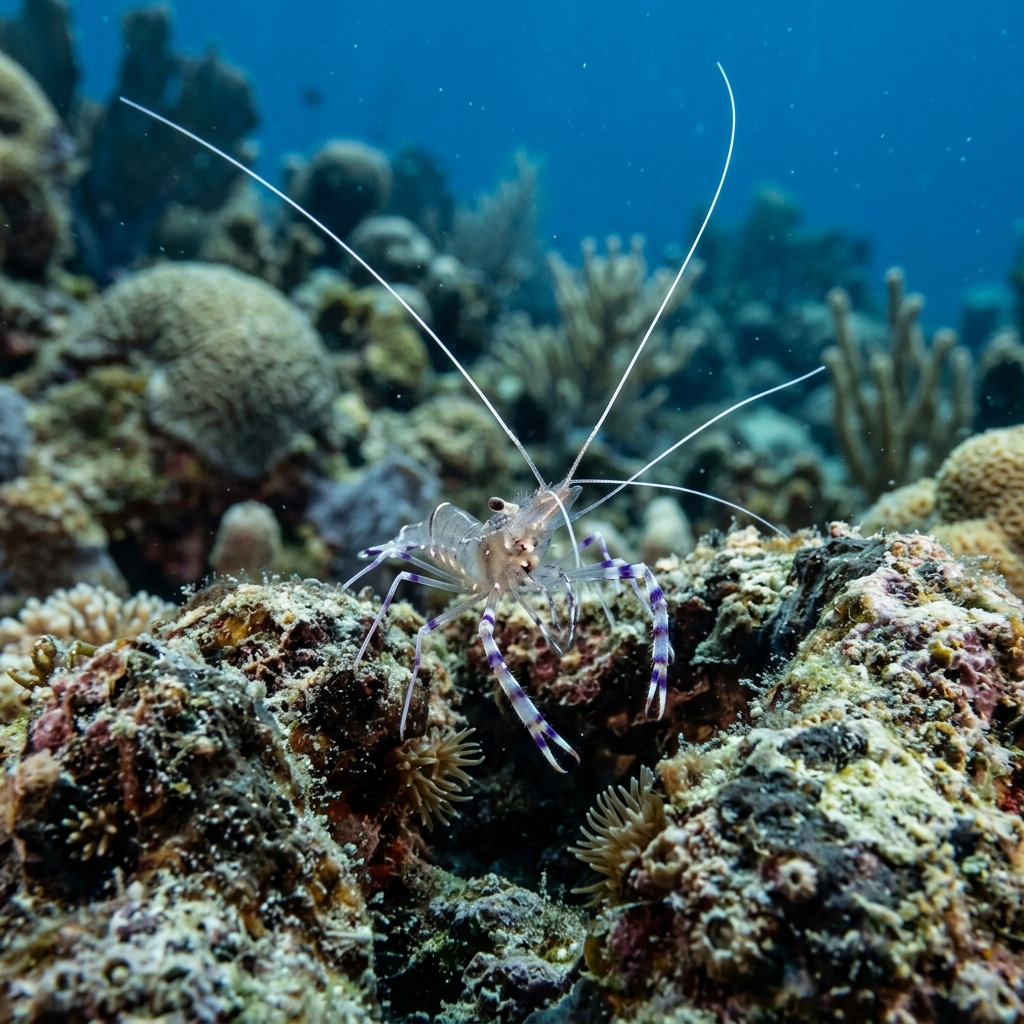
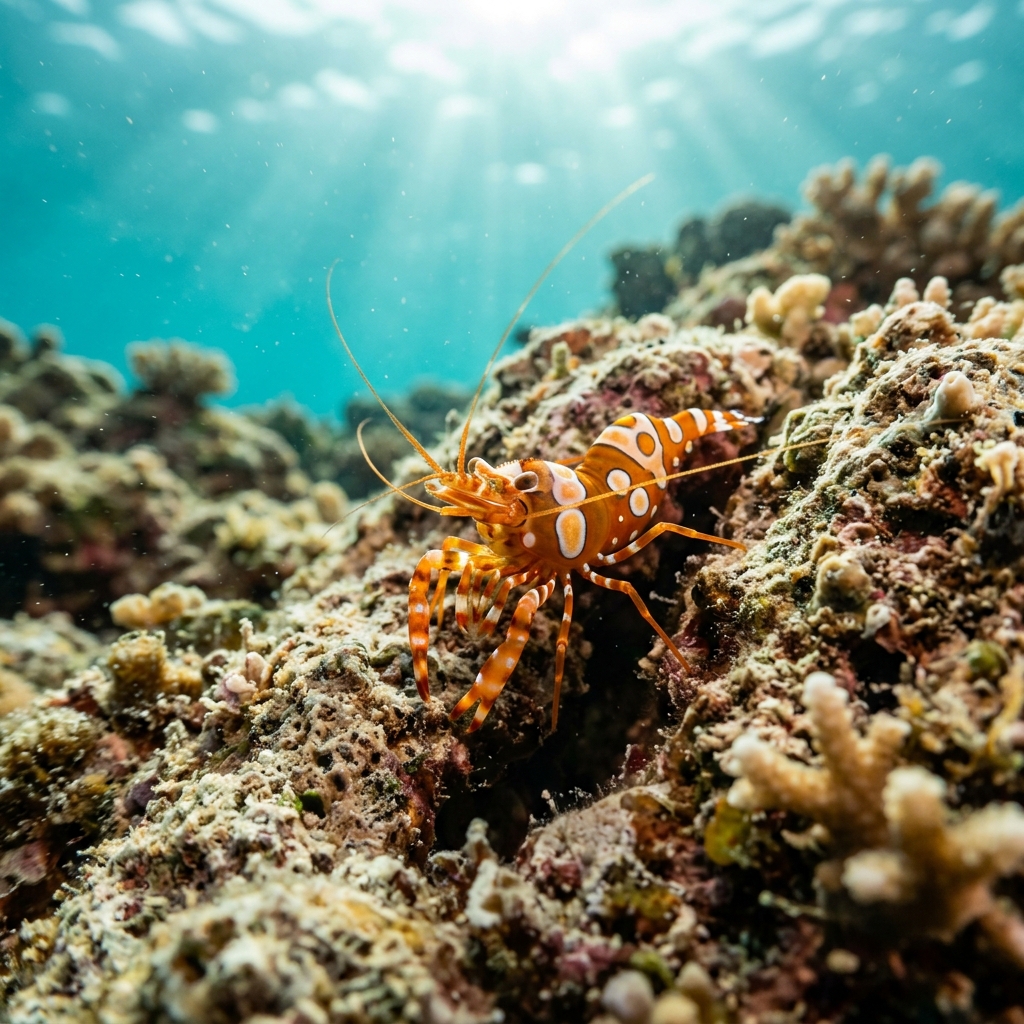
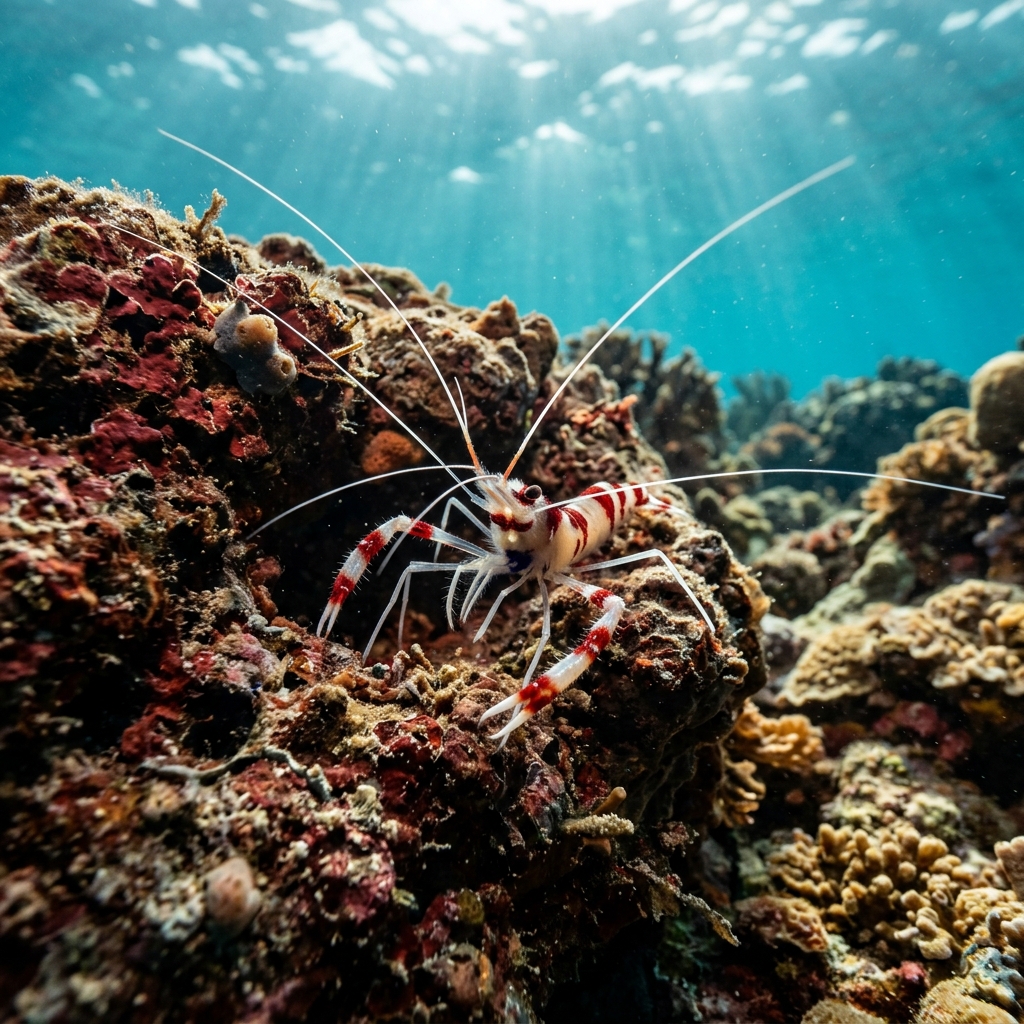
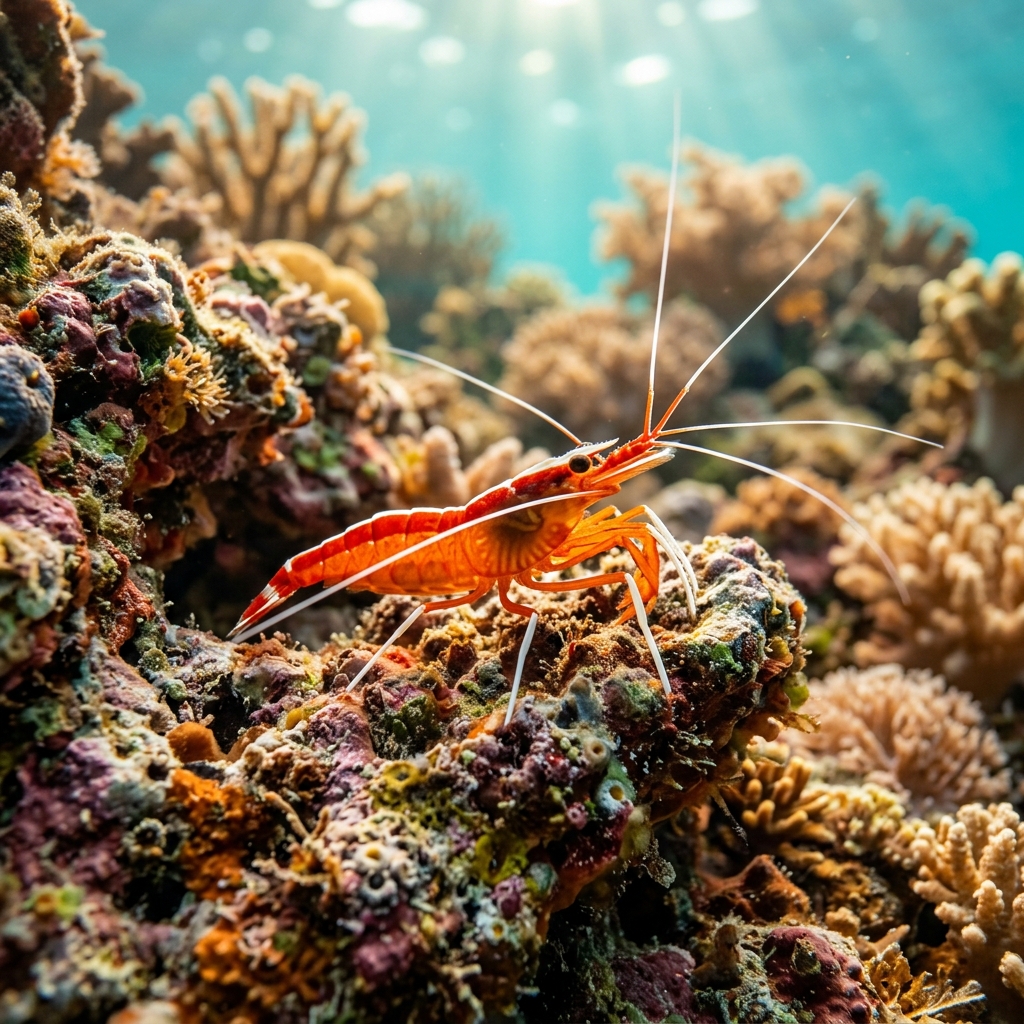
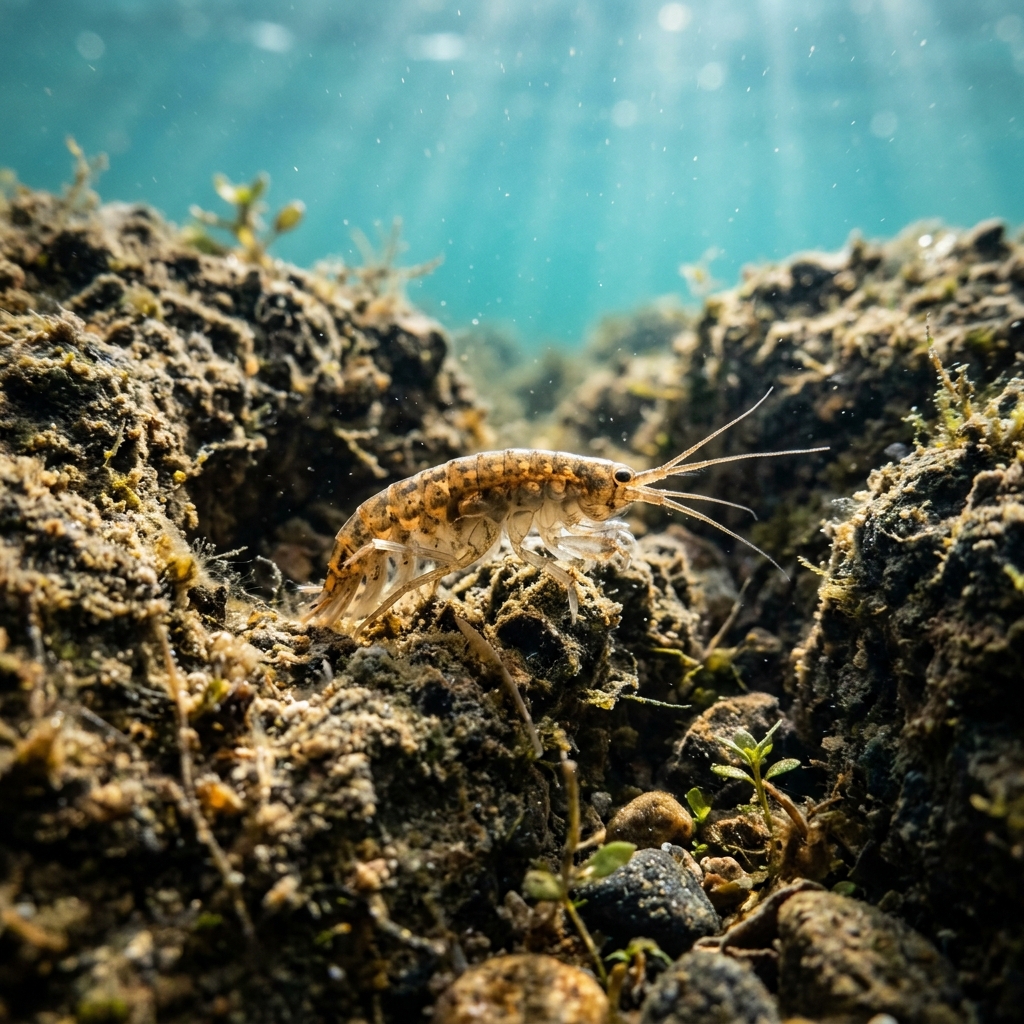
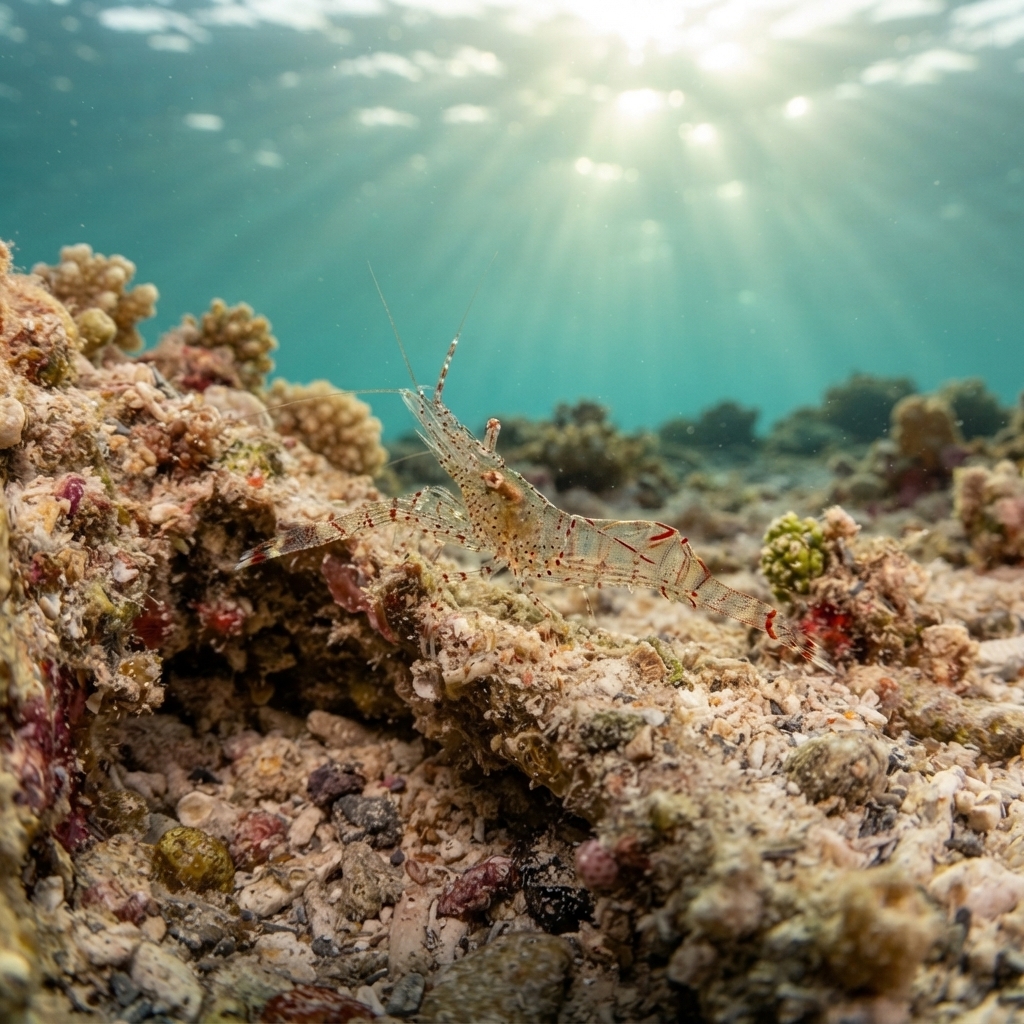
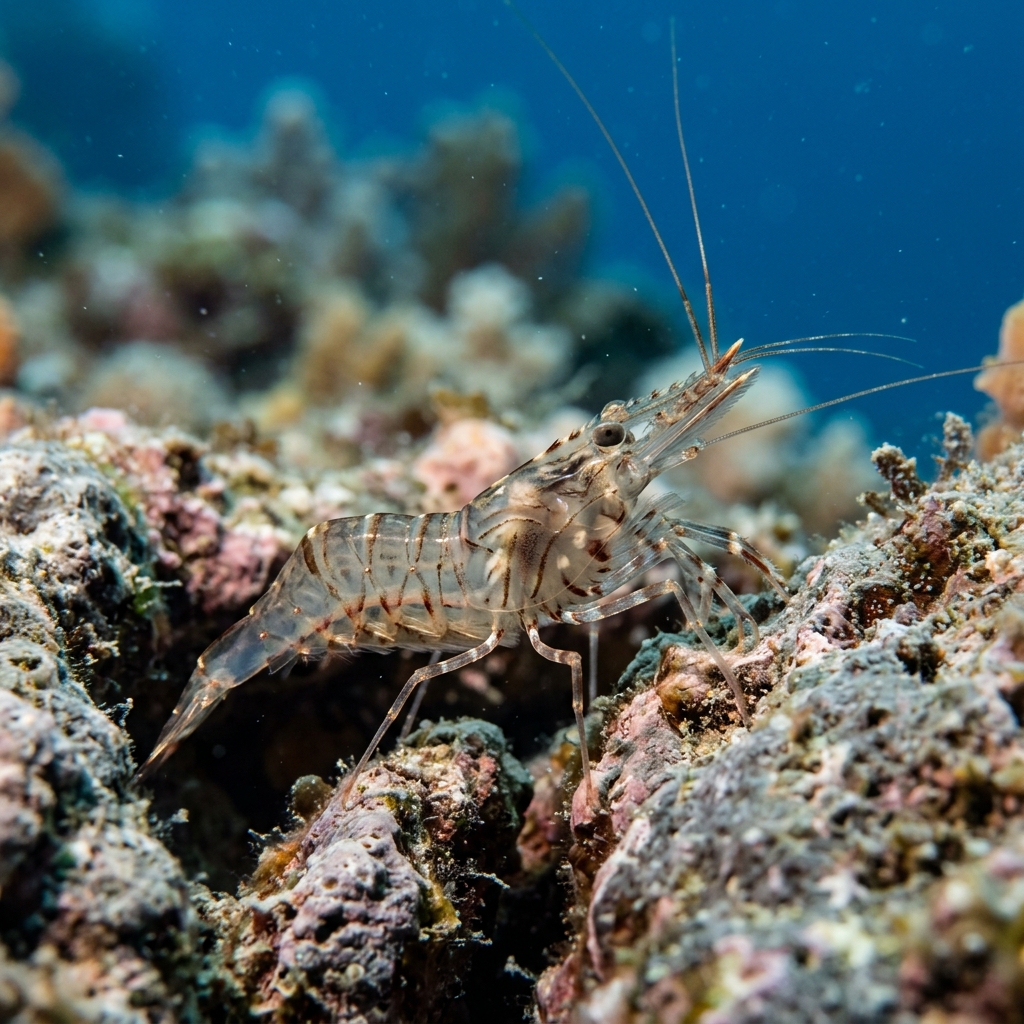
A small, almost see-through shrimp whose body lets light pass through, making it easy to miss against rock and algae. Look for faint striping or speckling along the translucent body and long, thin antennae sweeping the water ahead of it. Its size stays modest and it tends to sit low, close to crevices or holdfasts, rather than swimming openly in the water column.
Divers tend to find this shrimp tucked into rocky crevices or resting among algae and encrusting growth rather than out in the open. It's not a fast mover and doesn't dart off the moment a torch beam or diver passes, but its transparent body means you often only notice it once you slow down and scan a surface closely. Most reports describe it as an uncommon find, so patient, close-focus looking at rock walls and ledges pays off more than open-water searching.
Its near-transparent body is a classic small-shrimp defence: with little pigment to scatter light, it blends into rock and algae backgrounds well enough that most divers swim straight past it.
Sighting data doesn't show a clear seasonal pattern, and the observed temperature range of 15.6 to 21.6 C spans much of the Mediterranean diving calendar, so it's reasonable to look for it across the diving season rather than waiting for a specific month.
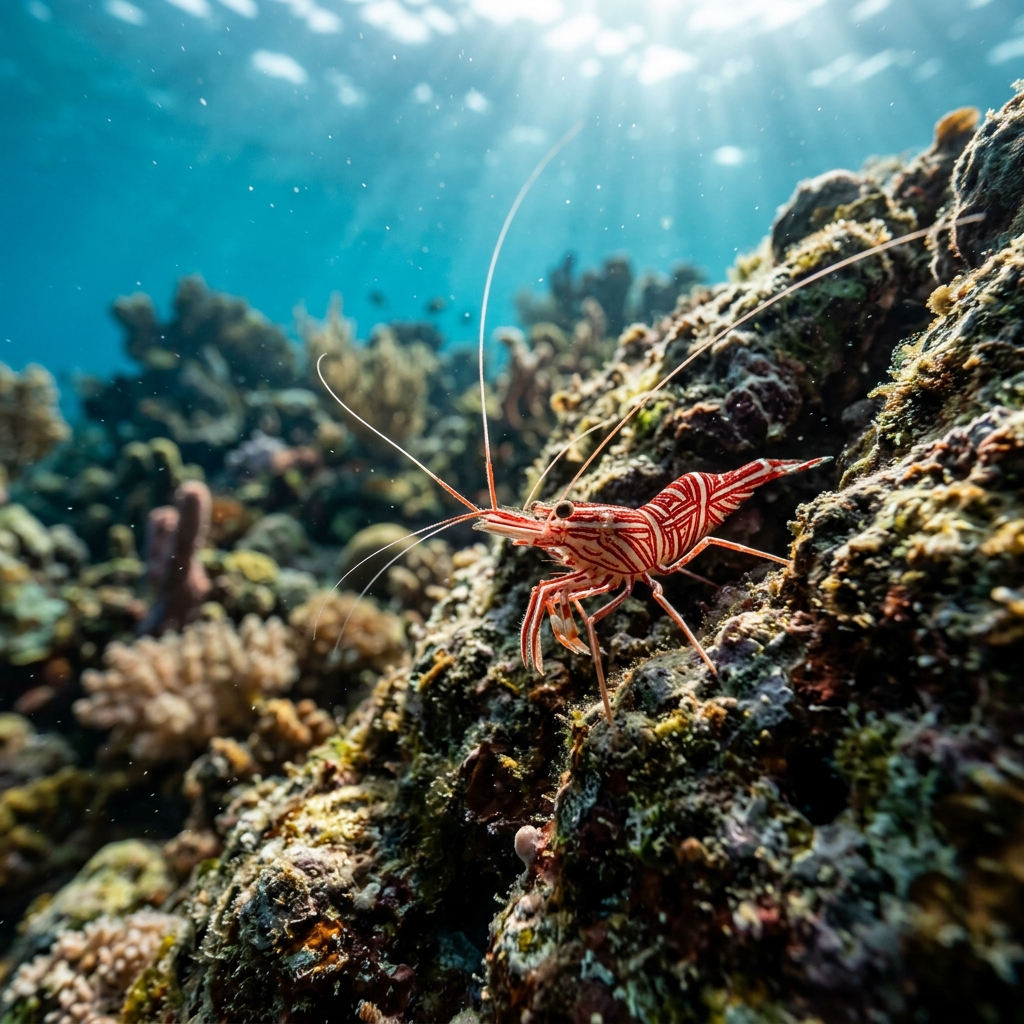
Reef neighbours a diver could mistake it for. Use the identification notes above to tell them apart.
This one is most reliably logged along the French coast, especially in Occitanie, with additional sightings in the French Riviera and Provence. Northern Greece produces a solid number of sightings too, and Catalonia in Spain rounds out the picture, making the western and northern Mediterranean the places to look.
Mapping where Crystal Prawn is logged…
It's most consistently reported in Occitanie in southern France, with further sightings in the French Riviera and Provence. Northern Greece and Catalonia in Spain also produce regular records, making the Mediterranean the core area for this species.
There isn't enough seasonal data to point to a specific window, and its recorded temperature range of 15.6 to 21.6 C covers much of the Mediterranean diving year, so sightings are spread across seasons rather than concentrated in one.
Look for a small, largely translucent shrimp tucked against rock or algae rather than swimming freely. Its see-through body and fine markings make it easy to overlook, so a slow, close scan of crevices and ledges is the best way to pick one out.
No. This is a small, harmless shrimp with no sting or bite that poses any risk to divers, so it can be observed and photographed at close range without concern.
Its almost fully transparent body is its standout trait, letting it disappear against rock and algae rather than relying on bright colours or a host anemone for cover, unlike many of its shrimp relatives.
Site and sighting data is aggregated from diver logs, iNaturalist and GBIF. For taxonomy and conservation status:
Rockpool Prawn
2,179 sites