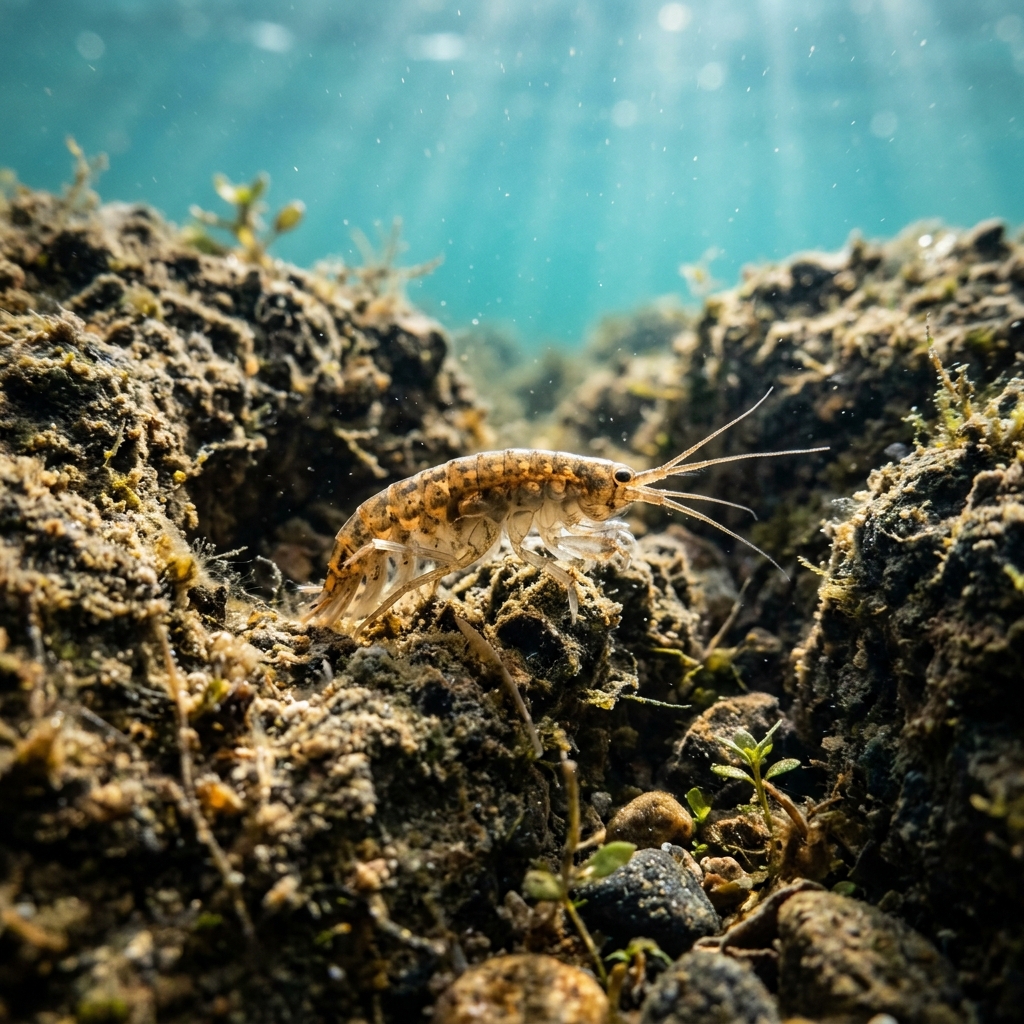
Gammaridae spp.
Spot freshwater shrimp in cold Central European rivers and lakes. Most logged in Germany and Switzerland in waters as cold as 1.7 °C.
Small, laterally compressed (flattened side-to-side) crustaceans that curl into a comma shape when disturbed and scuttle rapidly through the water column. Colouration ranges from pale translucent grey to olive-brown, often with a faint segmented pattern visible through the shell. During breeding, look for paired individuals: a noticeably larger male gripping a smaller female beneath him in a prolonged pre-mating carry known as amplexus.
When you spot them, freshwater shrimp are usually busy picking through leaf litter, biofilm (the thin layer of algae and bacteria coating submerged surfaces), or decaying plant matter on the substrate. Disturb the water and they dart in short, erratic bursts before tucking back under a stone or into vegetation. Breeding pairs move as one unit, the male steering both animals along the bottom.
Gammaridae are a key link in freshwater food webs, shredding dead leaves and recycling nutrients that feed everything from invertebrates to fish. Their presence or absence is used by ecologists as a bioindicator of water quality, so seeing them on a dive is a good sign the water is clean and well-oxygenated.
No clear seasonal peak has emerged from logged dives, so encounters appear possible year-round wherever the habitat is suitable. The observed temperature range of 1.7 to 17.3 °C points firmly to cold-water freshwater sites, meaning winter and early spring conditions in temperate regions are not a barrier to finding them.
Most logged across Central Europe, particularly in Germany and Switzerland, where rivers, streams, and lake shallows provide the cold, well-oxygenated habitat this family favours. The Bavarian Alps, Central Switzerland, and Berlin-Brandenburg regions account for a strong share of European records. North American sightings cluster in the Great Lakes and Northeast, and Florida and the Southeast.
Mapping where Freshwater Shrimp is logged…
They are most commonly logged in Germany and Switzerland, with strong records also from Austria, the Netherlands, and North America's Great Lakes region. Look for them in cold, clean rivers, streams, and lake margins rather than the sea.
No concentrated season has emerged from dive data, suggesting they can be found year-round in suitable habitat. Their tolerance for near-freezing water means cold winter and spring dives in Central Europe are just as viable as summer ones.
Look for a small, pale, comma-shaped crustacean scuttling along the bottom or through vegetation. The body is flattened side-to-side and often semi-transparent. Breeding pairs are distinctive: a large male clinging to a smaller female and carrying her.
Gammaridae vary by species but most are only a few centimetres long at most. Underwater they can be easy to overlook unless you slow down and search leaf litter and submerged plants carefully.
Yes. Gammaridae are sensitive to pollution and low oxygen levels, so ecologists use them as bioindicators of healthy, clean freshwater. Spotting them on a dive is a reliable sign the water is in good condition.
Site and sighting data is aggregated from diver logs, iNaturalist and GBIF. For taxonomy and conservation status:
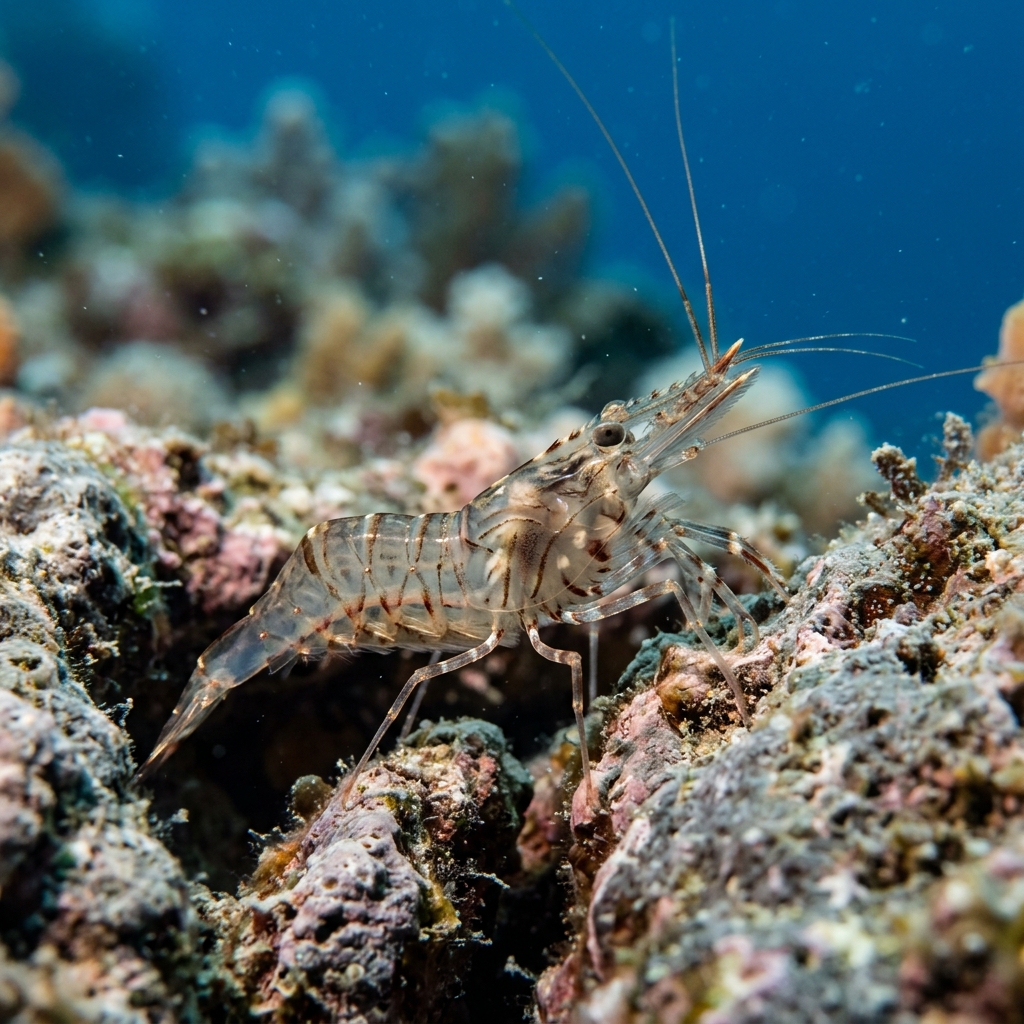
Rockpool Prawn
2,179 sites